A fellow at a club meet once told me his car had gone through a nut and bolt restoration. Somebody asked to see the invoice, and the room got quiet. The invoice showed a fresh respray, a rebuilt engine and a new top. It did not show a single hour for the chassis, the wiring or the brake system. The car was nice. It was not nut and bolt. The phrase had been stretched to cover a good cosmetic job, and the only thing that settled the argument was the paperwork.
That is the problem with the term. It sounds precise, and it has no official definition. No registry or judging body owns it. So the useful question is what a shop should mean by it, and what you should be able to see if they say it.
What the term actually means
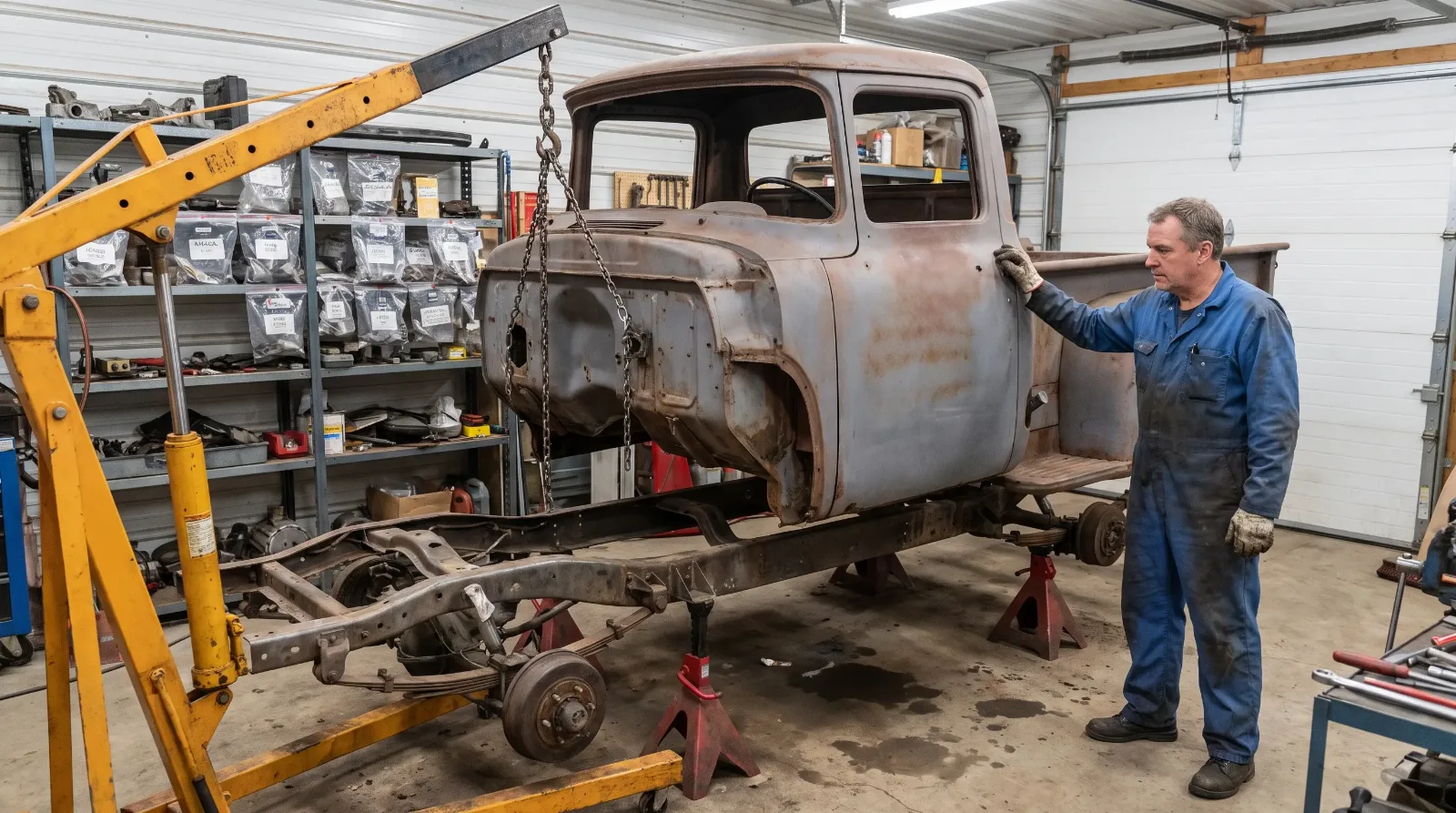
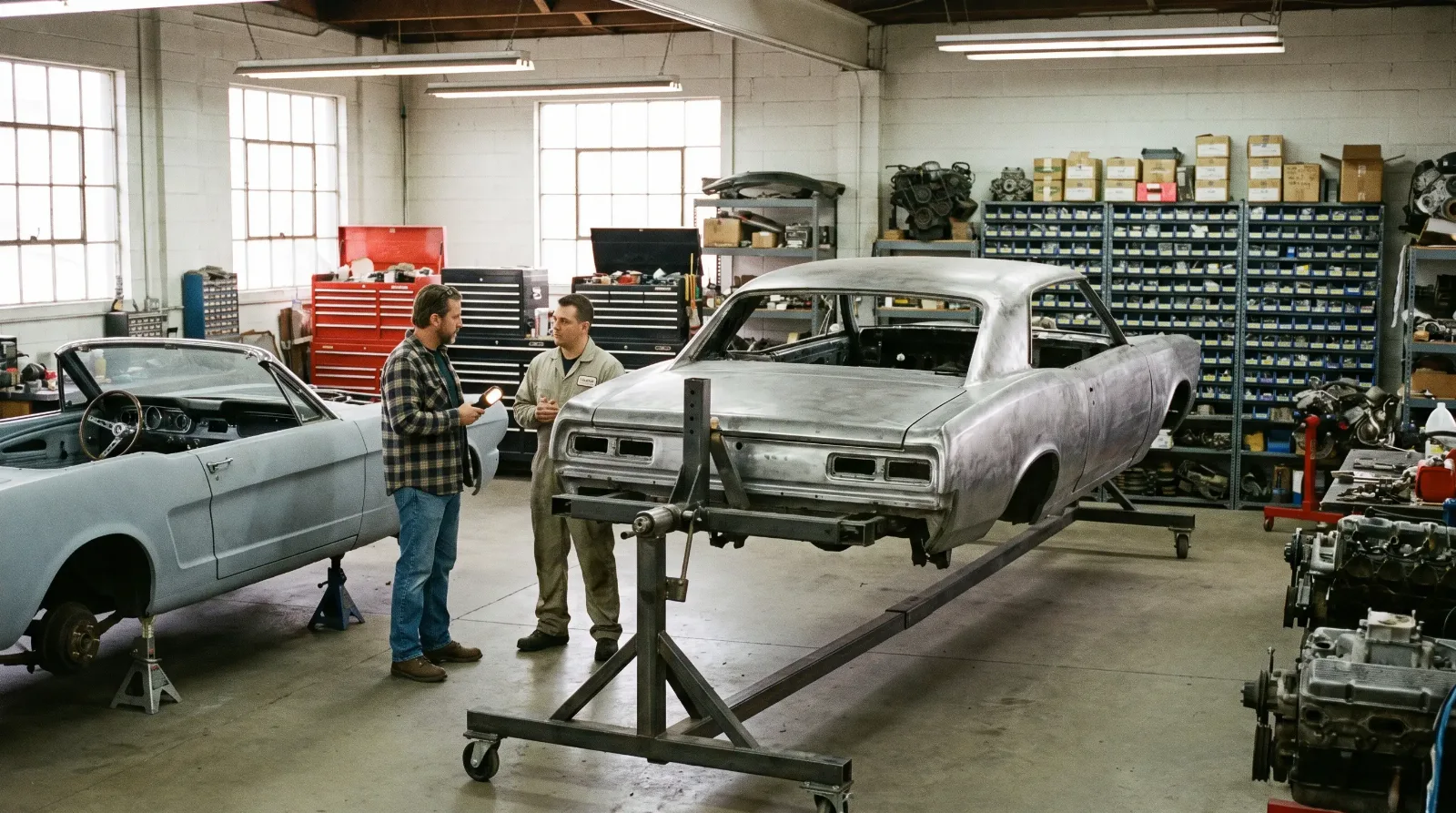
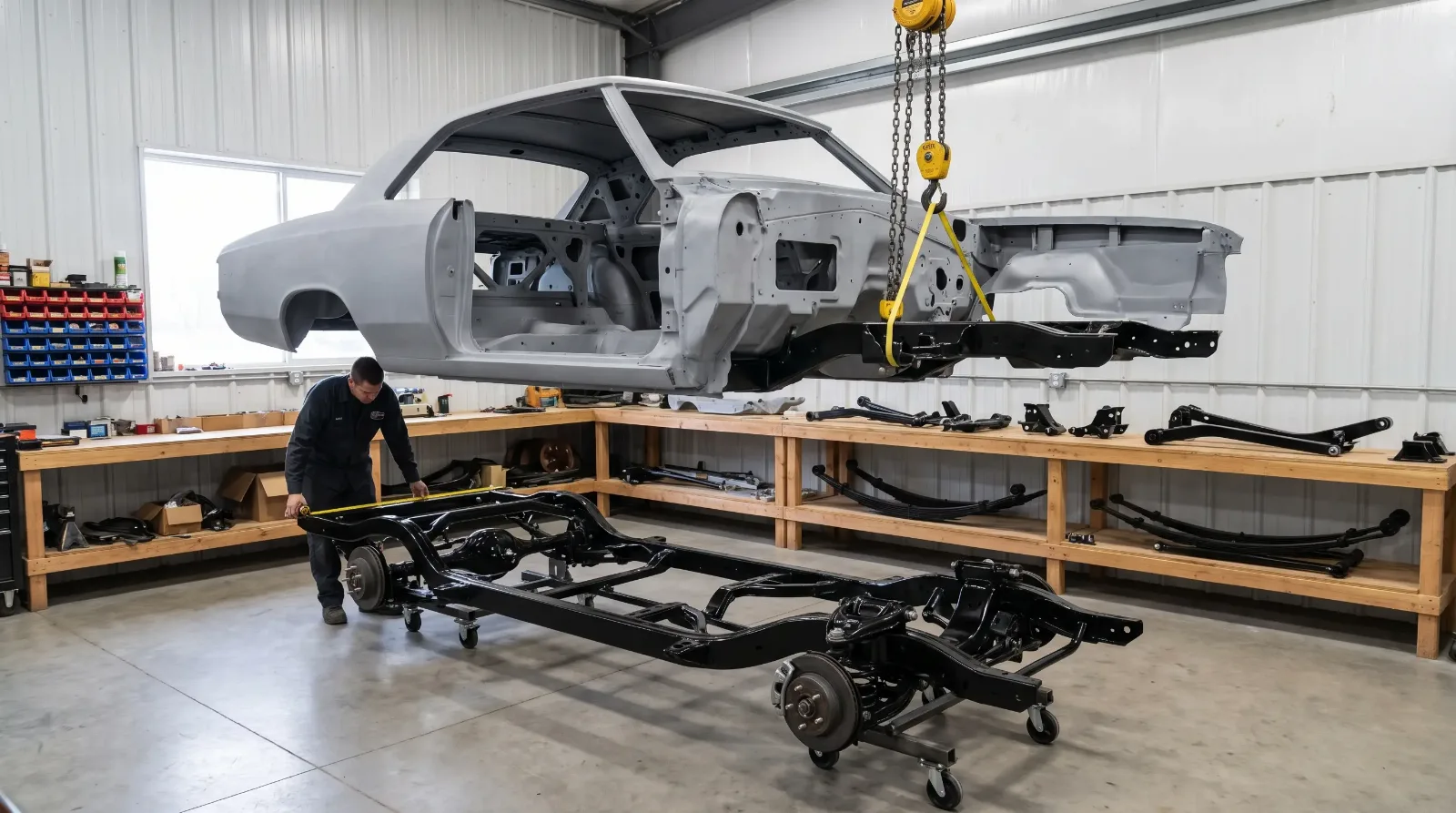
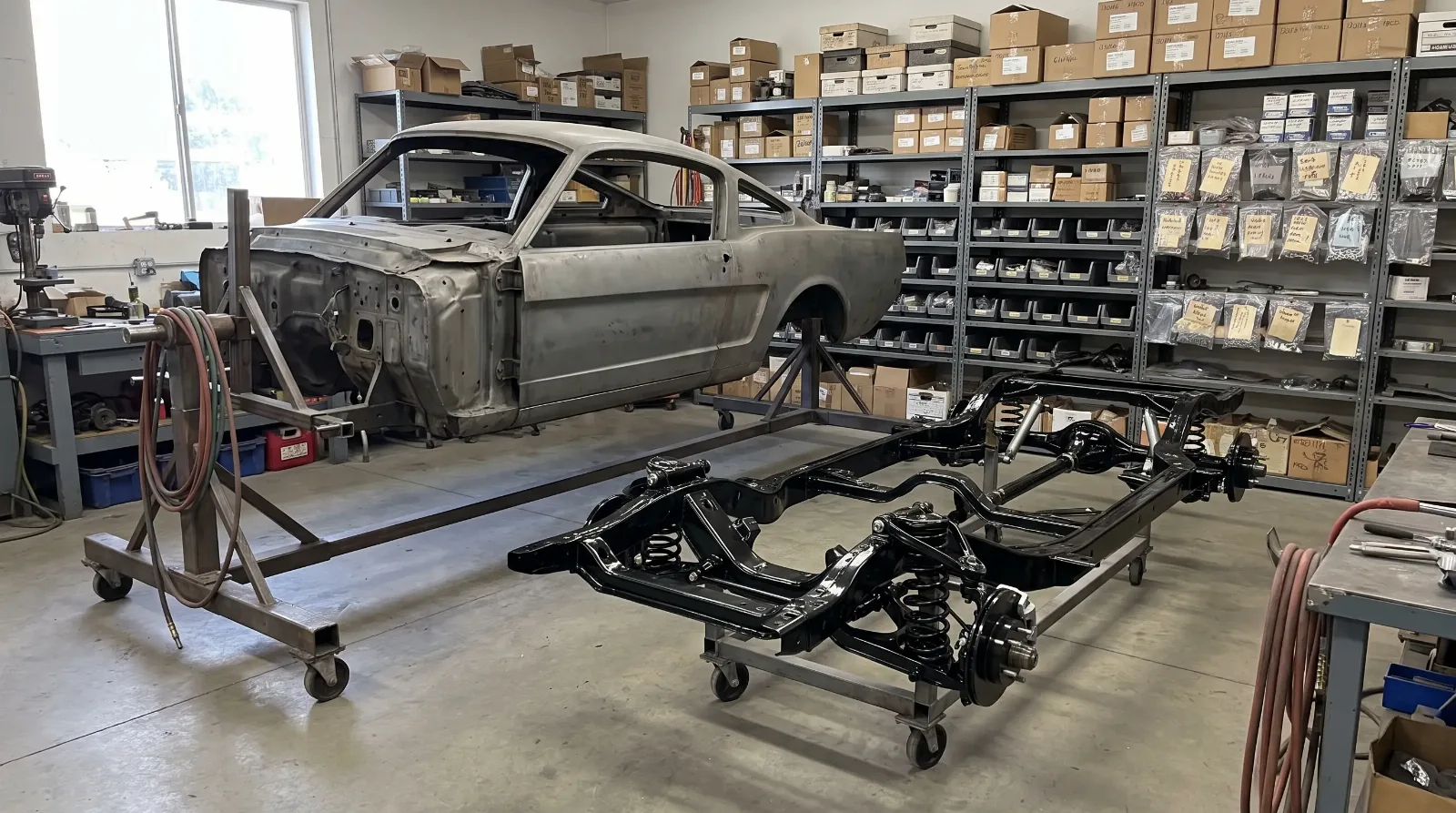
In plain terms, a nut and bolt restoration means the car is taken apart down to its last fastener, and every component is cleaned, inspected, and then restored, rebuilt or replaced. Nothing is left on the car because it looked fine. The body comes off the chassis, the engine and transmission come out, and the suspension, steering, brakes, fuel system, wiring, glass, trim and interior all go onto shelves and into labeled bins. Each part gets a decision: refinish it, rebuild it, or replace it.
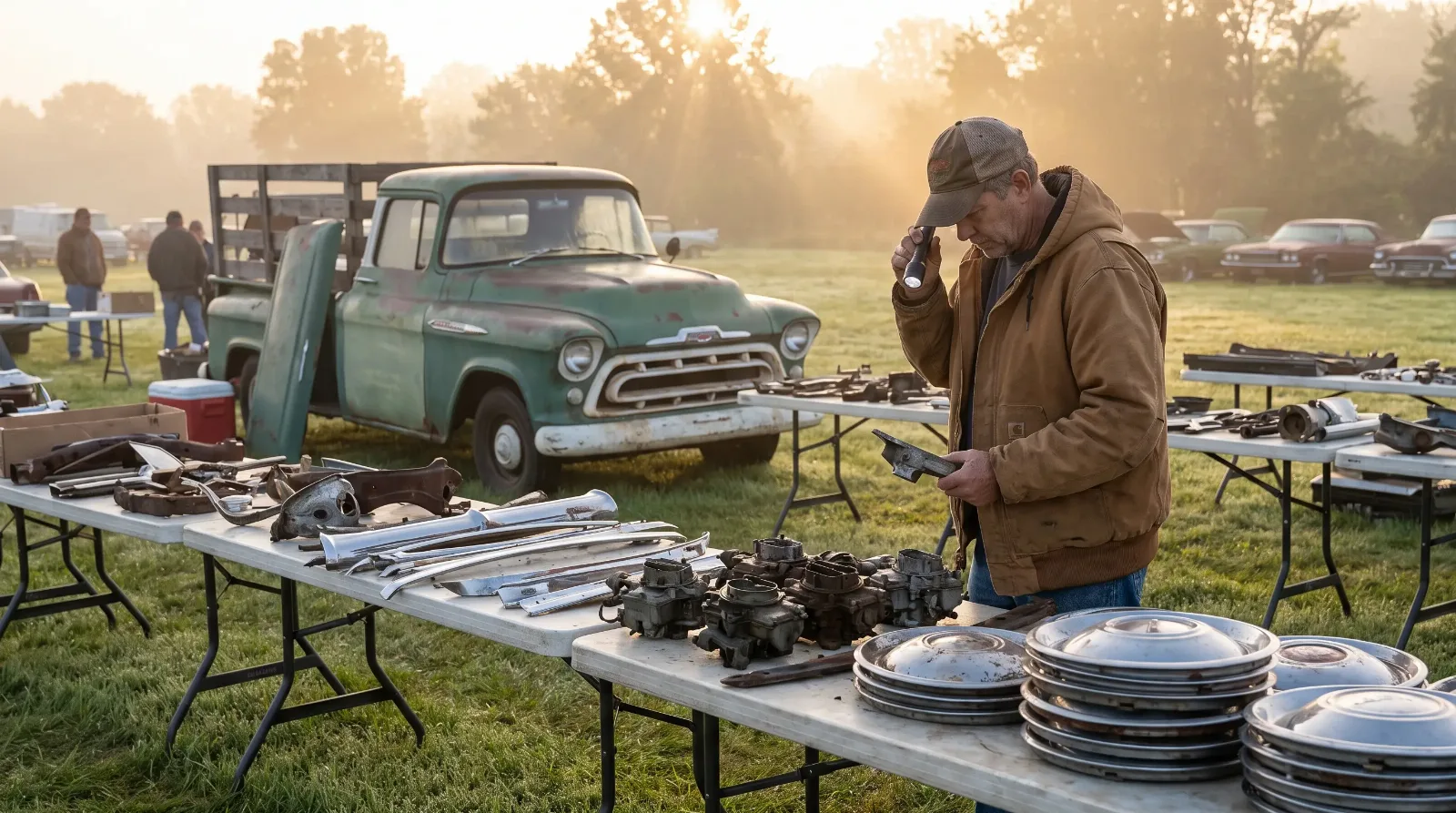
The word that matters is every. A car where the engine and paint are fresh but the front suspension still wears forty year old bushings is a partial restoration, however good it looks. Shops that do the work honestly will tell you that the reassembly is built from known good parts, so the finished car has no unknowns left in it.
How the work is sequenced
The order is the same on almost every serious job, because each step protects the next one. Documentation comes first: photographs from every angle, bags and tags for hardware, and notes on how the wiring and trim were routed. Many jobs lose value here, because a shop that tears down in a hurry cannot always put the car back the way the factory built it.
- Teardown and documentation, with every fastener bagged and tagged.
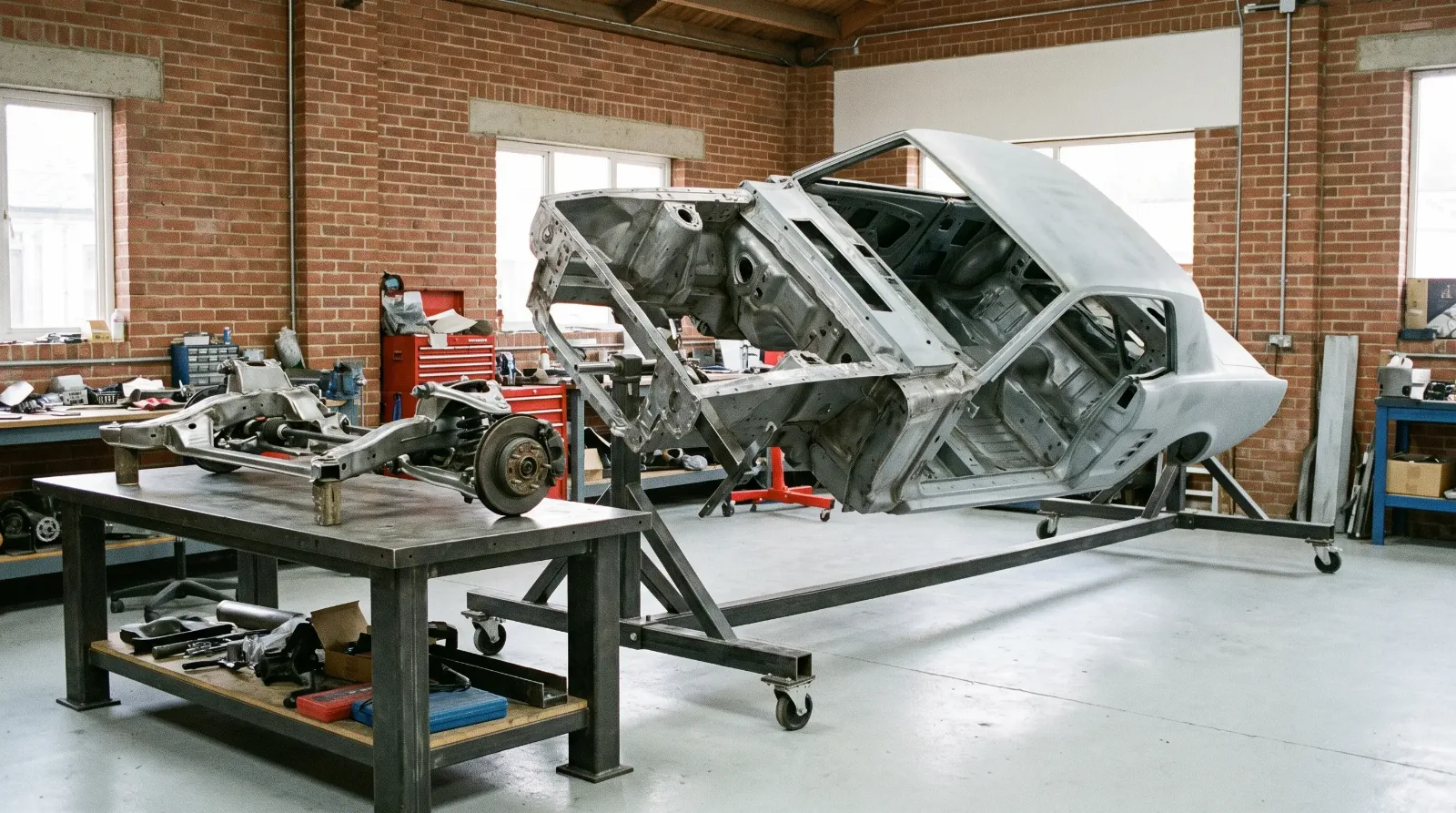
- Body off the chassis, then media blasting or chemical stripping of both.
- Metalwork on the shell and chassis, including rust repair and panel fit.
- Chassis and running gear rebuilt and refinished before the body returns.
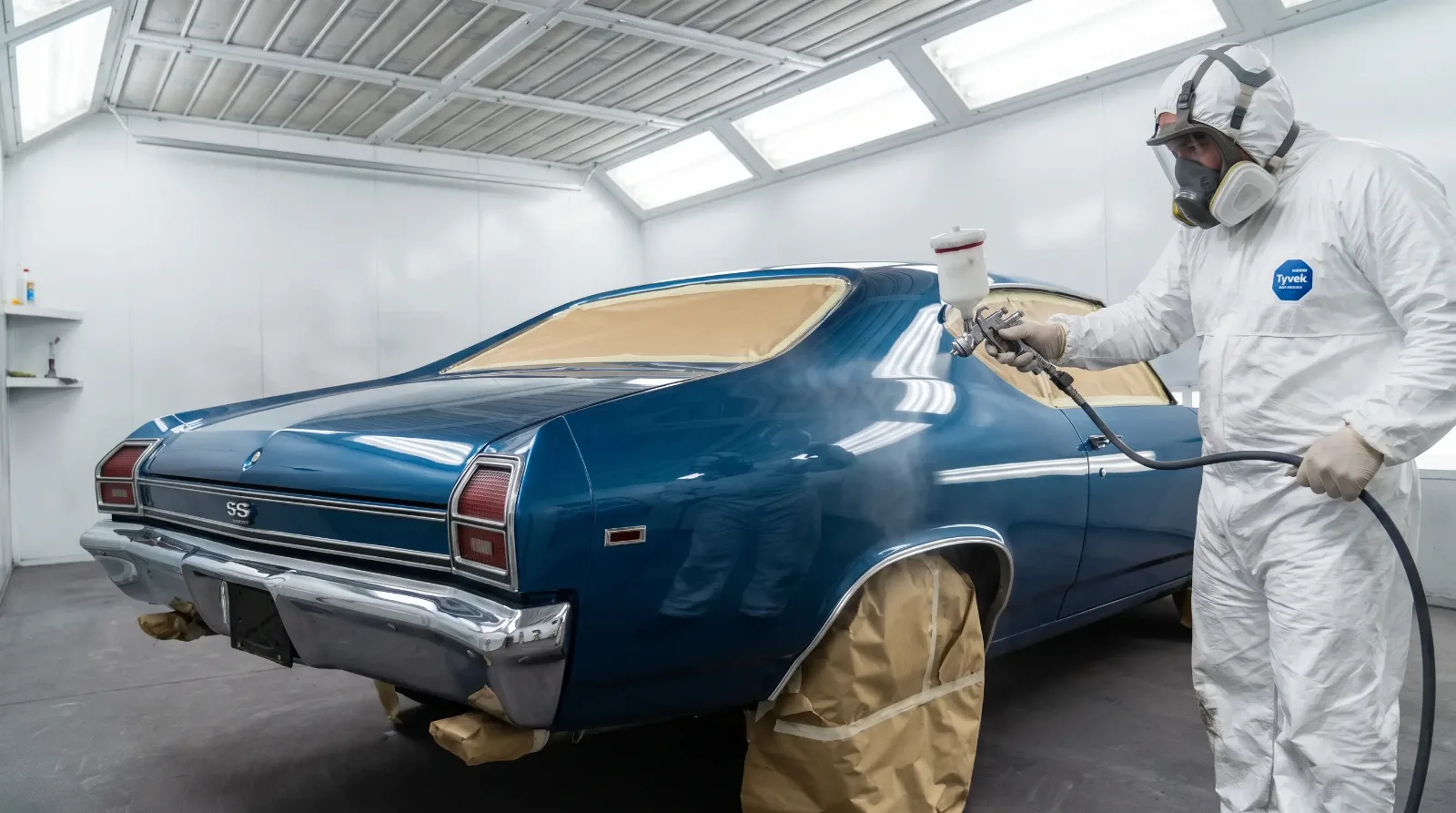
- Bodywork, primer, paint and color sanding.
- Engine, transmission and driveline rebuilt on their own schedule.
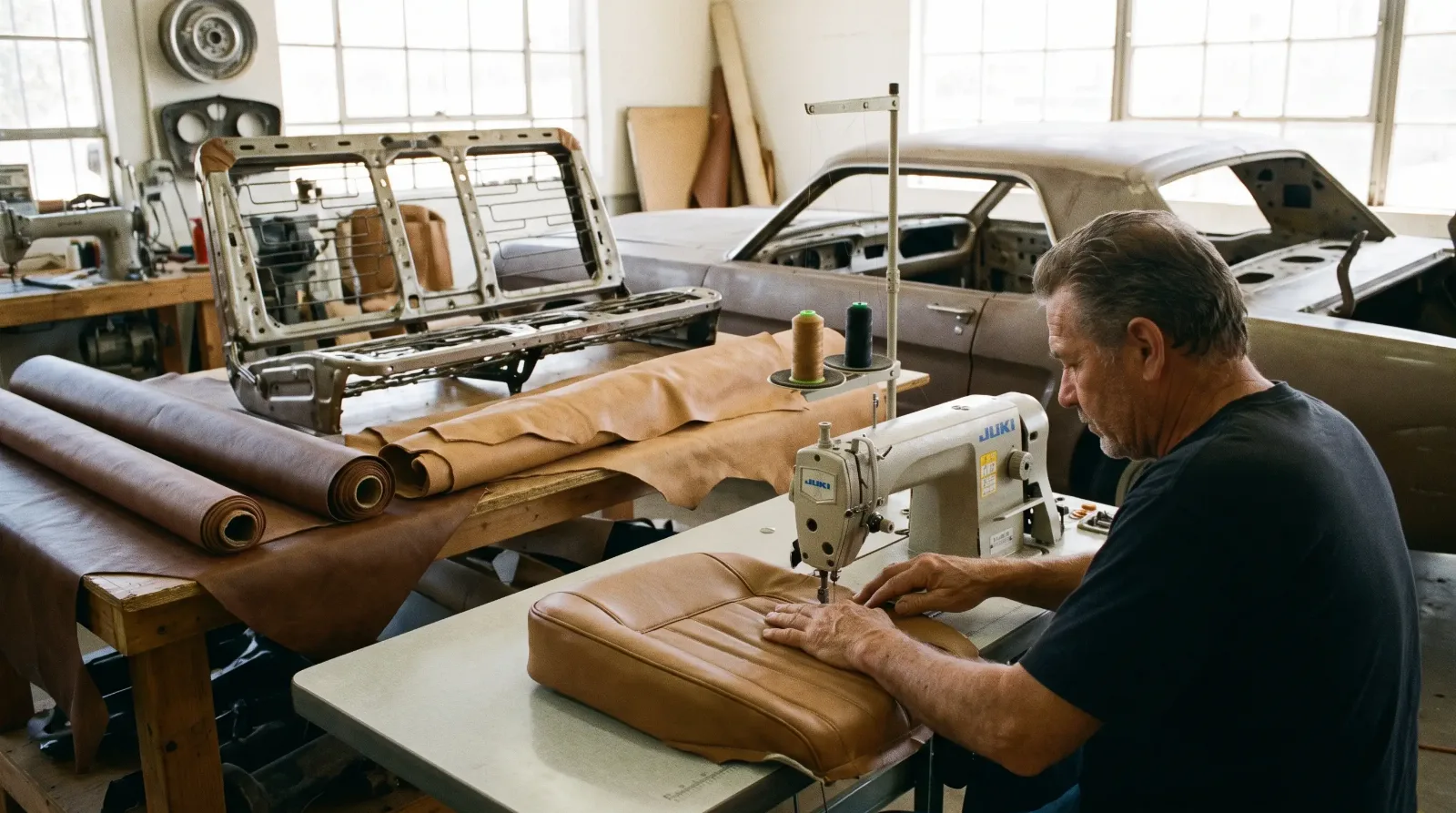
- Wiring, brakes, fuel system, glass, trim and interior installed.
- Shakedown miles, then a second round of fixes.
Fasteners are part of the scope. On a genuine job they are stripped, then plated or coated to the correct finish, or replaced with correct reproductions. Reusing rusty hardware is the quickest tell that the claim was marketing.
How it differs from other restoration levels
Buyers confuse these terms constantly, so the comparison is worth a table. Nut and bolt describes how far the disassembly goes. Concours describes how closely the finished car matches factory detail. The two overlap, but they are not the same thing.
| Term | What it describes | What it does not guarantee |
|---|---|---|
| Nut and bolt | Complete teardown, every part restored or replaced | Factory correct finishes or judging scores |
| Frame-off | Body lifted from the frame for access | That every component was rebuilt |
| Rotisserie | Shell rotated on a stand to work the underside | That the drivetrain was touched |
| Concours | Detail accuracy against factory specification | That it was done to be driven |
If you want the full ladder from driver to concours, the explanation of what a frame-off means and how it sits among the other levels is the place to start. A true nut and bolt job nearly always includes a frame-off, but a frame-off does not always include everything else.
What it costs and how long it takes in 2026
Shop rates in the United States run from about $85 to $150 an hour at most independent restoration shops, with about $125 typical. Concours and marque specialists charge $175 or more. Multiply that by a thousand to several thousand hours and the labor alone lands in a wide band. Add paint, plating, chrome, upholstery and engine machine work, and a complete job on a common American classic at a professional shop typically runs about $100,000 to $225,000 at show level and $200,000 to $400,000 or more at concours level. Rare cars, difficult bodies and anything with hard to find trim climb above that. Cheaper quotes exist, and they usually leave something out. Plan on a contingency of 20 to 30 percent on top of any estimate.
Time is the other price. Expect a long schedule, often well over a year, and parts that must be sourced or fabricated stretch it. The number to watch is the ratio between what the car is worth finished and what it costs to finish. A nut and bolt job on a common model rarely returns its cost at sale. People do it because they want the car, not because the math works.
"Ask for the photo log. A shop that really took the car apart has hundreds of pictures of it in pieces, and they will happily show you."
Wayne Coburn
How to check a nut and bolt claim
You do not need to be an expert to test a claim. You need to ask for evidence and know what honest evidence looks like. The invoice should itemize hours by system, not a single lump line. The photo record should show the bare shell, the blasted chassis and the rebuilt components on the bench. A sensible shop will also let you visit during the job.
- Look at the underside, not the paint. Fresh coatings on every bracket, brake line and fastener mean the car really came apart.
- Check the wiring harness date and the hardware finish. Old harness plus new paint is a cosmetic job.
- Ask which components were replaced and which were rebuilt, and why.
If you are shopping for the work itself, the shops that do nut-and-bolt work are worth comparing on exactly these points: documentation habits, visit policy and itemized billing.
Is it the right level for your car?
Choose nut and bolt when the car is rare enough or loved enough that you want zero unknowns, or when a previous restoration hid enough problems that starting clean is cheaper than chasing them. Do not choose it just because a shop uses the phrase. A sound original car with tired paint and a worn interior is better served by a cosmetic restoration, which spends a fraction of the money and keeps what is already right. Match the level to the car and the plan, then hold the shop to the same standard every time: show me the paperwork.
Sources and notes
- Popular Restorations: complete restoration article, supports the "to the last nut and bolt" meaning and the full teardown in a frame-off job
- Grand Prix Classics: restoration services, a shop's own scope list covering disassembly, body and paint, chrome, upholstery, engine, suspension, brakes, wiring and reassembly
- Wikipedia: Car restoration, supports ground-up restoration stages and the six-level quality scale in value guides
- Wikipedia: Concours d'Elegance, supports concours as a judging standard of condition and authenticity
- Wikipedia: Body-on-frame, supports the separate body and frame construction that makes a body-off teardown possible
- What is frame-off restoration (Wilson Auto), hundreds of bolts removed, each part photographed, labeled and cataloged, and the hunt for correct replacements when an original fastener is lost