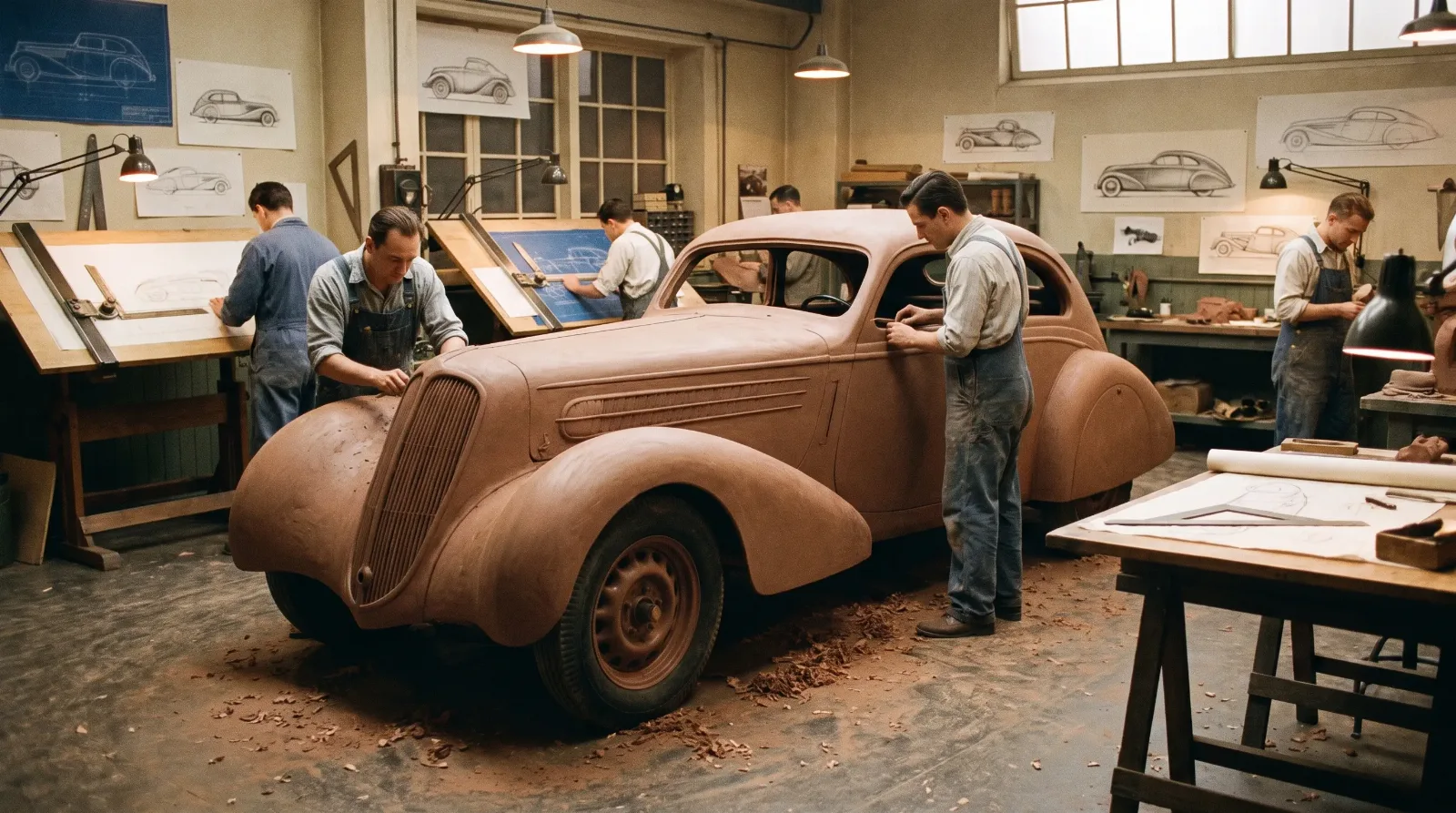
Picture a design studio in Detroit in 1935. A group of stylists, most of them young, none of them engineers by training, huddled around a clay model that looks nothing like the boxy sedans rolling off the line just a few years earlier. They are shaping a fender that curves like a wave breaking, arguing over whether the headlight belongs on a stalk or buried in the metal. Nobody in that room knows yet that they are inventing the visual language every car on the road will speak for the next decade. They just know the old shapes look tired, and they are chasing something that feels like motion even when the car is standing still.
That room, and dozens like it across the industry, is why people still call the 1930s the golden age of automotive styling. It is not nostalgia talking. Something genuinely rare happened in that decade, and it is worth understanding why.
A perfect, unlikely storm of conditions
Three things collided in the 1930s that had never lined up quite the same way before. First, streamlining theory arrived from aviation and rail design, giving car stylists a whole new visual vocabulary built around curves, taper, and the illusion of motion. Second, manufacturing technology had matured enough to actually produce those complex curved shapes in steel at scale, where a decade earlier the tooling simply could not have done it economically. Third, and this is the part people forget, the Depression forced manufacturers to compete on styling harder than ever before, because a beautiful car was one of the few ways left to justify a purchase people could barely afford.
Take away any one of those three factors and you get a different decade. Without the aviation-influenced design language, you get shapes without a unifying theory behind them. Without the manufacturing capability, you get concept sketches that never leave the drawing board. Without the economic pressure, you get manufacturers content to coast on incremental updates rather than reinventing the car's whole silhouette. All three showed up together, and the result was a level of design ambition that has rarely been matched since.
The shapes that changed everything
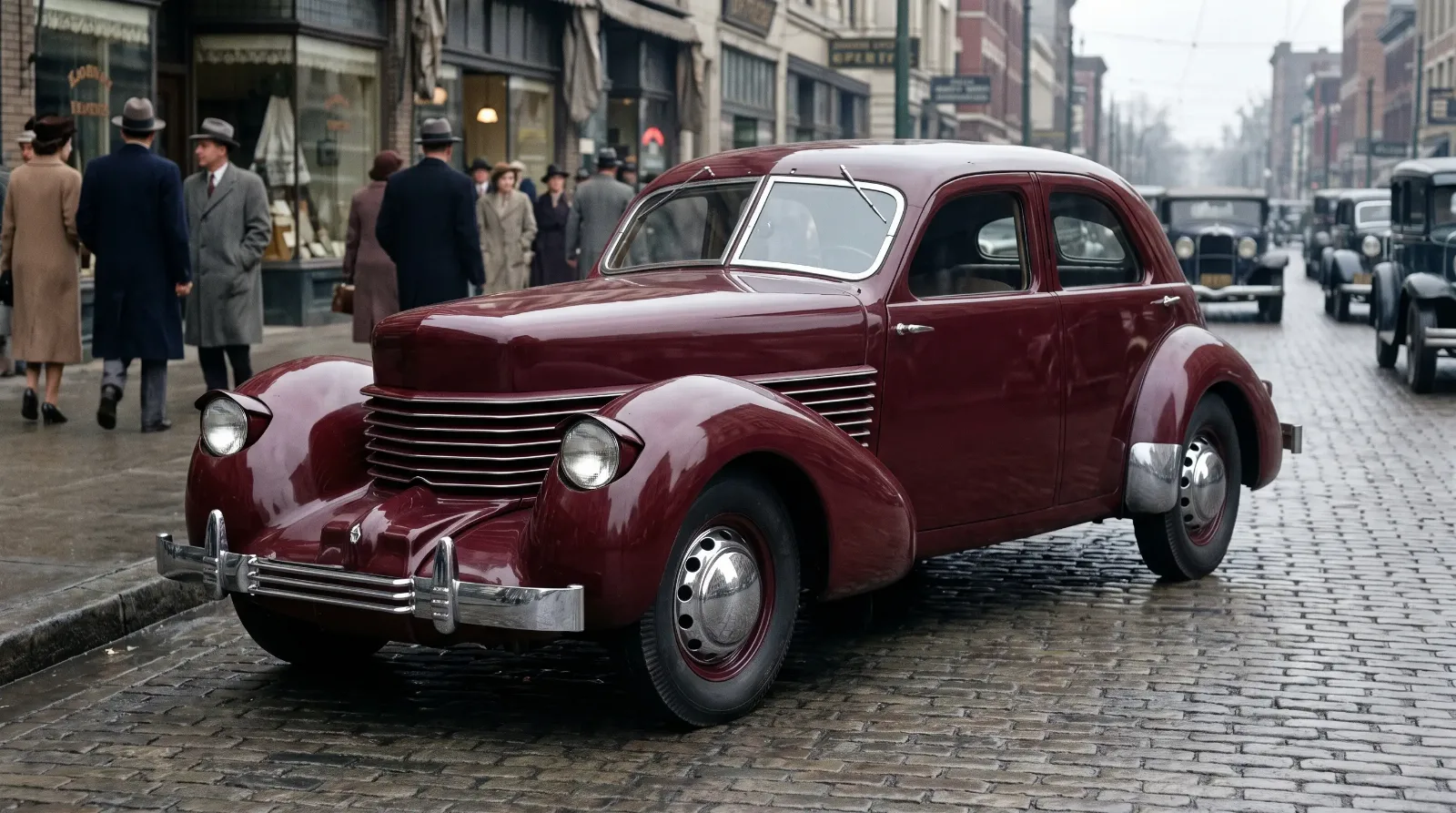
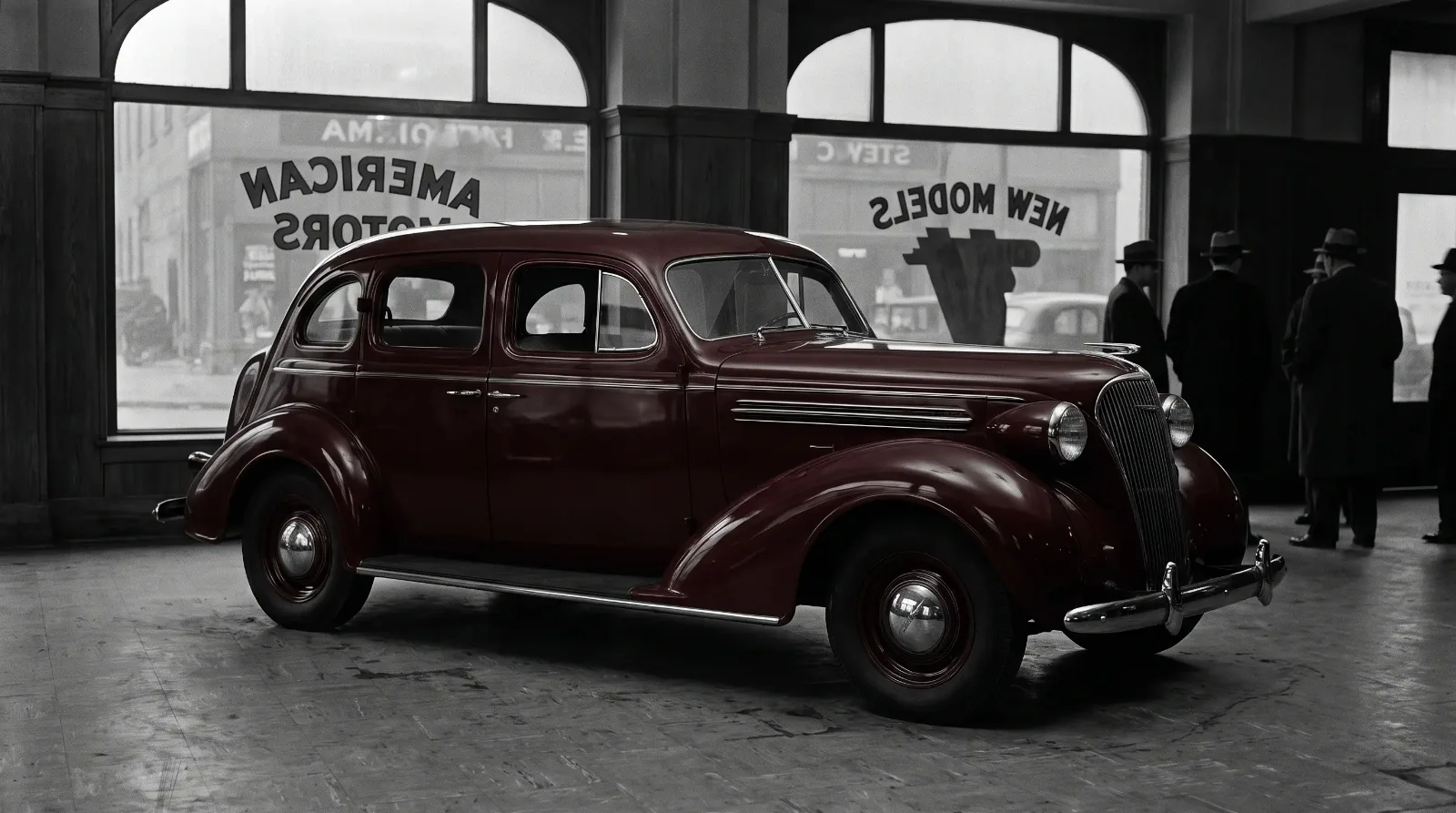
Look at a 1930 car next to a 1939 car from the same manufacturer and they barely look related. The 1930 car is tall, upright, built from flat panels joined at hard angles, still carrying the visual DNA of a horse-drawn carriage in its proportions. The 1939 car is low, wide, its fenders swept back into curves, its grille raked instead of standing bolt upright, its whole body reading as one continuous shape rather than a box with wheels attached.
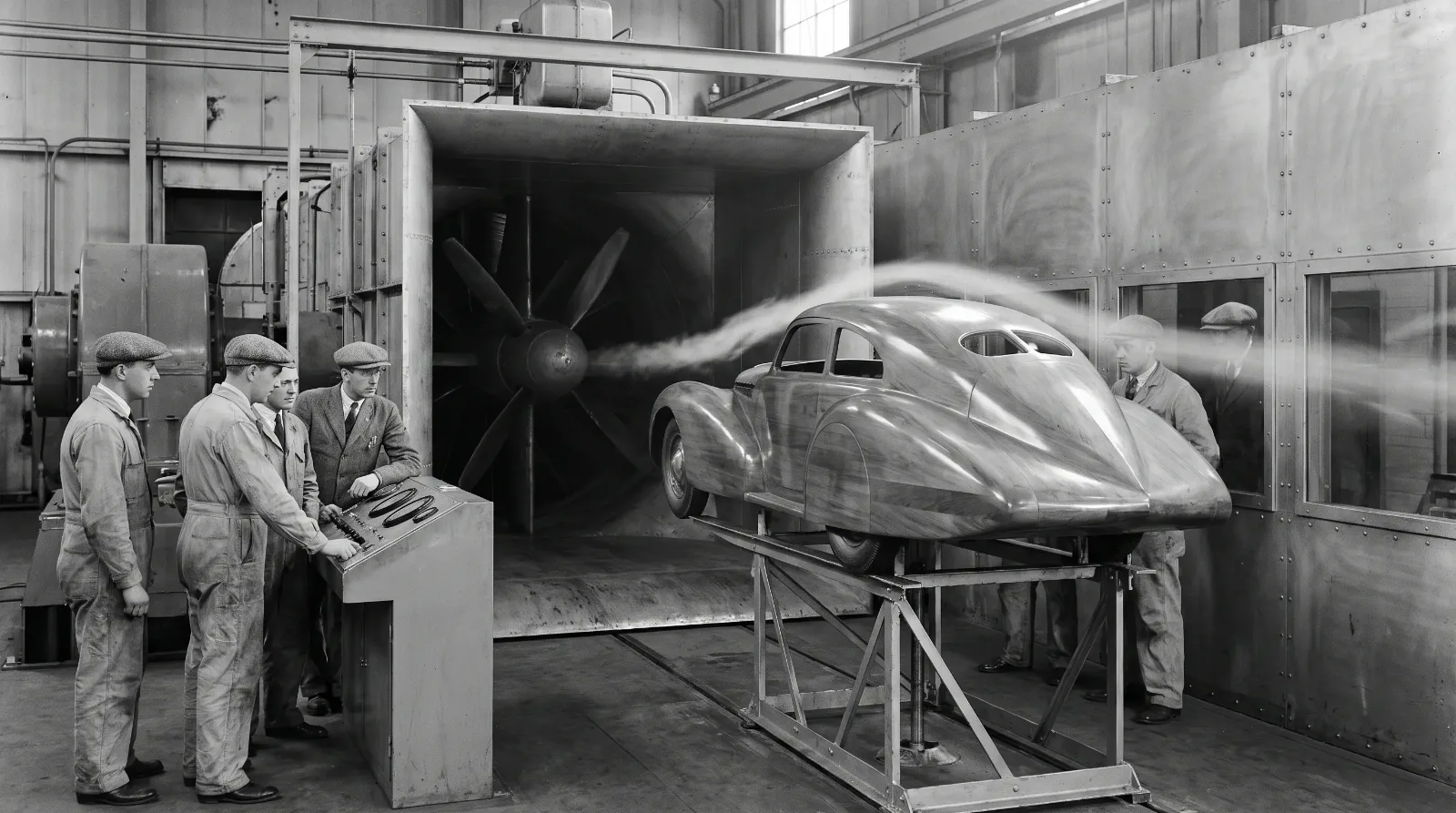
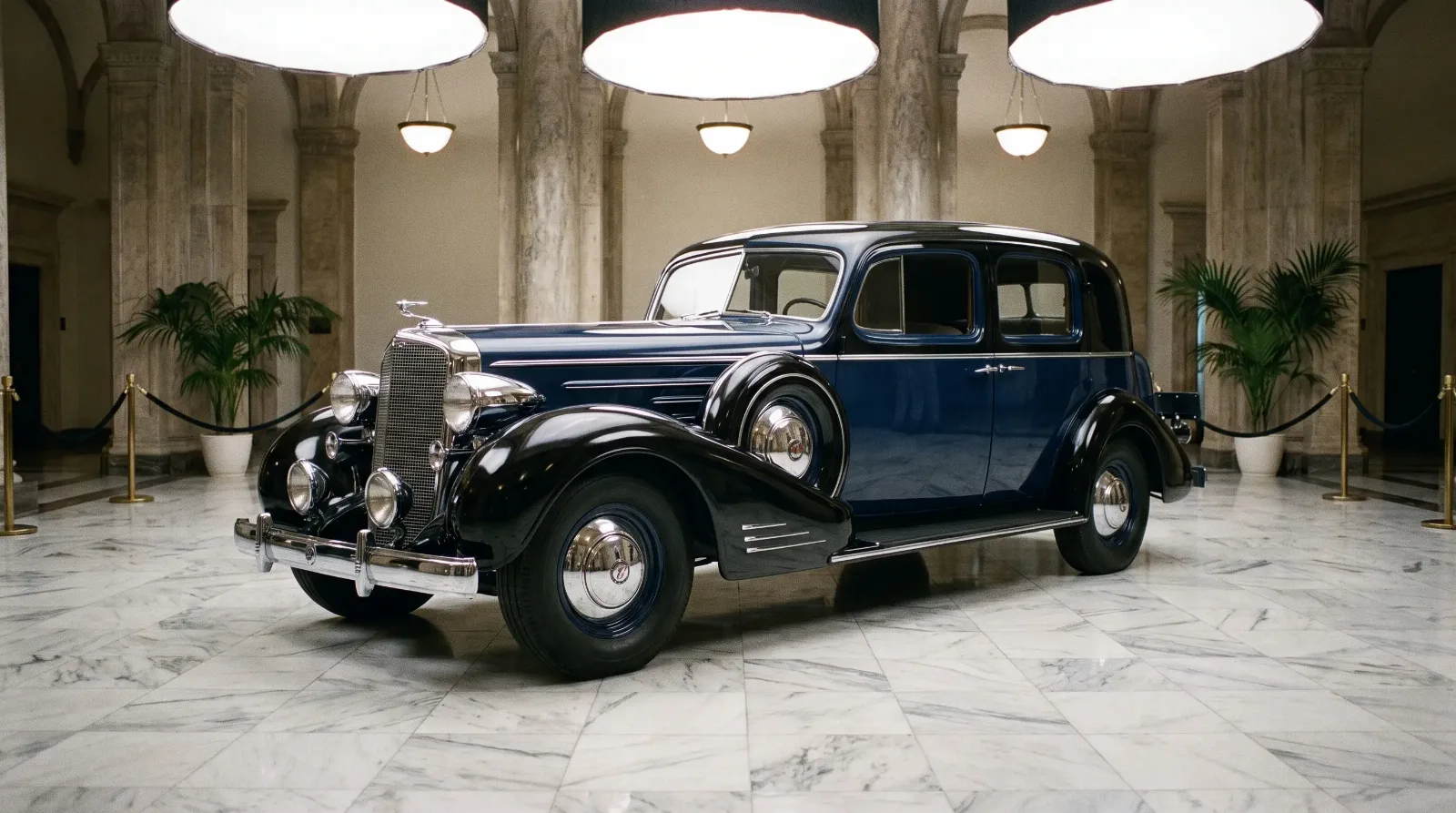
That transformation happened in real time, model year over model year, as different manufacturers pushed different pieces of the same idea forward. Chrysler's Airflow, radical and commercially unsuccessful, forced the whole industry to reckon with genuine aerodynamic thinking even as buyers rejected the car itself. Cord's coffin-nose 810 hid its headlights and buried its grille in horizontal chrome slats, a look so far ahead of its time that people still call it modern today. Lincoln, Packard, and Cadillac each found their own version of the same sweeping, integrated silhouette by decade's end.
Why it could not last
Every golden age ends, and this one ended for a reason bigger than fashion cycling out. The Second World War stopped American civilian car production almost entirely by the early 1940s, and when factories switched back over after the war, the styling conversation had to restart under completely different conditions, different materials availability, different buyer expectations, a different world. The specific creative moment of the 1930s, that particular collision of aviation-inspired theory, new manufacturing capability, and Depression-driven design competition, never quite reassembled itself the same way again.
Postwar cars got their own styling revolutions, plenty of them brilliant in their own right. But the 1930s hold a specific distinction. It was the decade the car stopped looking like assembled parts and started looking like a single deliberate shape, and everything that followed built on that foundation rather than reinventing it from scratch.
| Design element | Early 1930s | Late 1930s |
|---|---|---|
| Body form | Boxy, flat panels | Curved, integrated shapes |
| Fenders | Separate, bolt-on | Swept, blended into body |
| Headlights | Freestanding on brackets | Faired into fenders |
| Grille angle | Upright, vertical | Raked, streamlined |
"I think about that room full of young stylists a lot, arguing over a clay fender in the middle of the worst economy the country had ever seen. They had every reason to play it safe and they didn't. That is the part of the story that stays with me, more than any single car they built."
— Patrick Walsh
For the fuller mechanical and cultural context behind this transformation, our deep dive on 1930s car styling traces how the individual pieces, chassis, engines, materials, all moved together during these years.
Why it still matters
The golden age label gets applied loosely to a lot of eras in a lot of hobbies, but the 1930s earn it in a specific way. It was a moment when a genuinely new visual idea about what a car could look like arrived, proved itself, and then spread across an entire industry inside a single decade, against every economic headwind you could name. That kind of compressed creative leap does not happen often, in cars or anywhere else, and it is why these shapes still stop people in their tracks at a show today. Walk a concours field and watch where people linger. It is rarely the fastest car or the most expensive one that draws the biggest crowd. More often it is a late 1930s coupe or roadster whose lines still read as confident and modern nearly a century later, proof that the design instincts formed in that decade have simply not aged the way most things from the 1930s have. That same forward momentum carried straight into the aerodynamic engineering that followed, and the next installment picks up exactly where the styling story hands off to the wind tunnel.
Sources and notes
- Wikipedia: Cord 810/812
- This Day in Automotive History - end of civilian auto production for WWII
- MotorCities: WWII and the interrupted 1942 models
- Wikipedia: Chrysler Airflow
- Fast Lane Only - why the 1936 Cord 810 still looks advanced
- This Day in Automotive History - Cord retractable headlight patent