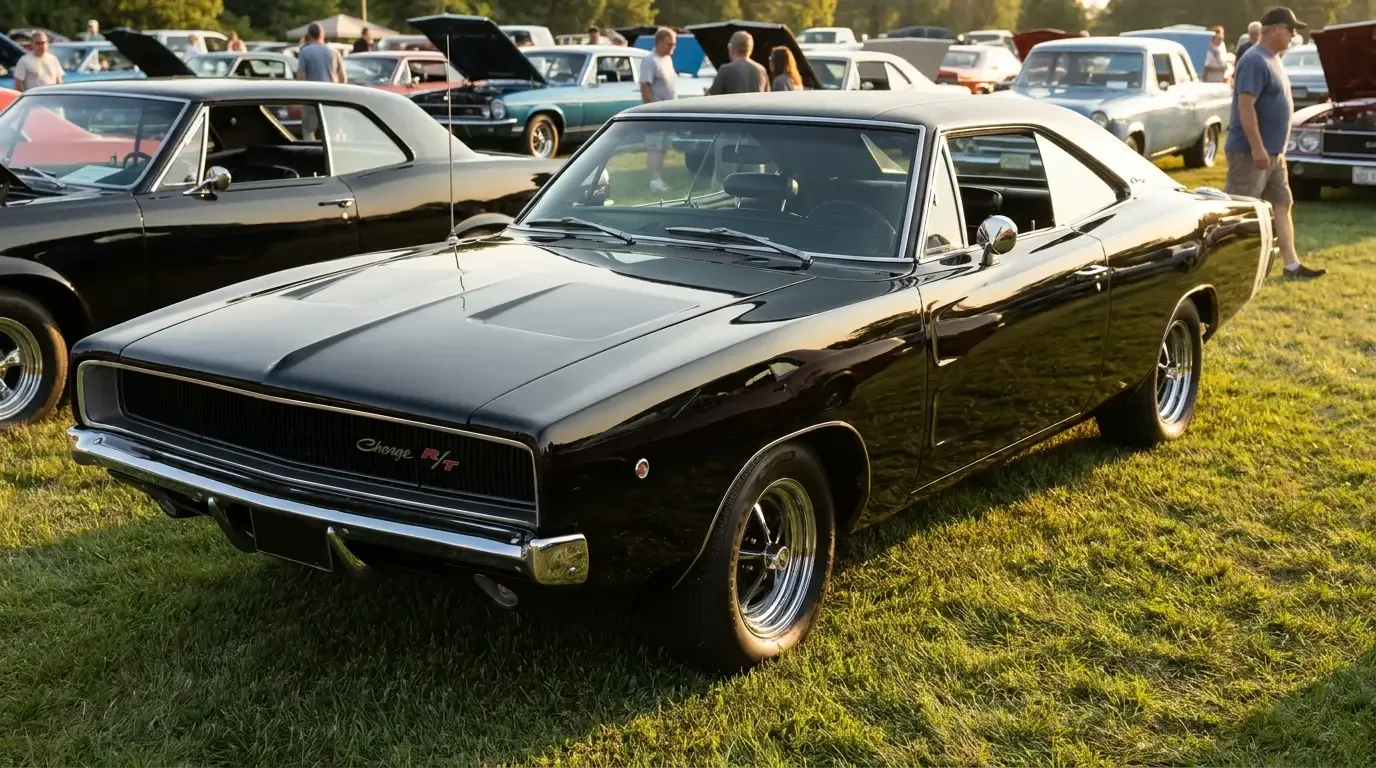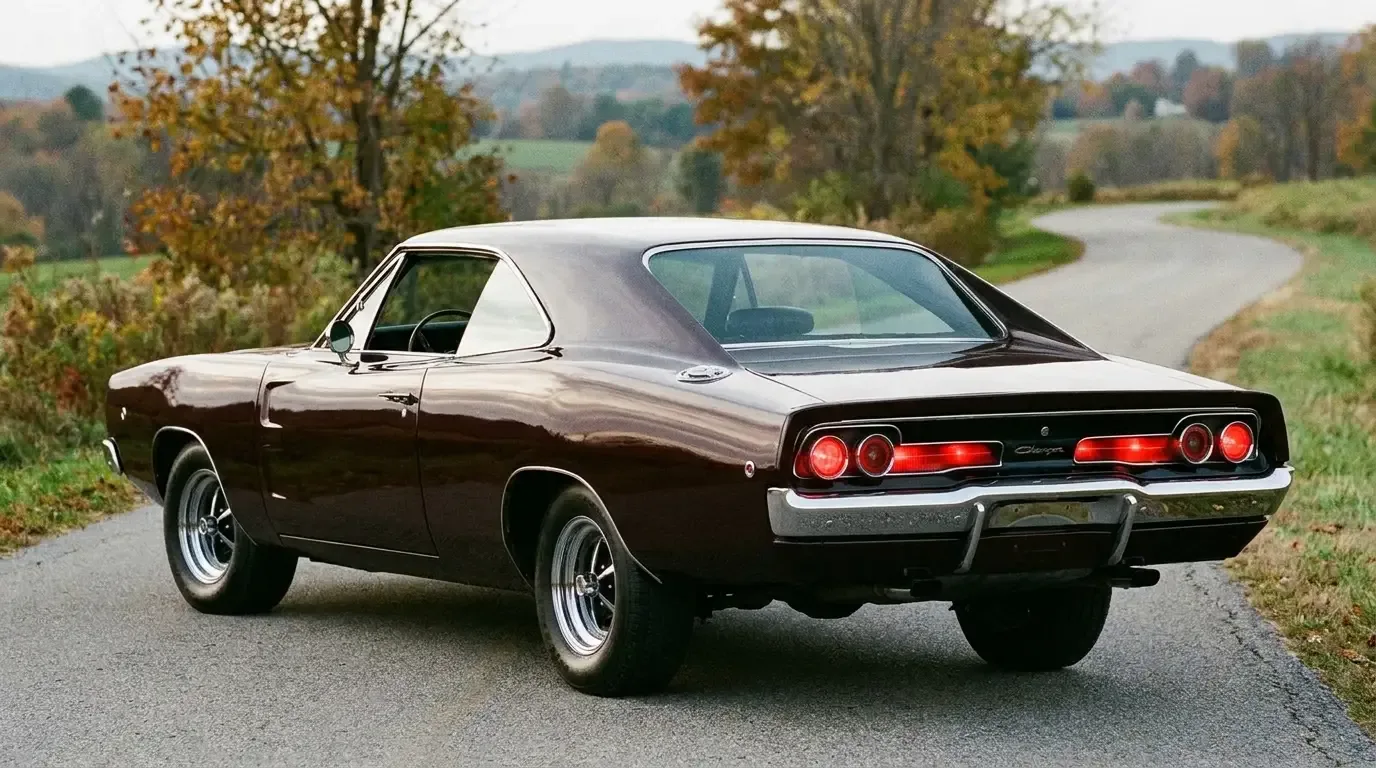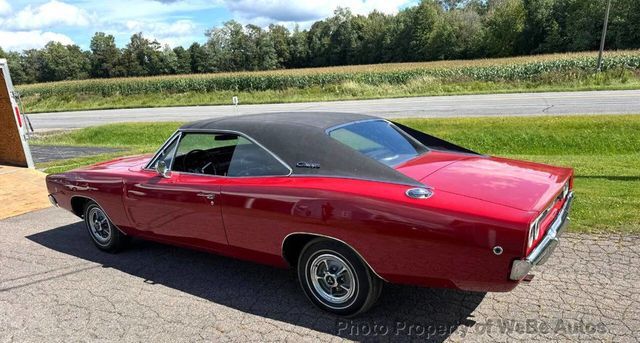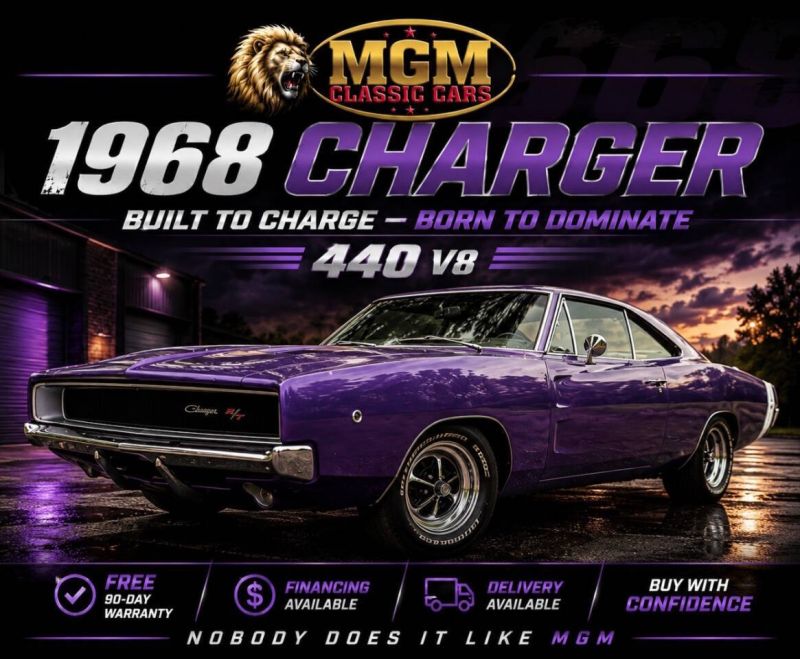
I get asked a lot whether a Charger someone's looking at is really a 1969 or if the seller just guessed. Nine times out of ten, the fastest way to answer that is to walk up to the grille. Dodge changed the front end enough between 1968, 1969, and 1970 that if you know what you're looking at, you can call the year from across a parking lot.
The 1969 grille is the one most people picture when they think "Charger." It's the year Dodge split the grille into two separate halves with a center divider bar, and it's worth knowing exactly what changed and why, because I still see cars advertised with the wrong year's front clip bolted on.
What actually changed on the 1969 grille
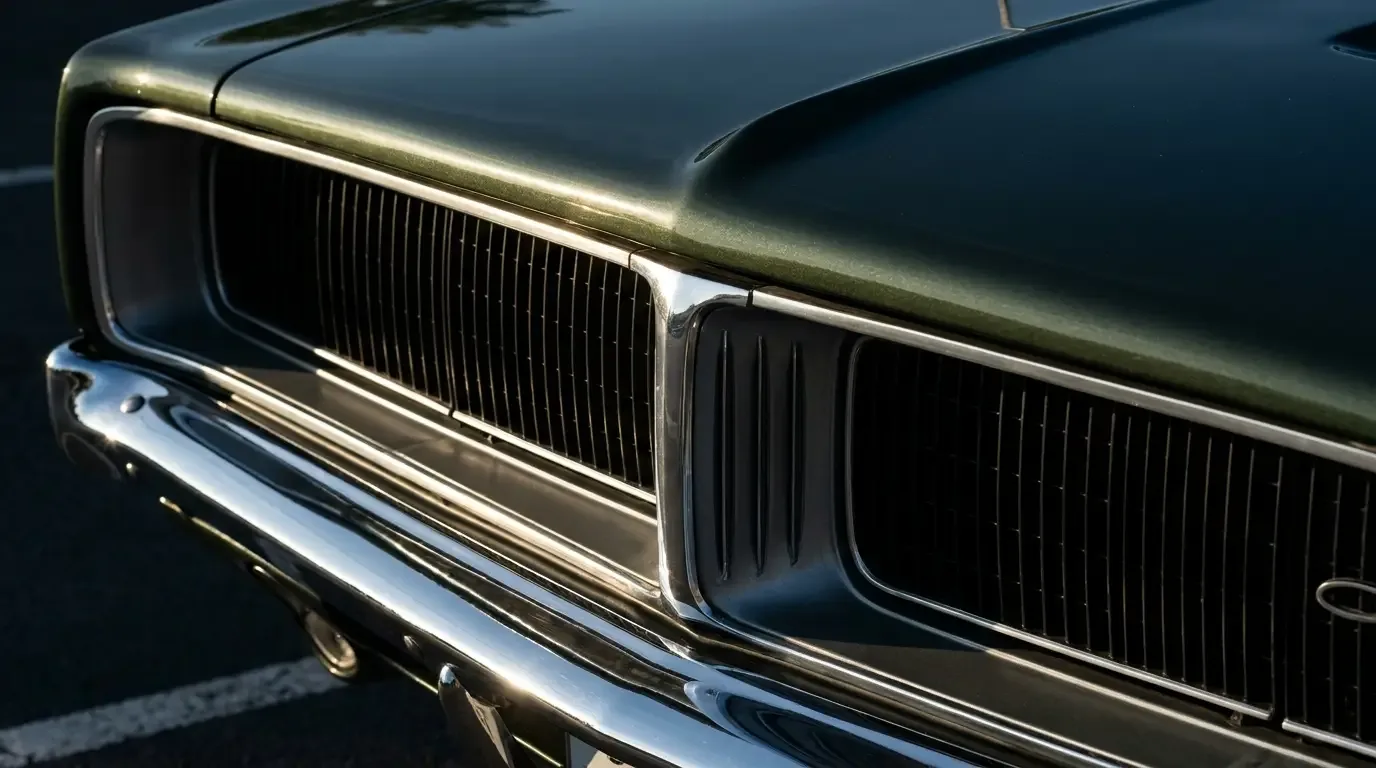
The 1968 Charger ran a single, unbroken full-width grille opening, one continuous horizontal element from fender to fender. For 1969, Dodge split that opening down the middle with a vertical divider, giving the car a two-piece grille look even though it's still a full-width design under the trim. The parking lights also moved, sitting inside the grille itself on the 1969 car rather than being separated from it. It's a small change on paper, but it changes the whole read of the front end from ten feet away, the 1968 face looks like one wide mouth, the 1969 face looks like two. The hidden headlight doors carried over as a concept from 1968, vacuum-operated covers that swing open when you turn the lights on, but Dodge revised the door shape and the surrounding trim ring to fit the new split-grille opening. That means headlight door parts are not universally interchangeable between 1968 and 1969 cars without also swapping the surrounding grille trim, something I've seen trip up more than one restoration.
Why the split-grille design exists
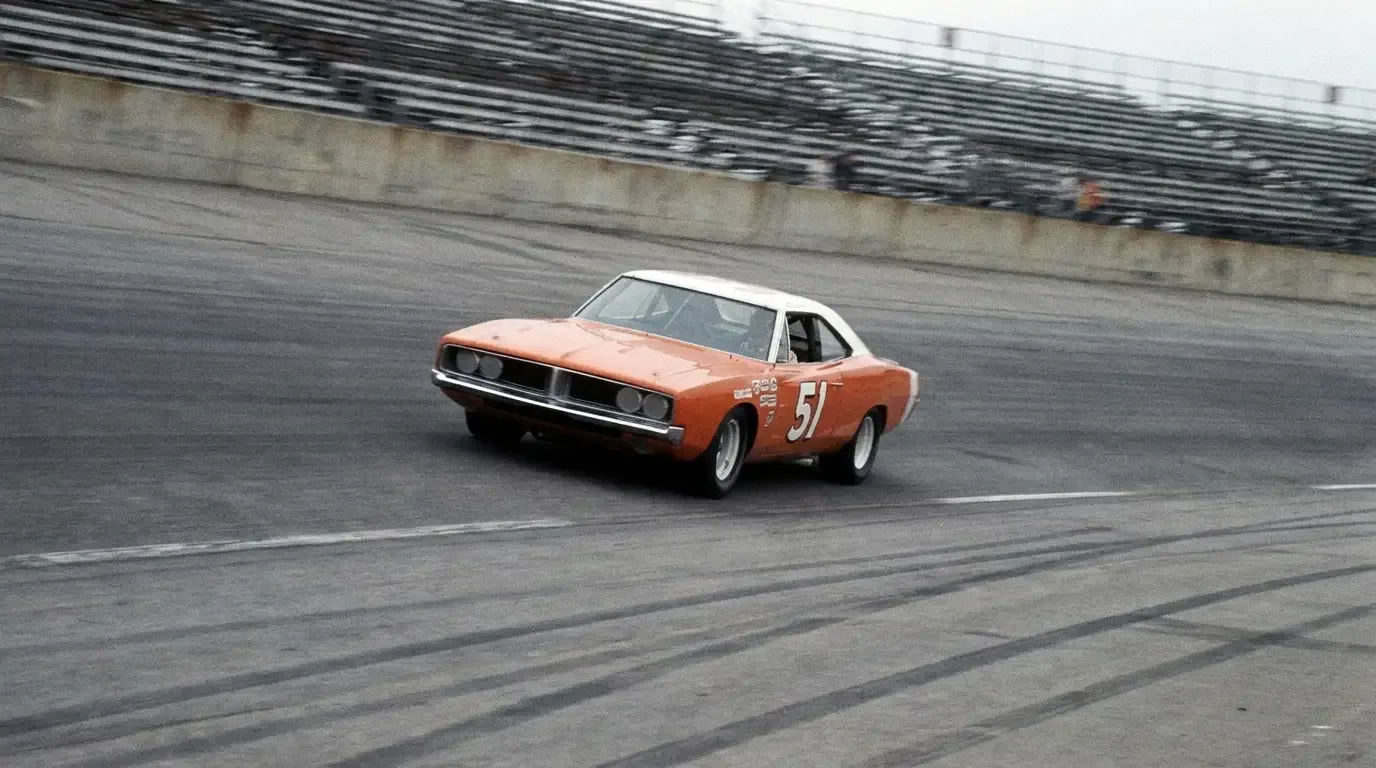
Some of this was straightforward styling refresh, the kind of yearly cosmetic update every manufacturer did to keep a model looking current without a full redesign. But there's also a practical piece to it. The center divider bar gave Dodge a place to mount a more prominent Charger badge and the bumblebee-adjacent trim elements that helped separate the base Charger from the R/T version at a glance, at least from the front. Buyers cross-shopping trim levels on a crowded showroom floor could tell cars apart faster with the split face than they could with 1968's single opening. That connection matters if you're researching this year deeply. the Charger feature on Classic Cars Arena covers how Dodge took this same basic grille shape and reworked it into a flush, non-recessed front end for NASCAR homologation purposes, ditching the hidden headlights entirely on that specific model in favor of exposed lights mounted flush to the nose. If a "1969 Charger" you're looking at has a flat, flush front end with visible headlights and no hidden headlight doors at all, you're not looking at a standard car, you're looking at a 500, and the price should reflect that.
Common problems on the standard 1969 headlight system
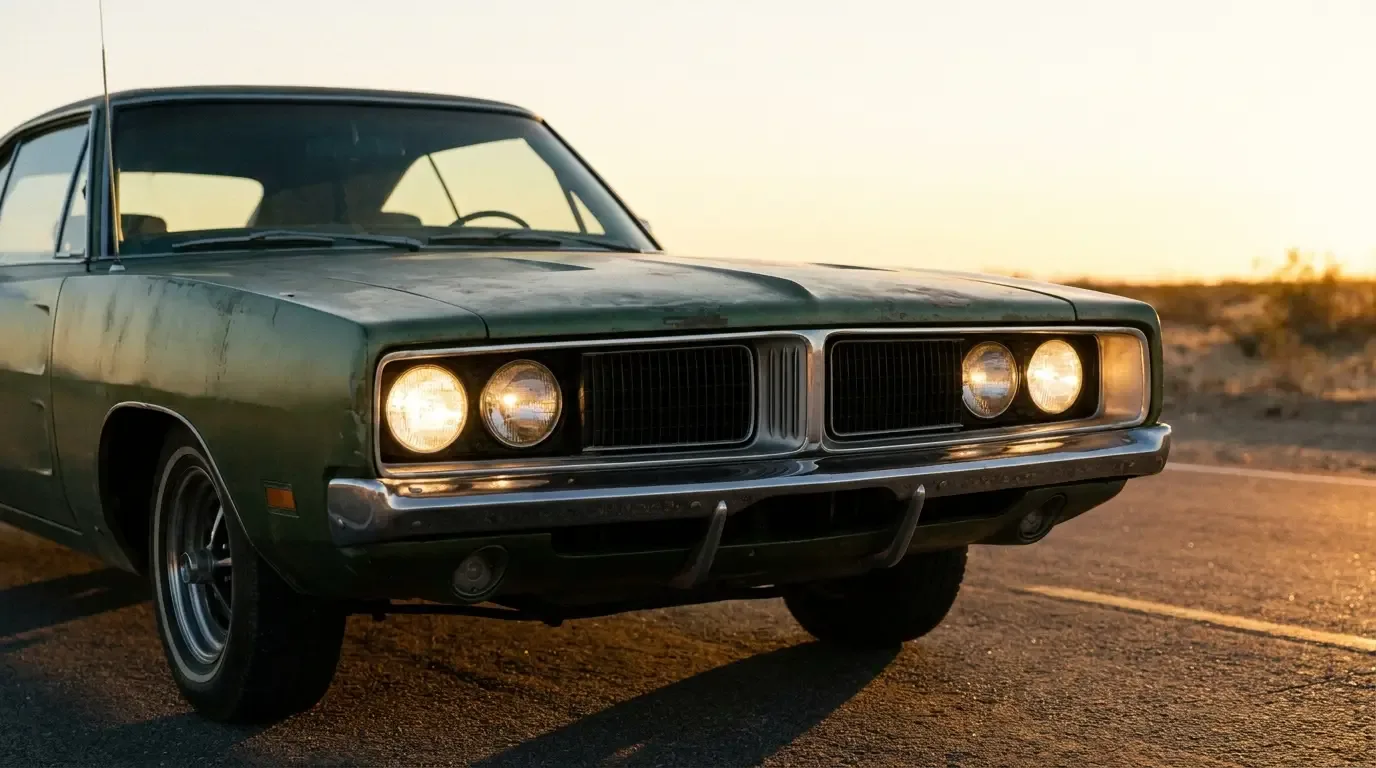
The vacuum-operated headlight doors are the piece I check first on any 1969 Charger, standard or R/T. The system runs off engine vacuum through a canister and a set of hoses that route from the intake manifold area up to the door actuators behind the grille. Fifty-plus years of dried-out rubber means a lot of these cars have at least one line with a leak, which shows up as doors that open slowly, only partially, or not at all. The fix is usually cheap, new vacuum line and a fresh check valve, but I've also seen actuators themselves seize up from age, which is a bigger job involving removing the grille section to access them. When you're looking at a car, cycle the headlights on and off a few times with the engine running, not just with the key in accessory position, because the system needs actual engine vacuum to work correctly, and a car that "sort of" opens its doors on battery vacuum alone might test fine on a cold start and then fail once it's actually running.
Grille condition and reproduction parts
The die-cast grille surround on these cars is another spot I check closely. It's chrome-plated pot metal, and pot metal doesn't like fifty years of parking-lot dings and freeze-thaw cycles any better than it liked them new. Pitting and bubbling under the chrome is common, and while reproduction grilles exist for the 1969 car, fitment and finish quality vary a lot between suppliers. A grille that doesn't sit flush against the header panel, with gaps that aren't consistent side to side, is a tell that either the reproduction part is a poor fit or it's been reinstalled after bodywork without being properly aligned.
Comparing years side by side
If you want the full year-by-year rundown of how the grille, taillights, and trim changed across the whole run, this story lays out the complete picture for 1968 through 1970. But for a quick field check on a 1969 specifically: look for the split grille with the center divider, parking lamps set into the grille opening rather than below it, and hidden headlight doors that should be symmetrical and full-width when closed. Anything that deviates from that, especially a flush non-recessed front end, means you're looking at a different model or a car that's had front-end work done that doesn't match its factory configuration. If you're actively shopping this generation, it's worth cross-referencing what you find against classic 1970 Chargers too, since the 1970 grille changed again, and knowing all three years cold means nobody can talk you into paying 1969 prices for a car that's actually something else.
Trim badges and how they interact with the grille
One more detail worth checking is how the Charger's trim badging sits relative to the grille opening on a 1969 car. The center divider bar gave Dodge a natural mounting point for badging and R/T identification that the single-piece 1968 grille didn't have in the same location, and cars that are missing this hardware, or have it mounted somewhere that doesn't match factory photos, are worth a closer look before you assume everything else lines up correctly. I've walked away from cars over less than this, not because the car was necessarily wrong, but because a seller who can't explain a mismatched detail usually can't explain the next one either. A quick gut check I use: does the grille trim look like it was designed for this specific opening, or does it look like something adapted to fit. Factory parts have a fit and finish that reproduction and adapted trim rarely matches perfectly, especially around the divider bar and the parking lamp housings. Spend the extra five minutes here before you write a check, because the front end is the first thing every appraiser and every future buyer is going to look at too.
Sources and notes
- Wikipedia: Dodge Charger (1966) - the 1968-70 hidden-headlight front end and the grille changes across the three model years.
- American Muscle Car Museum: 1969 Charger 500 - the 500's flush Coronet grille and fixed headlights that replaced the standard recessed split grille.
- ConceptCarz: Dodge Charger - year-to-year grille and front-end differences on the second-generation car.
- Muscle Car Facts: 1968 Charger - the 1968 single-opening grille baseline that the 1969 split grille departed from.
- Classic Industries: Mopar production numbers - 1969 Charger production context.