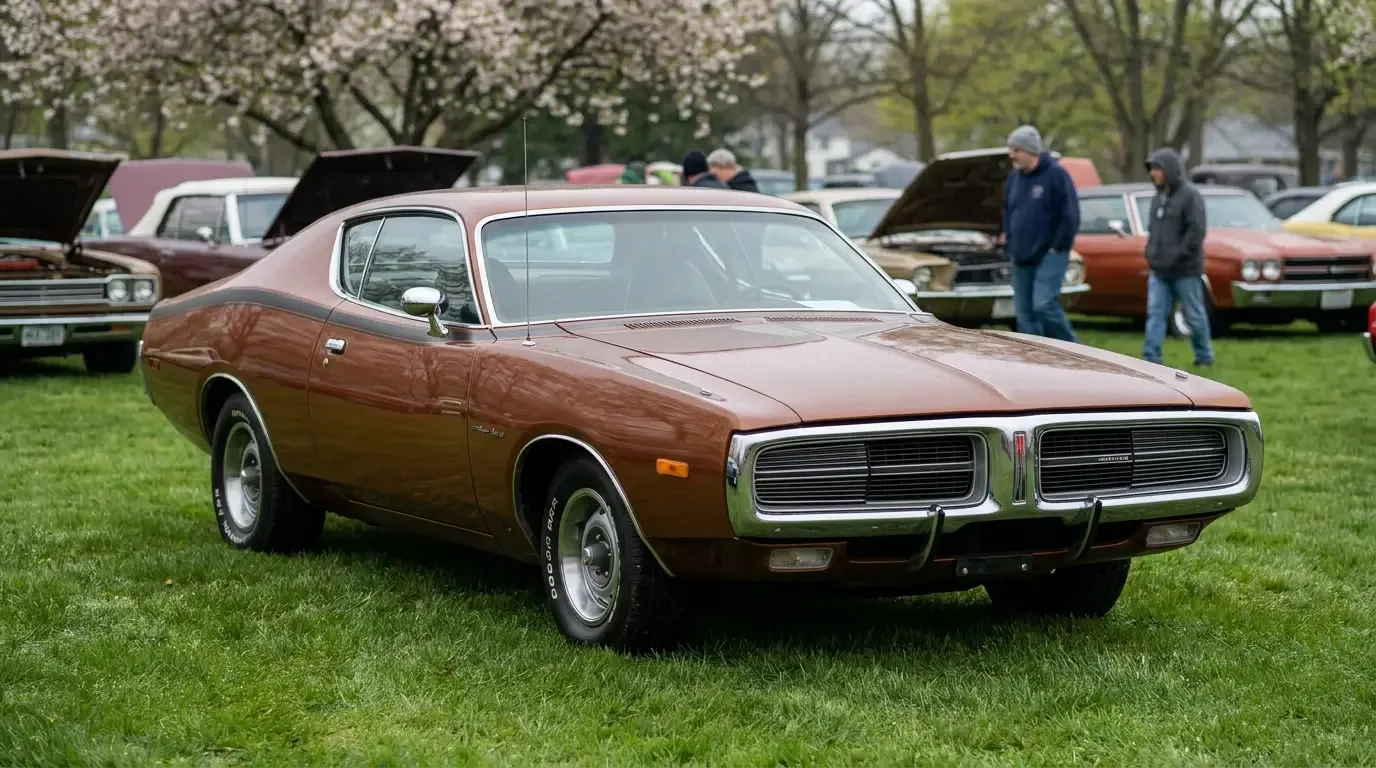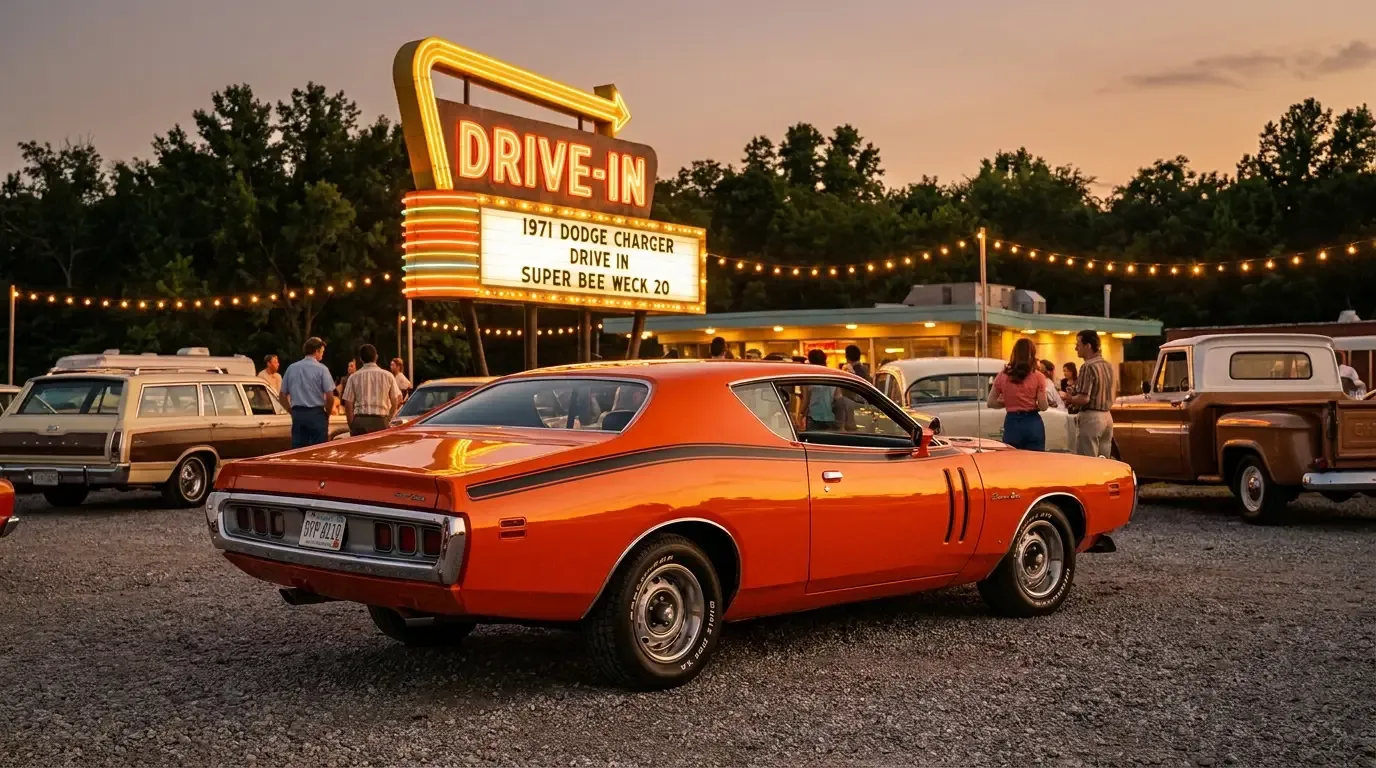
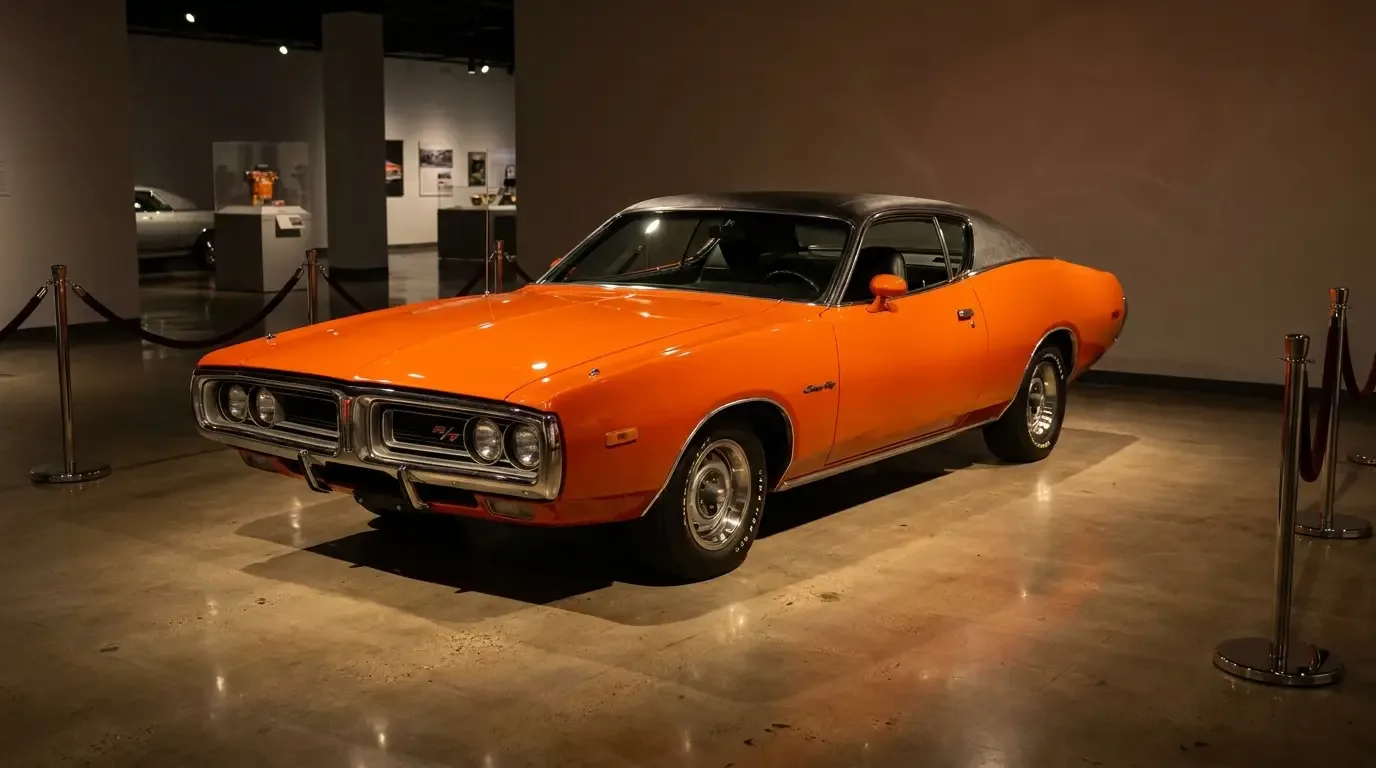
The 1971 Charger R/T was the last one built. That's the headline. Everything else is detail. After this model year the R/T badge disappeared from the Charger lineup entirely, and the number that matters most here isn't a horsepower figure. It's the production count, and it's low.
Dodge sold the R/T as the top performance trim on the fuselage-bodied Charger for 1971, but the muscle car market was already contracting. Insurance companies were raising premiums on anything with a big-block under the hood, and buyers who wanted a fast Dodge had more than one badge competing for their money that year, including the Super Bee package riding on the same body. The R/T lost that fight in the showroom, and the sales numbers back it up.
The production numbers tell the real story
Roughly 3,100 Charger R/Ts left the factory for 1971, down sharply from the prior year's total, which itself was down from 1969. That's not a small dip. That's a trend line pointing in one direction, and it's the actual reason this was the last year for the badge. Dodge didn't kill the R/T because it stopped being fast. They killed it because fewer people were buying it.
The standard engine was the 440 Magnum making 370 hp gross, with the 440 Six Pack and the 426 Hemi available as options. Hemi take rates on the R/T were already tiny by 1971, just 63 cars built, because the engine's price premium and insurance impact had become hard to justify against a 440 that gave up relatively little in real-world performance for a lot less money.
| Engine | Gross Horsepower (1971) | Notes |
|---|---|---|
| 440 Magnum | 370 hp | Standard R/T engine |
| 440 Six Pack | 385 hp | Three two-barrel carbs |
| 426 Hemi | 425 hp | Rare option, only 63 built |
"The blower looks great on the invoice. On the dyno it made twelve more horsepower than the combo that cost a third as much. That's the number that matters."
— Dan Reeves
Why the numbers dropped so fast
Three things hit at once. Insurance surcharges on high-horsepower engines got steeper every year starting around 1969. Gas prices hadn't spiked yet in 1971, that came later in the decade, but emissions regulations were already tightening compression ratios and reducing rated output across the board. And the buying public's taste was shifting toward cars like the Charger SE, which offered a plusher interior and softer image instead of a stoplight-to-stoplight mission.
You can read that shift in the numbers directly. The SE trim outsold the R/T that year, and it wasn't close. Buyers were choosing comfort over quarter-mile bragging rights, and Dodge's own sales figures reflect that choice more honestly than any magazine road test from the period.
What this means for buyers today
Low production numbers cut both ways in this market. A genuine 1971 R/T with matching numbers is a legitimately rare car, and the price reflects that scarcity. But scarcity also means fakes and clones exist, since a Super Bee or base Charger can be dressed up with R/T stripes and badges without much trouble. The fender tag and broadcast sheet are non-negotiable if you're paying R/T money.
The gap between a documented numbers-matching Hemi R/T and everything else isn't a small percentage. It's a different tier of car entirely, and the price difference reflects a much smaller surviving population, not just nostalgia. Buyers chasing that specific combination should expect to pay for verified paperwork, not a seller's word.
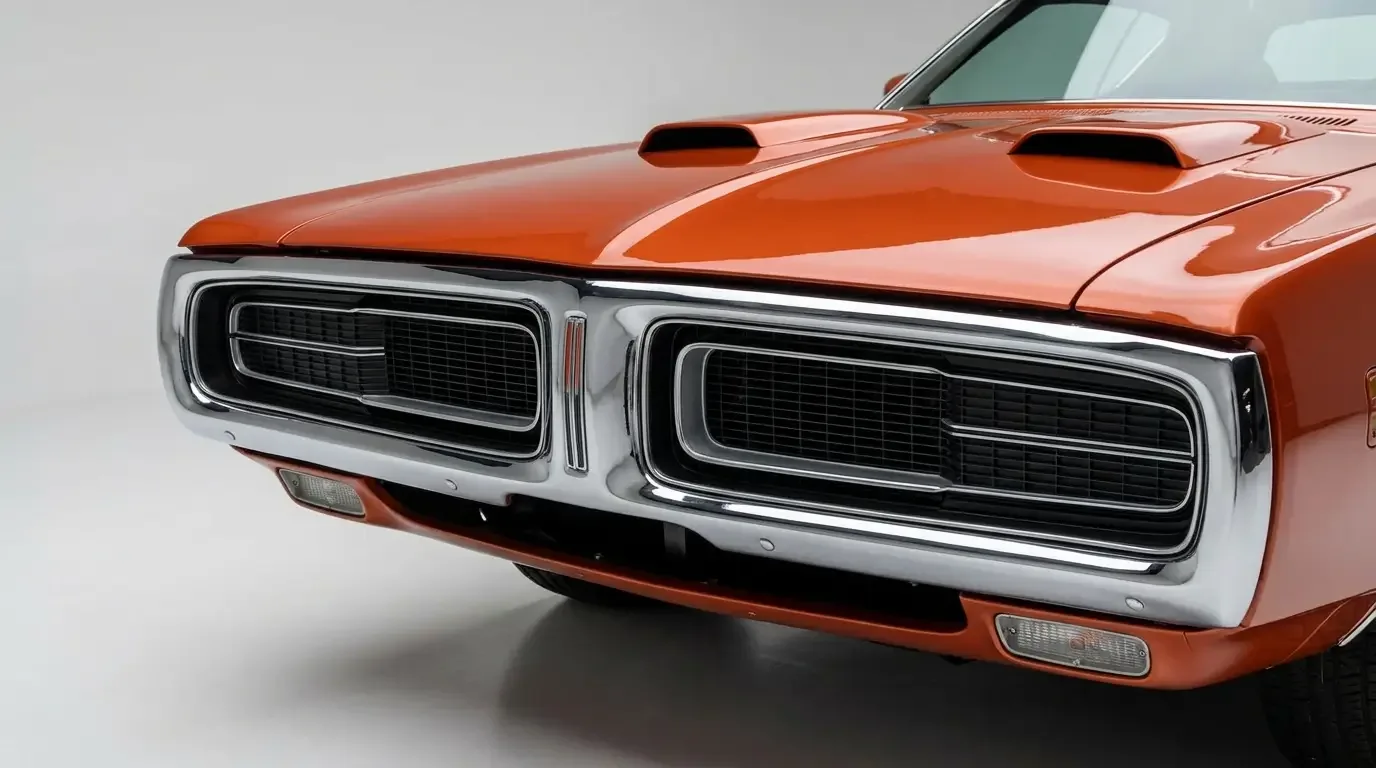
I've written the fuller context on this generation, including where the R/T's body sat relative to the rest of the lineup, in the Charger feature on Classic Cars Arena. For the badge's broader performance arc across the muscle years that led up to this final season, the Charger R/T story traces where the R/T came from. If you want the styling details specific to this model year, including the grille that set the 1971 car apart from the 1970, the 1971 Charger Grille story covers that ground directly.
The badge that quietly ended
Dodge didn't put out a press release marking the end of the R/T. It just stopped appearing on the order sheet the following year, replaced by trims with softer names and softer intentions. The numbers from 1971 are the closest thing to an obituary this badge got, and they're blunt about what happened. Fewer buyers wanted it, so Dodge stopped building it.
What replaced the R/T and why it wasn't the same car
The Rallye package that showed up on the 1972 order sheet inherited some of the R/T's suspension hardware and handling intent, but it wasn't built around the same engine commitment. The R/T guaranteed a big-block under the hood as standard equipment. Rallye was available across a wider range of engines, including small-blocks, and that's a meaningful difference if you're trying to understand what actually separated these two trims rather than just treating one as a renamed version of the other.
That distinction matters when you're comparing production numbers across years too. A drop in R/T-badged cars from 1970 to 1971 doesn't necessarily mean the same drop in overall Charger performance-trim sales, since some of that demand shifted into Rallye and Super Bee configurations rather than disappearing outright. The R/T name specifically declined faster than the broader performance-car category it represented.
The bigger lesson from the R/T's final year isn't really about one car or one badge. It's that production numbers are a more honest measure of a model's fate than nostalgia usually allows. The R/T didn't fade because it stopped being a good car. It faded because the market that supported it had already started disappearing, and the 1971 sales figures are the clearest paper trail of exactly when that happened.
Sources and notes
- DodgeGarage - Hemi Charger R/T for 1971 - confirmed only 63 Hemi R/Ts were built and 1971 was the Hemi's last year.
- Street Muscle - 1971 Charger R/T 426 Hemi - confirmed 1971 R/T production near 3,100 units and the $707 Hemi option price.
- Wikipedia - Chrysler B/RB engine - confirmed 1971 gross ratings: 440 Magnum 370 hp, 440 Six Pack 385 hp.
- Wikipedia - Dodge Charger (B-body) - confirmed 426 Hemi 425 hp gross and 1971 as the final R/T year.
- Silodrome - 1971 Charger R/T 440 Six Pack - background on R/T rarity and clone risk in today's market.