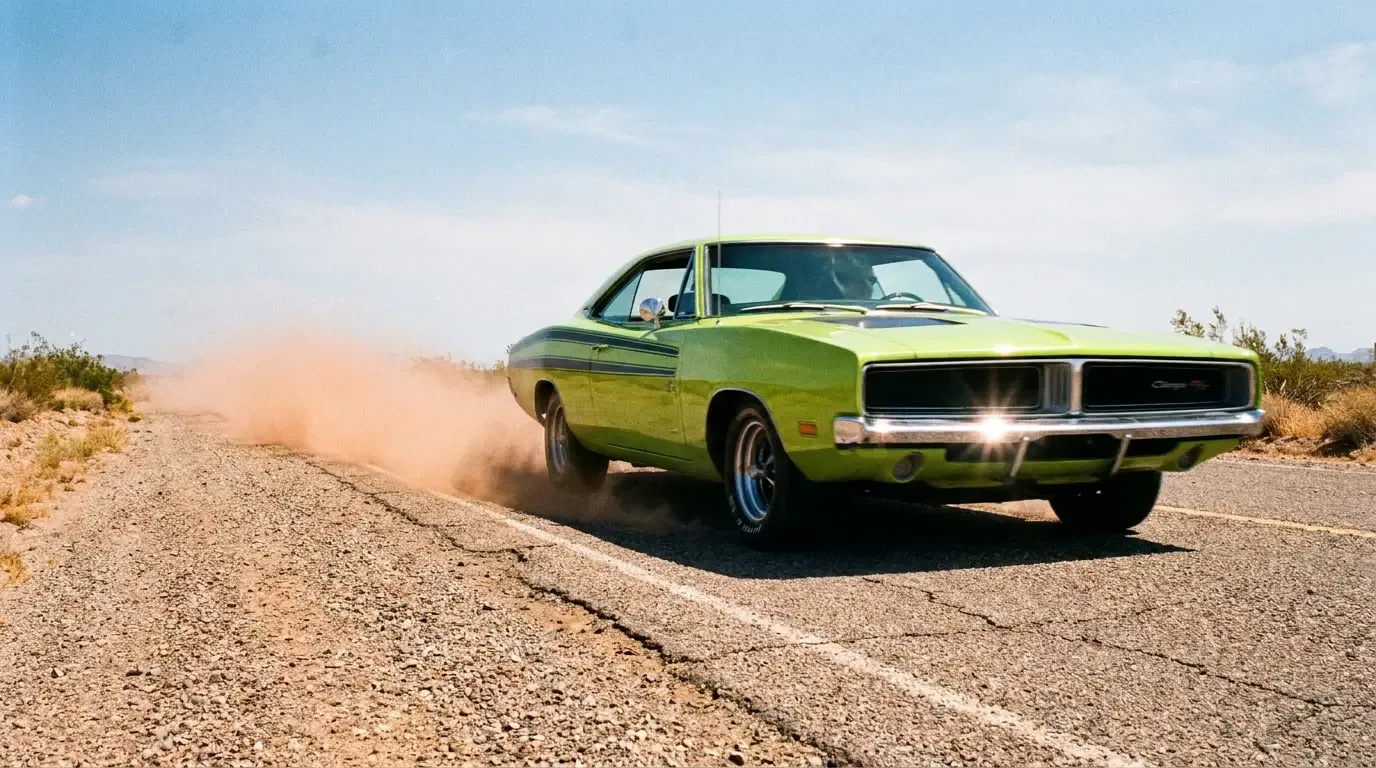
The film opens on a diner and a robbery and two people who don't yet know how the next ninety minutes will end for them. It's the Charger that carries most of it, a lime-green 1969 R/T that spends more screen time in motion than either lead actor spends standing still. "Dirty Mary Crazy Larry," released in 1974, wasn't a box office giant when it came out, but the car in it has outlasted almost everyone's memory of the plot.
The car itself, not a stunt double
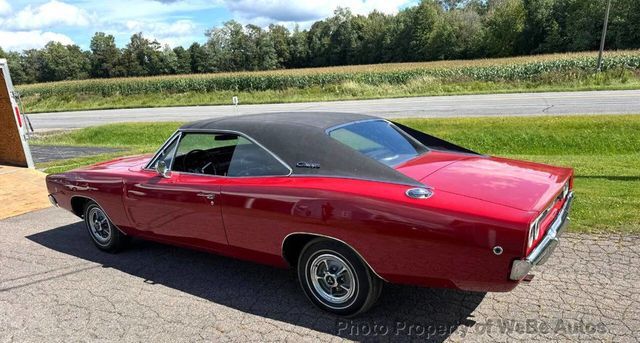
The production used three Dodge Chargers for the film, as most car chase movies of the era did, since stunt work destroyed vehicles faster than any single car could survive a shooting schedule. The hero car, the one used for close-ups and beauty shots, was an authentic 1969 Charger R/T with a 375 horsepower 440 Magnum, backed by a 1969 non-R/T and a 1968 car pressed into stunt duty. Larry, played by Peter Fonda, drives it with the kind of casual confidence that made the character believable even when the plot got thin. It wears the coke-bottle body of the 1968-1970 Charger, and the film leans on exactly the shape that made that generation of Charger recognizable at a glance.
What's notable watching it again now is how ordinary the car looks parked. It's not slammed, not chromed out, not built for a magazine cover. It looks like a car someone actually owned and drove hard, which is part of why the chase sequences land. The Charger in this film reads as a real object moving through real terrain, not a prop built to look fast while standing still.
A chase filmed the hard way
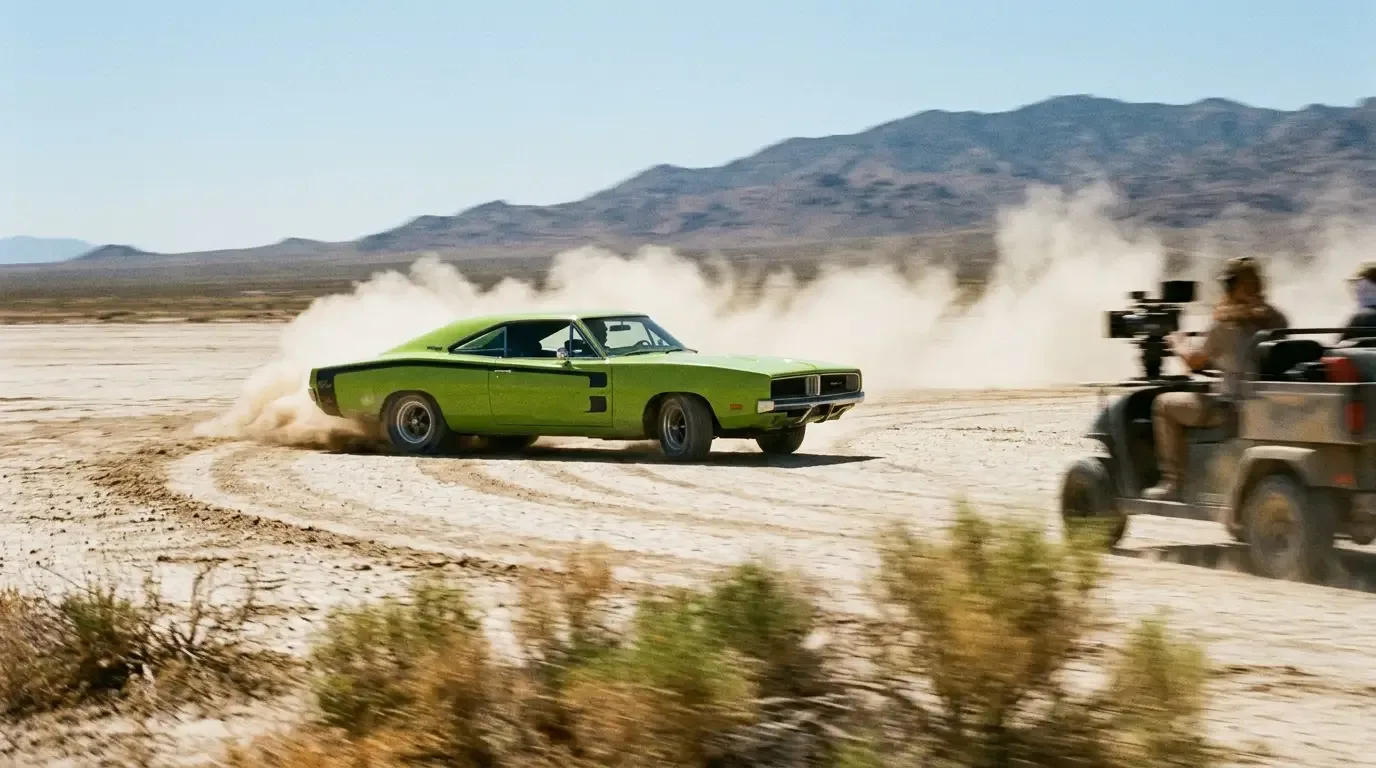
The extended highway chase near the end of the film was shot largely with real cars at real speed, without the layers of editing trickery that later chase films leaned on. Stunt coordinators pushed the Charger and the pursuing vehicles through open roads and dry lakebeds, and some of what's on screen is simply a car being driven fast by someone who knew what they were doing, filmed from a following vehicle rather than assembled from dozens of short cuts.
That approach meant real risk to the cars and the stunt drivers, and it's part of why "Dirty Mary Crazy Larry" still gets brought up by people who care about car chase filmmaking specifically, even those who've never seen the rest of the movie. The Charger holds up on screen because the car itself was actually doing what the camera shows.
The color that reads oddly on old prints
The Charger wasn't subtle. All three cars wore Dodge's Limelight, a High Impact lime green sometimes cataloged as Citron Yella, with black racing stripes the crew painted on by hand rather than ordering from the factory. If you saw the film on an early print or a first run television airing and remember the car as more yellow than green, that isn't your memory failing. Color timing in the early 1970s was done by eye, and whoever graded this film timed the green tint out of the paint, apparently reading it as a lighting error. Later DVD and Blu-ray releases restored the correct lime green shade the cars actually wore on set.
A color that loud could have pulled the eye toward the paint and away from everything else. Instead, the plain, unbadged presentation and the desert and open highway backdrops kept the attention on the bodywork itself, the long hood, the low roofline, the way the fenders curve into the doors. Watching the restored version now, it's easy to see why the car left a stronger impression than the plot did, green and all.
The performances built around the car
Susan George and Peter Fonda carry the human side of the story, two people running from consequences they created for themselves, but the film gives the Charger its own kind of presence too. It's rarely shot as simply a means of transportation. The camera lingers on it parked, on it accelerating, on the interior as the characters argue over what to do next. That attention is part of why the car left a stronger impression on some viewers than the plot resolution did.
What happened to the actual cars
Like most movie cars from this period, the exact fate of the hero Chargers used in production is murky. Some film cars from the era were sold off after shooting wrapped, some were scrapped once the stunt work had taken its toll, and documentation on exactly which VIN did which stunt rarely survived studio paperwork from the time. The car destroyed in the train finale was an engineless shell rigged for the stunt, while collectors and film car researchers have chased leads on the surviving examples over the years, with varying degrees of confidence in what they've found.
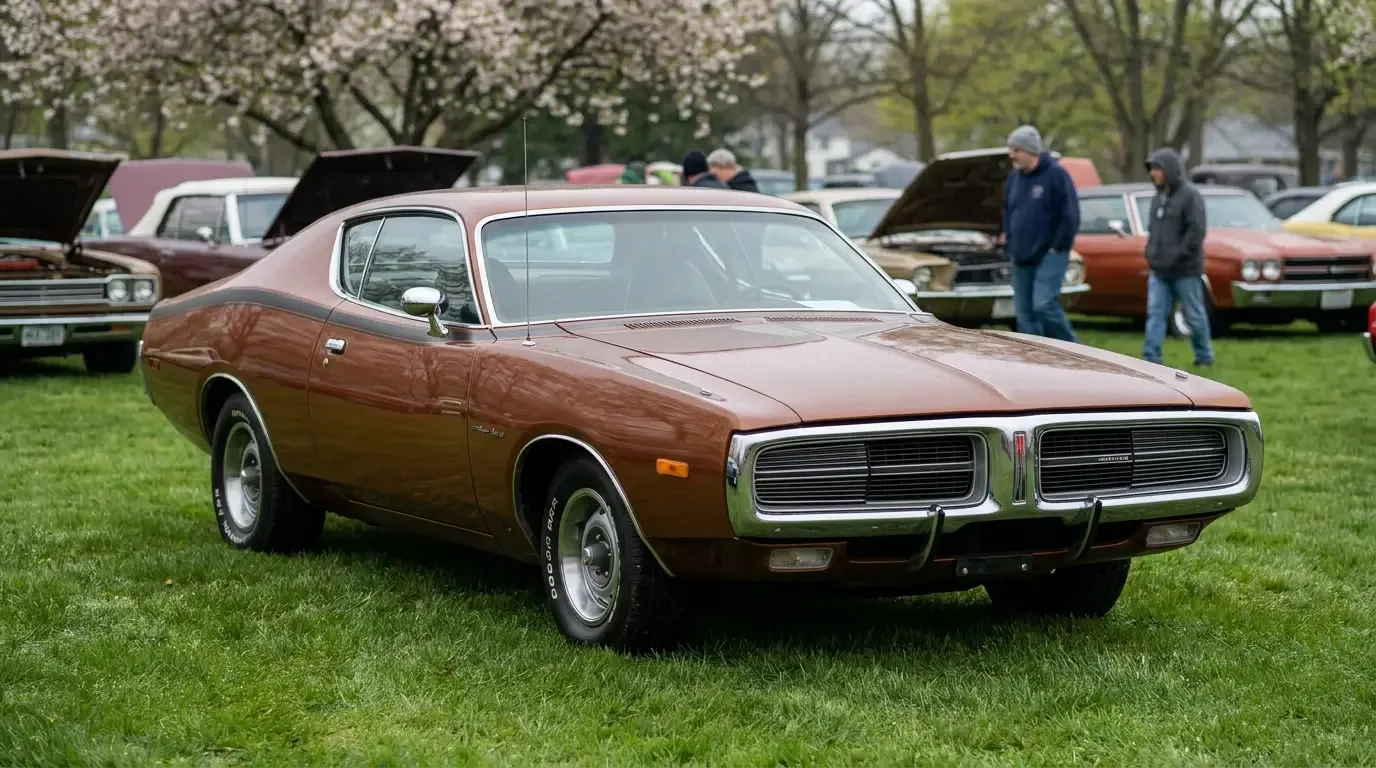
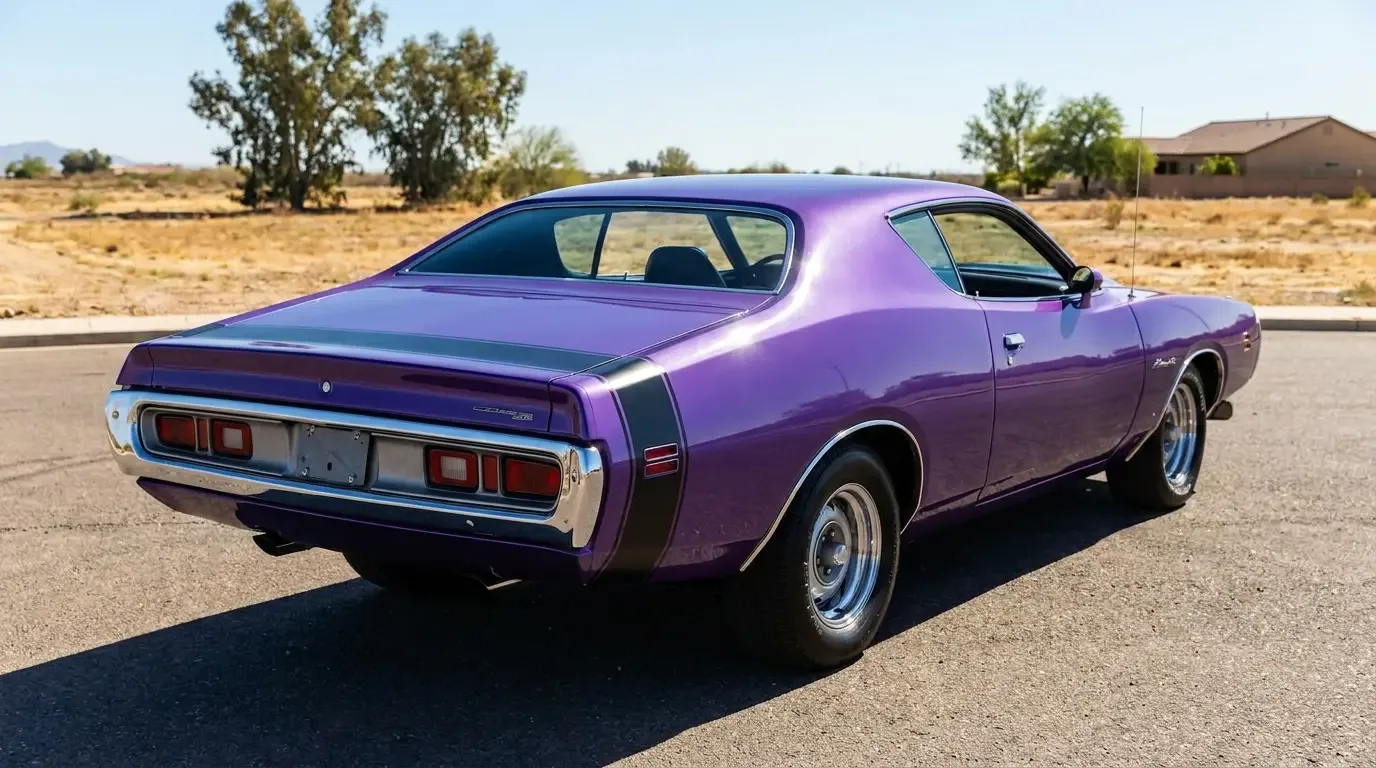
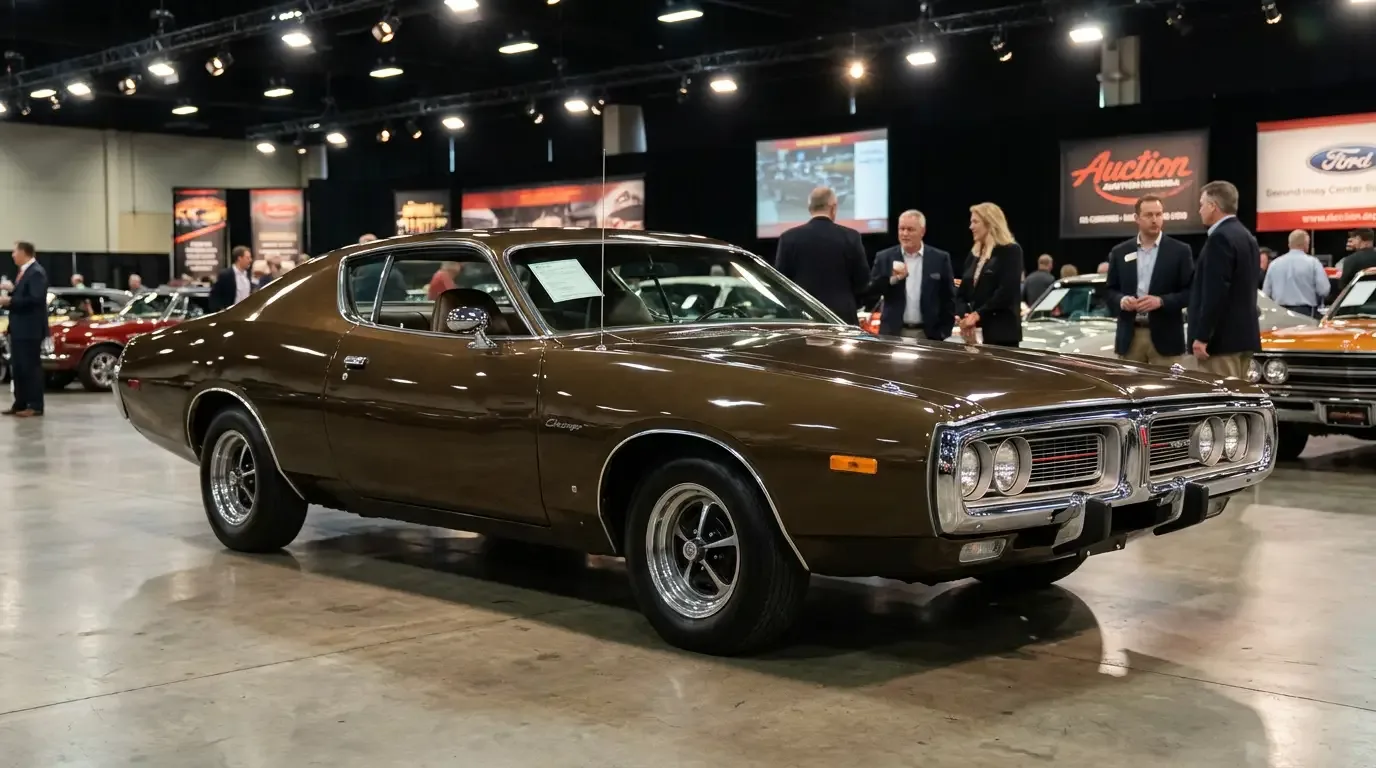
That uncertainty hasn't stopped the film's lime-green 1969 R/T from becoming a reference point for anyone building or restoring a tribute in the same spec. By the time the movie reached theaters in 1974, the Charger had already moved on to the 1971 dodge charger fuselage body, a softer and larger car than the one tearing across the screen, which is part of why the film fixed the earlier shape so firmly in muscle car memory.
"She kept the car in the barn for eleven years before she could sell it. When I asked her why she finally let it go, she said the movie had nothing to do with it. She just needed the space. But she remembered watching that film in a theater in 1974, and she said the car on screen looked exactly like the one in her barn, and that was enough to keep her from selling it sooner than she did."
— Nora Beckett
The car's place in the wider story
Movie cars don't always help a model's reputation with serious collectors, and Charger values have moved on factors that have little to do with any single film. Still, appearances like this one kept the third generation Charger in public memory during decades when the model wasn't fashionable among buyers chasing earlier, more storied years of the nameplate. For a closer look at how later Chargers were undervalued in the market, read more here on why those cars sat quietly priced for so long relative to what they actually offer.
The Charger has shown up on screen more than almost any other American car of its era, from television chases to feature films like this one. That broader thread, including the cars that became far more famous than this one ever did, is covered in the Charger in pop culture story, which traces the nameplate's strange path from showroom floor to screen icon.
Sources and notes
- Dirty Mary, Crazy Larry - Wikipedia - confirmed the car as a 1969 Charger R/T, the three cars used (two 1969 and one 1968), and the train-crash ending's cable rig and two-shot filming.
- IMCDb: 1969 Dodge Charger R/T 440 in Dirty Mary Crazy Larry - confirmed the exact car identification and 440 engine.
- BAMF Style: Crazy Larry's 1969 Charger - confirmed the Citron Yella / Limelight lime-green paint, hand-painted black stripes, and 375 hp 440 Magnum spec.
- Street Muscle: The '69 Charger from Dirty Mary, Crazy Larry - corroborated the color-timing story and the hero versus stunt car roles.
- IMDb: Dirty Mary Crazy Larry trivia - confirmed the engineless rigged Charger and the two separate crash shots.