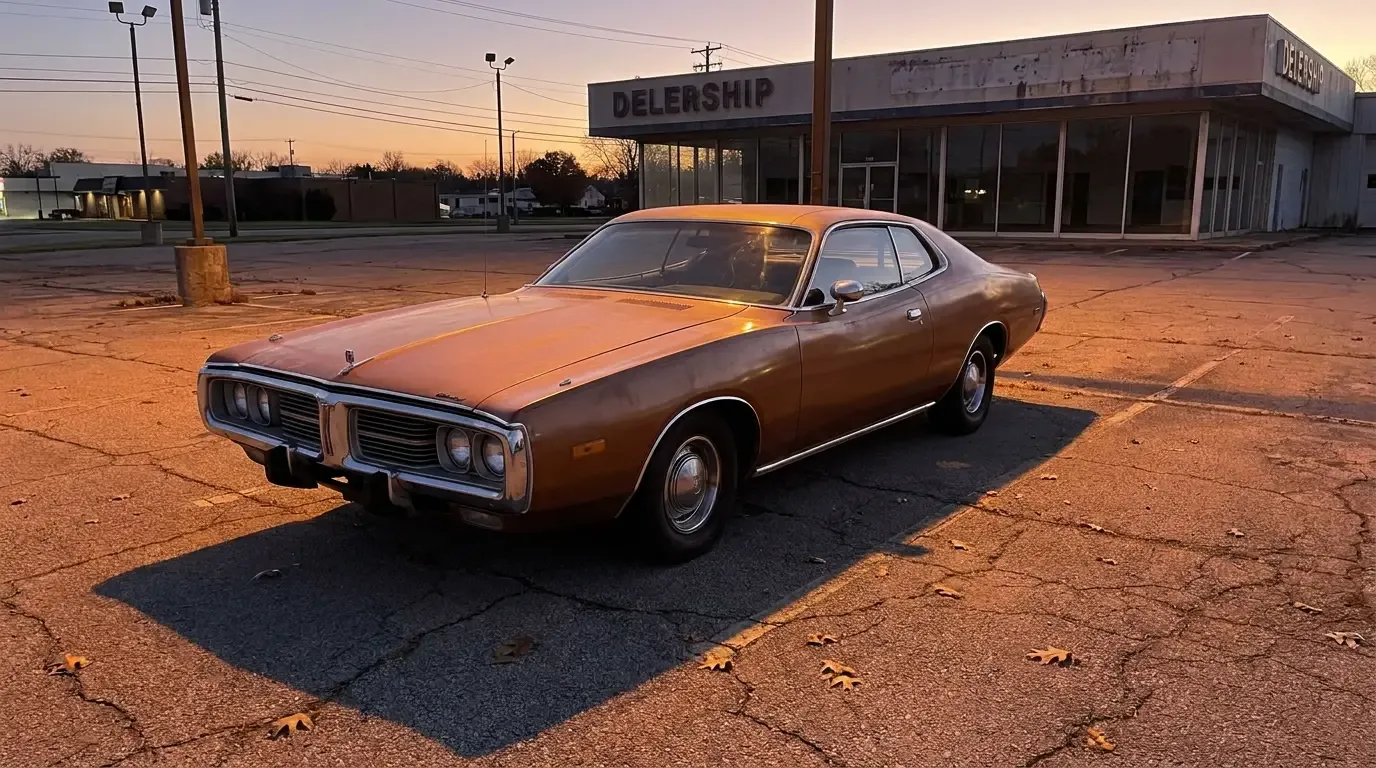
The guy at the dealership in the fall of 1973 probably didn't know he was selling the last of something. Nobody stamps "final year" on a window sticker. He just had a Charger to sell, same as the year before, same brochure format, same handshake at the end of the test drive. It's only in hindsight that 1974 reads as the closing chapter of a body style that had defined Dodge's muscle car identity for three straight years.
A model year that didn't know it was the end
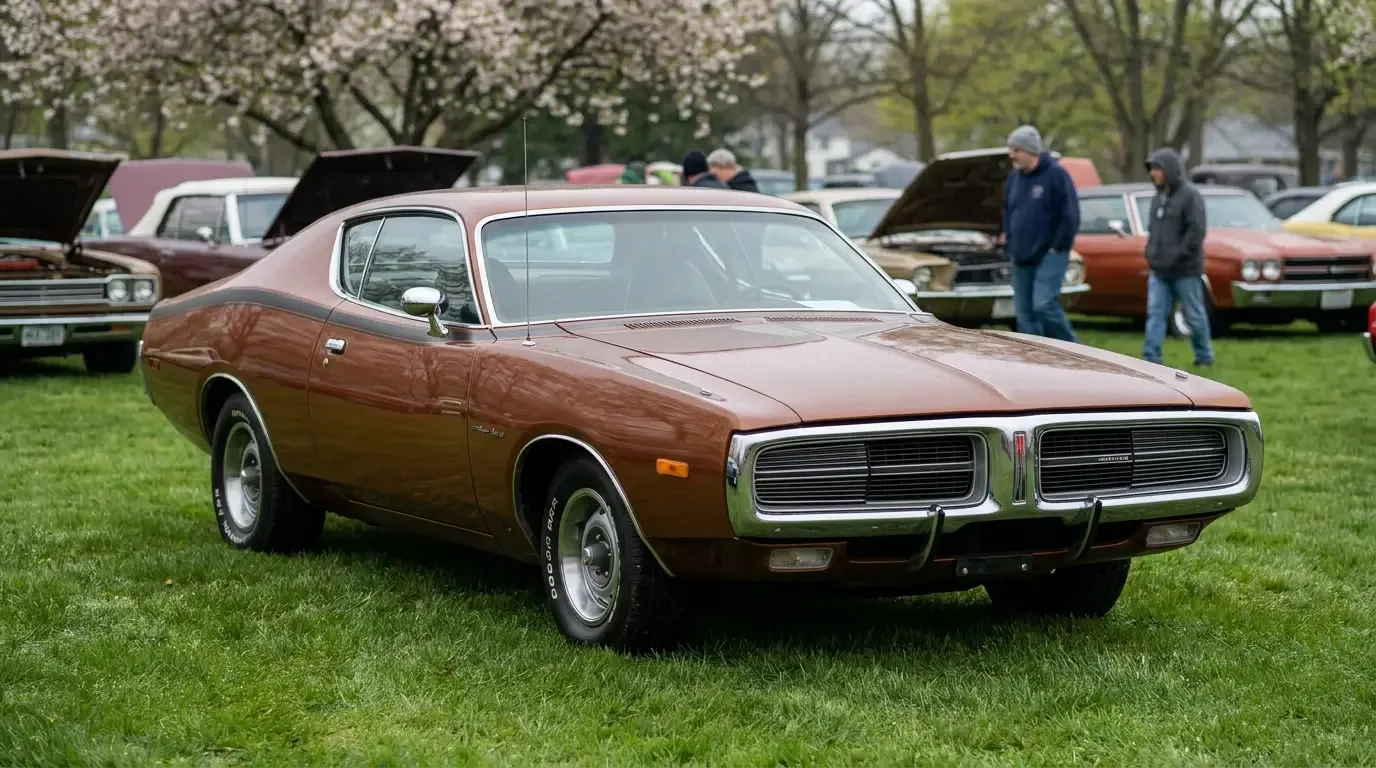
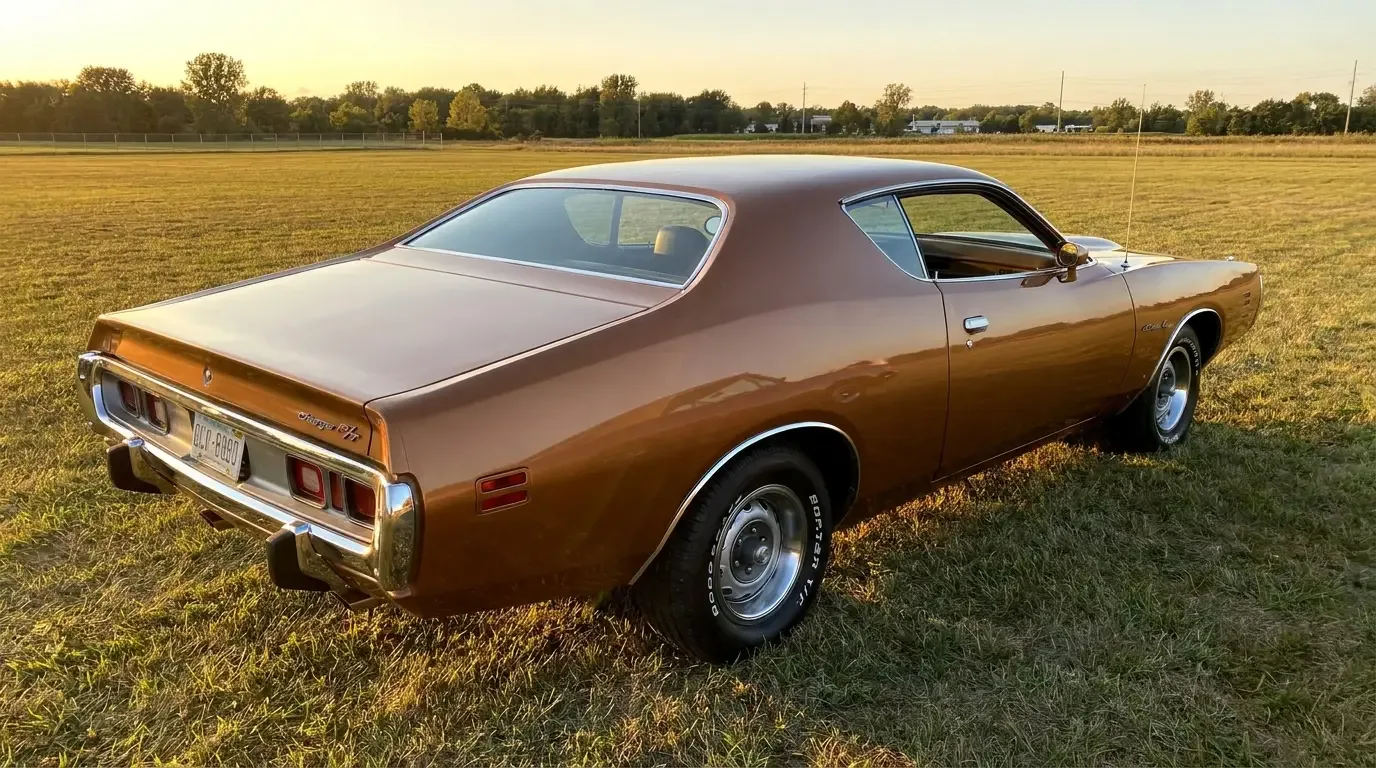
Nothing about the 1974 Charger's launch suggested Dodge saw the finish line coming. The car carried forward the same fuselage body that debuted for 1971, with modest trim and bumper updates to meet new federal impact standards, and the lineup still included performance oriented trims alongside the SE. Dealers sold it as a continuation, not a farewell. You have to look at what came after, the shift to the Charger nameplate landing on a Chrysler Cordoba based platform for 1975, to understand that 1974 was quietly the last of something specific: the last two door Charger built on the B-body platform that had carried the name since 1966.
For anyone new to this stretch of the car's history, the fuselage Charger chapter covers how that body came to be in the first place, which is worth understanding before diving into how it wound down.
What changed and what stayed the same
The 1974 model carried updated front and rear bumpers designed to absorb low speed impacts under new federal regulations, giving the car a slightly heavier looking face than the 1971 and 1972 versions. Underneath, the engine lineup had already been trimmed by the loss of the 426 Hemi after 1971, leaving the 440 Magnum as the performance ceiling, now further constrained by tightening emissions equipment that reduced output year over year across the whole industry, not just at Dodge.
The fuselage shape itself, the rounded fenders and low beltline that made this generation instantly recognizable, remained essentially intact through 1974. If you want to trace exactly how that shape first came together for the 1971 model year, read more here on the design decisions that gave this car its distinct look compared to the sharper edged Chargers that came before it.
| Aspect | 1974 Charger status |
|---|---|
| Body platform | Final year of fuselage B-body two door |
| Top engine | 440 Magnum, around 275 net hp, down from 280 in 1972 |
| Bumpers | Updated for federal impact standards |
| Next Charger generation | 1975, Cordoba based platform |
The industry backdrop that ended the era
The 1973 oil embargo hit showrooms hard, and by the time 1974 models were on the lot, buyer appetite for big displacement coupes had already softened considerably. Insurance surcharges on performance models had been climbing for years, emissions equipment kept cutting into the horsepower figures that used to sell these cars, and a broader shift toward smaller, more efficient vehicles was underway across the entire American auto industry. Dodge wasn't alone in retiring a beloved body style around this time. The whole muscle car era, across nearly every manufacturer, was winding down for the same combination of reasons.
None of that made the decision easier for people who'd grown up watching the Charger evolve from its 1966 debut through the fastback years and into this fuselage generation. The car that replaced it for 1975 shared the name but little of the character, built on a personal luxury coupe platform that prioritized comfort over the muscle car identity the Charger name had built.
Why 1974 cars carry a particular weight now
Talk to owners of 1974 Chargers today and a good number of them mention the ending, even if they didn't buy the car for that reason. There's a specific kind of attention paid to a last model year that doesn't apply the same way to a car in the middle of a production run. Buyers researching a 1972 or 1973 example are usually thinking about engine options and trim. Buyers researching a 1974 are often thinking about what came after, and what didn't.
That weight shows up at car shows too. Owners of 1974 cars tend to know exactly where their car sits in the model's timeline, in a way that owners of a 1972 car, still solidly mid production, often don't think about at all. It's not that the 1974 is objectively more important mechanically. It's that it closes a chapter, and people who love a specific era of a car tend to gravitate toward the bookend years, whether that's a first year or a last one.
"I talked to a man at a car show who bought his 1974 Charger new, right off the lot in Pittsburgh, because it was the last one his dealer had in the color he wanted. He didn't know it was the last model year of that body style until years later, when he read about the 1975 redesign in a magazine. He told me it changed how he looked at the car sitting in his own driveway."
— Patrick Walsh
The Charger's identity after 1974
The years that followed 1974 saw the Charger name applied to increasingly different cars, moving further from the muscle car identity that defined 1966 through 1974. That long arc, from the original fastback through the fuselage years and into what came next, is worth understanding as a complete story rather than isolated model years, and dodge charger history lays that full path out in one place.
For buyers drawn specifically to this final fuselage stretch, the market still offers real choices across the 1971 through 1974 range, each with its own character depending on trim and engine. Browsing 1972 Dodge Chargers for sale is a reasonable starting point for comparison, since that middle year of the generation shows the body style at what many consider its most balanced point, before the final year's bumper and emissions changes and after the initial 1971 launch settled into full production.
Sources and notes
- Dodge Charger (1966) - Wikipedia - confirmed 1974 as the last two-door B-body Charger and the 1975 move to the Cordoba-based platform.
- Automobile-Catalog: 1974 Charger SE 440 - confirmed the 1974 440's 275 net-hp rating, down from 280 in 1972.
- Muscle Car Facts: 1974 Charger - corroborated the trimmed 1974 engine lineup and federal-bumper updates.
- Classic Industries: Mopar Production Numbers - confirmed 1974 Charger output (~74,376) as the final year of the body style.
- Indie Auto: 1971-74 Dodge Charger - background on the oil-embargo backdrop and the muscle-era wind-down that ended this generation.