
Every Mustang club has heard some version of the story. A member buys a brand-new 1999 SVT Cobra, the fastest Mustang on the dealer's lot, and takes it to the strip. It runs slower than his buddy's 1998 Cobra. He blames himself, then the weather, then the track. Then he puts it on a chassis dyno, and the number on the sheet starts an argument that ends in a recall. The 1999 Cobra horsepower recall is one of the few Mustang legends where the owners turned out to be right and the factory said so in writing. The fun part is how much of the tale still gets told wrong.
Car Features
6 min read
The Missing Horsepower: Ford's 1999 Cobra Recall
The 1999 Cobra horsepower recall: a 320 hp rating, owner dynos near 285 hp, an August 1999 stop-sale and the myths that followed.
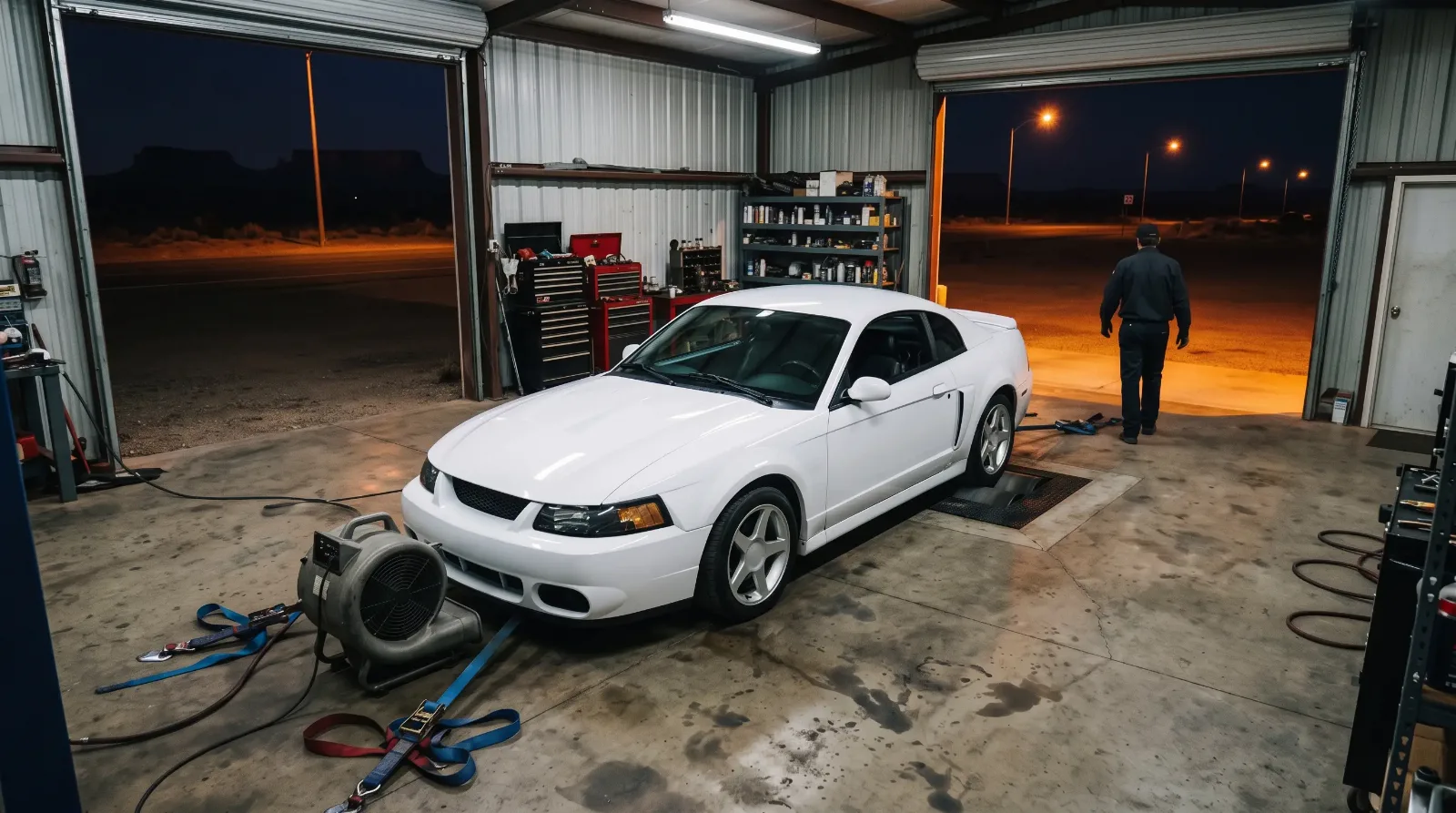
This is one chapter in our Mustang myths guide, and it sits close to the SVO, Saleen and SVT cars covered in the tuner Mustangs.
What Ford promised for 1999
On paper the 1999 Cobra was a clear step up. The 1996 to 1998 Cobra's 4.6-liter DOHC 32-valve V8 was rated at 305 hp at 5,800 rpm and 300 lb-ft at 4,800 rpm. For 1999 SVT revised the four-valve heads, cams and intake and advertised 320 hp at 6,000 rpm with 317 lb-ft at 4,750 rpm. The car also got independent rear suspension as standard, which made it the first production Mustang with an IRS.
Ford built 8,095 of them: 4,040 coupes and 4,055 convertibles. That is a fairly ordinary run for an SVT Cobra of the period. The 1998 car, for comparison, came to 8,654. Nothing about the order books suggested trouble.
| Car | Rated output | What owners found |
|---|---|---|
| 1996 to 1998 SVT Cobra | 305 hp at 5,800 rpm; 300 lb-ft at 4,800 rpm | Benchmark the 1999 car was compared against |
| 1999 SVT Cobra (as delivered) | 320 hp at 6,000 rpm; 317 lb-ft at 4,750 rpm | Slower than a 1998 Cobra; dyno results suggested about 285 hp |
How owners found the missing horsepower
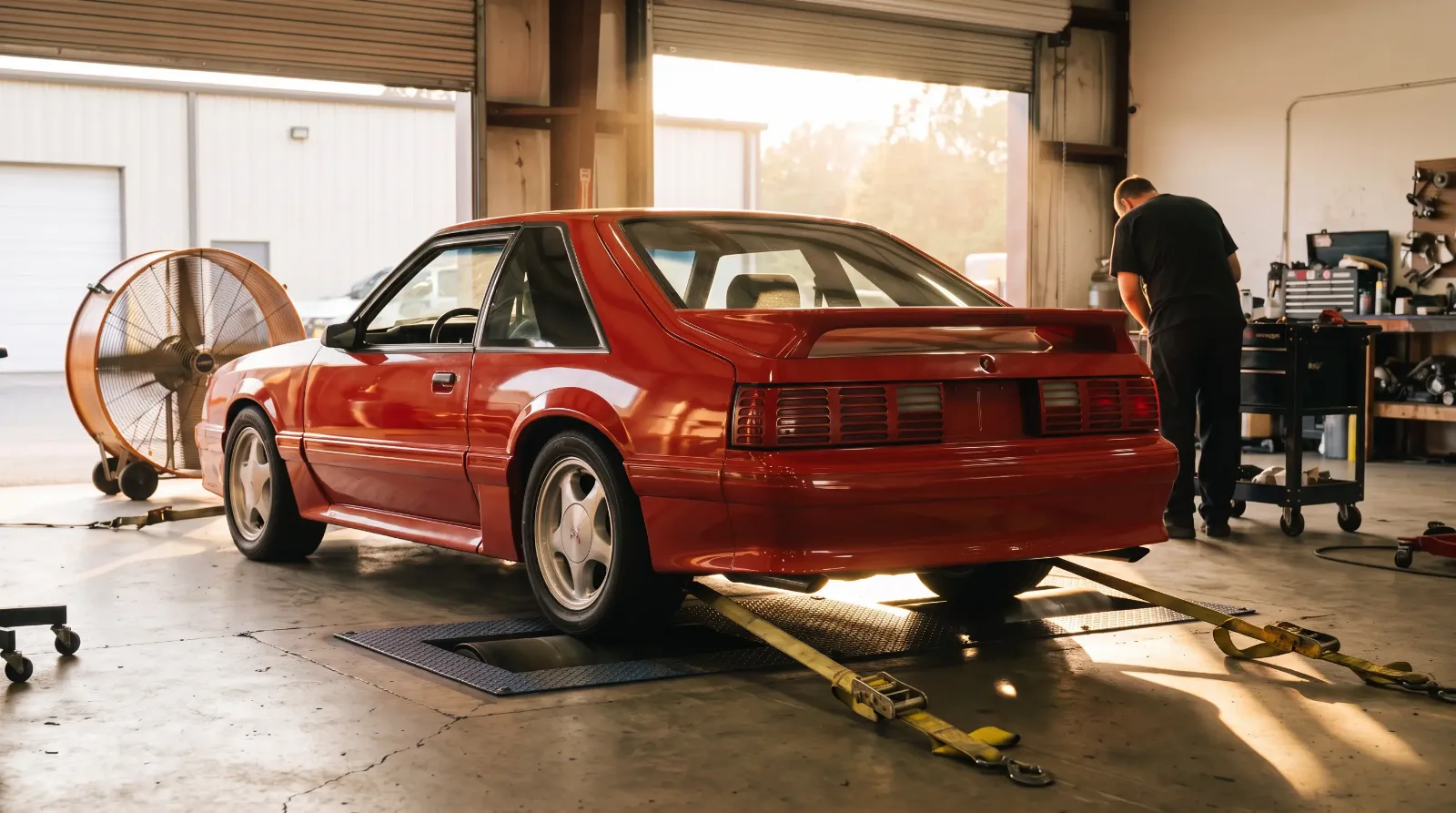
The first evidence did not come from Ford. Several magazines reported that the new Cobra felt slower than the cars it replaced, and owners started comparing timeslips and dyno sheets. A new Cobra rated 15 hp higher than the old one should have been at least as quick, and it was not; owners reported their 1999 cars running slower than 1998 Cobras. Once enough of them strapped their cars to dynos, the results pointed to roughly 285 hp, about 35 hp short of the advertised figure.
The older car made a convenient yardstick. Road & Track and Ford quoted 5.9 seconds to 60 mph for the 1996 to 1998 Cobra, Car and Driver got 5.4 seconds, and a quarter mile of 13.99 seconds at 101.6 mph appears in the published figures. An owner with a timeslip in hand did not need an engineering degree to see that his newer, supposedly stronger car was not keeping up with numbers like those.
Here is where the club version and the paper version part ways. In the retelling, a magazine or a single angry owner "exposed" Ford. The record I trust says something plainer: magazine road tests raised the doubt, owners' dyno tests built the case, and Ford acted on it. No single test or owner can be credited with forcing the recall, so I won't hang the story on a name.
"I've heard this one told six ways at six shows. Every version has a hero. The only version I believe is the one with a stop-sale date on it."
Wayne Coburn
The 1999 Cobra horsepower recall itself
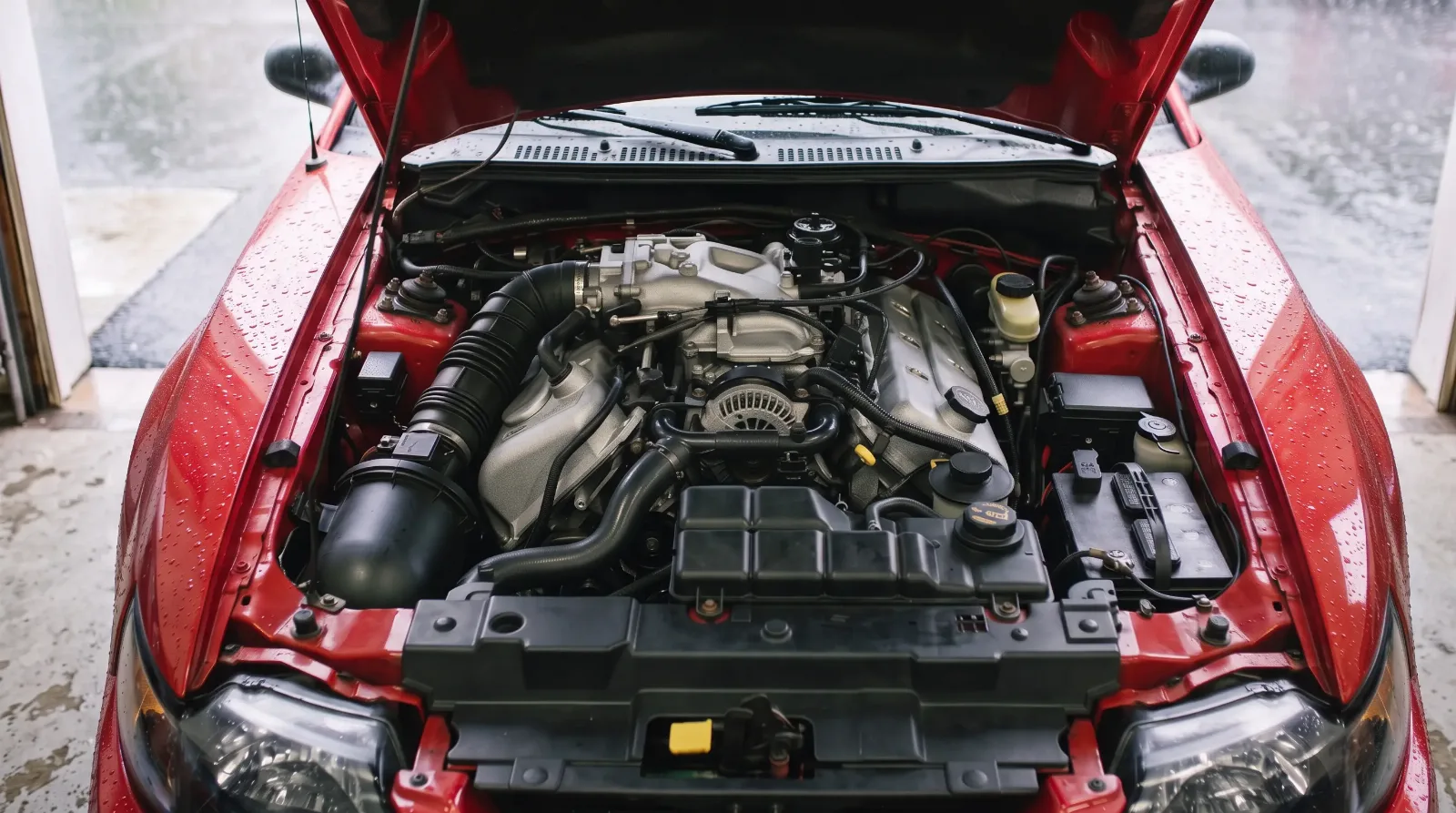
On August 6, 1999, Ford halted sales of unsold 1999 Cobras and recalled the cars already delivered, about 5,300 of them according to a later Associated Press report. The fix was hardware, not a press release. Cars got new upper and lower intake manifolds, a reflashed engine computer and a new exhaust from the catalytic converters back, with less restrictive mufflers. Reports at the time blamed excess casting flash inside the intake and an exhaust that had turned out more restrictive than Ford's engineers expected. That list tells you where the engineers thought the power had gone: breathing in, breathing out, and the calibration tying them together.
Ford's stated aim was a true 320 hp at the crankshaft, and the same changes carried over when the Cobra returned for 2001. What an individual fixed car made afterward was never published as one official figure; owner dyno sheets vary from car to car. Plenty of owners will tell you their car finally felt right. That is a fair claim about a driving impression; it is not a dyno sheet.
The myths that grew around the recall
Like most of the common myths about Mustangs, the recall picked up extra chapters as it was retold. A few are worth sorting out.
"Ford knew and lied." The sheet supports the shortfall, the dyno evidence and the stop-sale. It does not support any claim about what anyone inside Ford knew before the cars shipped. Motive is a guess; the recall is a fact.
"There was a 2000 Cobra too." Not in the regular sense. After the recall there was no standard 2000 Cobra, only 300 examples of the track-oriented 2000 Cobra R. The regular Cobra came back for 2001, with 7,251 built.
"The recall finished SVT." It did not. John Coletti led SVT from 1993 until 2004, well past the 1999 episode.
Ask whether Steve McQueen did his own driving in Bullitt and you get the same mix of legend and record; that question has the full story of its own. The method is the same in both cases: find the document, then decide what to believe.
Why the paperwork matters on a 1999 Cobra today
The punchline of the whole affair is a piece of paper. A 1999 Cobra with records showing the recall work was done is a different car, to a careful buyer, from one where nobody can say. The parts list is specific enough that a knowledgeable inspector can often tell, but documentation settles it without argument. In my experience the cars that change hands cleanly are the ones whose owners kept the boring envelope of receipts.
The 1999 Cobra holds an odd place in the record: the car that was advertised wrong, caught by its own owners, and fixed in public. That makes it one of the better documented stories in the complete history of the Ford Mustang, provided you read the dates and not the legends.
Sources and notes
- Ford Mustang SVT Cobra (Wikipedia): 1996 to 1999 ratings, production and the August 6, 1999 stop-sale
- MustangSpecs: 1999 Ford Mustang SVT Cobra, magazine reports, owner dyno tests and the recall
- WardsAuto (March 2000): Arvin and the Cobra exhaust, intake manifold flashing
- Winding Road: the 1999 Cobra fix, intake manifolds, exhaust and PCM reflash
- Deseret News / AP (2002): the 1999 recall of 5,300 Cobras and its cause
- MustangSpecs: 1996 Ford Mustang SVT Cobra, the 305 hp benchmark
Related Reading

Have a
Ford Mustang
for Sale?
Reach thousands of serious classic car collectors across the US.
Sell It Here →
Selling a classic? Here's how: compare the places to sell classic cars
Are You a Classic Car Dealer?
List your full inventory and connect with targeted classic car buyers.
Join as a Dealer →

About the author
Wayne Coburn
Longtime Corvette owner, judge and club figure who knows the cars, the records and the people behind them.
Related Listings - Ford Mustang

Comments
Be the first to comment on this article.