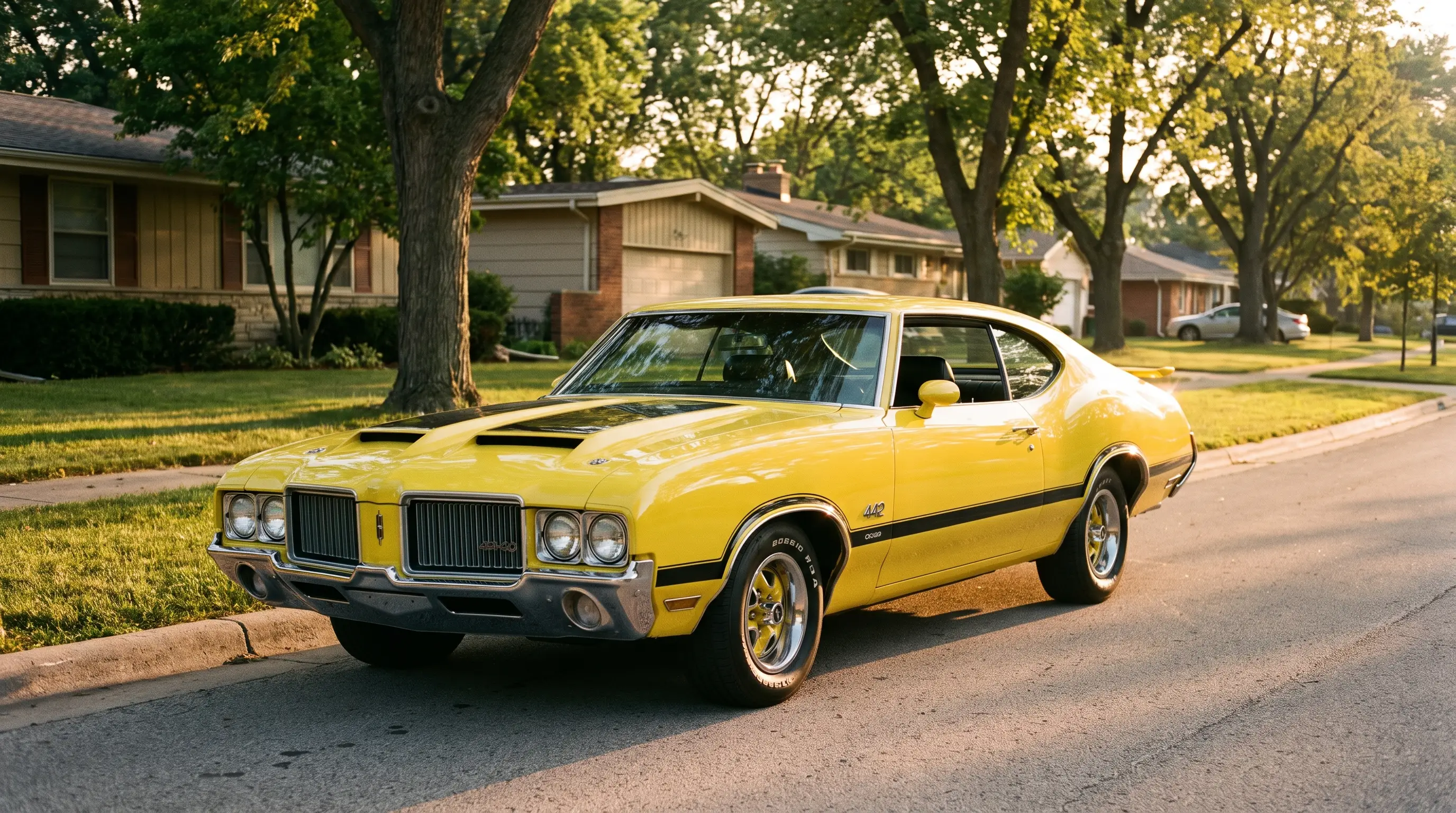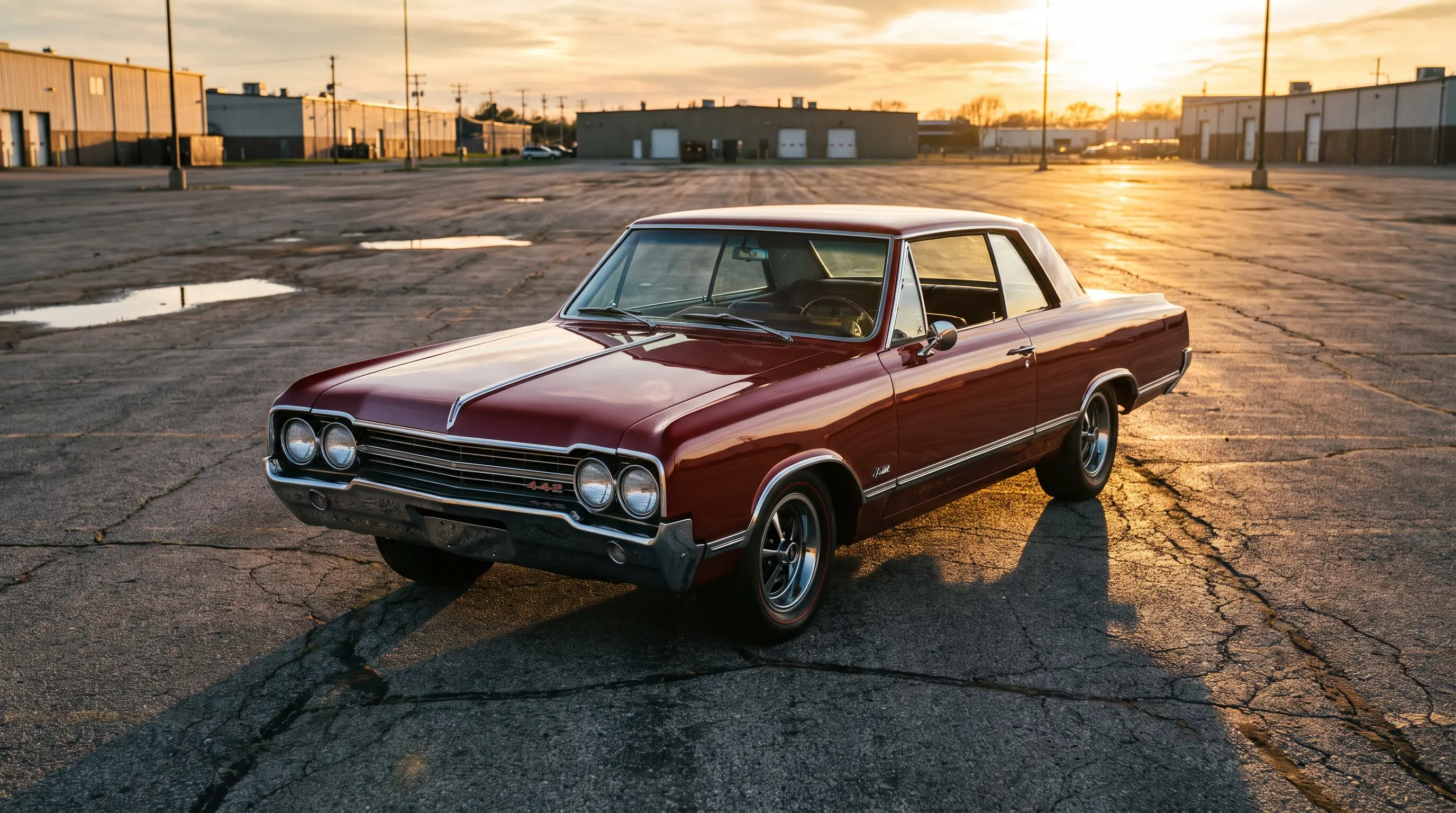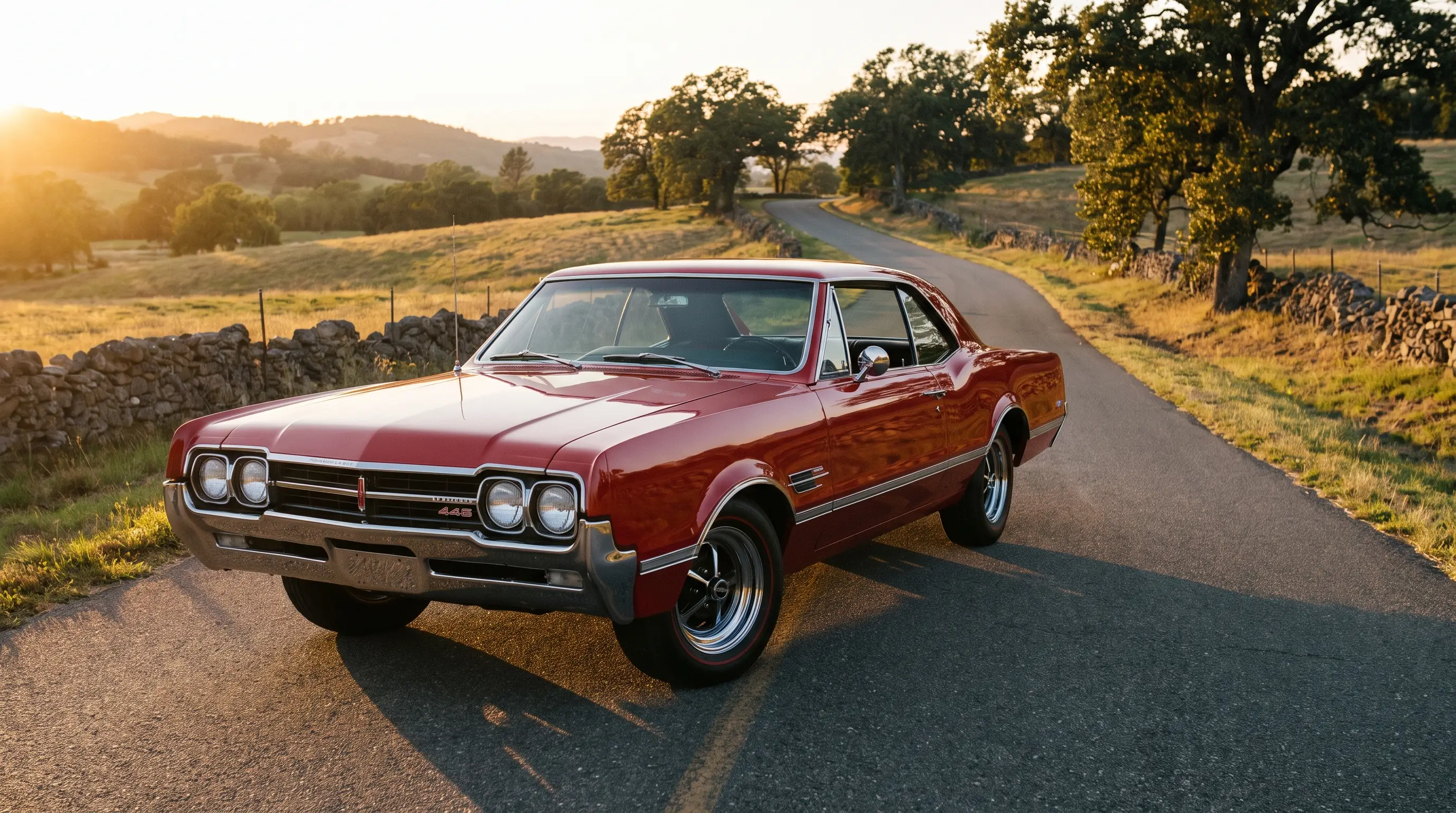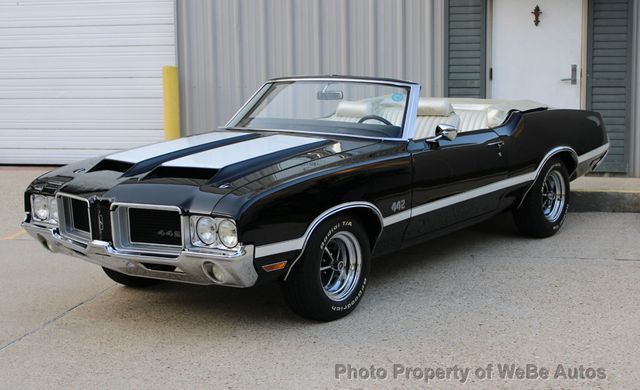
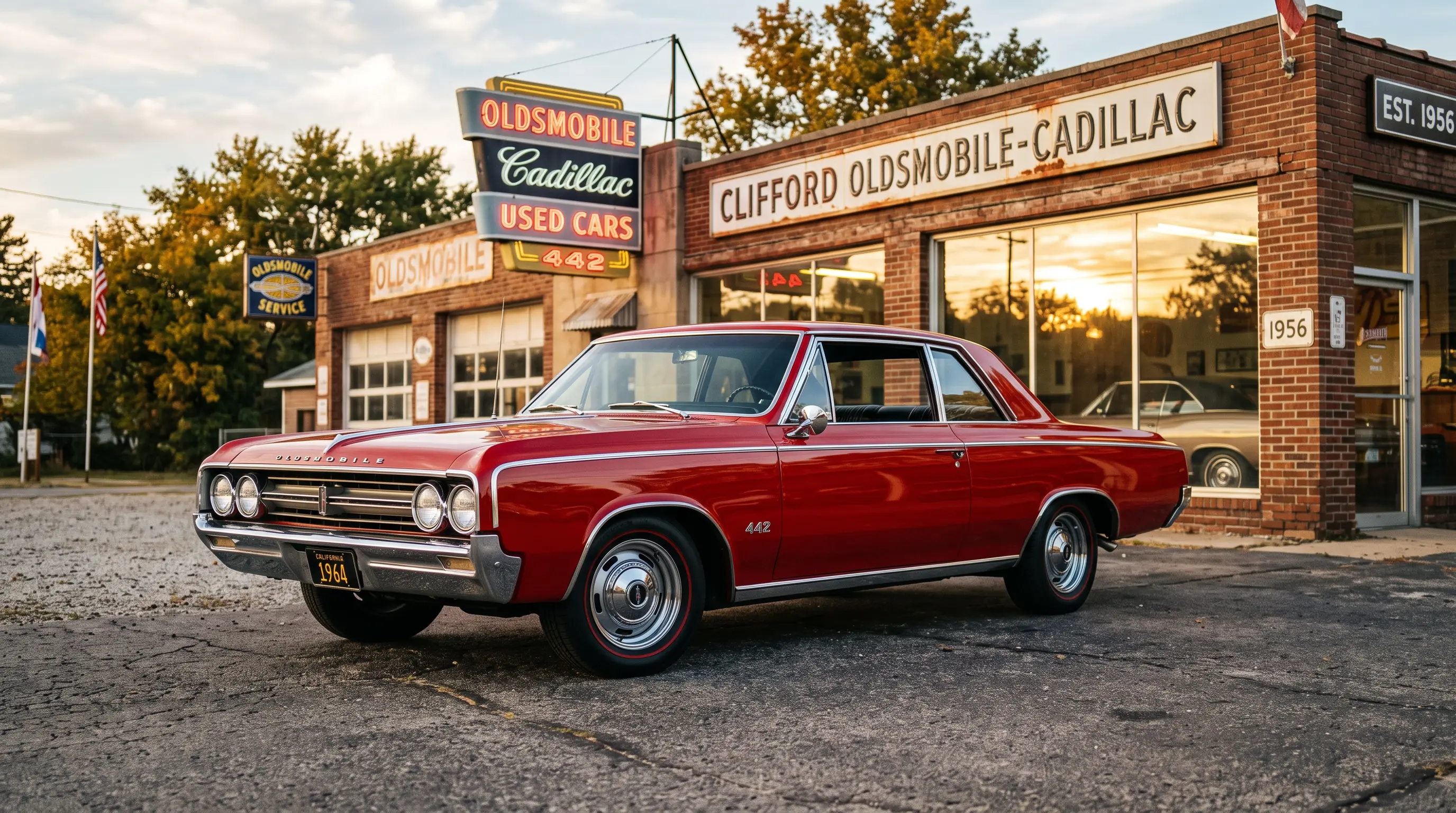
The 1964 Oldsmobile 442 is the car most people skip past on their way to the 1970 W-30 or the 1968 restyle, and that is a mistake. This is the first year, the one that had to prove Oldsmobile could build something faster than a Cutlass without turning the whole company upside down. It was not a standalone model. It was an option code stapled onto an existing car, built fast because Pontiac had already shown the intermediate performance market was real money. For the full background on how that package came together, the 442 chapter covers the corporate decision behind it.
An option package, not a model
In 1964, the 442 did not exist as its own car on the order form. It was RPO B09, a package you added to an F-85 or Cutlass. That distinction matters because it changes what you are actually looking for at a car show or on a listing. There is no separate 442 body, no unique sheet metal, no dedicated VIN sequence. What you are looking at is a Cutlass or F-85 that a buyer specifically ordered with the performance hardware checked off, and that hardware is what defines the car, not a nameplate stamped at the factory.
The package bundled a 4-barrel carburetor, heavier duty suspension components, and dual exhaust onto the existing F-85/Cutlass platform. A 4-speed manual transmission, the Chevrolet-built Muncie, was the only gearbox offered with the package. No automatic was available in 1964, since Oldsmobile's own Jetaway automatic could not handle the extra output. None of this required Oldsmobile to retool anything. That is exactly why it happened so fast. Engineering had the pieces sitting on other shelves already; somebody just had to authorize bolting them onto one car and giving it a name.
The 330 and why it mattered more than people give it credit for
The engine underneath the 442 badge in 1964 was Oldsmobile's 330 cubic inch V8, which in base Cutlass trim made good but unremarkable power. With the 442 package's 4-barrel carburetor and other tuning, output climbed to a rated 310 horsepower and 355 lb-ft of torque, a figure Oldsmobile was proud enough to advertise. That is a smaller engine than the GTO's 389, and smaller than what Oldsmobile itself would put in the car just one year later. People read that and assume the 1964 442 was the weak link in the lineup.
That assumption ignores what a 330 with the right internals and a well-matched 4-barrel can do in a car that was not overweight to begin with. The 1964 F-85/Cutlass body was lighter than what came later in the decade, before bumpers and emissions equipment started adding pounds every model year. A smaller engine in a lighter car is not automatically the slower car, and anybody who has actually driven a clean first-year 442 next to a later, heavier one knows that.
What buyers actually got for their money
Ordering the B09 package in 1964 was not just about the engine. It came with beefed-up suspension pieces intended to keep the car planted under the extra power, which mattered because the base F-85/Cutlass suspension was tuned for comfort, not for hard cornering. Dual exhaust was part of the deal too, and while it is a small thing to look at today, in 1964 it was a visible signal to everyone else on the road that this was not somebody's grocery-getter.
What buyers did not get was a unique dashboard, unique badging beyond small emblems, or any real cosmetic separation from a regular Cutlass. That is part of why survivors are hard to authenticate today. A 1964 442 looks, at a glance, almost identical to a well-optioned Cutlass without the package. The differences live in the mechanical specification sheet, not the sheet metal.
| Spec | 1964 Oldsmobile 442 |
|---|---|
| Base platform | F-85 / Cutlass |
| Option code | B09 |
| Engine | 330 cubic inch V8, 4-barrel carburetor |
| Transmission | 4-speed manual only (Muncie) |
| Exhaust | Dual exhaust, standard with package |
| Availability | Mid-year 1964 introduction |
Buying one today: what to actually check
If you are shopping a 1964 442, forget the badge on the fender and go straight to documentation. Because this was an option package layered on a common car, the single easiest mistake a buyer makes is trusting a repop emblem over a build sheet or Protect-O-Plate. Ask for the paperwork before you ask about the paint. A correctly documented car with the right engine code and the right option combination is worth real money. A Cutlass with an added-later 442 badge and a story is worth Cutlass money, no matter how good the story sounds.
"First-year cars get overlooked because they're not the biggest engine or the flashiest package. That's exactly why they're easier to fake and harder to verify. If somebody can't produce paperwork on a '64, walk before you fall in love with it."
— Mike Sullivan
Why this year set the pattern for everything after
Every 442 that came after 1964 owes something to this first year, even the ones that eventually outgrew it in every measurable way. Oldsmobile proved with the B09 package that it could compete in the intermediate performance market without inventing a new car from scratch, and that lesson shaped how the model evolved for the rest of the decade. The engine grew, the options multiplied, and eventually the 442 became its own series instead of a checkbox. But none of that happens without this first, unglamorous option package proving the demand was real. For where the story goes from here, a related deep-dive covers the years when the displacement jumped and the badge's own definition had to catch up.