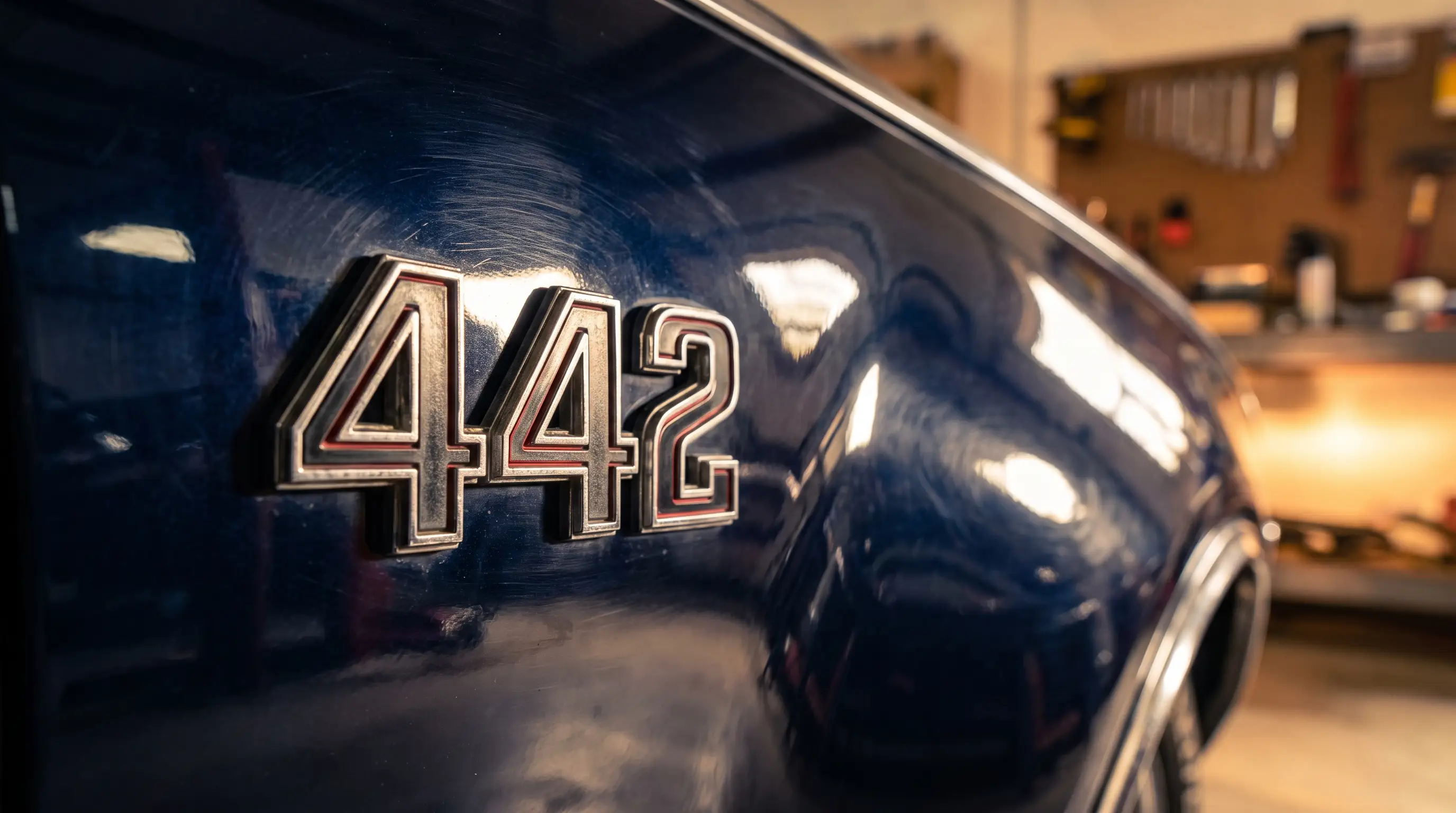
Ask ten Oldsmobile owners what the 442 emblem looks like and you'll get ten different answers, and every single one of them will be right for some year of production. The badge changed almost every generation, sometimes every couple of years, and that history tells you more about how Oldsmobile actually built these cars than most spec sheets do. I've had plenty of these cars on my lift over the years, and the badges are usually the first thing that tells me what I'm really looking at.
Why the badge design changed almost every generation
The 442 name itself started as a description, not a brand. In 1964 it stood for four-barrel carburetor, four-speed transmission, and dual exhaust, a straightforward equipment call-out on an option sheet. Once the badge started meaning something to buyers, Oldsmobile redesigned it for nearly every body style change the Cutlass went through, from the 1964-1967 cars through the 1968-1972 A-bodies, into the 1973-1979 colonnade and downsized-Salon years, and again on the 1985-1987 G-body revival. That's four or five distinct badge families across roughly two decades, and each one reflects what the package actually was in that specific year, not just a sticker slapped on for looks.
The 1964-1967 script badges
Early 442 badges were understated, script-style emblems, usually small, placed on the front fenders and rear deck, consistent with the option's original identity as an equipment package rather than a standalone model. These cars didn't shout. The badge sat quietly next to Cutlass and F-85 trim, doing exactly what a factory option badge is supposed to do: confirming what's underneath without making a promise the drivetrain couldn't back up. Original script badges from these years are getting harder to find in good condition, and reproduction quality varies enough that a buyer chasing a numbers-matching restoration needs to know exactly what a correct badge from a given year looks like before paying restoration prices for one.
The 1968-1972 fender and grille badges
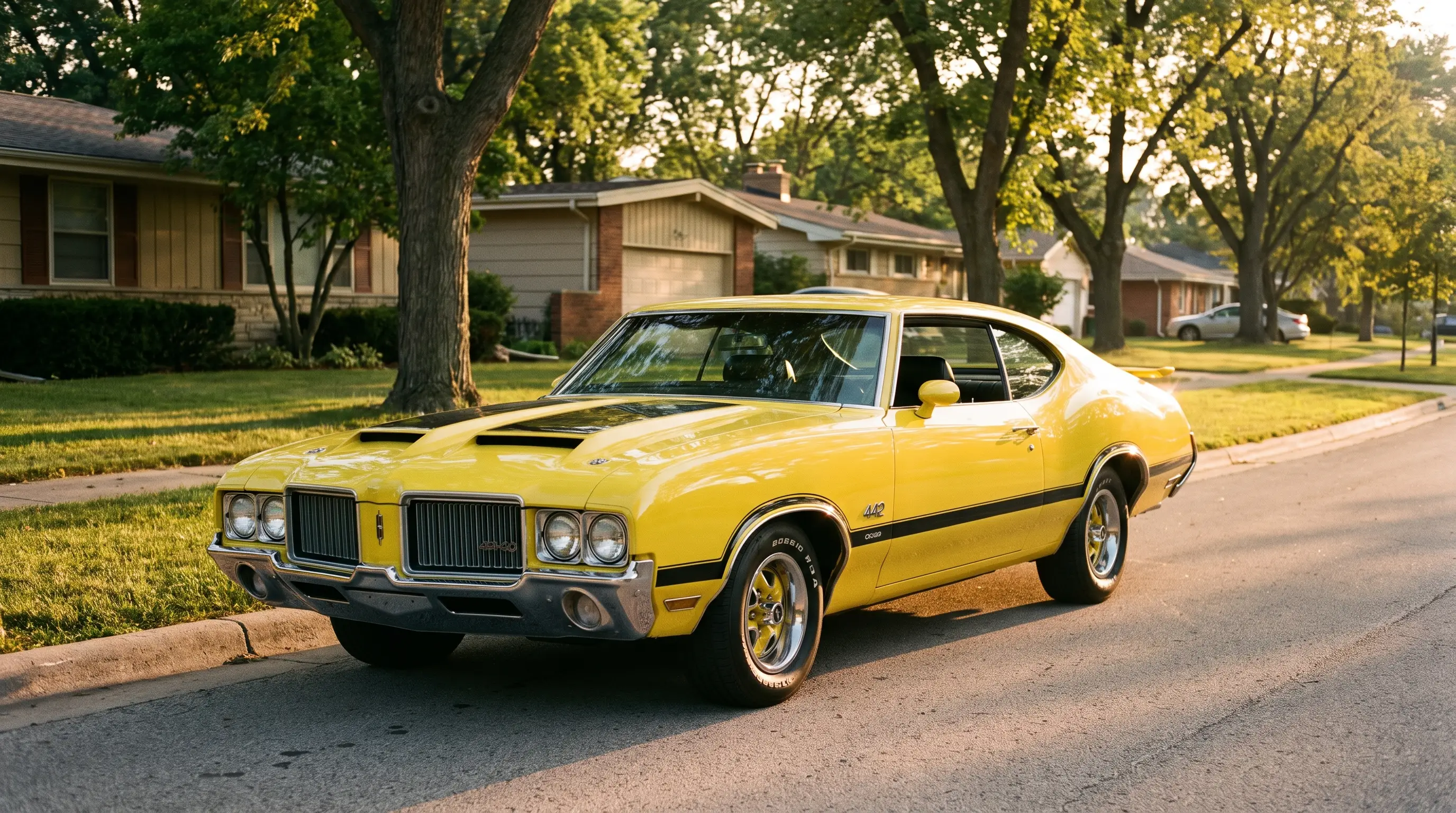
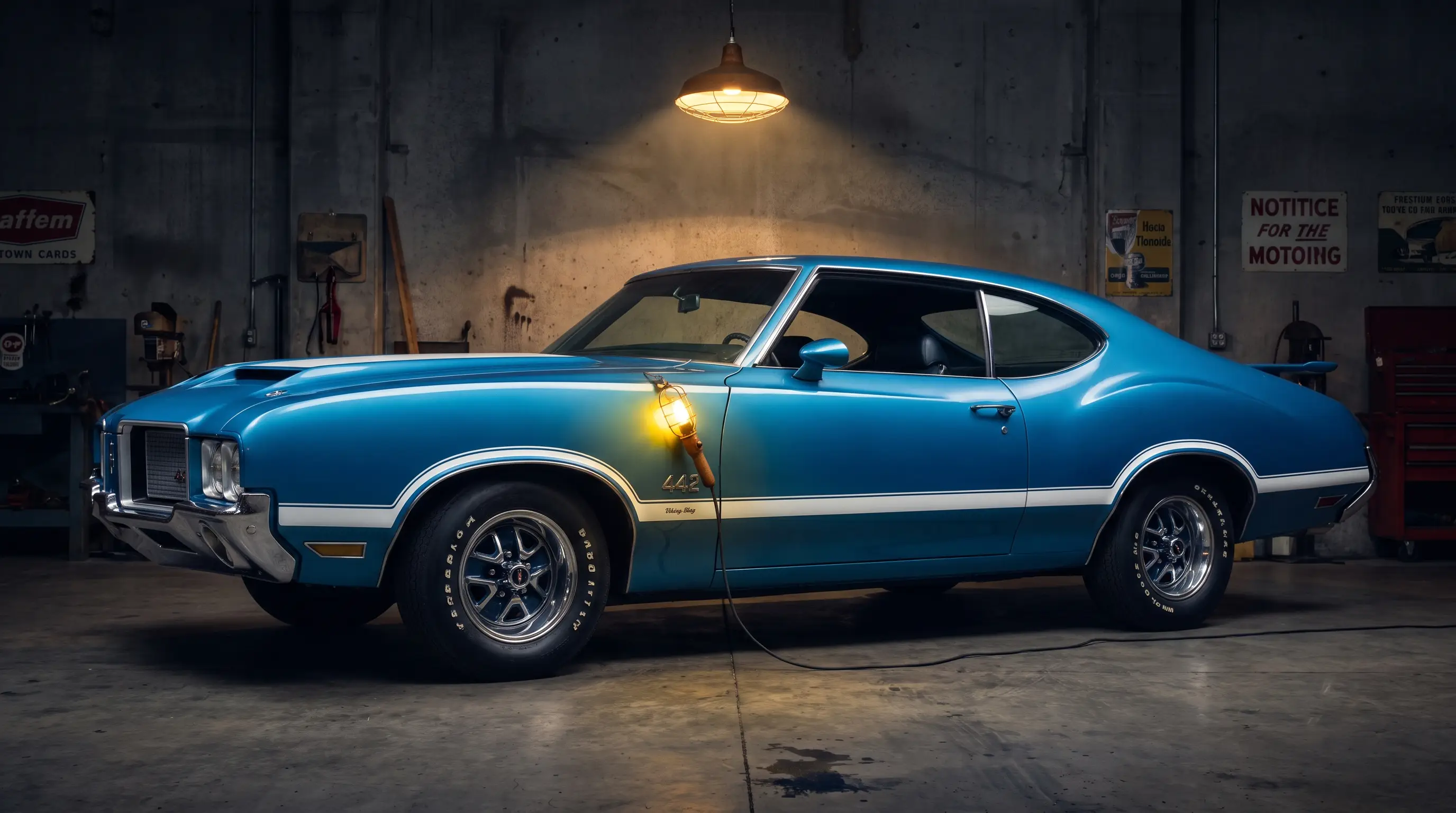
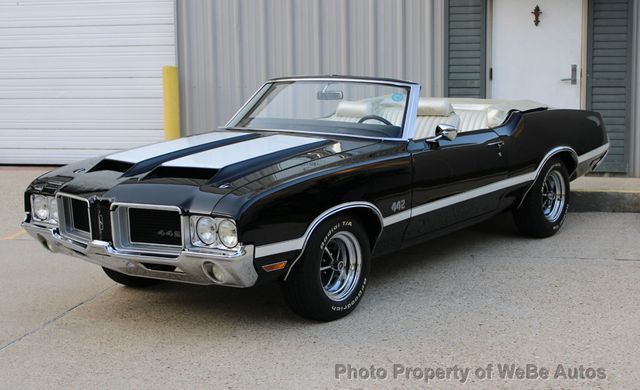
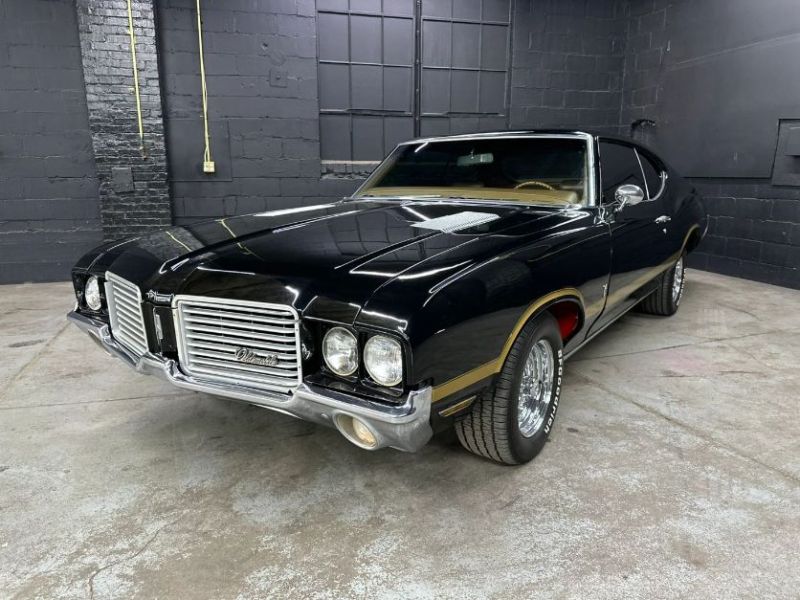
By 1968 the 442 had become its own model line rather than just an option, and the badging grew to match. This is the era most people picture when they hear "442 emblem": bolder block-style numerals, more prominent fender placement, and grille badges that made the car's identity obvious from the front. The W-30 package added its own separate badging on top of the standard 442 emblems, a distinction that matters enormously to buyers today because a W-30 badge on a car that never came from the factory that way is one of the oldest tricks in the book.
This generation also saw the most badge variation year to year, tracking trim and package changes closely enough that a knowledgeable eye can often narrow a car's model year just from badge style before ever checking a VIN.
Colonnade and G-body badges
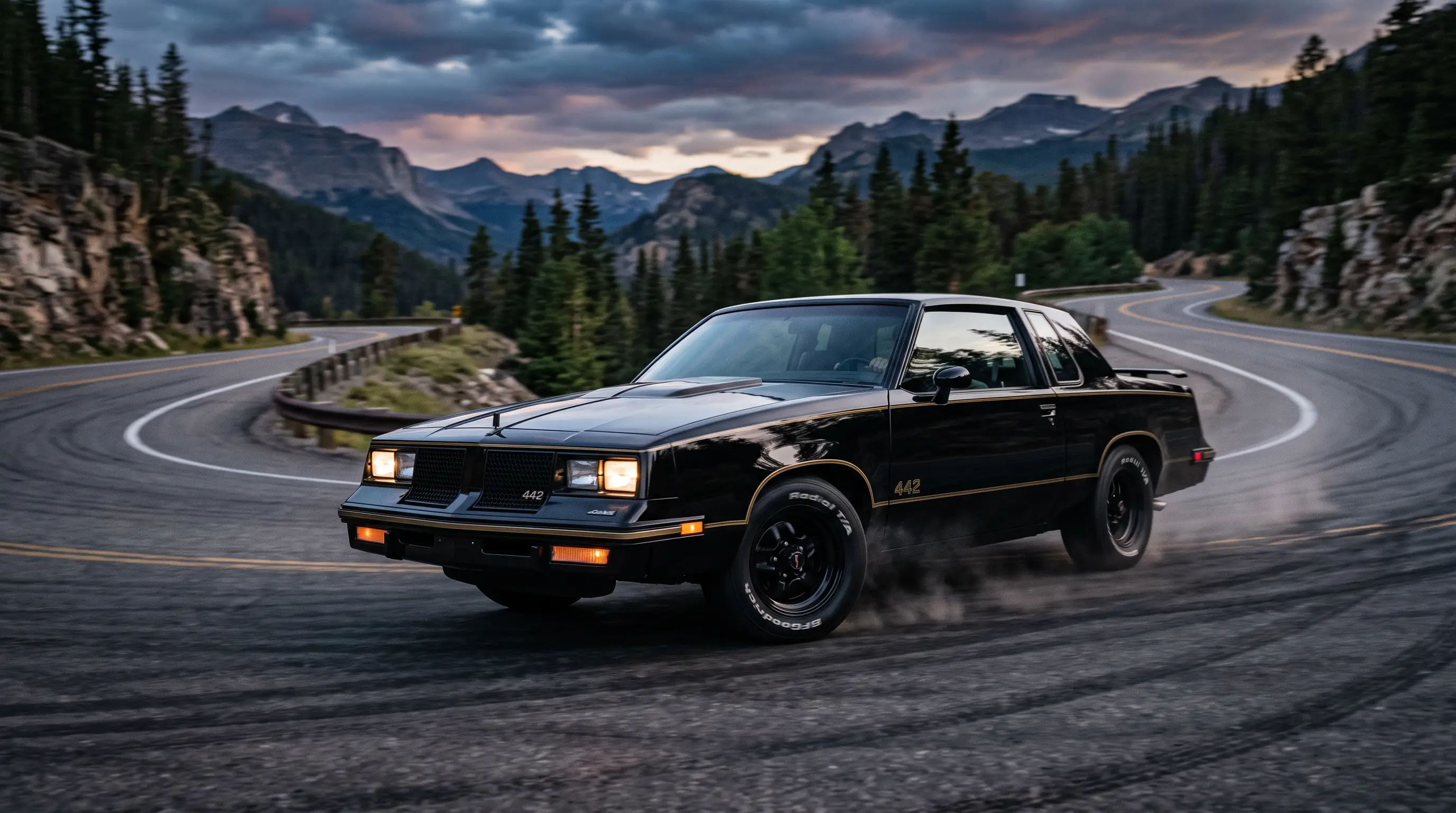
The 1973-1977 colonnade cars carried simpler, more restrained badging that matched the era's shift away from muscle car aesthetics toward handling packages and trim distinction. Badges got smaller and less aggressive, mirroring what the 442 package had actually become by then, a shift that continued after the Cutlass was downsized for 1978, when the 442 carried on as a badge and handling option on the Cutlass Salon through the 1979 model year before Oldsmobile shelved the name entirely. When Oldsmobile revived it for 1985 on the G-body Cutlass Supreme, the badge design changed again, adopting an angular, more modern typeface that fit the mid-1980s and had almost nothing visually in common with the 1968 script or the colonnade-era badges. Someone restoring a G-body 442 who orders 1970-style badges by mistake ends up with a car wearing the wrong decade on its fenders, and that mismatch is obvious to anyone who's spent time around these cars.
442 badge families at a glance
| Years | Badge style | Placement |
|---|---|---|
| 1964-1967 | Understated script | Front fenders, rear deck |
| 1968-1972 | Bold block numerals, separate W-30 badge | Fenders, grille, deck lid |
| 1973-1979 | Restrained, trim-package styling | Fenders, grille |
| 1985-1987 | Angular, modern typeface | Fenders, doors, deck lid |
Why badges matter more than people think
Placement changed as much as design did across these generations, and that's worth knowing before you go looking for a missing badge on a car you're considering. Early cars carried small emblems that could disappear entirely under a bad repaint if nobody masked around them carefully. The 1968-1972 cars, with badges on the fenders, grille, and deck lid all at once, gave a repaint crew three separate chances to lose or misplace one. A car missing a single badge from that era isn't automatically suspect, but it's a detail worth asking about, because a shop that skipped reinstalling one badge may have skipped other small things too.
A badge is a data point, not proof. It tells you what Oldsmobile intended a car to be in a given year, and it's one of the fastest ways to spot something obviously wrong, but it's never the whole story on its own. I've pulled correct-looking badges off cars that had none of the drivetrain or documentation to back them up, and I've seen honest, unrestored cars wearing tired, faded original badges that told the truth better than any polished reproduction ever could. Read how the 442 earned its name for the full history behind why this badge existed at all, and see a related deep-dive on separating documented factory cars from clones and tributes built later.
"A badge tells you what the factory meant the car to be. It doesn't tell you what happened to it in the forty years since. Both things matter, and I want to see both before I trust either one."
— Mike Sullivan
If you're chasing a genuine example of any generation, start with a car that's honest about its badges before anything else. Browse a classic Oldsmobile 442 for sale and check the emblems against the year before you check anything under the hood. The badge won't lie to you if you know what it's supposed to say.