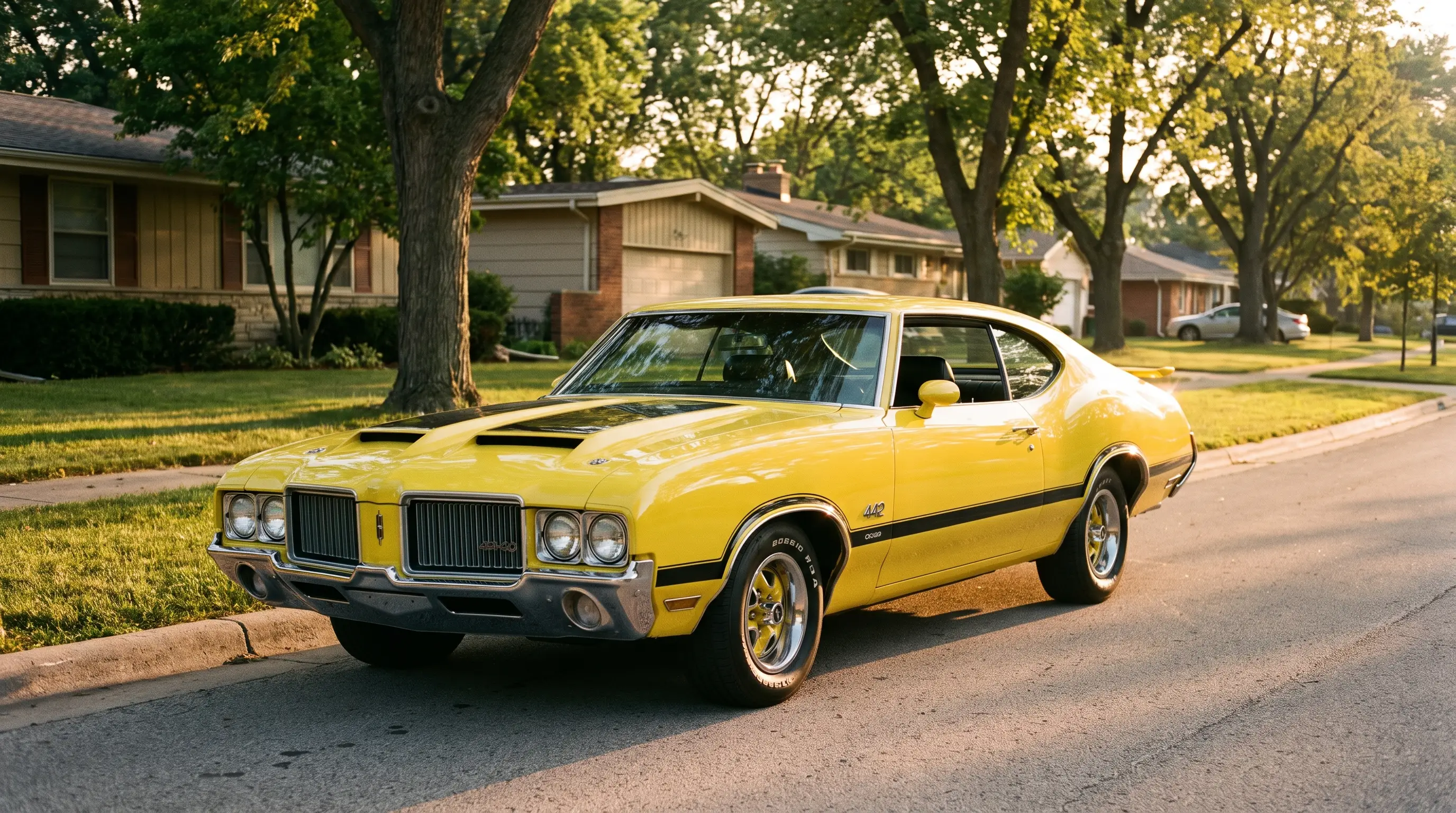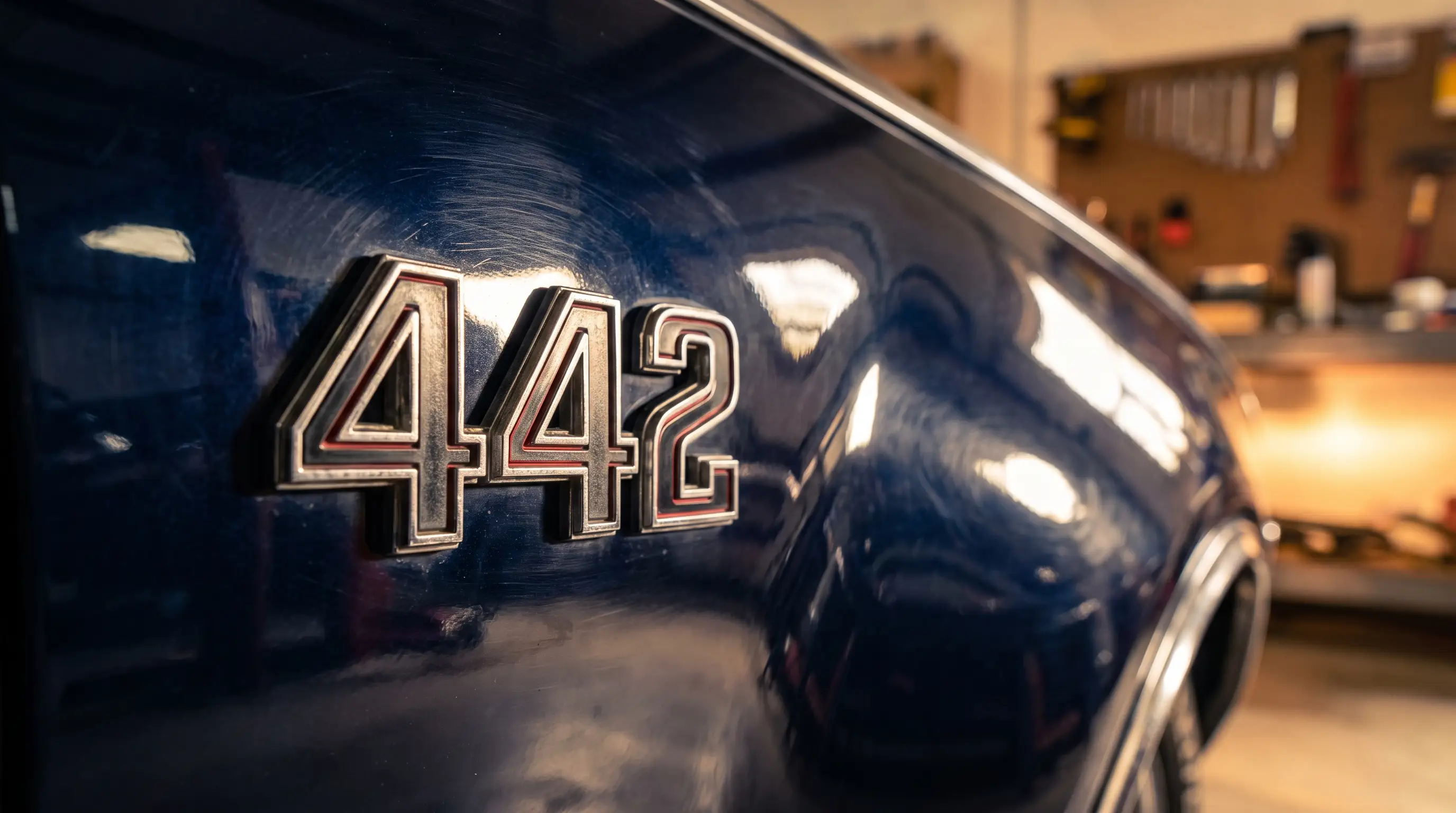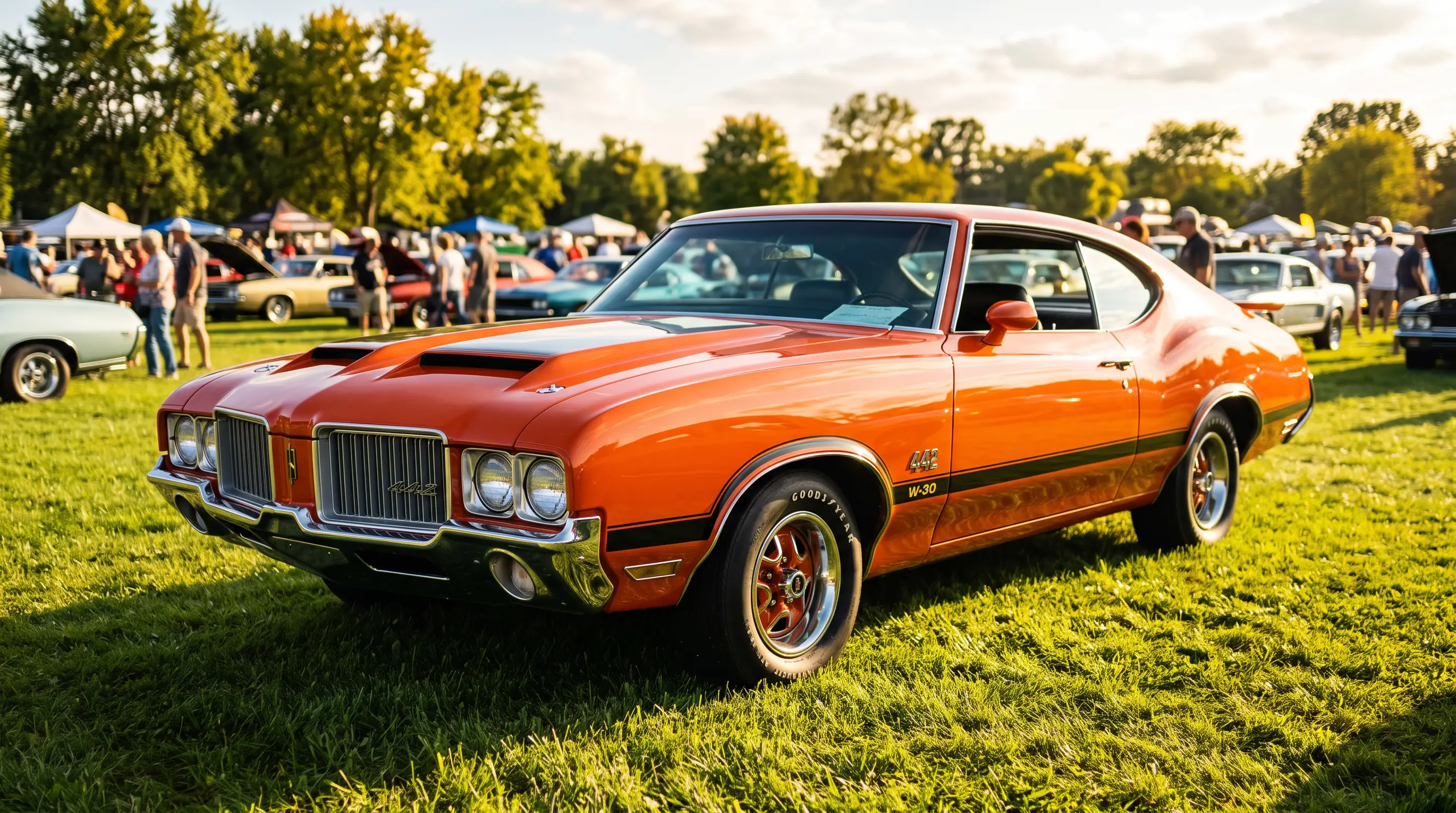
Every 442 I've ever put on a lift had a story, and not all of those stories were true. Some were honest cars that had simply been driven hard and repainted along the way. Others were plain Cutlasses dressed up to look like something they never were on the day they left the Lansing plant. The gap between a real 442 and a clone isn't a technical footnote. It's a story about how a whole hobby learned, sometimes the hard way, what documentation is actually worth.
Why clones exist and why nobody should be surprised
Cloning didn't start as fraud. In the 1980s and 1990s, plenty of builders took a rough, six-cylinder or small-V8 Cutlass and turned it into a tribute to the 442 or 4-4-2 W-30 they always wanted, badges and all, with no intention of passing it off as factory-original. That was an honest hobby project. The trouble started when those same cars changed hands two or three times, the story got fuzzy, and a tribute car ended up being sold, sometimes unknowingly, as the real thing. By the time values on genuine W-30 cars climbed into serious money in the 2000s, the incentive to blur that line got a lot stronger, and the hobby had to catch up fast.
I don't think most sellers today are running an active con. Most of them inherited a car, or bought it years ago, and simply repeated what they were told. That's exactly why documentation became the center of this whole conversation. Nobody's memory is reliable after forty or fifty years. Paper is.
The documentation era: build sheets, cowl tags, and Protect-O-Plates
Oldsmobile, like the rest of GM, left a paper trail on every car it built: a cowl tag stamped with trim and paint codes, a build sheet often tucked under seat springs or in the trunk, and a Protect-O-Plate carried by the original owner listing key equipment codes. None of these were designed with future collectors in mind. They were built for warranty and assembly line purposes. But that's exactly what makes them hard to fake convincingly and valuable as evidence decades later.
The hobby's real turning point came when clubs and marque researchers started systematically cross-referencing these documents against Oldsmobile's own factory records, building a body of knowledge that made a car's claims checkable rather than just believable. A W-30 badge stopped being enough on its own. A car either had the drivetrain codes, the RPO documentation, and a story that lined up, or it didn't. That shift changed how people bought and sold these cars permanently.
The stories that changed how people buy
Every longtime Oldsmobile collector has a version of the same cautionary tale: a car sold at a real price as a documented W-30, only for a later owner to discover mismatched casting numbers or a cowl tag that told a completely different story than the seller had. These stories circulated at swap meets and later online long before any official ruling ever got made, and they did more to change buyer behavior than any appraisal guide could. People stopped trusting badges. They started trusting paper trails, and they started paying real money for cars whose documentation actually held up under a second look.
That shift also changed what "real" means in practice. A numbers-matching, fully documented W-30 is one tier. A genuine factory 442 with a replaced engine but solid supporting documentation is another, still respected tier. A clone built with honesty and full disclosure sits below both, but it's not automatically worthless, it's just priced and sold as what it actually is. The dishonesty only enters when that distinction gets hidden from a buyer.
How the market treats different 442 histories
| Car's actual history | How the market treats it |
|---|---|
| Numbers-matching, fully documented W-30 | Top tier, commands the strongest and most consistent prices |
| Genuine factory 442, replaced engine, solid paperwork | Respected, sells well below numbers-matching but above undocumented cars |
| Honest, disclosed tribute or clone build | Sold and priced as a tribute; value depends on build quality, not deception |
| Undisclosed clone sold as factory-original | Loses buyer trust entirely once discovered; often forces a resale at a steep discount |
What actually gets checked before money changes hands
The practical side of this story is simpler than people expect. Serious buyers and serious sellers both know the drill by now: cross-reference the cowl tag codes against Oldsmobile's published trim and option code lists, compare engine casting numbers and dates against what the documented build calls for, and ask for anything on paper the current or a prior owner still has, from a Protect-O-Plate to old registration and title history showing continuity. None of that is exotic detective work anymore. Marque clubs and long-time researchers have made the reference material widely available, which is exactly why relying on a badge alone, or a seller's confident story, doesn't cut it the way it once did.
What's changed most isn't the checking itself. It's who's expected to do it. A generation ago, that kind of diligence was reserved for six-figure numbers-matching cars at the top of the market. Today it happens on a twenty-thousand-dollar driver-quality 442 just as readily, because the same registries and cross-referenced records exist regardless of what a given car is worth. That's a healthier hobby than the one that existed when a good story and a confident seller were often enough.
What the market actually rewards now
The 442 world today rewards honesty more than it rewards raw rarity. A seller who leads with a car's actual documented history, gaps and all, earns more trust and often a better price than one who leans hard on a badge and a good story. That's a real change from decades ago, when a confident seller and a shiny emblem were often enough to close a deal. Clubs, registries, and long-time researchers did the work of building that trust, one cross-checked build sheet at a time, and buyers are better off for it.
"I've seen a beautiful car lose half its value in one afternoon because the cowl tag told a different story than the seller did. I've also seen a tired, ugly survivor sell for strong money because every piece of paper matched. Paper wins every time it's checked."
— Mike Sullivan
Read the Oldsmobile 442 for the full history of how this badge earned the reputation that made it worth cloning in the first place, and see a related deep-dive on how factory paint codes became their own piece of the documentation puzzle. The badge got a car noticed. The paperwork is what makes it worth something.