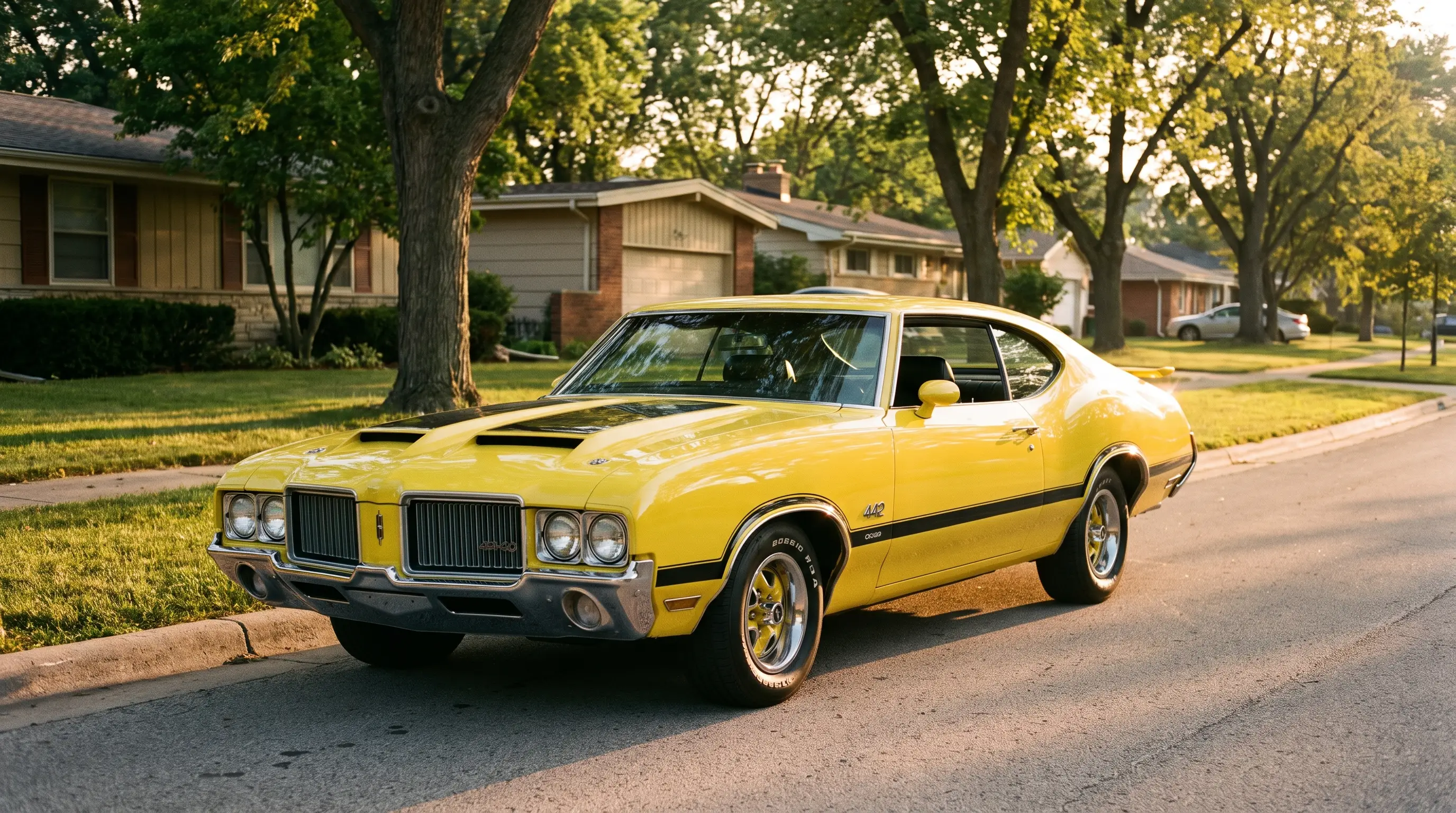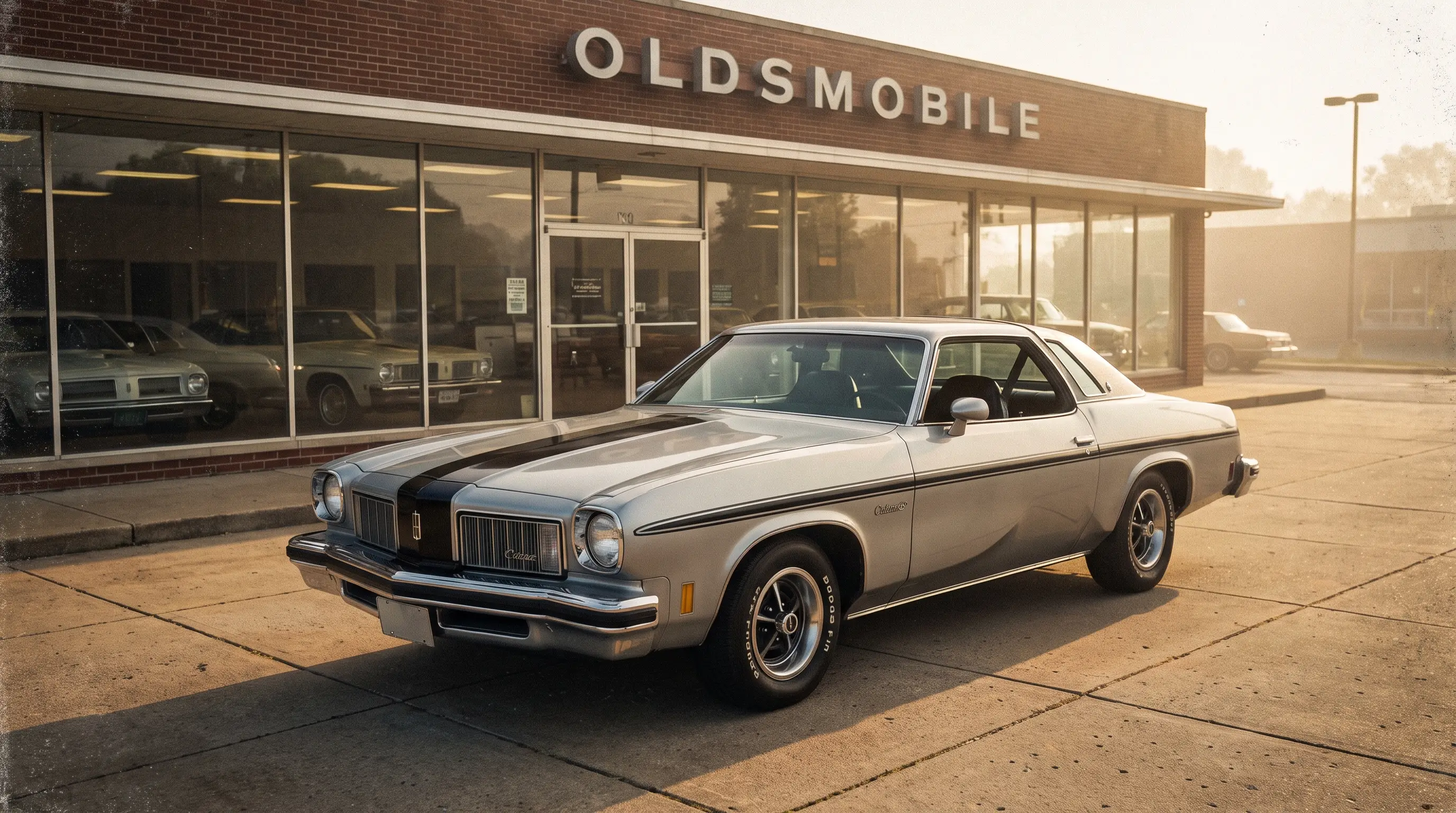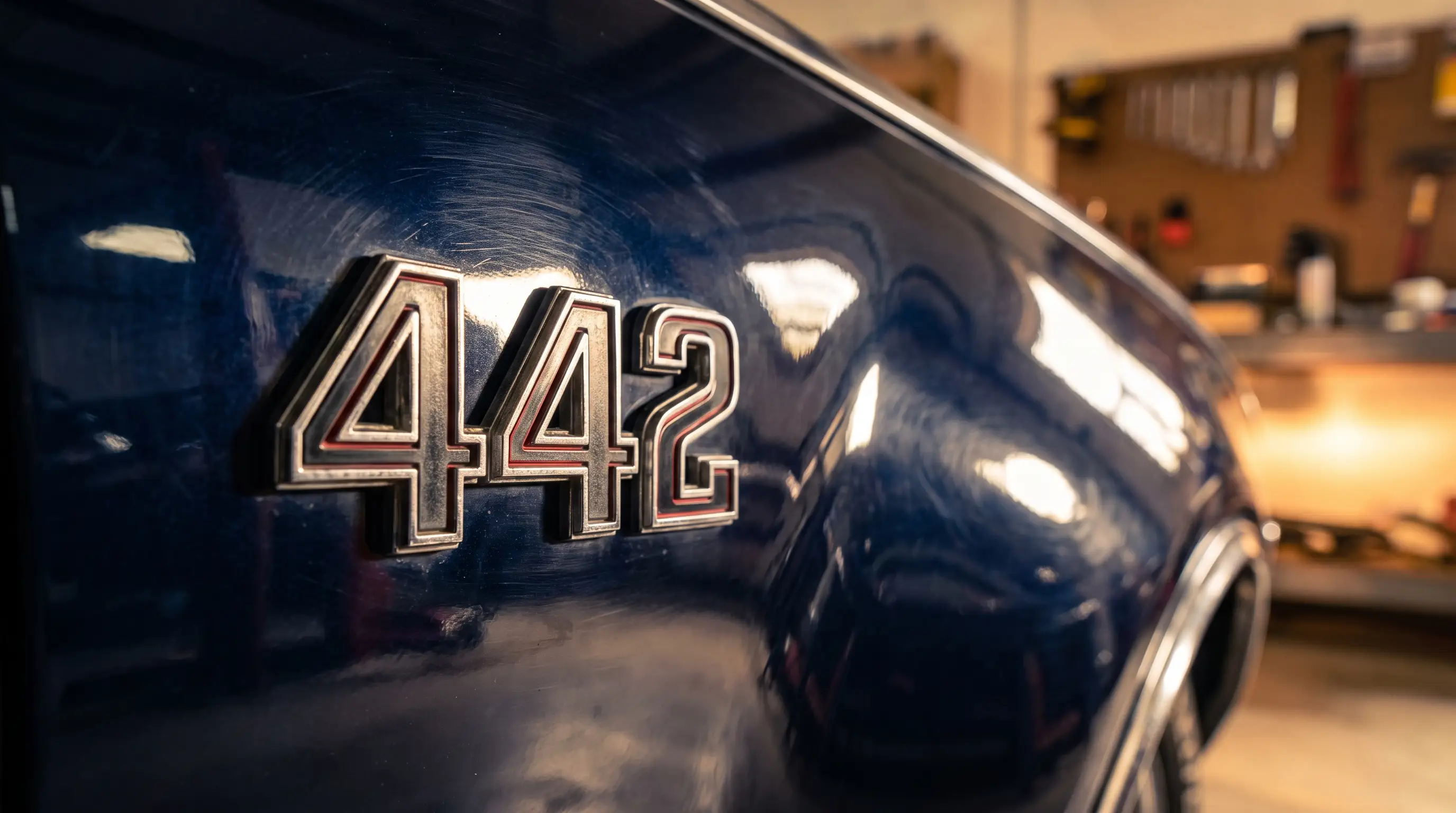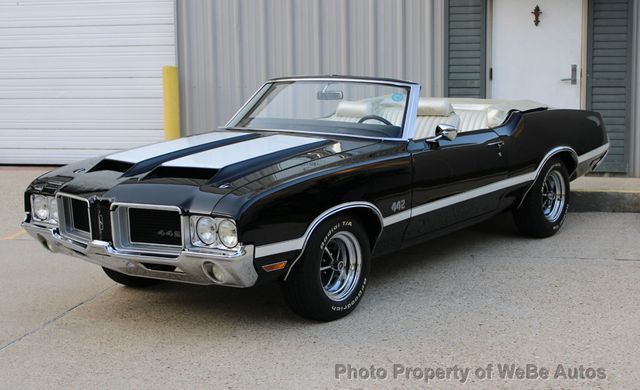
Oldsmobile retired the 442 badge after 1980 and left it dark for four model years. When it came back in 1985 on the G-body Cutlass Supreme, the car it landed on had nothing to do with big block torque and everything to do with a company trying to prove its midsize coupe could still handle a corner. The 1985-1987 G-body 442 is a small production run with real documentation behind it, and the market has started pricing it accordingly.
The badge comes back: 1985-1987 G-body 442
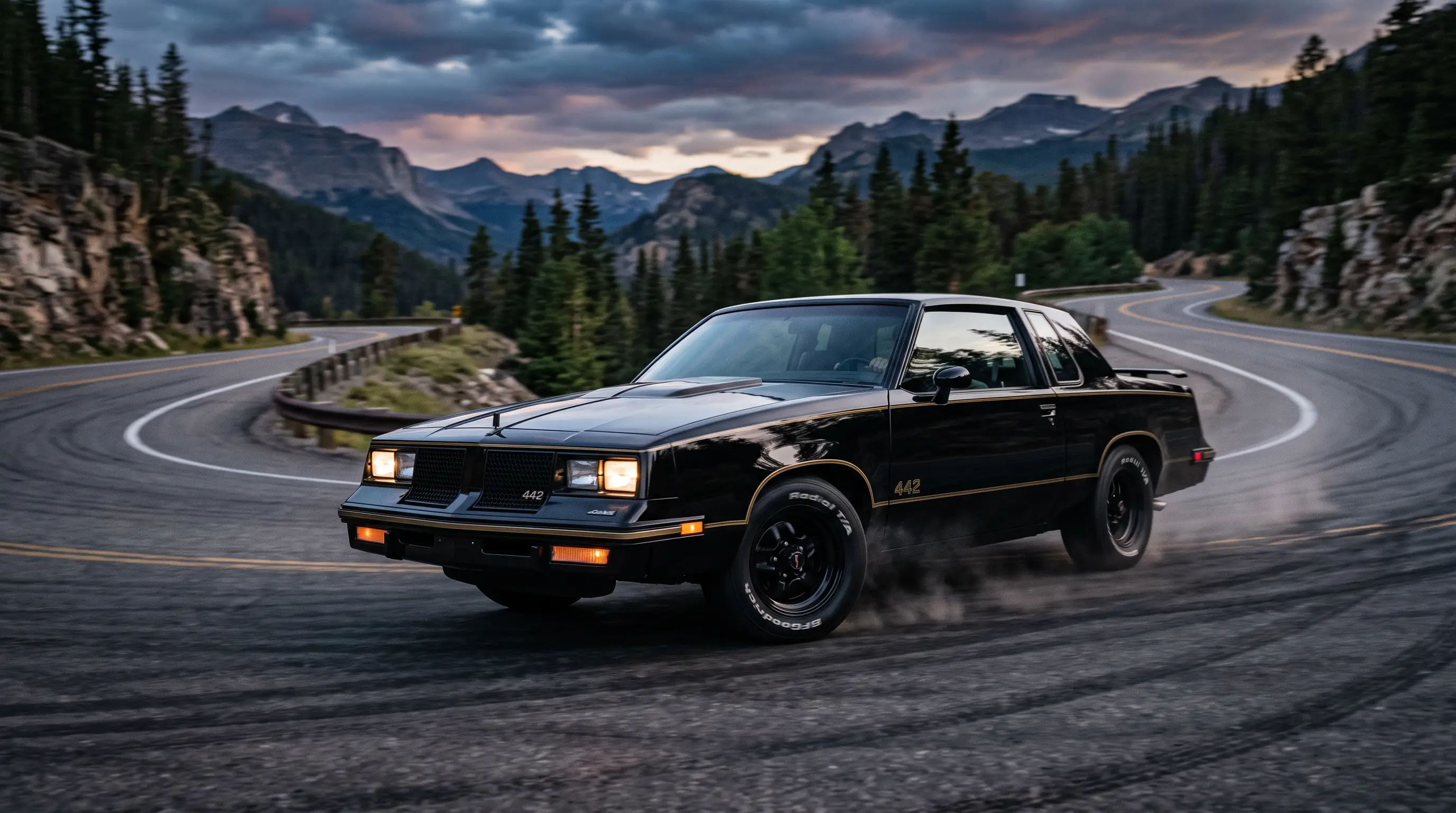
Oldsmobile revived the 442 name for 1985 as a handling and appearance package on the rear-wheel-drive Cutlass Supreme coupe, the same G-body platform underneath the Monte Carlo SS and Grand National. This was not a reboot of the muscle car formula. It was a response to a specific competitive gap: Chevrolet's Monte Carlo SS had a factory image and a NASCAR connection, and Oldsmobile needed an answer on its own showroom floor. The 442 package delivered stiffer springs, a rear stabilizer bar, quicker steering, and 15-inch aluminum wheels, wrapped in specific 442 badging and a distinct paint and tape scheme.
Production numbers were modest by any historical Oldsmobile standard. Total 442 package builds across the three model years landed at roughly 3,000 units in 1985, 4,273 in 1986, and 4,208 in 1987, well under the tens of thousands the badge saw in its late-1960s heyday. That scarcity, combined with genuine factory paperwork trails through Oldsmobile's own records, is a big part of why collectors treat this generation as a distinct, buildable data set rather than a footnote.
What was actually under the hood
The G-body 442 never got a big block, and it never pretended to. The standard engine was Oldsmobile's 307 cubic inch V8, rated at 180 horsepower for 1985 and early 1986, then dropping to 170 horsepower once Oldsmobile revised the 307 with a roller camshaft partway through 1986, a rating carried through 1987, backed by a 200-4R four-speed automatic overdrive transmission. That is a mainstream, emissions-compliant powertrain built for a decade that measured performance in handling numbers and 0-60 times that would have embarrassed a 1970 442 owner. Judged against its own era, though, the package held up as one of the more competent handling packages GM offered on a midsize coupe.
What buyers were actually paying for was the suspension calibration and the steering ratio, not raw power. Road tests from the period consistently pointed to the 442's cornering grip and body control as the real story, treating the engine as a known, honest quantity rather than the headline. That's a different value proposition than the 1970 W-30, and pricing data reflects the difference clearly.
Buyers also need to separate the appearance package from the mechanical one when they're shopping. Some cars wearing 442 badging were built with the visual package alone, decals and wheels without the full suspension upgrade, and that distinction shows up in the RPO codes on the factory paperwork rather than anywhere on the exterior. A car with the complete handling package, verified against its build sheet, trades at a real premium over one with badges alone. That's the same lesson that applies across almost every 442 generation Oldsmobile ever built: the emblem describes an intention, and the paperwork confirms whether the factory actually delivered it.
G-body 442 auction data, recent condition tiers
| Condition | Typical range | What drives it |
|---|---|---|
| Driver quality, minor issues | Roughly $8,000-$15,000 | Mileage, paint condition, working power options |
| Clean, documented, low miles | Roughly $18,000-$28,000 | Original build sheet, matching drivetrain, unmolested interior |
| Concours or ultra-low-mile survivor | Roughly $35,000-$40,000+ | Documented mileage, original paint, complete factory paperwork |
What these cars trade for today
The G-body 442 market moves slower and more quietly than the muscle car auction circuit. These are not headline lots at the marquee events. They trade at regional auctions, club sales, and increasingly through private sales tracked in specialty forums, and prices have climbed steadily as buyers who wanted a 1985-1987 Monte Carlo SS but couldn't find one, or couldn't afford one, discover the 442 is the same platform with a smaller following and, often, a lower price of entry. That gap has been narrowing, not widening, over the past several sales cycles.
Documentation moves the needle harder here than on almost any other Oldsmobile from this era. A car with the original window sticker, dealer paperwork, and a clean title history sells for a real premium over an otherwise identical car with none of that. Buyers in this niche are collectors first and drivers second, and collectors pay for provenance.
The buy case, and the risk
My read: buy a documented G-body 442 now if the price sits inside the mid-range of what similar-condition cars have traded for, and don't chase a car missing paperwork just because the badge says 442. The upside case is real. Low production numbers, a rear-wheel-drive GM platform with an active enthusiast base, and a badge with genuine history behind it are the ingredients that move a niche car into broader collector awareness over time. That has already happened once with the Grand National on this same platform.
The risk sits on the other side of that same coin: this segment is thinner than the muscle car market, which means it's more exposed to a shift in what buyers are chasing. A car this specific needs a buyer who wants exactly this car. That's a smaller pool than a 1970 442 draws, and a smaller pool means slower sales when the market softens. Go in for the car, not for a flip.
"The G-body 442 is a value story before it's a performance story. You're not buying horsepower, you're buying a documented, low-production GM handling package that the market hasn't fully priced yet, and that gap is exactly where I want to be."
— David Mercer
This generation only makes sense once you understand what came before it. Read the 442 chapter for the full badge history from 1964 forward, and see another angle on how Oldsmobile marked these cars badge by badge across every generation. For the full model timeline that this 442 revival sits inside, the complete Cutlass saga covers the platform from its earliest years through its final decade.