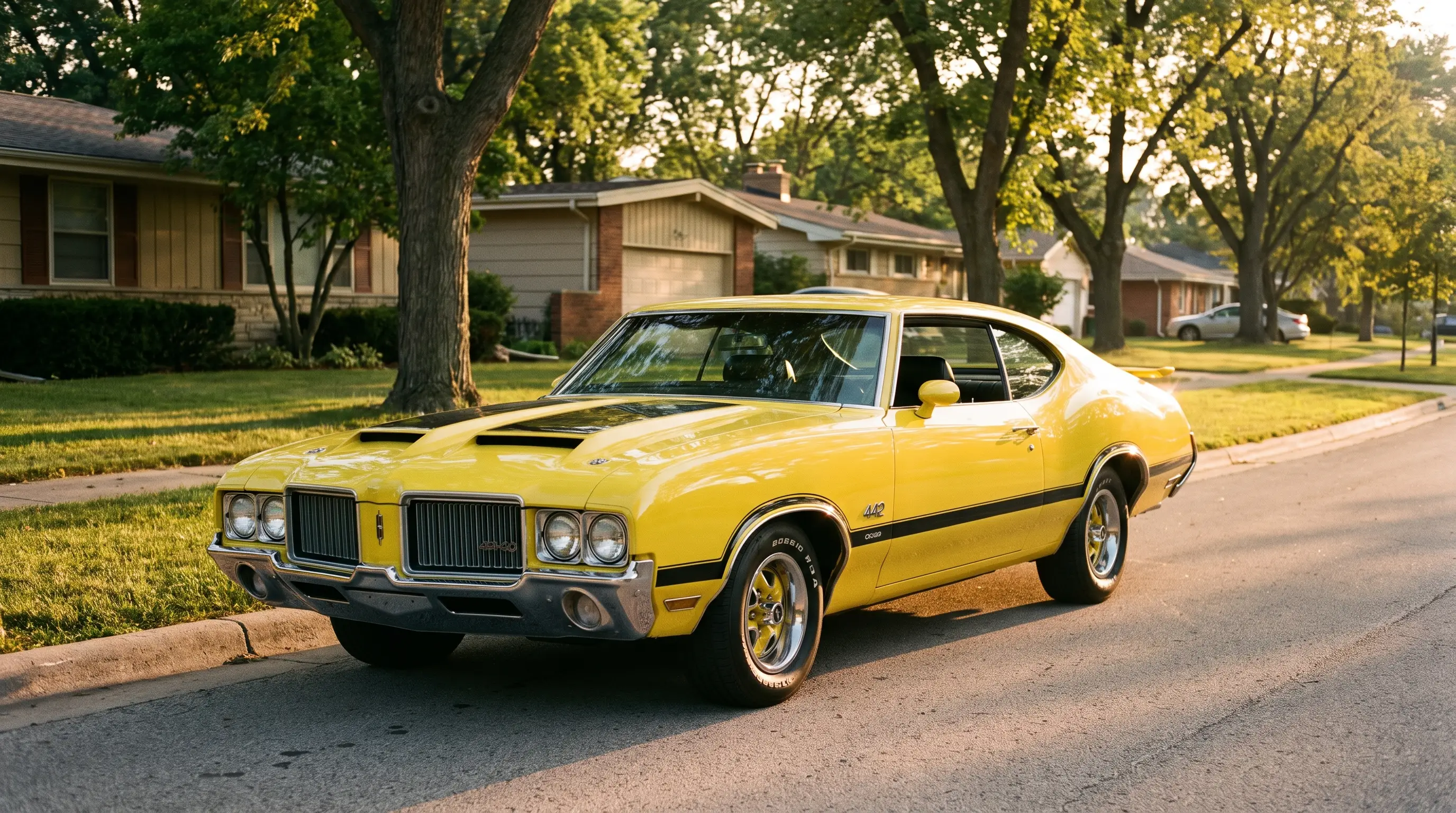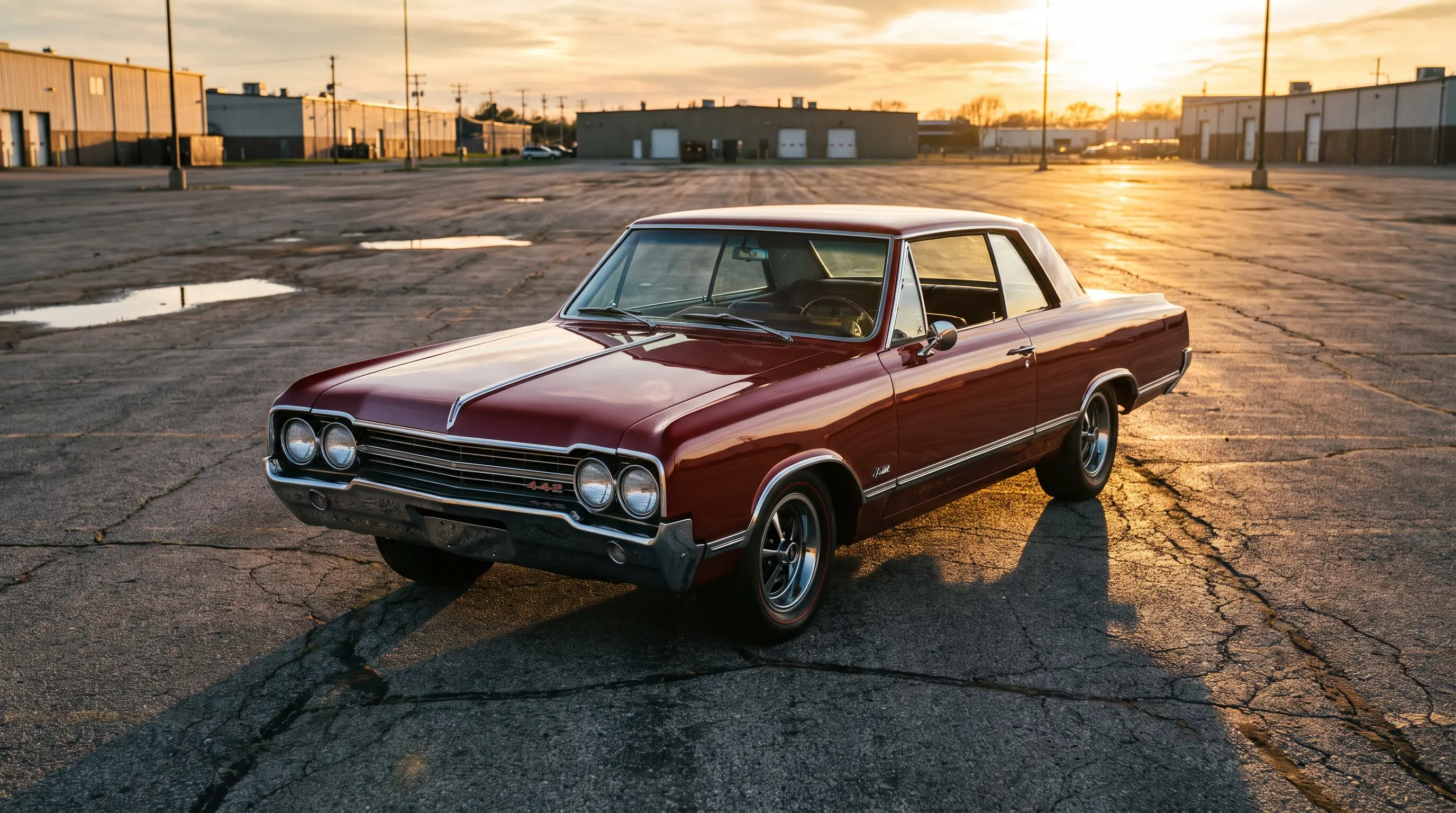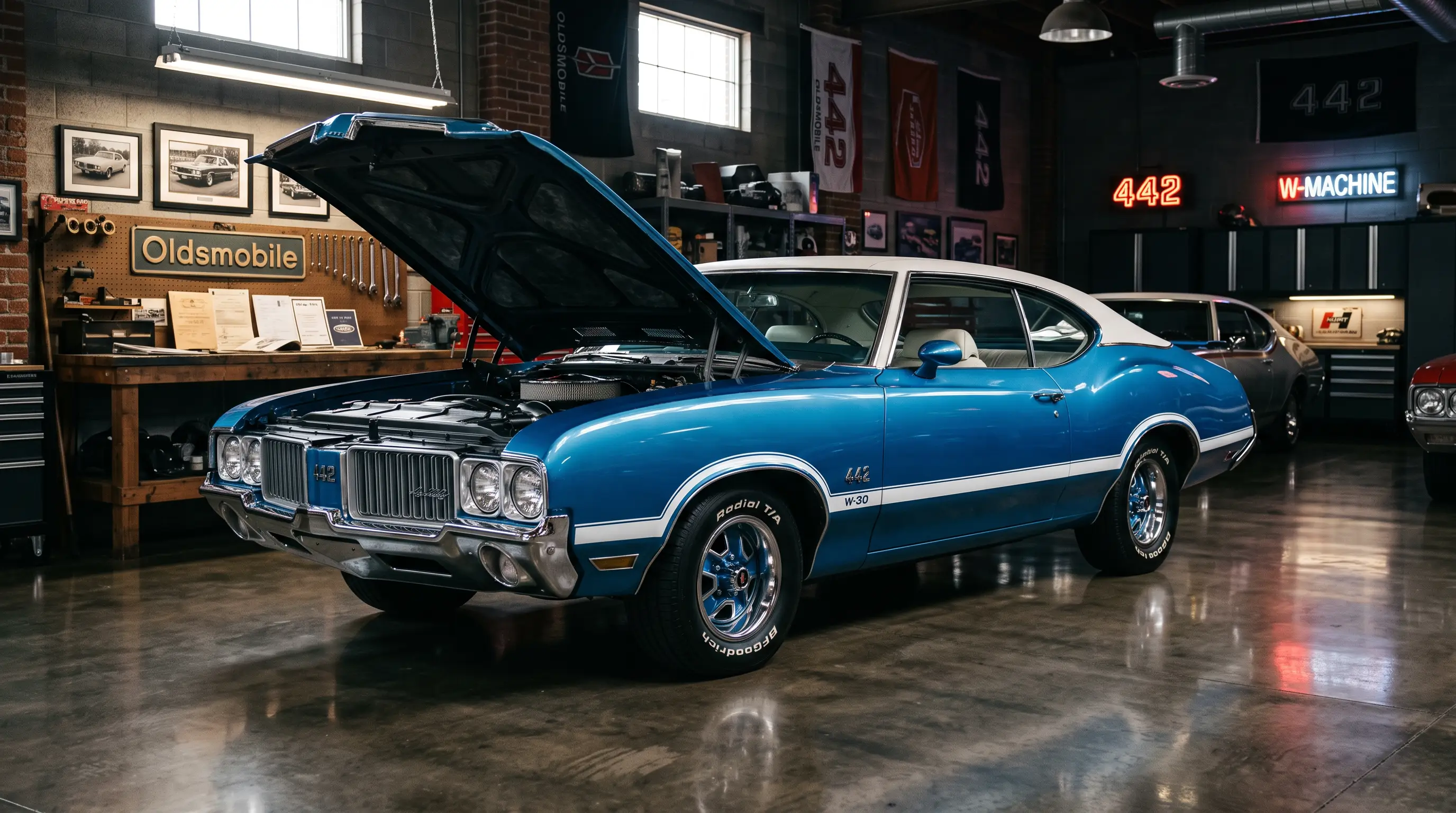
The Oldsmobile 442 gets called an icon a lot, and most of the time nobody backs that up with a number. I look at auction results for a living, so let me back it up. Icon status isn't a feeling. It's a car that keeps showing up at the top of results decades after the brand that built it stopped existing, and the 442 does exactly that.
Every muscle car segment has cars people call icons out of habit rather than evidence. I want to separate the two categories here, because the difference matters if you're deciding what to buy or what to hold.
The numbers behind the icon claim
Oldsmobile hasn't sold a new car in the United States since 2004. Most performance nameplates from defunct brands fade out of collector consciousness within a generation. The 442 hasn't. It still commands consistent bidding at major auctions, still gets featured coverage when a documented example crosses the block, and still holds price levels that track closer to surviving brands like Chevrolet and Pontiac than to other discontinued GM performance lines. That's the actual test of an icon: demand that outlives the company.
For the full mechanical and historical background on what the badge represented when new, the Oldsmobile 442 lays out the engineering case. What I'm interested in here is what the market has done with that history since.
From performance option to brand identity
The 442 started as an option package, not a standalone model, and that matters for how collectors value it today. A car that begins as a trim level and grows into a brand identity tends to hold value better than a car that was always a flagship, because it proves demand pulled it upward rather than marketing pushing it there. Oldsmobile leaned into that shift through the late 1960s and into the 1970s, expanding the badge, the striping, and the promotional weight behind it as buyer response justified the investment.
By the time the muscle car era wound down in the early 1970s, the 442 had become one of the few nameplates strong enough to survive engine changes, emissions regulations, and a shrinking performance market largely intact in name recognition, even as the cars underneath got softer.
Surviving the badge-engineering era
What separates a real icon from a name that just hangs around is what happens to it once the original engineering case disappears. The 442 badge outlasted the big-block engines that first justified it, carried through emissions-choked years when horsepower numbers dropped across the entire industry, and rode out a downsized G-body platform in the late 1970s and 1980s where the car underneath had almost nothing in common with the 1968 original.
Most nameplates that go through that kind of transformation lose collector credibility along the way. Buyers start treating the later cars as a different, lesser thing wearing an old name for marketing reasons. The 442 mostly avoided that fate, in part because Oldsmobile kept reviving the performance-badge tradition at key moments rather than letting it become pure trim-level dressing, and in part because collectors drew a clear enough line between the true muscle-era cars and the later editions that neither category dragged the other's reputation down.
What auction data says about staying power
Documented, numbers-matching 442s from the late 1960s through 1972 have shown steady appreciation over the last two decades rather than the boom-and-correction pattern seen in some hyped muscle car segments. That steadiness is itself a market signal. Cars driven by short-term speculation spike and drop. Cars driven by durable collector demand climb more slowly and hold the gains.
| Segment | Market behavior | What it signals |
|---|---|---|
| Documented W-30 hardtops | Steady multi-year appreciation | Durable collector demand |
| Base 442 hardtops, non-W-30 | Flat to modest growth | Entry point for new collectors |
| Convertibles, documented | Sharper appreciation, lower volume | Scarcity-driven premium |
| Undocumented or cloned cars | Discounted, slower to sell | Market penalizing missing paperwork |
Comparing the 442 to its muscle car peers
Set the 442 next to a GTO or a Chevelle SS and the spec sheets look similar on paper: big-block options, four-speed manuals, aggressive styling packages. What separates the 442's market position is the combination of relatively lower original production numbers in certain years against a brand that no longer exists to produce more. Scarcity that can't be undone by a future model year is a stronger long-term value driver than scarcity that's just a snapshot of one production run in an ongoing lineup.
That doesn't make the 442 automatically more valuable than its peers across every configuration. It does mean the ceiling on a top-documented example tends to hold up under the same collector logic that keeps Hemi Mopars and top-tier Chevelles strong: nobody is building more of them, and everybody who wants one already knows it.
There's a secondary effect too. Because Oldsmobile no longer exists as a brand, there's no factory heritage division reissuing parts, no modern marketing budget keeping the nameplate in front of new buyers, and no continuation cars muddying the collector market the way some surviving brands have flirted with. Everything that happens to 442 values from here forward happens because of the cars that already exist, not because of anything a company decides to do next. That's a cleaner setup for long-term value than a lot of collectors give it credit for.
"An icon isn't the car people talk about. It's the car people still bid on after the company that built it is gone. The 442 clears that bar every time it shows up at a major sale."
— David Mercer
Why the icon status holds up today
My buy assessment on a documented 442, whether W-30 or a well-optioned base car, is straightforward: buy the paperwork first, the color and options second. The market has already told us which combinations command premiums and which are steady long-term holds. What it hasn't done is punish the badge itself the way it has punished some other discontinued-brand performance cars. That's the real definition of icon status in this business, and the 442 has earned it with results, not nostalgia.
I get asked fairly often whether a defunct-brand car can really be a safe long-term hold, since there's no factory backing the parts supply or the name anymore. The 442's own results answer that question better than I can. A discontinued brand doesn't automatically mean a discontinued market. It just means the demand has to be strong enough to stand entirely on its own, with no help from a marketing department, and the 442 has been doing exactly that for two decades running.
For a closer look at the specific naming and badge history behind the car, a companion piece breaks down where the numbers in the name actually came from and how that story has been told and retold over the decades.
My take stays consistent every time I get asked: a documented 442 is a buy, not a maybe, at nearly every price point the market currently supports.