Ask ten people what makes a 442 rare and you'll get ten answers built on rumor. The real answer is boring and it's the same answer for almost every rare American muscle car: low production, the right options box checked, and paperwork that survived when most of it didn't. I've seen "rare" 442s that were common cars with an uncommon story attached, and I've seen genuinely scarce cars sitting unsold because nobody could prove what they were.
I've turned wrenches on enough of these to know the difference between a car that's actually scarce and a car that just sounds scarce in a sale ad. The gap between the two comes down to a handful of repeatable questions, and most sellers hope you won't ask them.
What actually makes a 442 rare
Production numbers alone don't make a car valuable. A 442 built in a low-volume color with a low-volume option combination, backed by a broadcast sheet or dealer invoice that confirms it, is worth real money. The same car with no paperwork is worth a fraction of that, because the market has learned the hard way that claims without documentation get contested. If you want the mechanical and historical grounding behind why any of this matters, the 442 story covers what the badge actually represented on the showroom floor.
Rarity also has to survive scrutiny. A car with a low build number but a replacement engine, a repainted body, or a title that doesn't track back cleanly isn't rare in any way that pays off at sale. Buyers who chase a low production figure without checking the rest of the file end up owning an expensive lesson.
I check the same three things on every "rare" 442 that rolls into my shop. Does the engine stamping match the broadcast sheet or build sheet, if one exists. Does the paint code on the cowl tag match what's on the car now. And does the frame or floor pan show any sign of a collision repair that would explain a suspiciously fresh repaint. Skip any one of those checks and you're buying a story, not a car.
The 1970 W-30 convertible
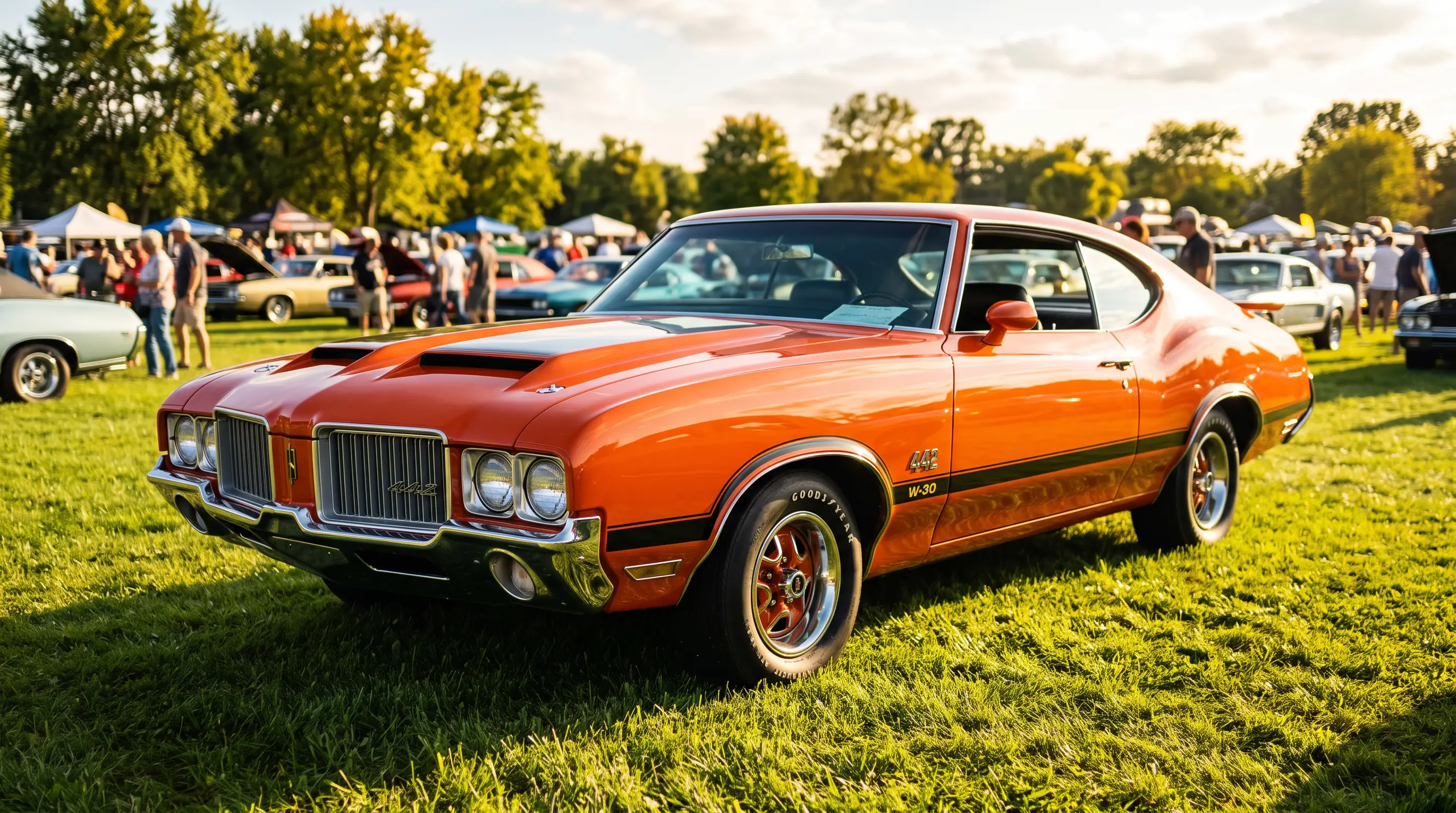
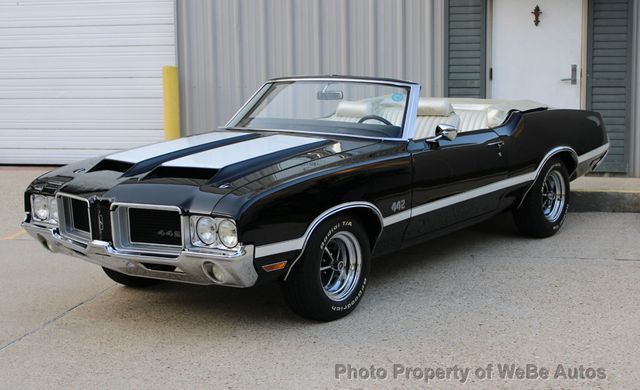
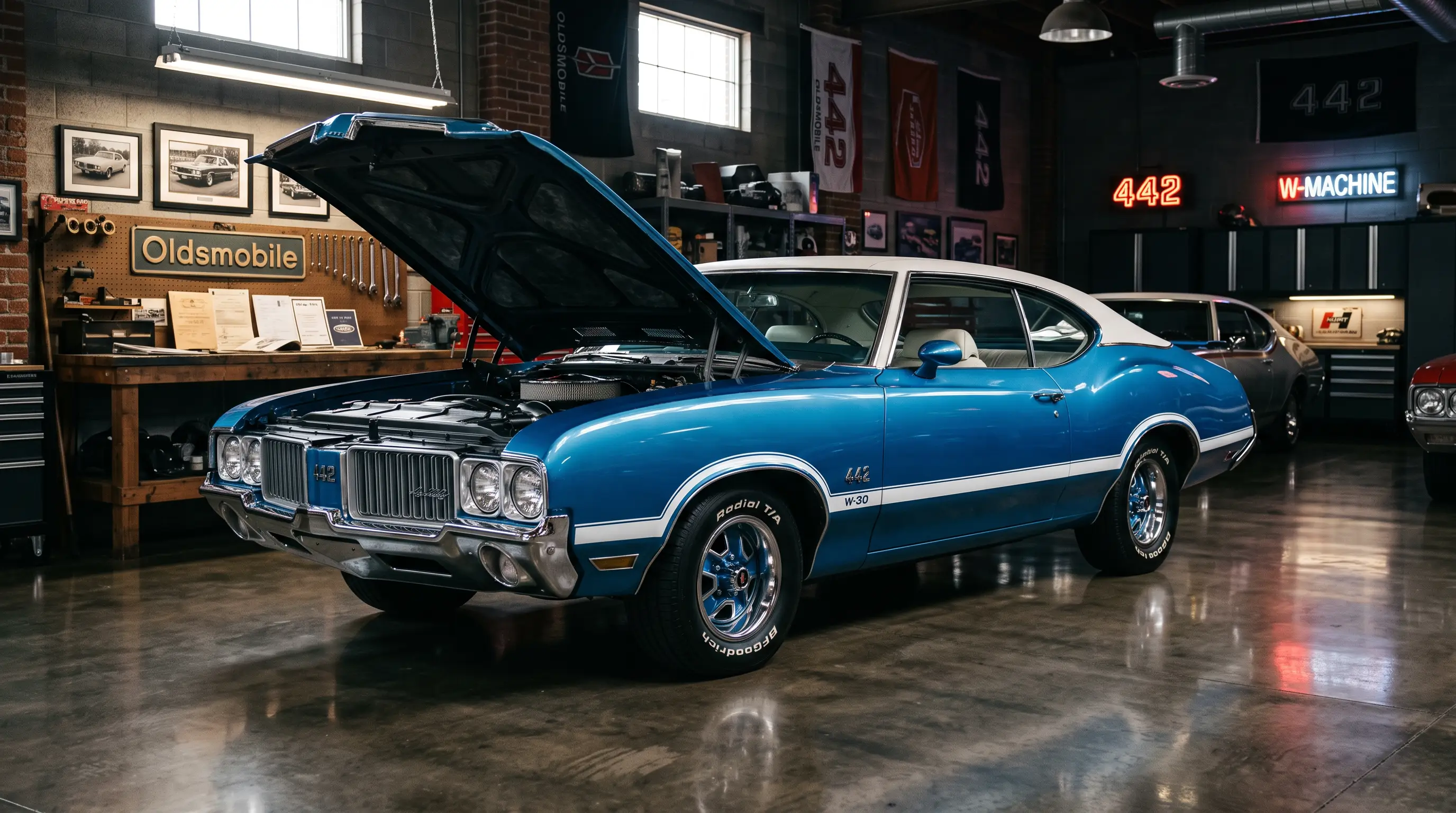
If you're ranking scarce 442s, the 1970 W-30 convertible sits near the top of most serious lists. Oldsmobile built the W-30 package as the performance option on top of an already quick car, and very few of those cars were ordered as convertibles rather than hardtops. Buyers who wanted the loudest engine package tended to want the hardtop's stiffer structure, which is exactly why the convertible combination stayed rare instead of common.
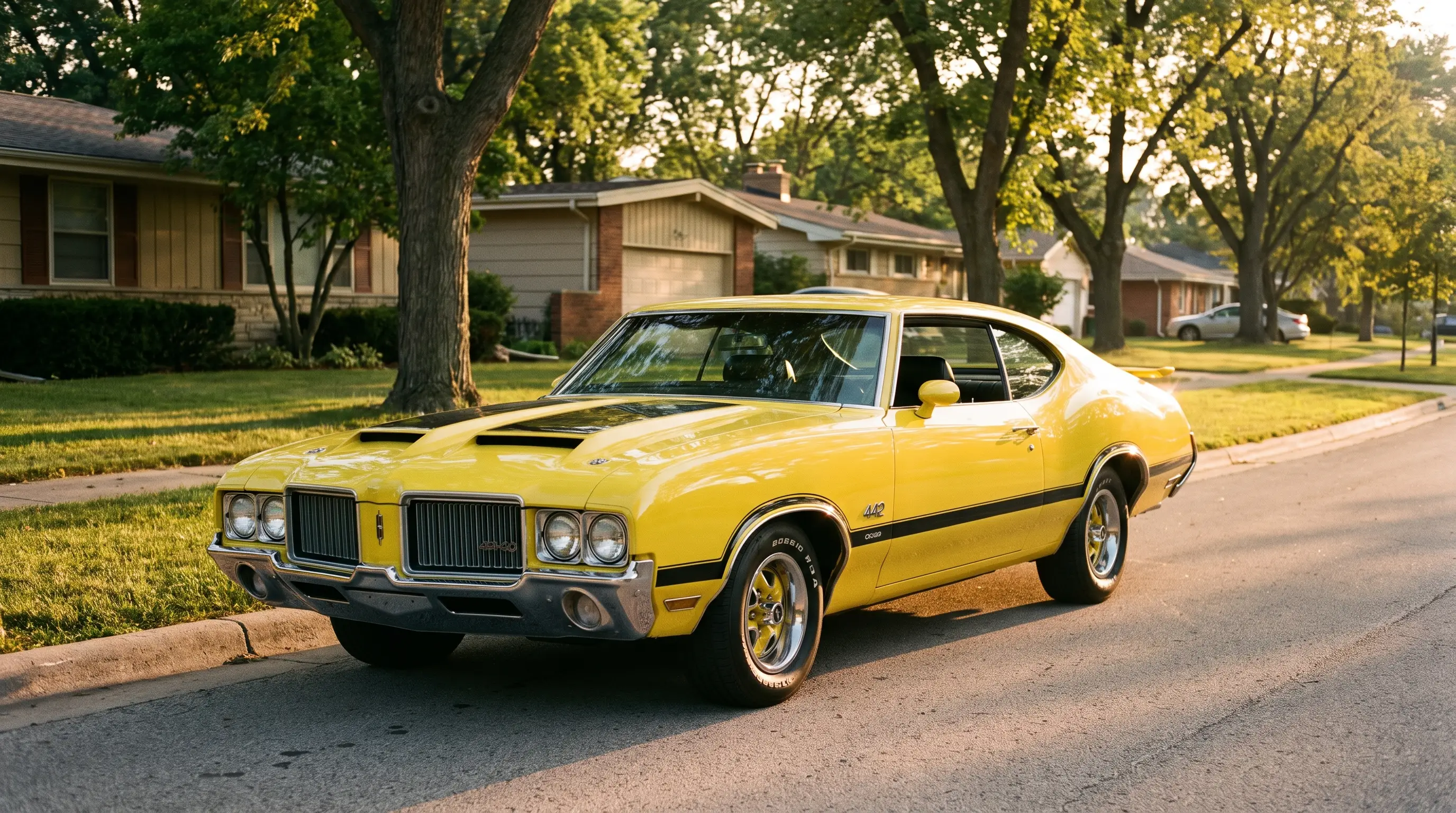
Add a documented Sebring Yellow example with the factory stripe package and functioning W-30 induction hardware, and you're looking at one of the most contested cars in the muscle car market whenever one surfaces at a major auction. These don't come up often, and when they do, bidding tends to run past what the spec sheet alone would predict.
First-year and one-year-only variants
1968 matters because it's the first year the 442 became its own model designation rather than an option package layered onto the Cutlass. Early 1968 W-30 cars, particularly with the correct fiberglass hood scoops and force-air induction, are scarce simply because the option was new and few buyers understood what they were paying for yet.
One-year-only trim and badge details also drive rarity in narrower ways. A stripe pattern, a wheel option, or an interior trim combination offered for a single model year creates a car that's rare almost by accident, since Oldsmobile revised these details nearly every season. None of these one-year quirks matter much on their own. Stacked together with a documented drivetrain, they add up.
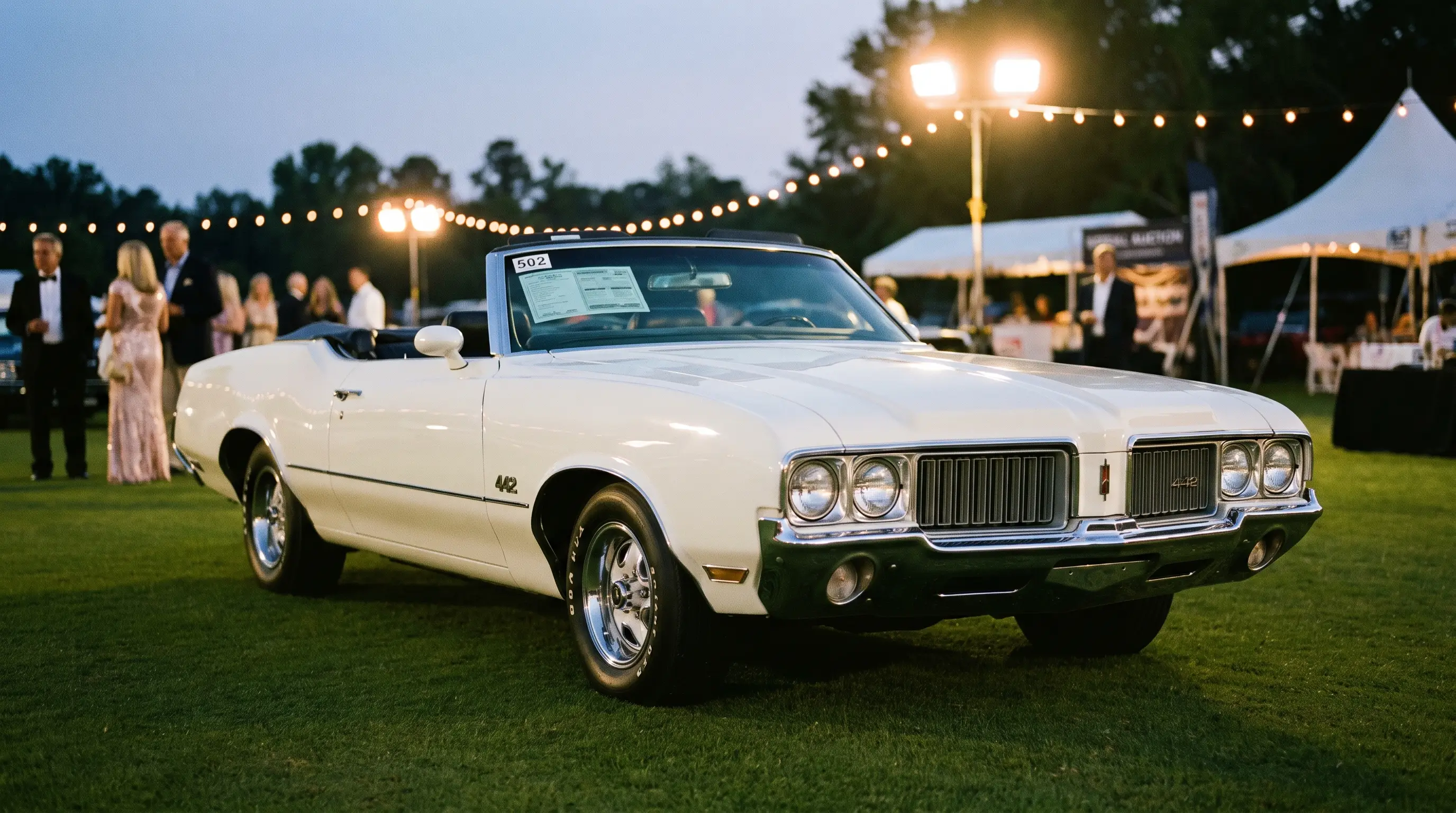
The 1972 model year deserves its own mention. Convertible demand across the whole muscle car segment was dropping fast by then, and a 1972 442 convertible isn't rare because Oldsmobile built some radical one-off package. It's rare because fewer buyers wanted a convertible, full stop, and low demand at the dealership turned into low supply at auctions decades later.
Colors and engines that move the needle
Rarity isn't only about body style or option package. Color matters more than a lot of buyers want to admit. A W-30 in a common white or black doesn't carry the same premium as the same car in a low-order color like Sebring Yellow or a factory two-tone that most dealers never bothered stocking. Dealers ordered inventory based on what they thought would sell fast, and bold colors sat on lots longer, which means fewer got built and fewer survived a repaint into something more conservative down the road.
Engine and transmission combinations tell a similar story. A W-30 paired with a four-speed manual draws a narrower, more committed buyer than the same car with an automatic, even though both left the factory with identical induction hardware and rated output. Among the 1970 W-30 convertibles, only 96 of the 264 built came with the four-speed, so the automatic actually outnumbered the manual in that body style. That narrower manual pool has still kept four-speed W-30s ahead of automatics at auction for years.
| Variant | Model year | Why it's scarce |
|---|---|---|
| W-30 convertible | 1970 | Only 264 built of 3,100 total 1970 W-30s, convertible body style rarely paired with the package |
| First-year 442 W-30 | 1968 | New option, low early adoption |
| Hurst/Olds 442 | 1968, 1969 | Dealer-installed specialty build, limited run |
| 1972 442 convertible | 1972 | Late-era convertible demand dropping fast |
Documentation as the real rarity multiplier
I'll say this every time somebody asks me to appraise a "rare" 442: the paperwork is worth more than the paint. A broadcast sheet, a factory build sheet, period photographs, or a documented ownership chain turns a plausible rare car into a provable one. Without that, you're asking a buyer to trust a story, and serious buyers don't pay serious money for stories.
This is also where fakes get made. It's not hard to build a clone with the right stripes and the right badges. It is hard to fabricate a clean, consistent paper trail that holds up when a knowledgeable buyer starts asking questions. That gap between looking right and proving right is where most of the real value sits. For a different way of measuring what made these cars matter beyond the rarity chase, another angle looks at the 442's standing in the market rather than its production numbers.
A real broadcast sheet has wear patterns, storage creases, and a chain of prior owners who can vouch for how it's been kept. A fresh reproduction printed last month has none of that history, just a document that showed up conveniently after the seller listed the car.
"Anybody can bolt on the right stripes. Nobody can bolt on thirty years of consistent paperwork after the fact."
— Mike Sullivan
What this means for buyers today
If you're shopping for a genuinely rare 442, start with the paperwork, not the spec sheet. Ask for the broadcast sheet before you ask about the color. Ask how long the current owner has had it and whether the ownership chain is documented back further than the last sale. A car that checks every rarity box on paper but can't answer basic ownership questions should get a lower offer, not a higher one.
The 442 didn't exist in a vacuum. It came out of Oldsmobile's broader Cutlass lineup, and understanding Oldsmobile's Cutlass history explains why the 442 option carried the weight it did within the brand. Rarity means something only in that context. A scarce option on a car nobody cared about isn't the same as a scarce option on the car that defined Oldsmobile performance for a decade.
Buy the documentation first. The rarity, if it's real, will still be there once you've confirmed it.