Look at a pre-war car from the front and the grille tells you almost everything before you read a badge. It is the one panel a designer could not disguise as anything other than decoration, since the radiator behind it needed airflow no matter what shape the metal took. That constraint, oddly, is what makes Art Deco grilles so interesting to study. Stylists had to solve a mechanical problem and an aesthetic one at the same time, and the best of them made the solution look inevitable.
I look at a lot of pre-war fronts in my work, and the grille is usually where originality questions start. A replaced or reshaped grille shell changes the entire read of a car's face, so understanding what a correct one looked like for a given chassis matters as much to a buyer as it does to a historian. This piece is a companion to the art deco car grilles story, focused narrowly on the one feature that most people notice first and understand least.
The grille as the face of a car
Before Art Deco, radiator shells were largely functional. Brass-era and early 1920s cars used flat or gently curved fronts, often left in polished metal, with little attempt to integrate the shape into a broader design language. That changed once stylists began treating the whole car as a composition rather than a collection of parts.
By the early 1930s, the grille had become a focal point. Designers used it to establish a car's personality before a viewer noticed anything else, tall and narrow for an aggressive stance, wide and low for a settled, confident one. The shape at the front set expectations for everything behind it, and a coachbuilder or factory stylist who got the grille wrong undermined the whole design no matter how well the fenders and roofline were resolved.
The waterfall grille and its French roots
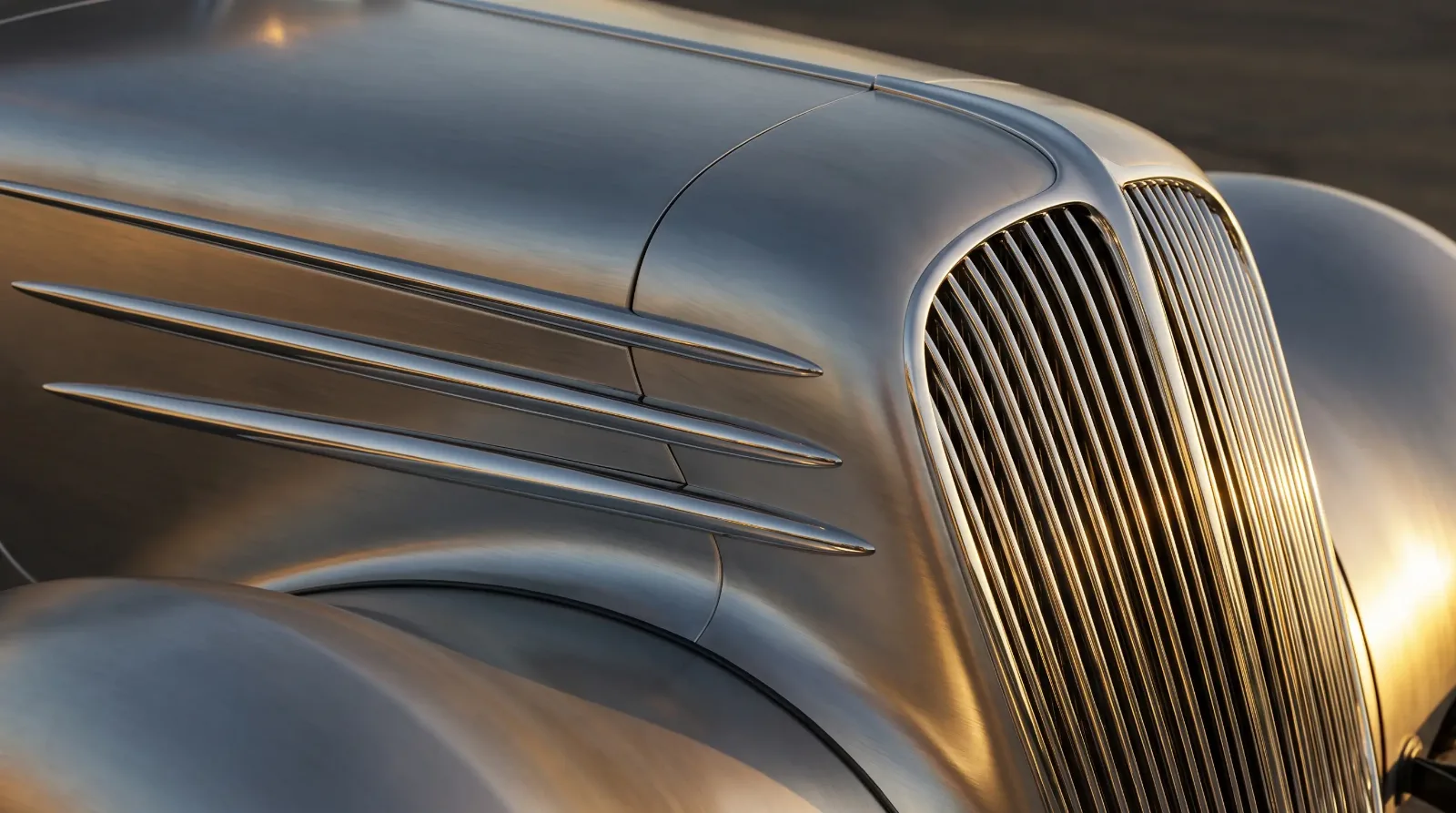
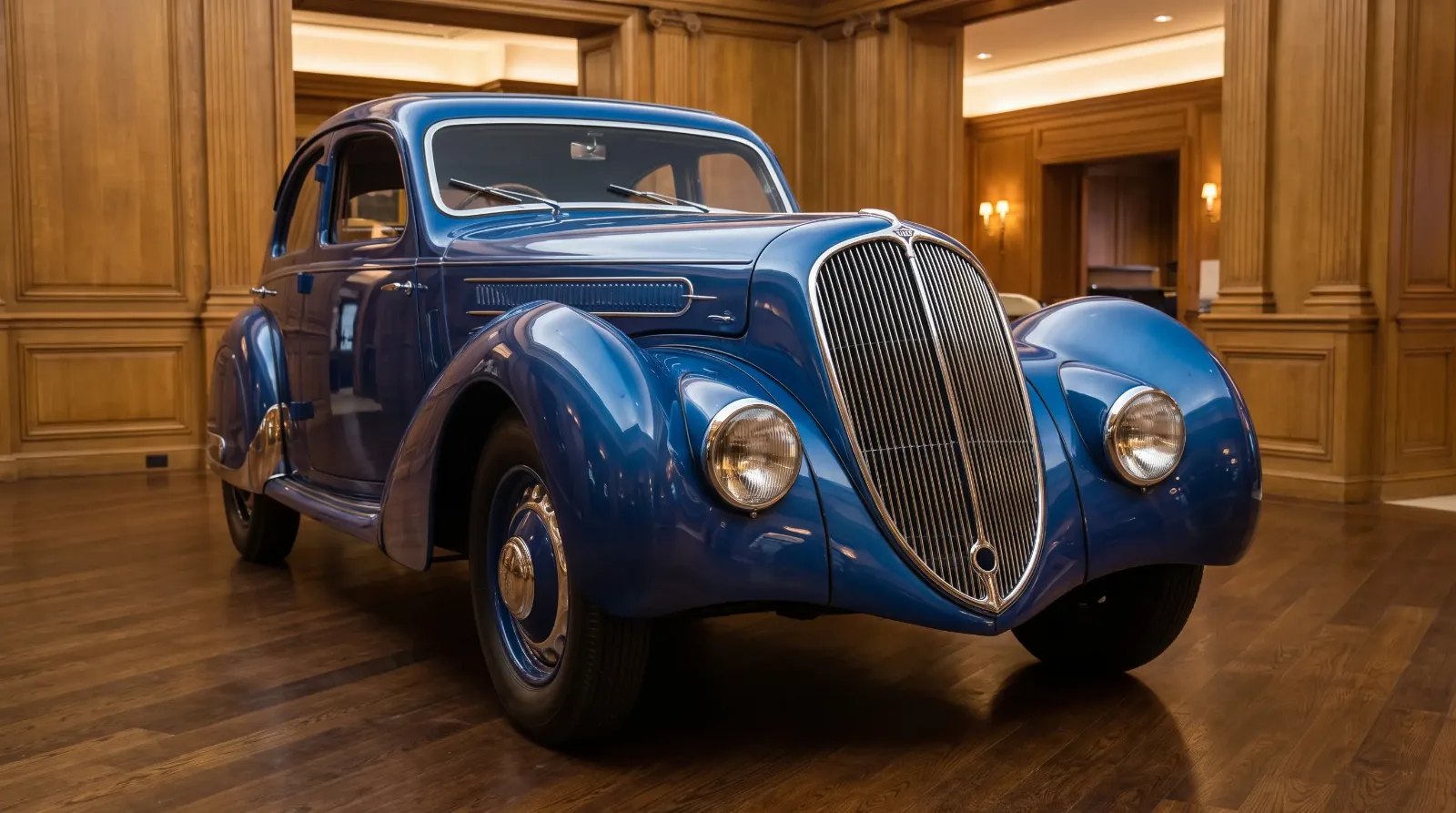
The signature Deco grille shape is the waterfall, a gently curved shell filled with narrow vertical bars that appear to cascade downward. The form borrowed directly from Deco architecture and decorative art, where repeated vertical elements were a common motif in everything from building facades to jewelry.
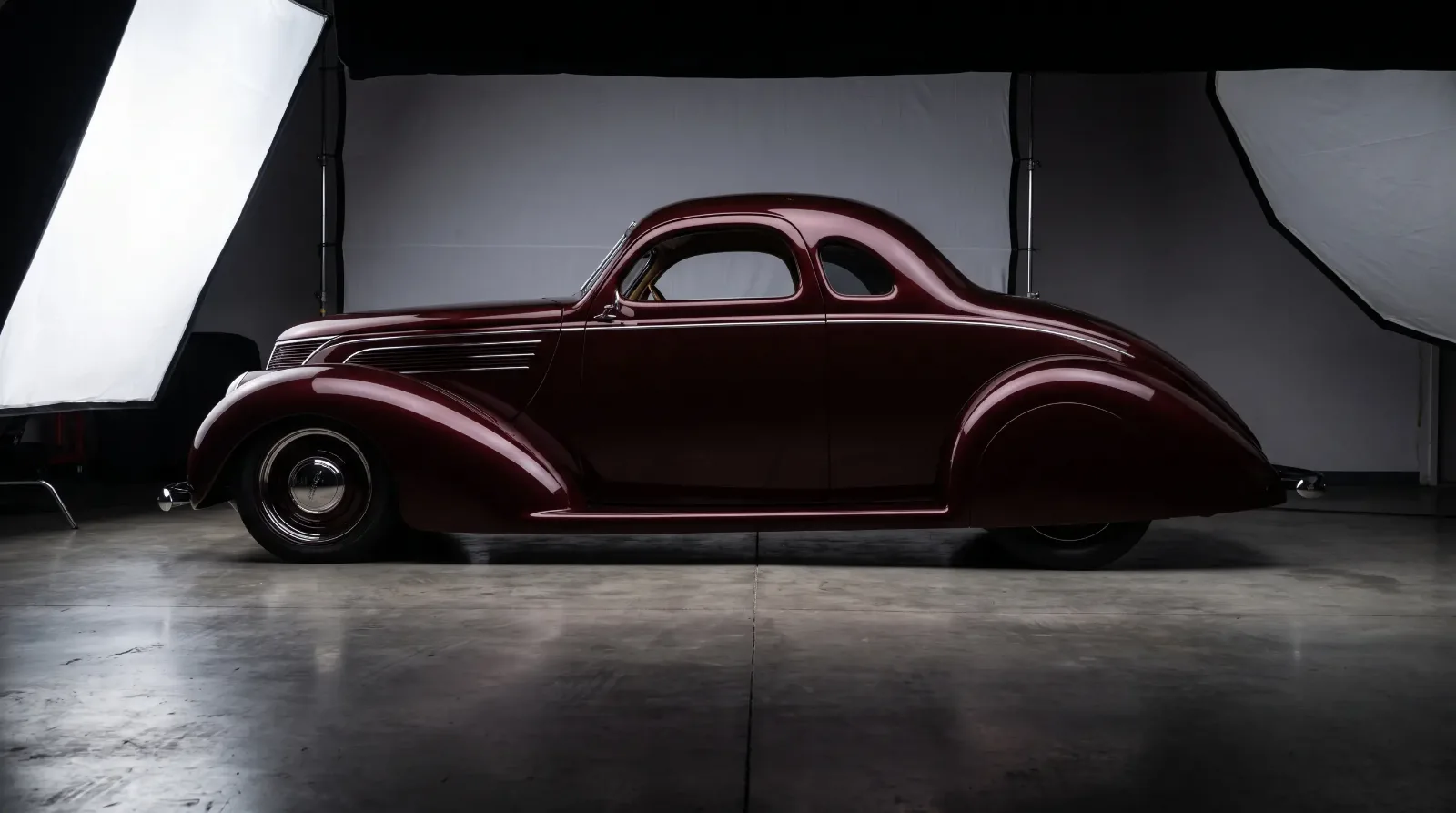
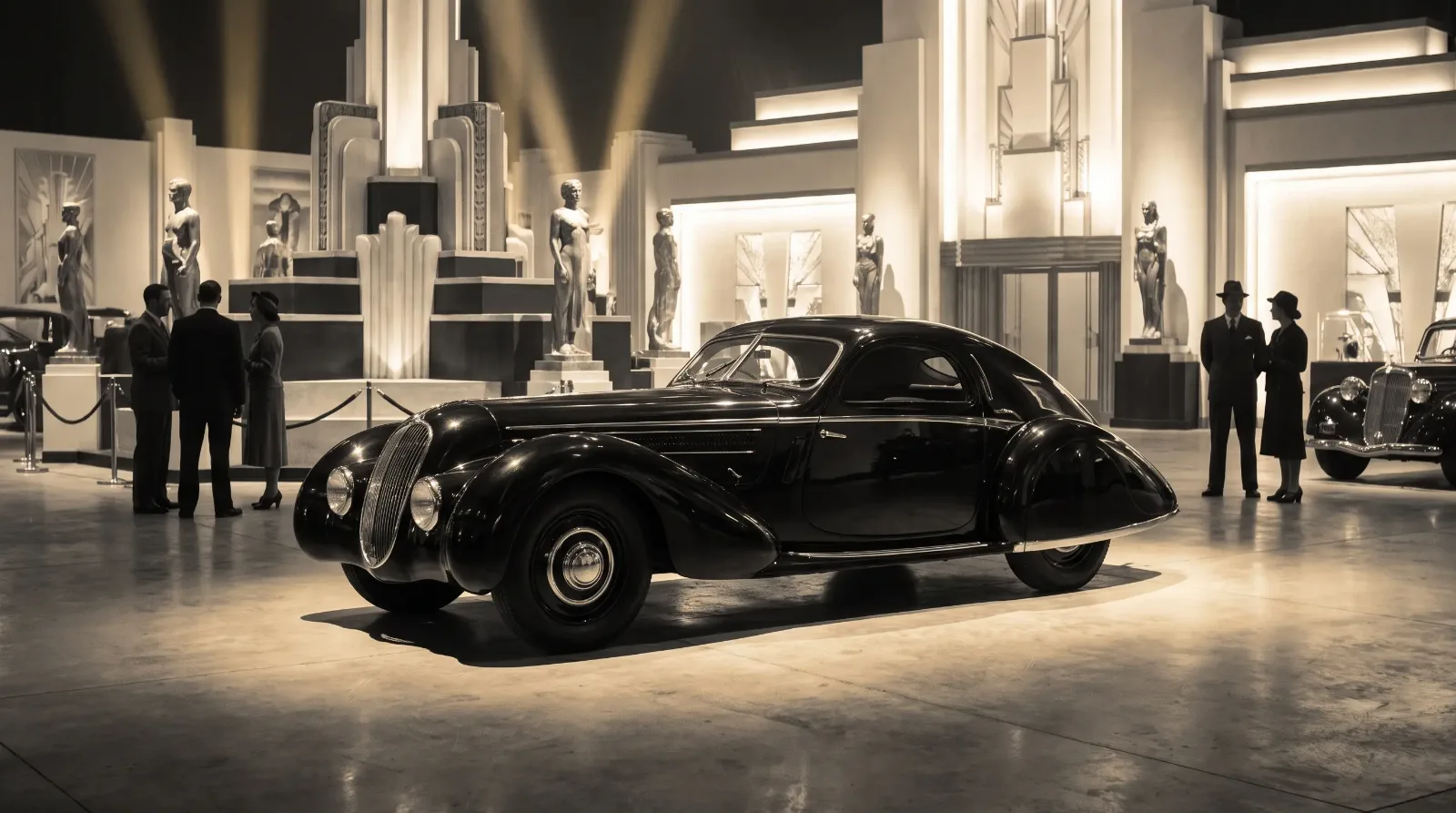
French coachbuilders working on Delahaye, Delage, and Talbot-Lago chassis pushed the waterfall shape furthest. Figoni et Falaschi in particular favored grilles that leaned back slightly at the top, echoing the raked windshields and teardrop fenders their shops became known for. The grille was never designed alone. It was drawn as part of the same continuous line that ran from the nose to the tail, and on the best French bodies you can trace that line with your eye without a single hard break.
Packard and Cadillac in the United States adopted a similar vertical-bar treatment but kept the shell more upright, a difference that reflects a broader split between European coachbuilt fluidity and American factory formality. Neither approach is more correct than the other. They simply answered to different design priorities, one shaped by hand for a single client, the other drawn for a production line and a house style that had to hold across many bodies.
American factory answers to the French shape
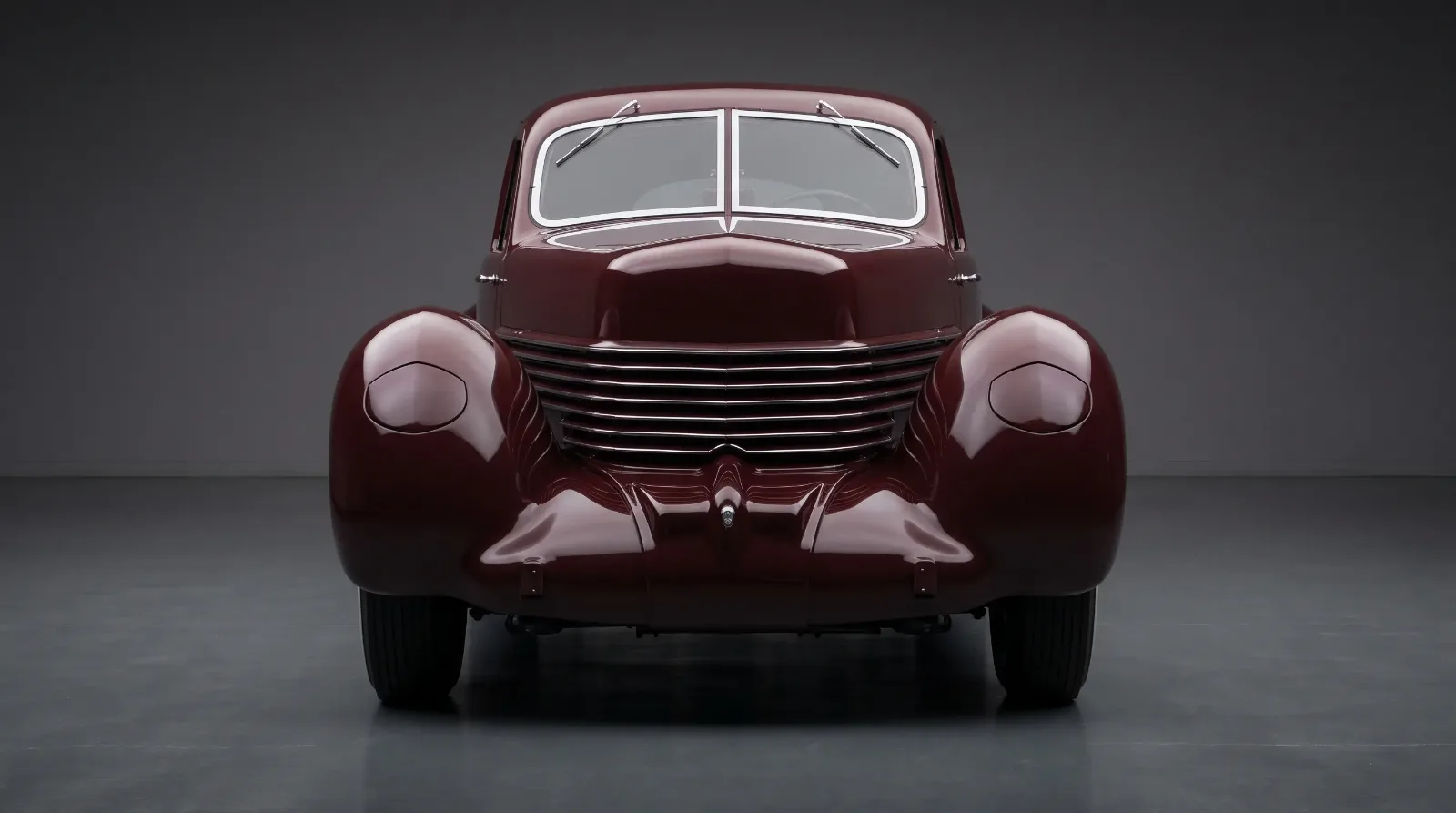
American manufacturers had a harder problem than the French carrosseries. A factory grille had to be stamped or cast in volume, fit a range of body styles, and survive a production budget, so the elaborate hand-finished waterfalls of Figoni or Saoutchik were never going to translate directly to a Ford or a Chevrolet.
What emerged instead were simplified interpretations. The Chrysler Airflow used a rounded, low grille that prioritized the aerodynamic story over Deco ornament. The Cord 810 went the opposite direction entirely and hid its grille treatment behind a wraparound louvered front with no traditional shell at all, one of the most radical grille decisions of the decade. Pierce-Arrow and Auburn split the difference, using stepped or vertical-bar shells that nodded to the French vocabulary while staying practical to manufacture.
The lesson for anyone studying these fronts is that a grille's shape usually tells you where the car sits between craft and production. A hand-planished waterfall on a coachbuilt chassis reflects a different set of priorities than a stamped shell on a mainstream American sedan, and neither should be judged against the other's standard.
| Grille style | Typical maker | Character |
|---|---|---|
| Waterfall, raked | Figoni et Falaschi (France) | Flowing, integrated into the body line |
| Vertical-bar, upright | Packard, Cadillac (USA) | Formal, dignified, consistent across a model line |
| Rounded aerodynamic | Chrysler Airflow | Low, smooth, subordinate to overall streamline shape |
| Wraparound louvers | Cord 810/812 | No traditional shell, hidden headlamps, radical for its era |
Streamline thinking touched every part of the car at once, not just the grille, and if you want the fuller picture of how that language developed across fenders, roofs, and interiors, keep reading.
What separates a great grille from a busy one
Not every vertical-bar front from the period succeeds as design. The weaker examples pile on chrome without resolving proportion, and the result looks decorated rather than designed. The strongest grilles share a few traits regardless of maker.
- The shell's height-to-width ratio matches the rest of the front end rather than fighting it.
- Bar spacing is consistent and reads as a single rhythm, not a pattern applied without regard for the shell's curve.
- The grille sits in visual balance with the headlamps, whether they are separate pods or faired into the fenders.
- Chrome is used to define the shape rather than to cover it.
Training your eye on proportion first, and ornament second, is the fastest way to separate a considered design from an over-decorated one. This is a skill worth building slowly, because photographs flatten a lot of the depth that makes a great grille work in person. A shell with subtle forward lean can look flat in a two-dimensional image and only reveal its shape when you walk around the car.
"A grille is the one place on a pre-war car where you can see the designer's hand most clearly, because it had to solve engineering and beauty in the same three square feet. The good ones make that look effortless."
— Sarah Whitfield
Reading originality in a surviving grille
For anyone examining an actual car, the grille shell is worth close inspection before anything else on the front end. Shells were sometimes damaged in period accidents and replaced with parts from a different body style or a later reproduction, and a mismatched shell changes both the look and the value of the car.
Check that the bar count and spacing match documented examples for that specific chassis and coachbuilder, since variations existed even within a single model line. Look at how the shell meets the fenders, because a poorly fitted reproduction often shows a visible seam or gap that an original hand-fitted piece would not have. Chrome quality is another tell. Older replating tends to be thicker and softer at the edges than a modern show-quality restoration, and knowing the difference helps when dating the last time a car was fully redone.
The grille rewards close attention because it carries more design information, and more originality risk, than almost any other single panel. Once you learn to read one correctly, the rest of a Deco car's face starts to make more sense too, and that habit of reading detail against period reference is worth carrying into the full pre-war story, where the same instincts apply across the whole era.