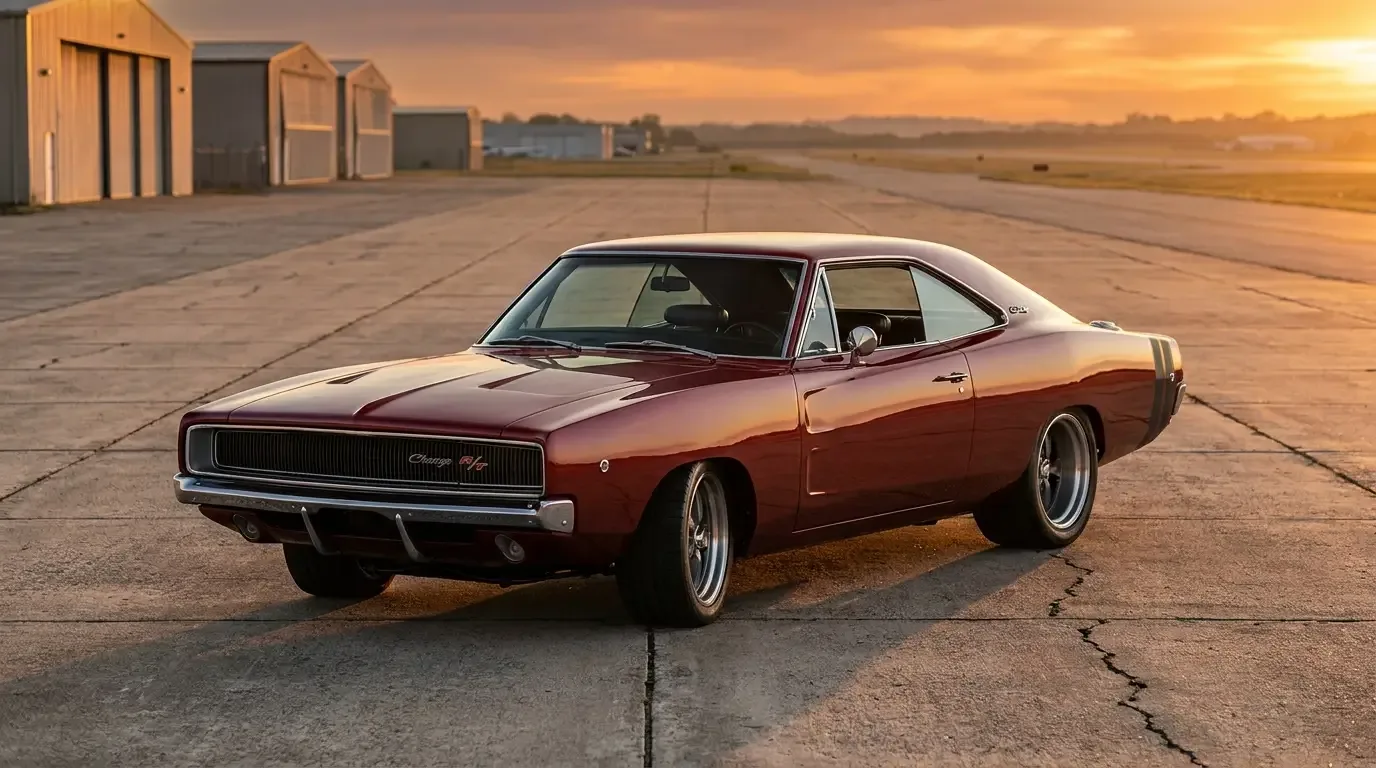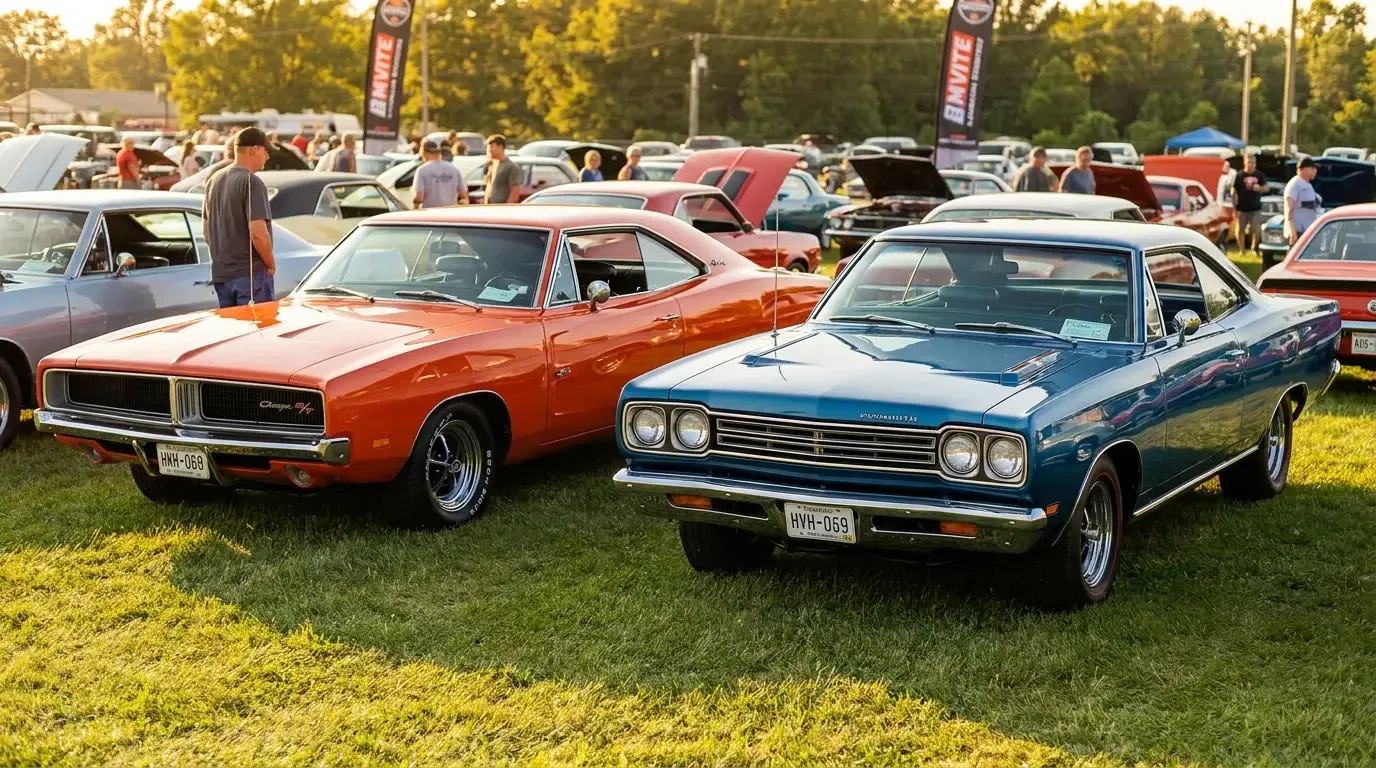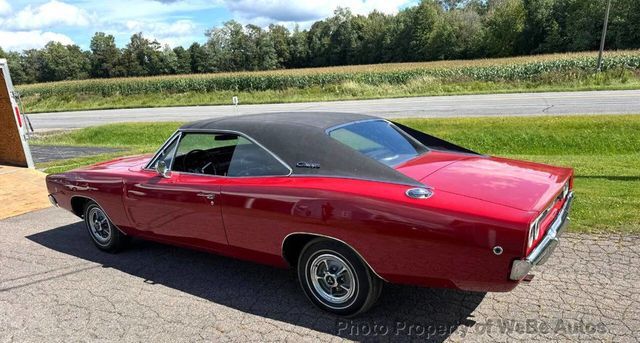
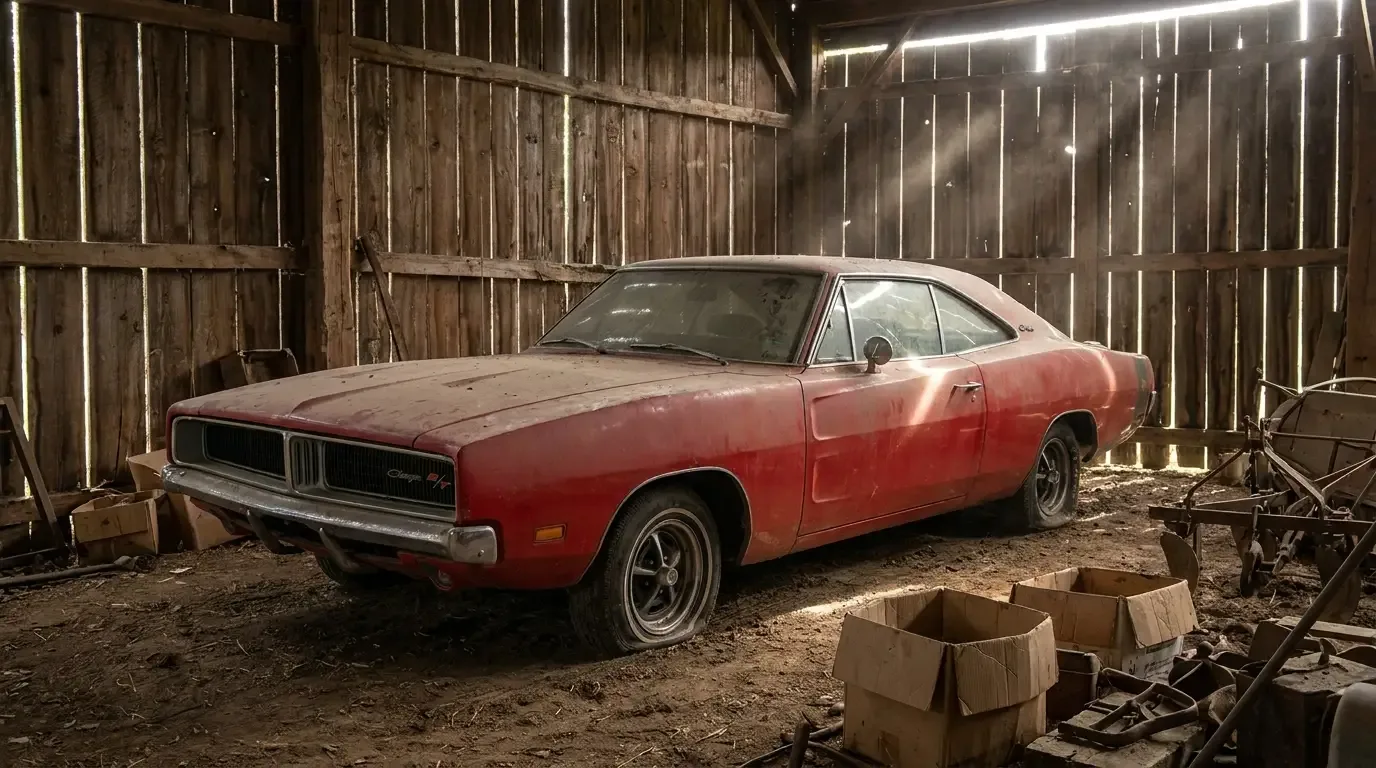
I got a call a few years back about a Charger sitting in a pole barn outside a farm town, parked since the transmission went out sometime in the late 1980s and never touched since. The owner's father had bought it new, then let it sit rather than deal with the repair, and it stayed exactly where it was parked for over thirty years. That's the barn-find story everybody wants to believe exists somewhere near them. Most of the time it doesn't. Sometimes it actually does.
Real barn-find Charger R/Ts are rarer than the hobby's romantic version of the story suggests, and the ones that do surface usually come with more problems than the sales pitch lets on. I've crawled under enough of these to know what actually separates a genuine find from a expensive mistake wearing thirty years of dust as camouflage.
What "barn find" actually means versus what sellers claim
A genuine barn find is a car that's been off the road for an extended period, usually stored indoors or under cover, with an ownership history that can mostly be verified. What gets sold as a barn find often doesn't meet that bar. I've seen cars parked outside for a decade get called barn finds because they ended up in a barn for the last six months before the sale. Dust and a flat tire don't make a car a barn find. A documented, continuous period of storage does, and the seller should be able to explain exactly why the car was parked and for how long.
What to actually check before getting excited
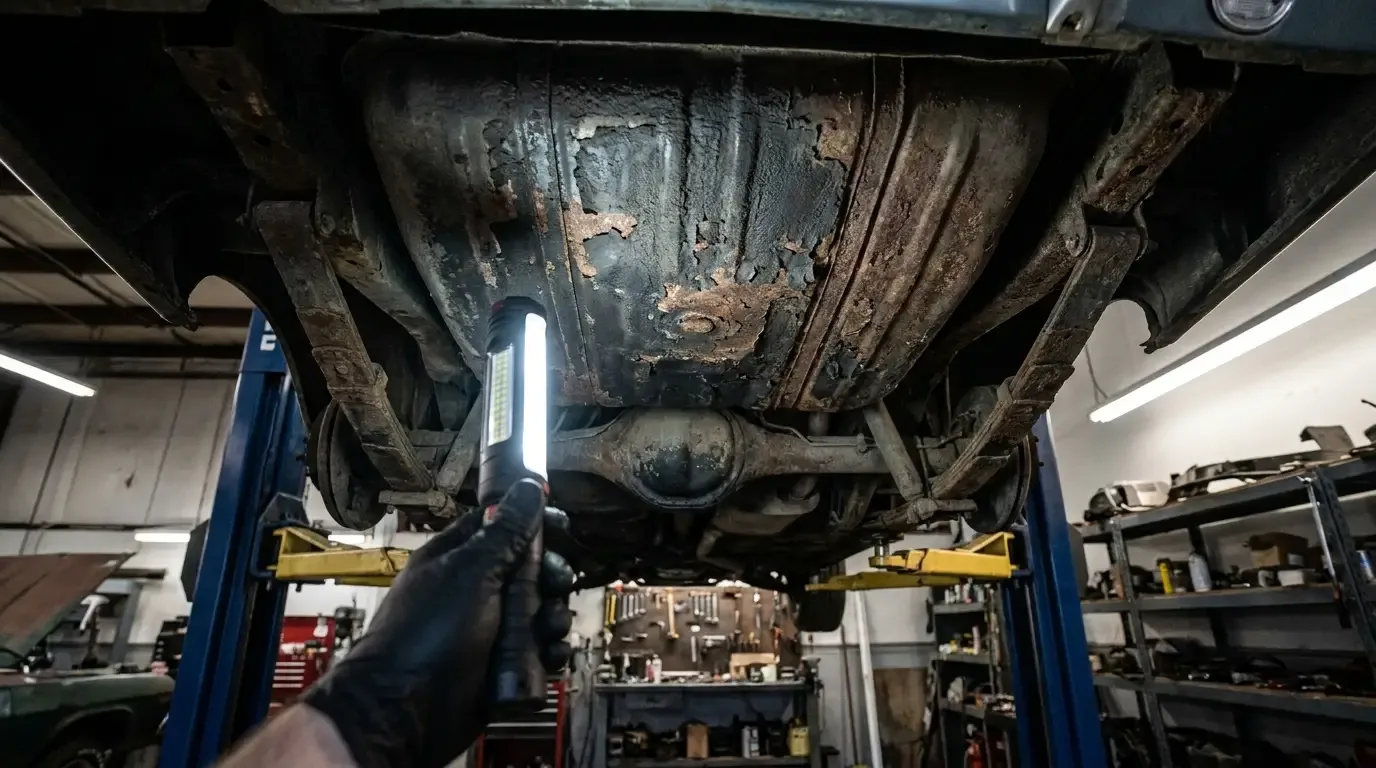
Rust is the first thing I look at, and on a car that's sat for decades, it's usually worse than it looks from a walk-around. Trunk floor, rear frame rails, and the area around the battery tray are where I start, because moisture collects there even in a dry barn. Next is the drivetrain. A "numbers-matching" claim on a barn find needs the same scrutiny as any other car, sometimes more, because thirty years of stored paperwork tends to go missing right along with the car itself. If the seller can't produce a fender tag or broadcast sheet, the numbers-matching claim is just a claim until proven otherwise.
"The paint looks right at fifteen feet. Under the hood there's a rebuilt carb on an engine that hasn't seen fresh oil in two years. Here's what to actually look at."
— Mike Sullivan
Why the engine that's in the car might not be the engine that should be
Plenty of long-stored dodge charger rt cars went through at least one engine swap before they ever got parked for good. A blown 440 in 1979 wasn't worth rebuilding to most owners at the time, so a running junkyard engine went in and the original block, if it survived at all, ended up on a stand in the corner of the same barn or long gone. Before paying a numbers-matching premium on any barn find, confirm the casting numbers on the block actually match the fender tag. I'd say a third of the "matching numbers" barn finds I've inspected turned out to have a different engine under the hood than the one that left the factory.
| Check | What It Tells You |
|---|---|
| Trunk floor and frame rails | Structural rust severity |
| Casting numbers on block | Whether engine matches fender tag |
| Fender tag and broadcast sheet | Original equipment and paint code |
| Title history and storage duration | Whether the barn-find claim holds up |
What it actually costs to bring one back
People underestimate recommissioning costs on a car that's sat for decades, every time. Fuel systems need a full teardown, not just a fresh tank, because varnished gas gums up everything from the carburetor to the fuel lines to the sending unit. Brake systems need new lines and cylinders across the board, since rubber seals that sat dry for thirty years don't seal reliably no matter how good they look. I tell people to budget at least several thousand dollars just to get a long-stored R/T running and stopping safely, before a single cosmetic dollar gets spent, and that number climbs fast if the fuel tank itself needs replacing or the brake lines have rusted through rather than just deteriorated.
Tires are another item people forget. Old rubber that looks fine can be structurally unsound from dry rot, even with plenty of tread depth remaining, and I won't drive a barn find on its original tires no matter how good they look sitting still. None of this is meant to scare buyers off a genuine find, it's meant to make sure the purchase price accounts for the real cost of getting the car safe and reliable again, not just the cost of cleaning it up for photos.
What a real barn find is actually worth
Genuine, well-documented barn-find R/Ts can command a real premium from buyers who specifically want originality over a fresh restoration, but that premium only holds up when the paperwork backs the story. A car with a plausible tale and no documentation should price like a project car, not like a discovery. Buyers chasing the romance of the story instead of the verified facts consistently overpay, and I've watched more than one deal fall apart at the last minute once a casting number didn't match what the seller had been claiming for months. If a Mopar sibling rivalry interests you as much as the Charger itself, the Charger R/T Vs GTX story is a good companion read, since barn-found GTXs turn up with nearly identical issues.
For anyone ready to look past the barn-find romance and shop what's actually documented and ready to buy, browse classic Chargers currently listed, and compare each one against the checklist here before getting attached to a story that might not hold up.
Sources and notes
- Silodrome - 1969 Charger R/T 426 Hemi barn find - a real barn-find example illustrating rust, storage and documentation realities.
- Hagerty - 1968 - 70 Charger buyer's guide - confirmed the rust-prone areas (trunk floor, frame rails) and numbers-matching caveats.
- Autoevolution - long-stored Charger R/T Hemi - background on engine-swap history in decades-parked cars.
- Wikipedia - Chrysler B/RB engines - confirmed the 440 casting-number identification used to verify original blocks.
- Wikipedia - Dodge Charger - background on fender tag and broadcast sheet equipment coding.