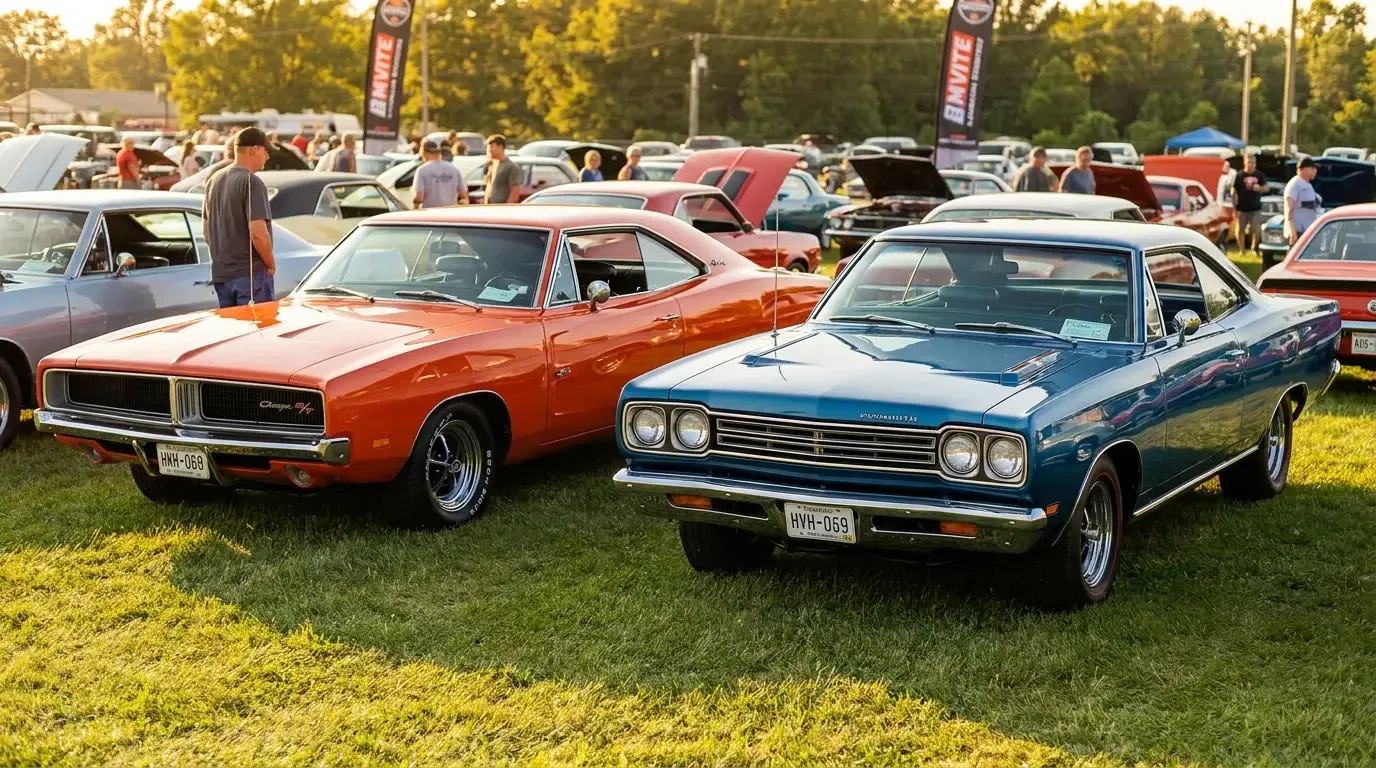
Two brothers at a family reunion in Michigan spent an entire Saturday afternoon arguing about a car neither of them owned anymore, one insisting his old Charger R/T had it over their cousin's GTX, the other pointing out they'd shared an engine plant, an assembly line, and half their parts bin the whole time. Neither one was entirely wrong, and by the third round of coffee the argument had drifted from horsepower into trim levels, dealer options, and whose father had actually paid less for a better-equipped car back in period. That argument, repeated at a thousand family reunions and swap meets since 1968, is the Charger R/T versus Plymouth GTX rivalry in miniature, a fight between two cars that were closer siblings than most fans want to admit.
Both were built by Chrysler on the same B-body platform, both offered the same 440 Magnum and 426 Hemi engine options, and both were aimed at a buyer who wanted serious power without going all the way to the stripped-down Road Runner. The differences that actually separated them were real, but they were narrower than the badge loyalty on either side would suggest.
Where the two cars were mechanically identical
Under the skin, a 1968 or 1969 Charger R/T and a GTX of the same year shared engines, transmissions, and much of the suspension and brake hardware. The 440 Magnum in the GTX made essentially the same power as the 440 in the R/T, and the Hemi option, on the rare occasions either car left the factory with one, performed identically since it was the same engine assembled at the same plant. the Charger R/T story covers the R/T's specific drivetrain history in more depth, and reading it alongside GTX literature makes clear just how much hardware the two nameplates actually shared.
Where they actually differed
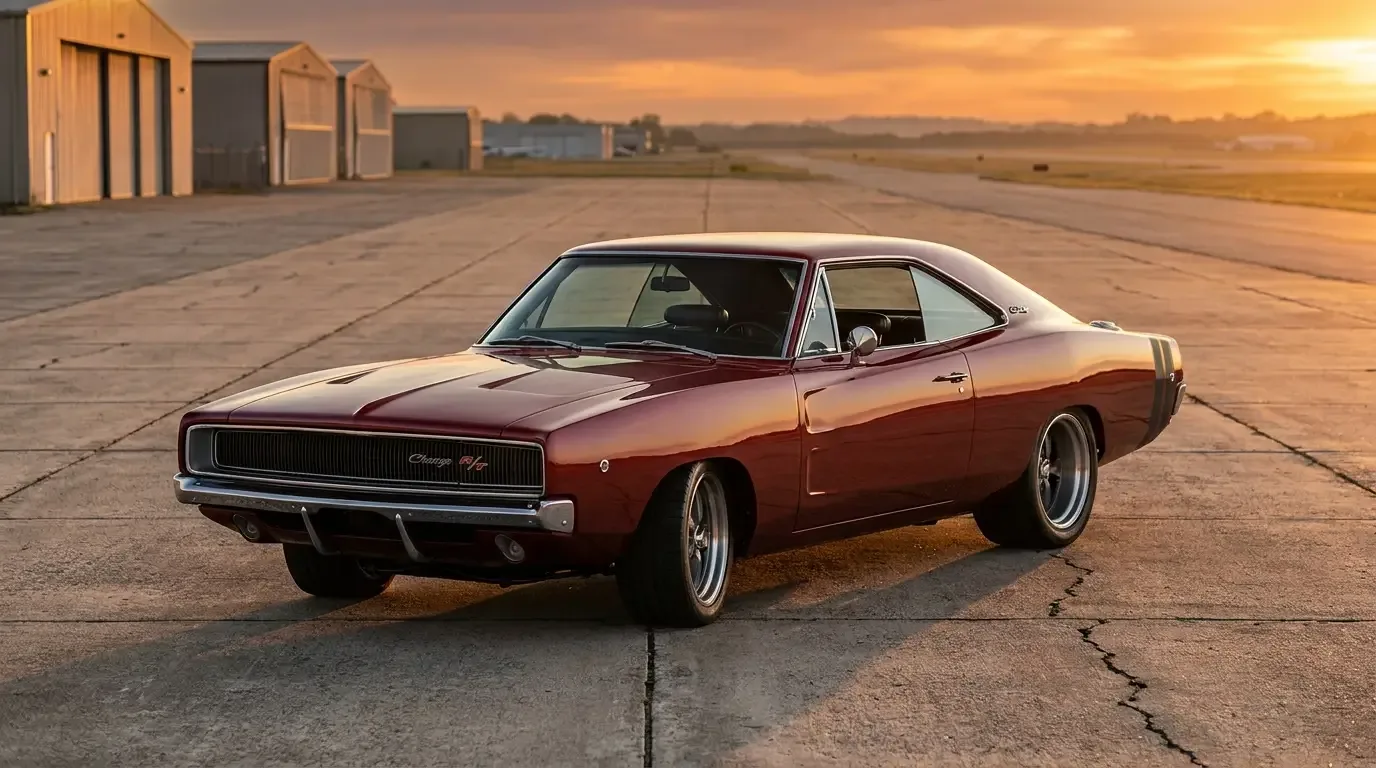
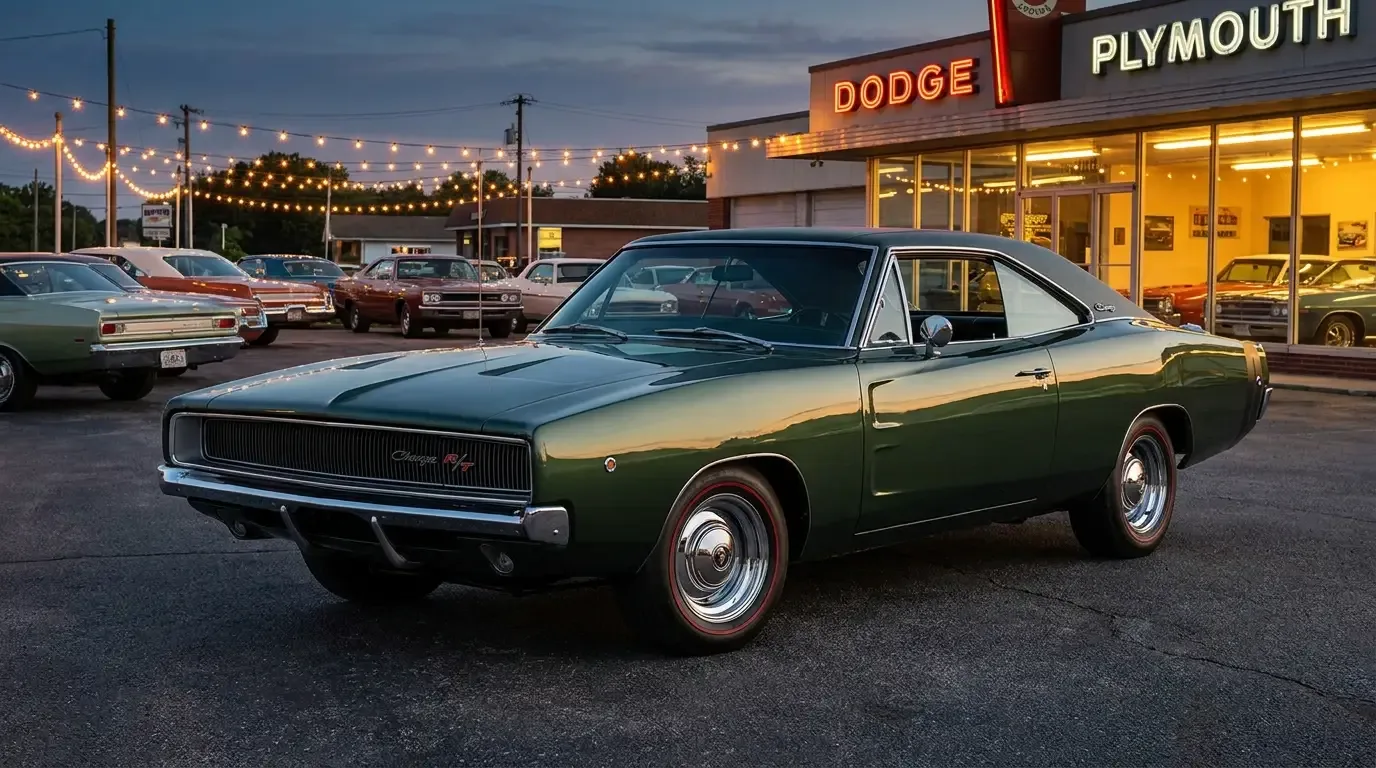
The real separation was styling and market positioning, not mechanics. The Charger R/T carried the coke-bottle fastback-adjacent body with hidden headlights in most years, a shape built around drama and a distinctive silhouette. The GTX wore Plymouth's Belvedere-based body, more conventional in profile, marketed as "the gentleman's muscle car" with a slightly more upscale trim level and standard equipment list than the R/T offered. Buyers choosing between them in period were often choosing an image as much as a spec sheet, flashy and youth-oriented on the Dodge side, a touch more restrained and adult on the Plymouth side.
"The guy I talked to at Carlisle had owned his car since 1974. Drove it there every single year, even the time the water pump let go outside Harrisburg."
— Patrick Walsh
Sales numbers tell an uneven story
Despite the GTX's upscale positioning, it never outsold the Road Runner, its own cheaper Plymouth sibling, and it generally ran behind the Charger R/T in total volume across most comparable years. The GTX occupied an awkward middle position, more expensive than the Road Runner without offering meaningfully more performance, while the R/T had a more distinct visual identity to justify its price. That positioning problem is part of why GTX production numbers were consistently lower, and why surviving GTXs are, in some years, harder to find today than comparable R/Ts, a rarity that doesn't always translate into higher prices simply because the R/T has stronger name recognition among buyers.
| Category | Charger R/T | Plymouth GTX |
|---|---|---|
| Standard engine | 440 Magnum | 440 Magnum |
| Optional engine | 426 Hemi | 426 Hemi |
| Body style | Fastback-adjacent coupe, hidden headlights | Belvedere-based hardtop coupe |
| Market position | Youth-oriented performance flagship | Upscale "gentleman's muscle car" |
| Relative sales volume | Higher | Lower |
What the rivalry looks like from the collector seat today
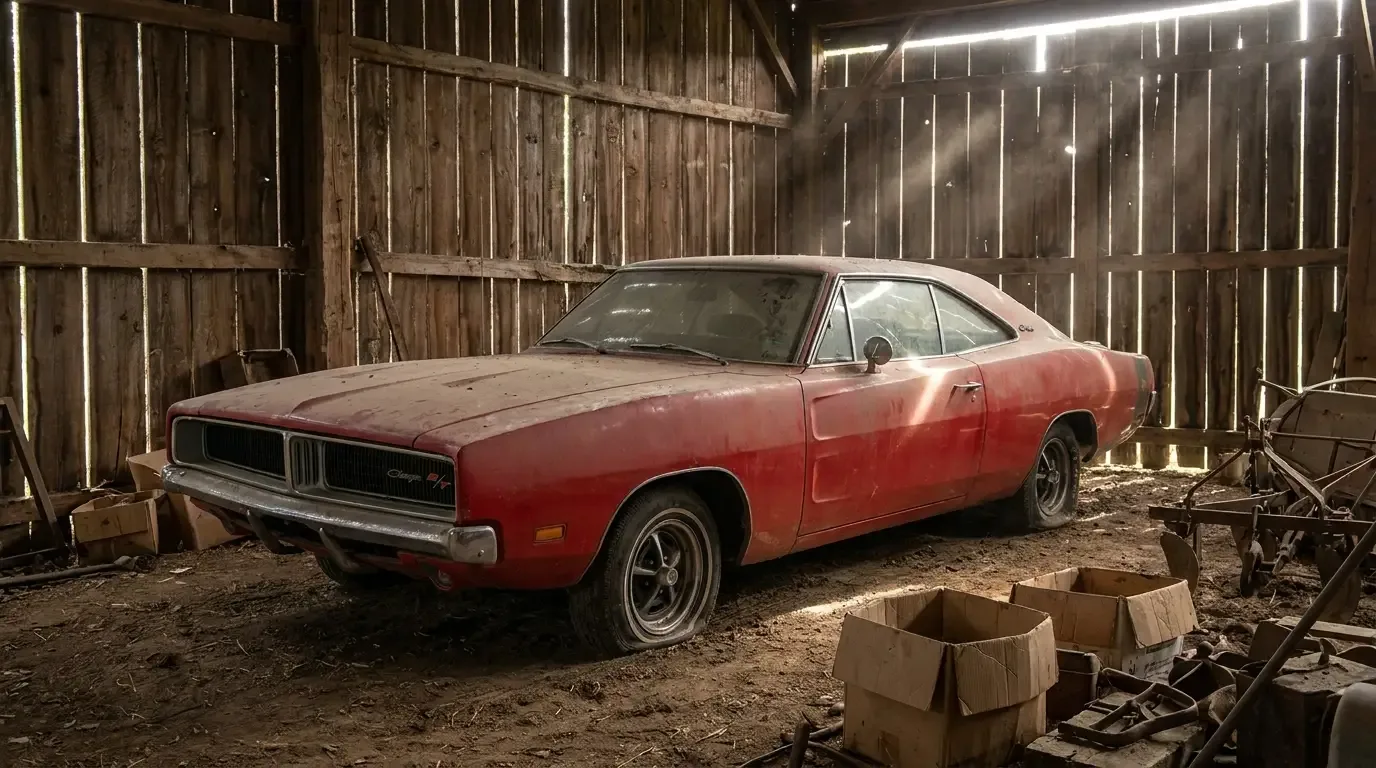
Modern collector interest has generally favored the Charger R/T, mostly on the strength of its styling and stronger brand recognition outside dedicated Mopar circles. That's not the same as the GTX being the lesser car. A documented 1968 or 1969 GTX with the Hemi option is every bit as significant mechanically as its Charger counterpart, and its relative obscurity among casual buyers can make it a comparatively better value for someone who cares more about the hardware than the name on the fender. For the roots of that R/T name and what it actually signaled when Dodge first used it, read more here, since the GTX never adopted the same badge convention despite sharing nearly everything else.
What each car feels like from behind the wheel
Drive them back to back and the shared mechanical DNA becomes obvious immediately, same basic power delivery, same era of drum-into-disc brake evolution depending on options, same general road manners for a heavy B-body with a big-block up front. The differences that show up are subtle, mostly in how each car's dash and seating position frame the driving experience. The Charger's cockpit-style dash, wrapped around the driver with deep-set gauges, feels sportier even when the mechanical experience underneath is nearly identical to the GTX. The GTX's more conventional dash and slightly more formal seating position reads as calmer, which lines up with how Plymouth marketed it. Neither car is objectively the better driver's machine, but the way each one presents itself behind the wheel does a lot to explain why buyers picked one over the other for reasons that had little to do with the spec sheet.
Why the argument never really settles
Nobody wins the R/T versus GTX argument outright, and that's kind of the point. Chrysler built both cars to appeal to slightly different buyers within the same performance segment, and both succeeded at that job well enough to still be argued about at family reunions more than fifty years later. For the fuller picture of how the Charger nameplate fits into this era, dodge charger history lays out the complete timeline. And if sibling rivalries like this one are your kind of rabbit hole, a related classic-muscle rivalry covers a similar dynamic between a GM flagship and its cheaper corporate stablemate.
Sources and notes
- Wikipedia - Plymouth GTX - confirmed the GTX's Belvedere-based body, 440/426 Hemi lineup and "gentleman's muscle car" positioning.
- Wikipedia - Dodge Charger - confirmed the R/T shared the B-body platform, 440 Magnum and 426 Hemi with the GTX.
- Hagerty - 1968 - 70 Charger buyer's guide - background on the R/T's stronger brand recognition versus the GTX among collectors.
- Wikipedia - Plymouth Road Runner - confirmed the Road Runner outsold the pricier GTX despite shared hardware.
- Classic.com - Plymouth GTX market - data supporting the GTX's lower survival/recognition versus comparable Charger R/Ts.