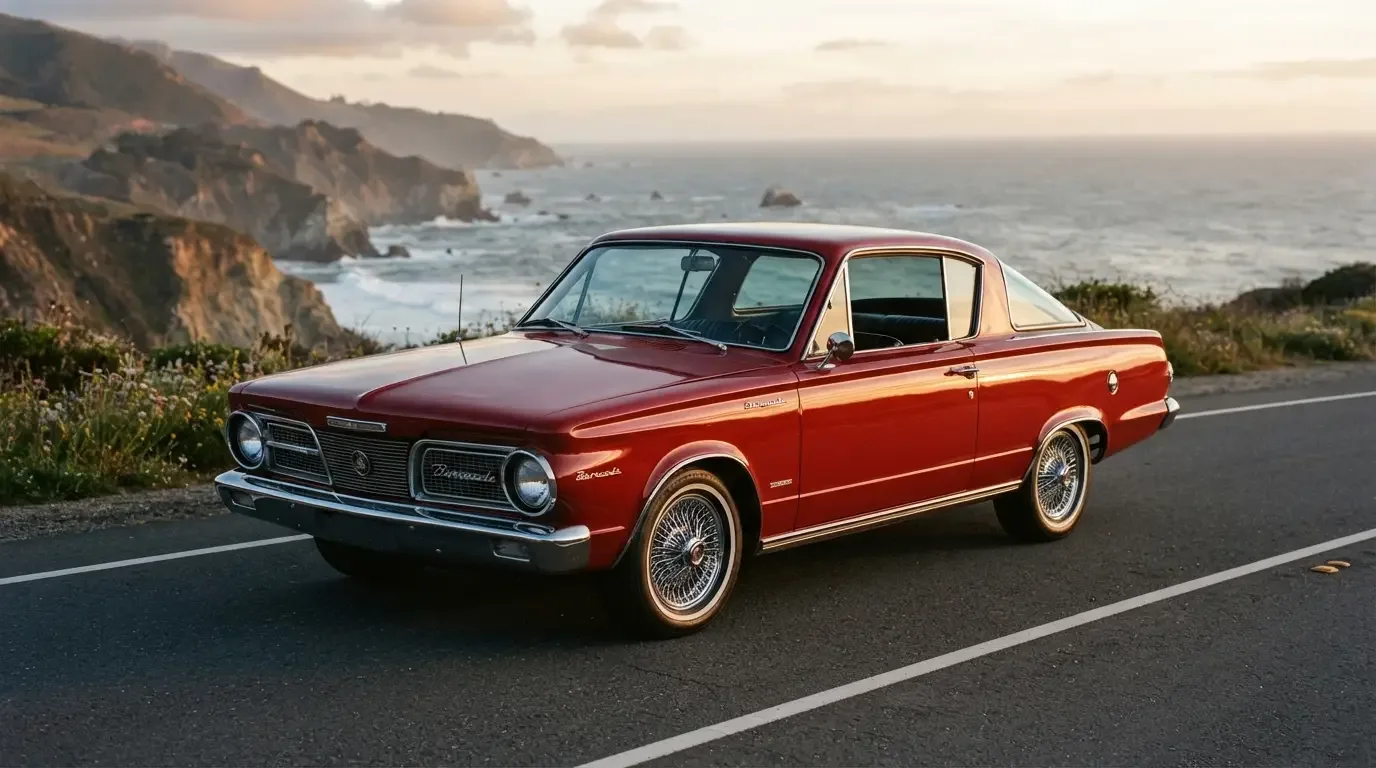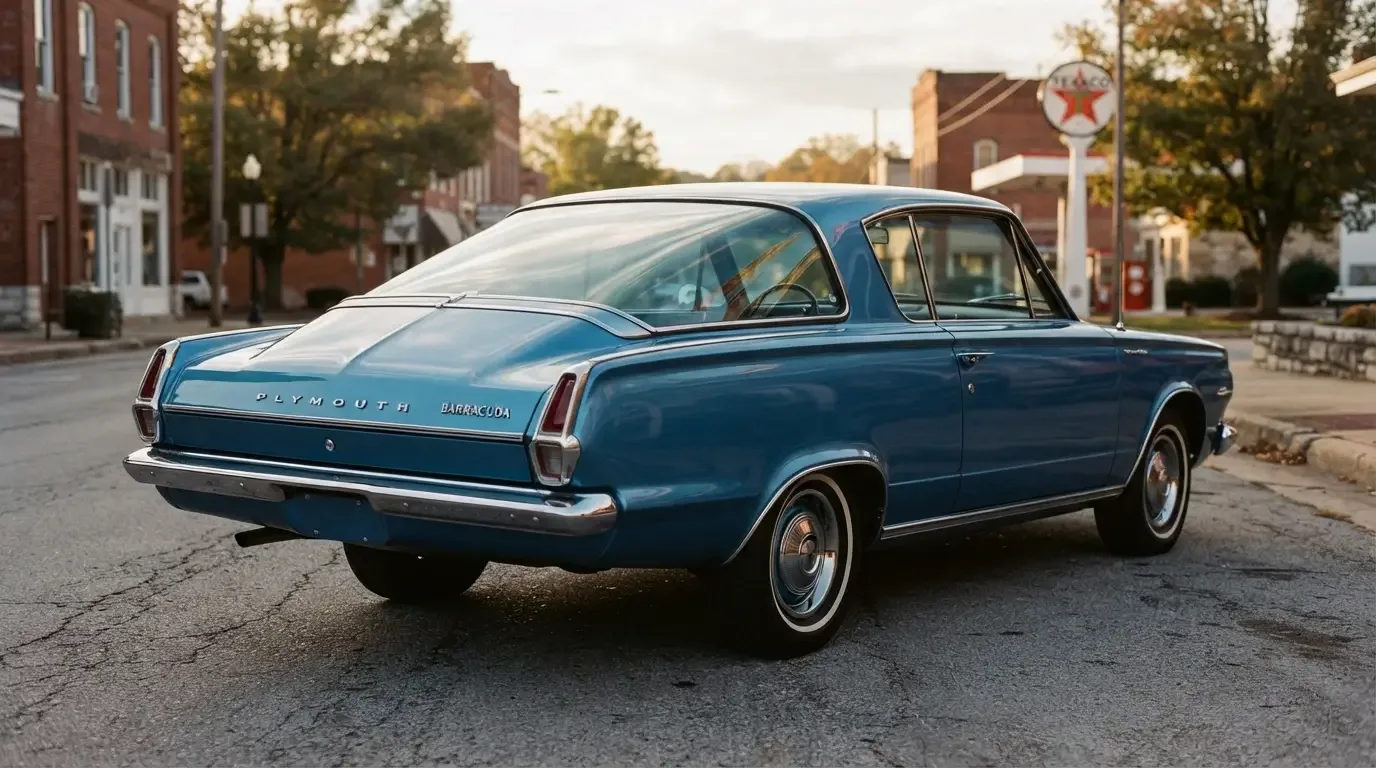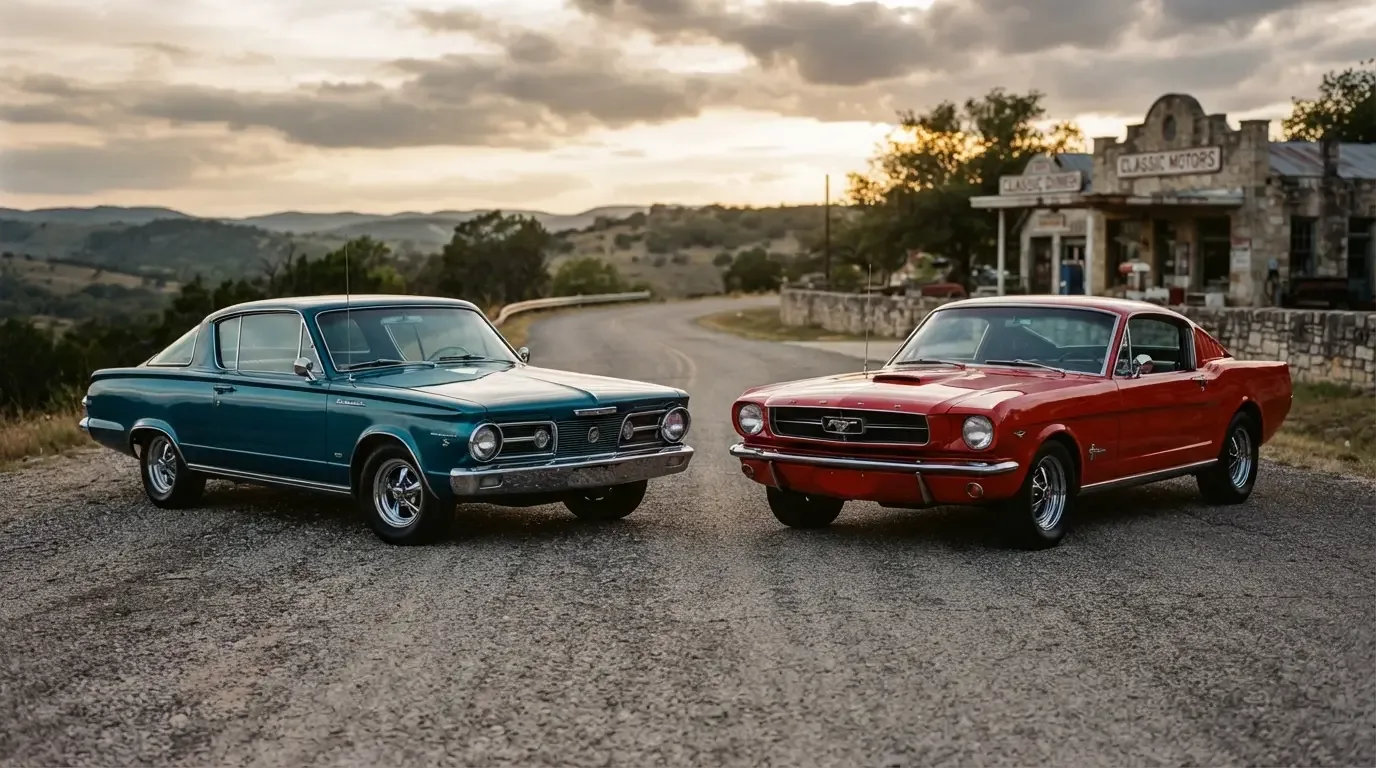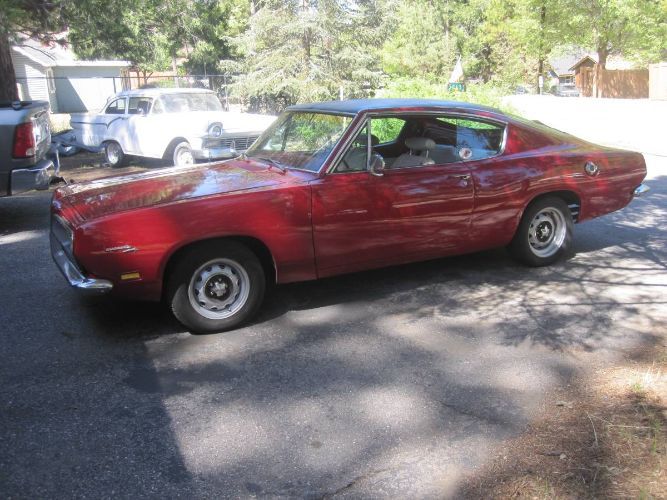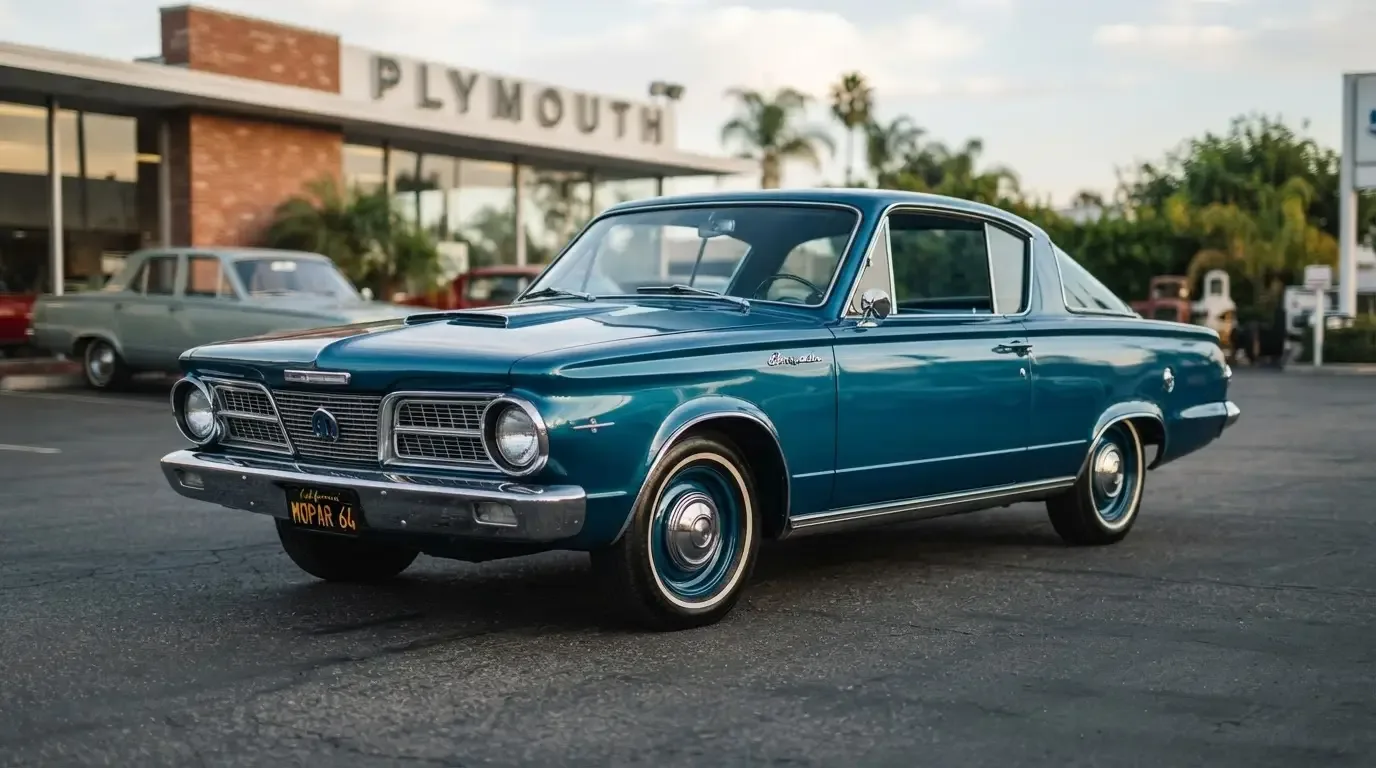
The 1964 Plymouth Barracuda beat the Ford Mustang to market by 16 days, and almost nobody outside Highland Park remembers it that way. Chrysler unveiled the Barracuda on April 1, 1964. Ford rolled the Mustang out at the New York World's Fair on April 17. Sixteen days is not a rounding error, it is a fact that got buried under fifty years of Mustang mythology, and it deserves to be pulled back into daylight.
A factory racing the calendar, not the market
Plymouth engineers and stylists were not chasing a hunch about young buyers wanting sporty coupes. They were chasing a deadline set by product planners who had heard, correctly, that Ford was building something new on the Falcon platform. Chrysler did not have the luxury of a clean-sheet design or a long lead time. What it had was the Valiant, a solid, unglamorous compact with a strong drivetrain and a chassis that could be reshaped without touching the mechanical bones underneath.
The result was a fastback built off the Valiant in roughly eighteen months from serious design work to showroom metal, an absurdly short cycle even by Detroit's looser 1960s standards. Nobody at Plymouth was under the illusion they were building a halo car for the ages. They were building a car to be first, and they were.
What "first" actually bought Plymouth
Being first mattered less than being remembered as first, and that is where the Barracuda's story gets complicated. Plymouth's own advertising in April 1964 did not scream "world's first pony car" because the category did not exist yet as a marketing term. The Mustang's arrival, backed by a saturation ad campaign and a starring role at the World's Fair, is what actually created the pony car conversation in the public's mind. Plymouth had the date. Ford had the moment.
That gap between chronology and perception is the whole story of the early Barracuda. Sales numbers back it up bluntly: Plymouth moved around 23,000 Barracudas in the shortened 1964 model year, a respectable number for a car that had barely been announced before it needed to be built. Ford sold Mustangs by the hundreds of thousands within its first year. The 1964 barracuda mustang comparison was never close on volume, even though it was a dead heat on the calendar.
The wraparound glass was the real headline, not the drivetrain
What Plymouth actually put on the cover of its own launch materials was not an engine spec or a 0 to 60 number. It was glass. The Barracuda's rear window, a single curved sheet stretching 14.4 square feet, was the largest piece of glass ever installed in a production car at the time. Read a related story for the full account of how Chrysler's engineers pulled that off, because the glass alone tells you more about Plymouth's priorities in 1964 than any spec sheet does. This was a company betting on visual drama over raw performance to get attention, and in a market that had not yet decided what a pony car was supposed to be, that bet was not unreasonable.
Two names, one platform, different destinies
Both cars started life as economy platforms wearing sportier clothes. The Barracuda rode the Valiant's bones. The Mustang rode the Falcon's. Neither company invented a segment out of nothing so much as they both recognized the same opportunity at nearly the same time and reached for what was already on the shelf. The difference was execution of the idea in the public imagination, not the mechanical concept itself.
Chrysler's own engineers reportedly saw the Barracuda less as a statement car and more as a stopgap, something to plug a hole in the lineup until a proper ground-up sporty compact could be developed later in the decade. Ford treated the Mustang as the whole point of the exercise. That difference in institutional conviction shows up in how each company marketed, priced, and expanded its car over the following seasons, and it is arguably the real reason one name became a cultural shorthand and the other became a footnote for people who already know the trivia.
"Sixteen days doesn't sound like much until you realize Plymouth had a finished car sitting on dealer lots while Ford was still building anticipation. History rewarded the anticipation, not the finished car. That's a lesson about marketing, not engineering."
- Tom Ramirez
Reading the full 1964 to 1966 arc
The birth story only makes sense inside the larger arc of the first generation. For the complete 1964 plymouth barracuda history, including how the car evolved across its three model years before the second generation broke away from the Valiant entirely, the fuller account fills in the engine options, trim changes, and production figures that this piece intentionally leaves aside to focus on the launch itself.
What survives from that April in 1964 is a genuinely interesting counterfactual. If Chrysler had waited even a month longer, or if Ford had rushed its own timeline forward, the entire pony car conversation might carry a different name at its center. Instead we have a footnote that collectors and factory historians still enjoy correcting people on at car shows, a small victory of documented fact over popular memory. Original, unmodified 1964 Barracudas in solid condition remain some of the more approachable entry points into first-generation Mopar ownership, and Barracudas for sale now occasionally include cars from this very first model year still wearing their original glass and trim.
Why the date still matters
None of this is an argument that the Barracuda deserves to replace the Mustang in the popular imagination. Ford earned its place through volume, culture, and six decades of continuous production under one name. But the factual record of who arrived first is not up for debate, and it is worth keeping straight precisely because so much of collector car history gets flattened into whichever version is easiest to repeat. The 1964 Barracuda was real, it was first, and it deserves to be remembered as more than a trivia answer.
Part of why the sixteen day gap gets forgotten is that Plymouth itself never leaned hard on the claim afterward. There was no anniversary campaign, no dealer literature reminding buyers a decade later that they had gotten there first. Ford, by contrast, built an entire corporate identity around the Mustang's launch, celebrating it at five, ten, twenty, and every subsequent milestone year with new specials and retrospectives. A company that tells its own story loudly and often will usually win the long game of public memory over one that treats a genuine first as a footnote in an internal production log.
Collectors researching a first-year car today have to work harder for documentation than Mustang owners do, simply because fewer records survive and fewer books were written chasing the details. Trim tag decoding, broadcast sheets, and dealer invoices from Plymouth's spring 1964 launch window are scarcer than equivalent Mustang paperwork, which makes verified early production cars more interesting to serious researchers even as they remain less famous to casual buyers. That imbalance between documented rarity and market recognition is precisely the kind of gap that patient collectors have learned to use to their advantage over the decades, buying honest history while the crowd chases a different badge.