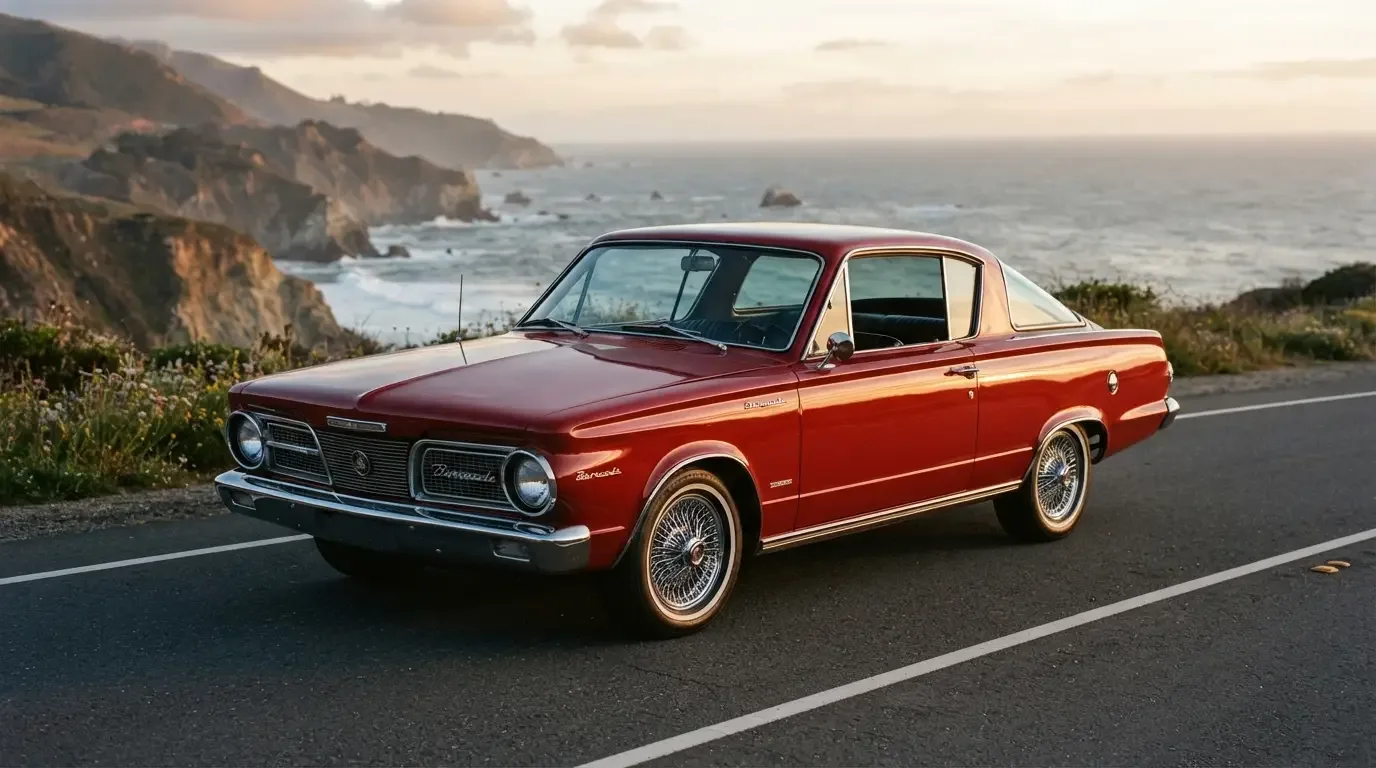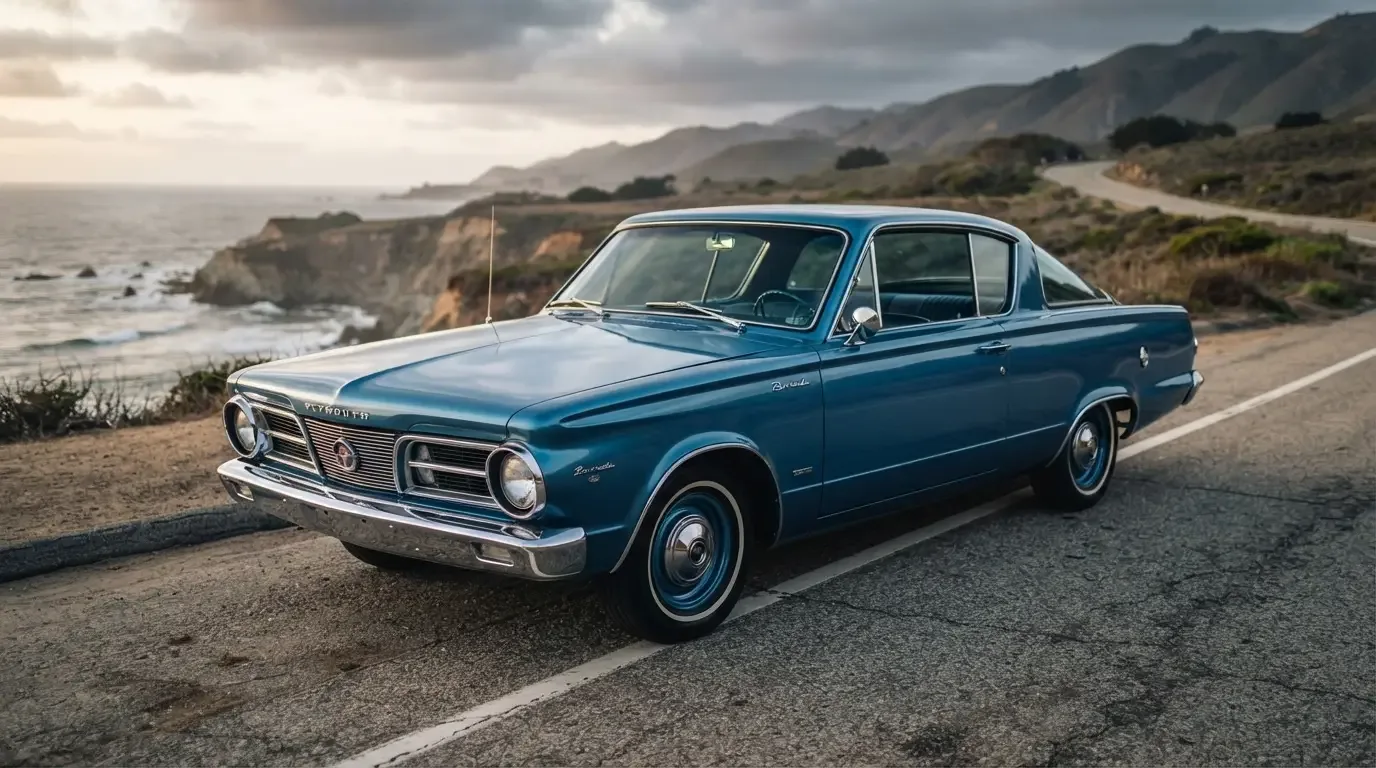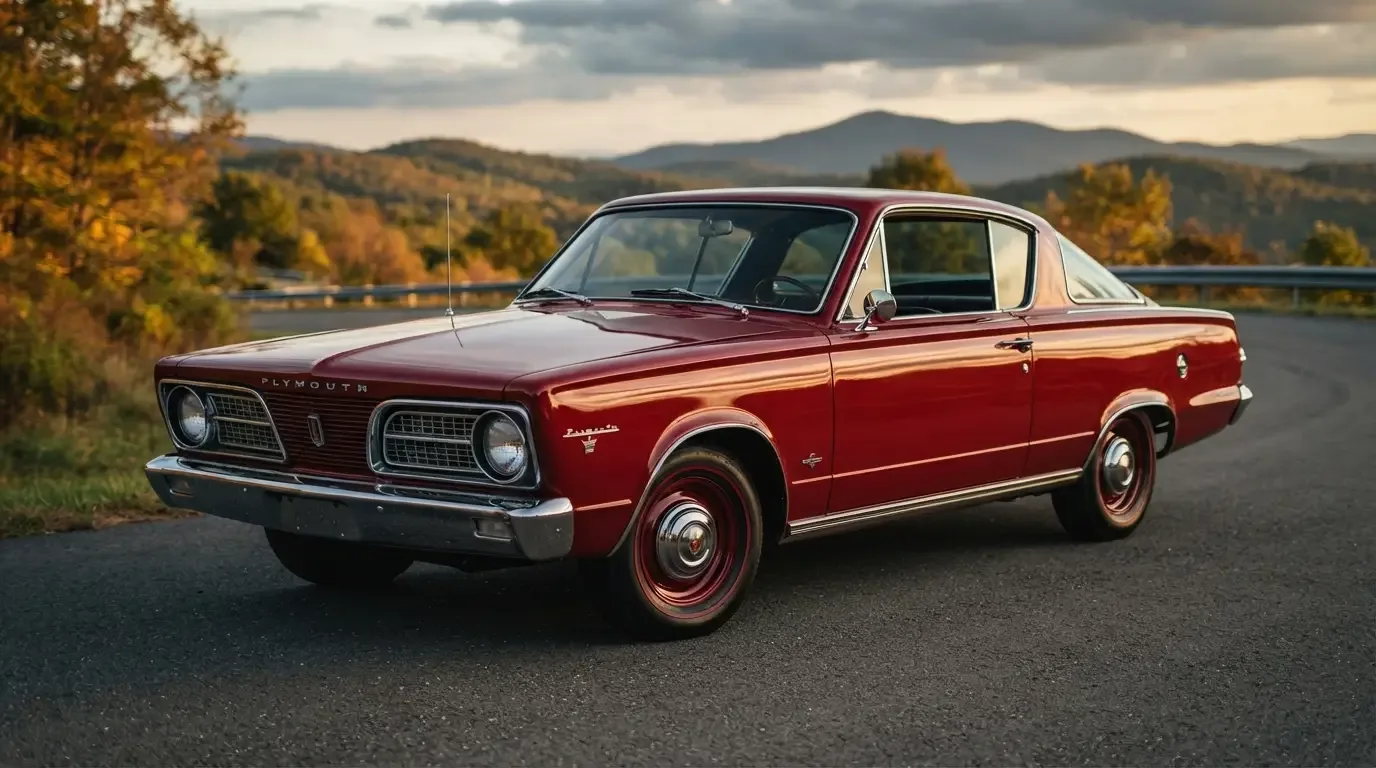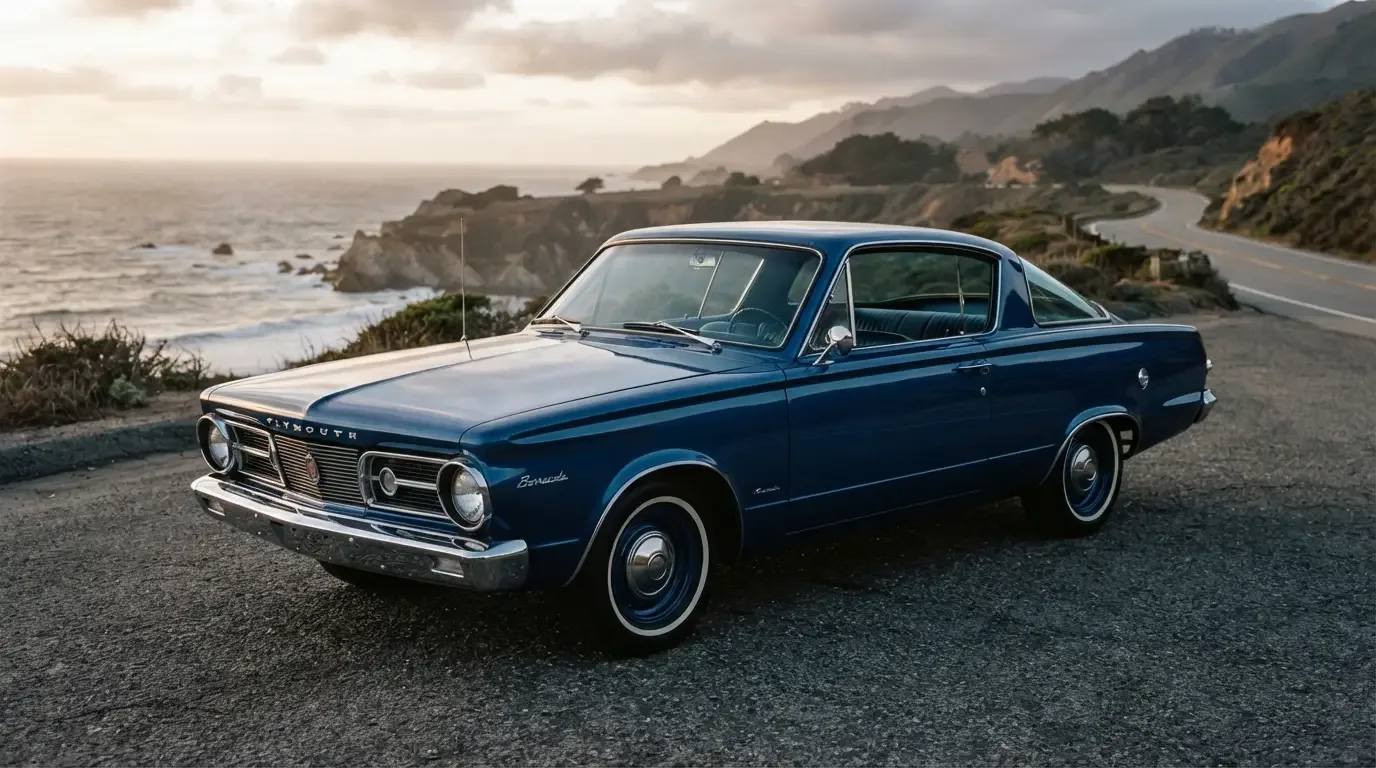
The 1965 Plymouth Barracuda is the year Plymouth stopped treating the car as a rushed answer to a competitor and started treating it as a product with its own identity. Sales climbed to 64,596 units for the model year, the strongest year the first generation would ever see, a genuine jump from the truncated 1964 run, and the arrival of the Formula S package gave the car a performance story it had not fully earned the year before.
A full model year finally gives Plymouth room to work
Unlike 1964, when Plymouth had barely seven months to sell the car before the model year closed, 1965 gave the factory a normal twelve-month cycle to market, refine, and expand the lineup. That extra runway shows up in the numbers and in the details. Plymouth revised the grille and taillight treatment, added new exterior colors, and reworked some interior trim, incremental changes that read as minor individually but collectively signaled a company now building a car on purpose rather than against a deadline. For context on why that deadline existed in the first place, where this started covers the rushed 1964 launch that made 1965 feel, by comparison, almost leisurely.
Formula S changes the conversation
The single biggest development for 1965 was the Formula S option package, which paired the 273 cubic inch V8 in a higher output tune with upgraded suspension components, a firmer set of springs and shocks, wider wheels, and identifying badging that separated these cars from a standard six-cylinder Barracuda at a glance. Where the 1964 car had leaned almost entirely on styling and glass to make its case, the Formula S gave Plymouth's dealers an actual handling and performance argument for the first time, one that automotive magazines of the period picked up on with noticeably warmer reviews than the base car had received a year earlier.
This mattered because the pony car conversation by 1965 was rapidly becoming a performance conversation, driven largely by how aggressively Ford was positioning the Mustang's own option packages. Plymouth needed an answer that was not just a bigger engine bolted into an unchanged chassis, and the Formula S package, imperfect as it may have been next to what would come later in the decade, was a genuine attempt to build a car that handled as well as it looked.
| Spec | 1965 Barracuda detail |
|---|---|
| Model year sales | 64,596 units |
| New for 1965 | Formula S performance package |
| Formula S engine | 273 cid Commando V8, 235 hp |
| Formula S suspension | Firmer springs and shocks, wider wheels |
| Base engine | 225 cid slant six replaces 170 as standard (U.S. market) |
What buyers actually chose
Despite the attention Formula S drew in period road tests, most 1965 Barracudas that left dealer lots were still ordered with the six-cylinder engines, a reminder that the performance package was a halo offering rather than the volume seller. That pattern, a headline performance option drawing outsized magazine coverage while the bulk of actual sales go to a more modest configuration, would repeat itself across the entire pony car era and is worth remembering when evaluating how representative period road tests actually were of the typical car buyers took home.
Why 1965 gets undersold in the broader Barracuda story
Collectors and casual fans alike tend to fixate on 1964 for being first and 1966 for being the last of the original body style, leaving 1965 as the year sandwiched in between that rarely gets its own headline. That is a mistake from a historical standpoint. The Formula S package launched here, the sales numbers here are the strongest of the entire first generation, and the styling changes introduced this year carried forward largely unchanged into 1966. If there is a single year that proves Plymouth had figured out what the Barracuda was supposed to be, this is it.
"1965 doesn't get the credit it deserves because it isn't 'the first one' or 'the last one.' But it's the year Plymouth stopped reacting to Ford and started building the car it actually wanted to build."
- Tom Ramirez
The competitive pressure behind the changes
None of the 1965 revisions happened in a vacuum. Ford's Mustang had spent its first year racking up sales figures that dwarfed the entire Barracuda program, and General Motors was already known within the industry to be developing its own pony car response, a project that would eventually become the Camaro and Firebird a couple of years later. Plymouth's engineers and product planners understood that a car built to plug a gap in 1964 needed a genuine reason to exist by 1965, not just a badge and a familiar silhouette. The Formula S package was Plymouth's answer to that pressure, an attempt to give the Barracuda a performance identity distinct from a Valiant wearing a sportier roofline.
Chrysler also used 1965 to start correcting some of the compromises forced by the rushed 1964 launch. Interior materials were upgraded in places, exterior trim was cleaned up, and the overall fit and finish reportedly improved as the factory settled into a normal production rhythm rather than scrambling to hit an April deadline. None of these changes made headlines the way the Formula S package did, but collectors who have driven both a 1964 and a 1965 car back to back often note the difference in overall build quality more than any single spec on a sheet.
Finding a genuine 1965 today
Verifying a 1965 Barracuda, particularly a claimed Formula S example, follows the same documentation discipline that applies to the rest of the first generation: fender tags, broadcast sheets where they survive, and factory build codes cross-referenced against known Formula S specifications. The jump in production numbers this year means more surviving examples exist than from 1964, which is good news for buyers but also means more opportunities for incorrect badging or misrepresented trim to slip past an inexperienced eye. Anyone browsing a classic Barracuda for sale from this model year should ask for documentation on any car marketed as a genuine Formula S before treating the badge as confirmation of anything.
Beyond the badge itself, a genuine Formula S car should show the corresponding suspension hardware, the correct wheel width, and matching engine codes on the block itself, none of which are difficult checks for a buyer willing to spend twenty extra minutes with a flashlight before signing anything. Sellers who balk at that kind of inspection, or who cannot produce even basic supporting paperwork for a car priced at a Formula S premium, deserve a healthy dose of skepticism regardless of how good the car looks in photographs. A properly documented 1965 Formula S remains one of the more attainable genuine performance Mopars from this era, and that combination of relative affordability and real mechanical substance is exactly why the model deserves more attention than it typically gets.