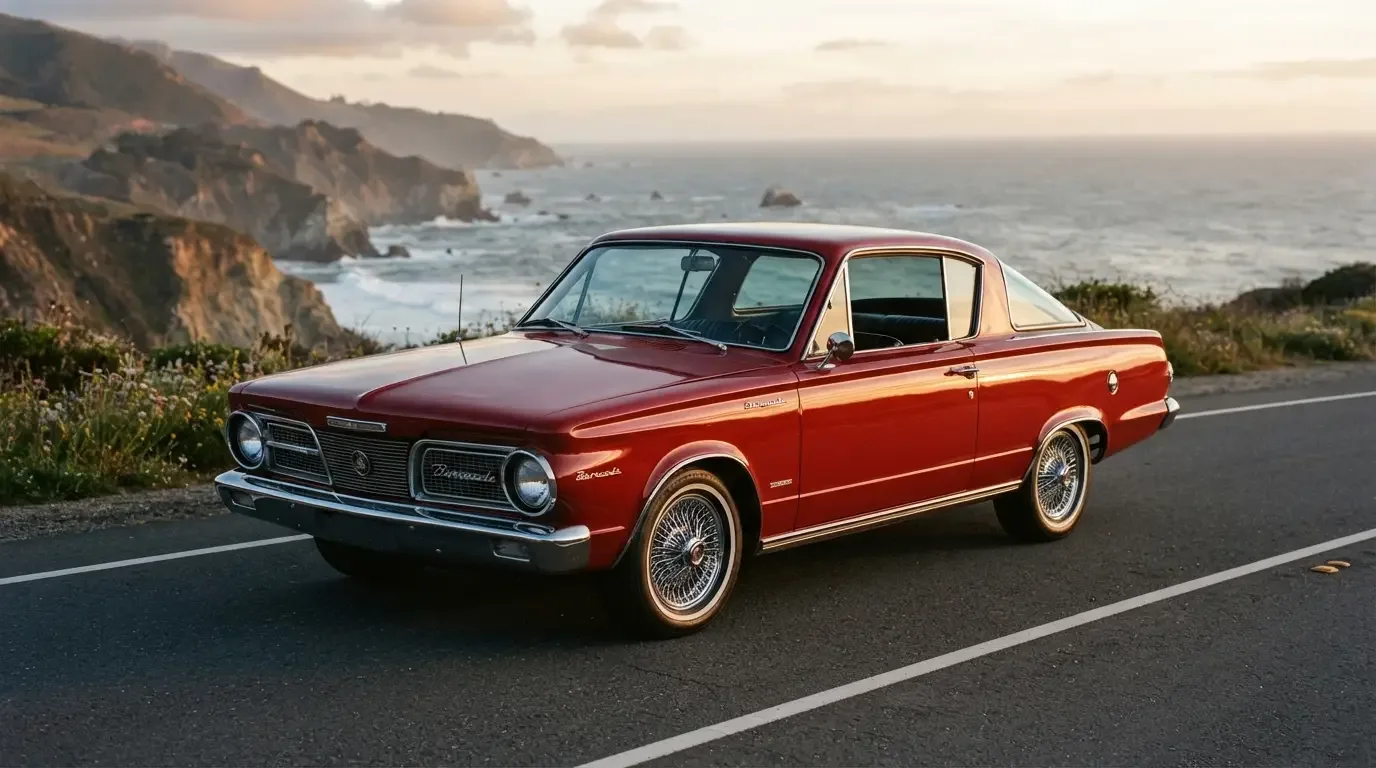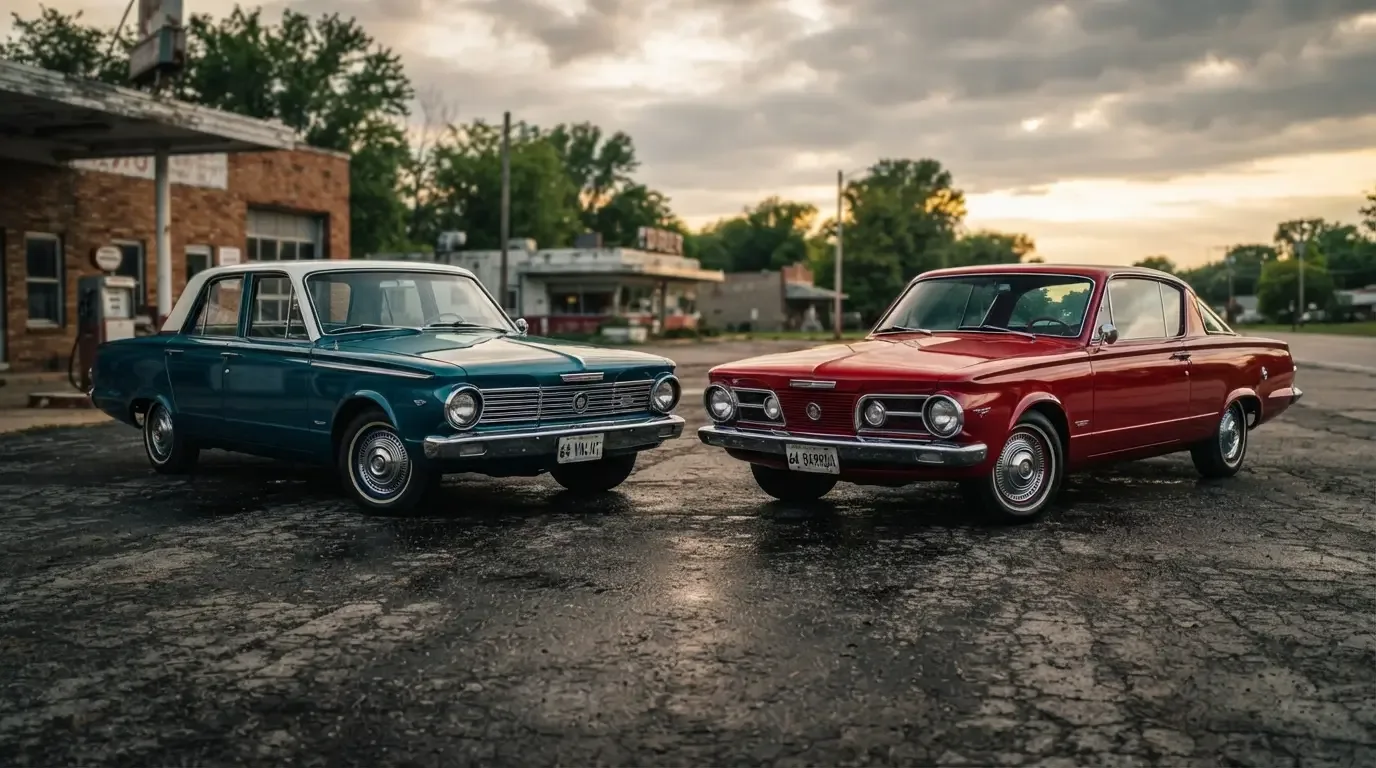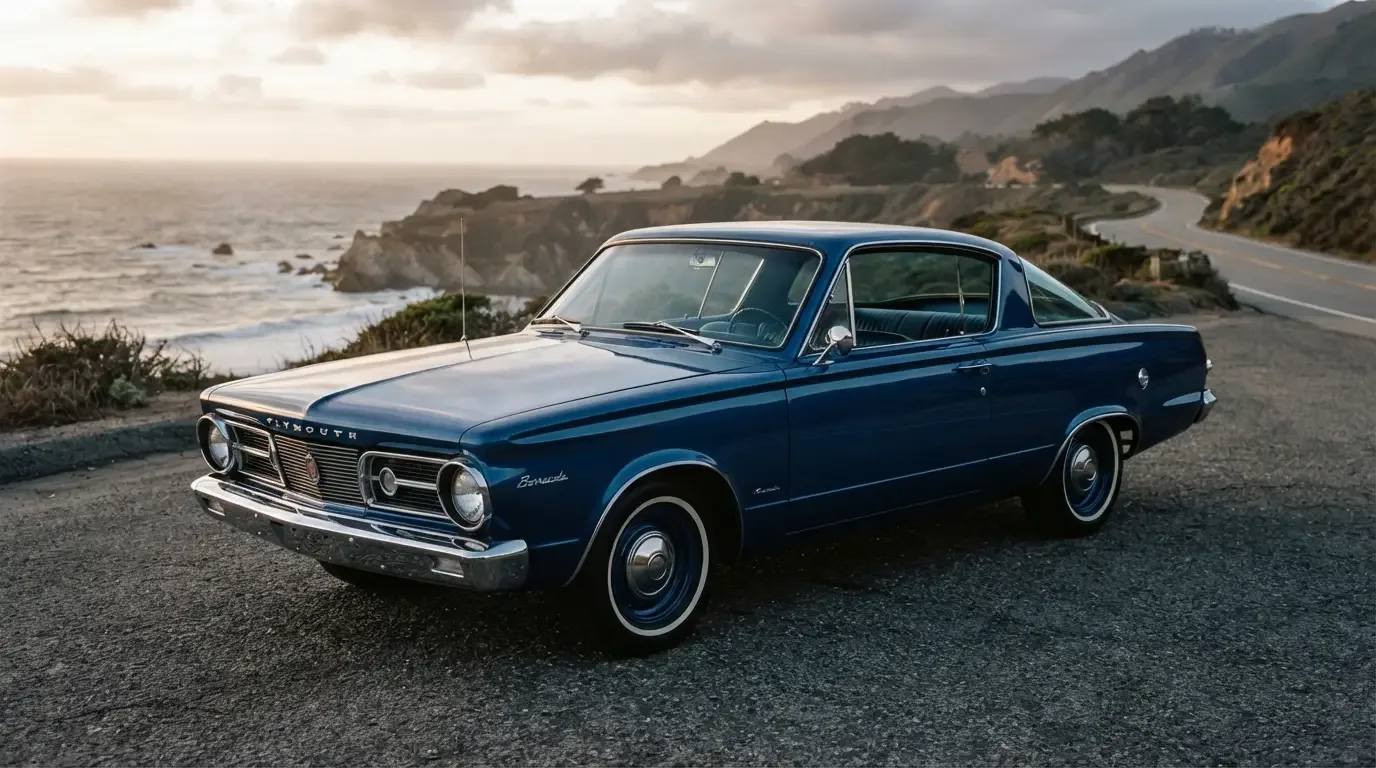
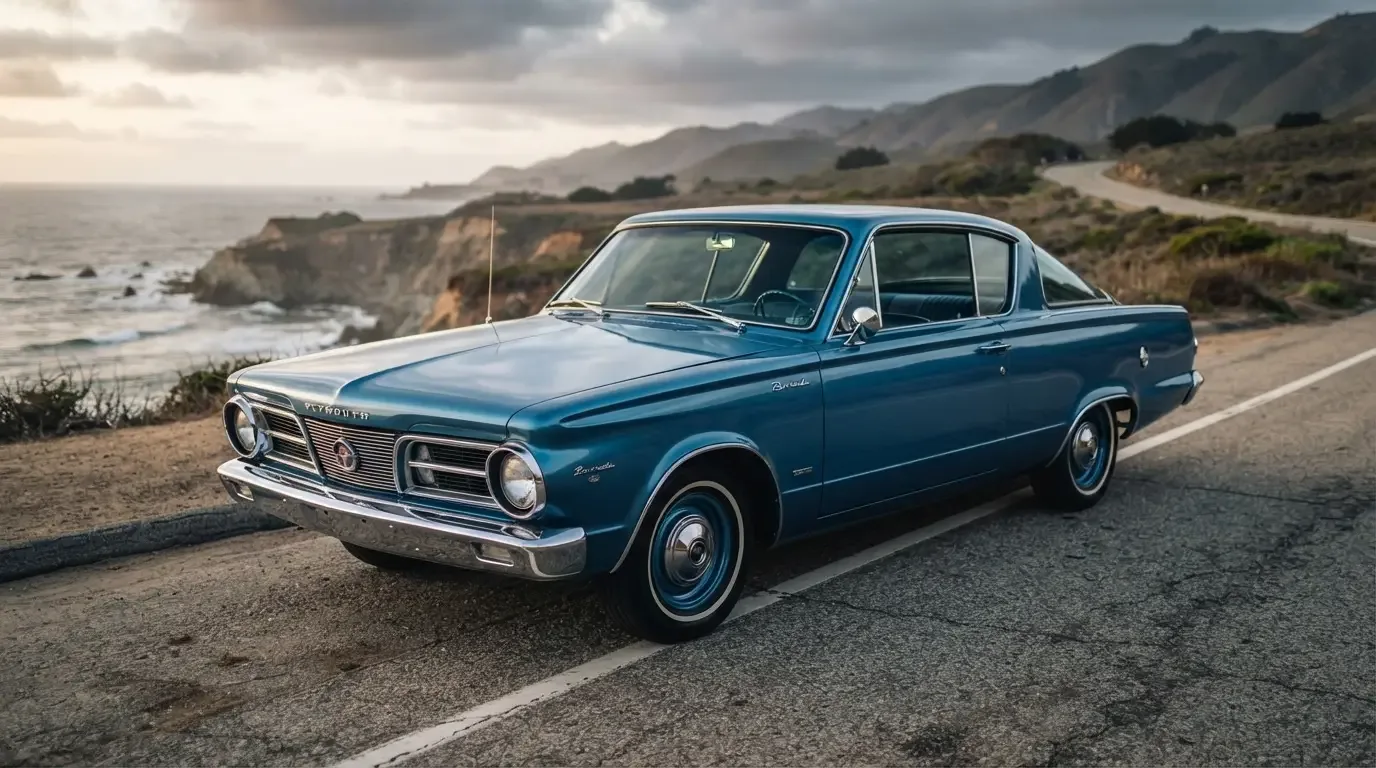
A first-year 1964 Plymouth Barracuda is a specific object with a specific set of markers, not just an early example of a familiar model. The 1964 plymouth barracuda year one cars carry details that changed within months of launch, and a researcher cataloguing one of these vehicles today has to treat the shortened model year almost as its own micro-chapter rather than an interchangeable slice of the broader 1964 to 1966 run.
A compressed model year, literally
Because the car launched on April 1, 1964, roughly seven months into what would normally be a full production year, the 1964 Barracuda had one of the shortest model year runs of any mainstream Detroit product of the decade. Plymouth built approximately 23,443 units before the close of the model year, a figure consistent with Chrysler's own production tallies of the period, split roughly across 8,119 base 170 six-cylinder cars, 10,597 with the optional 225 six, and 4,727 with the 273 V8. Whatever the precise final tally, the compressed build window means genuine first-year cars are a smaller pool than the badge suggests, and documentation matters enormously for anyone trying to confirm exactly when in that window a given car left the factory.
What separates a true first-year car from the rest
The clearest artifact-level marker is the standard engine offering. The base powerplant for 1964 was the 170 cubic inch slant six, with the 225 cubic inch slant six and the 273 cubic inch V8 available as options, the latter arriving as a genuinely important addition that gave the car real performance credibility for the first time. Trim tags, broadcast sheets, and fender tag codes from this specific window carry stamping conventions that differ subtly from cars built even a few months later in 1965, and a researcher who has handled enough original tags learns to spot the difference on sight.
| Spec | 1964 Barracuda detail |
|---|---|
| Launch date | April 1, 1964 |
| Platform | Chrysler A-body, shared with Valiant |
| Wheelbase | 106 inches |
| Base engine | 170 cid slant six |
| Optional engines | 225 cid slant six, 273 cid V8 |
| Signature feature | 14.4 sq ft one-piece wraparound rear glass |
Interior and trim details that get overlooked
Original 1964 cars used a specific bucket seat pattern and door panel design that Plymouth revised for 1965, along with badging that read simply "Barracuda" without the Formula S designation that arrived the following year. Researchers cataloguing surviving cars have noted that dash-mounted accessory switches and steering wheel design also shifted between the two years, small details that rarely appear in general histories but matter enormously to anyone trying to authenticate a claimed first-year interior.
Color and trim combinations from 1964 are also worth documenting carefully, since Plymouth's own paint and trim charts for this shortened model year listed fewer combinations than the fuller 1965 lineup would offer. A car presented as "rare color, first-year Barracuda" deserves to have that claim checked against period paint codes rather than accepted on the strength of an interesting-sounding description alone.
Provenance research for a genuine first-year example
For anyone trying to confirm a car's status as a true 1964 example rather than an early 1965 build, the fender tag, if it survives, remains the single most reliable primary source, cross-referenced against the broadcast sheet where one exists. Dealer invoices and original window stickers, when they have survived, corroborate build dates independently of the tag itself and are worth pursuing even when a full paper trail seems unlikely. For a look at where this started, the broader account lays out the context of the car's development that led to this specific shortened launch window, useful background for understanding why documentation from this exact period is comparatively thin.
"A first-year Barracuda without paperwork is still a nice car. A first-year Barracuda with paperwork is a documented artifact, and those are two very different things to a serious collector."
- Sarah Whitfield
The gap between what was sold and what survives
Roughly 23,000 units sold in a single truncated model year does not translate to 23,000 surviving cars today, and researchers cataloguing the current population have to account for the usual attrition of six decades, plus the specific pressures that hit affordable compacts harder than expensive luxury cars. Barracudas from this era were driven as everyday transportation by their original owners far more often than they were babied as future collectibles, and daily use took its toll on unibodies not engineered with corrosion protection in mind. Salt-belt cars from the Midwest and Northeast suffered particularly badly through the 1970s, which skews the surviving population toward cars that spent their early decades in drier climates, a bias worth keeping in mind when evaluating how "original" a given example's structure actually is.
This attrition also means that surviving fender tags and broadcast sheets are scarcer than the original production number implies. Plenty of cars lost their paperwork long before anyone thought to treat a 1964 Barracuda as worth preserving in the first place, since serious collector interest in the model did not really solidify until decades after the fact. A researcher working today is often reconstructing history from a thinner paper trail than the raw sales figures would suggest exists, which is exactly why cross-referencing whatever documentation does survive against dealer records, period advertising, and parts catalogs becomes so important rather than optional.
Why year one still draws serious attention
The compressed production window, the specific trim and engine details unique to this year, and the genuine scarcity of surviving documentation all combine to make a properly verified 1964 Barracuda more interesting to researchers than its comparatively modest original sticker price would suggest. For more on the 1964 plymouth barracuda, the fuller three-year arc puts this specific launch window into context against the changes that followed in 1965 and 1966. Buyers hunting specifically for a documented first-year car should expect to pay a premium over a later first-generation example, and those browsing classic Barracudas on the market should ask pointed questions about tag verification before assuming any given listing is what it claims to be.
None of this means an undocumented 1964 car is worthless or even necessarily suspect. Plenty of honest, correct cars simply lost their paperwork through no fault of any particular owner, passed through several hands, or sat in a barn for two decades before someone thought to save the glovebox contents. What it does mean is that a buyer paying a genuine first-year premium should understand exactly what that premium is buying, whether that is verified paperwork, period-correct components confirmed by an experienced eye, or simply a seller's confident but unverifiable claim. Treating those three scenarios as equivalent is the single most common mistake casual buyers make when a listing uses the word "original" a little too loosely.