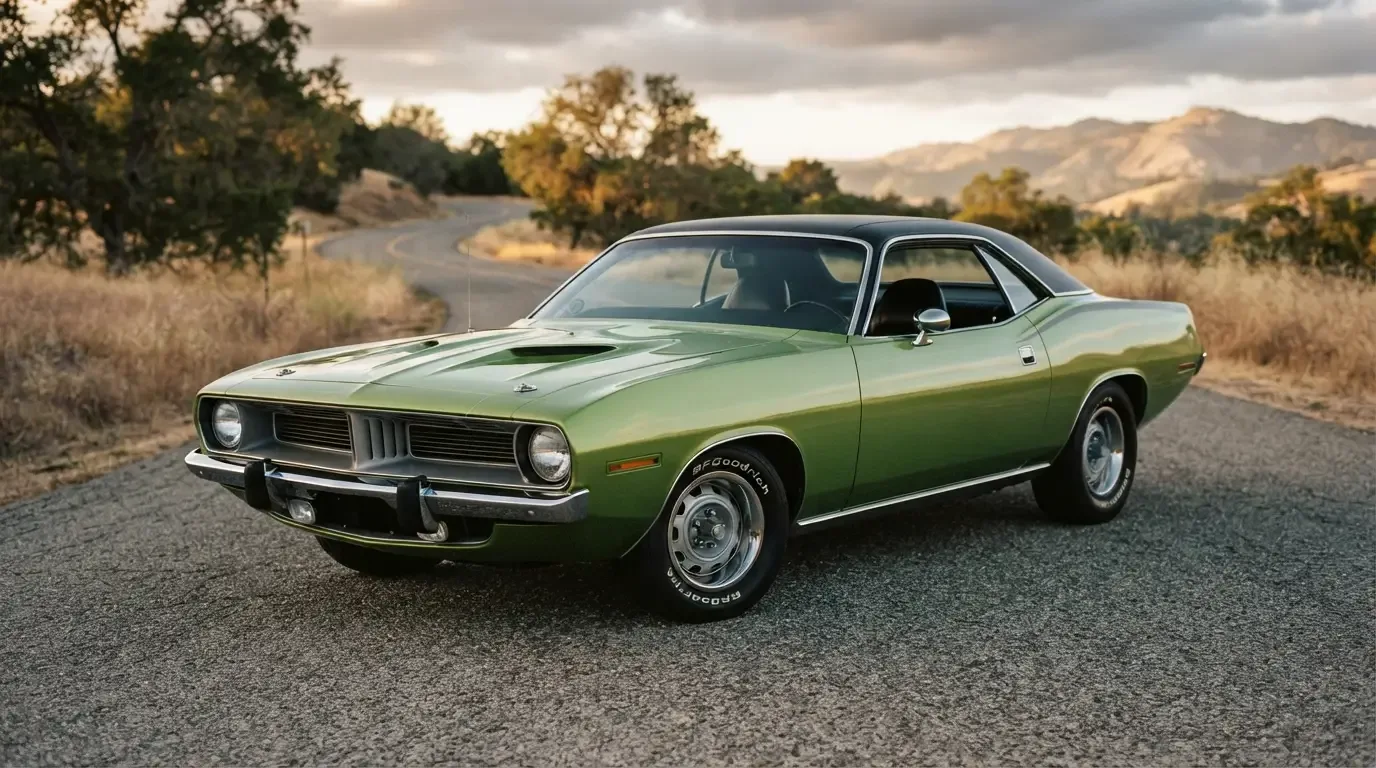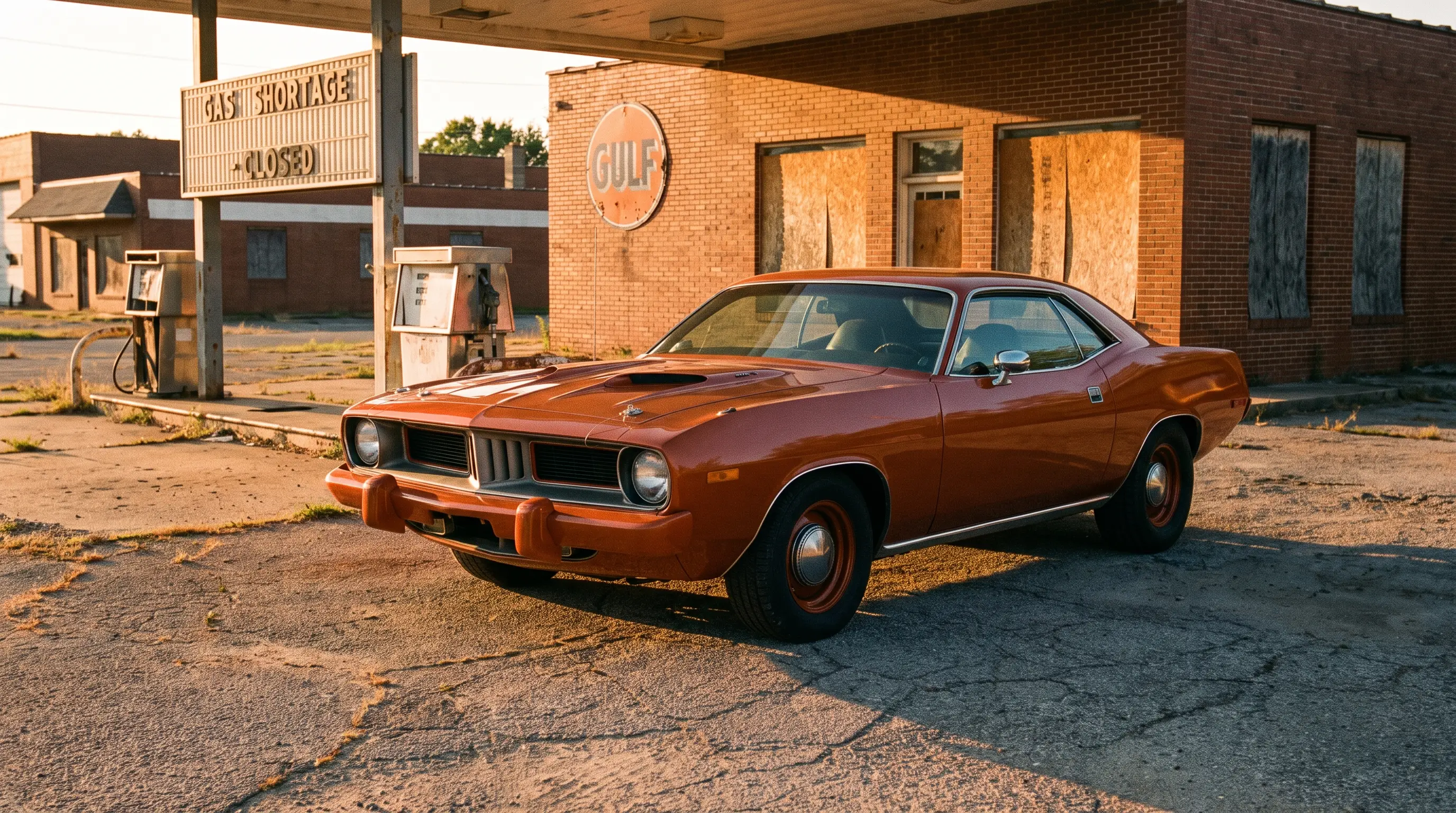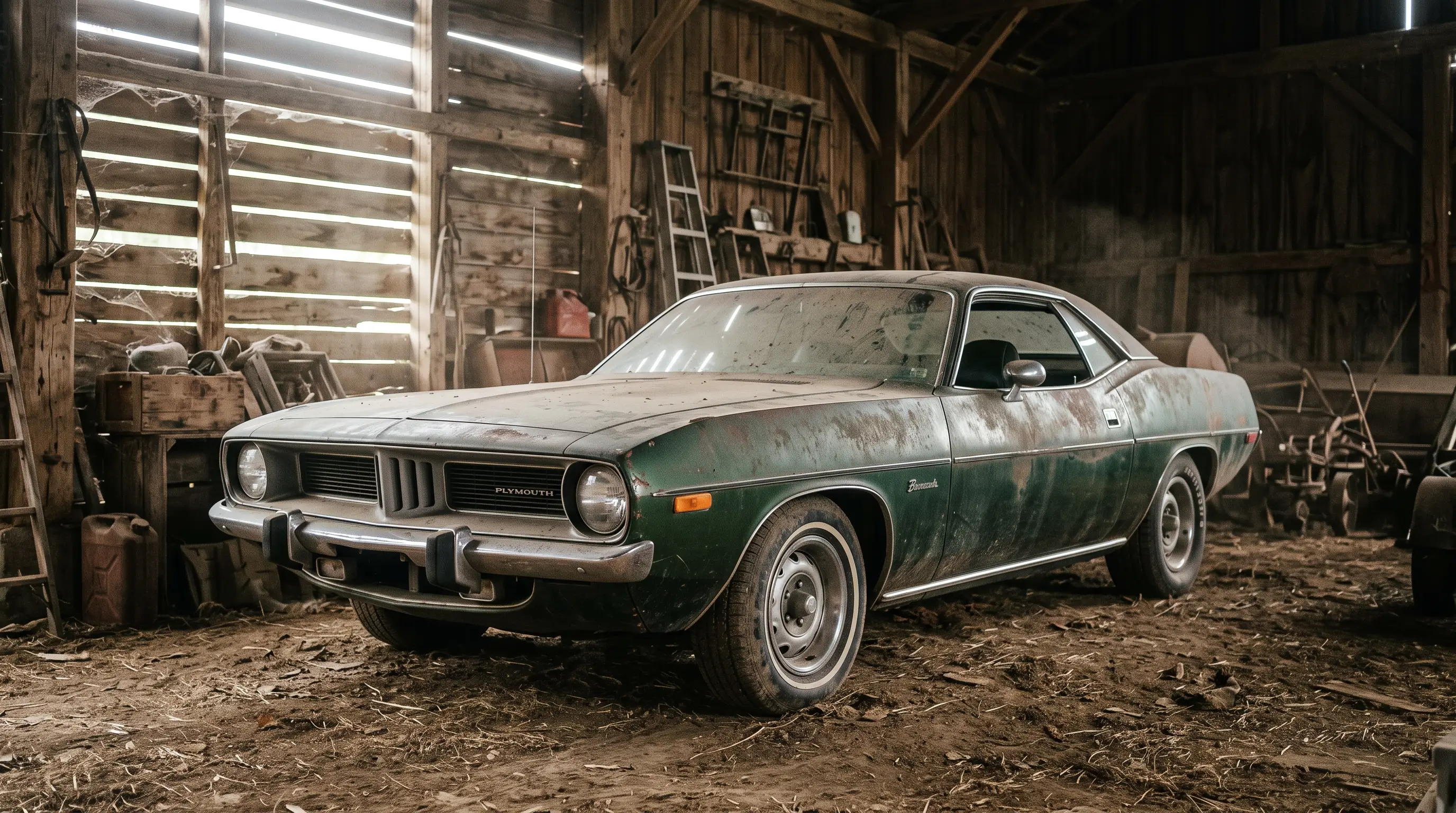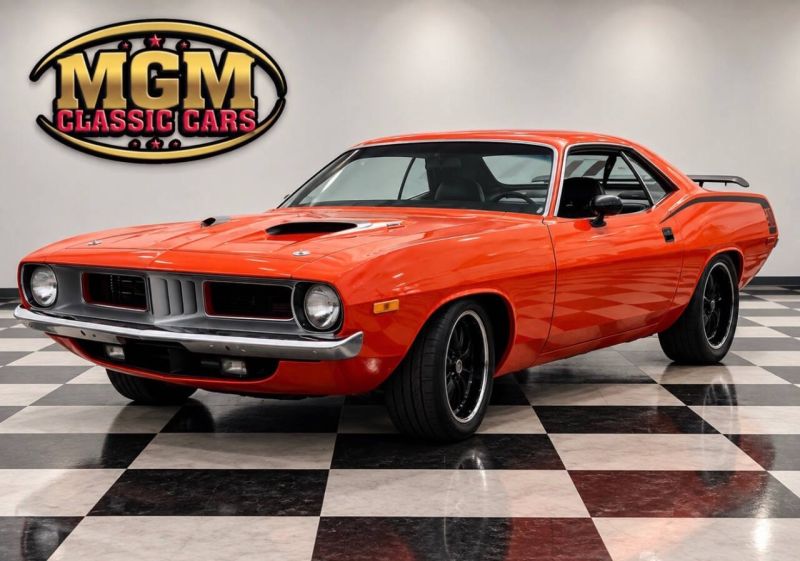
The 1972 Plymouth Barracuda is the year the party ended, and everyone building or buying one today needs to understand that before they get attached to a spec sheet. Gone was the 426 Hemi. Gone was the 440. What remained was a car still wearing the aggressive E-body shape, still capable of real performance, but operating under a completely different set of rules than the cars that came before it.
What actually changed under the hood
Plymouth's engineering team did not choose to drop the big blocks out of some marketing whim. Insurance underwriters had been raising premiums on high performance cars for several years running, and the federal government's push toward emissions controls meant every engine had to be recalibrated to run leaner. For 1972, the top engine available in the Barracuda line was the 340 four barrel, backed by a 318 two barrel and the slant six for buyers who wanted the shape without the performance. The 340 was still a genuinely strong small block for its era, but it was also the ceiling now, not a mid-pack option below the 383 and 440.
The horsepower numbers on paper told an even starker story than the engine lineup alone, because 1972 was also the year the industry switched from gross to net horsepower ratings. A given engine could look like it lost a huge chunk of power compared to the prior year's window sticker, when in reality much of that drop was a change in how the number was measured rather than a change in what the engine actually produced. That distinction matters enormously when you are comparing a 1971 spec sheet to a 1972 one, and it is one of the most commonly misunderstood details in this entire era of the car.
Styling held steady, badges told the real story
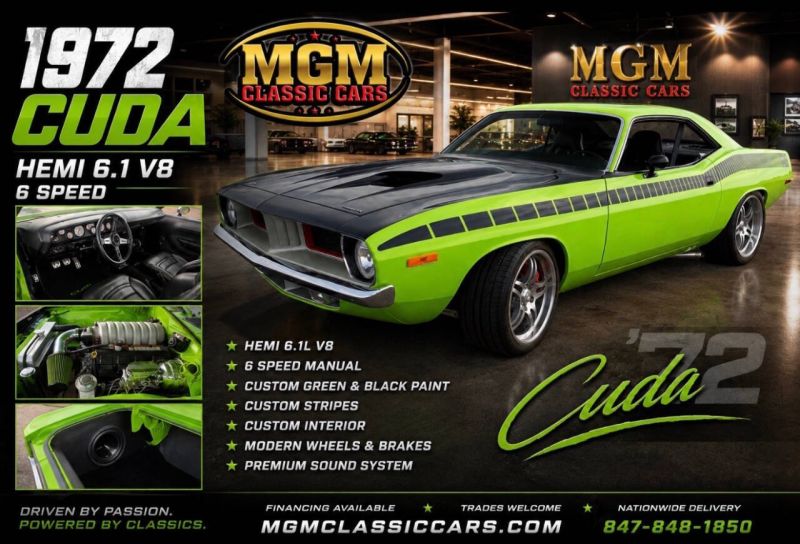
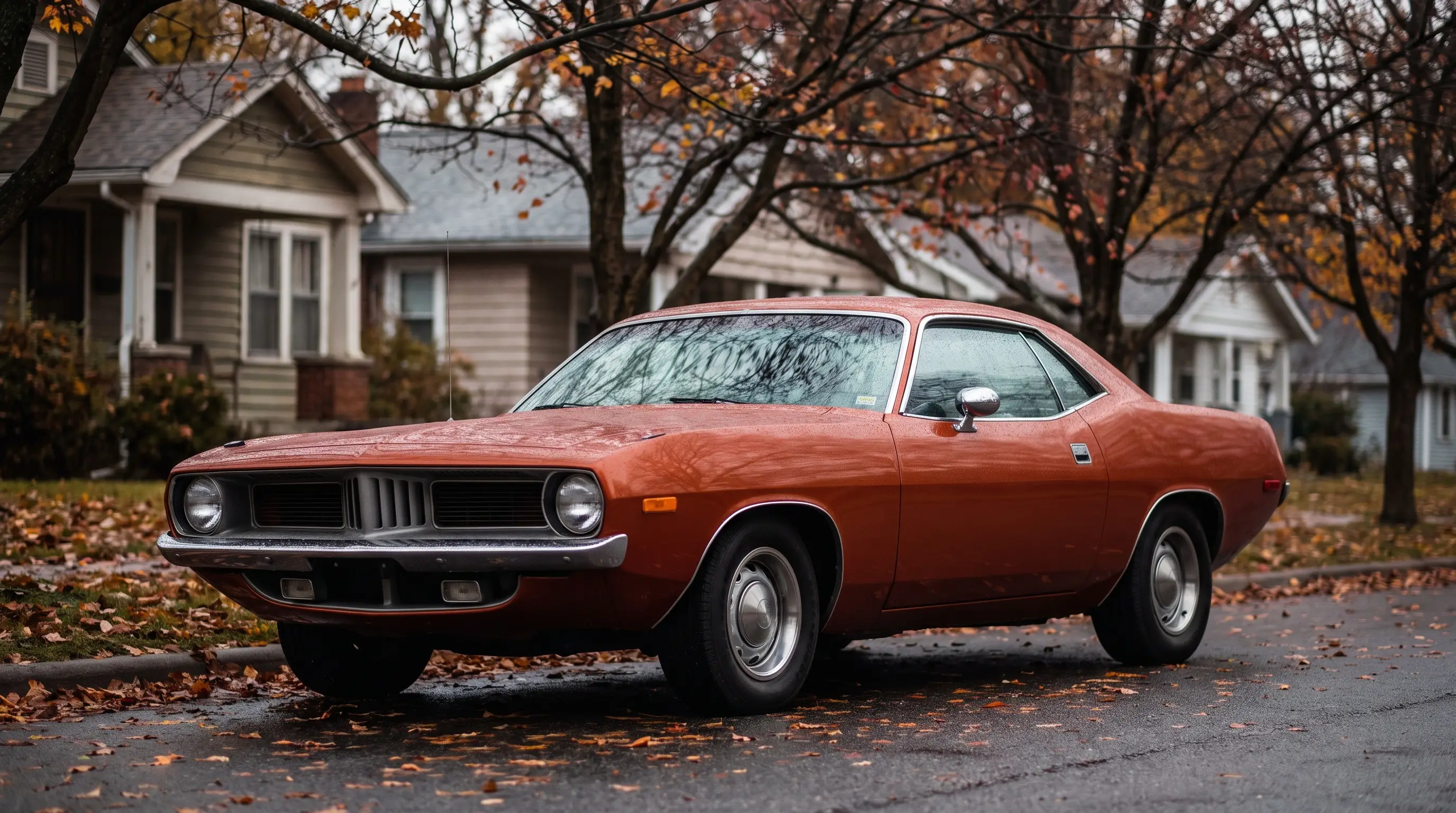
Visually, the 1972 Barracuda carried over the E-body's aggressive stance with only modest trim changes from 1971. The four headlight treatment unique to 1971 was gone, replaced by a simpler two headlight front end that would carry through the rest of the car's production run. The lineup itself had also narrowed to just two trims, the base Barracuda and the 'Cuda, since the convertible and the Gran Coupe were both dropped for 1972. The 'Cuda carried the sportiest available look, including its own scooped hood, heavy-duty suspension, wider tires, and body-colored grille and rear valence, though the shaker hood scoop itself, a feature of the 1970 and 1971 cars, was not part of the 1972 lineup.
The badges on a 1972 car are worth reading carefully if you are shopping one today. A scooped hood or 'Cuda-specific trim does not imply big block power the way it might on an earlier car, because by 1972 those visual cues were paired almost exclusively with the 340 or smaller engines. Anyone assuming otherwise based on styling alone is going to be disappointed, or worse, is going to overpay for a car dressed up to look faster than it actually is.
Production numbers reflect a shrinking market
Barracuda sales had been sliding since the E-body's introduction in 1970, and 1972 continued that trend as the broader muscle car segment cooled across the entire industry. Buyers were increasingly choosing personal luxury coupes over factory hot rods, and the insurance surcharges on anything with a performance badge pushed plenty of would-be buyers toward tamer options. The commonly cited figures put 1972 production at 18,450 hardtops total, split between roughly 10,622 base Barracudas and 7,828 'Cuda models, and while I would treat any specific per-trim number you find online with some caution unless it traces back to Chrysler's own build records, that split lines up across the sources that track this era closely.
What is not in dispute is the broader direction. The Barracuda line was contracting, both in engine choices and in total volume, as Plymouth quietly prepared to wind the E-body platform down entirely within a couple of years. Anyone looking at a 1972 car today is looking at a genuine transition year artifact, a car built while the factory could see the writing on the wall but had not yet pulled the plug.
| Item | 1972 Barracuda |
|---|---|
| Top available engine | 340 cubic inch four barrel V8 |
| Big block availability | None, 383 and 440 both discontinued |
| Hemi availability | None, discontinued after 1971 |
| Horsepower rating basis | SAE net, first year of the change |
| Headlight treatment | Two headlight front end, four headlight look retired |
Comparing the driving experience to the years before it
Anyone who has actually driven a well sorted 1971 big block Barracuda back to back with a 1972 340 car notices the difference immediately, but not always in the direction people expect. The big block cars are dramatic in a straight line, no argument there, but they are also nose heavy in a way that changes how the whole car feels through a corner. A 1972 340 car, carrying noticeably less weight over the front wheels, actually handles with a bit more balance than its big block siblings, even if it gives up the outright drama at wide open throttle. Plenty of period road testers made exactly this observation at the time, treating the smaller engine option as a genuine handling improvement rather than purely a compromise forced by regulation.
That nuance tends to get lost in modern conversations about this era, where the story gets flattened down to "less power equals worse car." The reality on a real road, with real corners, is more complicated than that framing allows, and it is one of the more interesting arguments in favor of taking the 1972 model seriously on its own terms rather than treating it purely as a diminished version of what came before.
Why the 1972 car still deserves respect
It is easy to write off the 1972 Plymouth Barracuda as the year the muscle got taken out of the muscle car, but that undersells what the 340 could still do in the right hands, and it ignores just how good these cars look sitting still. For collectors today, a well sorted 1972 Barracuda represents an approachable entry into E-body ownership, without the insurance headaches and price tags that come with chasing a big block or Hemi car from a couple years earlier. If you want the fuller context on how this era fits together, our 1972 plymouth barracuda history covers the whole arc from restyle to final year, and it is worth reading alongside a related story on what changed the following year.
"People act like 1972 was a bad year for the Barracuda. It wasn't a bad car. It was a different car, built for a different set of rules, and it still deserves to be judged on its own terms."
- Tom Ramirez
Shopping a 1972 today
If you are in the market, a 1972 Barracuda rewards patience more than almost any other year in the lineup, because the smaller pool of engine options makes verification easier, not harder. There is no ambiguity about whether a real Hemi car exists in this model year, which removes one entire category of fraud that plagues the earlier cars. What you still need to check carefully is the trim package documentation and whether the 340 under the hood is the original block. Buyers ready to look seriously at this model year can find Barracudas for sale now and use the details in this piece as a starting checklist before making an offer.