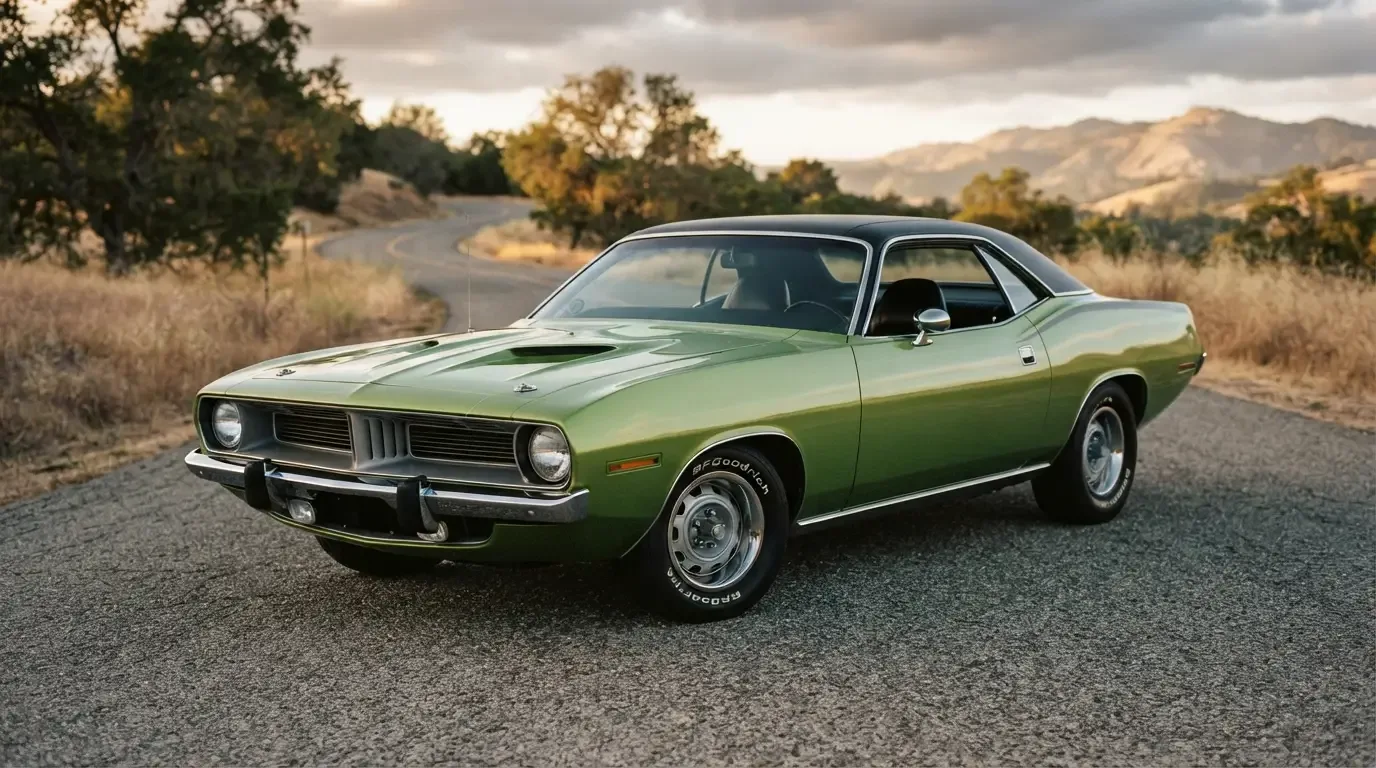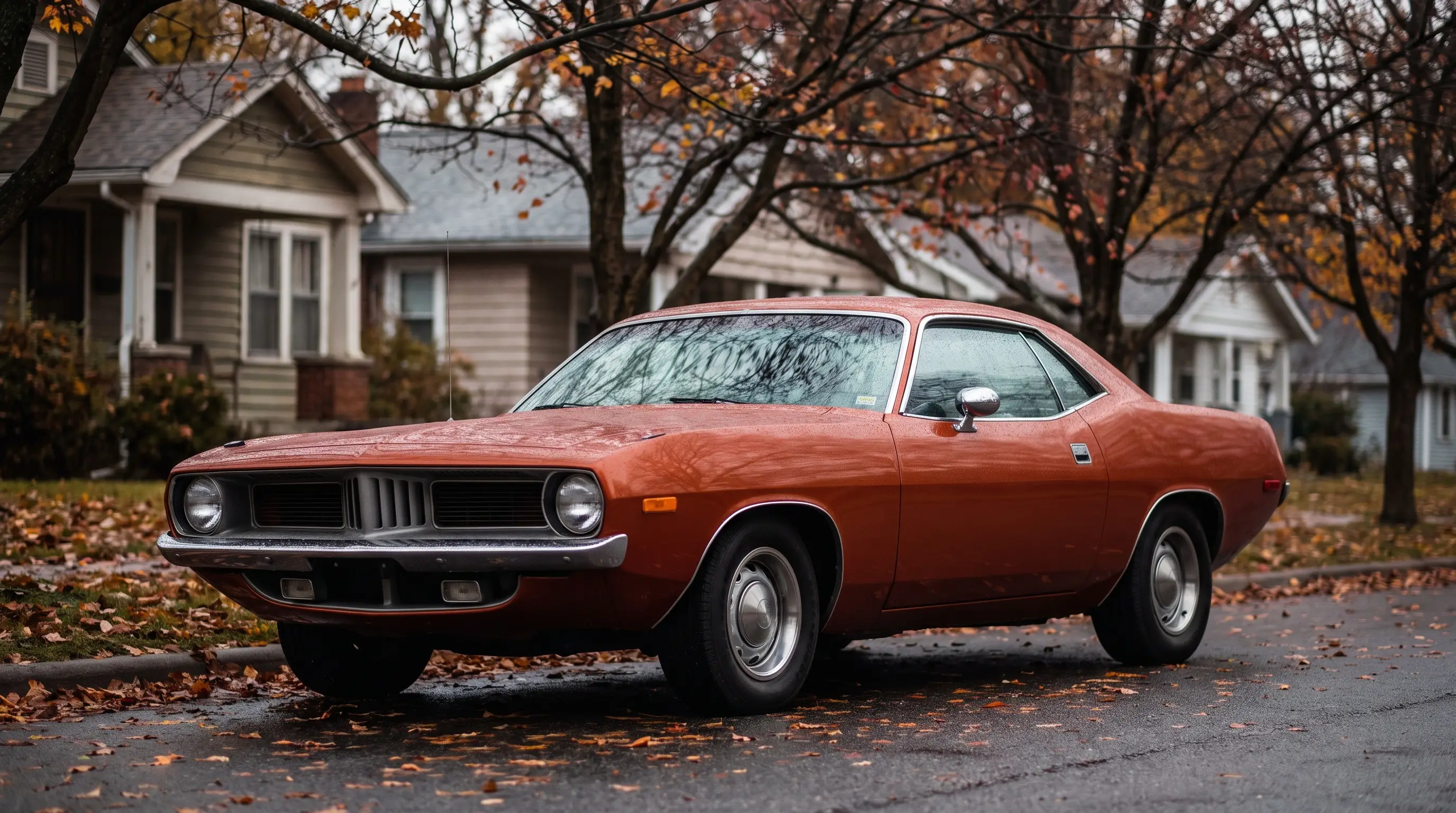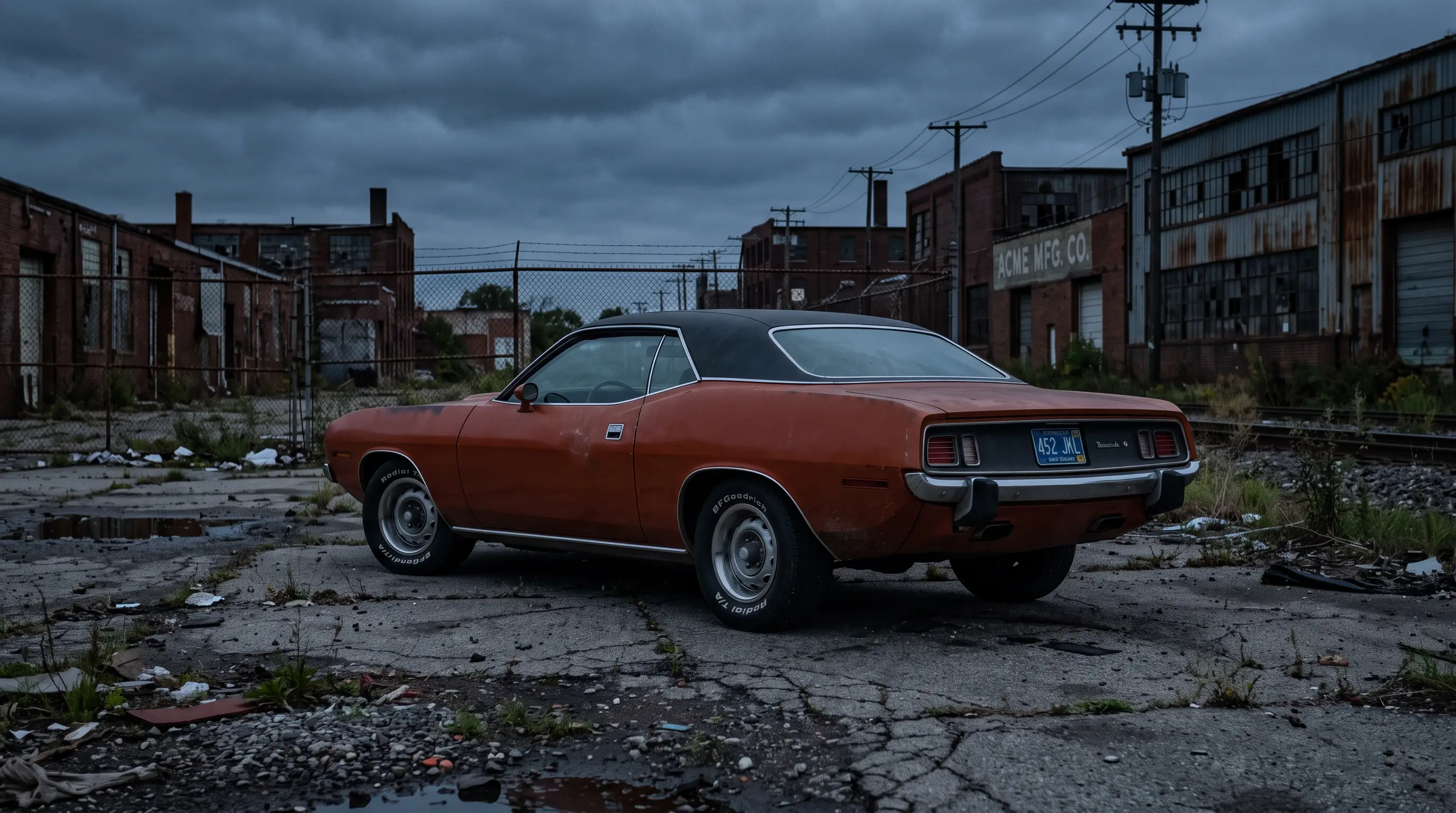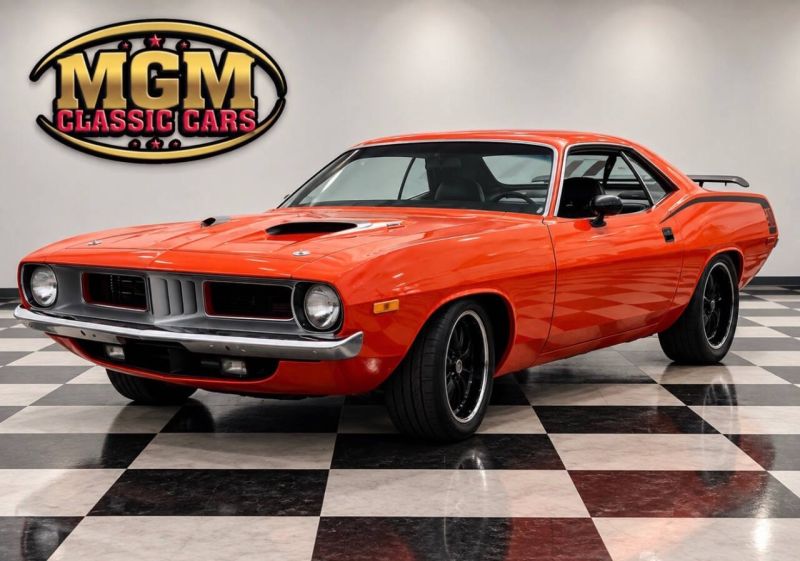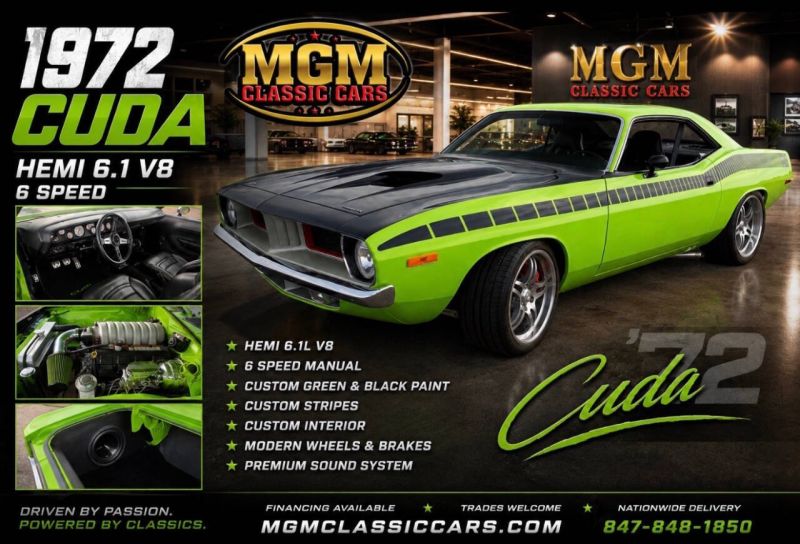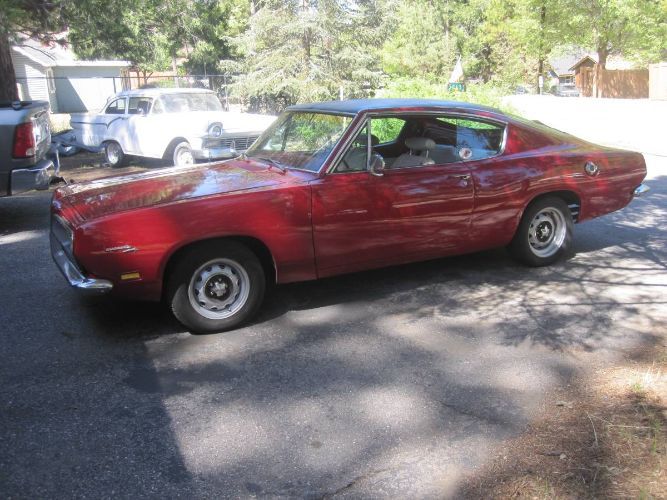
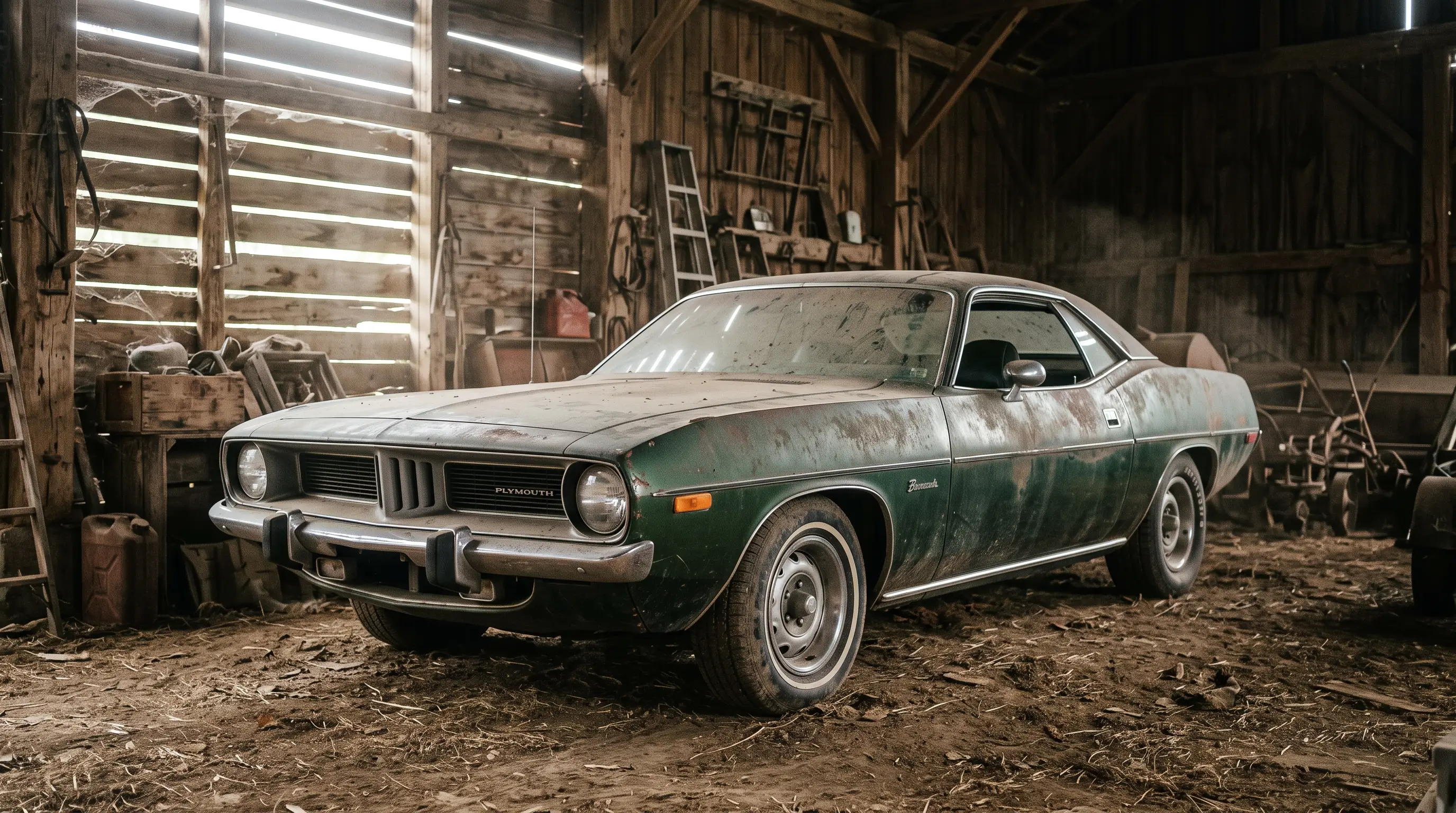
The late Barracuda has spent decades in the shadow of the 1970 cars. Ask a room full of Mopar people to name a favorite Barracuda year and almost nobody says 1972, 1973, or 1974. That gap in enthusiasm is exactly why the late barracuda collectible conversation has gotten interesting. Prices on the early E-body cars have run so far ahead of what most buyers can spend that the market has started looking sideways, at the cars nobody wanted, and finding value it overlooked the first time around.
I appraise cars for a living, and I get paid to be unsentimental about them. So when I say the 1972 to 1974 Barracuda is worth a second look, understand that I am not selling nostalgia. I am pointing at a gap between price and scarcity that has not closed yet, though it is closing.
What changed after 1971
The insurance surcharges, the emissions rules, and Chrysler's own financial squeeze gutted the Barracuda lineup fast. The 440 was gone after 1971. By 1972 the 340 was the top small block and the big block era was over for this car. Output numbers dropped across the board, and the cars that came out of Hamtramck for the final three model years carry lower compression, less bark, and a reputation for being the also-ran version of a car that used to have a Hemi option.
That reputation is not wrong about the specs. It is wrong about the implication. A 1973 340 Barracuda is not a slow car, and it is a genuinely rare survivor now, because nobody babied these when they were merely used cars. Attrition did not care that the collector world would eventually change its mind.
The production numbers tell the real story
Total Barracuda and Cuda production held roughly steady from 1972 into 1973, then collapsed in the final model year. Plymouth built around 11,700 Barracudas and Cudas for 1974, the lowest single-year total the car ever posted, and only about 1,200 of those left the factory with the 360 V8. Fewer cars were built, fewer were optioned with anything interesting, and fewer of those survived the following decade of cheap gas prices and cheaper insurance write-offs. A well-documented 1974 Cuda with the 360 is not common. It just was not celebrated as rare until recently, because everyone was busy chasing 1970 numbers-matching cars with six-figure price tags.
| Model year | Top engine | Market position today |
|---|---|---|
| 1972 | 340 cid V8 | Undervalued relative to survivors |
| 1973 | 340 cid V8 | Scarce, quietly appreciating |
| 1974 | 360 cid V8 | Final year, growing attention |
Documentation is doing more work than horsepower
In my appraisals, a late Barracuda with a broadcast sheet, a fender tag that decodes cleanly, and a paper trail back to the original owner beats a numbers-questionable early car on defensibility, even if the early car nominally has the bigger engine. Buyers who got burned on undocumented "matching numbers" claims in the 1990s and 2000s have gotten cautious. A late car with real paperwork is a known quantity. An early car with gaps in its history is a bet.
This matters because collectibility is not just about what the car was in period. It is about what a buyer can prove today, and what the next buyer will be able to prove after that. A 1973 Cuda with a clean title chain is more liquid than people assume, because the buyer pool trusts it.
"I have watched buyers pay a premium for a boring color combination on a documented '73 over a flashy claim on an early car with holes in the story. Paper beats paint every time it actually gets tested at sale."
- Marcus Feld
Where the risk actually sits
None of this means every late Barracuda is a buy. Rust is rust regardless of model year, and these cars rusted in the same rocker panels and trunk floors as every other seventies Mopar. The downside case is a car that looks complete in photos and turns out to need full quarter panels, which erases any price advantage instantly. Buy the documentation and the structure first. The engine number is a distant third concern on a car this affordable relative to its 1970 sibling.
Liquidity is the other honest risk. These years sell in a thinner market than the early Cudas. That is precisely why they are cheaper, and it is also why a seller needs patience rather than an auction-house timeline. If you need to exit fast, this is not your car. If you can hold for the right buyer, the math favors you.
Colors and options that move the needle
Even within the late cars, some combinations sell faster than others. A 1973 or 1974 Cuda with the Rallye package, a factory sunroof, or one of the leftover high impact colors carrying into the final years commands a real premium over a base coupe in a common tone. None of that changes the underlying engine story, but it changes how fast the car moves once it is priced correctly, and speed of sale is part of what I mean when I talk about liquidity. A plain car in a plain color can sit for a year. An optioned car in a distinctive color usually does not.
Interior condition matters more on these late cars than it did on the earlier ones too, mostly because fewer restoration shops stock reproduction parts for a 1974 dash pad than for a 1970 one. A tired original interior is a real cost line, not a cosmetic footnote, and I factor that into every valuation I write on a late car.
The case for buying now
The gap between a clean 1970 Cuda and a clean 1974 Cuda has been wide enough for years that first-time buyers priced out of the early cars are starting to look at the late ones on purpose, not as a fallback. That shift in intent, from settling to choosing, is usually what moves a segment of an undervalued market. It happened with early Corvairs, it happened with second-gen Camaros, and it is happening here now, later than most of us appraising these cars expected.
The Barracuda story itself, where this started for this final generation, explains a lot of why these cars got overlooked in the first place. Read that context before you buy one, because knowing what you are getting, and what you are not, is the whole game with a late car.
If the numbers here make sense to you, shop classic Barracuda listings and look specifically for the documentation trail before you look at the sticker price. That is where the real value of a late barracuda collectible actually lives right now.