The 1973 Plymouth Barracuda is a car defined by a single federal regulation as much as anything Plymouth's designers wanted to do. The new front bumper standard, requiring cars to withstand a low speed impact without damage to safety equipment, forced a visible change to the E-body's nose, and the Barracuda wore that change more awkwardly than some of its rivals. Understanding why the 1973 car looks the way it does requires understanding the rule before you can appreciate the car underneath it.
The bumper rule and what it did to the face of the car
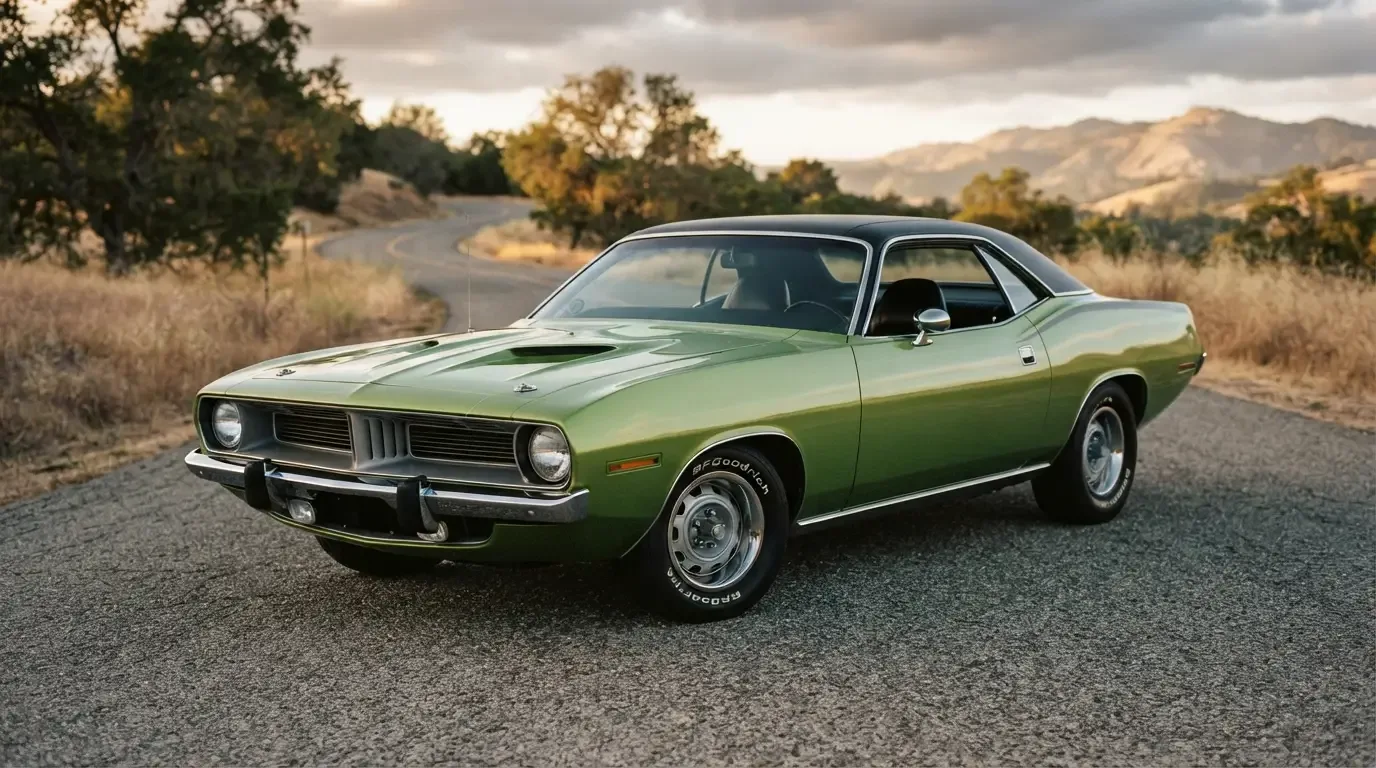
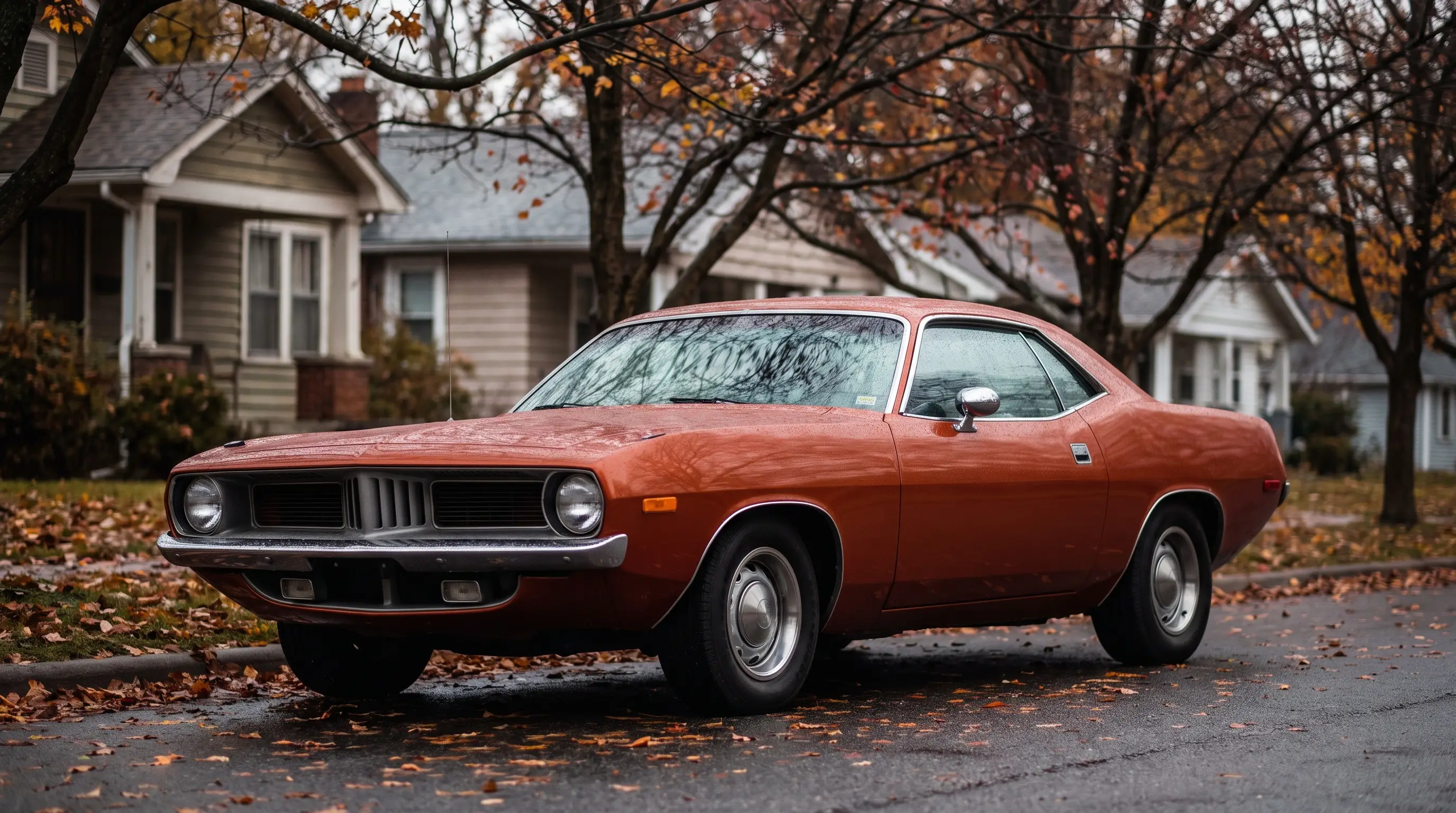
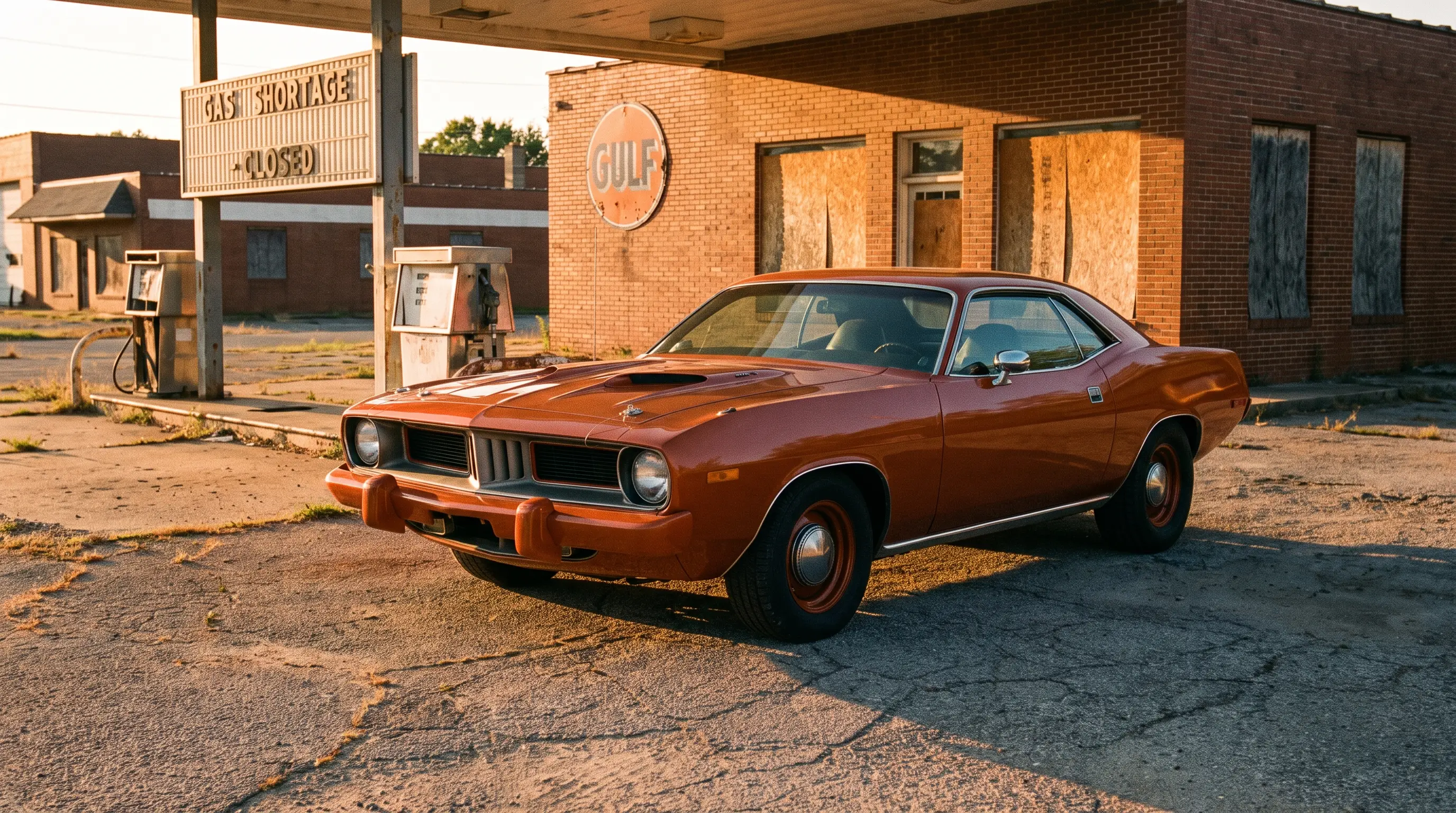
Starting with the 1973 model year, federal regulation required front bumpers on passenger cars to absorb a 5 mile per hour impact without damage to lights, fuel systems, or other safety-related components. Plymouth's engineers responded by adding a heavier bumper structure and revised grille surround to the Barracuda's nose, a change that added visible bulk to a car whose original design language depended on a low, lean front end. It is not a subtle difference if you park a 1972 and 1973 side by side. The 1973 car sits with a noticeably heavier front presence, and the grille texture and surround were revised to integrate the new bumper mounting.
This was an industry wide problem, not something unique to Chrysler's engineers, and every manufacturer scrambled to comply without gutting the visual identity of their existing designs. Some cars absorbed the change more gracefully than others. The Barracuda's front clip redesign is often cited by period reviewers and modern collectors alike as one of the more heavy-handed examples of the rule being met with the least possible design effort, though I would push back gently on the harshest versions of that criticism. Given the timeline the engineers were working under, the result is more coherent than plenty of alternatives on the market that year.
What stayed the same under the skin
Mechanically, 1973 continued the trajectory set the year before, with one change. The slant six was gone entirely, dropped after 1972 and never offered in the Barracuda again, leaving the 318 as the base engine. The 340 four barrel carried on as the main performance choice, and partway through the model year Plymouth introduced a new 360 cubic inch V8 as an additional option, a preview of the engine that would take over completely for 1974. The base Barracuda and 'Cuda trims remained the only two body styles, and the 'Cuda kept its scooped hood and heavy-duty suspension for buyers who wanted the visual statement even if the underlying performance had been dialed back from the big block years. The interior saw only minor trim revisions, keeping the same basic dashboard layout and switchgear that had defined the E-body cabin since 1970.
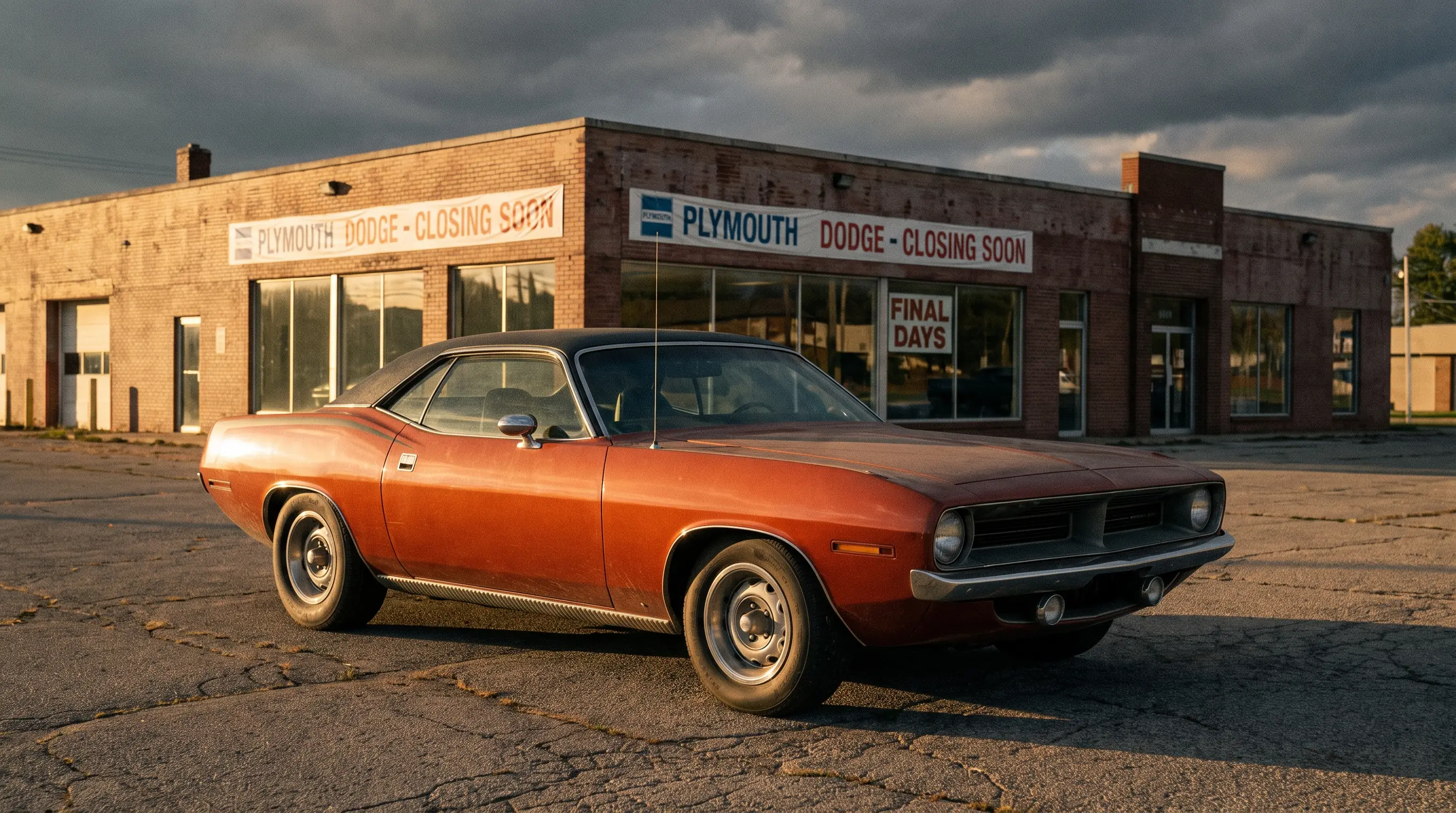
What did shift, subtly but meaningfully, was the broader context the car existed in. The 1973 oil embargo hit in the fall of that year, right as the model year was well underway, and buyer priorities across the entire industry began tilting hard toward fuel economy. A car built around a big torsion bar suspension and a small block V8 was suddenly competing for attention against a public newly anxious about gas prices, a headwind the Barracuda had not faced in its earlier, more confident years.
| Item | 1973 Barracuda |
|---|---|
| Front bumper standard | New federal 5 mph impact requirement |
| Rear bumper standard | Unchanged, standard tightens in 1974 |
| Top engine | 340 cubic inch four barrel V8, with a 360 added mid-year |
| Trim packages | Base Barracuda and 'Cuda only |
| Market pressure | Fall 1973 oil embargo begins mid model year |
The showroom experience buyers actually had
It is worth remembering what walking into a Plymouth dealership in the fall of 1973 actually felt like, because the context shapes how you should read the car today. A buyer cross-shopping a Barracuda against a Mustang or a Camaro that season was doing so against a backdrop of gas lines forming across the country and daily news coverage of fuel rationing plans being floated in Washington. A performance-oriented coupe, however modest its actual thirst compared to a big block from a few years earlier, was suddenly a harder sell than it had been just months before, regardless of what was actually under the hood.
Dealers responded the way dealers usually do, leaning harder on financing incentives and trade-in offers to move inventory that had been ordered and built before the embargo hit. Some 1973 Barracudas sat on lots longer than Plymouth would have liked, which is part of why surviving examples today sometimes show remarkably low delivery mileage relative to their age, a detail worth checking for on any car you are seriously considering.
Why this year gets overlooked
Sandwiched between the more historically discussed 1972 car and the genuinely final 1974 model, the 1973 Barracuda tends to get treated as a footnote rather than a subject in its own right. That is a mistake. It represents the exact moment Detroit's performance car era collided head on with federal regulation and geopolitical crisis simultaneously, and the styling changes on this specific model year are a physical record of that collision. If you want our complete history of the restyle years, the 1973 chapter is where the pressure really started to show.
Collectors today sometimes overlook the 1973 model in favor of its neighboring years, which can actually work in a buyer's favor. Prices for well documented 1973 cars have historically lagged behind comparable 1972 and 1974 examples, even though production numbers and surviving population are broadly similar. That gap will not necessarily persist forever, and buyers who understand the historical significance of this transitional year are often the ones getting ahead of where the broader market eventually catches up.
"The 1973 car carries the scars of its era honestly, the heavier bumper, the changed grille, all of it. I find that more interesting than a car that pretends nothing was happening around it."
- Sarah Whitfield
How the press covered the car at the time
Period road tests of the 1973 Barracuda tend to read differently than reviews of the earlier E-body cars, and the tone shift itself is a useful historical document. Reviewers in 1970 and 1971 wrote breathlessly about quarter mile times and engine options. By 1973, the same publications were more likely to discuss fuel economy figures, ride comfort, and value for money, a reflection of exactly the buyer priority shift happening across the whole market that year. Some reviewers were openly critical of the added front bumper mass, arguing it disrupted the E-body's originally lean proportions, while others took a more practical view, noting that every competitor on the market was dealing with the identical regulatory requirement and that Plymouth's solution was no worse than the alternatives.
Reading these period reviews today gives a clearer sense of how contemporary observers actually experienced the changes as they happened, rather than filtering everything through the nostalgia that colors so much modern discussion of this era. The 1973 Barracuda was not universally beloved when new, but it was not dismissed as a failure either. It was simply understood, correctly, as a car adapting to circumstances nobody at Plymouth had chosen.
What to look for when shopping one
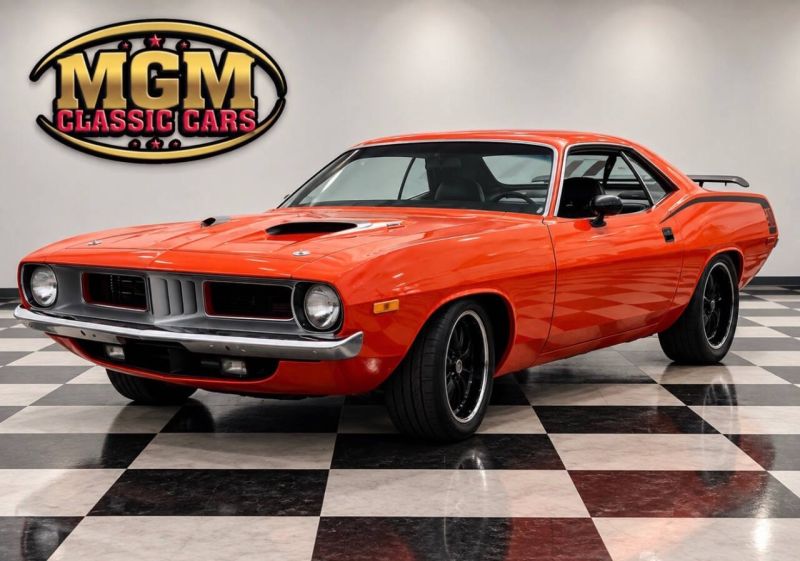
The front bumper structure itself is one of the first things worth inspecting on a 1973 car, since the added mass and mounting hardware are specific to this model year and not interchangeable with 1972 parts without modification. Beyond that, the shopping checklist mirrors any other E-body Barracuda from this era: verify the fender tag against the engine, check for rust in the usual torsion bar crossmember and trunk floor areas, and confirm any trim package claims against documentation rather than trusting a badge alone. For anyone ready to start looking, you can find a classic Barracuda from this often underappreciated model year and see for yourself how the changes of 1973 shaped the car's final chapter.