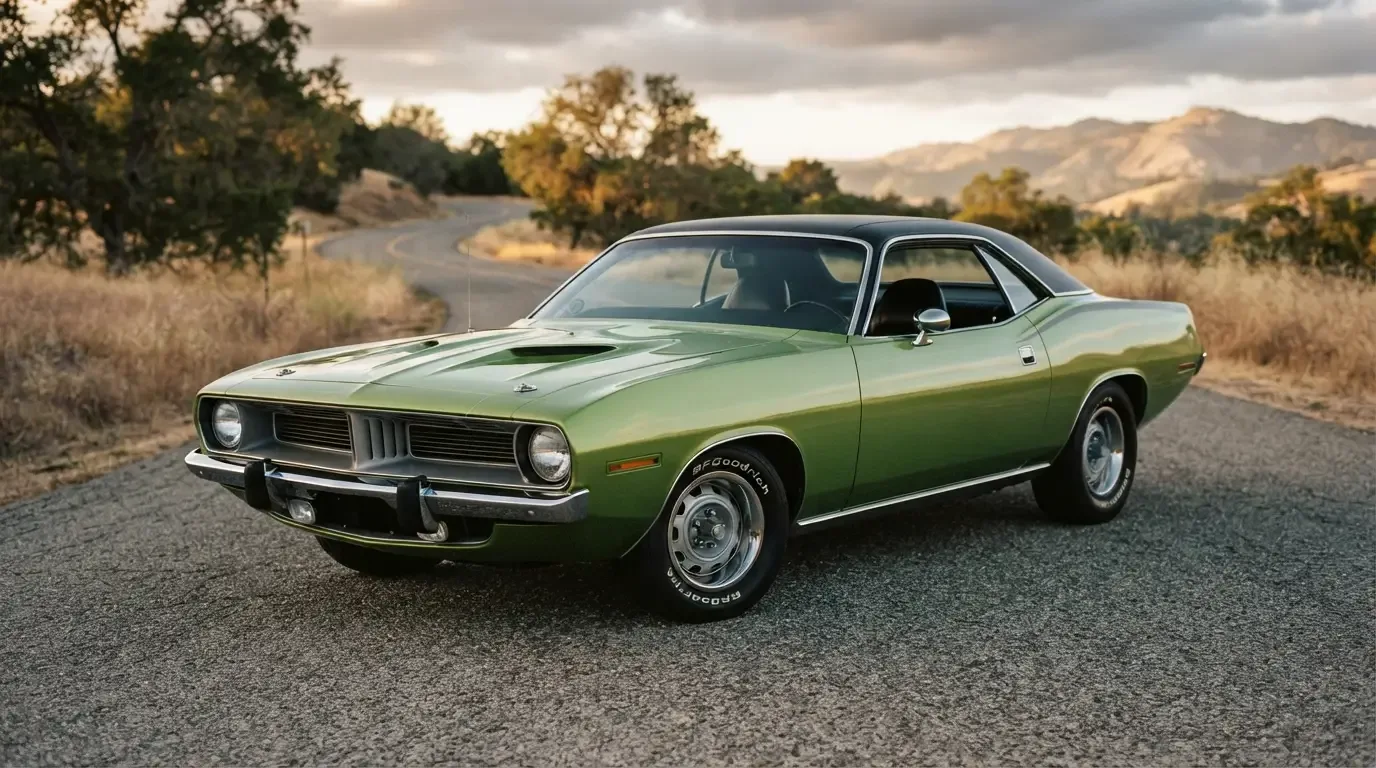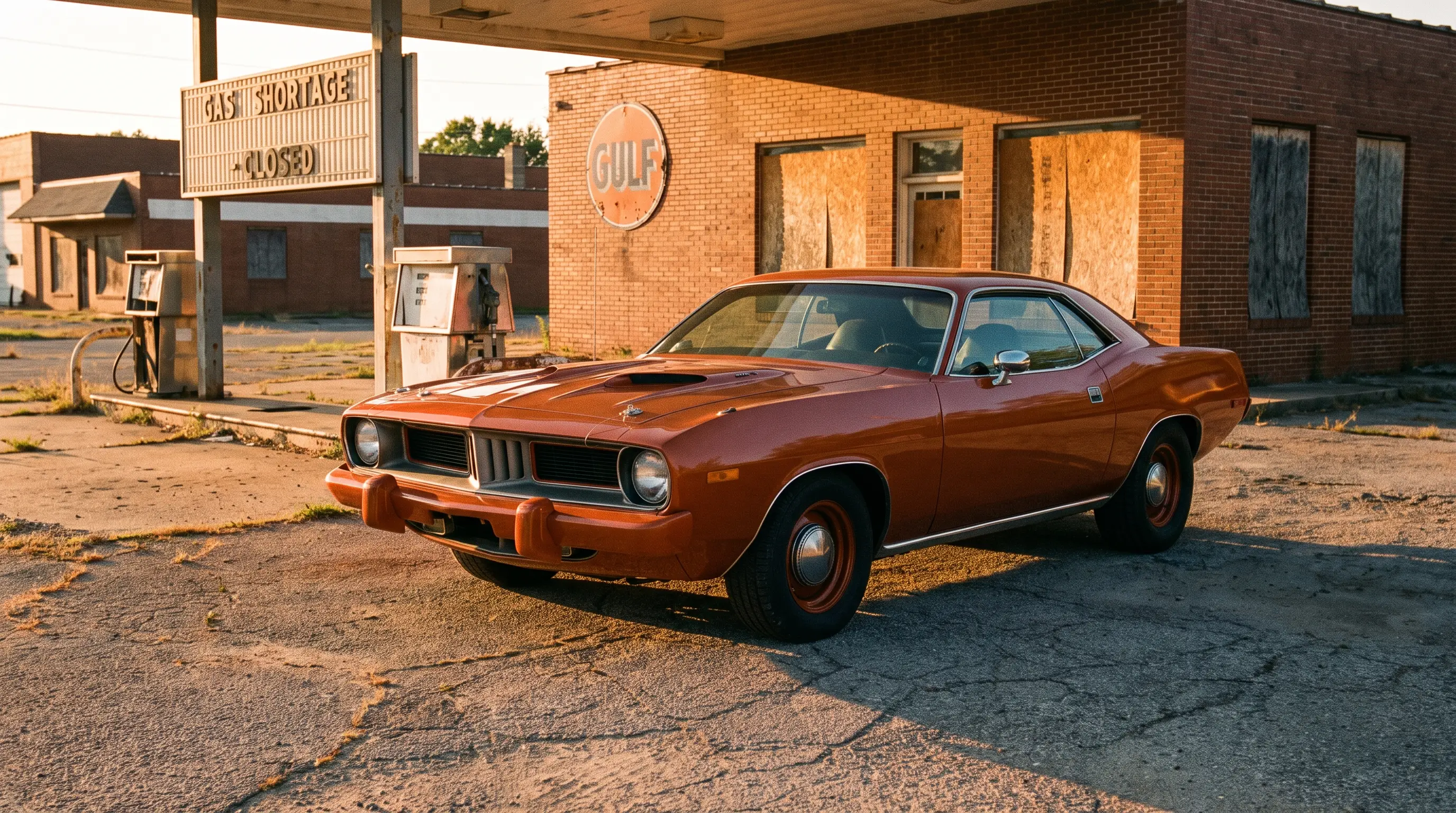
Every production run ends somewhere, and for the Plymouth Barracuda, that somewhere was April 1974, when the last E-body rolled off the assembly line and Plymouth quietly closed the book on a nameplate that had opened the muscle car era a decade earlier. The 1974 Barracuda does not get discussed with the same reverence as the Hemi cars from 1970 and 1971, but it deserves attention precisely because it shows what the factory does when it knows the end is coming.
The engine lineup Plymouth was left with
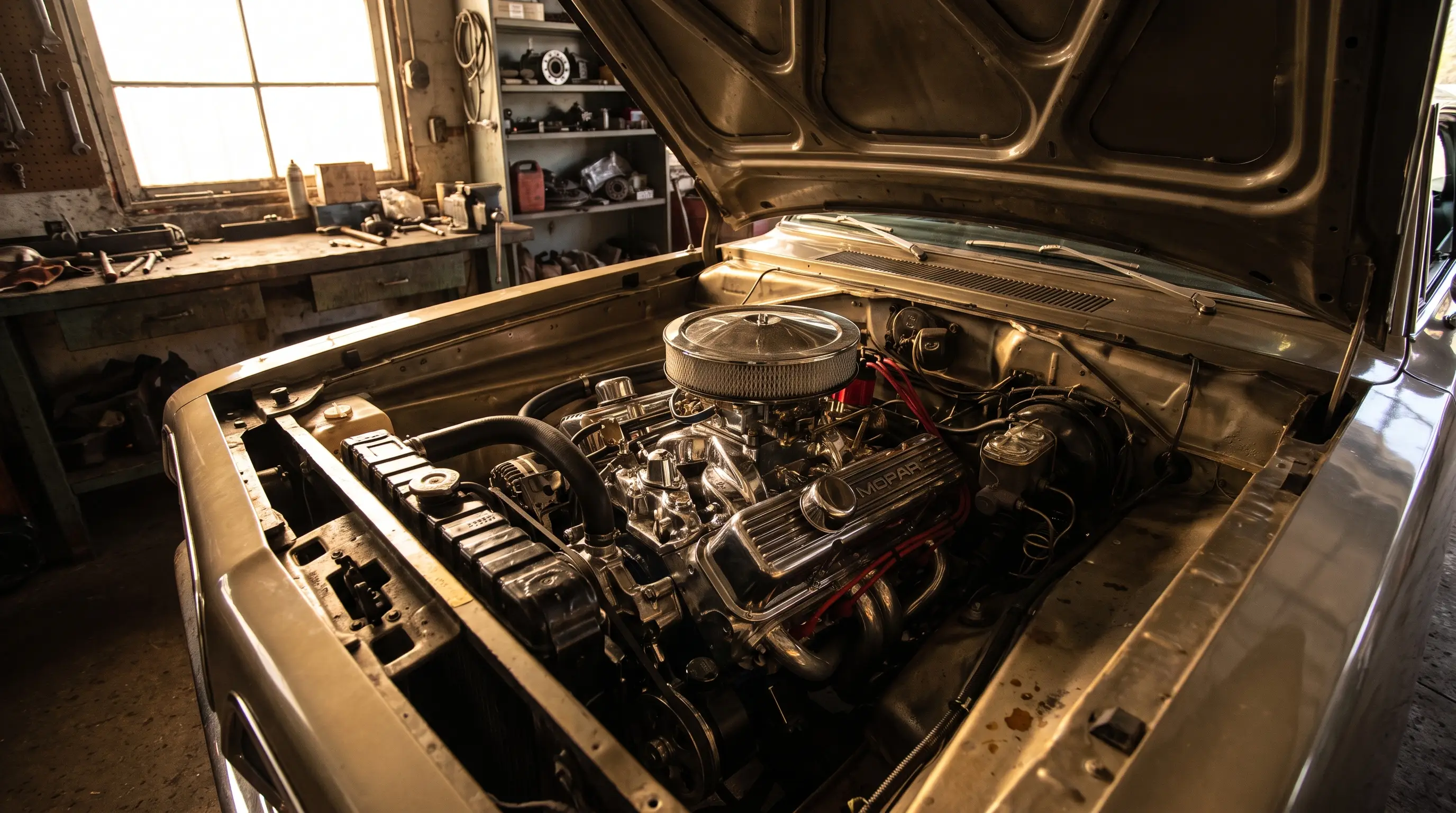
By 1974, the 340 that had served as the Barracuda's performance flagship for the previous two model years was gone, fully replaced by the 360 cubic inch V8 that Plymouth had introduced partway through 1973. This was not simply a bigger displacement swap for its own sake. The 360 was part of Chrysler's broader small block strategy for the mid 1970s, designed with an eye toward emissions compliance and durability rather than outright peak output. The 'Cuda came standard with the four barrel 360, rated at 245 horsepower, and the base Barracuda used the 318 as its standard engine. The slant six, which had already been dropped after 1972, was not offered in the Barracuda at all by this point, so buyers who simply wanted the shape without much performance were choosing between the 318 and the 360, not a six-cylinder economy option.
Comparing the 1974 lineup to what had been available just four years earlier is a useful exercise in understanding how quickly the entire industry pivoted. In 1970, a buyer could walk into a Plymouth dealer and order a Barracuda with a 426 Hemi. By 1974, the entire engine range topped out with a 360 four barrel that, however competent, was not chasing the same numbers at all. The gap tells you everything about how fast insurance pressure, emissions regulation, and changing buyer priorities reshaped Detroit in a very short window.
Styling in the final year
The 1974 Barracuda carried the heavier bumper treatment introduced the prior year, now with rear bumpers also updated to meet the expanding federal impact standards that had applied only to the front end in 1973. The result was a car noticeably heavier looking front and rear than the clean 1970 original, though the basic body lines and greenhouse remained recognizably the same E-body shape throughout the entire run. Trim options continued largely unchanged from 1973, with the base Barracuda and the 'Cuda's scooped hood and appearance package still the only two ways to option the car for buyers who wanted the visual performance cues even without the biggest engine to fully back them up.
| Item | 1974 Barracuda |
|---|---|
| Top available engine | 360 cubic inch four barrel V8, standard on the 'Cuda |
| Engine no longer offered | 340 cubic inch V8, discontinued after 1973 (360 introduced mid-1973) |
| Rear bumper standard | New federal impact requirement takes effect |
| Production end date | April 1974 |
| Body platform | E-body, shared architecture retired same year |
What the assembly line actually looked like that spring
There is something worth sitting with in the fact that the workers building Barracudas in early 1974 were, by most accounts, going about an entirely ordinary production run. Corporate decisions about platform futures rarely get communicated to the assembly line in real time, and the E-body's cancellation was tied up in broader decisions about where Chrysler wanted to invest its limited development dollars for the back half of the 1970s, decisions that were being finalized in offices far removed from the plant floor. The cars themselves reflect that ordinariness. There is no evidence of corners being cut in anticipation of cancellation, no rushed final-run special edition, just a normal production process that happened to stop a few months earlier in the calendar year than the previous several years had.
That matters for how you should think about build quality on a 1974 car specifically. Unlike some discontinued nameplates where the final year shows visible signs of a company checking out early, a 1974 Barracuda was built with the same standards Chrysler applied to any other model that year, which is reassuring news for anyone shopping this final chapter of the car's history.
Why the final year still matters to buyers
There is a certain honesty to a car built in a company's final year of a program, because nobody involved in building it was cutting corners in anticipation of a redesign the following season. The 1974 Barracuda got the same attention to fit and finish as any other year, it simply arrived at the end of a story that had already peaked several years earlier in terms of raw performance. For collectors who prioritize the shape and the ownership experience over chasing horsepower figures, a 1974 car represents genuinely good value relative to the earlier big block years.
The rarity angle also deserves mention, though it needs the right framing. A 1974 Barracuda is not scarce in the way a 1970 Hemi convertible is scarce. It is scarce in the sense that it represents the closing chapter of an entire platform, and buyers who understand E-body history tend to place real value on owning a documented example from that final production run. If you want read the background on how the restyle years led up to this final chapter, it puts the 1974 car's context in sharper focus, and our piece on worth a look too covers exactly how the 340 gave way to the 360 in more mechanical detail.
"Nobody at the plant in early 1974 was thinking they were building the last one. That's what makes these cars interesting to me. They were built like any other year, and history decided afterward what they'd mean."
- Tom Ramirez
How the 1974 car compares within the broader collector hierarchy
Within the informal hierarchy collectors use to rank E-body Barracudas, the 1974 model tends to sit in the middle rather than at either extreme. It does not carry the outright rarity premium of a documented 1970 or 1971 Hemi car, and it does not carry the budget-friendly entry point reputation of some later, lower trim examples either. What it does offer is a genuinely distinct historical position, the literal end of the line, which appeals to a specific type of buyer who values narrative significance as much as raw performance credentials. That buyer is not chasing the biggest number on a dyno sheet. They are chasing the last chapter of a story that started a decade earlier with a car rushed to market just weeks ahead of the Mustang.
Whether that narrative premium translates into a meaningfully higher price than a comparable 1972 or 1973 car depends heavily on documentation and condition, the same factors that drive value across this entire segment regardless of model year. What is consistent is that buyers who understand the story tend to pay closer attention to 1974 examples than the casual market gives them credit for.
Shopping the final model year today
Buyers looking at a 1974 Barracuda should approach it with the same discipline as any other E-body purchase: verify the fender tag, confirm the engine against the VIN, and check the usual rust-prone areas around the torsion bar crossmember and trunk floor pan. Because the 360 was a relatively durable and well understood engine within Chrysler's small block family, parts support for a numbers-matching 1974 car remains solid, which helps keep ownership costs reasonable compared to some of the more exotic earlier engine options.
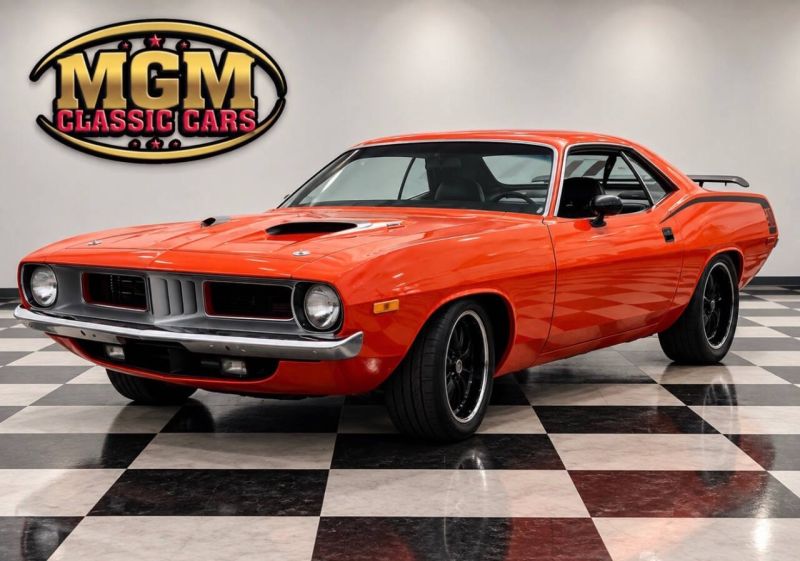
Anyone drawn to the idea of owning the last chapter of the Barracuda story rather than the flashiest one can find real satisfaction in a well sorted 1974 example. For those ready to start that search, you can shop classic Barracuda listings and see what is available from this quietly significant final production year.