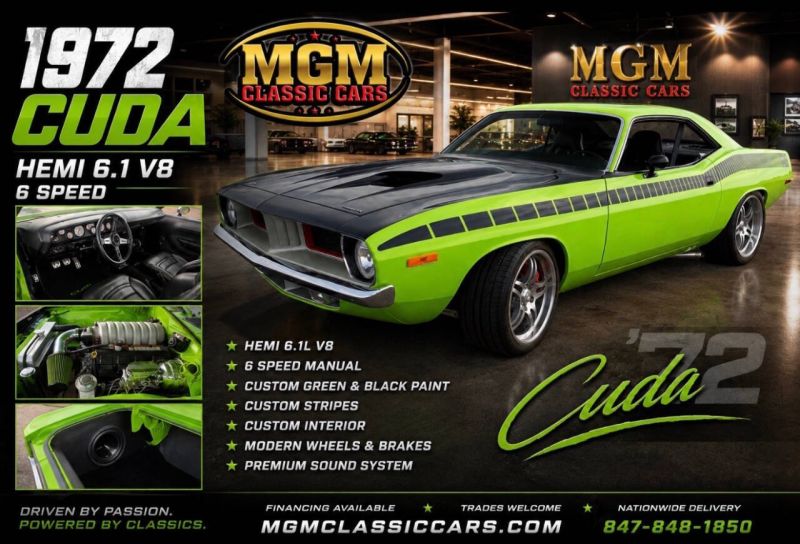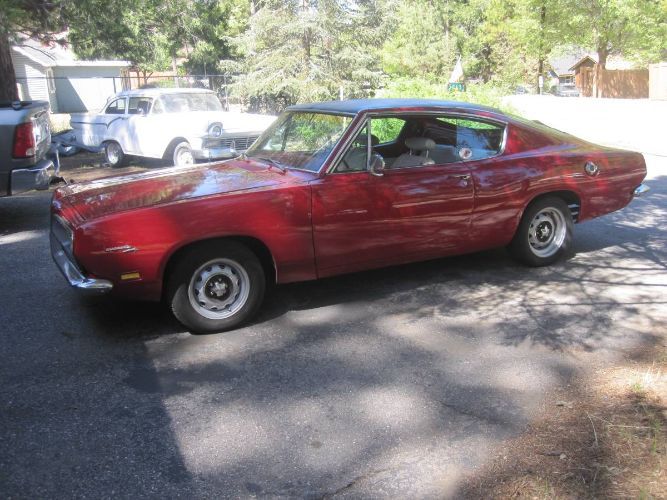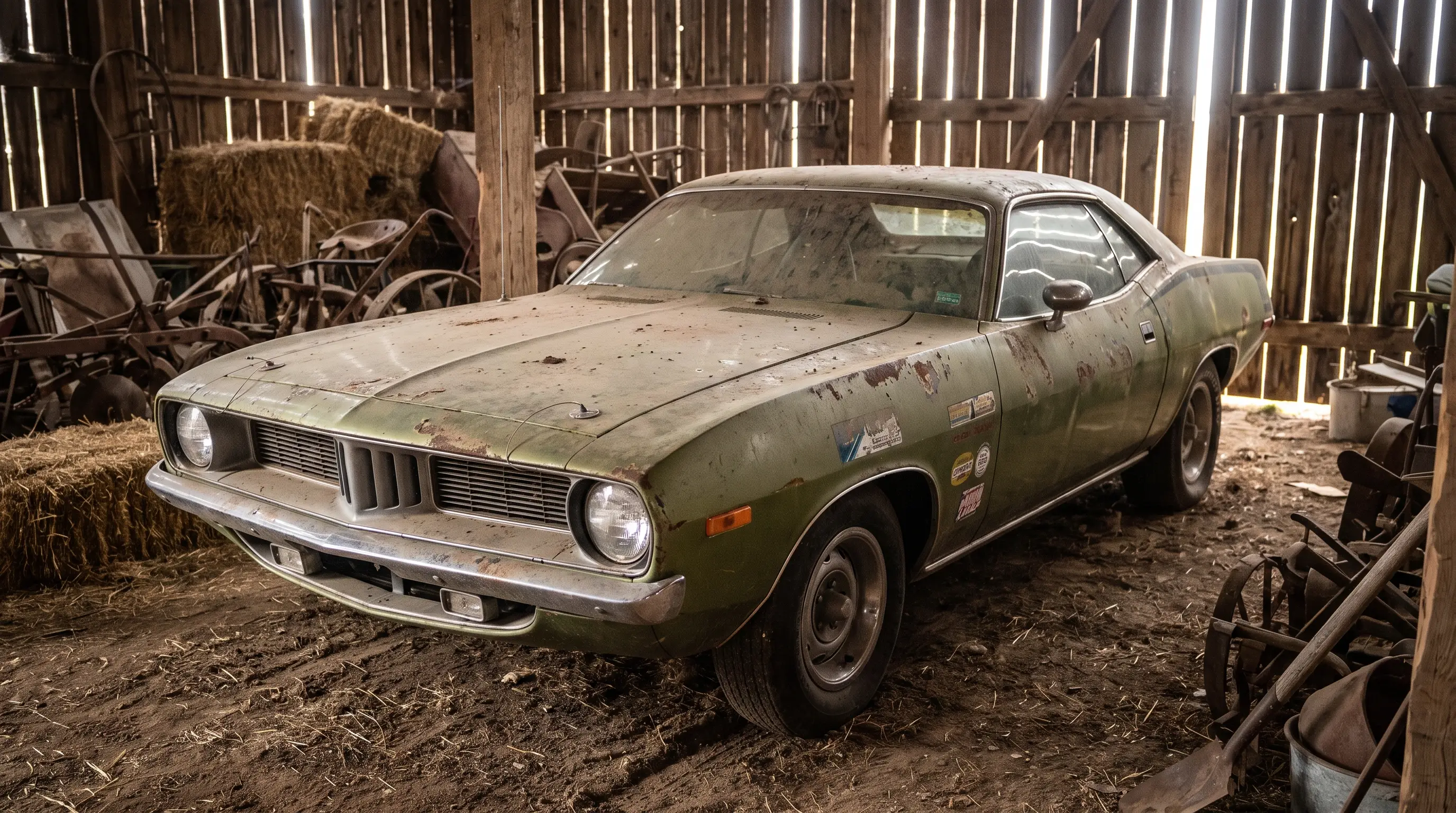
Finding a genuine 1974 barracuda survivor today means understanding what these cars actually went through between the factory floor and a modern car show. Plymouth's final generation of E-body cars was built as ordinary transportation first and collectible second, and that fact shapes exactly how many original, unmolested examples remain and where they tend to turn up.
How many actually made it this far
Nobody at Chrysler was tracking long-term survival rates when these cars left the plant, so any estimate today has to work backward from what shows up at swap meets, registries, and club rosters decades later rather than from any official source. That indirect method is imperfect, but it is the only method available, and it consistently points to a much smaller surviving population than the raw production totals imply.
Production for the 1972 through 1974 model years totaled roughly 52,400 Barracudas combined across all trims, 18,450 in 1972, 22,213 in 1973, and 11,734 in 1974. Survivorship studies on American cars of this era generally suggest attrition rates well above half by the time a model reaches fifty years old, factoring in rust, accidents, and simple neglect during the decades before values recovered. That math suggests genuine survivors, meaning cars still road-worthy or restorable with meaningful original content, likely number in the low thousands rather than the tens of thousands the raw production figures might suggest.
Base Barracudas without the Cuda package have fared worse than the performance trims. Cars bought purely as economical daily transportation received less mechanical investment over their working lives and were more likely to be scrapped once repair costs exceeded their resale value. Cuda-package cars, valued earlier by enthusiasts even during the lean years of the 1980s, survived at meaningfully better rates.
Where survivors tend to come from
Dry climate states, particularly the American Southwest, produced a disproportionate share of the best-preserved late Barracudas, for the same reason they preserve most vintage American cars better than the Rust Belt or coastal regions. A car that spent thirty years in Arizona or New Mexico before ever reaching a collector's hands typically presents with far less structural rust than an equivalent car that lived its whole life in Michigan or Ohio.
Single-owner histories and low-mileage examples both show up more often among Cuda-package cars than base models, reflecting the fact that enthusiast buyers were more likely to garage a performance-package car and drive it sparingly once the initial daily-driver years passed. Documentation supporting that kind of history, service records and old registration paperwork especially, adds real credibility to a survivor claim. It is not uncommon to find a Cuda that passed through only two or three owners across fifty years, a pattern almost never seen among surviving base-trim cars from the same production run.
"A survivor claim without paperwork is just a nice story. The cars that actually earn the label have receipts, old registrations, and a chain of ownership somebody can trace."
- Tom Ramirez
What separates a true survivor from a restoration
The term gets used loosely, and it should not be. A true survivor retains its original paint, interior, and mechanical components to a significant degree, even if some maintenance items have naturally been replaced over fifty years of use. A restoration, however well executed, is a different category entirely, a car brought back from deteriorated condition using replacement parts, repainting, and often reupholstery. Both categories have real value, but they are not interchangeable, and sellers who blur the line do their buyers a disservice.
Anyone assembling a picture of 1972 plymouth barracuda history alongside these later years benefits from understanding that survivor cars from this window are genuinely scarcer than casual production numbers suggest, which is exactly why documentation carries so much weight in this specific corner of the market.
Reading a survivor's build sheet correctly
Fender tags on these cars carry the engine code, transmission code, trim level, and paint code, and matching every one of those against what is actually installed on the car is the single most reliable check available to a buyer. A survivor with a fender tag that matches its current configuration in every detail is a far stronger claim than one relying on the seller's word alone. Discrepancies do not automatically mean fraud. Engines and transmissions were sometimes swapped decades ago for practical reasons long before anyone cared about matching-numbers status. But an honest seller discloses those changes rather than letting a buyer assume originality that is not actually there.
Broadcast sheets, when they survive at all, add another layer of confirmation, since they were generated at the factory and typically riveted somewhere inside the body during assembly. Finding one intact inside a genuine survivor is rare enough that it meaningfully strengthens the car's documented history when it happens.
The bigger picture around these final years
Understanding why so few base cars survived also means understanding the broader forces that shaped this generation's entire existence, from tightening emissions rules to the fuel crisis that hit right as these cars were new. A related story digs into how the wider muscle car segment wound down around the same years these Barracudas were built, context that helps explain why owners in the 1970s and 1980s had so little financial incentive to preserve an ordinary used car rather than replace it.
That neglect during the lean years is precisely what makes today's genuine survivors worth the extra scrutiny. A car that made it through four decades of being just an old used car, rather than a recognized collectible, before finally landing in careful hands has a story worth verifying properly.
For readers who want to see what condition and documentation actually looks like across current listings, Barracudas for sale now is a good place to compare survivor claims against real inventory.
Fifty years from the factory floor to a garage today is a long road for any ordinary used car, and most of these Barracudas did not survive it. The ones that did carry a story worth taking seriously, provided the paperwork actually backs it up.
Every genuine survivor I have examined tells the same basic story from a slightly different angle: an owner somewhere along the way decided the car was worth keeping when the practical choice would have been to sell it or scrap it. That decision, repeated by enough individual people across five decades, is the entire reason any of these cars still exist for collectors to argue about today.
Sources and notes
- 440 Magnum Network: Plymouth Barracuda Production Numbers 1964-1974
- 440 Magnum Network: 1973 Plymouth Barracuda Production Numbers
- 440 Magnum Network: 1974 Plymouth Barracuda Production Numbers
- Wikipedia: Plymouth Barracuda
- E-Bodies.org: History of the Plymouth Barracuda and Dodge Challenger
- Hagerty Valuation Tools: Plymouth Barracuda