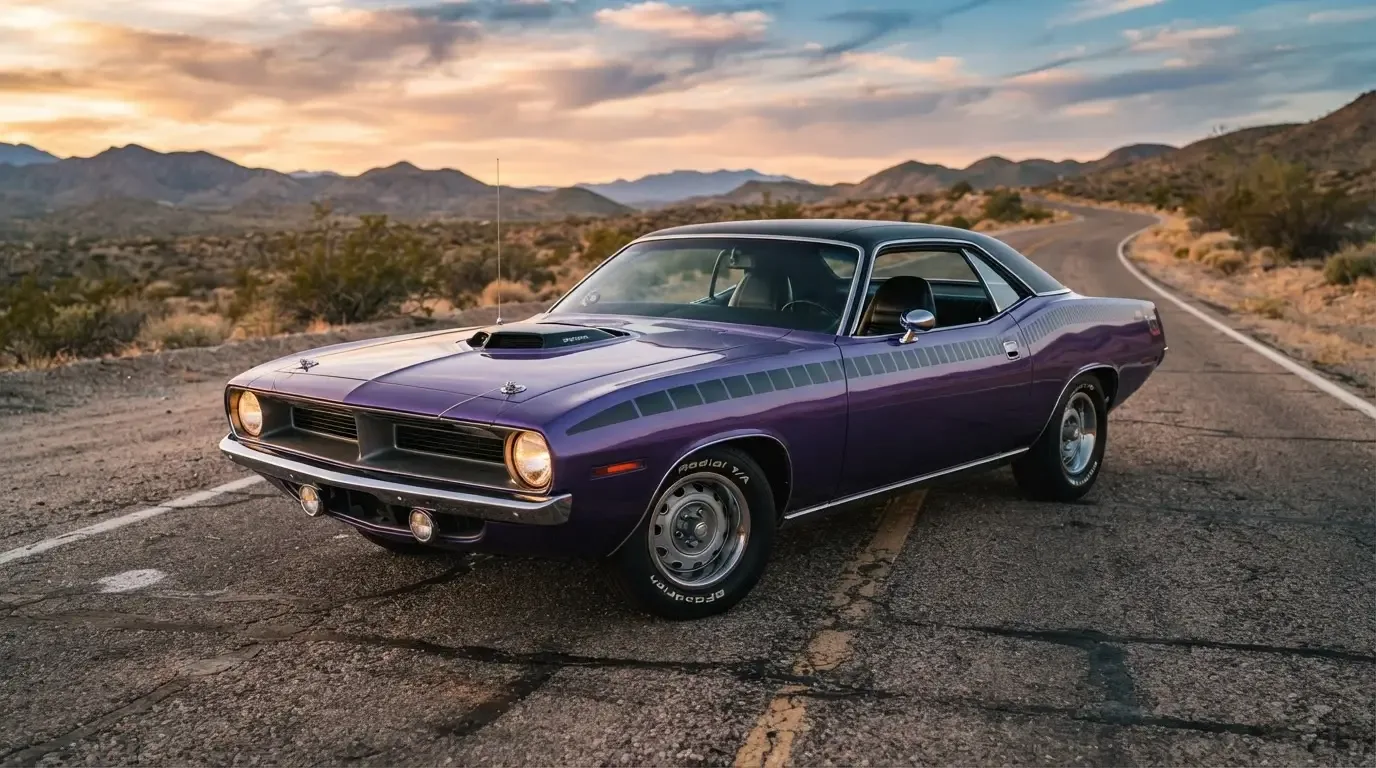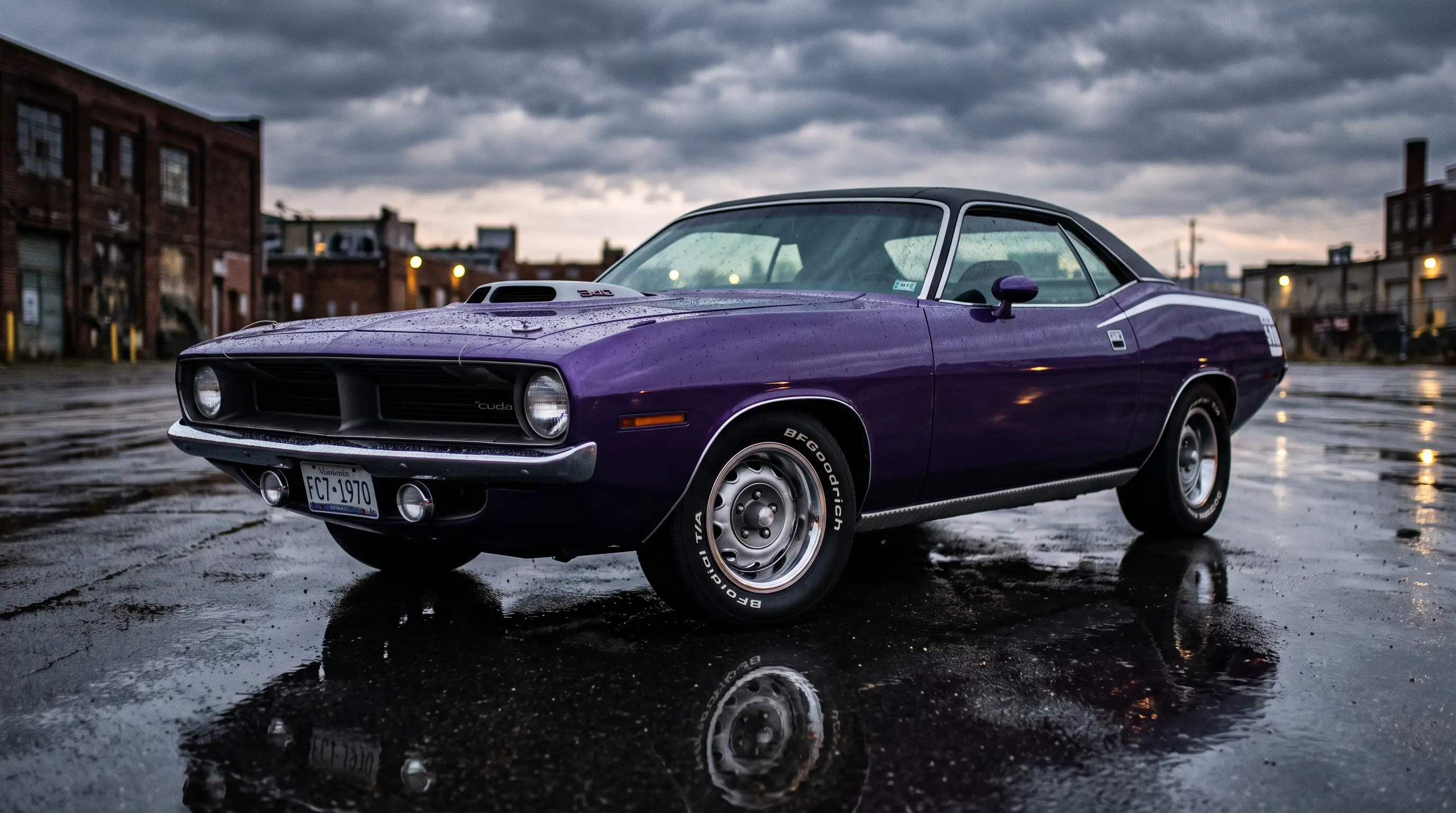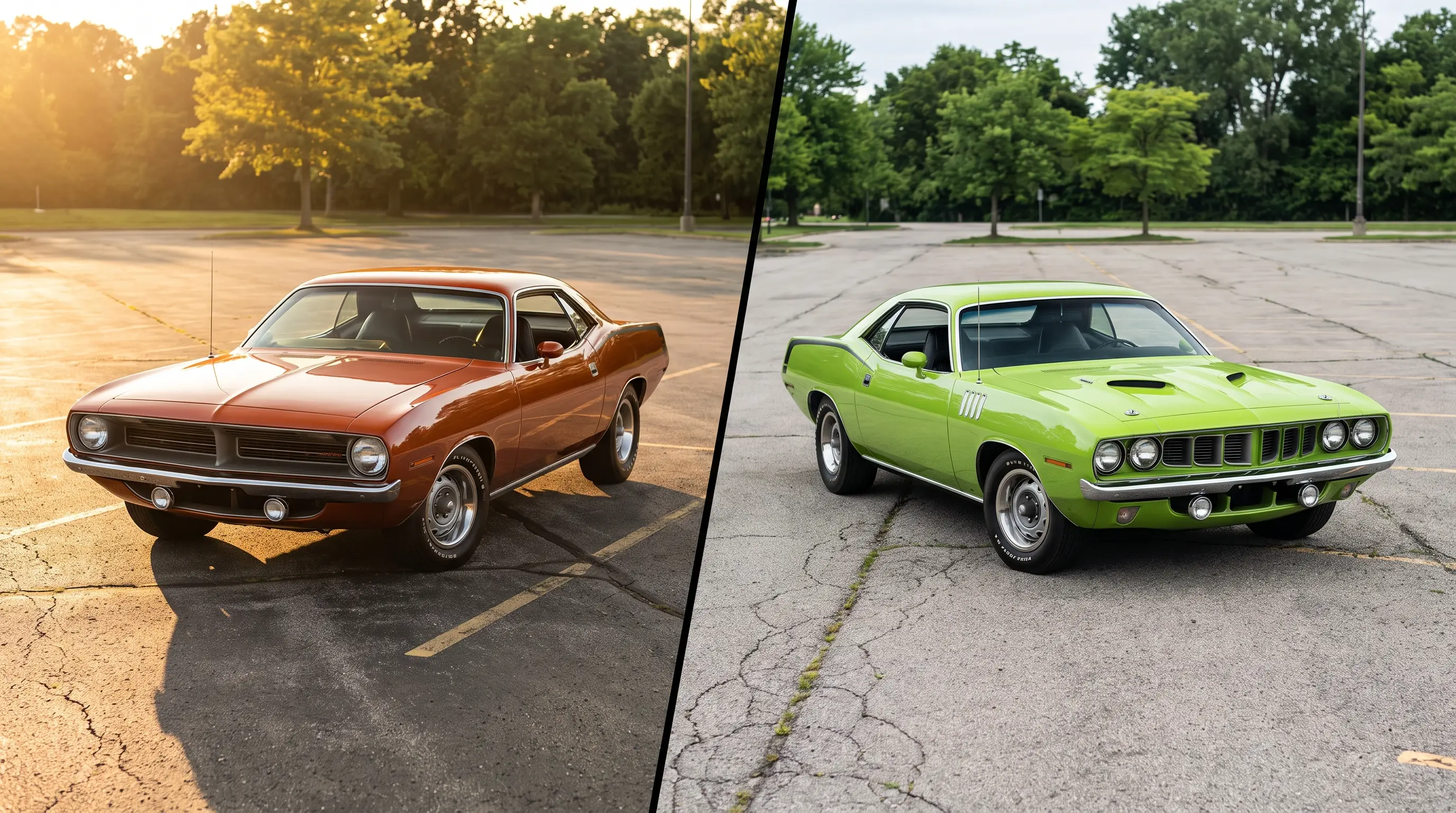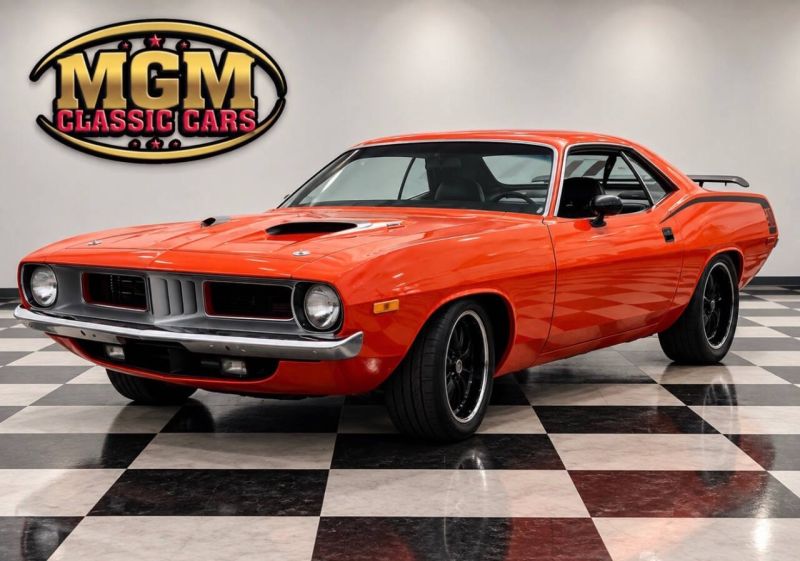
Every concours judging sheet I have ever filled out for one of these cars eventually forces the same question a casual observer rarely thinks to ask: what is the actual difference in the barracuda vs cuda name, and does it matter for authenticity? It matters more than most owners realize, and the historical record, badges, build sheets, and period advertising all together, gives a precise answer rather than a matter of casual preference.
Barracuda was always the model name
From its 1964 introduction, Barracuda was the full model name Plymouth used for the entire car, badge, brochure, and title, across every generation and every trim level. This never changed throughout the model's production run. A base six cylinder coupe and a top trim performance convertible were both, officially, Barracudas. The name referred to the whole car, not to a specific performance variant, and that distinction is the foundation for understanding everything that follows.
Cuda arrives as a performance designation
Cuda entered the picture as a trim and marketing designation applied to specific performance-oriented variants, most visibly from the 1970 model year onward on the E-body cars, though the informal shorthand had circulated in enthusiast and dealer conversation somewhat earlier. Factory literature and badging from 1970 explicitly used "Cuda" as a distinct trim identity, applied to cars equipped with the performance option package, separate from base Barracuda trim even though both wore the same underlying model name on the title and window sticker.
This is the detail that trips up even experienced buyers: a car can be titled and registered as a Barracuda while wearing Cuda badging and trim, because Cuda was never a separate model in Chrysler's official corporate hierarchy. It was, and remains, a trim identity nested inside the Barracuda model name.
| Term | What it actually refers to | Where it appears |
|---|---|---|
| Barracuda | Full model name, all trims, all years | Title, window sticker, VIN documentation |
| Cuda | Performance trim designation | Exterior badging, dealer literature, from 1970 onward |
💡 Did You Know?
Because Cuda was a trim designation rather than a separate model, factory documentation for a 1970 Cuda still lists Barracuda as the model name, a detail that surprises many owners the first time they request a build sheet.
Why judges and authenticators care about the distinction
At a concours event, this distinction is not academic. A car presented as a Cuda but lacking the badging, trim, or documented option package that Plymouth's own literature associated with that designation gets flagged during judging, regardless of how the seller or owner has always described it informally. I have personally corrected entry paperwork more than once where an owner listed their base trim Barracuda as a Cuda simply because that was the word they had always used casually, without realizing the two carry genuinely different documentation requirements for authentication purposes.
The inverse mistake happens too, and it may be more costly. Owners of genuine Cuda trim cars sometimes undersell their own vehicle by defaulting to the generic Barracuda name in casual conversation or even in sale listings, failing to highlight the specific trim designation that carries real value in the collector market. Precision in terminology, in this specific case, is not pedantry. It is accurate cataloging of what the car actually is.
"I've seen owners undersell a genuine Cuda by calling it just a Barracuda out of habit, and I've seen the opposite mistake cost someone credibility at judging. The names carry real documentation weight, not just familiarity."
- Sarah Whitfield
How the naming shift reflected a larger identity change
The emergence of Cuda as a distinct trim identity in 1970 coincided precisely with the platform's most significant engineering overhaul, the move to the E-body chassis discussed at length elsewhere in this coverage. That is not a coincidence in the historical record. Plymouth's marketing department appears to have used the new trim name deliberately to signal that this generation represented a genuine departure from the compact, A-body cars that preceded it, giving buyers a shorthand for the performance identity that the engineering changes had created.
For the fuller account of how the E-body platform, the naming shift, and the trim hierarchy all came together across the 1970 and 1971 model years, our complete history documents the whole period in detail. Anyone researching a specific car's correct terminology should also consult period documentation directly rather than relying on how a previous owner happened to describe it.
For collectors and researchers who want to examine actual examples of both naming conventions in period-correct trim, current listings under find a classic Barracuda include cars spanning the full range from base trim to documented Cuda specification.
How auction houses handle the naming distinction
Major auction house catalogs have grown increasingly precise about this distinction over the past two decades, largely in response to buyer complaints about vague or inconsistent terminology in earlier catalog descriptions. A well cataloged listing today will specify both the title designation, Barracuda, and the trim identity, Cuda, along with the specific documentation supporting the trim claim, whether that is a fender tag, broadcast sheet, or invoice. Listings that use the terms loosely or interchangeably without that supporting documentation should be read as a caution flag by any serious buyer, not a simple stylistic choice on the cataloger's part.
I have reviewed catalog copy for consignments where the cataloger clearly understood the distinction and applied it correctly, and I have reviewed others where the terms were used almost interchangeably in ways that would not survive scrutiny at a formal judging event. Buyers relying on auction catalog language alone, without independent verification, are trusting a secondary source that varies considerably in rigor from one auction house to the next.
A note on international and non-factory usage
Outside North America, and particularly in markets where the car was imported after its original production run, the naming convention has sometimes been applied even more loosely, with dealers and subsequent owners using Cuda as a general nickname for any second generation or E-body Barracuda regardless of factory trim. This informal usage, while understandable as shorthand, has occasionally complicated provenance research for cars that changed hands internationally before returning to the domestic market, since paperwork generated during that period sometimes used terminology inconsistent with the original factory designation.
The precise answer for the record
Barracuda vs Cuda name confusion persists because the two terms genuinely overlap rather than sitting in clean separate categories. Barracuda is, and has always been, the model. Cuda is, and has always been, a performance trim designation nested within that model, most formally from 1970 forward. Getting this right matters for authentication, for accurate cataloging, and for anyone presenting a car for serious judging.
I have spent enough years cataloging these cars for concours events to know that precision here is not about pedantry for its own sake. It is about giving each car an accurate record, one that a future owner, appraiser, or judge can rely on decades after the original paperwork was filed. Get the terminology right at the point of cataloging, and every subsequent transaction, appraisal, and judging entry inherits that accuracy. Get it wrong, and the confusion compounds with every owner who repeats it.