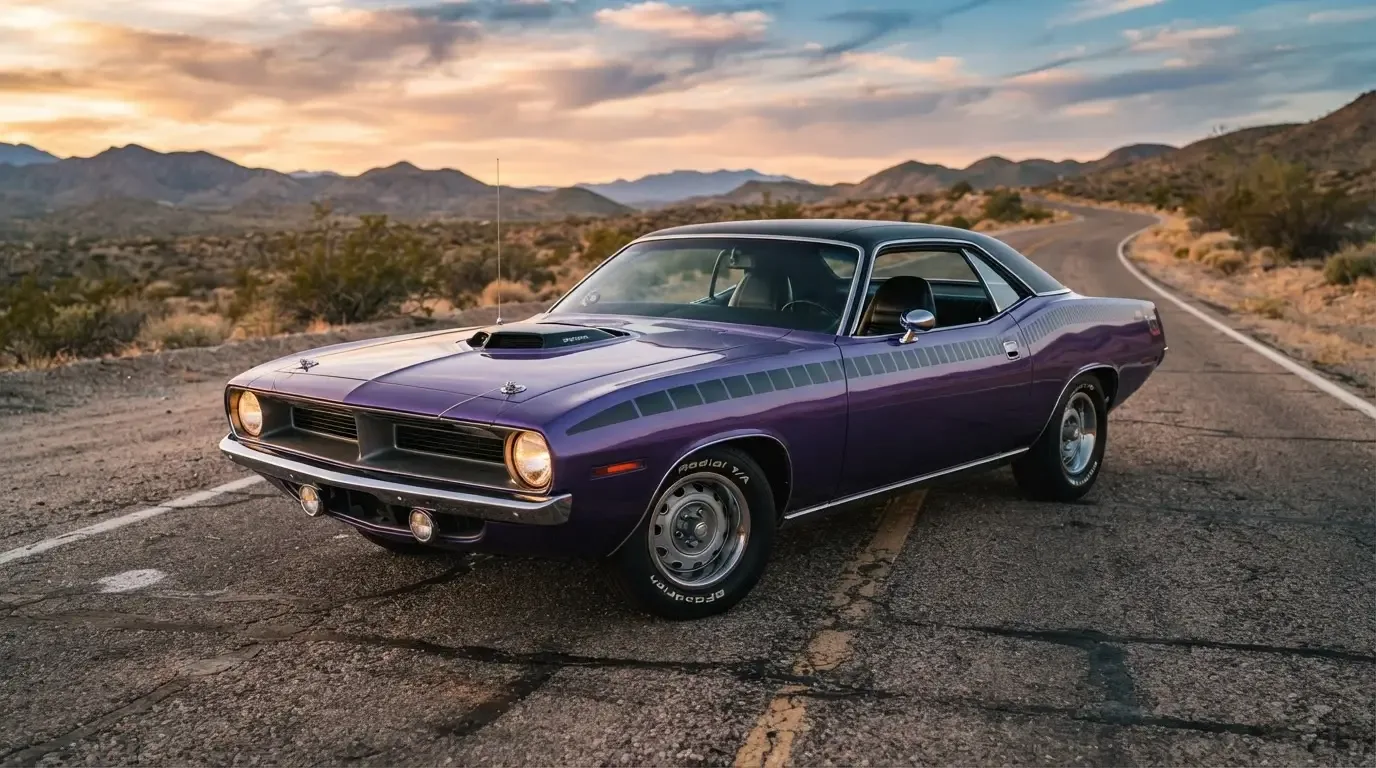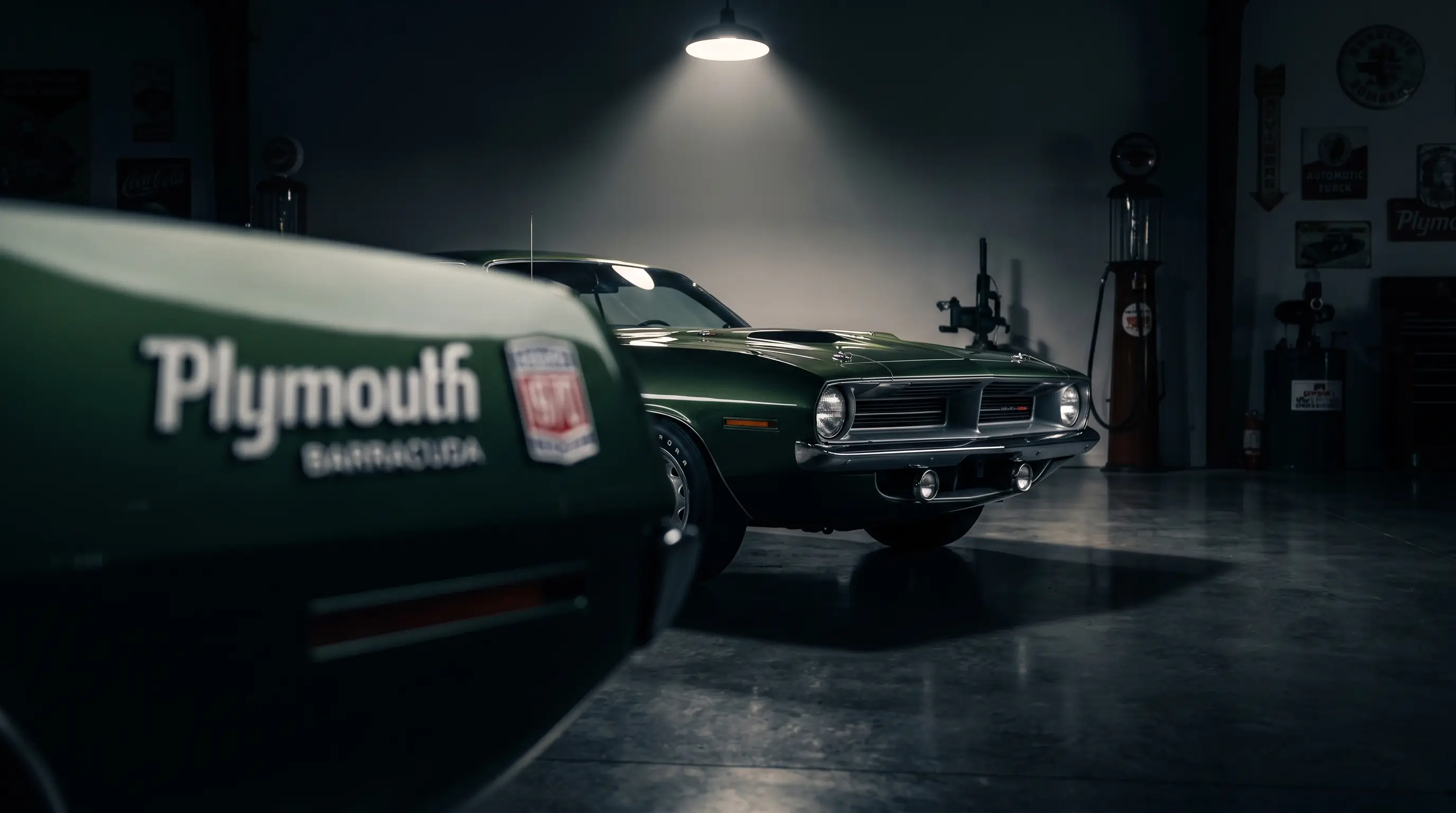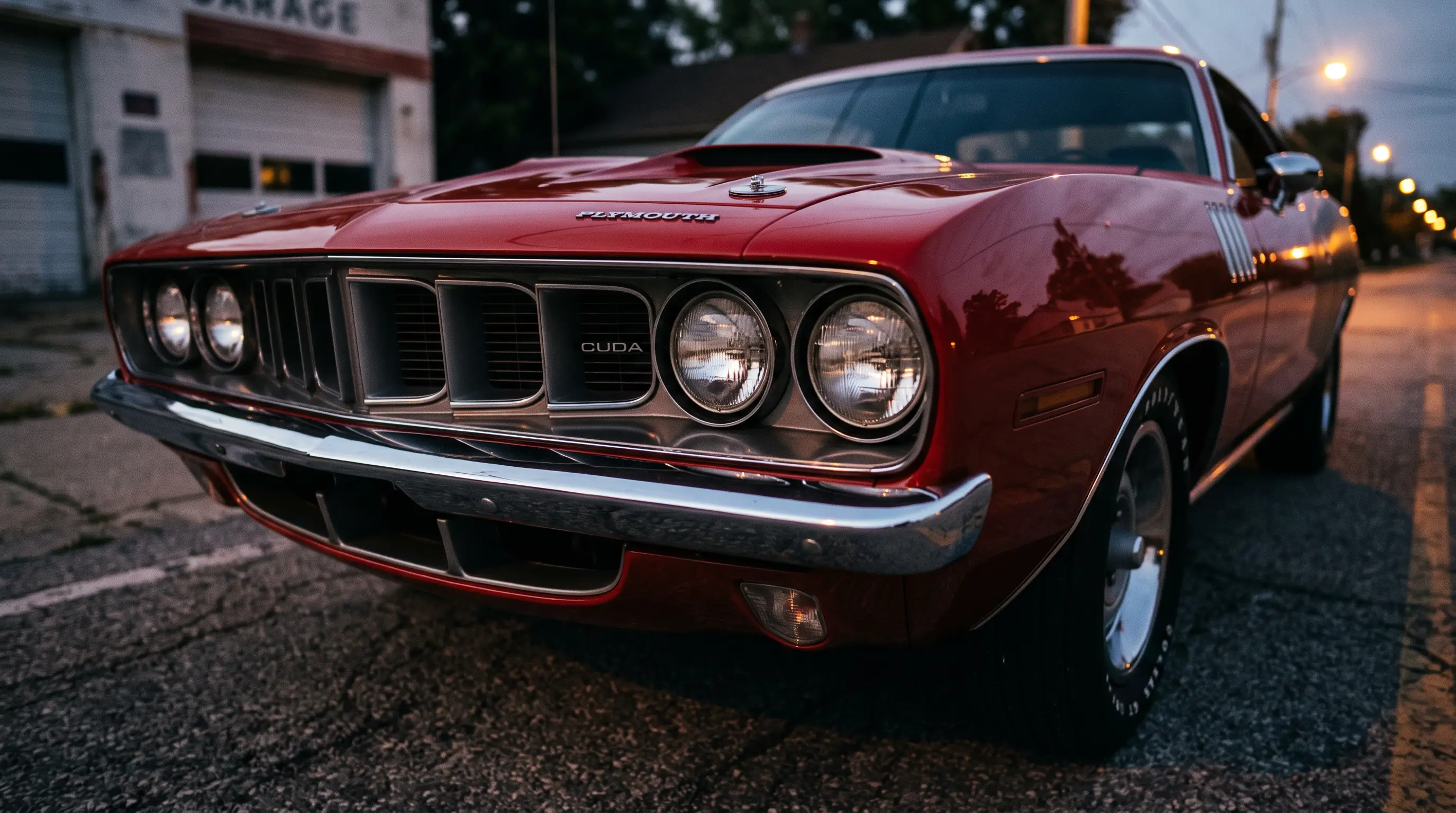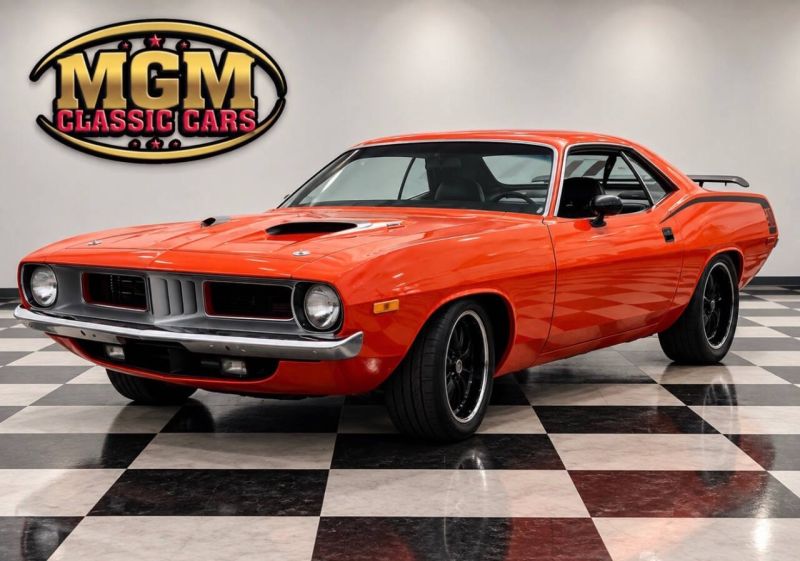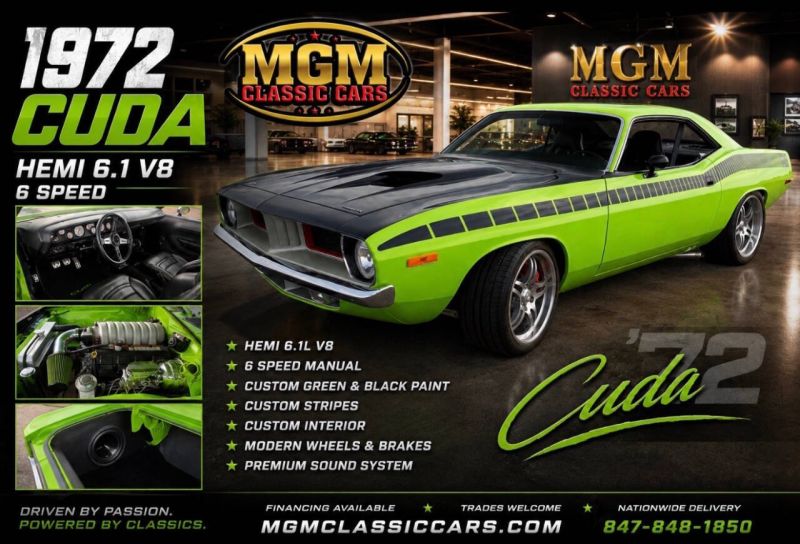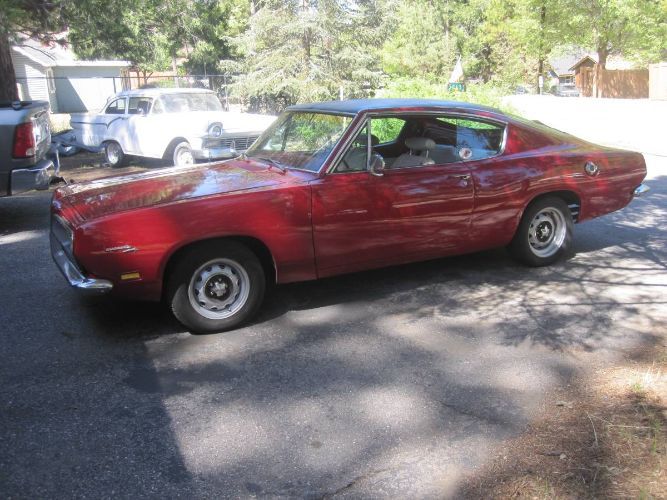
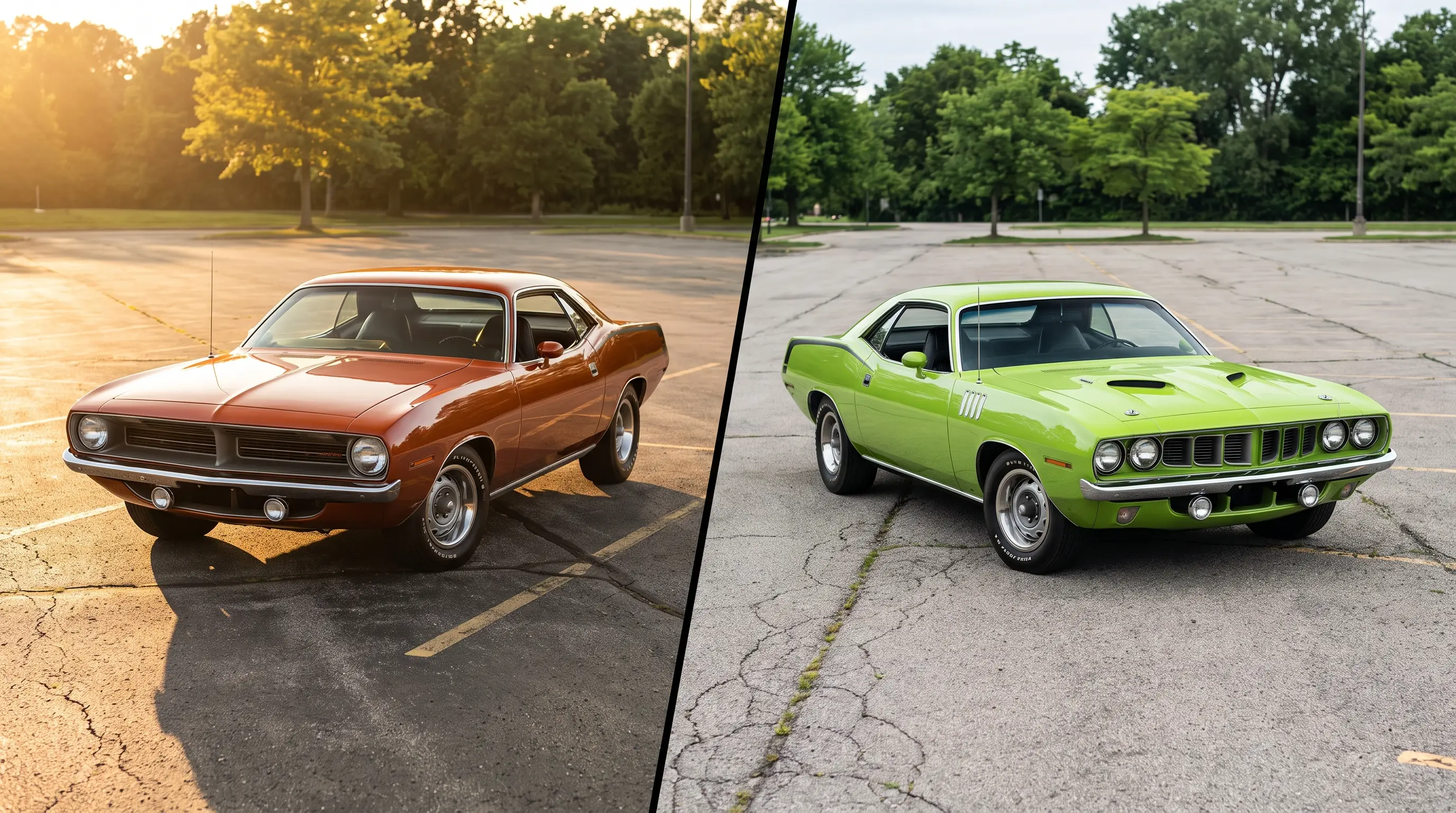
The Plymouth Barracuda only wore its third-generation body for four model years, and the first two of those years, 1970 and 1971, look close enough at a glance that plenty of swap meet vendors mislabel parts between them. Line the cars up side by side and the differences stop being subtle. A 1970 vs 1971 Cuda comparison is really a study in how fast Chrysler's stylists were willing to move once they had a hit shape on their hands, and how a single model year of running changes can scramble a car's identity for anyone piecing one back together fifty years later.
Two years, one platform, a different face
Both cars sit on the same E-body platform Plymouth introduced for 1970, sharing the wheelbase, the cowl, and the basic greenhouse. What changed was everything forward of the firewall and a good bit of the trim behind it. Plymouth's stylists treated the Cuda less like a fixed design and more like a canvas they revisited every twelve months, which is unusual for a car built on a single generation of tooling. For 1971 specifically, the front clip was reworked enough that a 1970 fender will not bolt to a 1971 core support without modification, a detail restorers learn the hard way when they buy "correct" sheet metal off a shelf without checking the year stamp.
The quickest way to date a car from ten feet away is still the face, but the differences run deeper than the lights, into the bumpers, the fender contours, and even how the hood meets the cowl.
The grille tells the story first
1970 Cudas carry a single-headlight arrangement per side, set into a grille that reads as one continuous horizontal element with the turn signals tucked at the outer edges. 1971 brought a four-headlight face, with the outboard lamps recessed into the leading edge of the fender rather than the grille itself. It is the single fastest way to tell the years apart, and it is why the four-headlight look has its own following among collectors who consider it the more aggressive of the two. Anyone who wants the deeper mechanical and cosmetic breakdown between the years can read the background on how Plymouth arrived at both designs in the first place.
The grille texture changed too. The 1970 grille uses a finer mesh pattern, while 1971 moved to a bolder, more open design that better matched the quad lights sitting above it. Reproduction grilles for each year are not interchangeable, and buyers restoring a car should confirm which one they are actually holding before writing a check.
Inside the cabin, small changes that matter
Interior differences are less dramatic but still trip up buyers chasing a numbers-correct restoration. The 1971 dash added a different woodgrain-style appliqué option and revised door panel inserts, while the steering wheel design carried over with only minor changes to the horn button trim. Seat upholstery patterns shifted between the years as well, with 1971 introducing new color and pattern combinations that were not offered in 1970. None of this shows up in a walk-around, but it matters enormously to judges at a concours event, and it matters to anyone trying to verify a car's build sheet against what is actually bolted inside it.
Broadcast sheets and fender tags remain the only reliable way to confirm interior codes match the year claimed, since aftermarket reproduction parts exist for both years and get mixed up in parts bins more often than anyone would like to admit.
Engine codes and how they shifted between years
Engine availability moved year to year as well. The 340 four-barrel, the 383, the 440 in both four-barrel and Six Barrel form, and the 426 Hemi were all available across both 1970 and 1971, but the specific carburetor and emissions calibrations changed as Chrysler responded to tightening federal standards. A 1970 340 and a 1971 340 do not share identical tuning specifications, and engineers at the time were already trimming timing and jetting in small increments that would accelerate sharply once 1972 arrived. Buyers cross-shopping engine codes should treat the fender tag as the primary document and not assume a part number from one year bolts straight onto the other without checking.
The Hemi remained the rarest option in both years, and its availability did not change meaningfully between 1970 and 1971 beyond the carburetor and ignition tuning already mentioned. What did shift was how dealers ordered it. Some dealers who had struggled to move Hemi cars in 1970 quietly discouraged the option in 1971 as insurance surcharges climbed, which is part of why documented 1971 Hemi cars are rarer in absolute terms than their 1970 counterparts despite the engine technically remaining on the order sheet both years.
Bumpers, badges, and the exterior details that separate the years
Beyond the headlights, the front bumper design itself changed shape slightly between the two years to accommodate the new fender stampings, and the front turn signal lenses moved position accordingly. Badging on the fenders and trunk lid carried different scripts in small ways that a casual observer would never notice but that a judge at a sanctioned show absolutely will. Rear taillight treatment stayed broadly similar across both years, which is one of the few areas where Plymouth left well enough alone rather than revising the design for 1971.
Wheel and trim ring options also shifted slightly, with certain styles carried over and others discontinued or introduced fresh for 1971. None of these details will make or break a purchase decision on their own, but taken together they form the kind of evidence a serious buyer wants in hand before paying a premium for a car advertised as fully original.
| Feature | 1970 Cuda | 1971 Cuda |
|---|---|---|
| Headlights | Single per side, in grille | Quad, outboard pair in fenders |
| Grille texture | Fine mesh | Bolder open pattern |
| Available big block | 440, 440 Six Barrel, 426 Hemi | 440, 440 Six Barrel, 426 Hemi |
| Interior trim options | 1970-specific patterns | New patterns and woodgrain appliqué |
Why collectors argue over which year is "the" Cuda
Ask five people which year they would rather own and expect five different answers backed by real reasoning. Some prefer the cleaner single-headlight face of 1970 because it reads as the purer expression of the E-body shape before Chrysler started adding visual complexity. Others want the 1971 for exactly the opposite reason, arguing the quad headlights give the car more presence and that it was the last year before federal bumper mandates started reshaping muscle car faces for the worse. Neither argument is wrong, which is part of why both years hold strong values today and why documentation, not opinion, ends up settling most restoration disputes.
For anyone building a collection or filling in a gap, the 1971 grille story is worth a look too, since the quad-headlight face gets its own detailed treatment there. And for buyers who have made up their mind on a year and want to see what is actually on the market right now, it is worth taking a moment to shop classic Barracuda listings before committing to a restoration project sight unseen.
"People treat 1970 and 1971 like they're practically the same car because the platform didn't change. The sheet metal tells you otherwise, and so does the fender tag, if you actually read it instead of guessing."
- Tom Ramirez
The safest approach for anyone buying a Cuda from either year remains the same: pull the fender tag, match it against known broadcast sheet data, and treat visual identification as a starting point rather than a conclusion. The two years share a name and a platform, but Plymouth changed enough between them that a careless assumption can cost a buyer real money down the line.