
Pop the trunk lid on a 1953 Bel Air today and half the guys at the show will ask about the engine first. I go straight for the paint code tag. The 1953 bel air colors tell you more about how the car left the factory than any dyno sheet ever will, and getting them wrong is the fastest way to turn a numbers-matching car into a nice-looking mystery.
Car Features
7 min read
Early Bel Air Colors
A restorer's guide to the two-tone paint combinations Chevrolet offered on the 1953 Bel Air, and why matching the factory code matters more than matching memory.
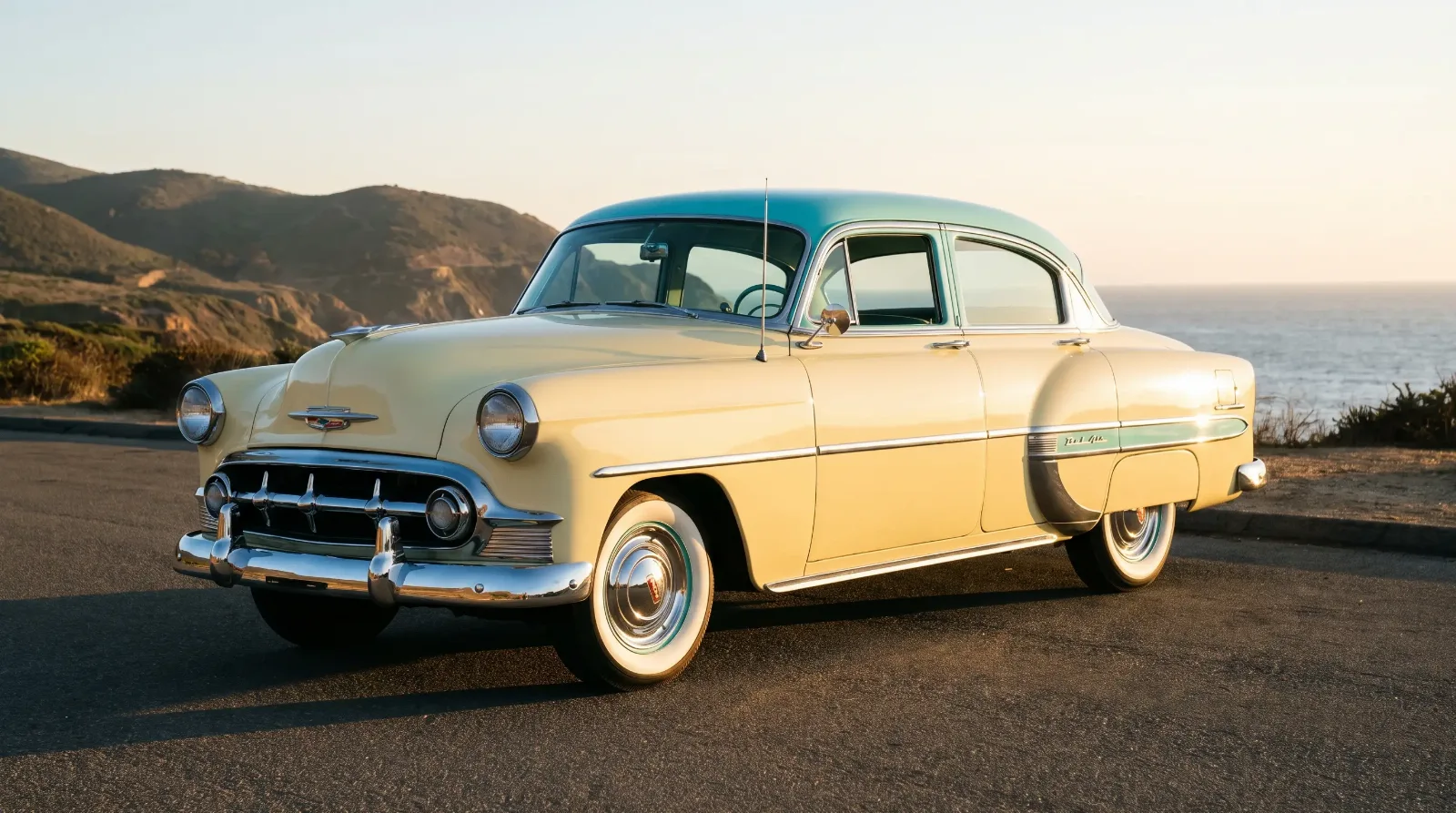
What Chevrolet actually offered in 1953
Chevrolet's 1953 palette was built around DuPont Duco lacquer, and the Bel Air line leaned hard into two-tone combinations as a way to visually separate the new top trim from the base 150 and mid-line 210. You had solids like Horizon Blue, India Ivory, and Sea Mist Green, plus two-tones that paired a light roof or upper body panel with a darker lower body, or the reverse. The sales brochures made a point of showing the Bel Air in combinations the cheaper lines simply were not offered in, because color was doing marketing work that trim badges alone could not.
That mattered more than it sounds. In 1953 a lot of buyers cross-shopped Chevrolet against Ford and Plymouth on price, and the low-priced three were closer in mechanical spec than dealers wanted to admit. Color and two-tone treatment were cheap ways to make the Bel Air look like it belonged in a different class of car, sitting a rung above the six-cylinder economy sedans crowding the same showroom floor.
Two-tone was not an accident, it was a strategy
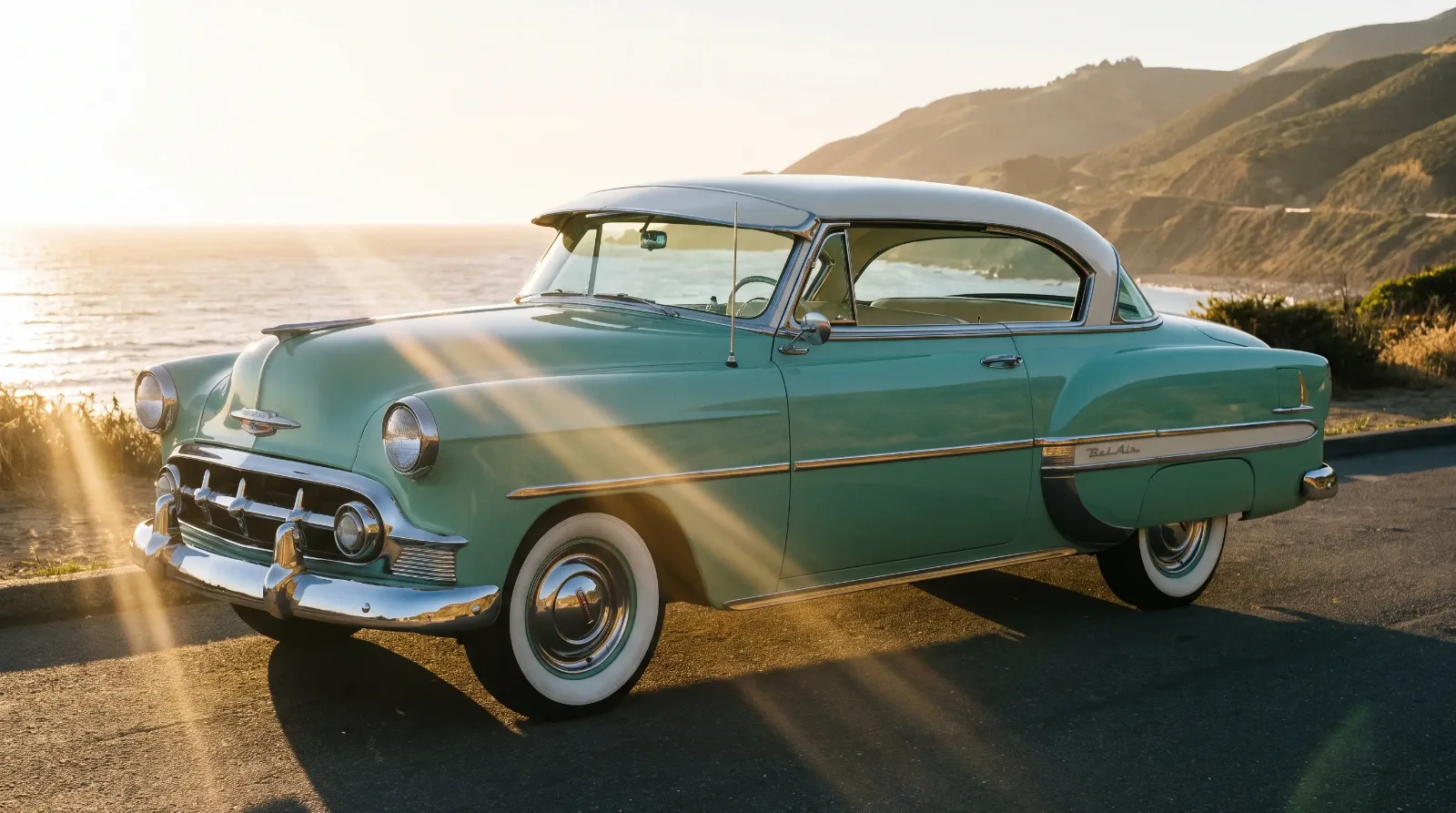
The two-tone split on a 1953 Bel Air Sport Coupe typically ran the roof color down into the beltline, which made the hardtop look lower and longer than its actual proportions. I have restored two of these coupes and the paint break line is not a random styling flourish, it is doing real optical work. A Bel Air painted a single solid color from bumper to bumper reads heavier and shorter than the same body in a well-executed two-tone. Whoever signed off on those paint breaks at GM Styling understood proportion better than half the custom painters working today.
Dealers pushed two-tone hard because it was a profit center. A two-tone combination on a 1953 Bel Air often carried a modest option charge over a solid color, and it moved cars off the lot faster because it visually announced "loaded" from across the street. Salesmen knew a two-tone Bel Air sitting in the window sold the six-cylinder base cars parked behind it just by association.
"People ask me to match a repaint to what they remember the car looking like. I tell them memory is not a paint code. Pull the tag, find the number, and if the tag is gone, we go by evidence on the car, not by what looks right under shop lights."
- Jim Vasquez
Reading the evidence when the paperwork is gone
Most 1953 Bel Airs on the market today do not have their original build sheet, and the paint code stamped on the data plate can be hard to read after seventy-plus years of underhood grime and heat cycling. When I get a car in the shop with no clear paperwork, I look for original paint in places that never saw a wrench or a body hammer: inside the glovebox, behind the dash pad, under the rear seat cushion frame, and inside the trunk drop-off panels. Those spots hold factory color long after the exterior has been repainted two or three times.
I have seen restorers guess wrong on a two-tone split because they matched paint fragments from a fender that had clearly been replaced at some point in the car's life, likely after minor collision damage decades ago. A mismatched fender from a parts car can carry a completely different factory color, and if you do not check for panel gaps and overspray patterns first, you will chase a ghost. This is not glamorous work, it is detective work with a paint scraper.
Why colors matter more to collectors now than they did in 1953
Original owners picked colors for personal taste. Collectors today pick them for rarity and correctness, which is a completely different calculation. A common solid color in excellent original paint can be worth less at auction than a rarer two-tone combination in honest, older repaint, because the two-tone tells a more specific story about how the car was ordered and equipped. Buyers chasing documentation want the color to line up with everything else on the car, from the interior trim to the build tag, and any mismatch invites questions that hurt the sale price.
I tell customers who are restoring a 1953 Bel Air for value, not just for driving pleasure, that the color decision is not really theirs to make freely. If the goal is a correct, documented restoration, the paint code on the tag wins the argument every time, even if the owner personally prefers a different shade from the period catalog. Read the whole picture for how these early cars fit into the model's larger arc, because the color story only makes sense once you understand what Chevrolet was trying to prove with the Bel Air nameplate in the first place.
What this means if you are shopping one today
If you are looking at a 1953 or 1954 Bel Air for sale right now, ask the seller directly whether the current color matches the data plate code, and ask to see photos of any untouched interior paint as backup evidence. A seller who has already done that homework and can show you the comparison is worth paying a premium for, because you are buying certainty along with the car. A seller who has never checked is not necessarily hiding anything, but you should plan to do the legwork yourself before you commit.
Color correctness will not make a mechanically tired car drive better, but it absolutely affects what the car is worth and how easily you can sell it down the road. If you want to go look at what is currently available, you can shop classic Air listings and start comparing paint codes against what sellers are claiming, which is exactly the kind of homework that separates a good purchase from an expensive lesson.
Sources and notes
Related Reading
Have a
Chevrolet Bel Air
for Sale?
Reach thousands of serious classic car collectors across the US.
Sell It Here →
Are You a Classic Car Dealer?
List your full inventory and connect with targeted classic car buyers.
Join as a Dealer →
#two-tone paint
#classic car paint
#Chevrolet Bel Air
#1953 bel air
#restoration history
#Chevrolet colors

About the author
Jim Vasquez
Southern California hot rod and custom car builder with roots in the traditional kustom kulture scene.
Related Listings - Chevrolet Bel Air
Comments
Be the first to comment on this article.