Walk a car show field and you can spot a 1956 Bel Air from forty yards before you ever see the grille. It is the paint. Chevrolet's mid-fifties color program turned the Bel Air into a rolling argument that a family sedan could be as loud, or as restrained, as the owner wanted. I have stripped enough of these cars down to primer to tell you the factory was not shy in 1956, and neither were the buyers who ordered them.
By 1956 Chevrolet was offering close to twenty exterior colors and, more importantly, a two-tone combination system that let a Bel Air wear one shade below the beltline and another above the roofline and rear deck. That is the detail people miss when they talk about "the colors" in the abstract. The magic was never a single hue. It was the pairing, and the factory gave dealers a chart of sanctioned combinations so a buyer could not accidentally order something a paint shop foreman would refuse to spray.
The palette that defined the year
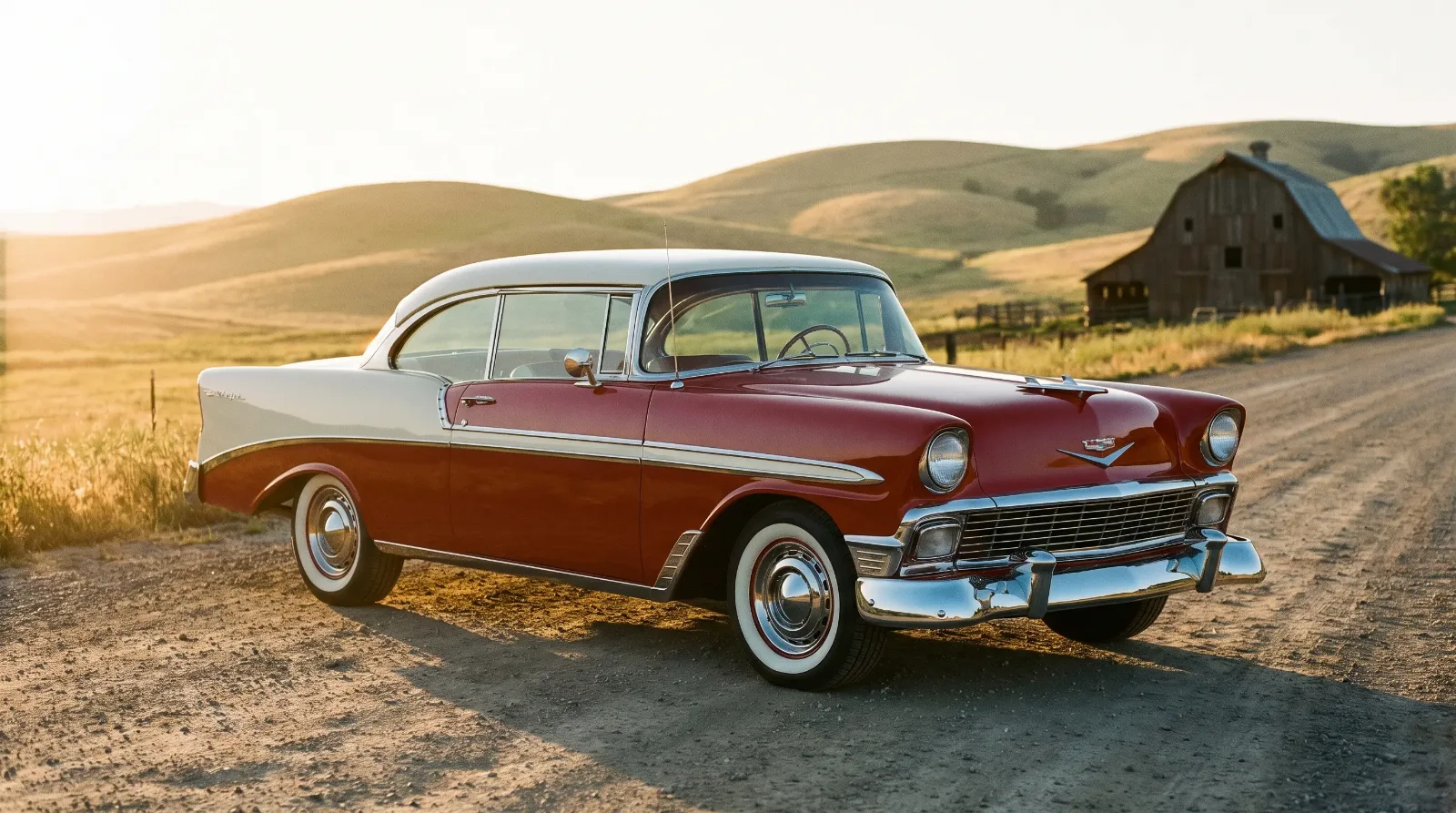
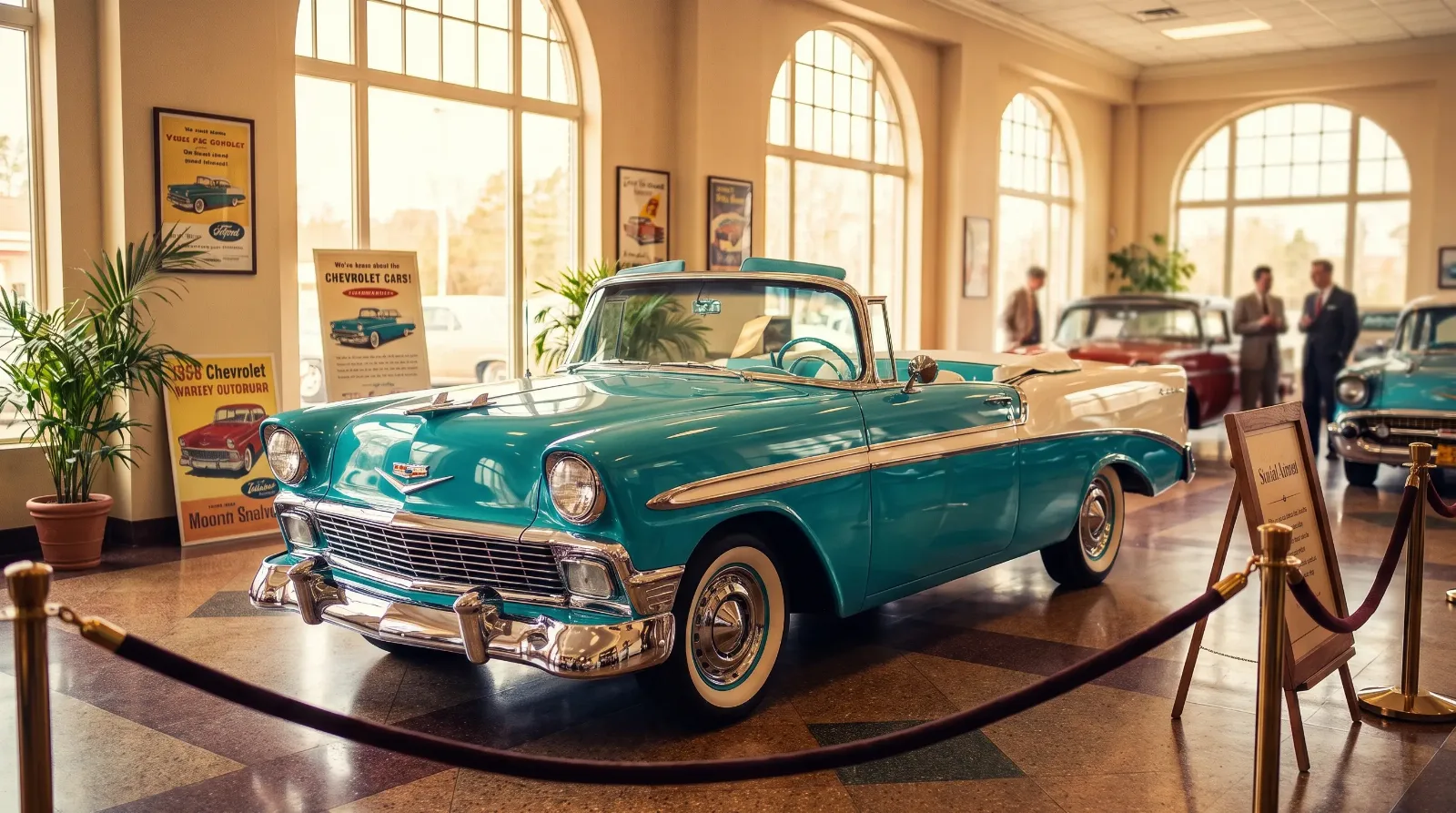
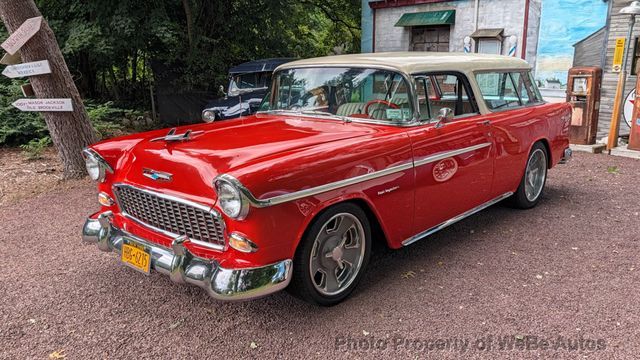
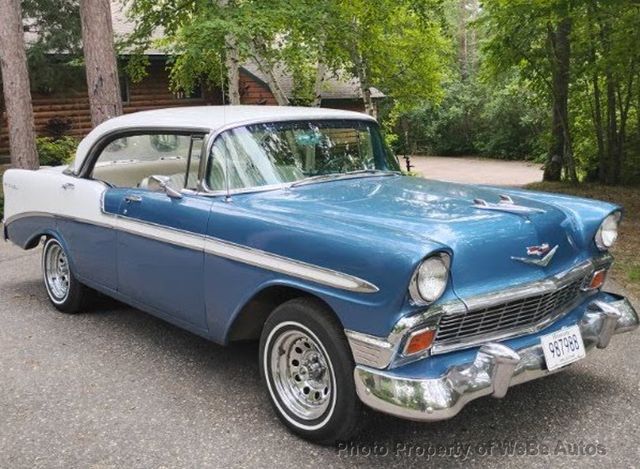
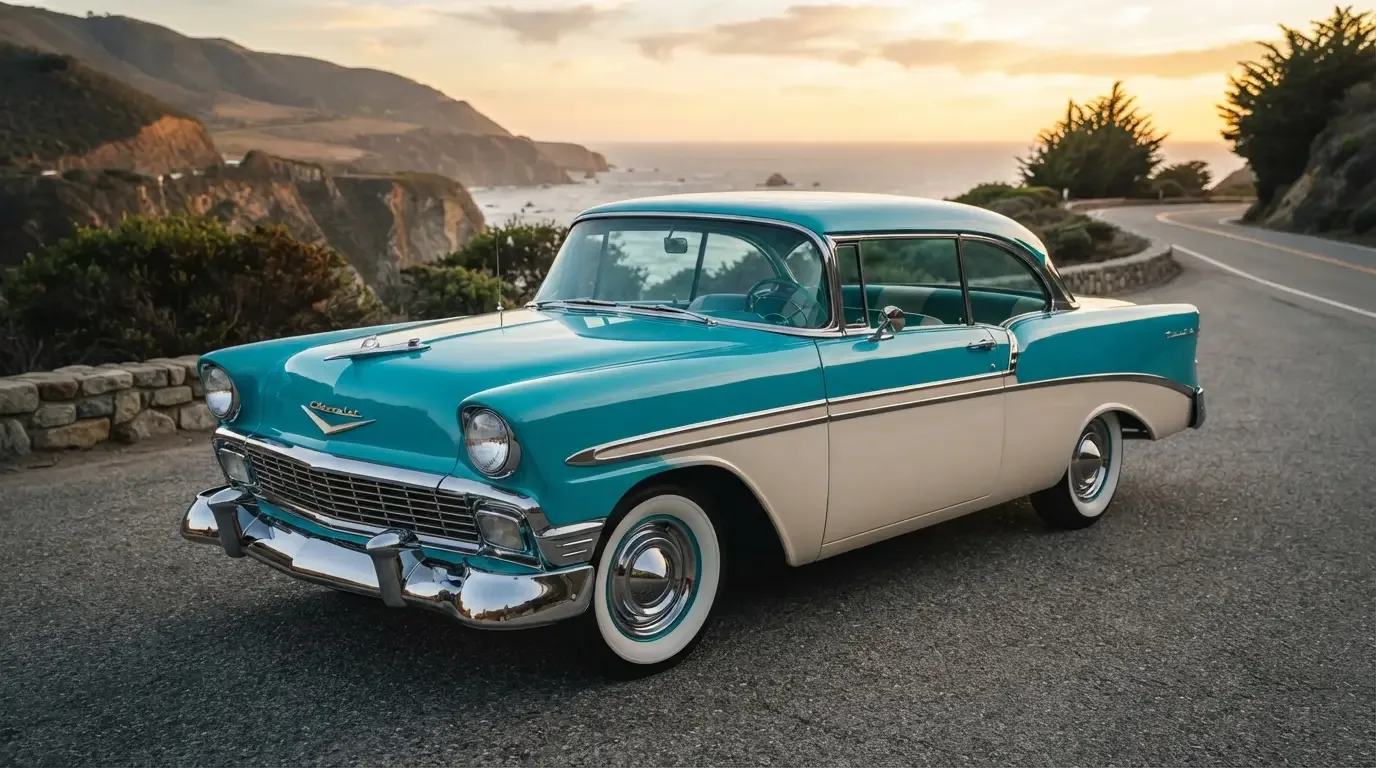
India Ivory paired with just about anything was the safe, popular choice, the color you see most often because conservative buyers ordered conservative cars. But the combinations collectors chase now are the bolder ones: Sherwood Green over India Ivory, Matador Red with an Ivory roof, Nassau Blue and Ivory, and the two-tone treatments that put a saturated color on the bottom and left the roof pale so the car read lighter and longer than it actually was. Matador Red is the color most non-car people picture when you say "1956 Chevy" even if they could not name it. It photographs well, it ages well, and it was genuinely popular in period, which is a combination you do not always get with old colors.
What I want people to understand, working on these cars in the shop, is that the two-tone split on a 1956 is not the same sweep as the 1955 or the 1957. Chevrolet reworked the side trim spear for 1956, and the color break follows that trim line, not a generic beltline. Get the break wrong on a repaint and the car looks off even to someone who cannot articulate why. I have had customers stand in front of a "finished" respray and just frown, and nine times out of ten the paint break is a half inch high or low from where the trim dictates it should sit.
Interior colors followed the exterior, on purpose
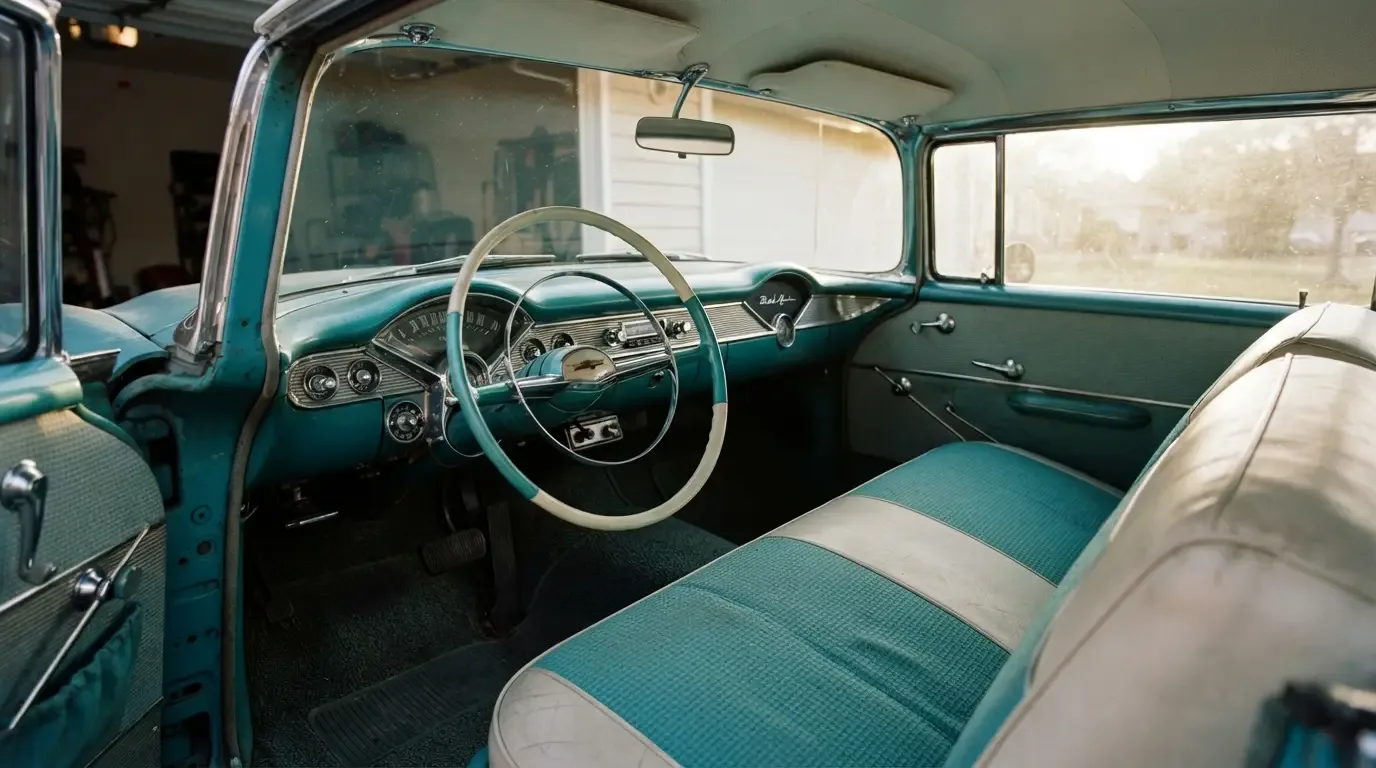
Chevrolet did not leave the cabin as an afterthought. Interior vinyl and cloth combinations were coordinated to specific exterior colors, so a Cardinal Red exterior might pull a red and white interior scheme rather than something the factory considered clashing. That is worth knowing if you are trying to verify whether a car in front of you is wearing its original combination or a repaint someone chose because they liked it, not because it is correct. If you want the deeper background on how the interior program worked that year, a related story covers it in more depth than I can here.
Why the paint code matters more than the paint
Every 1956 Bel Air left the factory with a body tag carrying a paint code, and that code is the only reliable way to confirm original color on a car that has been resprayed once or twice since Eisenhower was in office. I have pulled cars apart that wore a "correct looking" red only to find the door jambs, trunk drop, and firewall all told a different story in a color nobody talks about at shows because it never got a nickname. Restorers chase the popular combinations because they sell better, and that quietly erases some of the less flashy factory colors from the record. If you are shopping a 1956 and someone tells you the color, ask them how they know, not just what they think it looked like.
"A repaint can fool your eye from ten feet away, but it can't fool a body tag, and it definitely can't fool the paint break line if the trim doesn't sit where it should."
- Jim Vasquez
Two-tone versus solid, and what it says about the buyer
Solid-color 1956 Bel Airs exist and they have their own quiet appeal, especially in the darker tones like Onyx Black or Harbor Blue, but the two-tone cars are the ones that get talked about. A two-tone order in 1956 cost a little more and signaled a buyer who wanted the car to look like the brochure, not just drive like the brochure. That matters when you are trying to read a car's history. A two-tone Bel Air that has been solid-color for decades has usually lost something more than paint. It has lost the buyer's original intent, and that is a harder thing to restore than a color code.
For background on where the 1956 model year sits in the bigger Bel Air story, including how the paint program fit into that season's changes, our 1956 chevy bel air retrospective lays out the full picture. And if reading about 1956 bel air colors has you wanting to see the real thing under actual sunlight rather than a photo, there are Airs for sale now wearing everything from factory-stock Cardinal Red to less common combinations that never made the poster.
Buying and restoring with color in mind
If you are restoring one of these cars, resist the urge to pick a color because you like it more than the factory offering. Judges at serious shows know the approved combinations, and casual buyers increasingly do too, because the internet has made the color-and-trim books easy to find. A correctly paired two-tone in a less common combination, verified against the body tag, will hold value better than a popular color sprayed in the wrong pairing or with a paint break that ignores the trim spear.
What the shop sees when a color job goes wrong, and what it means to buy one
I have taken in more "correct color" 1956 Bel Airs than I can count where the customer swore up and down the car was original paint, and the tell was never the color itself. It was the texture. Factory lacquer from 1956 has a specific look under raking light that no modern basecoat clearcoat job replicates, no matter how good the color match is. Once you have sanded through enough repaints to see the factory primer underneath, you develop an instinct for it, the same way a jeweler develops an instinct for a stone that has been recut. The color can be dead-on and the car can still be lying to you about its history.
The other thing I check before I ever touch a panel is consistency across body sections that were not necessarily painted together in a repaint. A fender that was replaced after an accident in 1971 and resprayed to match will often show subtle differences from the original door and quarter panel next to it, differences invisible in a photo but obvious with a paint thickness gauge or, honestly, just a trained eye in good light. Buyers relying on online photos alone are working with the least reliable version of the evidence available to them.
None of this means a repainted 1956 Bel Air is a bad car. Most of them have been repainted at least once, and a well-executed, correctly coded repaint is a legitimate and honest way to preserve a car that spent decades outdoors before anyone thought it was worth protecting. The problem is only when a repaint gets sold as something it is not. A shop that tells you honestly "this was resprayed in the 1980s in a correct combination" has given you more useful information than one that insists everything is original without offering a single piece of evidence to back it up.
When I am helping someone shop for a 1956 Bel Air, I push them to think about color the same way they think about the drivetrain. It is not just what they will look at every day. It is a data point about how the car has been treated and how carefully its history has been documented. A seller who can produce the body tag, explain the paint code, and show consistency between the code and what is actually on the car has done real work. A seller who just says "it's the original red, trust me" is asking you to do that work yourself, usually after you have already paid.
Color is the first thing anyone notices on a 1956 Bel Air and the last thing most buyers actually verify. Get past the paint and check the code. The car will tell you the truth even when the seller does not know it.