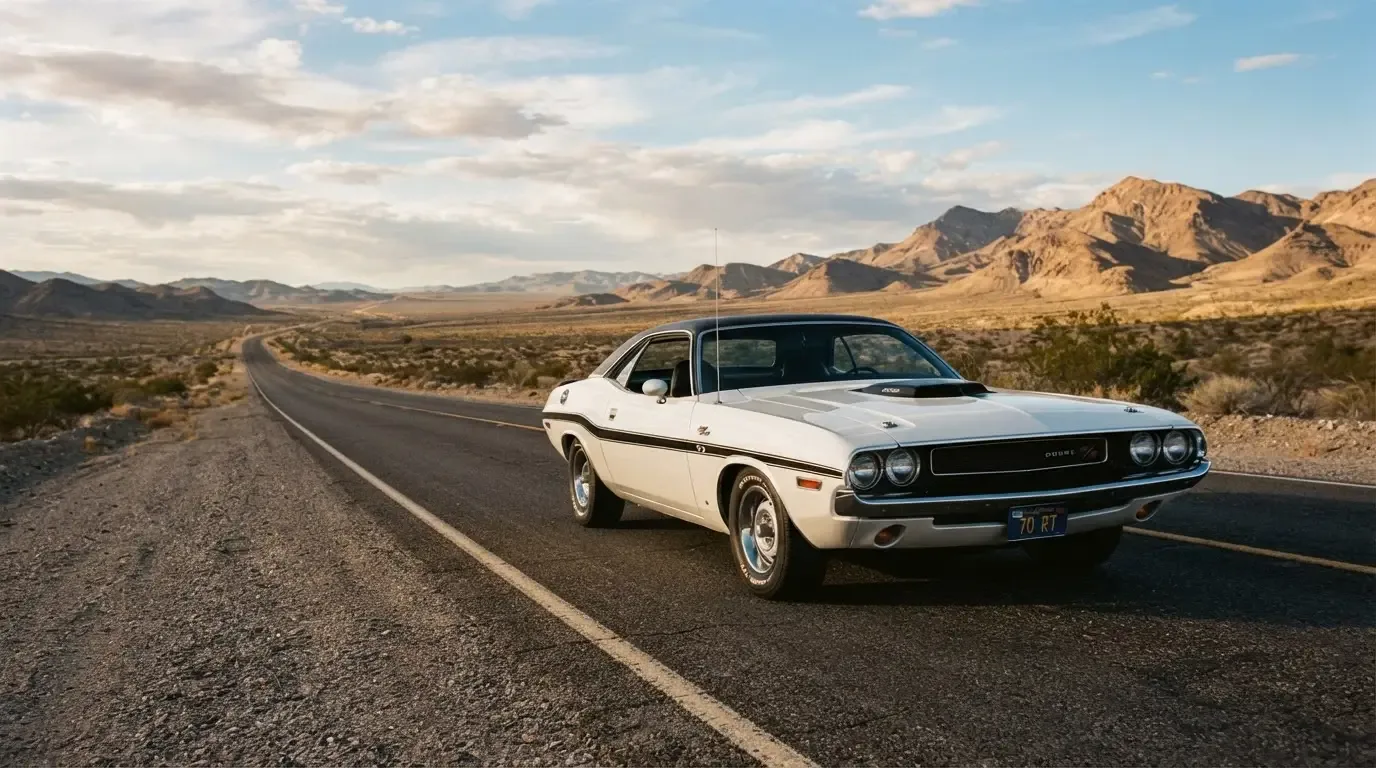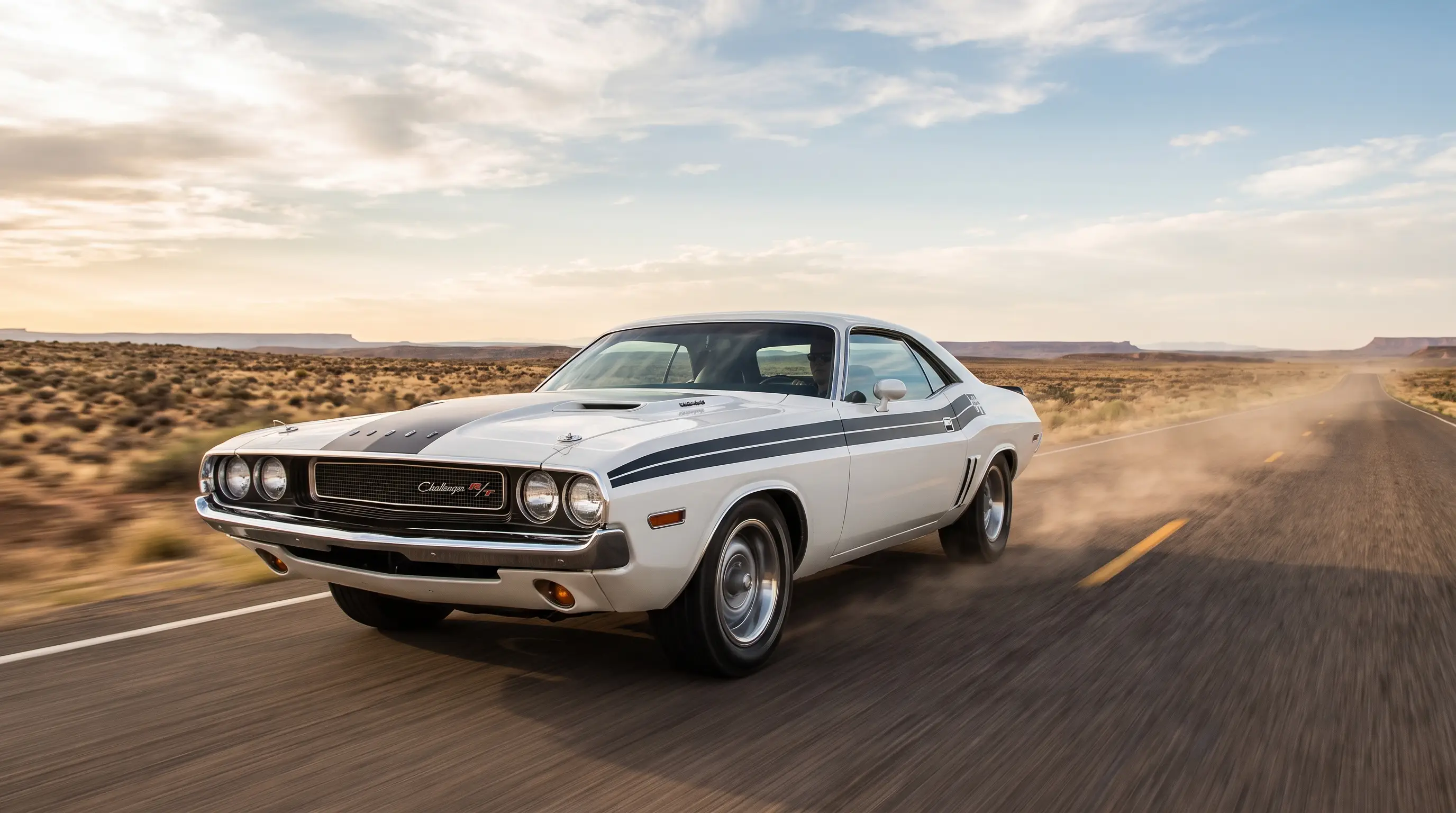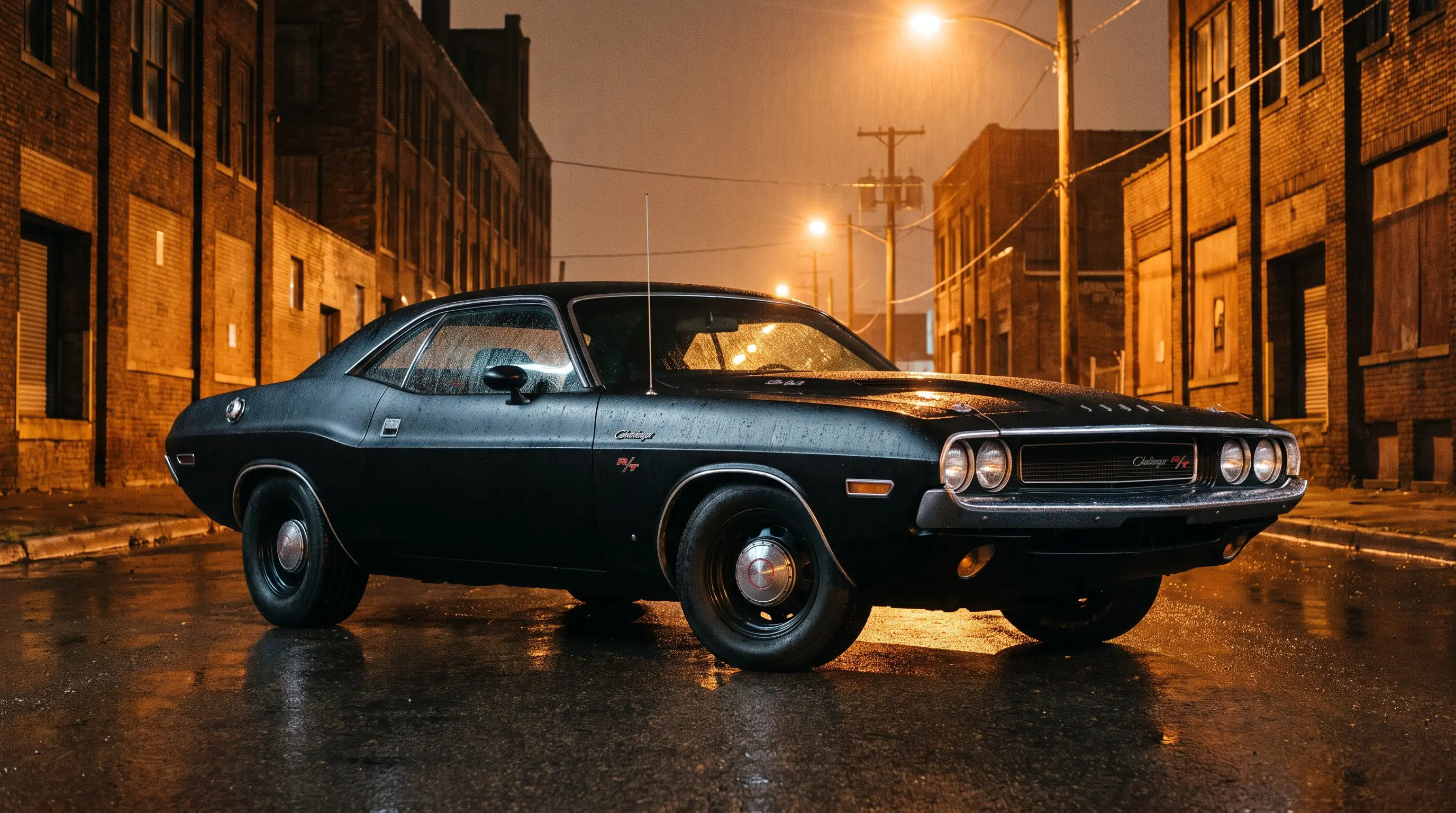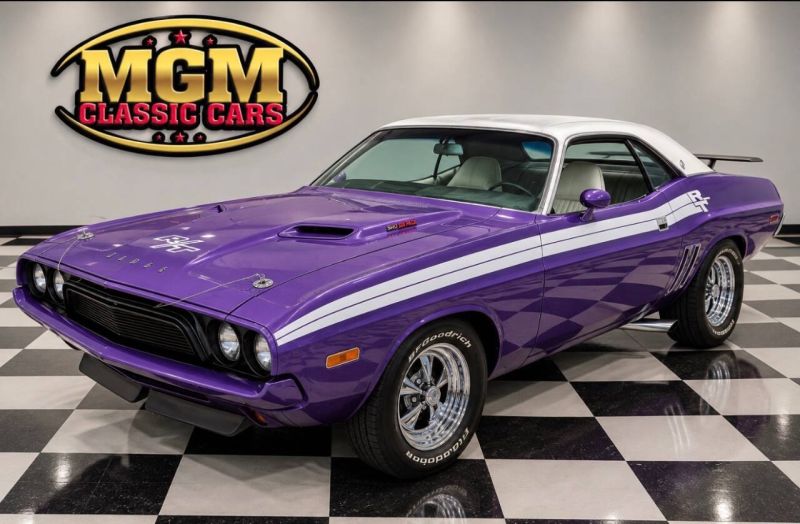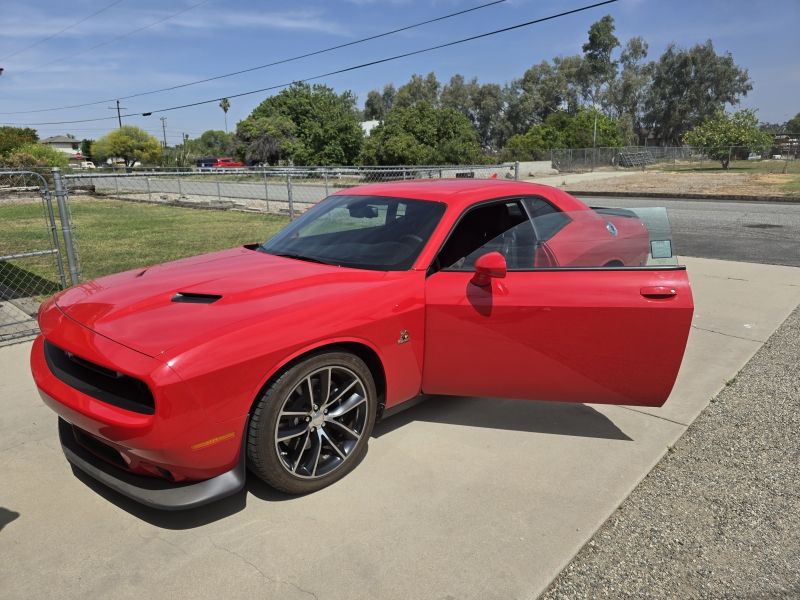
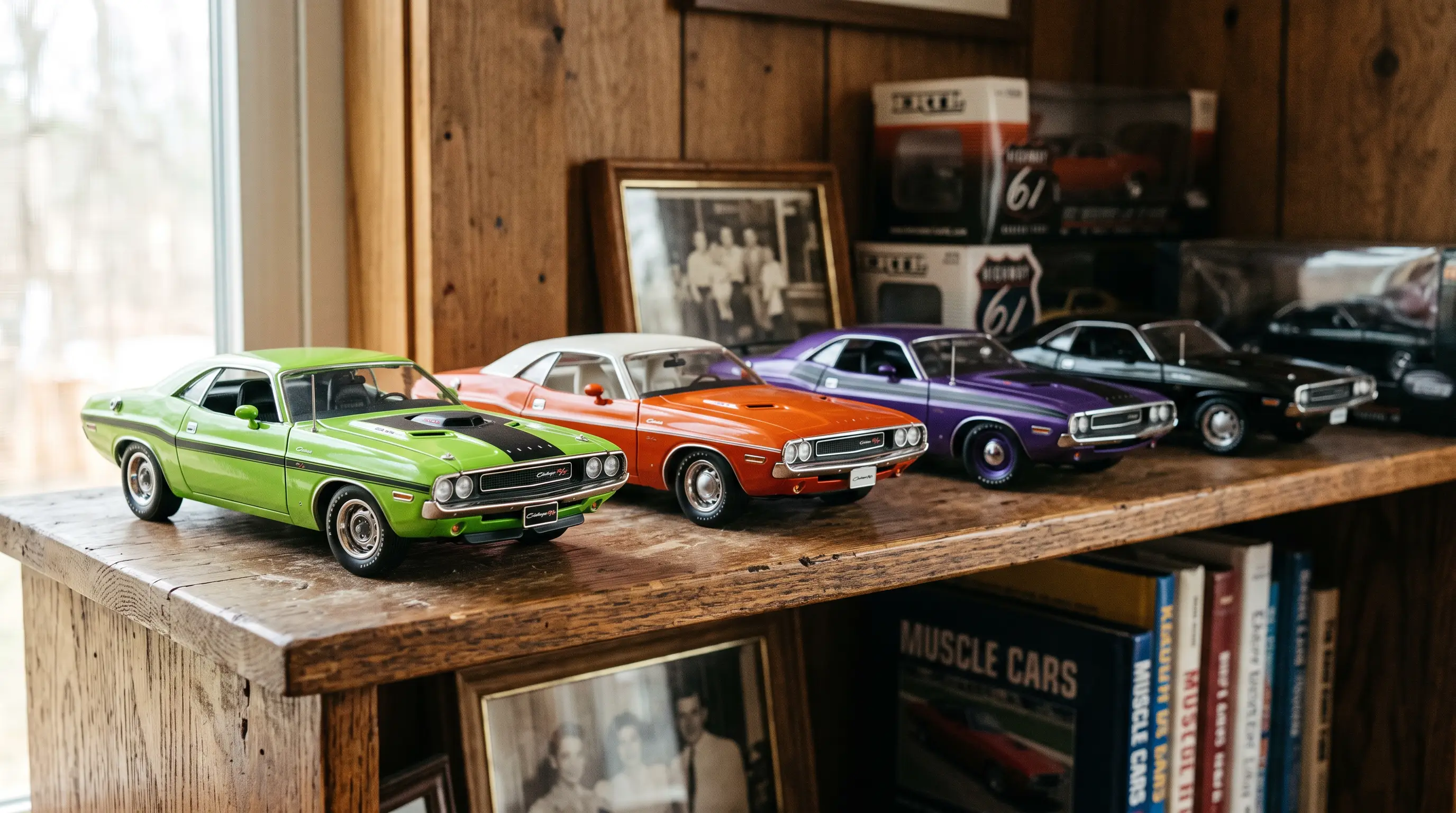
Walk into any serious diecast collector's display case and you will find at least one classic Dodge Challenger, and usually more than one, because the real story of challenger diecast models goes far past the pegs at a drugstore checkout. This is a hobby with its own hierarchy, its own grading standards, and its own quiet obsessives who treat a 1:18 scale Challenger with the same seriousness a full-size collector treats an original fender tag.
Beyond the toy aisle
Hot Wheels gave millions of kids their first taste of the Challenger's shape, usually in candy-colored paint and playground-durable plastic, and that introduction matters more than diecast snobs sometimes admit. A lot of people who now own a real 1970 R/T can trace their fascination with the car back to a pocket-sized version they wore the wheels off of as a kid. But the serious collecting world moves well beyond that entry point into scale accuracy that would make an engineer nod in approval.
Brands like Danbury Mint built detailed 1:24 scale Challenger replicas, while later high-end producers such as ACME and GMP pushed into 1:18 scale with opening doors, hoods, and trunks, detailed engine bays that replicate a real 426 Hemi or 440 Magnum down to hose routing, and interior stitching patterns that match factory upholstery options. These are not toys in any meaningful sense. They are miniature reproductions built for adults willing to pay real money for accuracy, and the best examples show up in glass cases rather than on a kid's shelf.
What separates a good model from a great one
Scale accuracy is the obvious differentiator, but paint code matching is where the real experts separate themselves from casual buyers. A model finished in the correct period Dodge color, matched to the actual paint code used on real 1970 or 1971 cars, commands more respect and often more money than a similar model finished in a generic approximation of the same shade. Collectors who know their factory colors will spot an incorrect Plum Crazy or Sublime finish from across a room, and it changes how they value the piece.
Wheel and tire detail matters just as much. A correctly proportioned Rallye wheel with the right lug pattern, paired with a tire sidewall that mimics period-correct raised white letters, tells a knowledgeable collector that the manufacturer did real research rather than working from a single reference photo. These small details are exactly what separates a mass-market casting from a limited production piece worth genuinely collecting.
💡 Did You Know?
Some limited production 1:18 scale Challenger models have been built with fewer than a few thousand units worldwide, a scarcity that has pushed secondary market prices for mint, boxed examples well past their original retail price, particularly for correctly optioned Hemi and R/T variants.
Why collectors take this seriously
A quality scale model lets a collector own a version of a car that might otherwise be financially or practically out of reach. Not everyone can afford an original numbers-matching Hemi Challenger convertible, but plenty of people can afford a beautifully detailed scale replica of one, and that accessibility has built a genuine parallel hobby around these cars rather than a lesser substitute for owning the real thing. Serious diecast collectors treat provenance and packaging with the same care full-size collectors apply to build sheets and broadcast sheets. A mint, factory-sealed box adds real value the same way an untouched build sheet does on the full-size side of the hobby.
There is also a documentary value to good diecast models that full-size restoration sometimes loses. A well-researched model captures a specific factory configuration exactly as it left the assembly line, without the decades of modification, repaint, and drivetrain swaps that complicate so many surviving real cars. In that narrow sense, a correctly detailed model can be a more accurate historical record of a specific factory build than the actual surviving car it represents.
"I have met grown men who can tell you the exact paint code discrepancy on a 1:18 model from thirty feet away, and I have never once doubted they were being completely serious about it."
- Patrick Walsh
Where the hobby is headed
Newer manufacturers continue pushing detail further, with some producers now offering resin models in even smaller production runs aimed squarely at collectors rather than casual buyers, complete with certificates of authenticity and individually numbered production. That trend mirrors what has happened in the full-size collector car market itself, where documentation and verified rarity increasingly matter as much as the object itself. The diecast world is simply running the same instinct at a smaller, more affordable scale.
For readers who want the broader cultural story behind why the Challenger has this kind of staying power across scales, from the big screen to the toy shelf, there is more read the background covering that wider footprint. And if scale models have you thinking about the real thing instead, it is worth taking a look at what is out there. You can keep exploring some of the Challenger's other pop culture moments that helped cement its collectibility in the first place.
Building a collection with a plan
Newer collectors often make the same mistake, buying whatever catches their eye at a show without a strategy behind the purchase. Experienced diecast collectors tend to specialize instead, focusing on a single year, a single body style, or a single manufacturer's tooling, and building depth within that narrow lane rather than chasing every Challenger casting that comes along. Someone focused exclusively on 1970 R/T variants, for instance, can build a collection that tells a genuinely coherent story about a single model year across multiple colors and options, which is a far more satisfying result than a shelf full of unrelated castings from different decades and different manufacturers.
Storage and display matter too, more than casual buyers usually expect. UV exposure fades paint on a diecast model just as it does on a full-size car, and humidity can cause metal fatigue or corrosion on cheaper castings over enough years. Serious collectors keep their best pieces in climate-controlled display cases away from direct sunlight, treating preservation with the same seriousness a full-size owner applies to a heated garage. A model that looked perfect on the day it left the factory can degrade badly over twenty years of sitting on a sunny windowsill, and that kind of damage is often irreversible.
From shelf to driveway
A well-built scale model can teach a collector more about a car's factory details than a walk around most surviving originals, simply because so many original cars have been modified over the decades. But eventually, for a lot of people, the model becomes a gateway rather than a destination. If that describes where this is heading for you, there is a classic Challenger for sale waiting to make the jump from display case to driveway a lot more real. The model taught you what to look for. The real car is where that knowledge finally gets to matter.