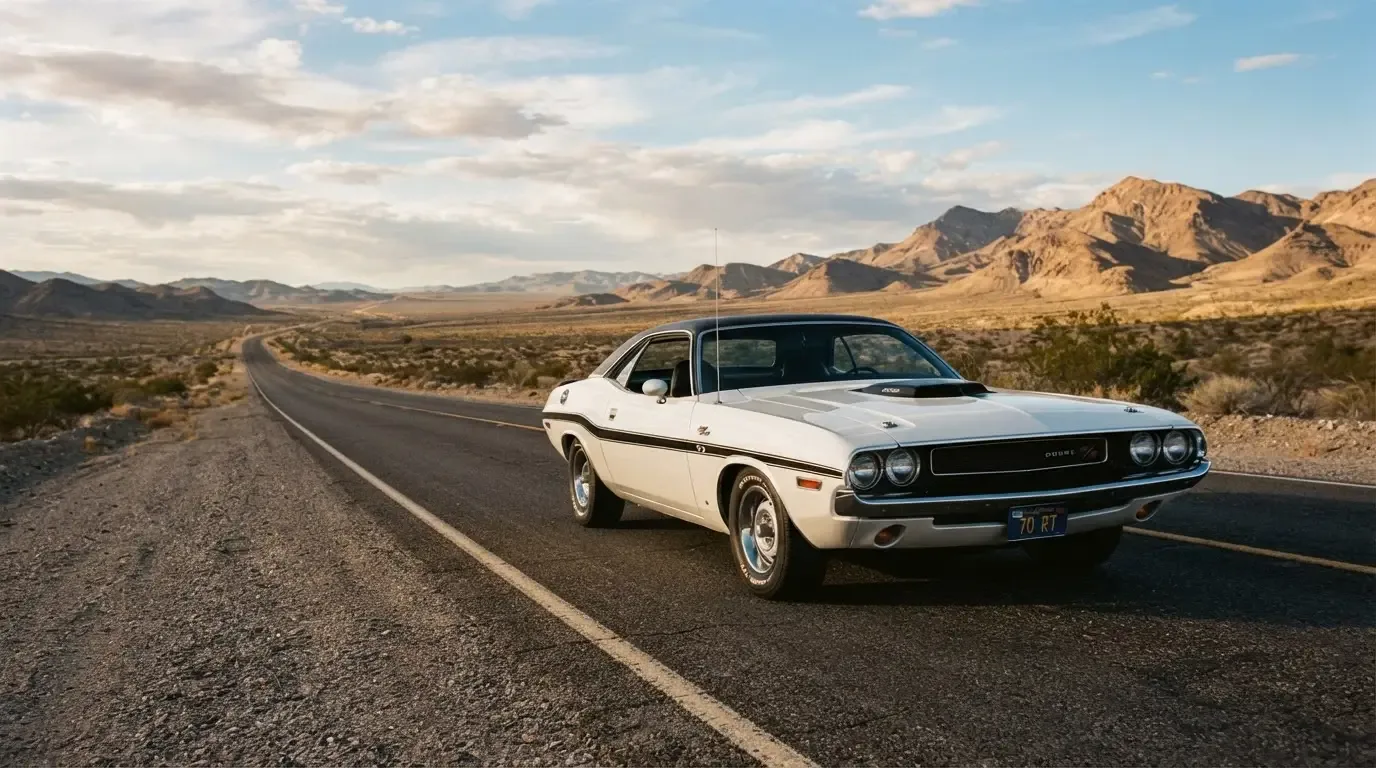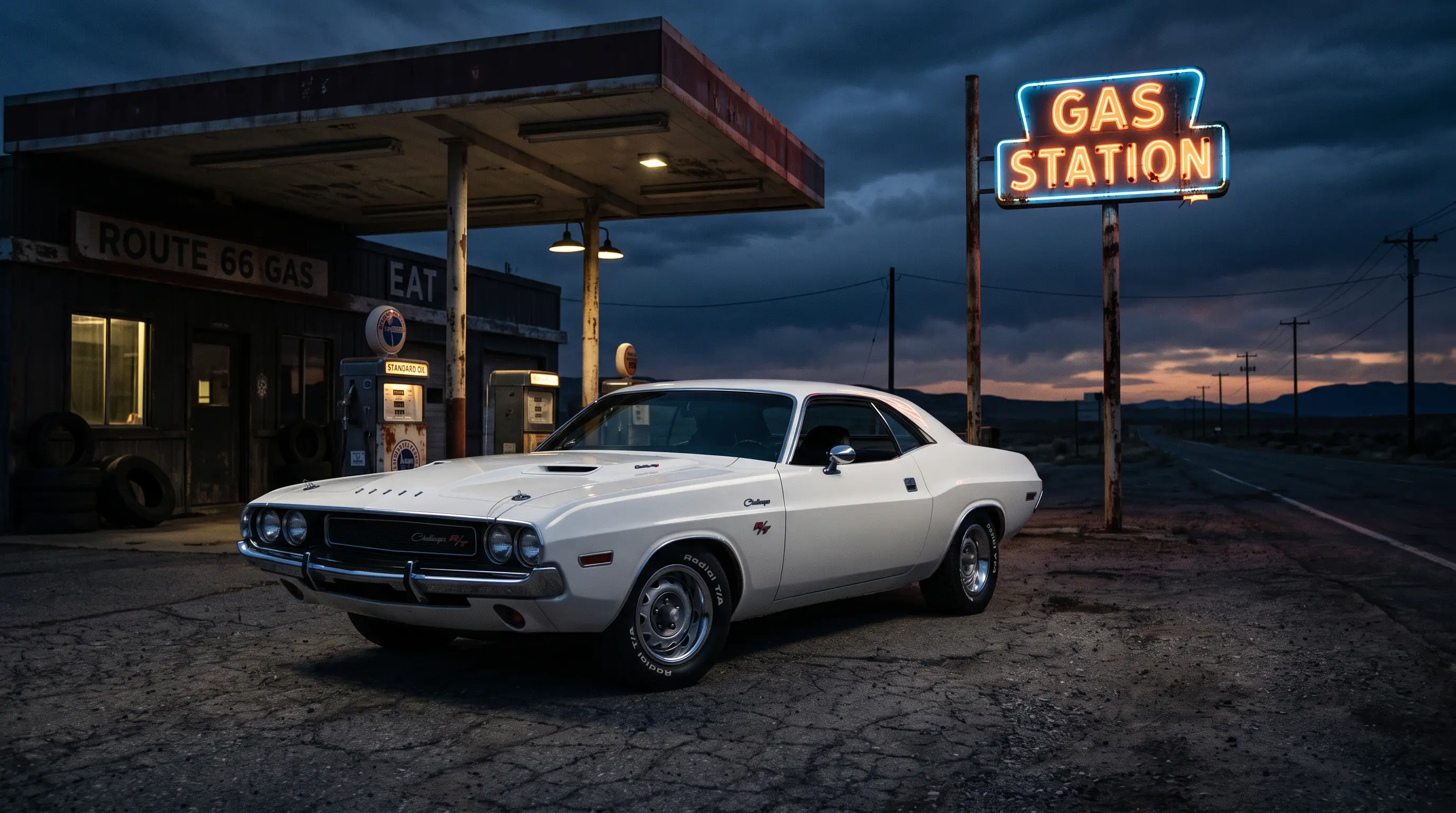
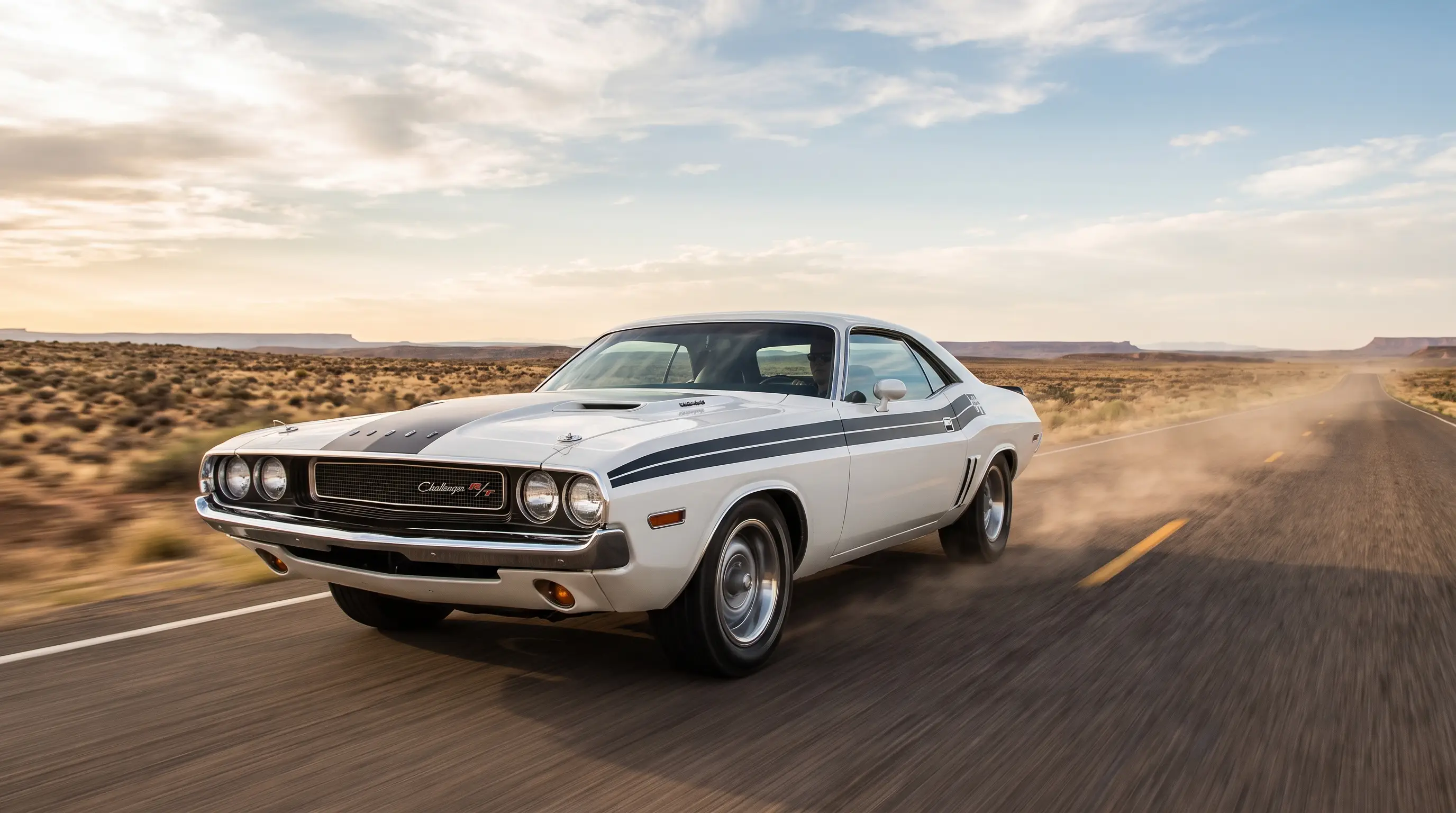
There is a particular white that only exists in movie prints from 1971, a white that has gone slightly warm and grainy with age, and it belongs to one car. The 1970 Dodge Challenger in Vanishing Point is not the fastest movie car ever filmed, not the most technically accurate, and not even, by some accounts, driven by the same actor in every scene. It is simply the one that people remember, the white shape disappearing down an empty highway toward something the film never quite explains.
A delivery job that became a myth
The plot of Vanishing Point is almost beside the point. A driver named Kowalski agrees to deliver a car from Denver to San Francisco, makes a bet with himself that he can do it in an impossible amount of time, and spends the rest of the film outrunning police across the American Southwest for reasons the movie never bothers to fully justify. That vagueness is part of why the film still gets talked about. It is less a story with a plot than a mood, and the white Challenger is the physical center of that mood.
The car itself was a 1970 Challenger R/T hardtop, painted in the factory's plain white (code EW1) with a black vinyl interior and a 440 Magnum V8 for most of the production cars, though multiple Challengers were used across filming and stunt work, as was standard practice for any film with this much high-speed driving. By most later accounts five cars were used in total, four with the 440 and four-speed manual and one with a 383 and automatic. That detail rarely makes it into the mythology, but it is a good reminder that movie cars are built to photograph well first and perform second.
Why the ending stuck with audiences
Without spoiling the specific final shot for anyone who has not seen it, the film's conclusion refuses the easy version of a chase movie payoff. It is abrupt, almost anticlimactic on first watch, and that choice is exactly why the movie has the reputation it does. Audiences in 1971 were used to car chase films resolving with either a triumphant escape or a dramatic crash played for spectacle. Vanishing Point gave them something colder and stranger, and the white Challenger became inseparable from that unresolved feeling.
Critics at the time were split. Some dismissed it as thin genre filmmaking dressed up with countercultural posturing. Others recognized it as something closer to an existential road film wearing a car chase movie's clothes. Fifty years on, the second reading has mostly won out, and the Challenger's white paint is now shorthand for the entire film in a way that few movie cars manage.
A soundtrack and a landscape that shaped the mood
Part of what makes the Challenger read as more than a prop is the environment the film builds around it. The empty highways of the American Southwest, filmed with a flat, unglamorous honesty rather than the polished car commercial gloss that later films would apply to similar landscapes, give the white paint something to stand out against. There is very little dialogue during the actual driving sequences, and the soundtrack leans on period rock and blues rather than a conventional score, which lets the sound of the engine itself carry much of the tension.
That restraint is easy to overlook now, decades removed from the film's original release, but it was a deliberate choice against the grain of how car chases were typically filmed at the time. Many contemporary chase films leaned on quick cuts, dramatic music stings, and visible stunt spectacle. Vanishing Point instead let long, sustained shots of the Challenger moving across open desert do the work, trusting the audience to feel the tension building without being told explicitly how to feel it.
The car's afterlife in Challenger culture
What Vanishing Point did for the Dodge Challenger was give it a personality separate from its spec sheet. Plenty of pony cars from this era had bigger engines or better sales numbers, but very few had a piece of film that made the car itself feel like a character with intent rather than just a vehicle a character happened to drive. That distinction has kept the Vanishing Point Challenger relevant in a way that outlasts most movie car tie-ins, which tend to fade once the film itself stops being widely watched.
The film's influence shows up decades later too, most directly in the deliberate homage built into 2007's Death Proof, which borrowed the white Challenger and the open-highway premise almost wholesale. For the full arc of how that connection plays out on screen, a related story covers the newer film's relationship to the original in detail.
"The car does not do anything special in that final shot. It just keeps going, and somehow that is the whole point. People remember the white paint because the movie refused to give them the ending they expected."
- Nora Beckett
Why collectors still chase this specific car
Owning a genuine Vanishing Point tribute or, in rare cases, a car with a real claim to production use, carries a different kind of appeal than owning a numbers-matching R/T with no film history. It is not about horsepower or rarity in the traditional collector sense. It is about owning a piece of a specific cultural moment, the early 1970s road movie era, when a white Dodge Challenger on an empty highway meant something to an entire generation of moviegoers regardless of what was actually under the hood.
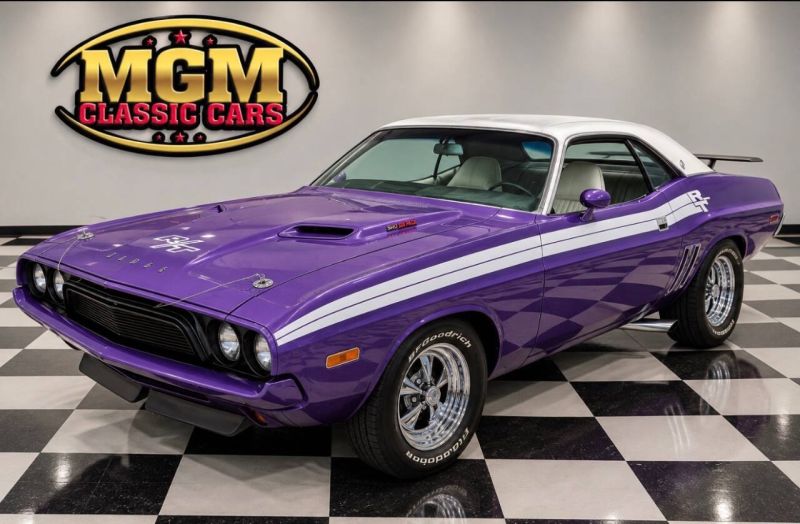
For the complete background on how this single film shaped the Challenger's identity in popular culture well beyond its factory specifications, vanishing point challenger history traces the full picture. And if the film has you wanting the real thing rather than the myth, Challengers for sale now shows what is currently on the market, white paint optional but, for plenty of buyers, still very much the point.
The car's specific shade of white, commonly identified in Mopar reference sources as factory code EW1 plain white, has become something of a minor obsession within Challenger tribute build circles, with builders spending considerable effort trying to match not just the color but the way it aged and photographed on period film stock rather than how a fresh coat looks under modern lighting.
What is easy to forget more than fifty years later is how modest the actual production was behind such a lasting cultural footprint. This was not a big-budget studio spectacle with a fleet of identical cars and a marketing campaign built around the Challenger's presence. It was a relatively lean production that happened to land on an image, a white car alone on an empty road, that turned out to outlast almost every bigger, more expensive car movie that came after it. That gap between the modesty of the production and the size of its legacy is part of why enthusiasts keep returning to this specific car, decade after decade, long after most of its contemporaries have been forgotten.
Sources and notes
- What You May Not Know About The Vanishing Point 1970 Dodge Challenger R/T - Mopar Connection Magazine
- Vanishing Point Car: Kowalski's 1970 Dodge Challenger R/T - Muscle Cars Illustrated
- The Real Story Behind The White Dodge Challenger From Vanishing Point - HotCars
- Recreate your Vanishing Point movie dreams with this 1970 Dodge Challenger - Motoring Research
- Vanishing Point (1971 film) - Wikipedia