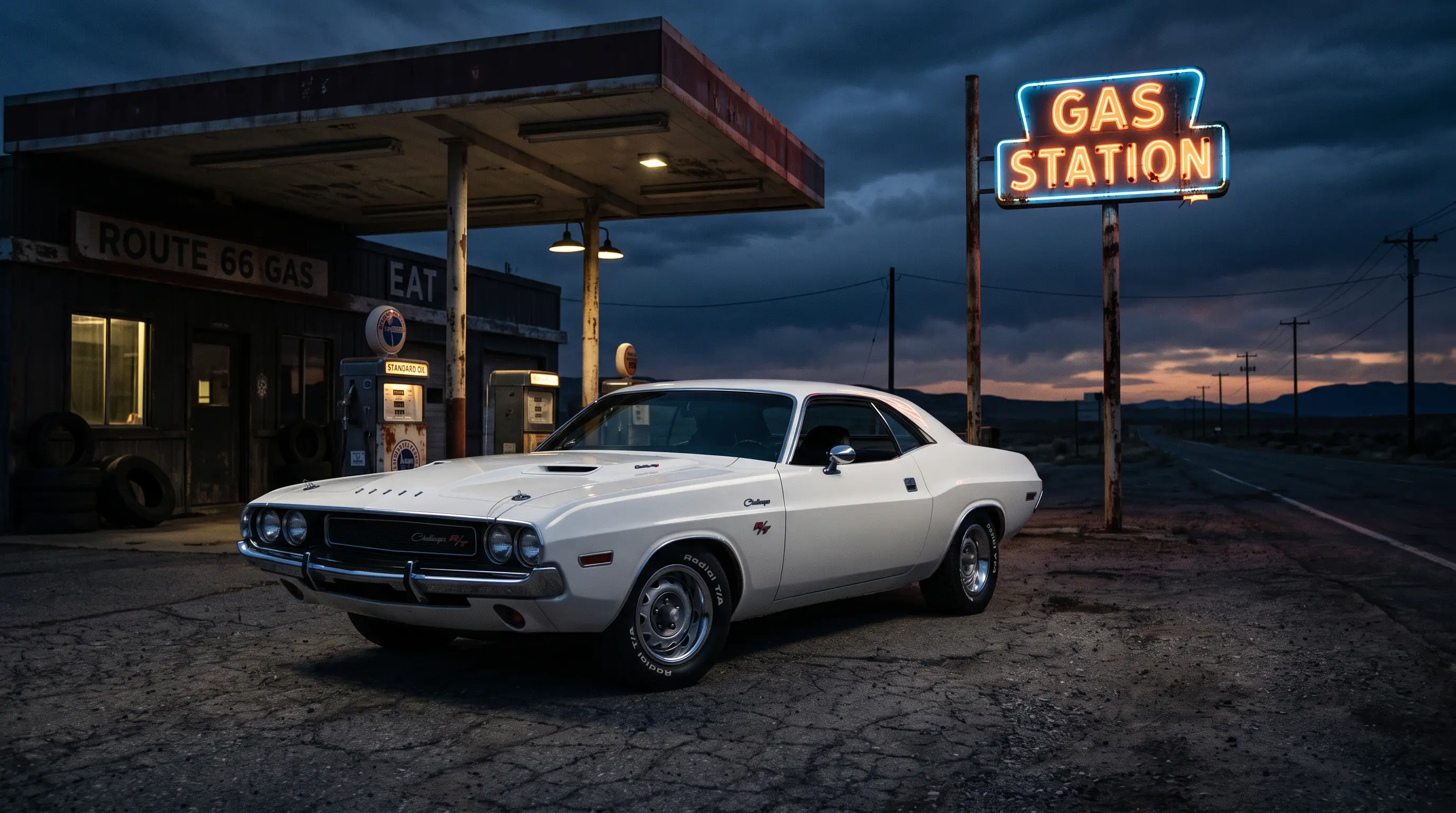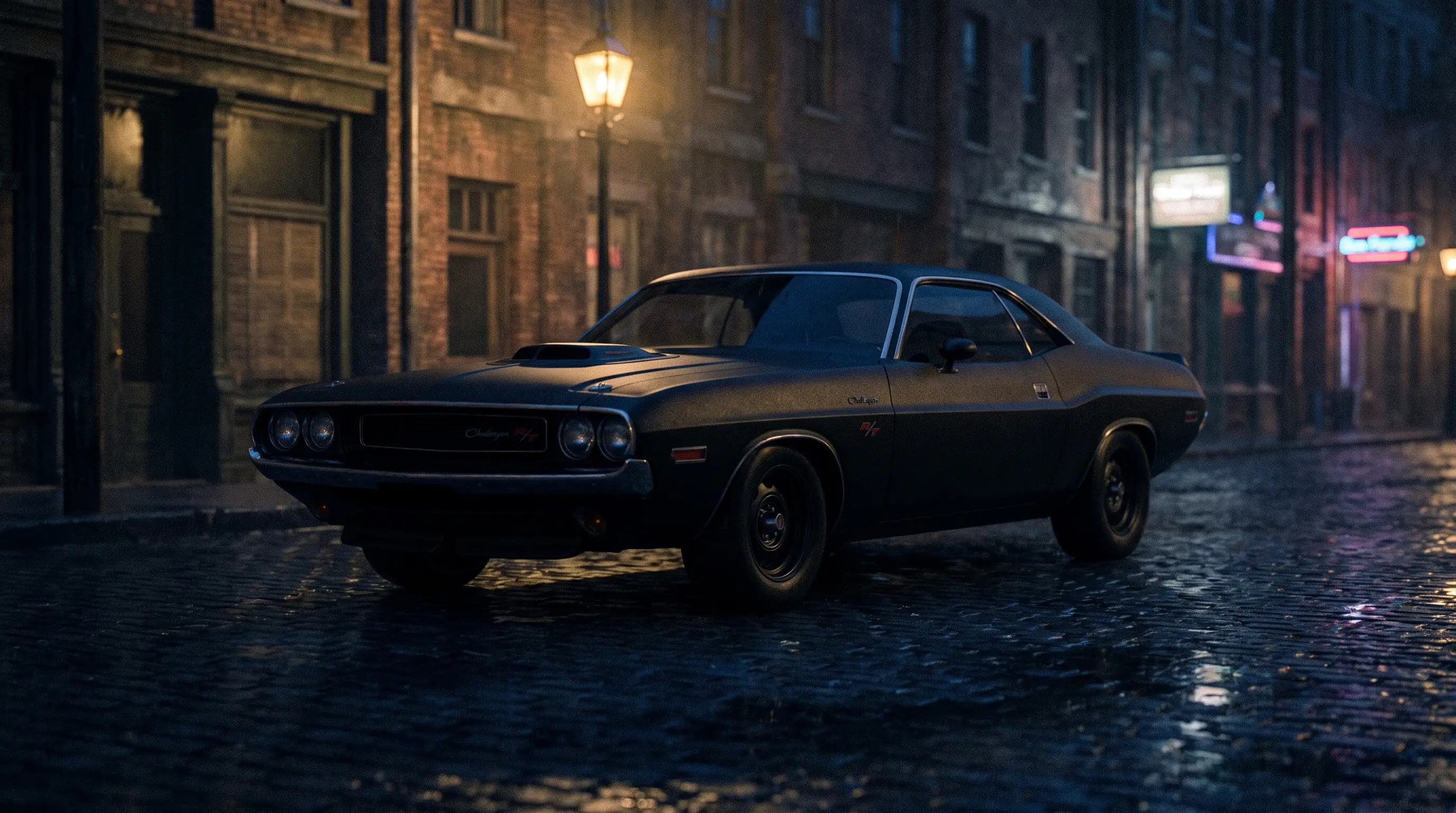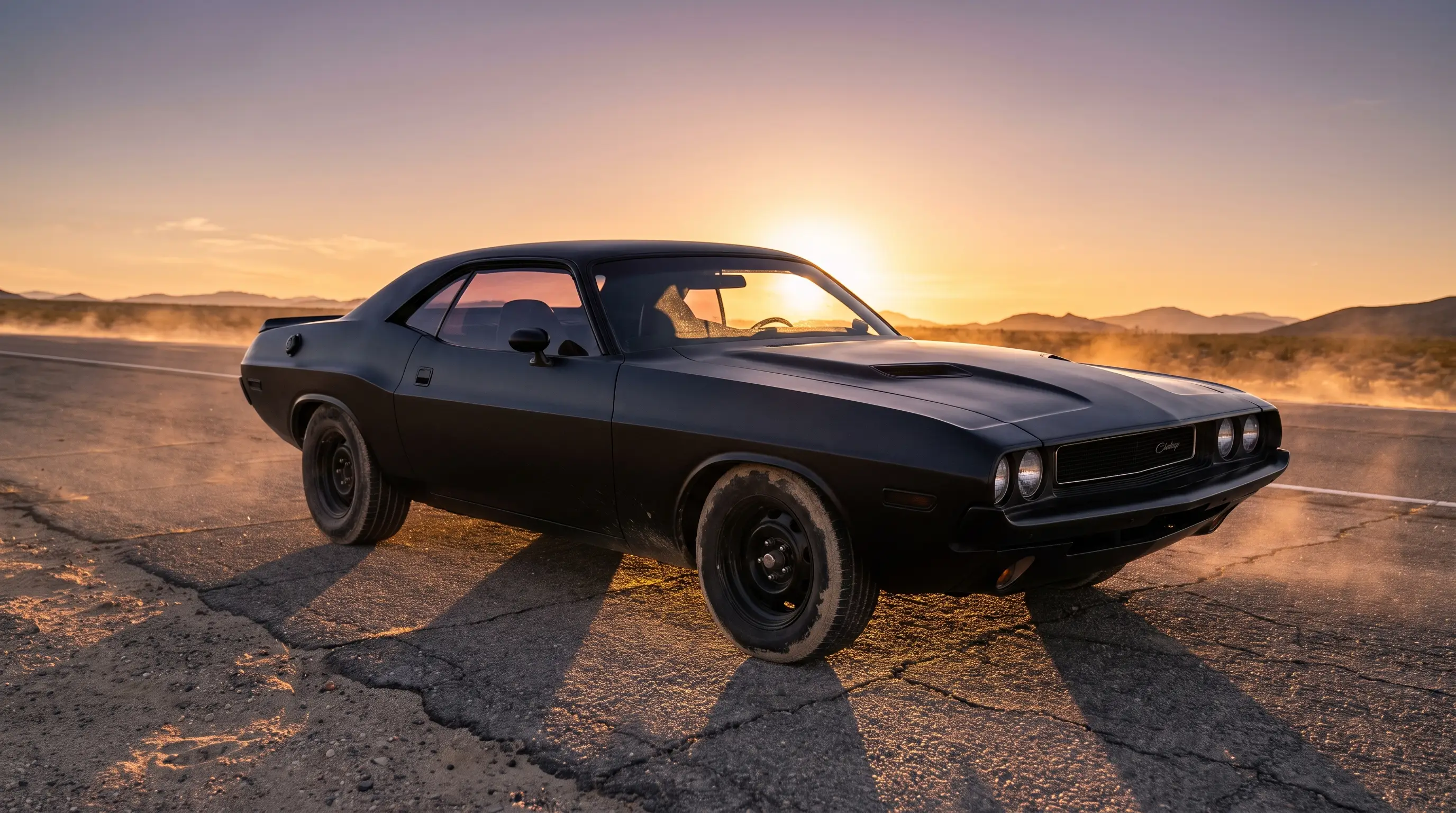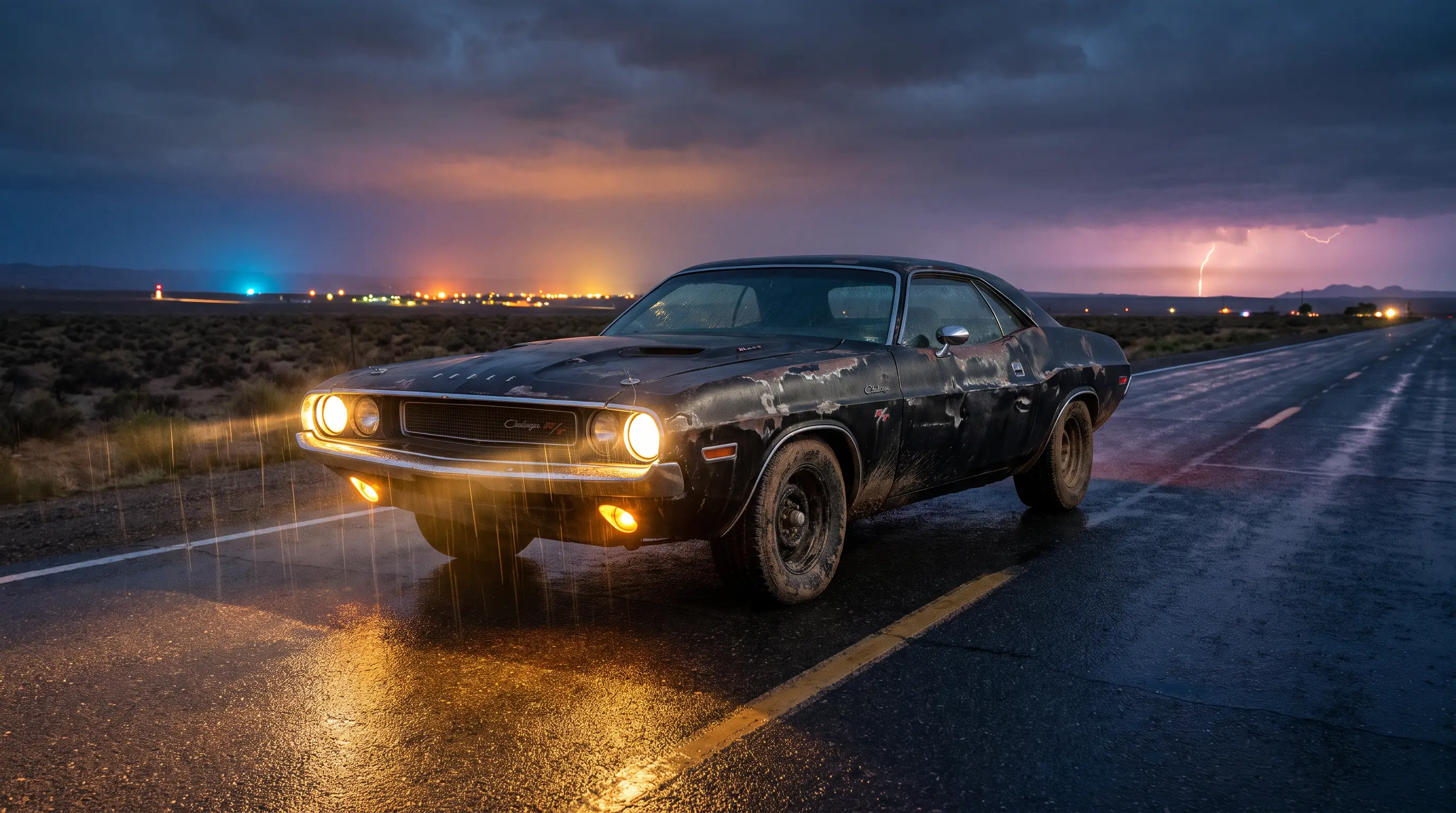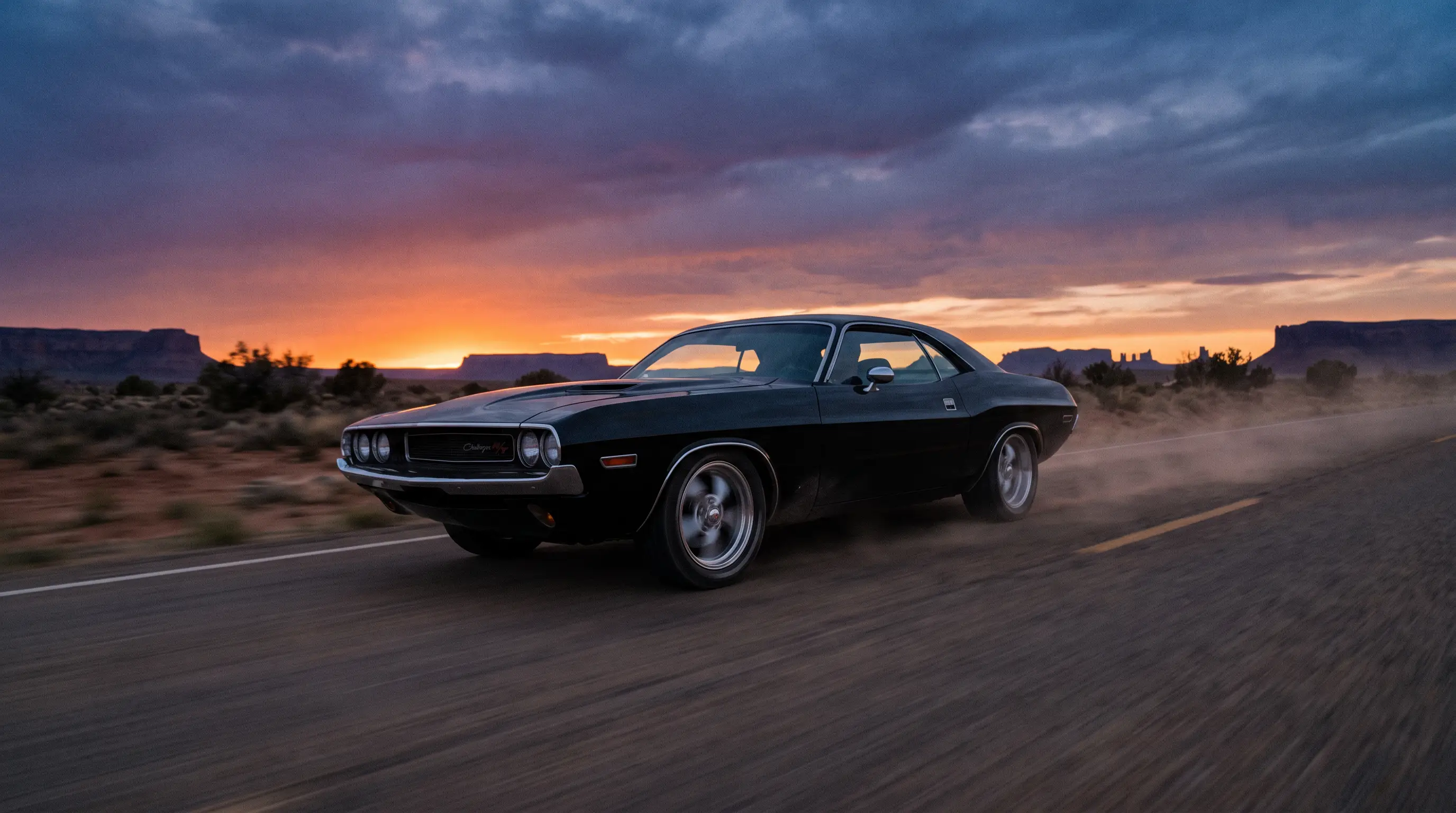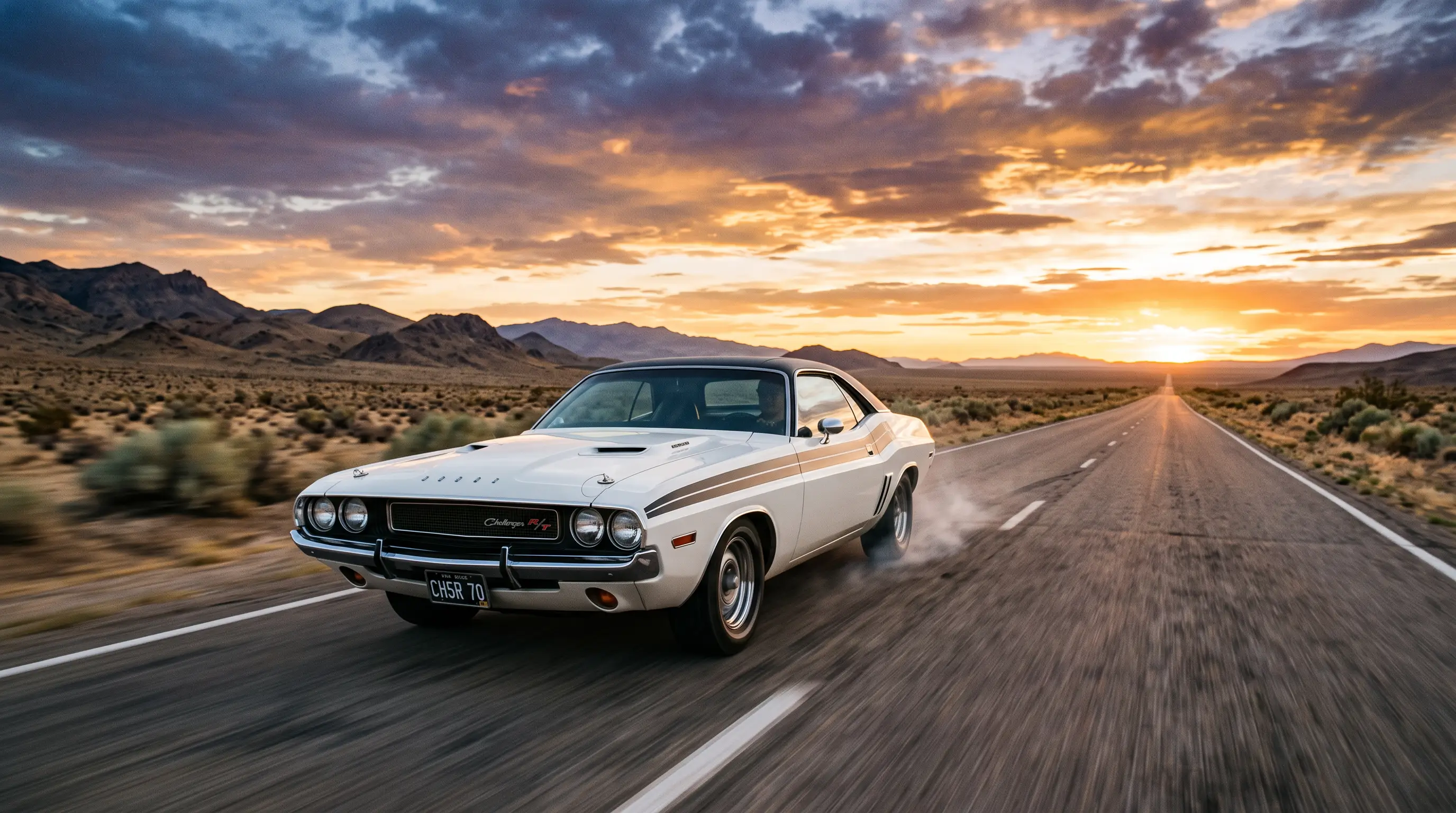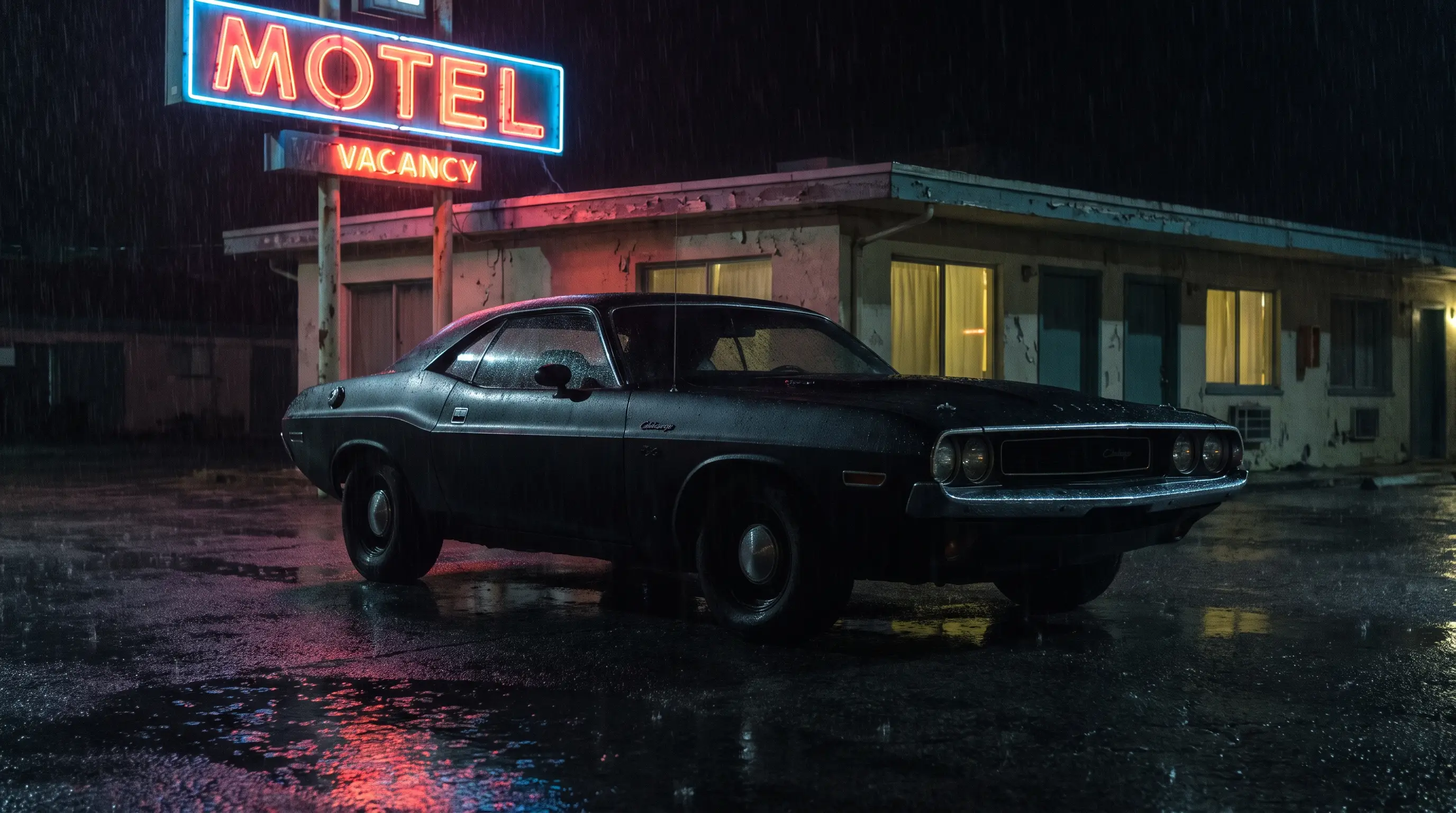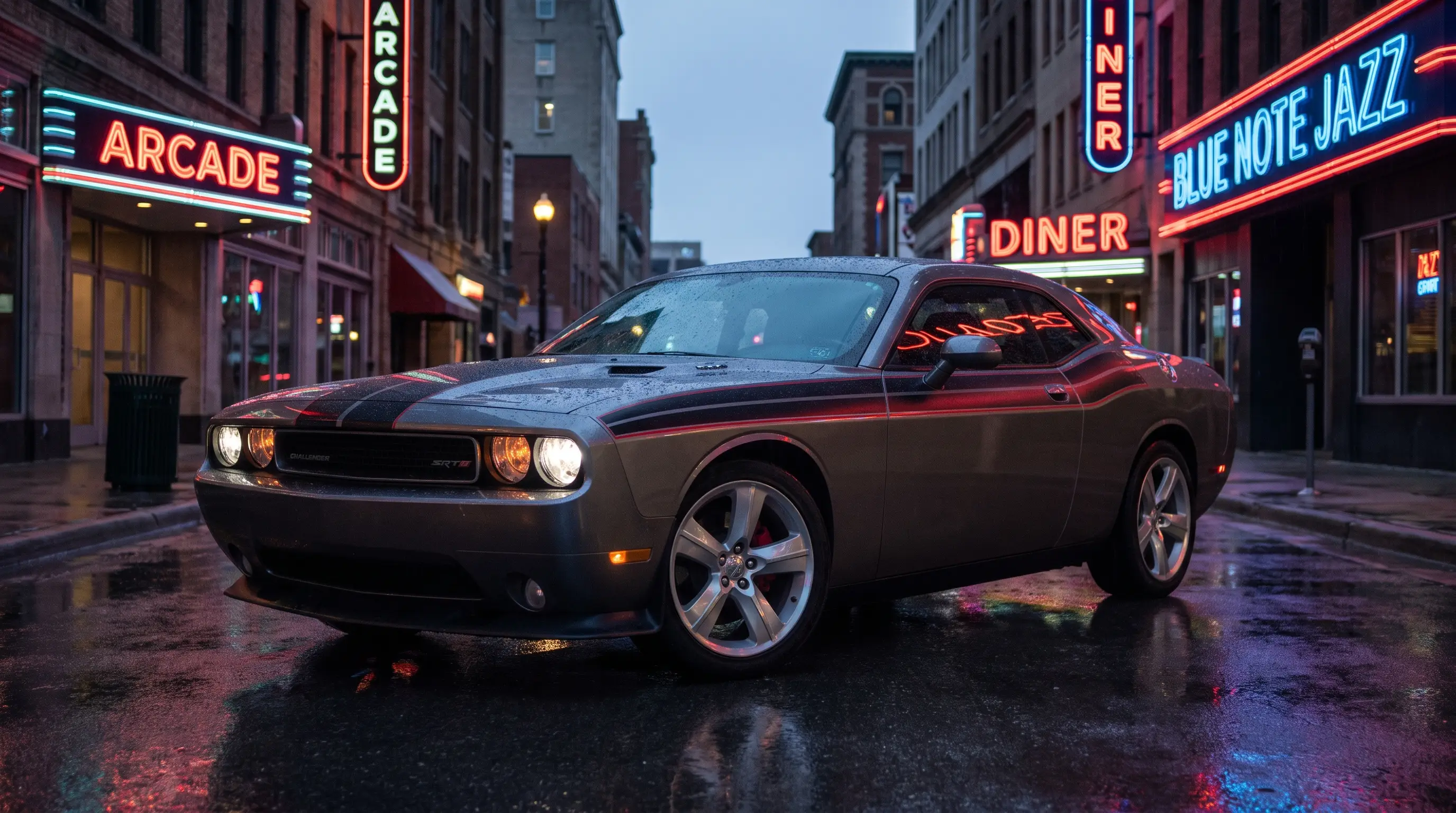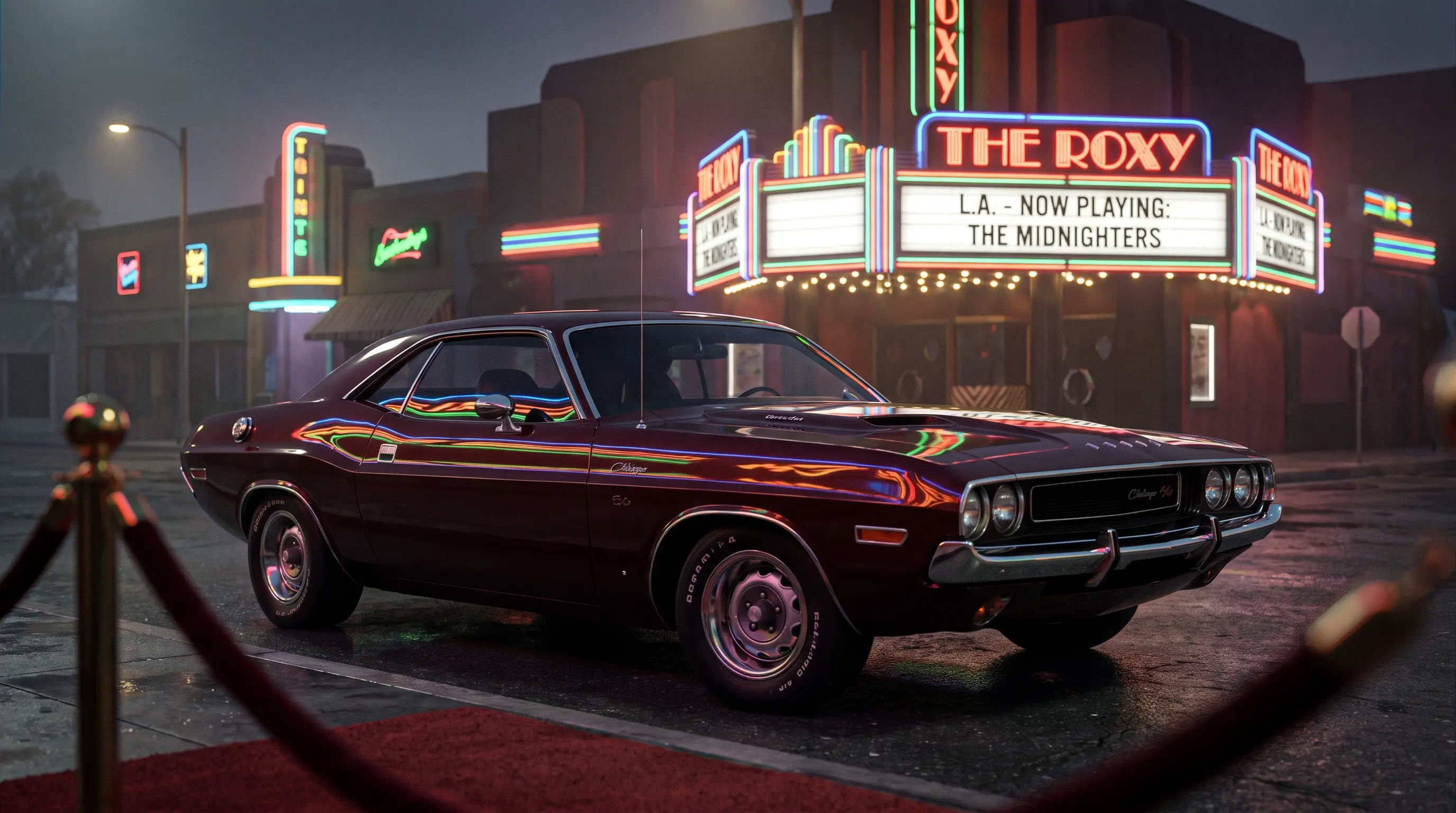
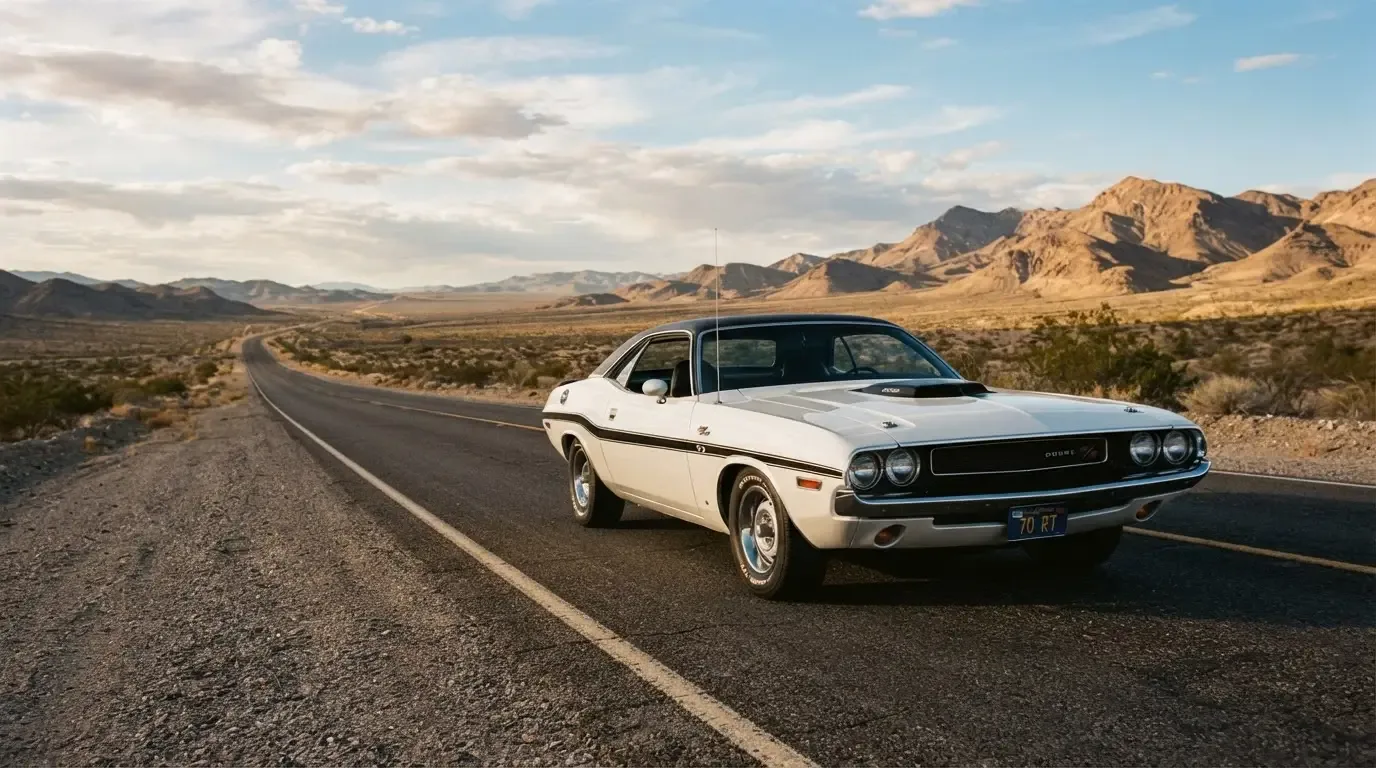
There is a moment near the start of the 1971 film when a man named Kowalski accepts a bet he does not need to make. He will drive a car from Colorado to California in a span of time that leaves no room for sleep, for caution, or for a second thought. The car is a white Dodge Challenger, and by the end of that decade it had stopped being a piece of Detroit engineering and become something closer to a folk symbol. The Vanishing Point Challenger is the reason a great many people know the shape at all.
I have always been drawn to the gap between what a car is and what a film makes it mean. A Challenger is steel and glass and a build sheet. On screen it can carry loneliness, defiance, the whole weight of a man driving away from a life that no longer fits. The camera did that. But it needed the right car to do it with, and the Challenger turned out to be the right car.
The white car and the open road
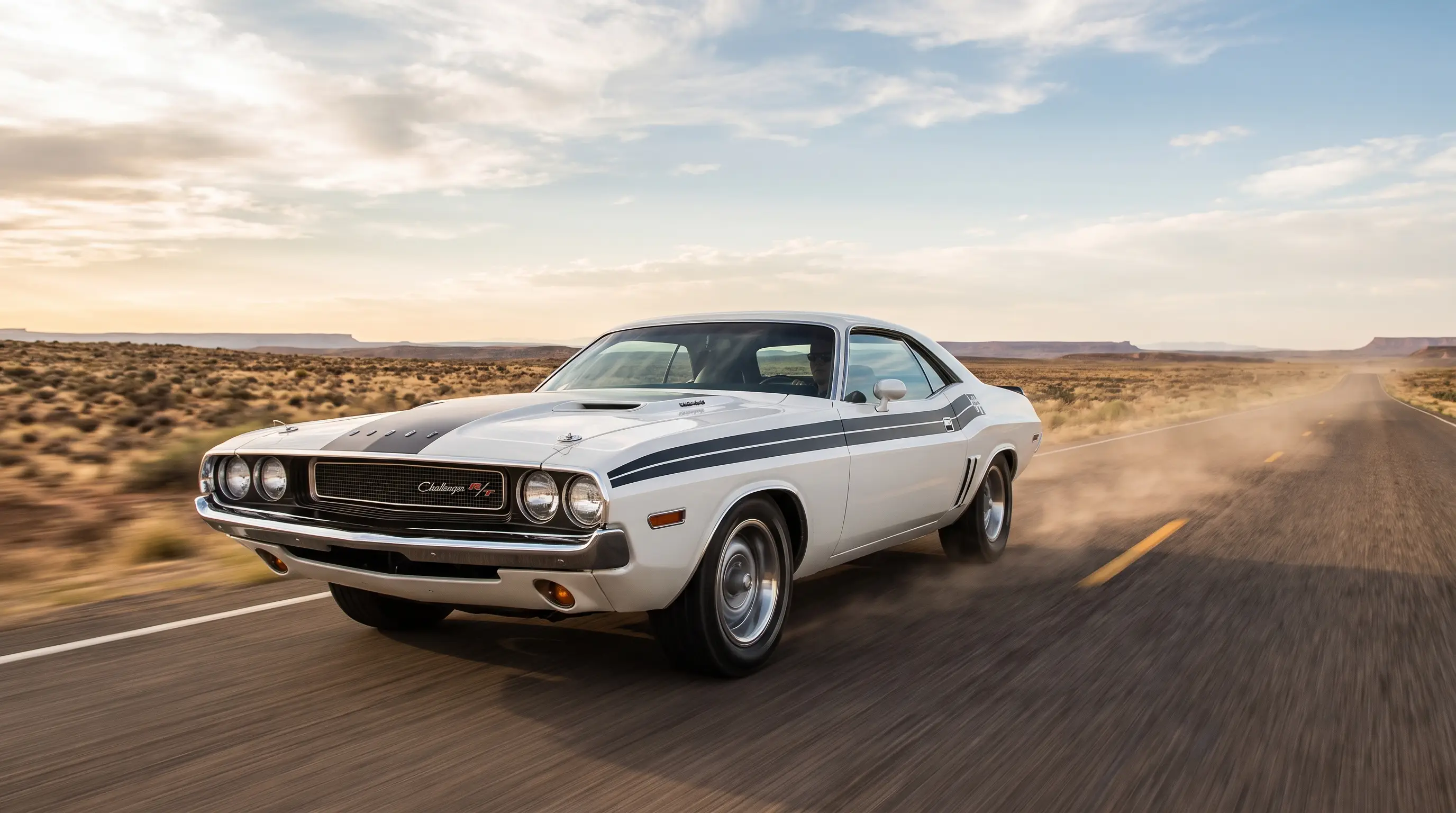
Vanishing Point gave us a plot stripped down to almost nothing. A car delivery driver takes a fresh white Challenger and points it west, chased by police across the desert, cheered on by a blind radio DJ who reads the pursuit like scripture. There is barely a story in the conventional sense. There is a man, a car, and a stretch of country that keeps opening in front of the windshield. The film asks you to feel the driving rather than follow a plot, and the Challenger becomes the only thing on screen you can hold onto.
The production used several identical white cars, since the stunts were hard on them, and the ending sends the Challenger into a police roadblock in a burst that the film treats almost as a release rather than a death. That final image is what fixed the car in memory. It is not a victory. It is an ending chosen on the driver's own terms, and the machine is inseparable from the choice.
Why the shape read so well on camera
Not every muscle car photographs the way the Challenger does. The long hood and the taut roofline give it a profile that reads clearly even at speed and even in a wide desert shot where the car is a small white shape against the rock. Directors love a silhouette that stays legible when it is far away and moving fast. The Challenger has that. It looks like intent.
Color mattered too. A white car in a brown and blue desert is impossible to lose. The filmmakers were not thinking about paint codes the way a collector does, but the instinct was right. The car had to stand apart from everything around it, because the whole film is about a man who has already decided he does not belong to the world he is racing through.
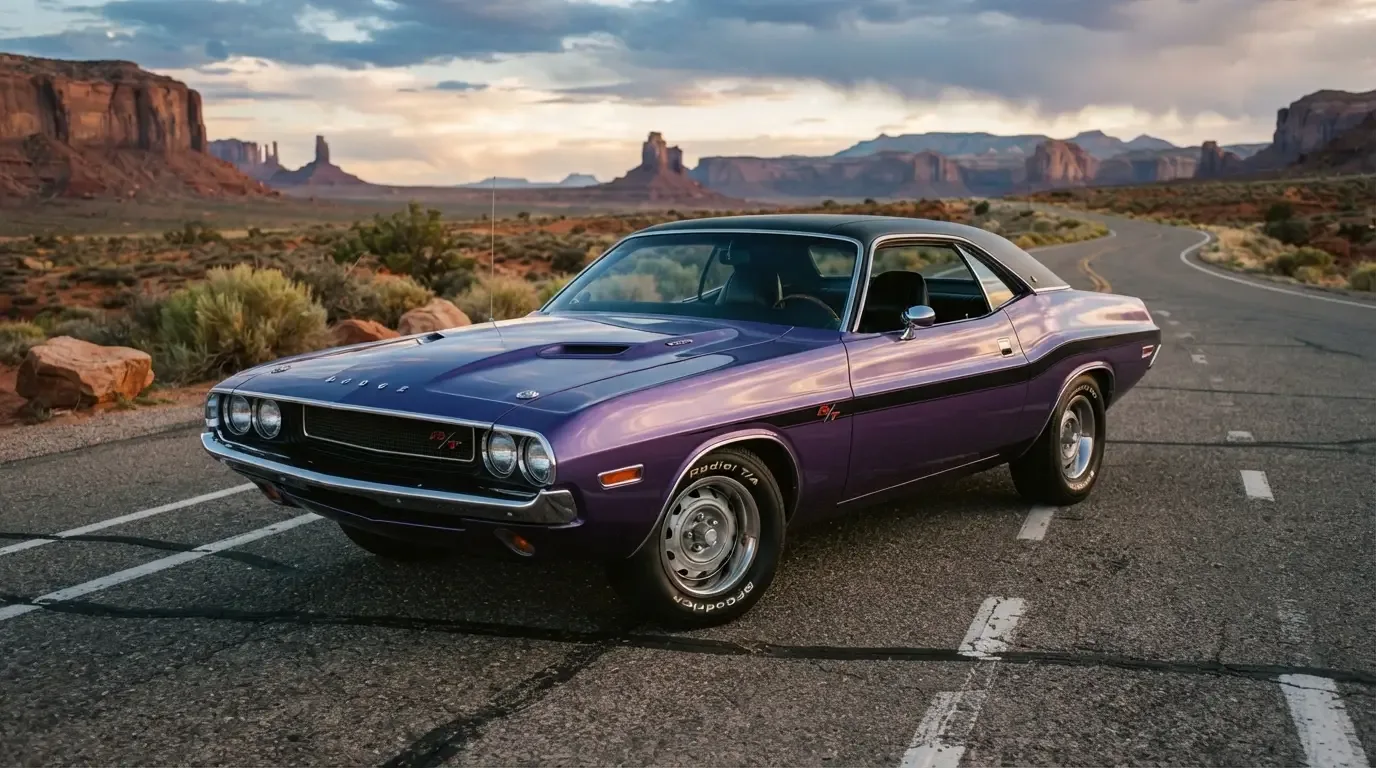
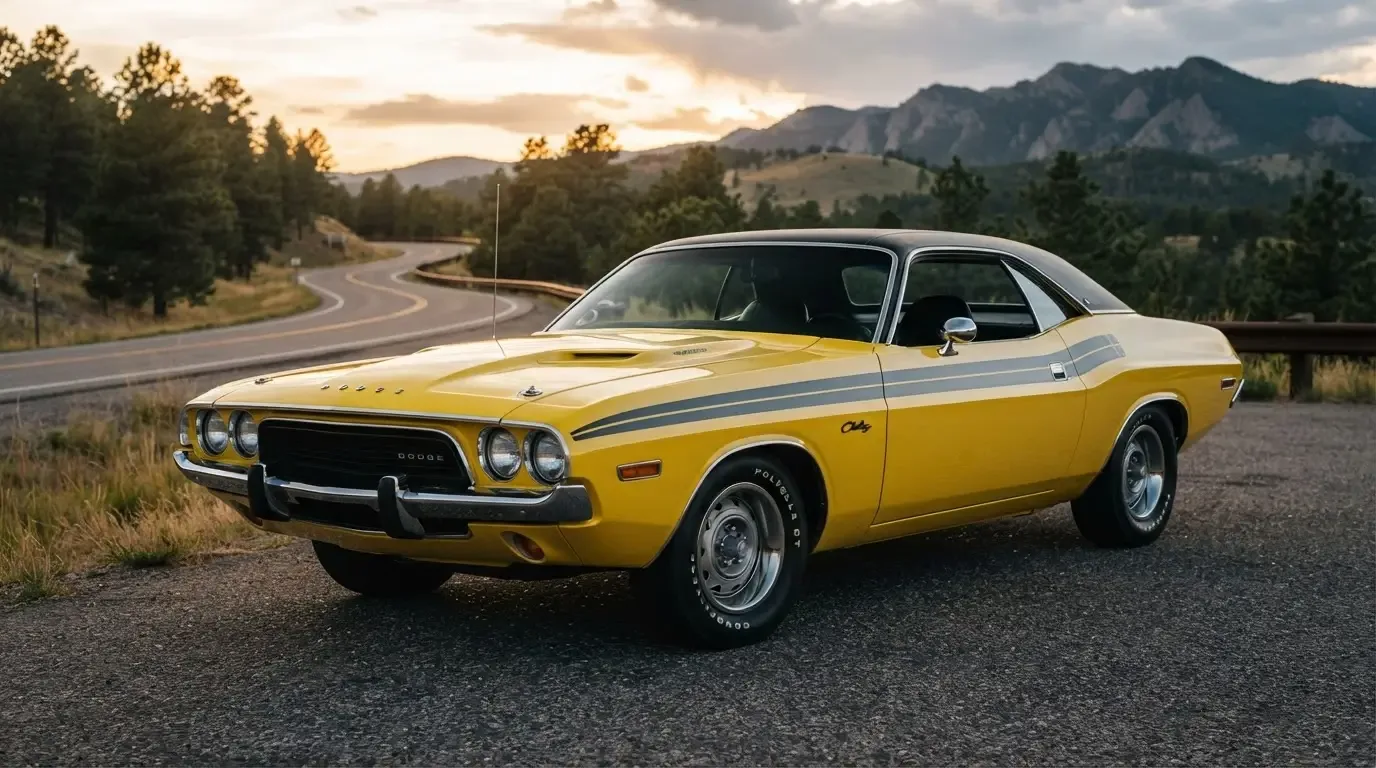
The origin of the shape, the way Dodge arrived at this particular car at this particular moment, is a story worth reading on its own, and the dodge challenger story fills in how the design came to exist before Hollywood ever pointed a lens at it. The film borrowed a form that Detroit had already gotten right.
| Screen Challenger | Detail |
|---|---|
| Landmark film | Vanishing Point (1971) |
| Director | Richard C. Sarafian |
| On-screen car | White 1970 Dodge Challenger R/T |
| Lead actor | Barry Newman as Kowalski |
| Later homage | Death Proof (2007), directed by Quentin Tarantino |
| Enduring image | A lone white car against open desert |
The radio preacher and the myth
One of the reasons the film lodged so deep is a voice. A blind radio DJ named Super Soul picks up the police chatter and starts narrating Kowalski's run to his listeners, turning a traffic pursuit into something like a sermon. He gives the driver a name in the culture, calls him the last American hero, and the white Challenger stops being a car and becomes the thing that name is attached to. It is a strange piece of storytelling, a man on the radio building a legend around a car he cannot see, and it works.
I think about that voice a lot, because it is really the film explaining itself out loud. Super Soul is telling the audience how to feel about the car before we have decided on our own. By the time the Challenger reaches its last stretch of road, the radio has already made it a symbol, and we are not watching a chase anymore. We are watching a legend that was written in real time, mile by mile, with the car as its only proof.
That layering is why the movie rewards a second viewing. The first time through you watch the driving. The second time you notice how carefully the film wraps meaning around the machine, until the two cannot be pulled apart. A lesser production would have let the car be scenery. This one made it the argument.
A second life through homage
A film can make a car famous once. It takes a second generation of filmmakers to keep it famous. Quentin Tarantino did that in 2007 when he built part of Death Proof around a 1970 Challenger and had his characters talk about Vanishing Point directly, treating the earlier film as sacred text. The homage was not subtle, and it was not meant to be. Tarantino wanted the audience to feel the lineage, to understand that the white car had a history worth invoking.
That is how a piece of pop culture stays alive. It gets handed down. Younger viewers who had never seen the 1971 film met the Challenger through the tribute, then worked backward to the original. The car gained fans who were not born when it was new, which is exactly how a machine outlives its own production run.
"The car in Vanishing Point does not need dialogue. It just needs to keep moving. That is a rare thing for any object to carry, and it is why people who have never driven one still feel like they know it."
- Nora Beckett
Why it had to be this car
People sometimes ask why the Challenger, of all the muscle cars available in 1970, became the one the camera loved. Part of the answer is timing. The film was made right when the car was new, so it wore the shape at its freshest, before regulations softened the ends and before the styling changed. The audience met the Challenger at its best moment, and that first impression stuck.
The rest of the answer is character. A lot of muscle cars of the era read as flashy, as cars for showing off. The Challenger, in plain white with no stripes and no bright color, read as serious. It looked like a car a man drives because he has somewhere to be, not because he wants to be seen. That restraint is exactly what the story needed. A louder car would have turned Kowalski into a show-off. The quiet white Challenger let him stay a mystery.
There is a lesson in that for how objects earn meaning. The film did not pick the most expensive or the most powerful car it could find. It picked the one whose personality matched the man. When the match is that good, the audience stops separating the two, and the machine inherits everything we come to feel about the person driving it.
The car as a character, not a prop
Most movie cars are props. They get chosen for a scene and forgotten after it. The Challenger crossed over into something else, into a character the audience roots for, and that shift is the whole difference. When Kowalski drives, you are not watching a man use a car. You are watching two things that have agreed to end the same way.
Writers have spent decades reaching for what the film means. Some read it as a counterculture story about freedom running out of road. Some read it as a simpler thing, a man who would rather choose his own finish than be handed someone else's. The car sits at the center of both readings without ever tipping its hand. That ambiguity is why it lasts. A less interesting car would have pinned the meaning down.
From the screen to the driveway
The strange gift of all this is what it did for ownership. A person who falls for the Challenger through a film is not buying a spec sheet. They are buying a feeling they first met in a dark room in front of a screen. When they finally go looking at classic Challengers on the market, the white 1970 cars carry a premium of emotion that no build sheet fully explains. The movie is priced into the desire, even when it is not priced into the paperwork.
I find that honest rather than foolish. We do not fall in love with objects for their tolerances. We fall for what they meant to us when we first saw them move. The Vanishing Point Challenger taught a couple of generations what a Dodge could mean, and that lesson has never really worn off.
The story keeps driving
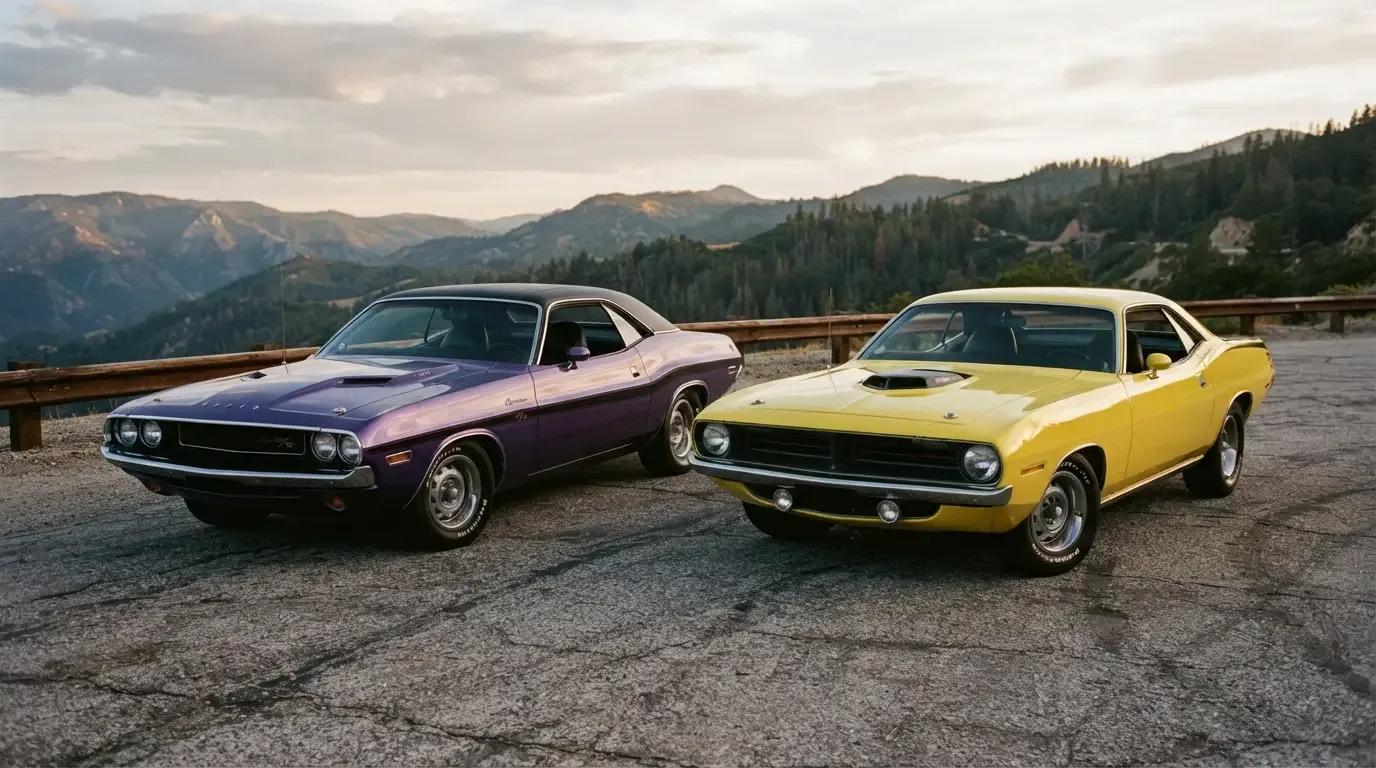
What the film cannot tell you is how the Challenger fit into its own family, how it stood next to its close cousin from the same factory floor, and why the two were both alike and not alike at all. That is the next chapter, and it is the part of the story that pulls you out of the desert and back into the showroom where the whole thing began.
Kowalski never made it to California. The car did, in a way he never could, by driving straight through fifty years of memory and coming out the other side still recognizable. A machine that can do that was never only a machine. The Vanishing Point Challenger proved it, one long desert mile at a time.
Sources and notes
- Vanishing Point (1971 film), Wikipedia
- Vanishing Point Car: Kowalski's 1970 Dodge Challenger R/T, Muscle Cars Illustrated
- 5 Things About The Vanishing Point Challenger, Motorious
- The Real Story Behind The White Dodge Challenger From Vanishing Point, HotCars
- 1970 Dodge Challenger R/T in Vanishing Point, IMCDb