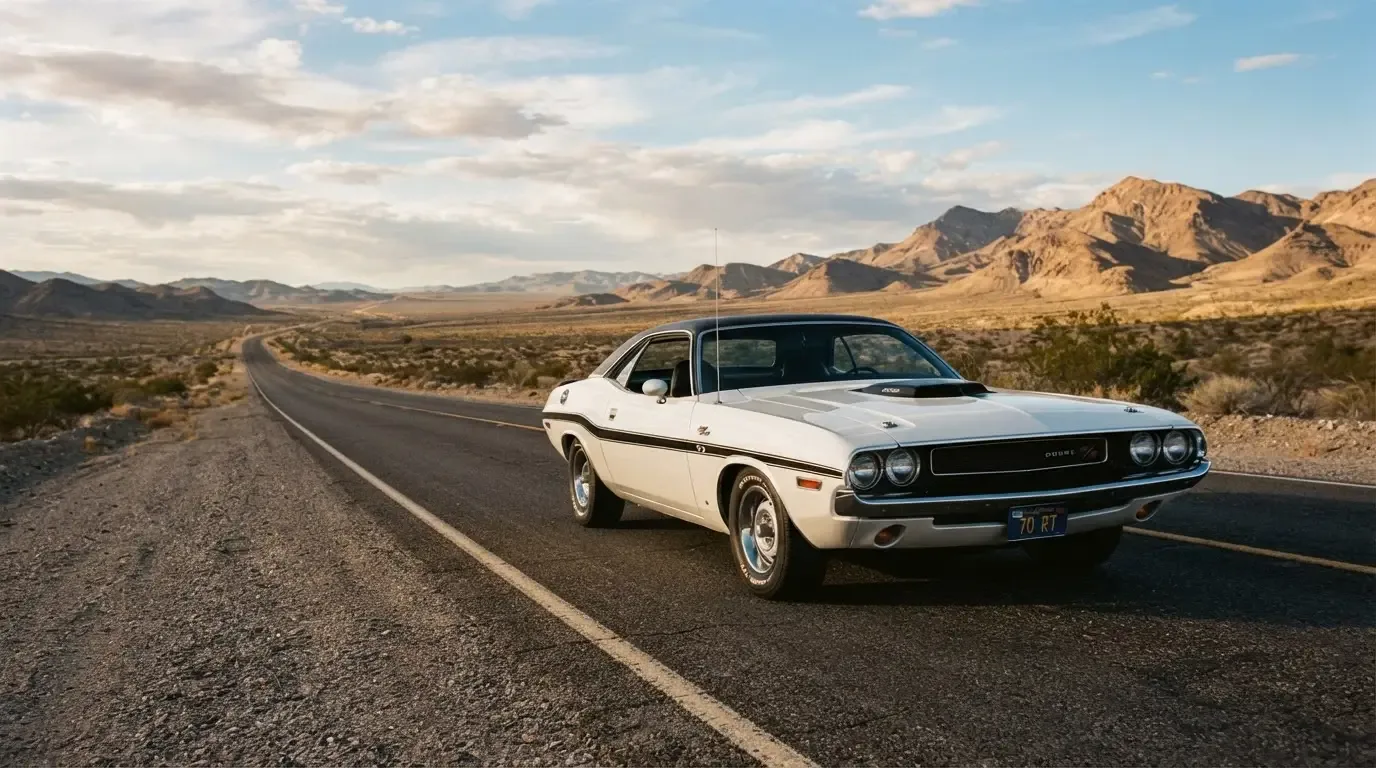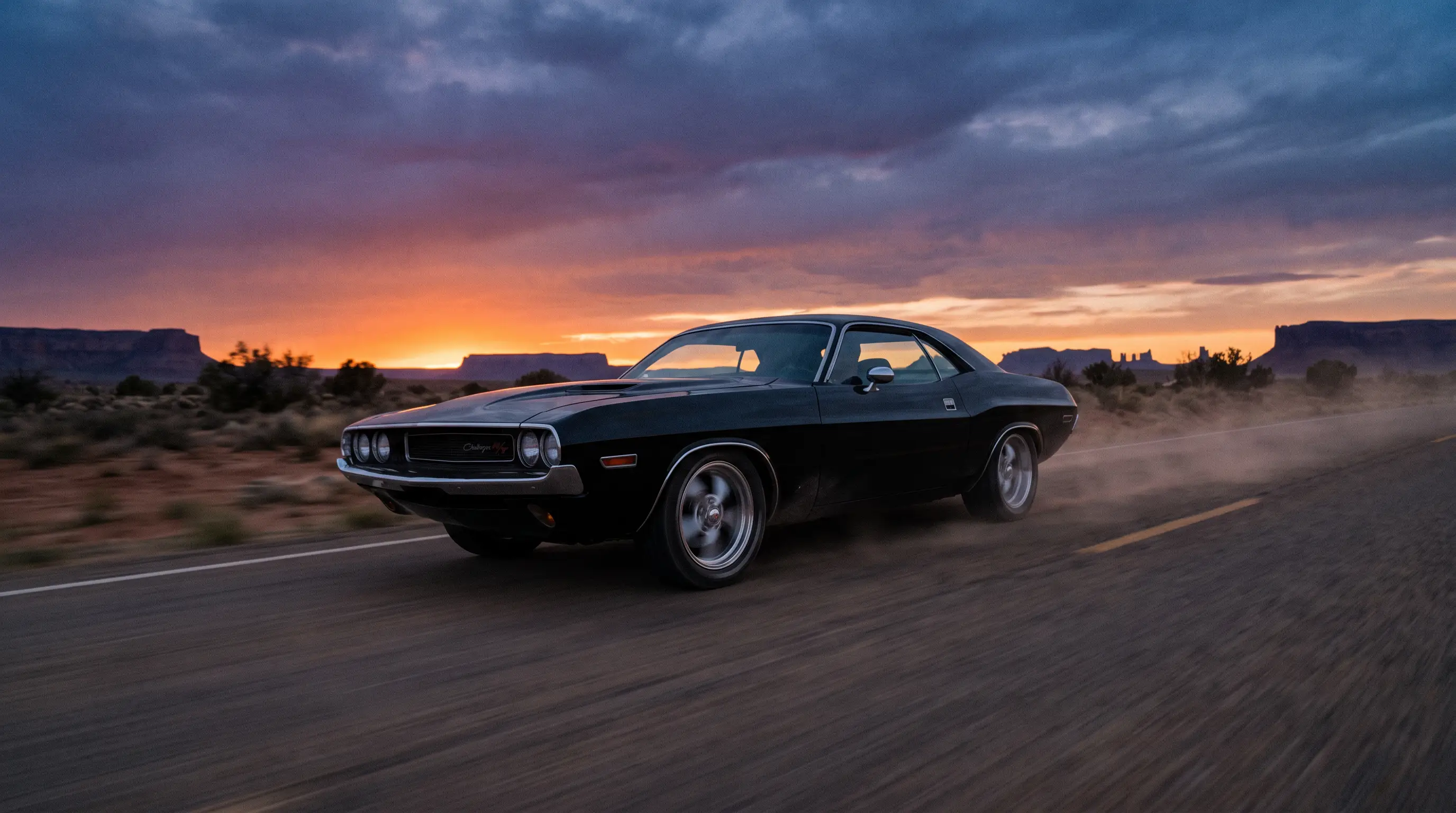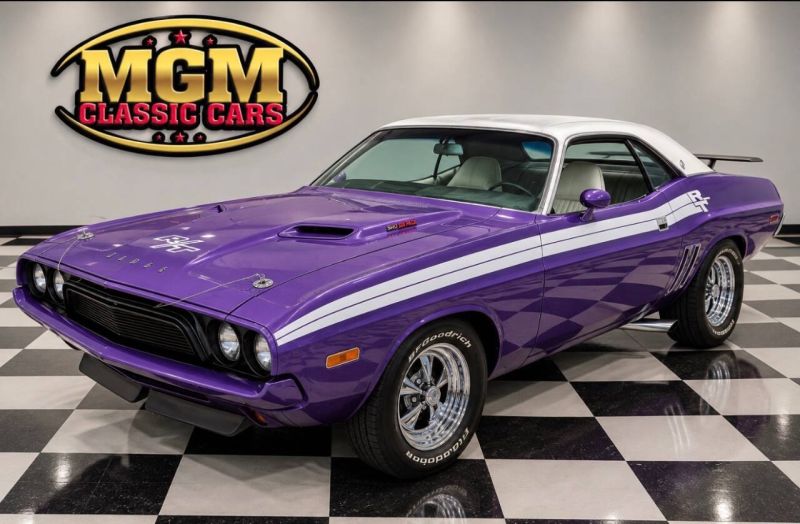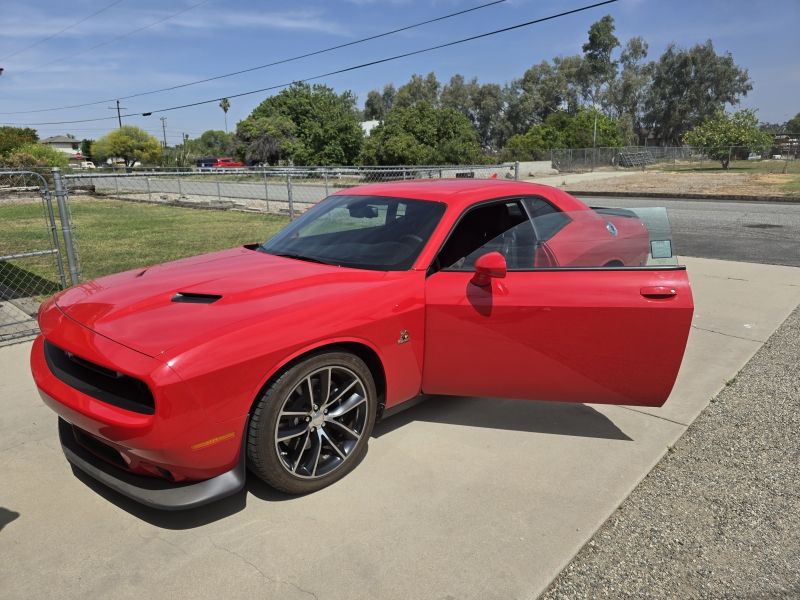
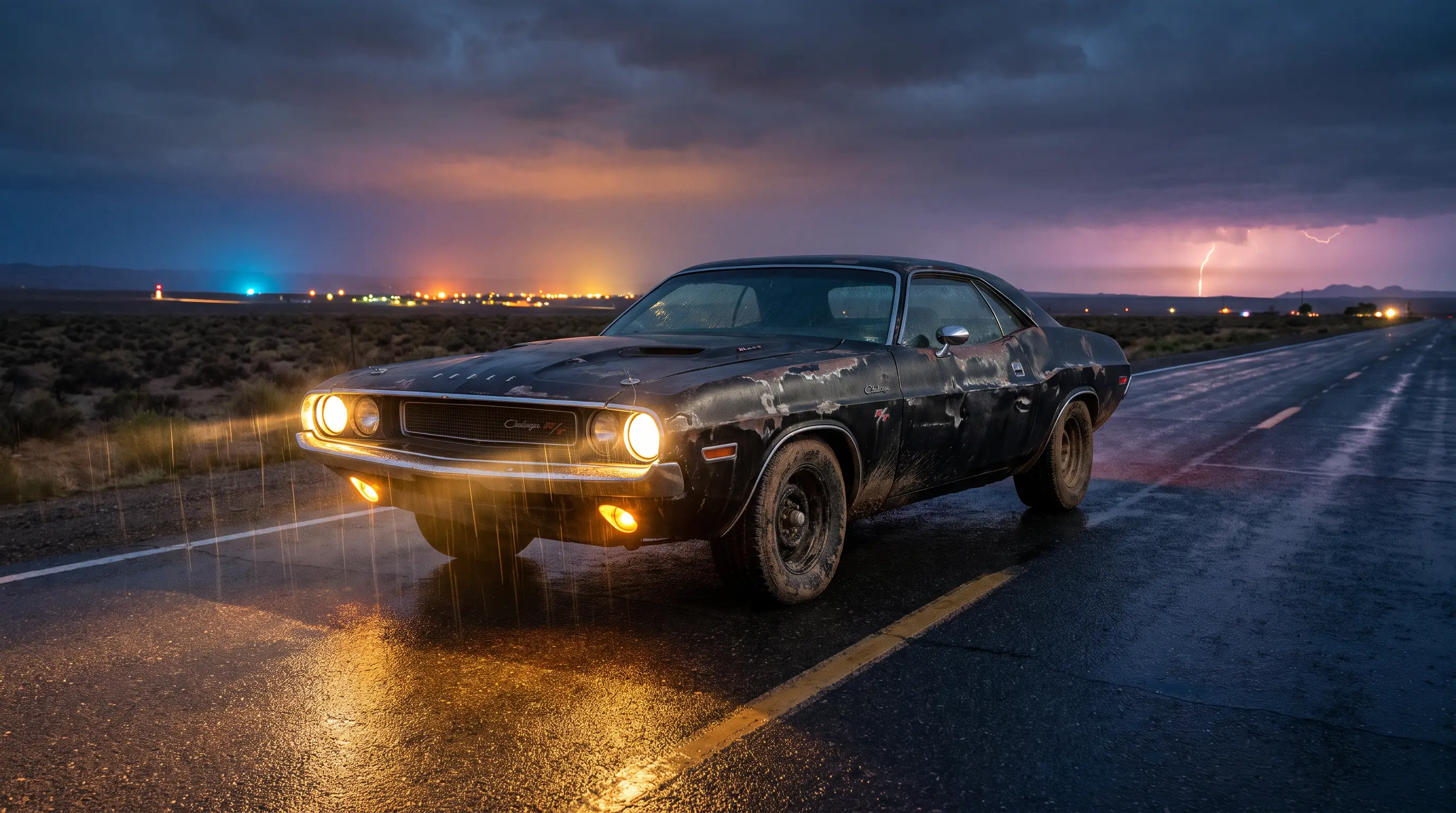
A 1969 Dodge Charger R/T does not usually get billed above the actor holding its wheel, but that is what happened in 2011. The drive angry gas station sequence, a car chase filmed mostly through a moving muscle car while its driver refuels at a gas pump without ever stopping the vehicle, is the reason a lot of younger fans first noticed Nicolas Cage's screen car at all. Cage plays a dead man out for revenge, and the car does half his acting for him. Worth noting up front for anyone searching this topic: Drive Angry's featured muscle car is a Dodge Charger, not a Challenger, even though both cars share a Mopar pedigree and a similar screen reputation.
The car nobody expected to headline
By 2011 the classic Challenger had already logged time in Vanishing Point, in Death Proof, in a string of lesser chase pictures, and that reputation is part of why muscle car fans noticed Drive Angry at all when it arrived. Drive Angry itself put a 1969 Dodge Charger R/T at the center of an action sequence built entirely around the car's mechanical limits rather than around a stunt double actor's face. The now famous refueling gag, where Cage's character John Milton drives through a gas station, grabs a hose, and keeps the car rolling while it fills, was shot largely as a practical stunt, with the car kept rolling at a crawl by a hidden low driver while a rigged fuel hose stayed connected, rather than being built from a green screen trick. Whatever the exact rig involved, audiences remembered the car before they remembered the plot.
The Charger used in the film was dressed to look weathered rather than showroom fresh. Chipped paint, a dented quarter panel, a general sense that the car had been through something before the story even started. That choice mattered. A pristine restoration would have looked wrong next to a character who has clawed his way out of hell to save his granddaughter. The car had to look like it had already paid a price.
Why an older B-body instead of anything newer
The production reached for a late 1960s Mopar rather than a modern muscle car, and that decision was not an accident. The flat, low nose of a car like this reads as menace in a way a newer performance car, for all its power, still cannot quite match, because the original was never designed with pedestrian safety regulations or a friendly face in mind. It is flatter, longer in the hood, meaner around the grille. For a movie built on a guy who drives through fire, literally, that silhouette does more storytelling in one establishing shot than three pages of dialogue.
There is also a practical reason stunt coordinators like an older unitized Mopar body. Chrysler's late 1960s B-body and E-body cars share a simple, heavy steel unibody structure that tolerates the kind of abuse a chase sequence demands better than newer unibodies with more sensors and more crumple engineering built in. A production can cage a car like that, roll it, drag it, and know roughly how it will behave, and that same durability is part of why the 1970 through 1974 Challenger has held up so well in its own decades of screen work.
The Milton character and the muscle car myth
John Milton is not a good man in Drive Angry. He is a father who failed, then a dead man clawing back into the world for one more chance. Giving that character a battered muscle car instead of a clean sports car ties him to a long line of screen antiheroes who get judged by their machine before anyone reads their file. Kowalski's Challenger did it first in Vanishing Point. Milton's Charger does it decades later, older and angrier, and the two cars sit in the same family tree of morally ambiguous Mopar leads even though they are different models.
What the film did for classic muscle car interest
Enthusiast forums saw a bump in interest across Mopar muscle cars after the film's release, the kind of secondary bump that follows almost any film with a recognizable muscle car in a lead role. It was not a Bullitt sized moment, Drive Angry was not that kind of hit, but for a niche crowd already circling classic Mopars, the film gave them one more reason to point at the car and say, that one, right there. You can read the full story on how the Challenger built its own screen reputation across five decades, a related but separate lineage from the car featured in this film.
Neither car's price on the collector market spiked the way a Bullitt Mustang's did after its own movie exposure, but a well shot chase scene keeps a body style's silhouette in front of a generation that had never seen Vanishing Point. That matters for cars whose factory production numbers were never huge to begin with.
"You put a beat up muscle car on screen next to a guy who just crawled out of hell, and nobody in the theater asks why it's not a new car. The old body just fits the part."
- Mike Sullivan
Buying into the reputation today
None of this means a buyer should pay a premium because a car looks like a movie prop. It means the classic Mopar body style, whether Challenger or Charger, has earned a second wind of cultural relevance outside the collector world that already knew its history. For someone who wants the Challenger's specific shape without the myth tax, the R/T and the base Challenger both carry that same profile, and both show up regularly among people who browse classic Challenger listings looking for a driver rather than a museum piece.
A car bought for looks still needs the same inspection a car bought for numbers matching provenance gets. Rust in the trunk floor, torsion bar mounts, and the usual unibody trouble spots do not care whether the seller mentions a movie in the ad copy. Check the car the same way regardless of what got you interested in it.
How the stunt team actually pulled it off
Stunt driving on a moving muscle car through a gas station is not the kind of thing you improvise on the day. The crew built a modified fuel line rig that let the hose stay connected to the nozzle while the car crept along at a crawl, with a driver hidden low in the frame keeping the car dead straight through the pumps. Get the angle wrong by a few degrees and the whole gag falls apart, either the hose rips free early or the car clips a pump island. The fact that it reads as effortless on screen is the actual achievement, because effortless stunt work is usually the most rehearsed kind.
Cage himself did a portion of the driving in wider shots, with a professional stunt driver handling the tighter, more dangerous work. That split is standard for a production this size, and it is worth knowing before anyone assumes an actor spent a week learning to heel toe shift a big block Mopar. The car took the abuse either way, and by the time filming wrapped the Charger used for the roughest sequences had earned every scratch already painted onto it before day one.
The lasting image
Ten years on, Drive Angry is a mid tier action picture that most casual moviegoers have half forgotten. The gas station scene still circulates on its own, clipped and shared, because it is a genuinely well built piece of stunt driving built around a genuinely mean looking car. That is the whole trick behind putting a battered Mopar in a movie like this. The car does not need lines of dialogue. It just needs to look like it means it, and a well cast muscle car never has trouble with that part of the job.