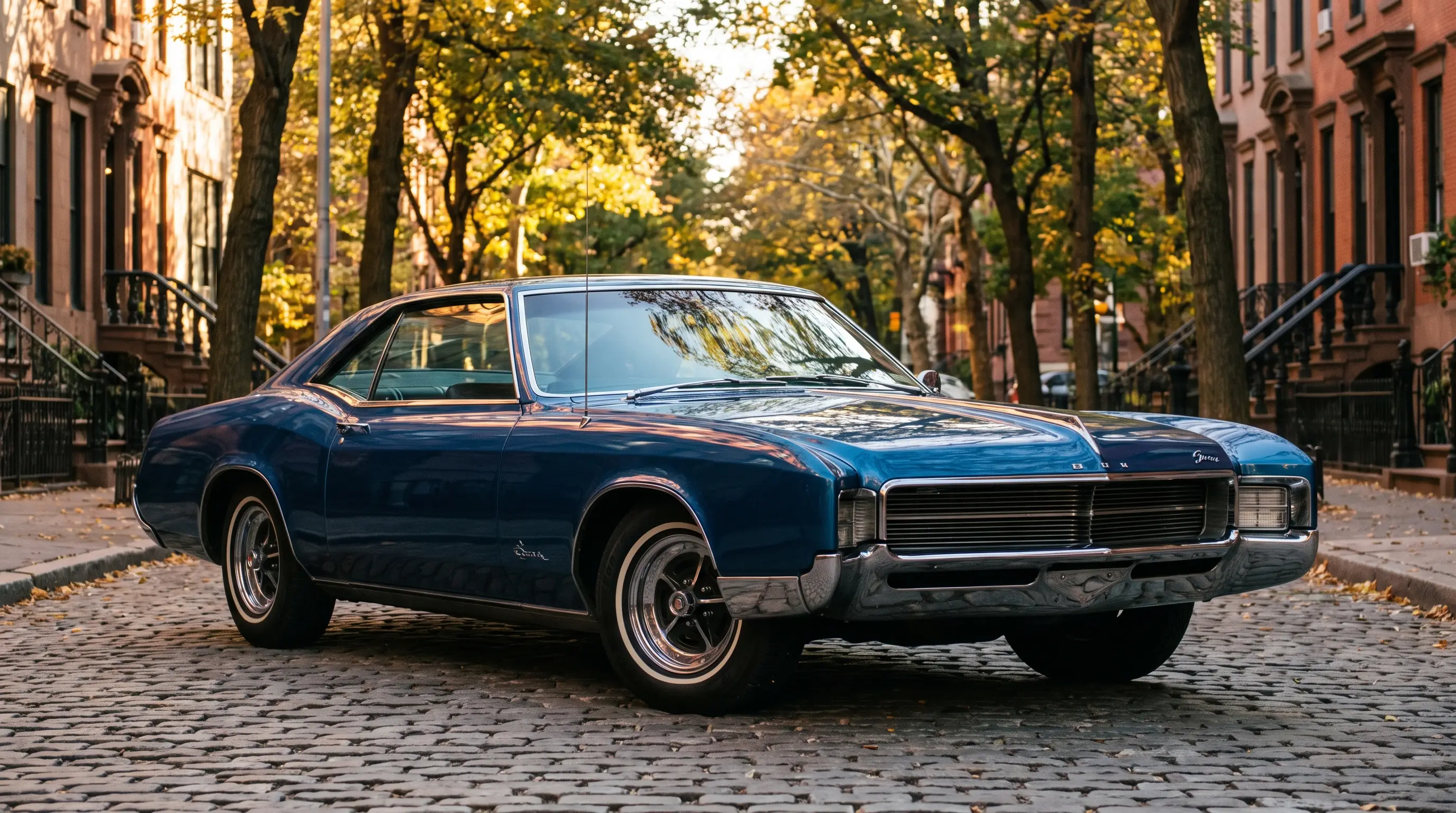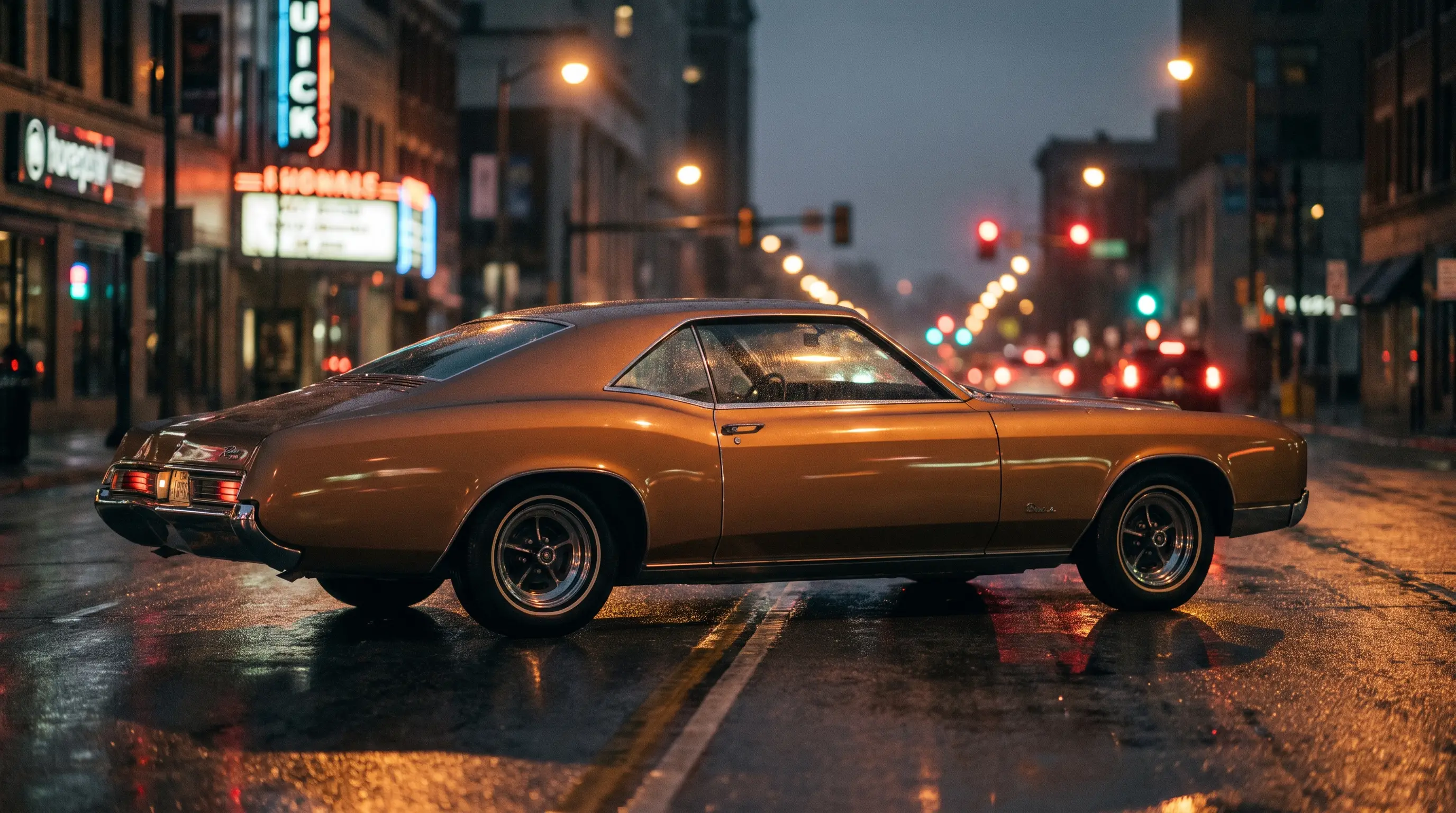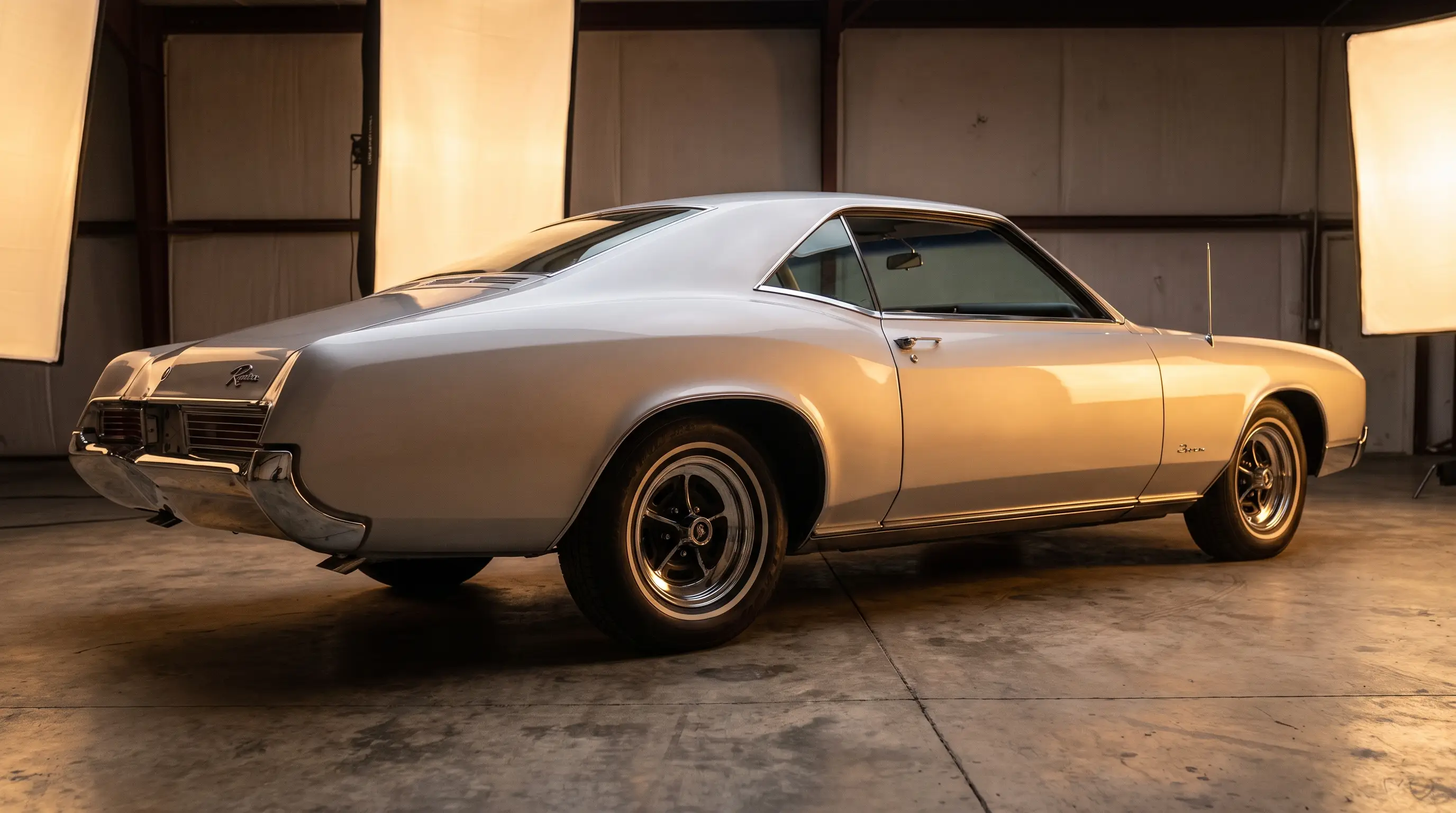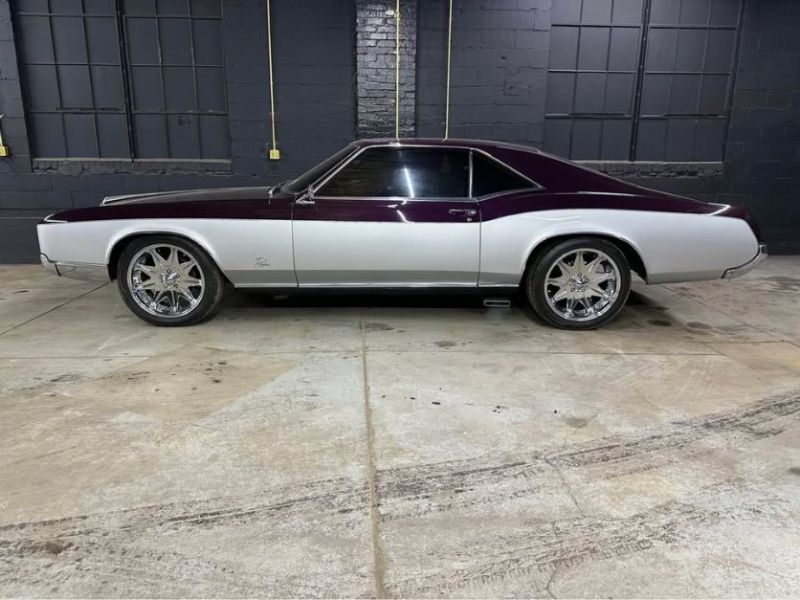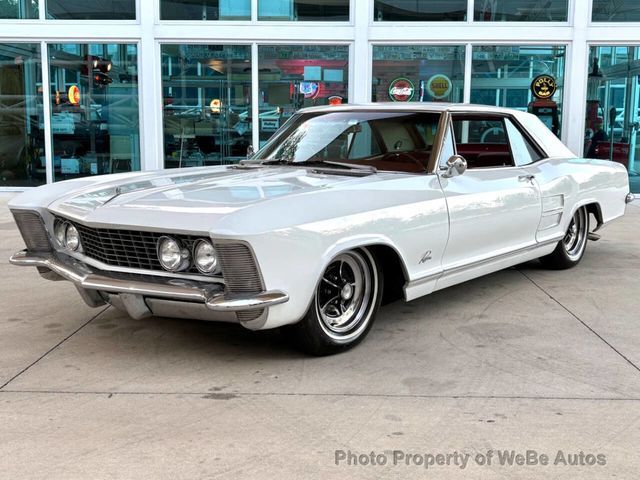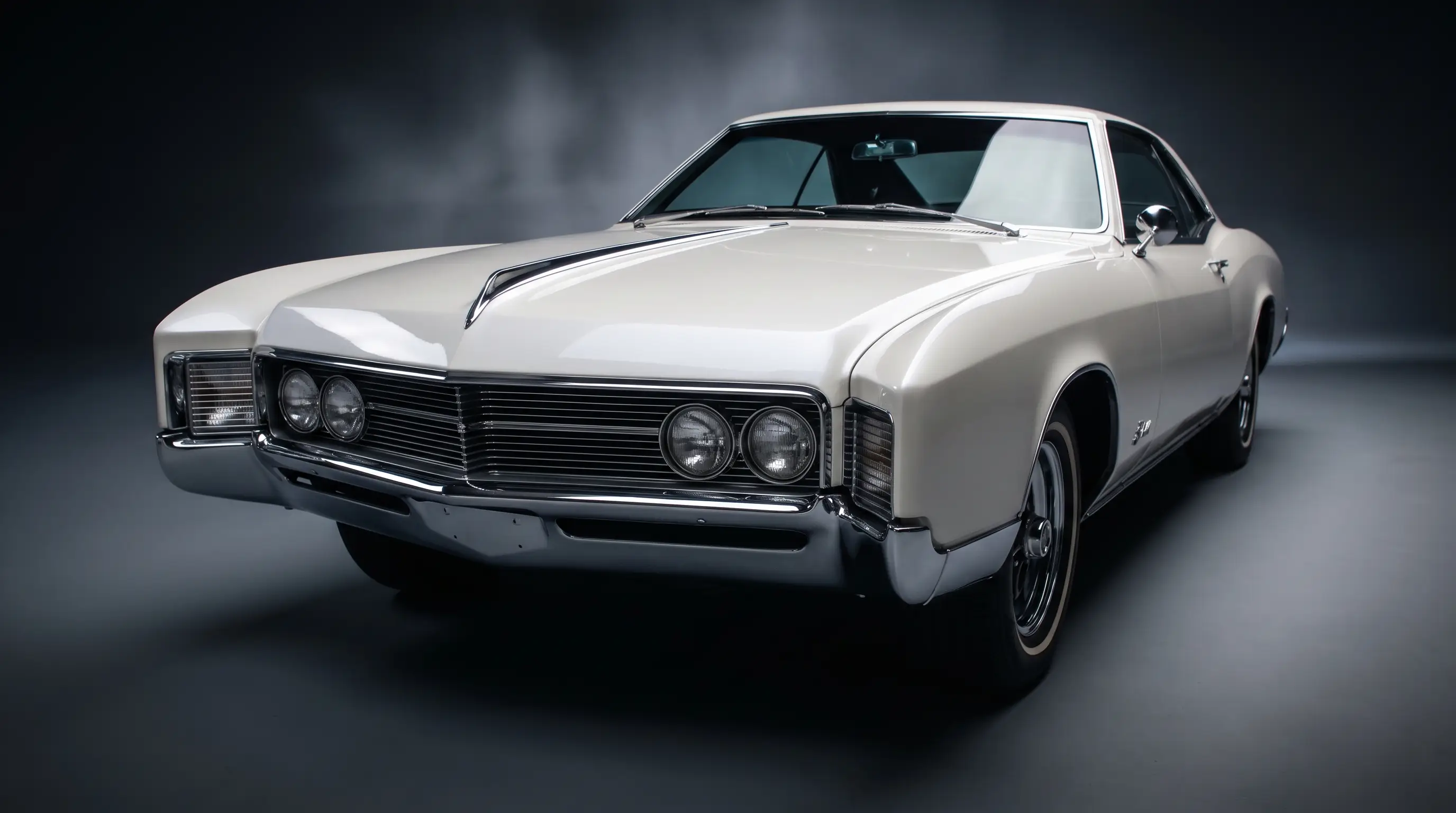
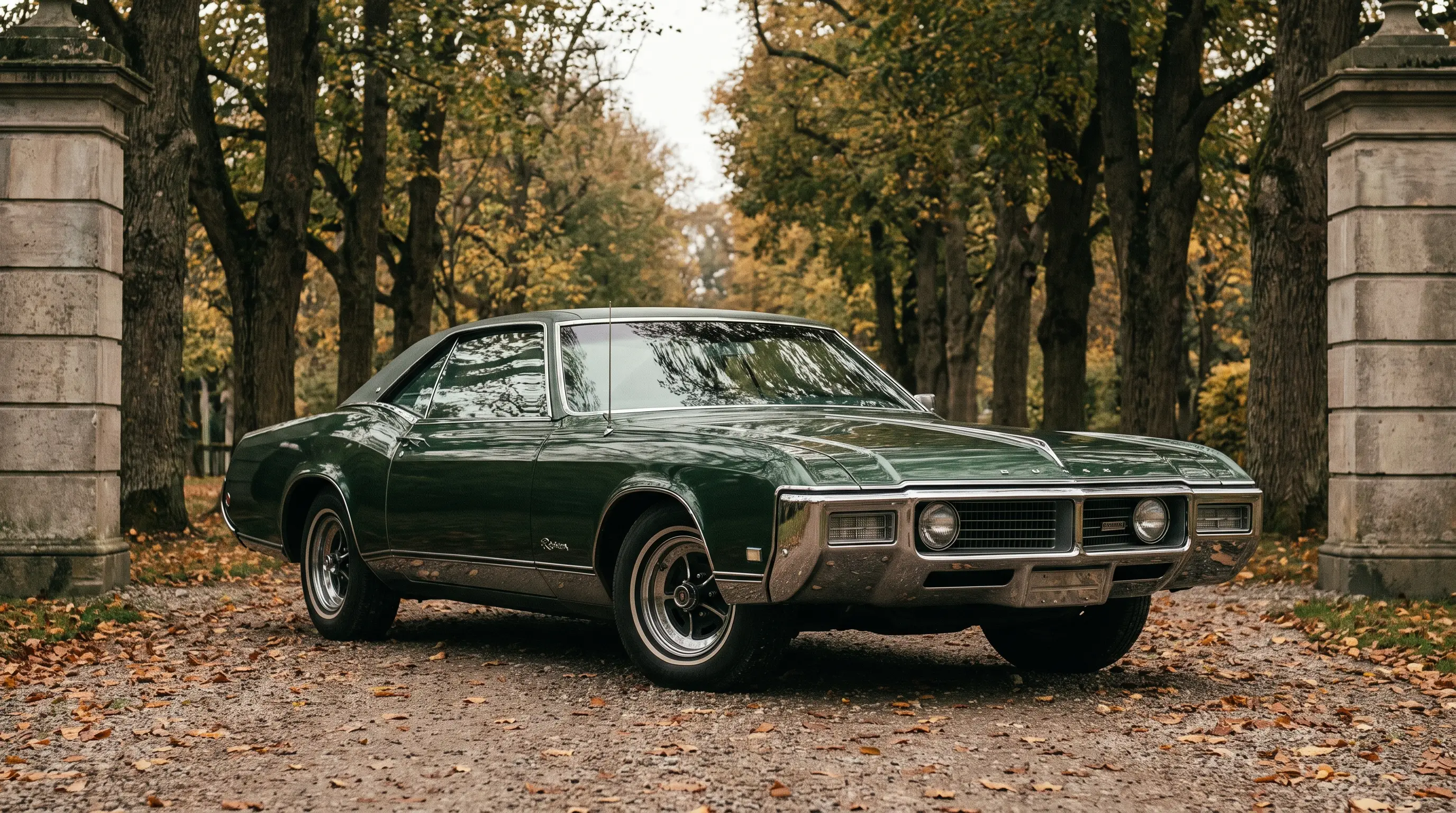
The Buick Riviera 1966 70 generation guide begins with a simple fact: Buick did not tweak the original Riviera for its second act, it replaced it. The 1963-65 car had been a tight, razor-edged two-door built to answer Ford's Thunderbird on Buick's own terms. For 1966, General Motors gave the Riviera a new body, a new platform partnership, and a new visual language, and the result carried the nameplate through 1970 as one of the most confident personal luxury cars Detroit built in that decade.
This is the middle chapter of the Riviera story, bracketed by the founding 1963 car on one side and the swoopy boat-tail 1971-73 cars on the other. It gets less romantic press than either bookend, which is a mistake. The second generation is where Buick figured out how to make the Riviera bigger, more powerful, and more distinctive without losing the clean-sheet confidence that made the original work. For the full account of how the car got here, our complete history covers the 1966 redesign in detail.
A new platform, a new studio approach
The 1966 Riviera rode on GM's E-body architecture, the same basic platform underpinning the Oldsmobile Toronado that launched the same year and, from 1967, the Cadillac Eldorado. That shared engineering made sense on a balance sheet. Buick still kept the Riviera rear-wheel drive while Oldsmobile and later Cadillac went front-wheel drive with their versions, which meant the Riviera's driving character stayed closer to a conventional American coupe even as its silhouette grew more dramatic.
Bill Mitchell's design studio pushed the second-generation Riviera toward a longer, lower stance with a fastback roofline that curved down into the rear deck in one continuous sweep. The car grew a couple of inches longer overall than the 1965 model while keeping the same 119 inch wheelbase, giving stylists a bit more sheet metal to work with even without a longer chassis underneath. The overall effect read less like a coupe wearing a formal roof and more like a single sculpted shape, a shift that mattered to buyers who cross-shopped the Riviera against European grand tourers as much as against Detroit rivals.
Engines and running gear across five model years
Buick's big-block V8 grew through the generation rather than staying fixed. The 1966 and 1967 Riviera used a 425 cubic inch V8, with the standard four-barrel version and an optional dual-quad setup for buyers who wanted the extra pull. For 1967 the block was reworked and bored out to 430 cubic inches, a displacement that carried through 1968 and 1969. The final model year, 1970, brought Buick's new 455 cubic inch V8, the largest engine ever fitted to a production Riviera up to that point, rated at 370 hp gross (245 hp net) in factory literature.
| Model year | Standard V8 | Approx. rated output | Notable change |
|---|---|---|---|
| 1966 | 425 cid | 340 hp standard, 360 hp with GS dual-quad option | All-new fastback body, E-body platform shared with Toronado |
| 1967 | 430 cid | 360 hp | Displacement increase, Eldorado joins the E-body family |
| 1968 | 430 cid | 360 hp | Concealed headlamps return, revised grille |
| 1969 | 430 cid | 360 hp | Minor trim and interior updates |
| 1970 | 455 cid | 370 hp | Largest engine of the generation, final year before boat-tail redesign |
Transmission choice stayed simple across the run. Buick's three-speed Super Turbine 400 automatic was the transmission nearly every buyer chose, and a manual was never seriously offered on the Riviera in this era. That consistency meant the driving experience across 1966 through 1970 changed less than the sheet metal did. What buyers felt from behind the wheel was more torque every couple of years, delivered the same relaxed way.
The front end kept changing its mind
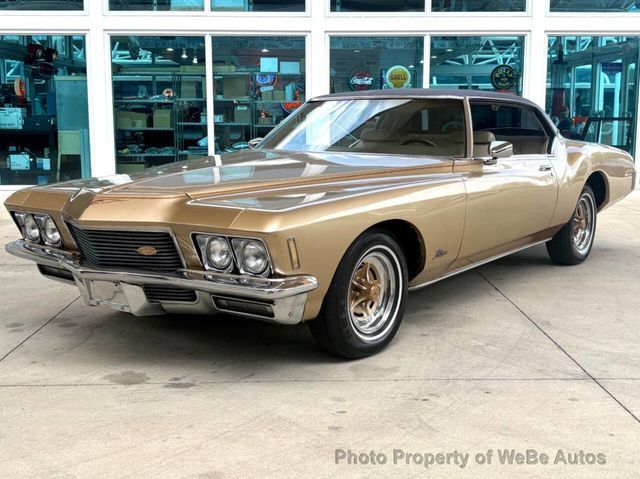
Few details tell the second generation's story as well as the headlights. The 1966 and 1967 cars ran exposed quad headlamps set into a crosshatch grille, a deliberate departure from the concealed clamshell lamps that had defined the 1965 model. Buick brought hidden headlamps back for 1968, tucking them behind vacuum-operated doors in a revised nose, and kept that arrangement through the end of the run in 1970. That back-and-forth is worth its own read, since the reasoning behind both changes says a lot about how GM's stylists were trying to balance cost, manufacturing complexity, and visual drama year to year.
The Gran Sport option added muscle to the manners
Buick offered a Gran Sport package on the Riviera starting with the 1965 model and carried it into the second generation, pairing the dual-quad 425 (and later 430) V8 with a Positraction rear end, stiffer springs, and a firmer anti-roll bar setup. It was never marketed as a drag strip weapon the way the GTO or Chevelle SS were. The Riviera GS was aimed at a buyer who wanted a genuinely quick car that still looked and rode like an executive's coupe, and that positioning is a big part of why the Riviera occupies its own lane among collectors today rather than getting lumped in with muscle car pricing.
Inside the cabin, comfort took priority over gadgetry
Buick kept the Riviera's interior focused on comfort rather than the cluster of gauges some rivals used to sell a sporting image. Bucket seats remained standard through the generation, with a center console available for buyers who wanted the full personal luxury layout, and a bench seat option stayed on the order form for those who preferred to seat three across. Simulated wood trim on the dash and door panels grew more prominent as the years went on, and Buick added extra sound insulation with each facelift, a choice that fit a car meant to cruise a boulevard rather than lap a track.
Options followed the same logic. Power windows, power door locks, and a tilt steering wheel were all available across the run, and air conditioning take rates climbed steadily as the 1960s wore on. None of this made the Riviera unusual among its direct competitors, but it did reinforce what the car was for. Buick never tried to out-gadget the Thunderbird or the Eldorado on paper. It aimed for a cabin that felt substantial and quiet, and by most contemporary road test accounts it succeeded.
Where the second generation sits with collectors now
Values for 1966-70 Rivieras trail the boat-tail cars in headline auction results but reward buyers who care about drivability and parts availability over outright design drama. Clean, numbers-matching GS cars command the strongest premiums, and 1966 models get a bump for being the first year of the fastback body. Documentation matters more than most owners expect going in, since GS-optioned cars were never a large share of total production and fakes exist. Anyone shopping the era should start with a car's build sheet before falling for the styling, and those ready to look at real examples can find a classic Riviera currently listed for sale.
Parts support is another practical reason the second generation appeals to first-time Riviera buyers. Because the 425, 430, and 455 V8s share so much architecture with other Buick big-blocks used across the Wildcat, Electra, and Estate wagon lines, mechanical rebuilds rarely require the exotic sourcing that first-gen or boat-tail owners sometimes face. Trim pieces are the harder chase, particularly the concealed headlamp mechanisms on 1968-70 cars and generation-specific brightwork, but a buyer entering this hobby through a 1966-70 Riviera has an easier road than most personal luxury car owners of the same era.
"People assume the second generation is the transition car between the famous ones, but it's the generation that actually taught Buick how to sell a big coupe as a piece of design rather than just a warmed-over sedan platform."
- Sarah Whitfield
Sources and notes
- Plutocrat Pony Car: The 1966-1970 Buick Riviera, Ate Up With Motor
- Introduction to the 1966-1970 Buick Riviera, HowStuffWorks
- Is The Buick 430 V8 A Big Block, And How Much Horsepower Did It Produce, SlashGear
- 1970 Buick Riviera GS Specs Review, Automobile Catalog
- Buick Riviera, Wikipedia
- Dual-Quad 425: 1966 Buick Riviera GS, Barn Finds