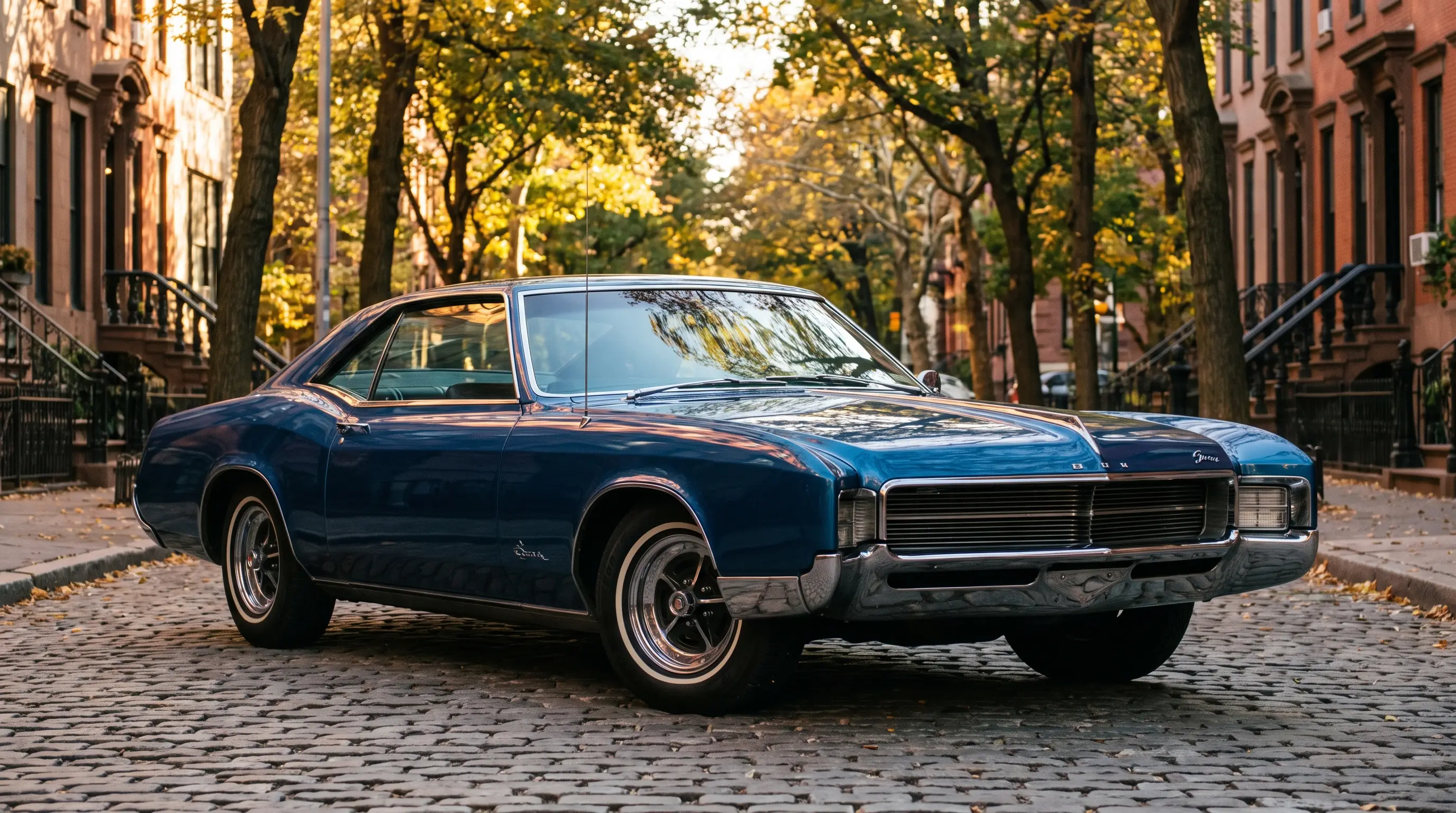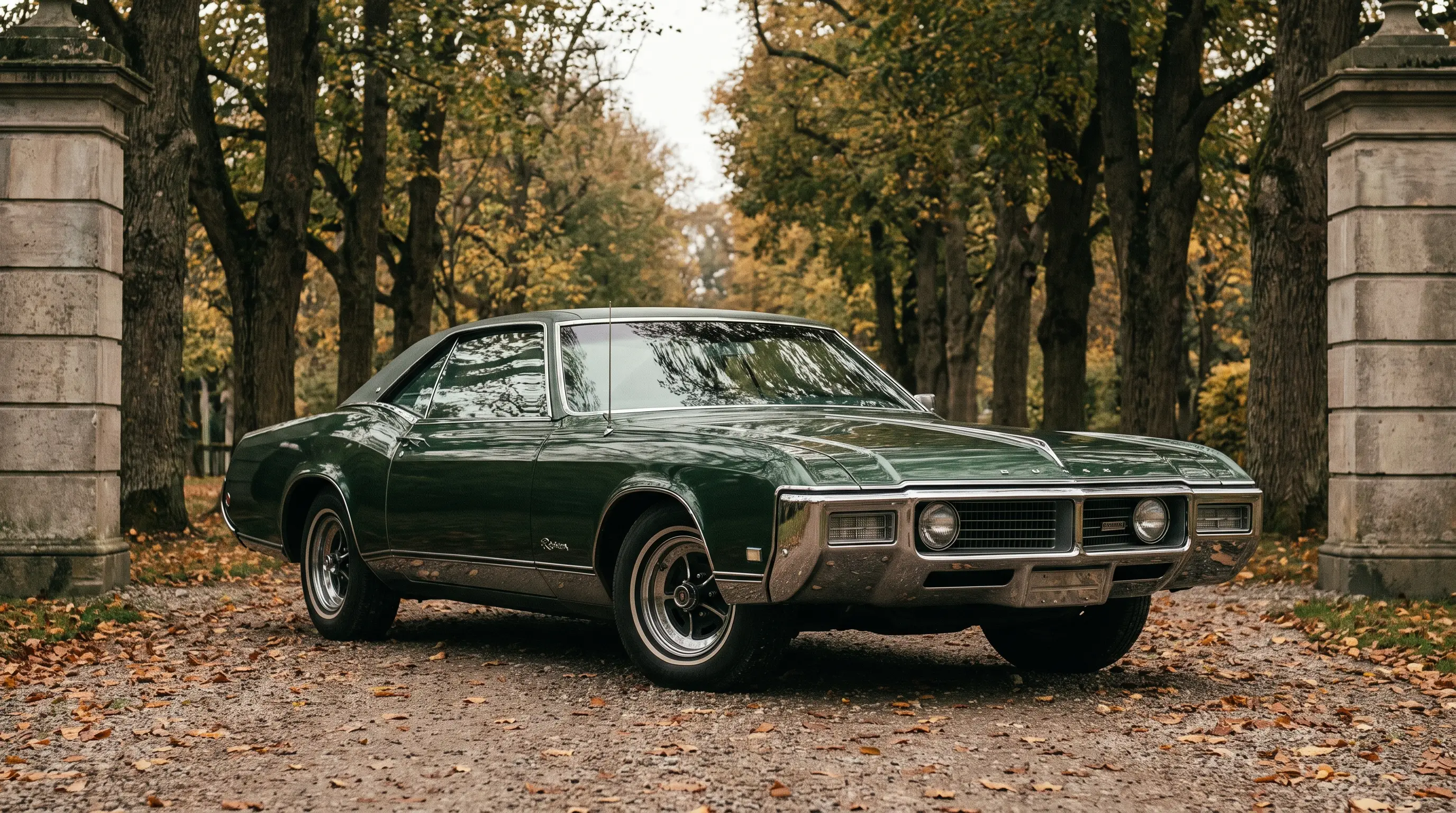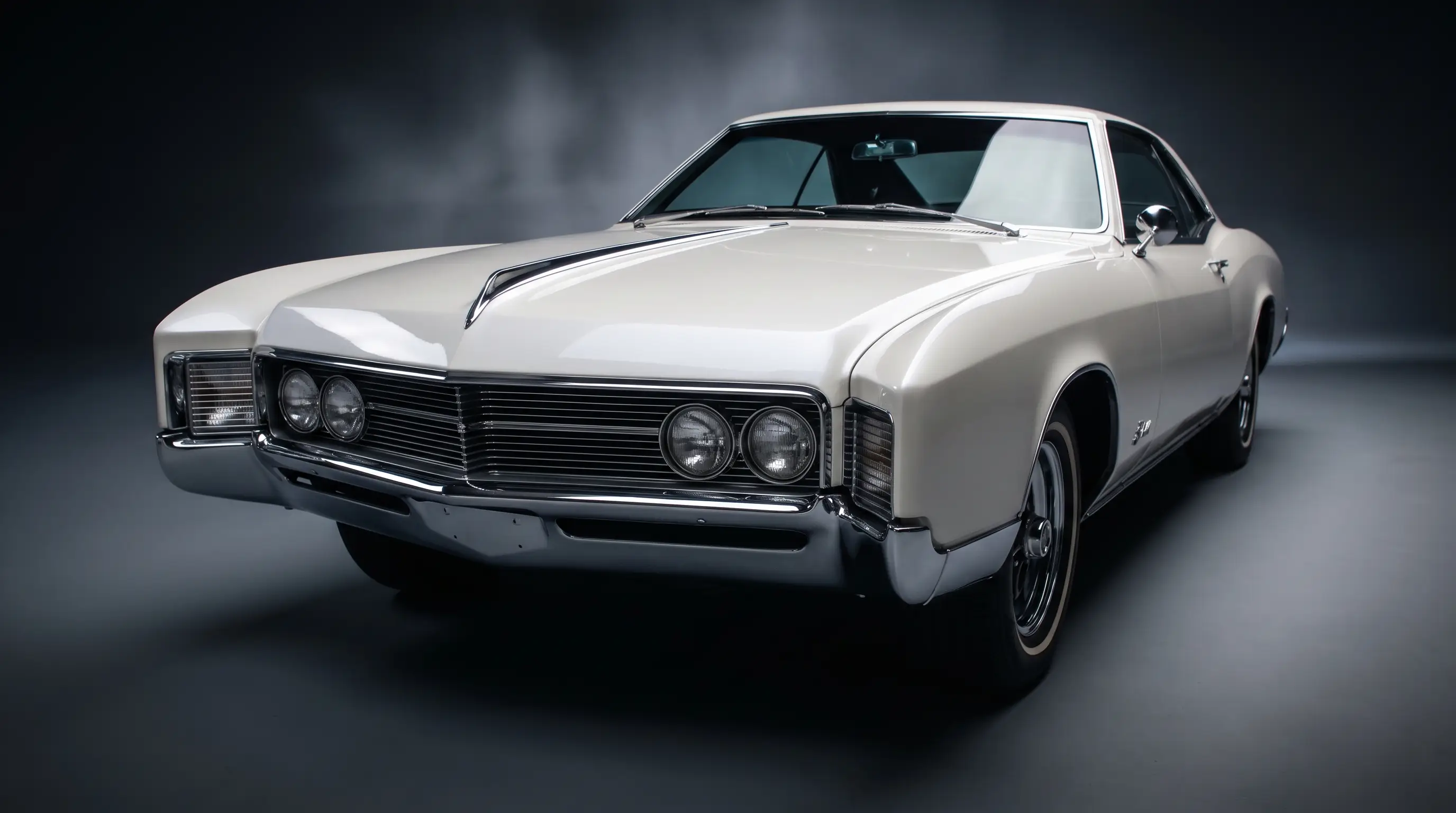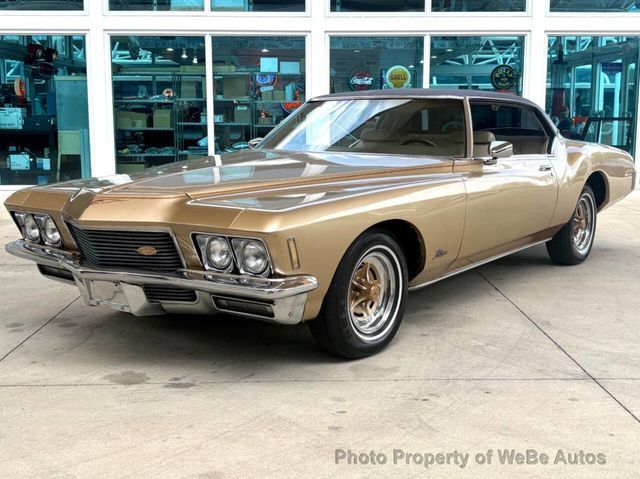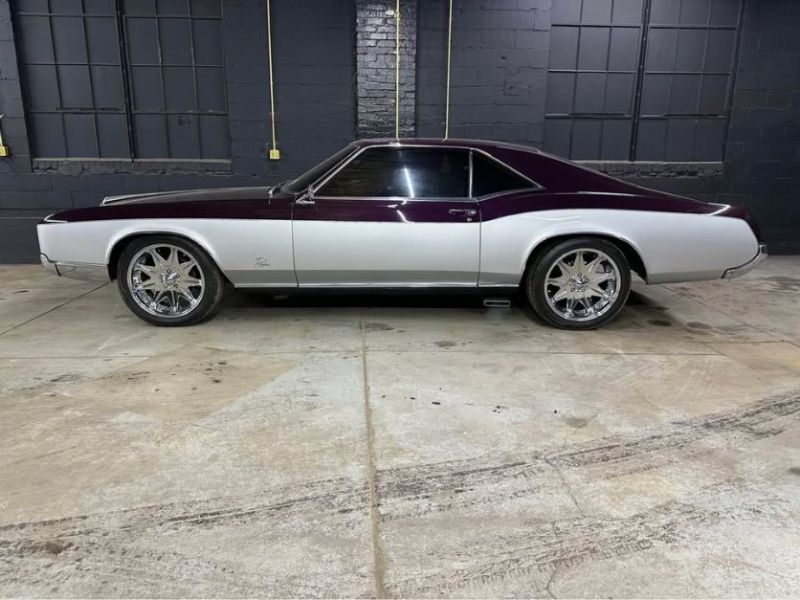
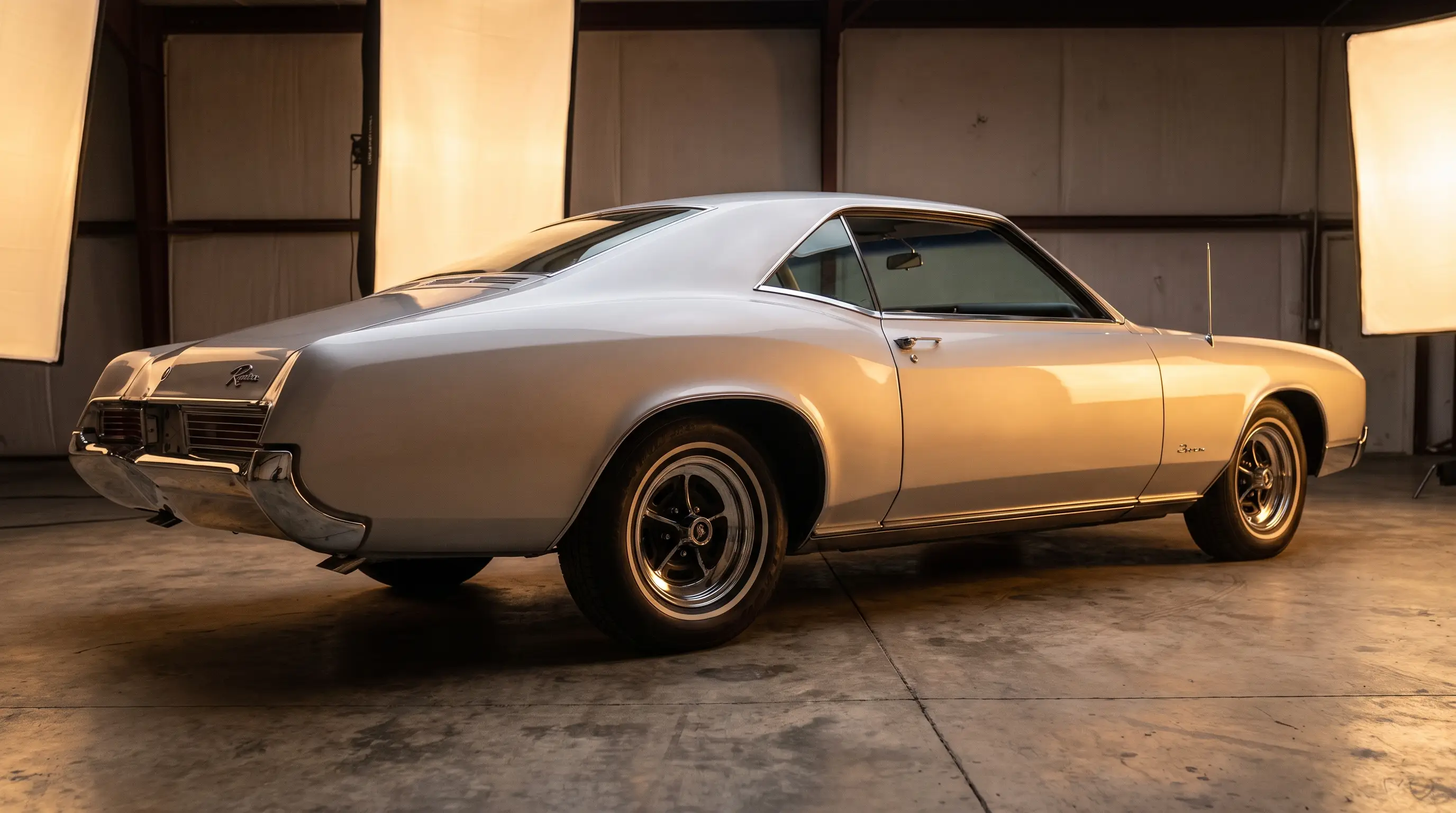
I have had my hands on a lot of sheet metal over the years, and the 1966 Buick Riviera fastback still stands out as one of the harder shapes to get right off a stamping press. That roofline does not break into separate surfaces the way a lot of 1960s coupes do. It runs from the windshield header to the tail in one continuous curve, and when a body man tells you a panel is "in one piece visually" even though it is bolted together from a dozen stampings, this car is what they mean.
Buick's stylists called it a fastback, and that is the honest word for it, but what makes the shape work is restraint. There is no add-on spoiler lip, no fake vent, no chrome spear breaking up the curve. The whole rear three-quarter view is one long, low sweep from the roof down into the deck lid, and that is a hard thing to fake once you have seen an original.
Why the roofline reads as one continuous shape
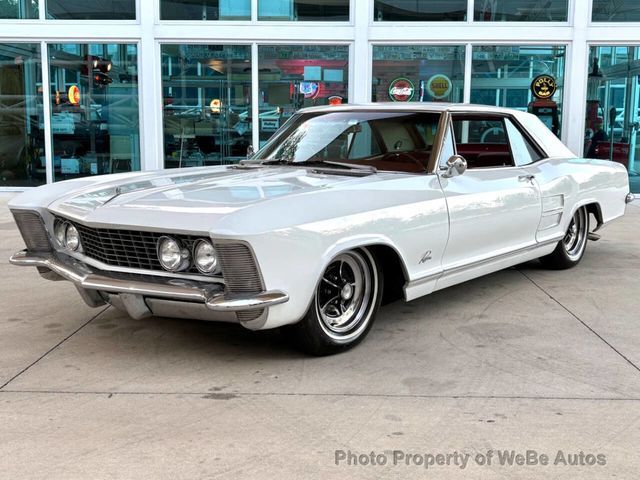
The trick is in the C-pillar. Instead of a formal, upright roof pillar the way the 1963-65 Riviera used, the 1966 car's pillar leans back and narrows as it goes, so your eye follows it straight into the rear deck instead of stopping at a hard edge. Get underneath a well-preserved original and you can see how much metal work went into making that transition look effortless. The rear window is nearly flush with the surrounding sheet metal, sunk into a frame that curves in two directions at once, and getting the reveal gaps consistent around that glass took real tooling precision from the factory. On a restored car, that is one of the first things I check, because if the gaps are wavy or too wide, somebody has replaced or refitted rear quarter panels without matching the original curvature. Read the background on how this redesign came together if you want the full story behind the shape.
The quarter panels are the hardest pieces to get right
The rear quarter panels on a 1966-70 Riviera carry almost all of that fastback curve, and they are compound-formed in a way that a lot of restoration shops underestimate. There is no flat section to hide a patch panel weld. A quarter that has been cut and pieced badly shows up immediately under raking light, because the curve breaks where it should flow. I have turned down cars at swap meets that looked clean from ten feet away and had visible ripples the moment I got a hand flat against the panel and sighted down it. Original, unmolested quarters are getting scarce, which is part of why rust-free examples from dry Western states carry a real premium over otherwise-comparable cars from the Rust Belt.
Paint code matching complicates things further. Buick ran a wide range of colors across the 1966-70 generation, and metallics in particular are notoriously hard to match panel to panel if a car has had partial repaints over the decades. A period-correct restoration means matching not just the color but the metallic flake size and the way the factory laid the paint down, which most home resprays get close on but rarely nail exactly. Buyers who cannot tell the difference between "close" and "correct" are exactly who a seller banking on a quick sale is hoping to find.
Trim and brightwork frame the shape without fighting it
Buick kept the chrome trim minimal on purpose. A single character line runs the length of the body, and the rocker panel trim is thin compared to some of Buick's other 1966 offerings. That restraint is deliberate, because heavy brightwork would have chopped up the fastback's long visual line into segments. Anyone who has seen a Riviera with aftermarket trim added, or missing factory trim replaced with the wrong-profile stock, knows immediately how much that single detail changes the read of the whole car. It is a small thing that separates a correct restoration from one that just looks close in photographs.
How the shape changed after 1966 without losing the idea
Buick did not freeze this body for five years and call it done. The basic fastback profile carried from 1966 through 1970, but the details around it moved every year or two, mostly in the nose and tail rather than the roofline itself. The core panel stampings for the roof, doors, and quarters stayed largely consistent across the run, which is good news for anyone sourcing parts, since a rust-free door skin off a 1968 will generally work on a 1966 with minor trim swaps. What changed was the jewelry around that shape, the grille texture, the taillight lenses, the way the rear bumper wrapped into the quarter panel. None of those updates touched the fundamental line that made the car work in the first place, which tells you Buick's design team knew exactly what they had and were not about to mess with it for the sake of an annual refresh.
That consistency is also why parts interchange gets talked about a lot at swap meets and in club newsletters. A shop doing a quarter panel repair on a 1966 will sometimes source a later-year panel and modify the trim mounting holes rather than wait months for a 1966-specific stamping to turn up. Purists argue about how much of that interchange is acceptable on a numbers-focused restoration, and reasonable people land in different places on it. What everyone agrees on is that the underlying curve has to be right regardless of which model year the sheet metal actually came from.
What I look for before I buy one
None of this is meant to scare buyers off. A straight, correct 1966-70 Riviera fastback is one of the more satisfying shapes from this era to own and to look at every day in a garage. It just rewards patience over impulse, the same way any car built around one continuous, hard-to-fake curve does. Worth a look too is how the front end of this same body evolved across the generation, since the nose treatment changed more than the profile did. When you are ready to go looking at real cars instead of just photographs, you can shop classic Riviera listings and start comparing panel gaps in person.
"You can tell a real one from a redone one with your hand before you ever look at the paperwork. Run your palm flat along that quarter panel. If it stops flowing anywhere, somebody's story about a rust-free car just got a lot shorter."
- Jim Vasquez