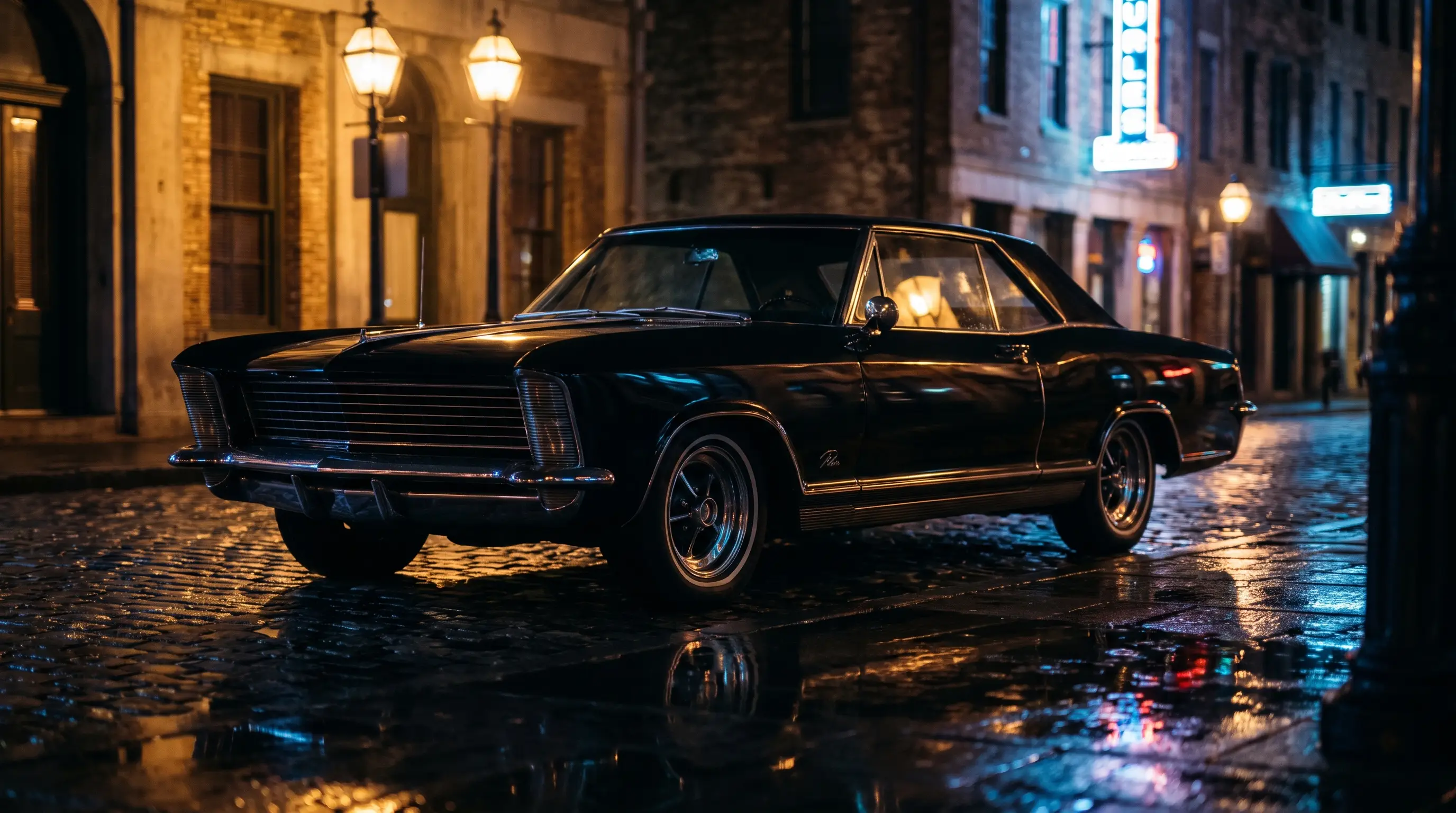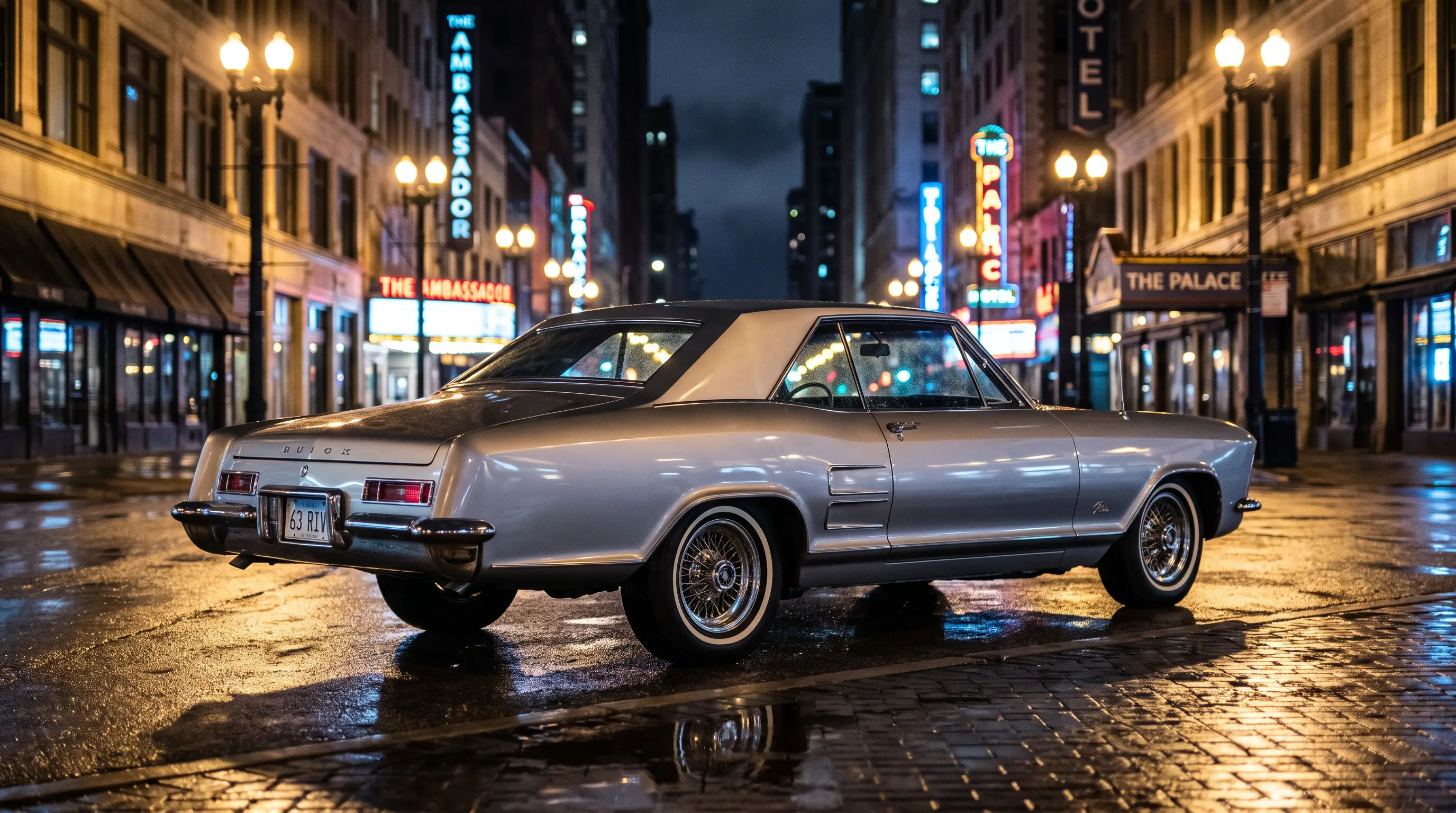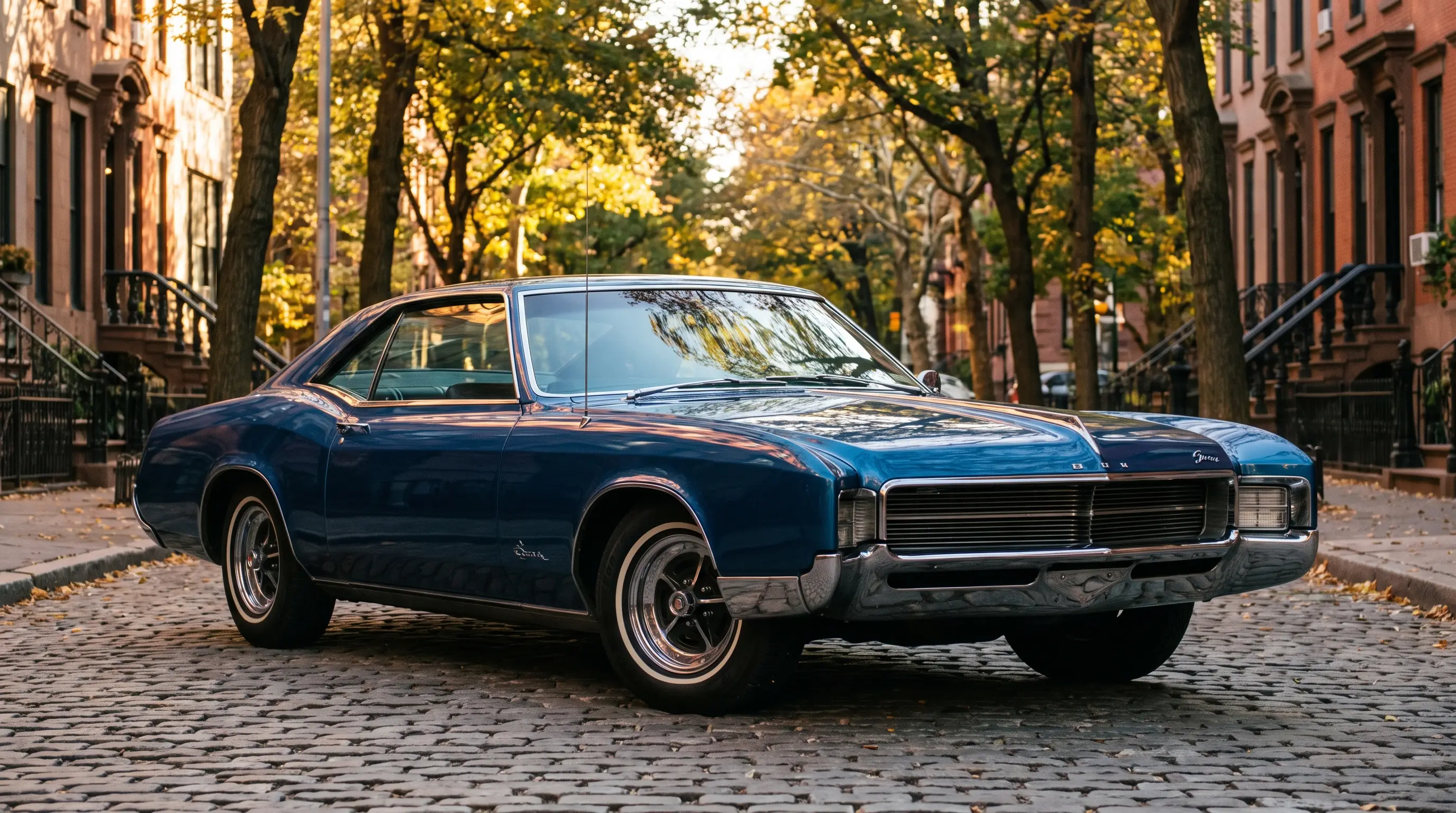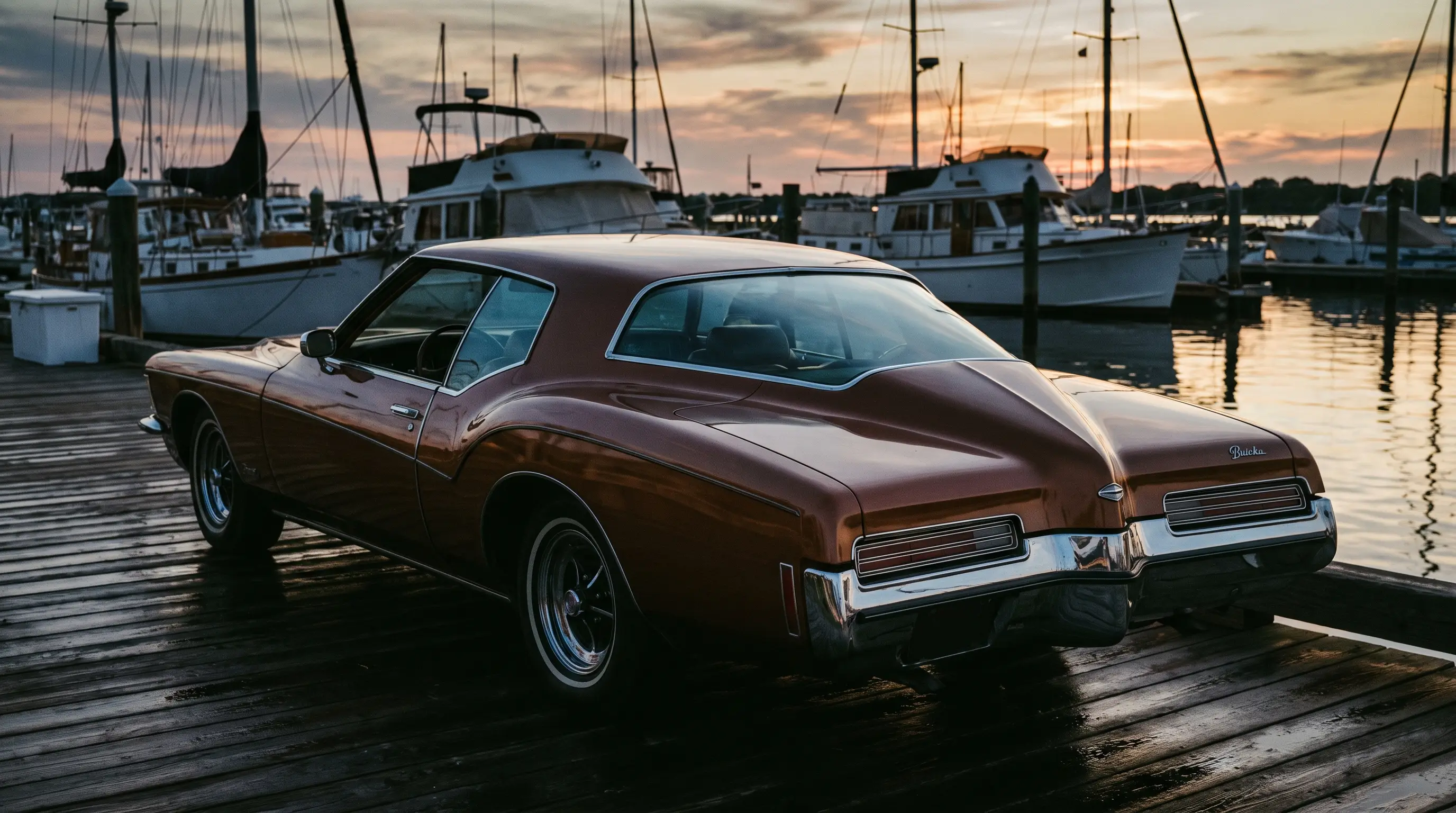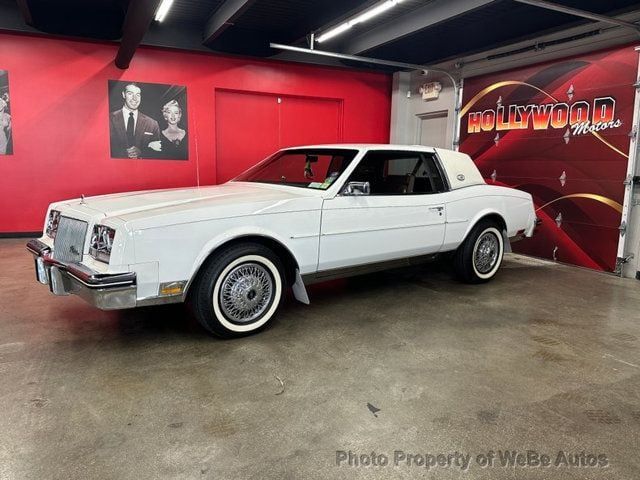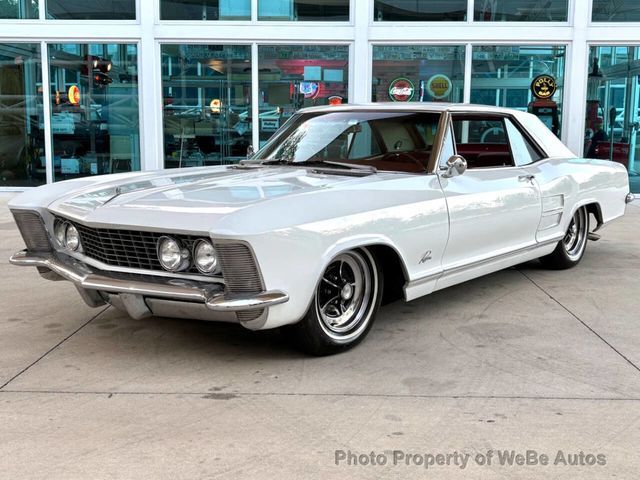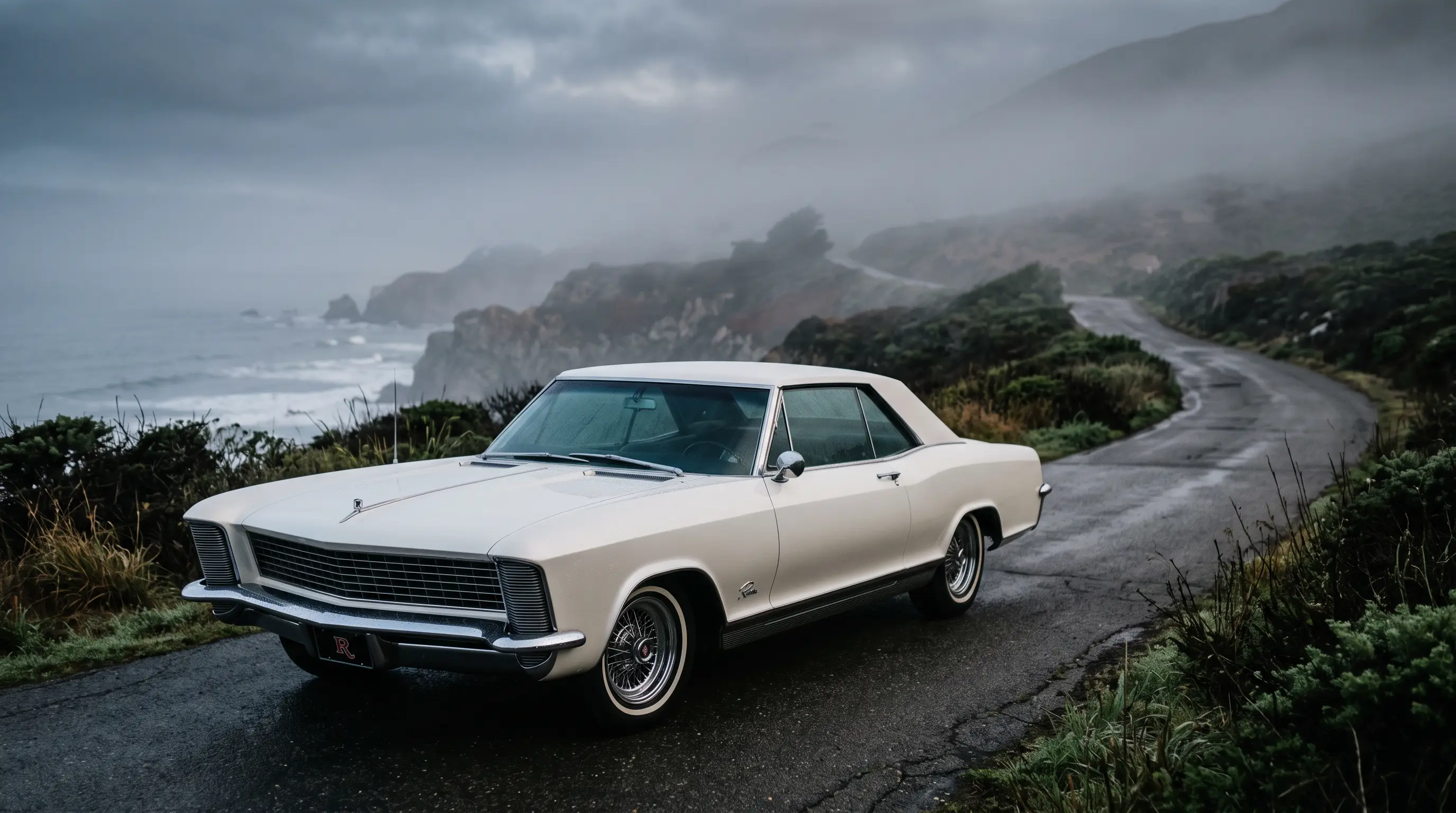
The story people love to tell starts on a wet night in London, with Bill Mitchell walking back from dinner and a custom-bodied coupe sliding past through the fog, its razor-sharp fenders catching the streetlight. Whether it happened exactly that way or got polished a little in the retelling, the shape that came out of it became the Buick Riviera, and the Riviera became the most desirable car Buick ever built. It arrived for 1963 as something Detroit had not quite seen before, a two-door that borrowed the presence of a European grand tourer and sold it at an American price. For the next decade it set the tone for what a personal-luxury coupe was supposed to be, and the cars from that run are the ones collectors still chase today.
What makes the Riviera worth an afternoon of your attention is that it kept reinventing itself. The car that debuted in 1963 looked nothing like the boat-tail of 1971, which looked nothing like the crisp downsized coupe of 1979, yet all of them carried the same idea: build something a person wanted for themselves, not for the family, not for the commute, but for the pleasure of owning it. This is the long version of that story, from the first knife-edge coupe to the personal-luxury cars that closed out the golden era.
A shape born in the fog
The Riviera began inside General Motors styling as a proposal that did not yet belong to anyone. Mitchell ran the studio, and Ned Nickles is the designer most closely tied to the production shape, the man whose pen gave the car its long hood, its short deck, and that single clean crease running the length of the body side. The clay model was shopped around the corporation as a shape looking for a home. The barroom version says it was drawn for Cadillac, rejected, and handed to Buick as a leftover. That is too tidy to be true. The more honest account is that GM built a division-neutral proposal and let the divisions make their case, and Buick, whose image had drifted toward the sensible and the safe by the early 1960s, needed it more than anyone and wanted it more loudly.
So Buick won it, and won it nearly finished. Most show cars lose their drama on the way to the assembly line, sanded down by cost and regulation until the production car is a rumor of the original. The Riviera lost almost none of it. The 1963 car on the street looked strikingly like the thing the studio had signed off on, with the razor-edge fenders Mitchell fell for still sharp and intact. That is a rare thing, and it is a large part of why the first car landed with such force.
It helped that the timing was right. By the early 1960s the Ford Thunderbird had already shown Detroit that a two-door built for one person could sell in real numbers, and Buick wanted a car that answered it without copying it. The Thunderbird had gone soft and formal by then. The Riviera came out sharp and athletic, and the contrast is the whole point. Buick did not try to build a better Thunderbird. It built the anti-Thunderbird, a car with the same personal-luxury mission and the opposite personality, and that clarity of purpose is why the first Riviera still reads as intentional rather than reactive.
The name Buick already owned
Here is the correction I find myself making at every cars-and-coffee where someone leans on a fender and calls the Riviera a name invented in 1963. It was not. Buick had used Riviera since 1949 as its label for a pillarless hardtop body, and the 1949 Roadmaster Riviera is generally recognized as one of the first mass-produced hardtops in the industry. So when the 1963 coupe launched, the word already carried more than a decade of Buick history. What changed in 1963 is that Riviera stopped being a body-style label pinned to other models and became a distinct car with its own identity and its own place in the lineup.
That matters when you read the old literature. A Riviera reference from the 1950s points at a hardtop roofline on a Roadmaster or a Special, while a Riviera reference from 1963 forward points at the coupe. Buick did not stumble into the name. It reached back into its own catalog for a word that already suggested something a cut above, and it handed that word to the car meant to prove the division could still make people look twice.
The first generation lays down the law
The 1963 Riviera rode on a cruciform frame and used frameless door glass, so with the windows down the side of the car opened up clean and uninterrupted. The standard engine was the 401 cubic inch Nailhead V8, rated at 325 horsepower, an overhead-valve engine known for its odd small vertical valves and its heavy low-speed torque. It was never a high-revving screamer and was never meant to be. It pulled hard off idle and cruised quietly, which suited a heavy luxury coupe perfectly. Buick announced a larger 425 cubic inch Nailhead as an option in December 1962, rated at 340 horsepower with a single four-barrel carburetor, though it arrived late in the model year and only about 2,601 of the 1963 cars got it.
Inside, the car made its personal-luxury pitch with bucket seats, a center console, and a driver-focused panel, the kind of cabin that told you the car was built for the person behind the wheel rather than the crowd in the back. Buick priced it around 4,333 dollars, above the ordinary Buick range but well under the imported grand tourers it was implicitly measured against. That price-to-image ratio was the whole strategy, and it worked. Buick held first-year output to roughly 40,000 units, choosing scarcity over volume to keep the car special.
| Specification | First-generation Buick Riviera, 1963 to 1965 |
|---|---|
| Body style | Two-door personal-luxury hardtop coupe |
| Standard engine | 401 cubic inch Nailhead V8, 325 hp |
| Optional engine | 425 cubic inch Nailhead V8, 340 hp with a single four-barrel for 1963; a dual four-barrel "Super Wildcat" version rated at 360 hp followed for 1964 to 1965 |
| Transmission | Twin Turbine automatic |
| Base price, 1963 | 4,333 dollars |
| 1963 production | About 40,000 units |
| Headlamps | Exposed for 1963 and 1964, hidden behind clamshell doors for 1965 |
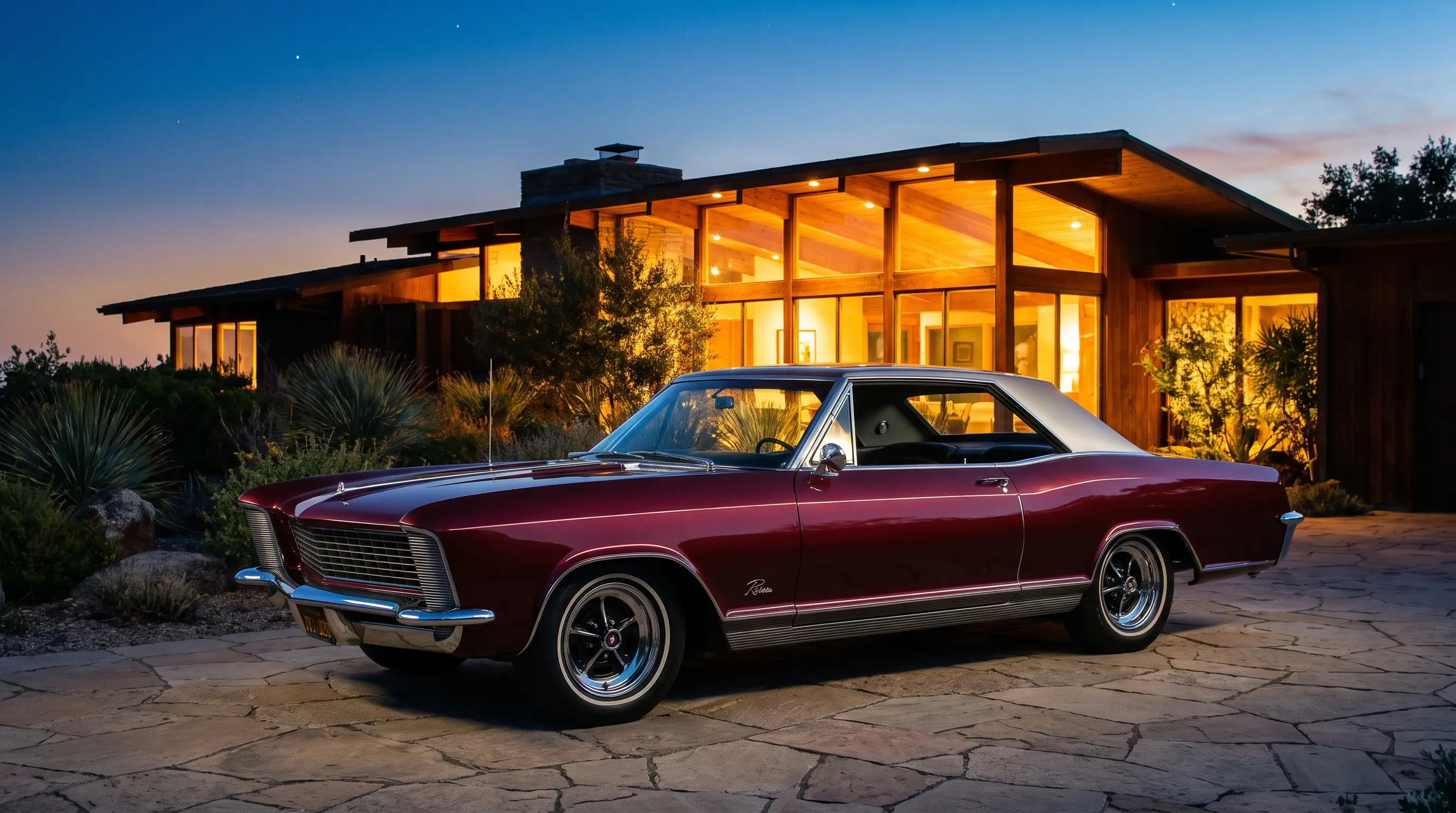
The 1964 car is a close cousin of the 1963, with most of the running changes happening underneath. The clean visual break comes in 1965, and it is the version most people picture when they close their eyes and imagine a first-generation Riviera.
"The 1963 is the car that made me fall for Buick, and I did not grow up a Buick person. You stand in front of one and the shape argues with you. It has no business looking that expensive, that composed, at the price Buick was asking. That gap between what it cost and what it looked like is the entire magic of the thing."
- Patrick Walsh
Gran Sport and the hidden headlamps
For 1965 the front end changed in the way that defines the whole first generation in most people's memory. The headlamps disappeared behind body-color clamshell doors set into the leading edge of the fenders, so the nose read as a clean, unbroken face until the lamps swung open at night. The taillamps moved down into the rear bumper. If you ever need to date a first-generation car at a glance, the front tells you everything: exposed lamps mean 1963 or 1964, hidden lamps mean 1965.
1965 also brought the Gran Sport, and this is where the personal-luxury coupe grew a harder edge. The Gran Sport package paired the 425 Nailhead with dual four-barrel carburetors, a numerically higher rear axle, and a firmer suspension, turning the boulevard cruiser into something that could hustle. It was not a muscle car in the stripped, single-purpose sense, but it proved the platform had more in it than quiet cruising. The Gran Sport name would follow the Riviera through later generations, always signaling the version with a little more bite under the hood.
The second generation goes big
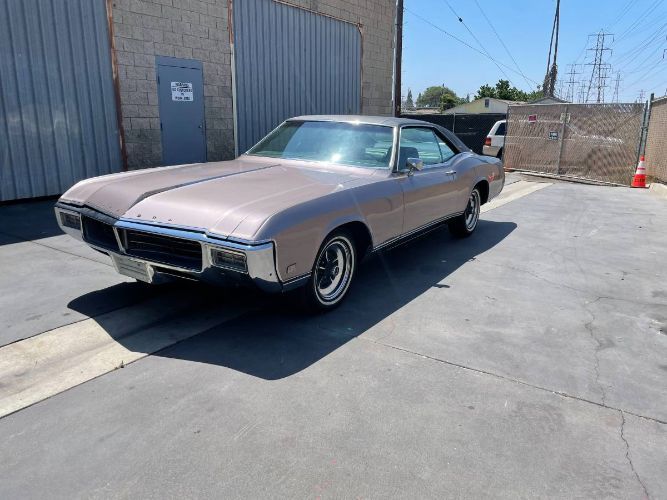
For 1966 Buick moved the Riviera onto a new front-engine platform shared with the Oldsmobile Toronado, and the car grew in every direction. The razor-edge crispness of the first generation softened into something longer, lower, and more sculptural, with a sweeping fastback roofline and a body that looked poured rather than folded. It was a different kind of dramatic. Where the 1963 car was all sharp creases and restraint, the 1966 was all curves and confidence, and both approaches worked because both were done with conviction.
The platform detail is worth a moment because people get it tangled. The 1966 Riviera shared its basic body engineering with the front-wheel-drive Oldsmobile Toronado, but the Riviera itself stayed rear-wheel drive through this generation. Same corporate bones, different driven wheels, different character. Buick used the shared structure to build a lower, wider car without the packaging headaches that usually come with a big coupe, and the result is a car that feels planted and long on the road in a way the first generation, for all its style, did not quite manage.
The Nailhead bowed out during this generation, replaced by Buick's newer big-block V8 family. By 1970 the Riviera offered the 455 cubic inch V8, a torque-rich engine that gave the big coupe genuinely strong acceleration for its size. The Gran Sport option carried over, now built around the 455, and a well-optioned second-generation GS is one of the more underappreciated performance luxury cars of its era. These are big, heavy, comfortable cars that still move with real authority when you ask them to, and they tend to trade for less money than their first-generation elders, which makes them a quiet value for someone who wants the presence without the first-year premium.
These cars are also where the Riviera picked up its reputation as a stylist's playground. The 1969 and 1970 models sharpened the front end and added hidden headlamps again, and the whole generation is full of the kind of confident detailing that only happens when a design studio trusts itself. If the first generation is the car enthusiasts revere, the second generation is the one they actually drive, because a good one gives you eighty percent of the presence at a friendlier price and asks less of your nerves in traffic.
The boat-tail gamble
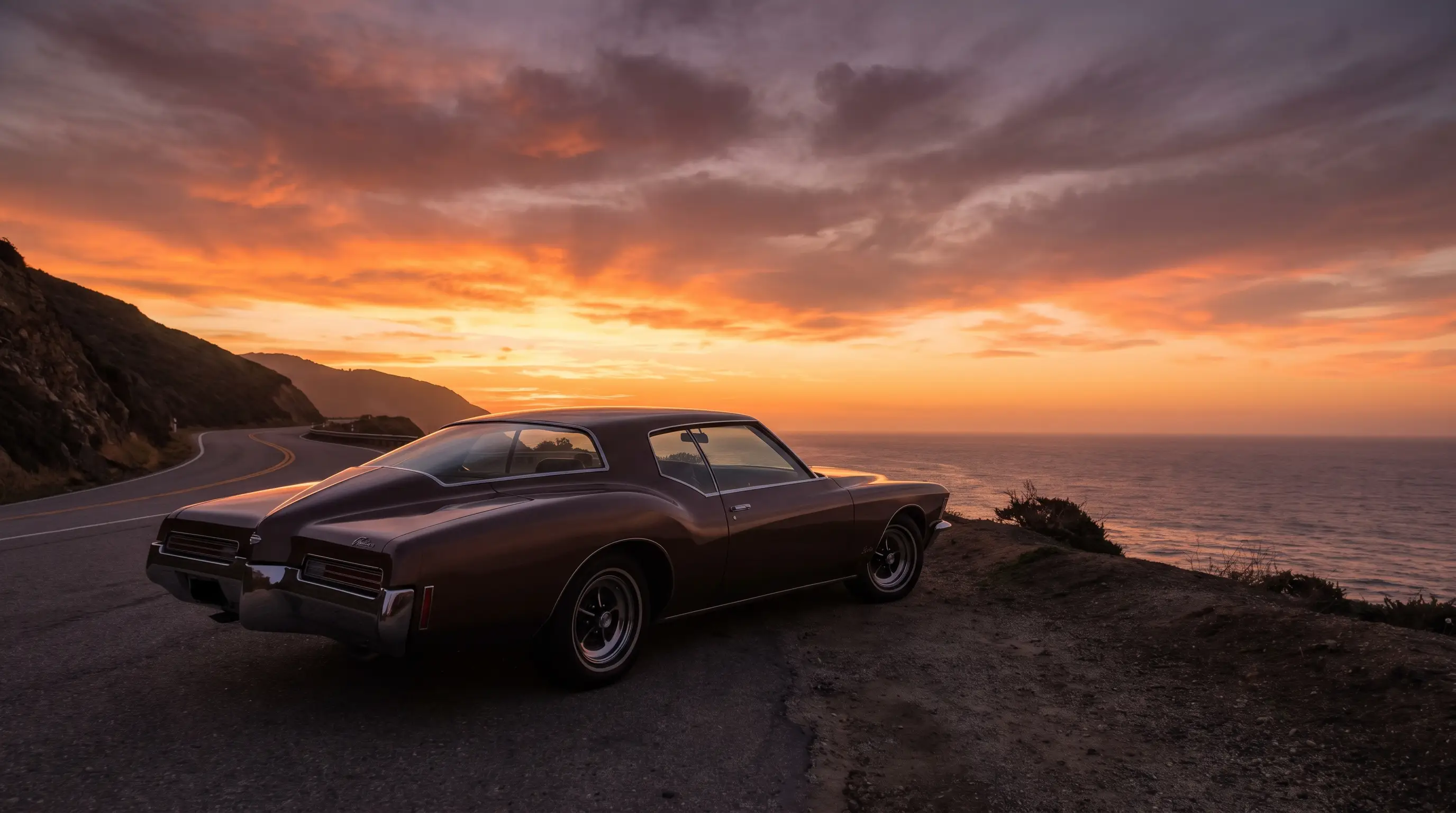
Then came the swing for the fences. For 1971 Mitchell pushed through the boat-tail Riviera, a car with a dramatic tapering rear window and a pointed tail that echoed the split-window Corvette and the speedboats Mitchell loved. It is the most divisive Riviera ever built, and that is exactly why enthusiasts love arguing about it. Some people think it is the most beautiful American car of the 1970s. Some people think it lost the plot entirely. Almost nobody feels nothing about it, and a designer would rather be argued over than ignored.
Under the sloping tail sat the 455 V8, and the boat-tail carried on the personal-luxury brief with a plush cabin and effortless cruising manners. Federal bumper regulations and shifting tastes softened the design over its short run, and the pure boat-tail shape lasted only three model years, from 1971 through 1973, before Buick pulled the tail in for a more conventional look. That brief production window is part of why clean boat-tails have such a following now. They are the cars that took the biggest risk, and the market has come around to rewarding the nerve.
The long personal-luxury years
After the boat-tail, the Riviera settled into the personal-luxury role it had helped define. The mid-1970s cars grew larger and more formal, following the tastes of the moment, before the industry-wide downsizing of the late 1970s brought the Riviera back to a tighter, cleaner size. The 1979 car is the one worth knowing from this stretch. It moved to a front-wheel-drive platform, again shared with the Toronado and the Cadillac Eldorado, and it wore a crisp, tailored body that many people consider the best-looking Riviera since the first generation.
The middle of that decade is the part collectors tend to skip, and it is worth understanding even if you never buy one. The 1974 through 1976 cars were the largest Rivieras ever built, heavy formal coupes shaped by the fuel-crisis moment and the taste for sheer size that came just before the reckoning. They are not the cars that made the Riviera's name, but they are honest artifacts of their moment, and a clean survivor from those years is a rolling snapshot of American luxury right before the industry had to reinvent itself. When the downsizing finally came, Buick did not fumble it. The 1979 car is proof that a smaller Riviera could be a better one.
That 1979 car also offered a turbocharged V6, an early sign of where the industry was heading as the big V8s came under pressure. It won its share of praise and sold well, proving the personal-luxury idea still had life in it even as the world changed around it. The cars that followed through the mid-1980s kept the formula alive: two doors, a driver-first cabin, and a name that still meant something. A convertible even returned to the lineup for 1982, the first open Riviera in decades, aimed squarely at buyers who wanted the personal-luxury idea with the top down. For the purposes of the golden-era story, the run through 1985 closes the chapter that began with Mitchell and the fog, a chapter that spans knife-edge coupes, fastbacks, boat-tails, and finally the neat, downsized personal-luxury cars that carried the idea into a new decade.
Colors, culture, and the screen
Part of the Riviera's staying power is that it looked right in period photographs and looks right now, which is not the same thing for every car of its era. The first-generation cars wore their best colors quietly, deep metallic blues, silvers, and blacks that let the shape do the talking, while the second-generation and boat-tail cars could carry the louder greens, golds, and burgundies of their moment without looking dated. Order sheets from these years read like a catalog of American optimism, and the right color on the right generation can double a car's presence at a show.
The Riviera also earned a place in the culture. It became a favorite of the lowrider community, particularly the second-generation and later cars, prized for their long, flat body sides and their road presence. It turned up in films and on album covers as shorthand for a certain kind of cool, the car of someone who had arrived without needing to announce it. That cultural life kept the Riviera in the conversation long after the last one left the showroom, and it is part of why younger enthusiasts who never saw one new still know exactly what it is.
"Every generation of Riviera is somebody's favorite, and they will fight you about it. The first-generation people think everything after 1965 is too soft. The boat-tail people think everyone else is a coward. The 1979 crowd quietly owns the best-driving car of the bunch and lets the others argue. That is a healthy thing for a model. It means Buick got something right more than once."
- Patrick Walsh
Why the Riviera still pulls a crowd
What holds the whole run together is intent. Every Riviera worth knowing was built to be wanted rather than needed, and you can feel that in the way the cars are put together and in the way owners talk about them. The first generation is the historically important one, the car that proved Buick could build desire. The second generation is the big, confident cruiser. The boat-tail is the wild card. The 1979 is the sleeper that drives better than any of them. There is a Riviera for almost every taste and almost every budget, and that range is a gift to anyone shopping the model today.
If you are ready to start looking, the smart move is to decide which chapter of the story you actually want before you start reading listings, because a first-year car and a boat-tail and a downsized 1979 are three completely different ownership experiences. Once you know your generation, you can watch the market with patience and hold out for a documented, honest car rather than the first one that catches your eye. Take your time and look for a classic Buick Riviera for sale whose paperwork matches the story the seller tells, and let the condition and the documentation, not the color, make the final call.
Sixty years on, the Buick Riviera holds up because it was never one idea. It was a division betting that people would pay for style and pleasure, and then betting again, and again, in shapes that argued with each other across two decades. The fog-bound coupe of 1963 and the downsized cruiser of 1979 have almost nothing in common except the thing that matters most, which is that somebody built each of them to be wanted. That is why the crowd still gathers when one rolls in, and why the story is worth telling all the way through.
Sources and notes
- Buick Riviera - Wikipedia
- 1963 Buick Riviera Fact Sheet - Over-Drive Magazine
- 1963 Buick Riviera 425 V-8 Specifications - Automobile Catalog
- In Motion Classic: 1965 Buick Riviera - Curbside Classic
- Why aren't 1963-73 Buick Rivieras worth more? - Hagerty Media
- Original 425: 1963 Buick Riviera - Barn Finds