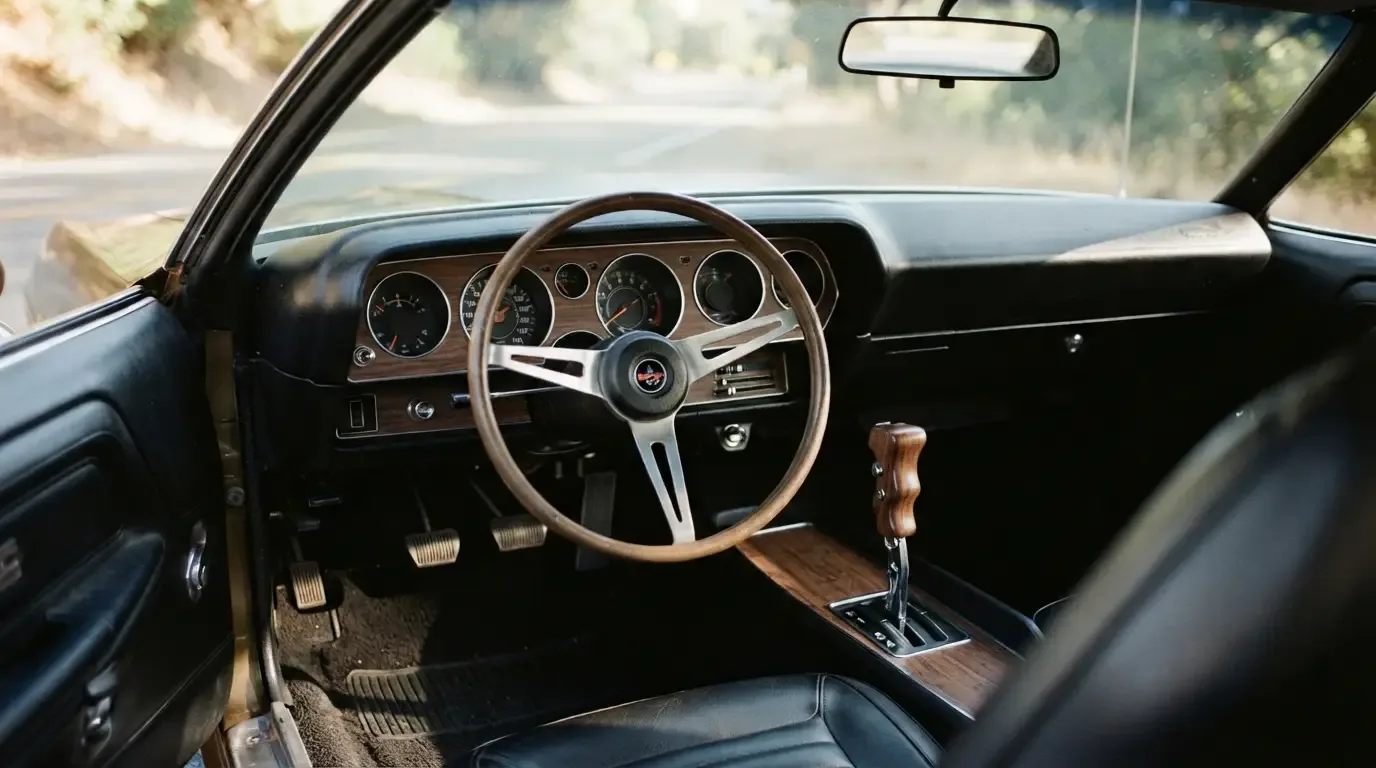
Open the driver's door on a well-optioned 1970 Challenger interior and you get a very specific message before the engine even turns over. The Rallye instrument cluster sits ahead of you with round, deeply set gauges instead of a flat strip speedometer, and if the buyer checked the right box on the order form, a pistol-grip shifter rises out of the console like it was designed by someone who had actually driven the car hard before drawing it. Dodge did not treat the cabin as an afterthought behind the styling and the engine choices. The 1970 challenger interior was engineered to back up every promise the exterior made.
The Rallye cluster changes the whole conversation
Base Challengers came with a simpler dash layout, a horizontal speedometer strip that told you what you needed and nothing more. Step up to the Rallye instrumentation package, and the entire character of the cabin shifts. Four round gauges replace the strip, arranged the way a driver actually scans them under load rather than the way an accountant might lay out a parts bin. Oil pressure, water temperature, and amperage sit alongside the speedometer and tachometer, giving anyone who ordered an R/T or an SE the visual vocabulary of a car built for real driving, not just a car styled to look fast in a parking lot.
Chrysler's engineering records from the period back this up: the Rallye cluster was developed specifically to answer criticism that earlier Mopar dashboards felt like an afterthought compared to what GM was putting in front of Camaro and Firebird buyers. Dodge closed that gap directly, and the cluster remained one of the most requested options across the Challenger's first several model years.
The pistol-grip shifter, function wearing a costume
Few interior details from this era get discussed as often as the pistol-grip shifter, and for good reason. Available on manual transmission cars, the handle's shape was not purely cosmetic. It positioned the driver's hand for quick, positive shifts under hard acceleration, and its silhouette became so associated with Mopar muscle that it shows up in reproduction parts catalogs and enthusiast merchandise to this day. A four-speed Challenger with the pistol grip in hand tells you everything about what that car was built to do before you have covered a single block.
Seats, trim, and the materials that separated trims
Base Challengers used simpler bench or bucket seating with vinyl that prioritized durability over flair. Move up through the SE and R/T trims and the materials story changes considerably, with houndstooth cloth inserts becoming available and additional sound deadening and trim pieces separating the higher trims from the entry-level coupe. The SE in particular pushed toward a more formal, upscale cabin experience with a vinyl roof option and additional brightwork, aimed at a buyer who wanted pony car styling without giving up every comfort feature to get it. That range, from spartan to genuinely well appointed, mirrors the same broad strategy Dodge used across the entire model, offering something for the budget buyer and something else entirely for the customer who wanted to option a Challenger up toward luxury.
| Interior feature | Where it appeared |
|---|---|
| Rallye instrument cluster | Optional on base, standard-leaning on R/T and SE |
| Pistol-grip shifter | Manual transmission cars, optional |
| Houndstooth cloth inserts | SE and upper trim option |
| Overhead console (SE) | SE trim exclusive option |
"Chrysler's engineers documented the Rallye cluster development specifically as a response to what GM was doing inside Camaro and Firebird. That paper trail exists, and it tells you Dodge was not guessing about what buyers wanted in front of them."
- Tom Ramirez
What the overhead console added to the SE cabin
Buyers who checked the SE box could also add an overhead console mounted between the sun visors, a feature that put map lights and, on some cars, additional switches within easy reach without cluttering the main dash. It was a small addition in physical terms but a significant one in how it positioned the Challenger against rivals that still treated the headliner as empty space. GM had experimented with similar overhead consoles in some of its personal luxury coupes, and Dodge borrowing the idea for a pony car cabin signaled how seriously the SE trim took its role as the comfort-forward alternative to the R/T's stripped-down performance focus.
Air conditioning, when ordered, added vents low on the dash rather than integrated into the main cluster housing, a packaging choice that later interior refreshes changed as HVAC technology improved. For a 1970 buyer, though, that arrangement was standard practice across the industry, and it is one more detail that helps date a genuine, unmodified example when comparing it against later Challenger interiors that moved vents and switchgear around as the decade progressed.
Why the cabin still matters to buyers today
Condition and originality of the interior carries real weight when a Challenger changes hands now, arguably as much as the engine bay does for serious collectors. A car with its correct Rallye cluster, an unmolested pistol-grip shifter, and factory-correct upholstery tells a more complete story than an engine number alone ever could. It confirms how the car was ordered from the factory floor, not just what parts have been bolted on since. Readers digging into the full context behind these options will find our piece on 1970 dodge challenger history lays out how the interior choices fit into the model's broader launch strategy, and our look at a related story covers how Dodge marketed these same cabin features to buyers at the time.
Shopping with the interior in mind
If the cabin is where you plan to spend your judgment before you buy, it pays to compare several cars side by side rather than falling for the first clean-looking dash you find. Gauge faces fade, shifter grips crack, and reproduction parts vary wildly in accuracy, so knowing what an original Rallye cluster and pistol grip actually look like protects you from paying original-spec prices for aftermarket substitutes. You can look through Challengers for sale now and get a real sense of how much interior variation exists across the current market before you commit to one.
A cabin built to match the car's ambitions outside
What ties all of these interior details together is that none of them existed purely to look expensive. The Rallye cluster gave a driver genuinely useful information laid out for quick reading under load. The pistol grip shifter improved actual shift feel rather than just appearance. Even the SE's more comfort-focused additions, the overhead console and upgraded upholstery, answered a real customer request rather than padding a price sheet with meaningless trim. Dodge treated the cabin as functional space serving a specific type of buyer, whether that buyer wanted maximum performance feedback or a slightly more upscale daily experience, and that intentionality is exactly why the 1970 challenger interior still reads as coherent and purposeful rather than dated when you sit in a well-preserved example today.