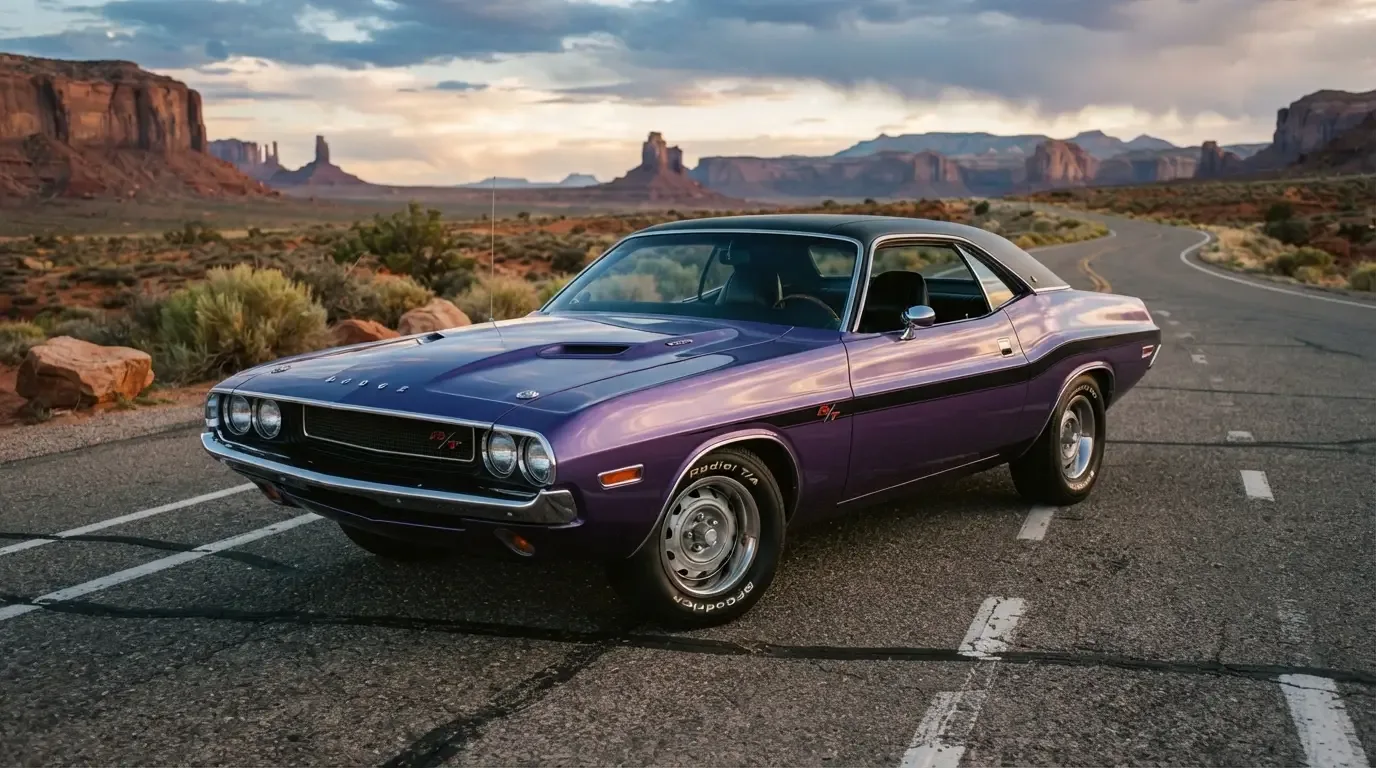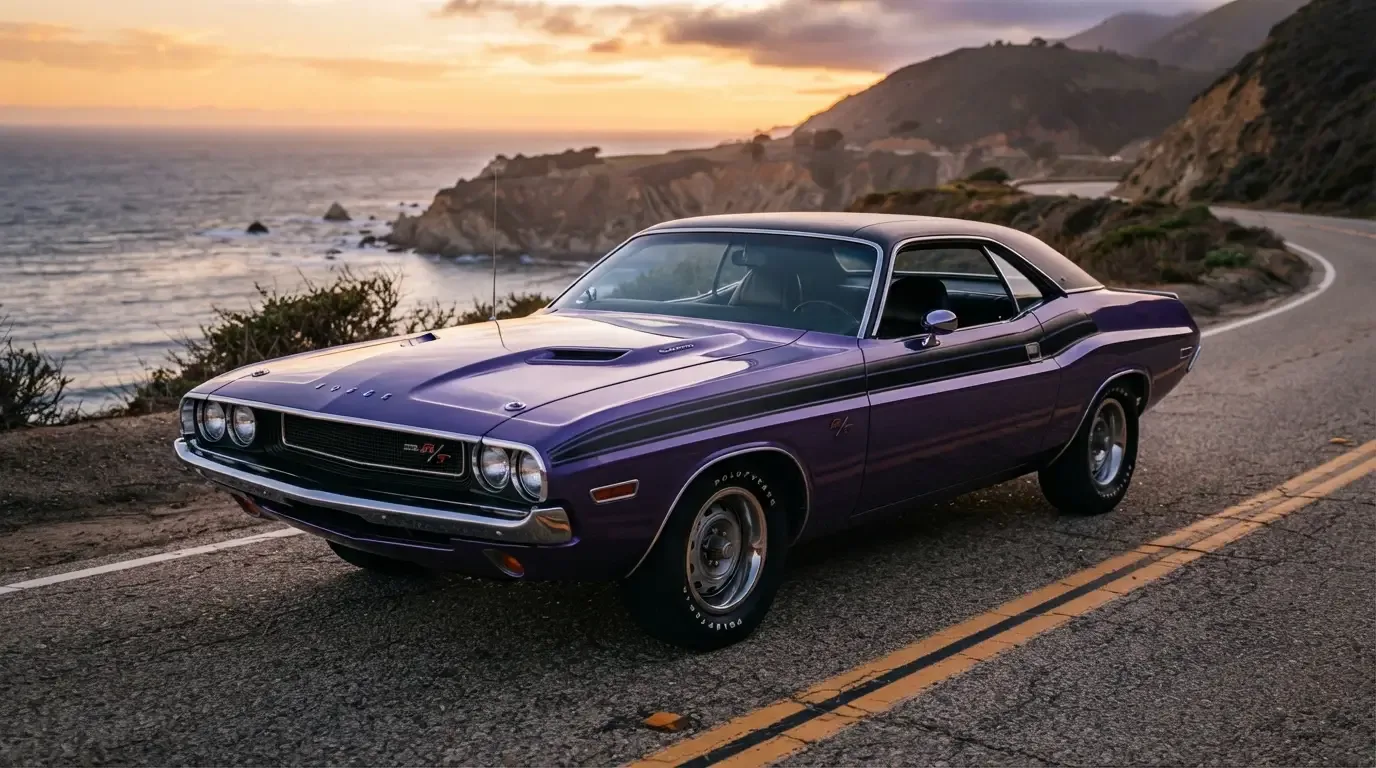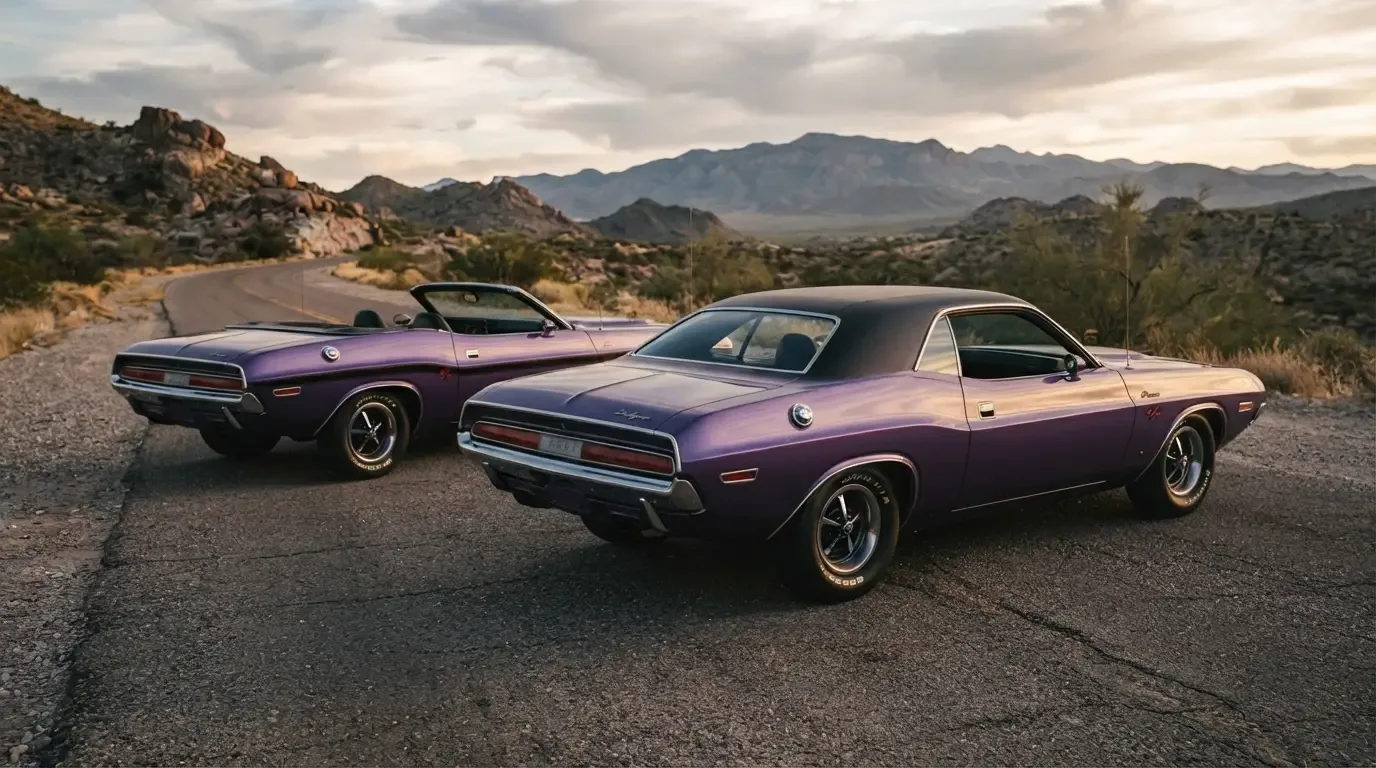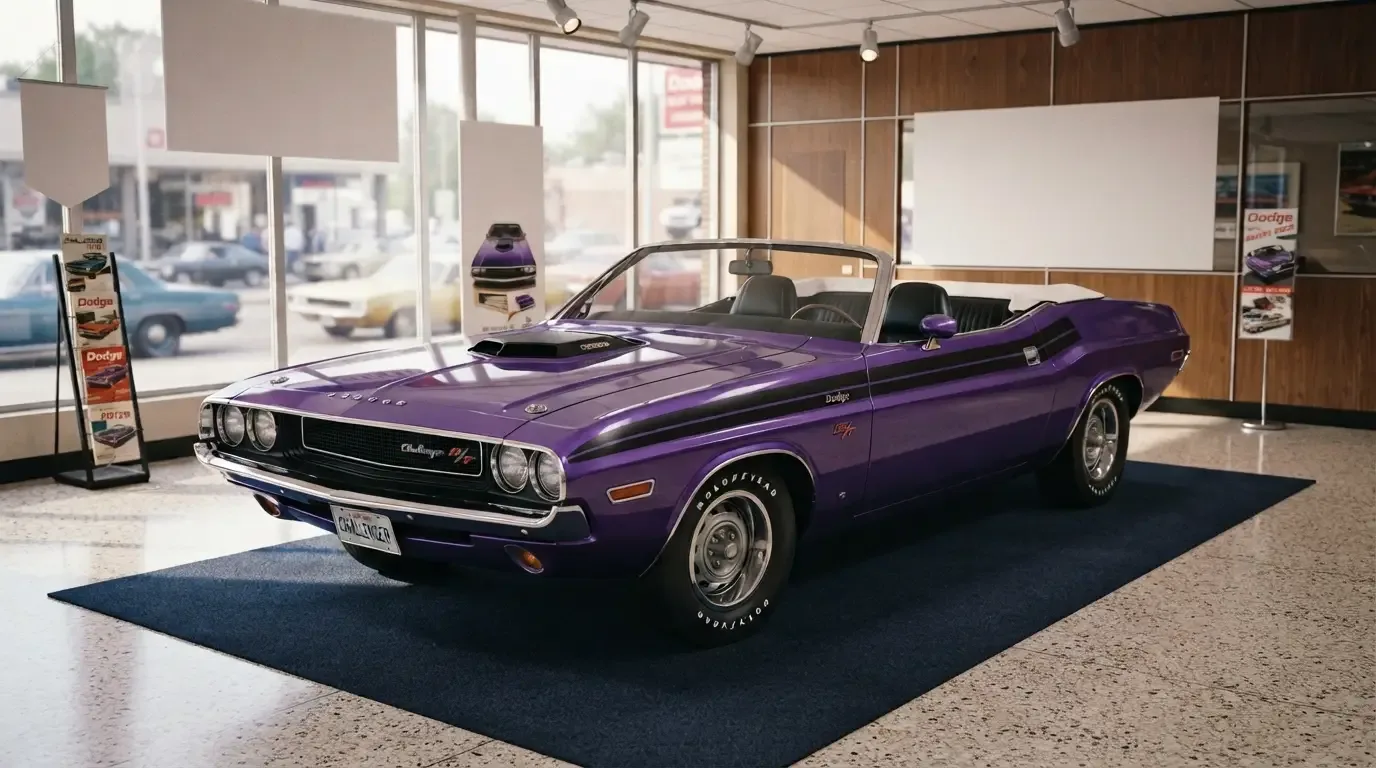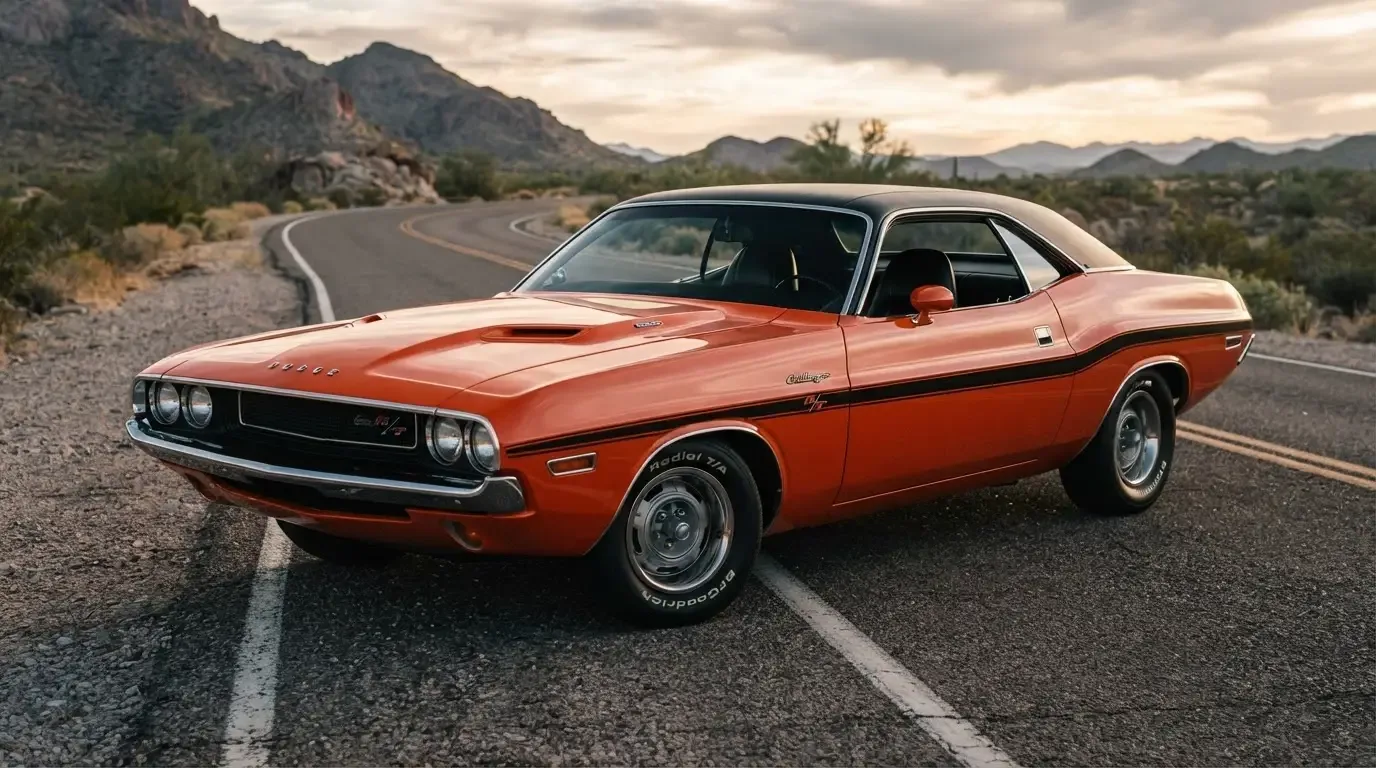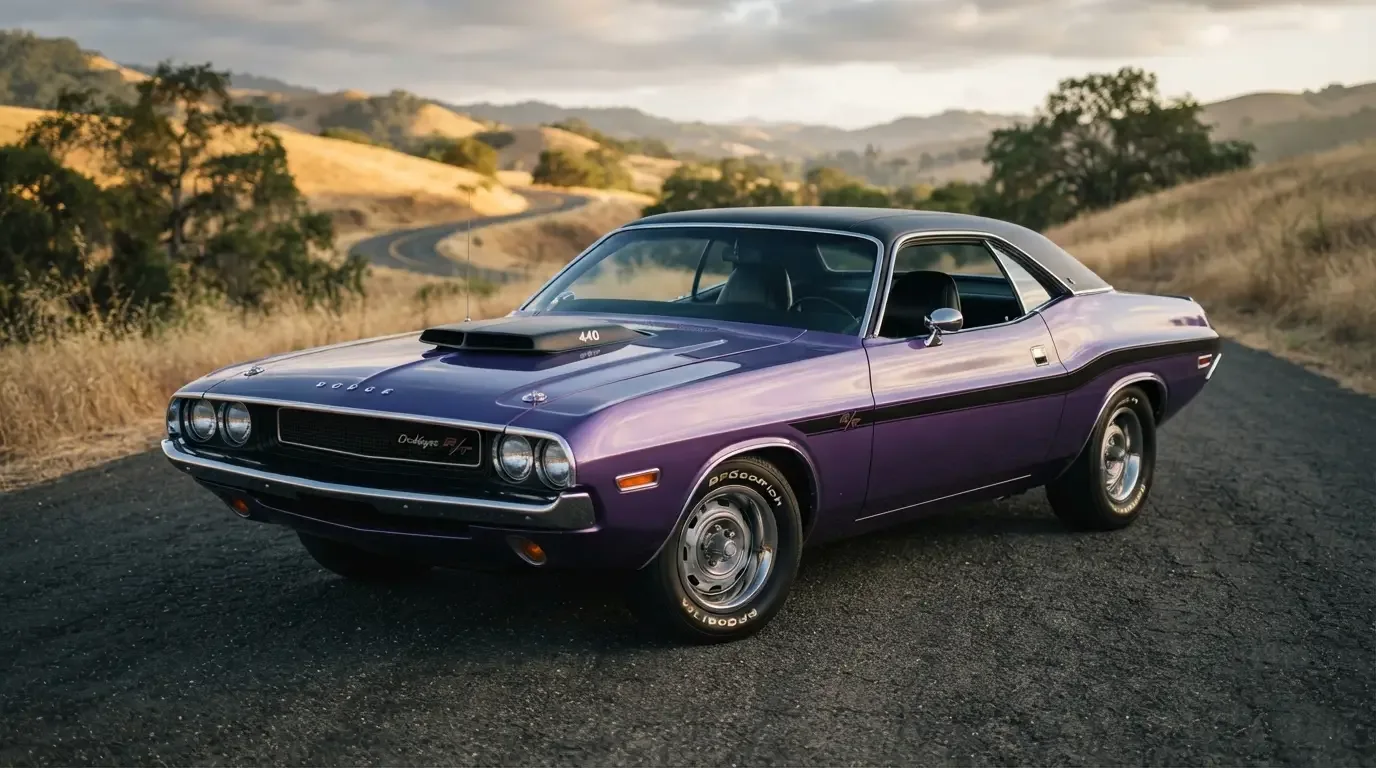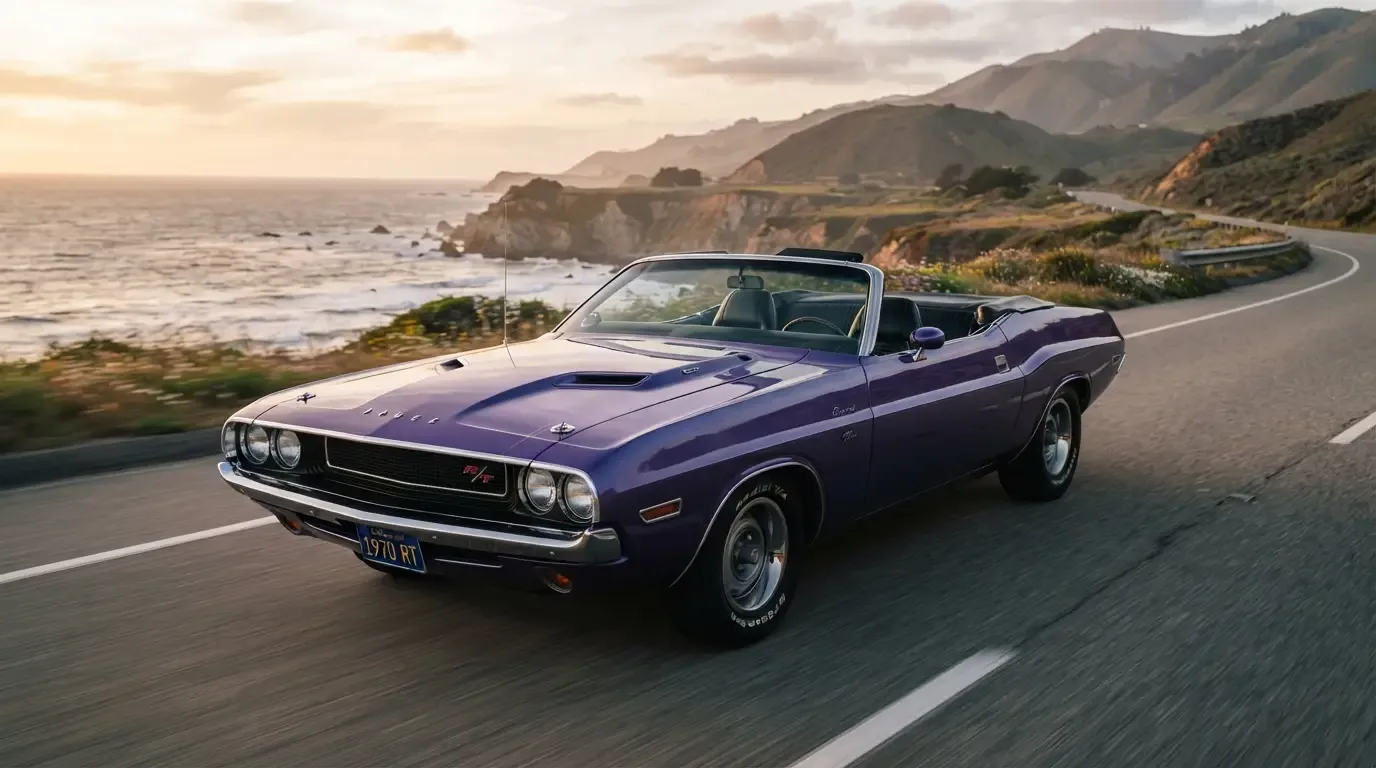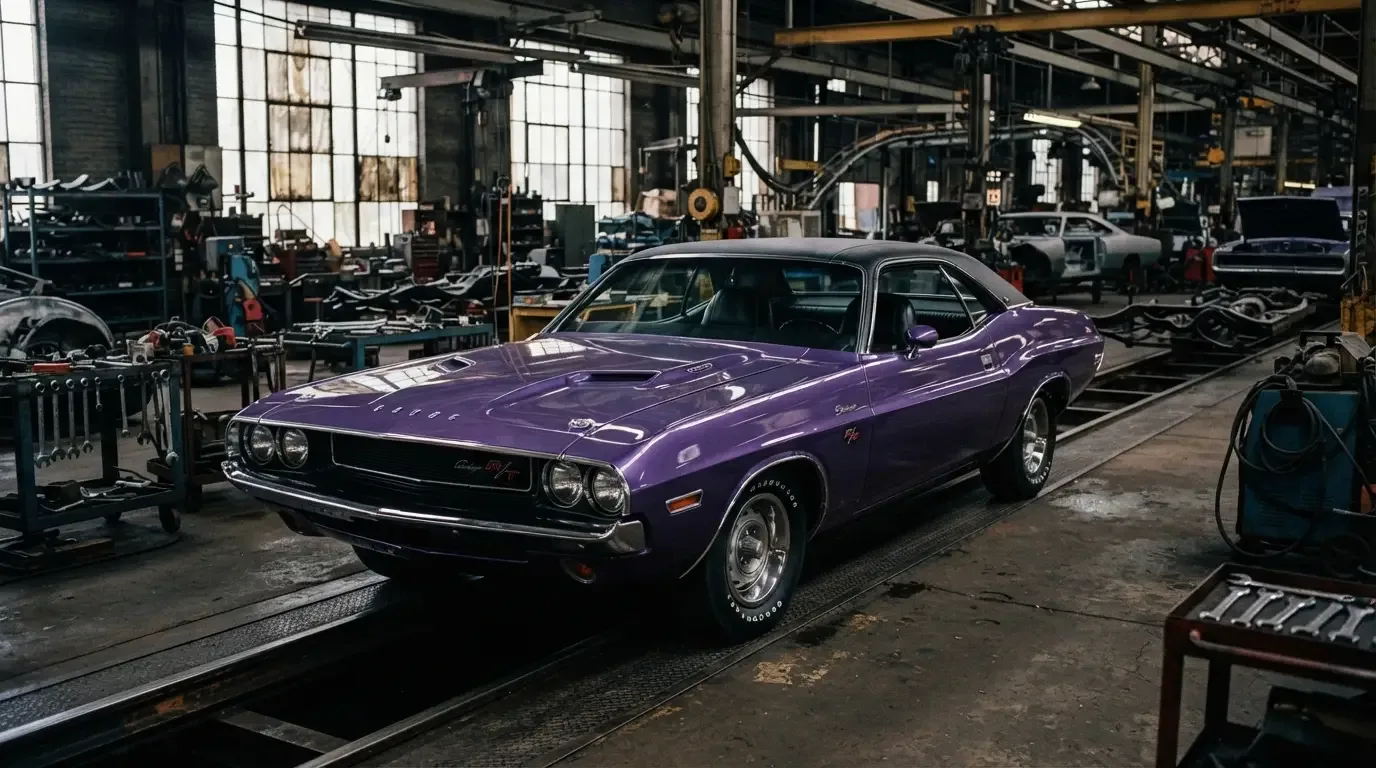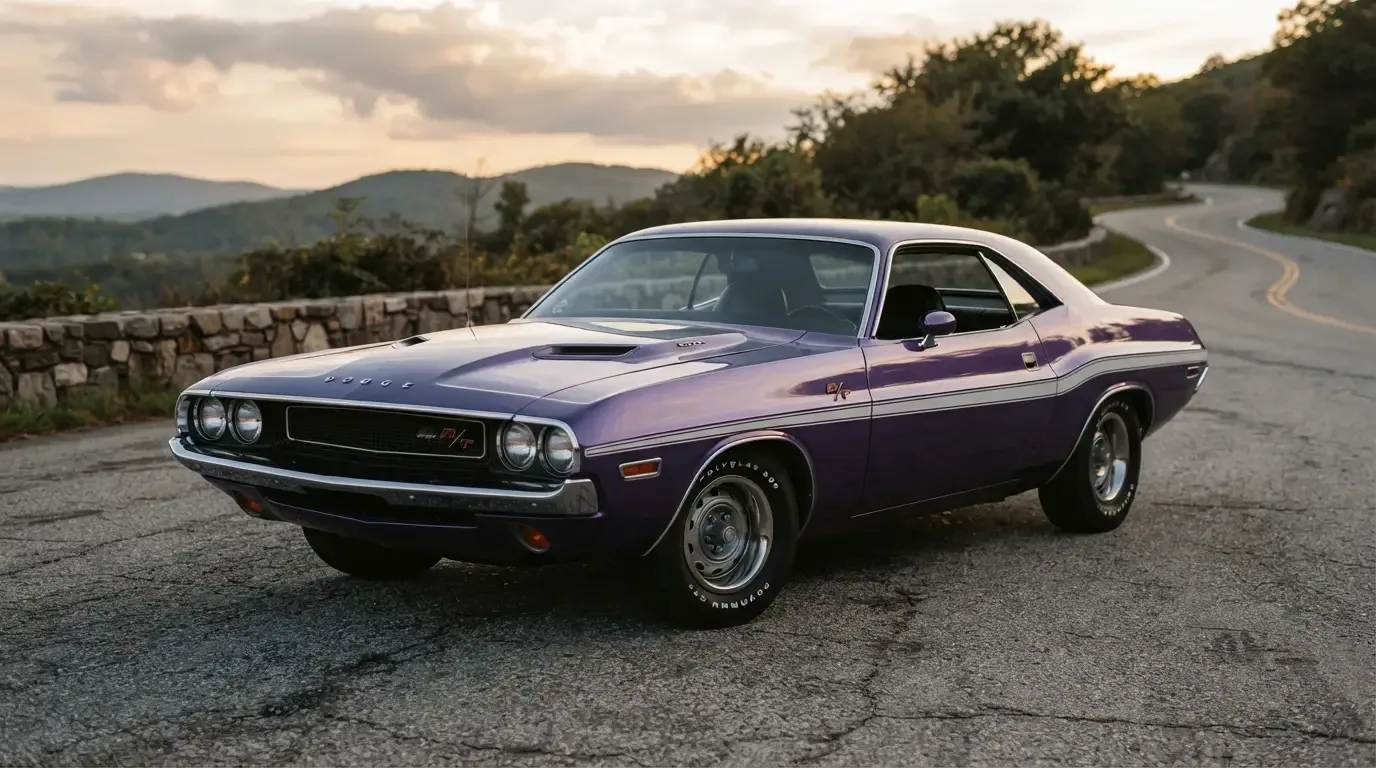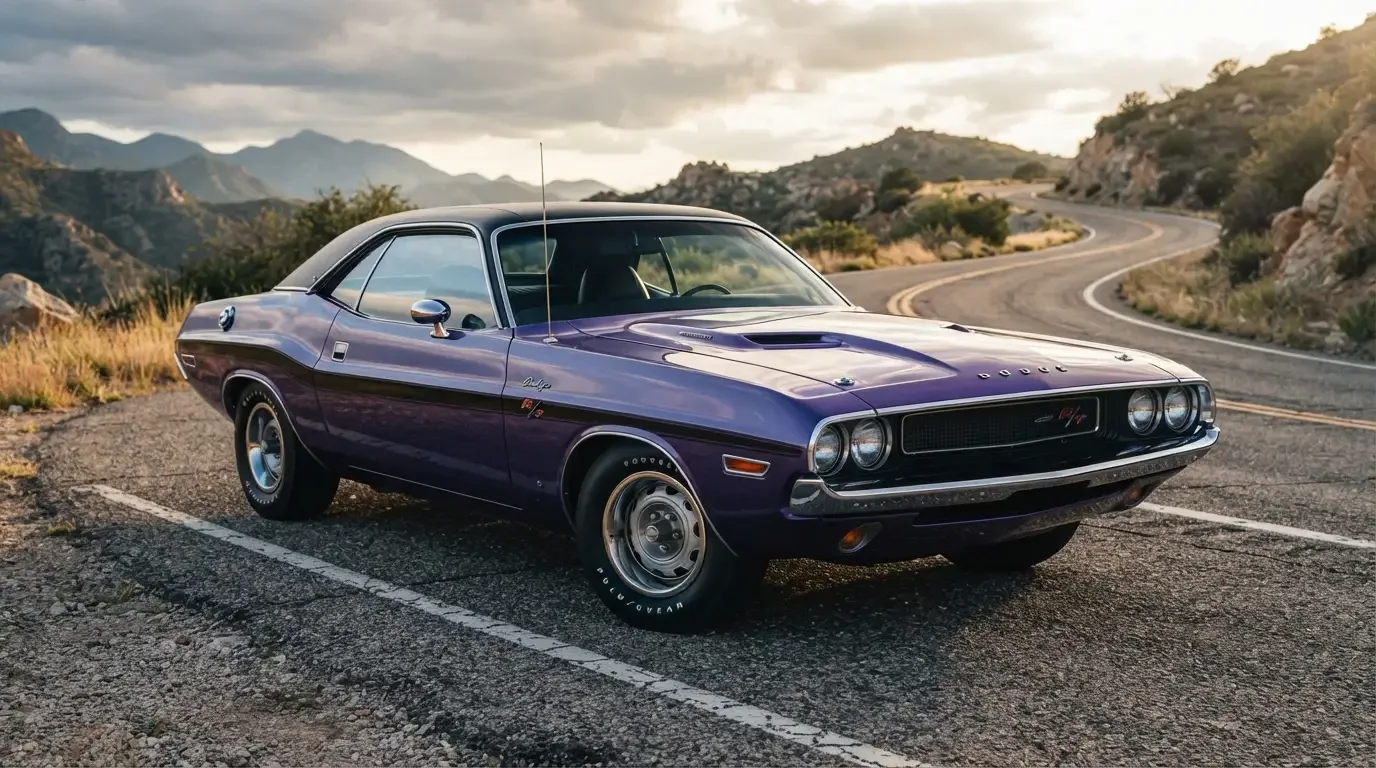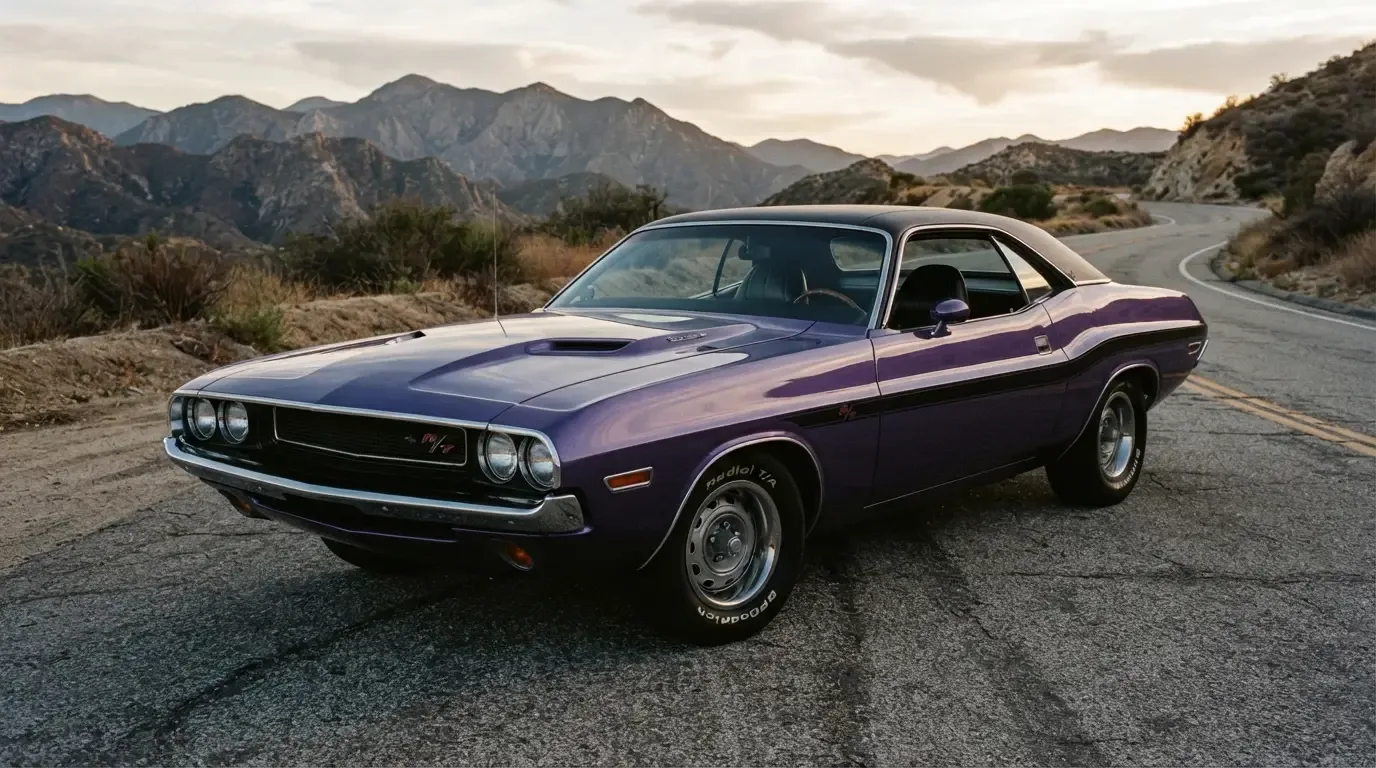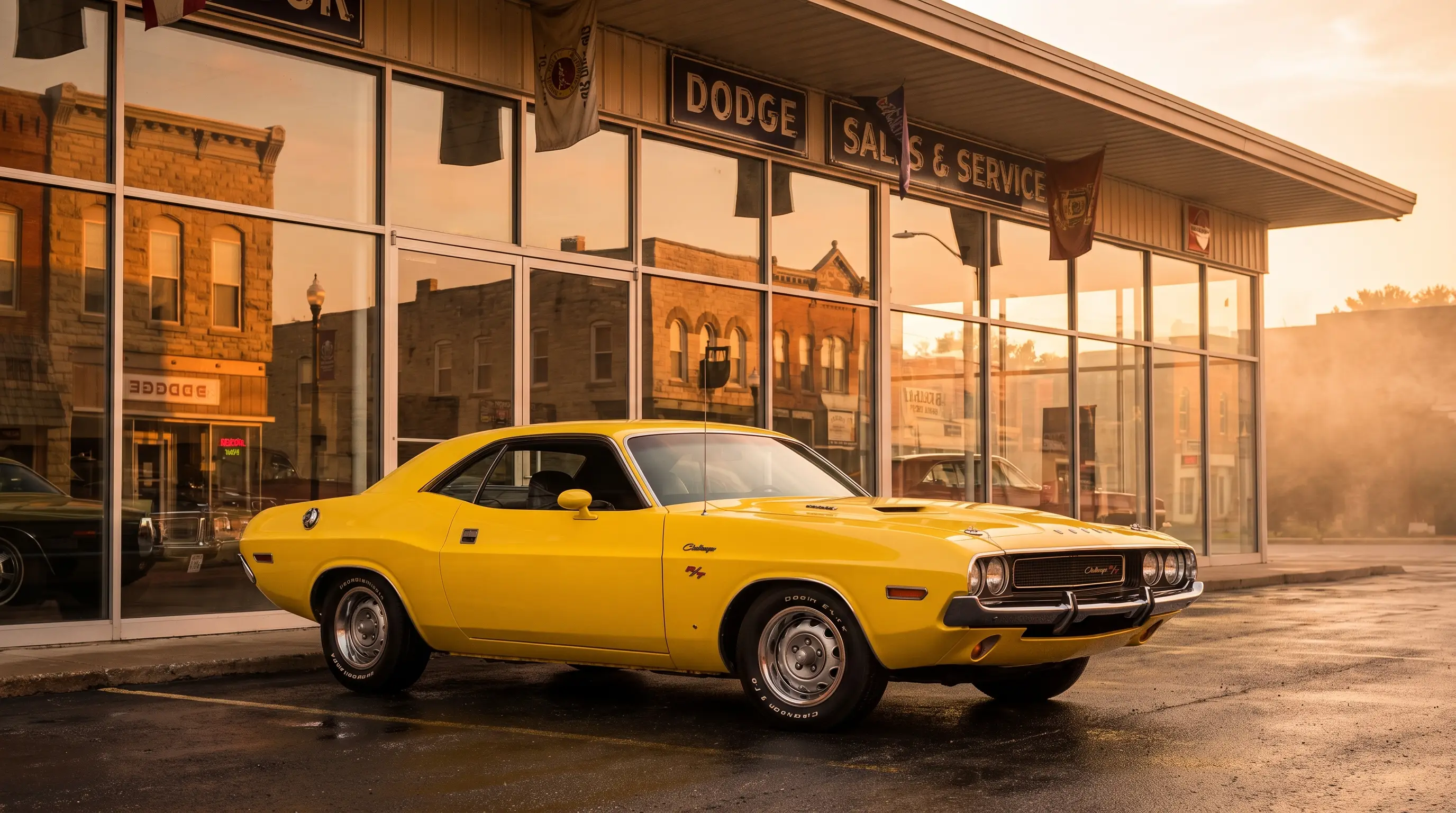
When the 1970 Dodge Challenger reached showrooms in the fall of 1969, Dodge was arriving late to a party it had helped start. Ford had the Mustang. Chevrolet had the Camaro. Plymouth, Dodge's sibling inside Chrysler, already had the Barracuda. Dodge had nothing in the pony car class at all, and by 1970 the class was five years old. What Dodge did with that late arrival is the interesting part, because the car it built was not a follower. It was the largest, widest, and most heavily optioned entry the segment had yet seen, and it came out swinging with an engine roster that ran from a humble slant-six all the way to the 426 Hemi.
Why Dodge waited until 1970
The delay was a matter of corporate arithmetic, not indecision. Chrysler built the Barracuda on the compact A-body platform from 1964, and for years Dodge dealers watched Plymouth sell a sporty compact while they had no equivalent. The fix was the E-body, a new platform engineered specifically to carry Chrysler's biggest engines in a pony car wrapper. Plymouth got the redesigned Barracuda on it. Dodge got the Challenger. Both launched for 1970, and both shared cowl, glass, and much of the structure underneath. The Challenger rode on a longer wheelbase than the Barracuda, at 110 inches versus 108, which gave it a slightly different stance and a roomier cabin.
This is where a common misconception deserves a gentle correction. People often call the Challenger a rebadged Barracuda. It was not. The two cars shared a platform the way the Camaro and Firebird shared one, but they had different sheet metal, different dimensions, and different marketing intent. The Challenger was pitched slightly upmarket, positioned as the more grown-up of the pair. That positioning would matter later when the pony car market collapsed.
The man who drew it
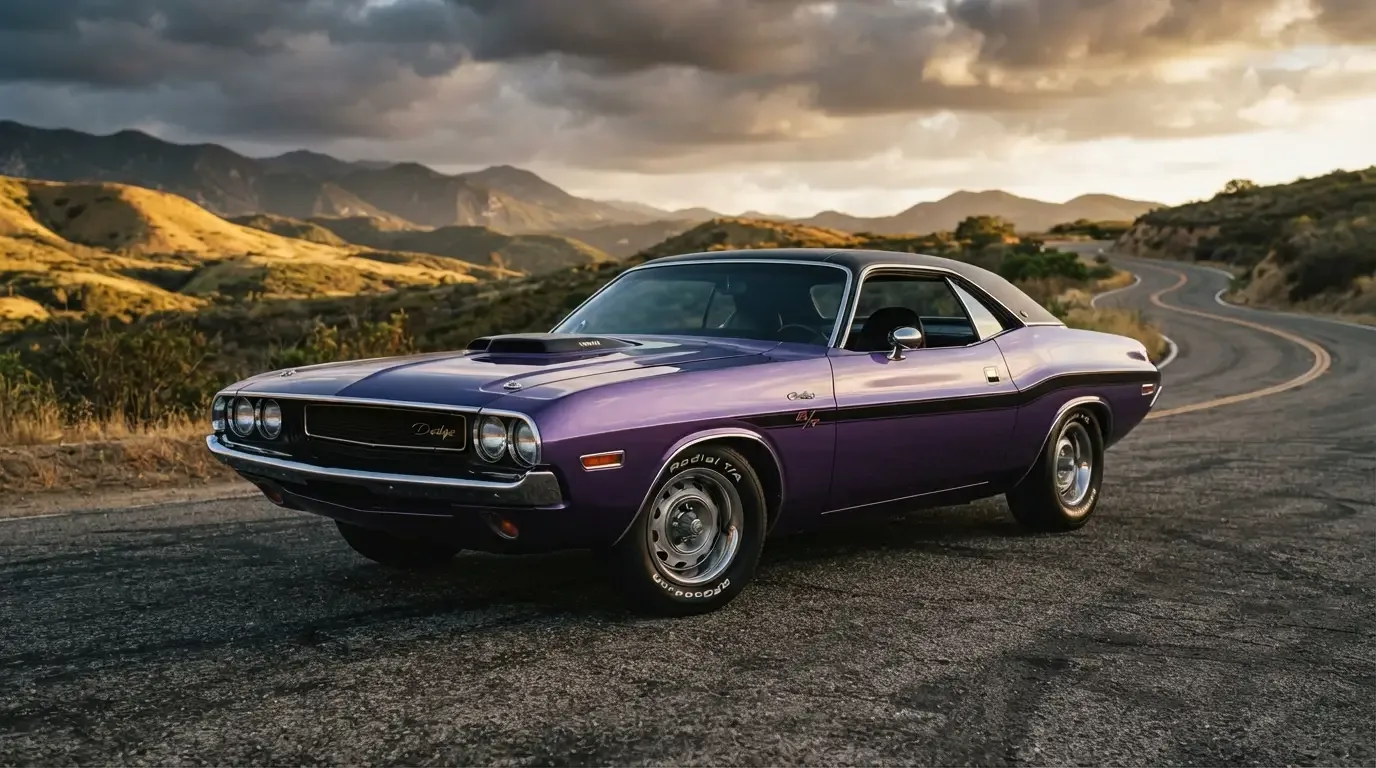
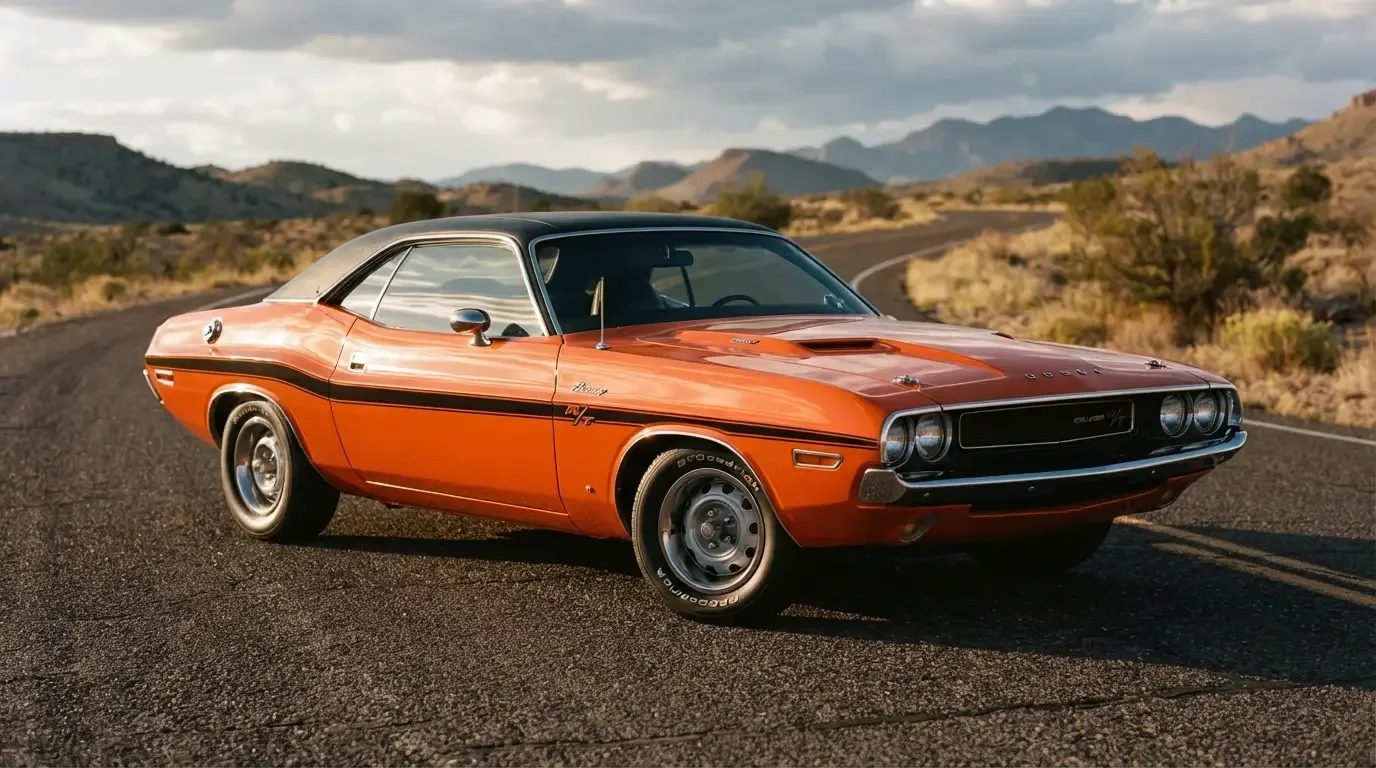
The exterior came from the pen of Carl Cameron, a Chrysler stylist whose earlier work included the 1966 Dodge Charger. Cameron gave the Challenger a long hood and short deck, the mandatory pony car proportions, but he added a full-length body character line and a wide, aggressive grille that set it apart from the Barracuda's rounder face. The result read as bigger and more serious than its competitors, which was exactly the point. If you have followed our dodge challenger history coverage, you know that this first-year design is the one collectors still treat as the definitive shape.
An engine list with no middle ground
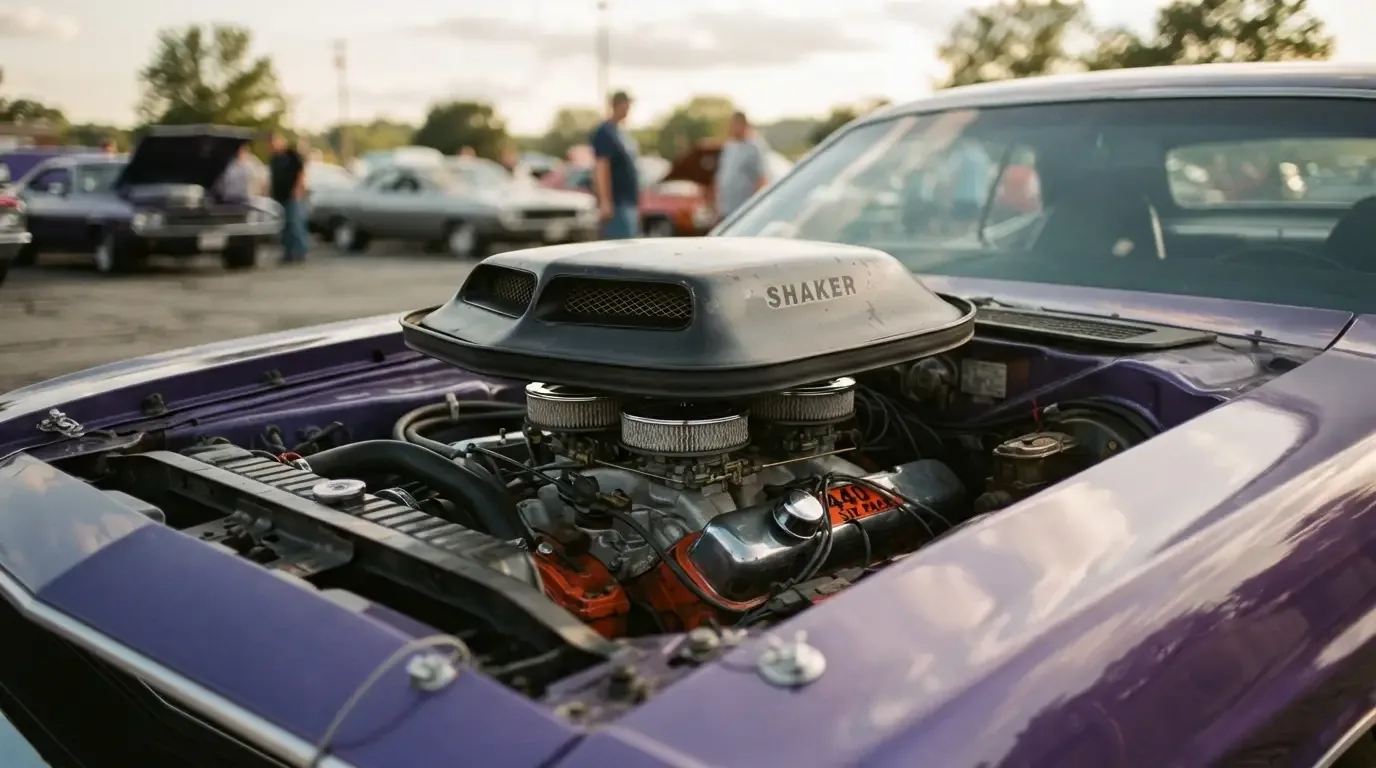
The breadth of the 1970 powertrain catalog is what makes the car so hard to summarize. At the bottom sat the 225 cubic inch slant-six, a durable economy engine that turned the Challenger into an ordinary commuter. Above it came a 318 two-barrel V8, then the 383 in two- and four-barrel forms. The performance tier started with the 340 small block, moved through the 383 Magnum, climbed to the 440 in single four-barrel and triple-carburetor "Six Pack" versions, and topped out with the 426 Hemi. That is a spread from a mild six to a race-bred elephant motor in one body style, and it explains why two 1970 Challengers can be worth ten thousand dollars or two hundred thousand depending entirely on the engine code.
The trim structure was just as layered. A base Challenger, a plusher SE (Special Edition) with a smaller rear window and a vinyl roof, the performance-focused R/T, and the one-year T/A built to homologate a Trans-Am racer. The R/T is the one most buyers picture, and it deserves its own study if you want to keep exploring. Our companion piece is a good next stop, so keep exploring when you finish here.
Colors as a sales weapon
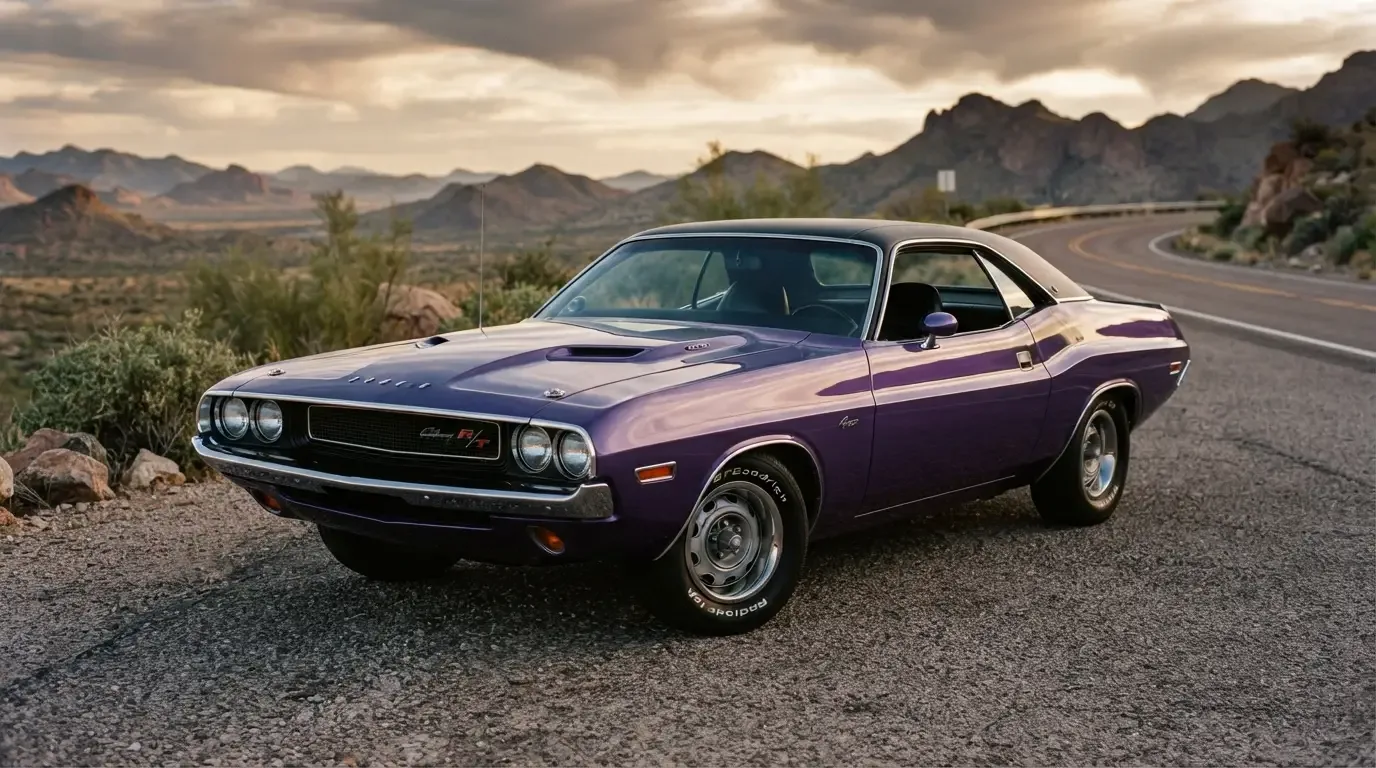
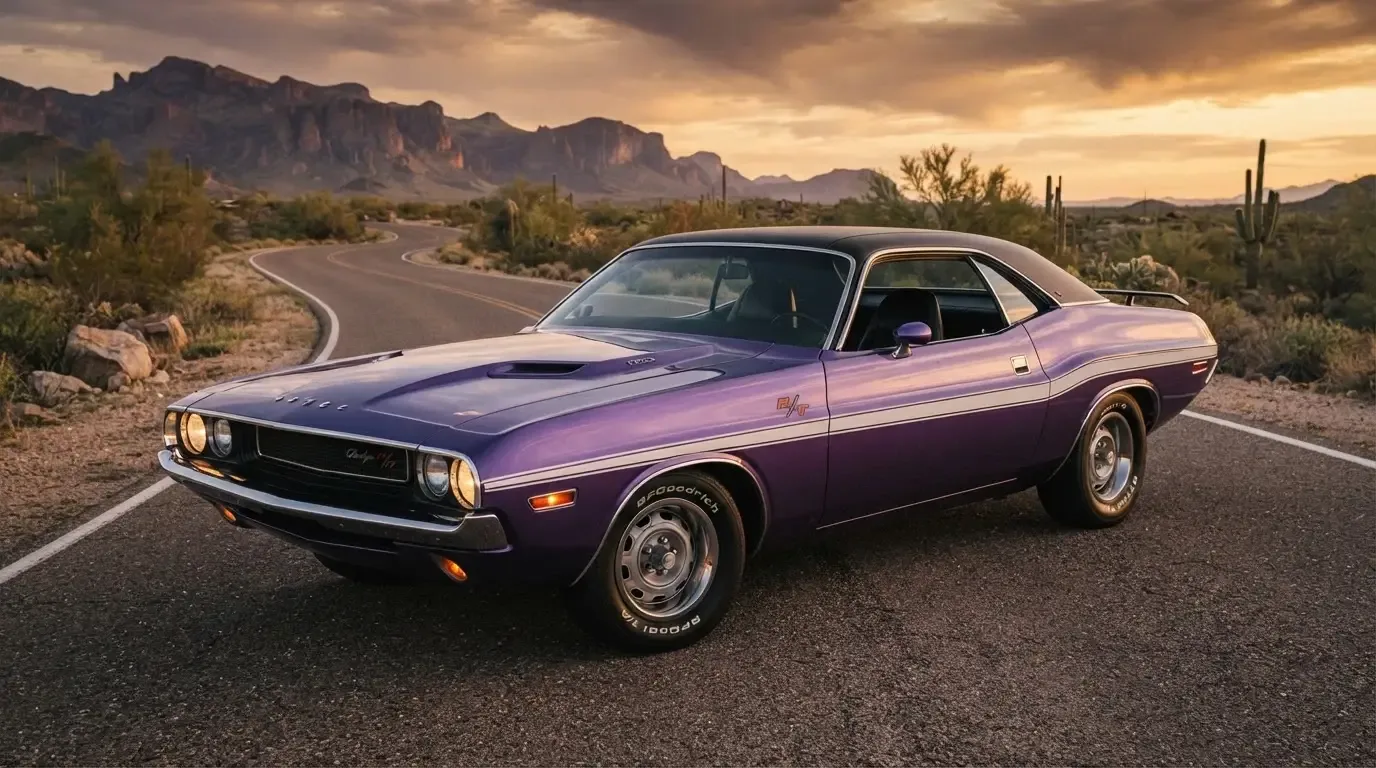
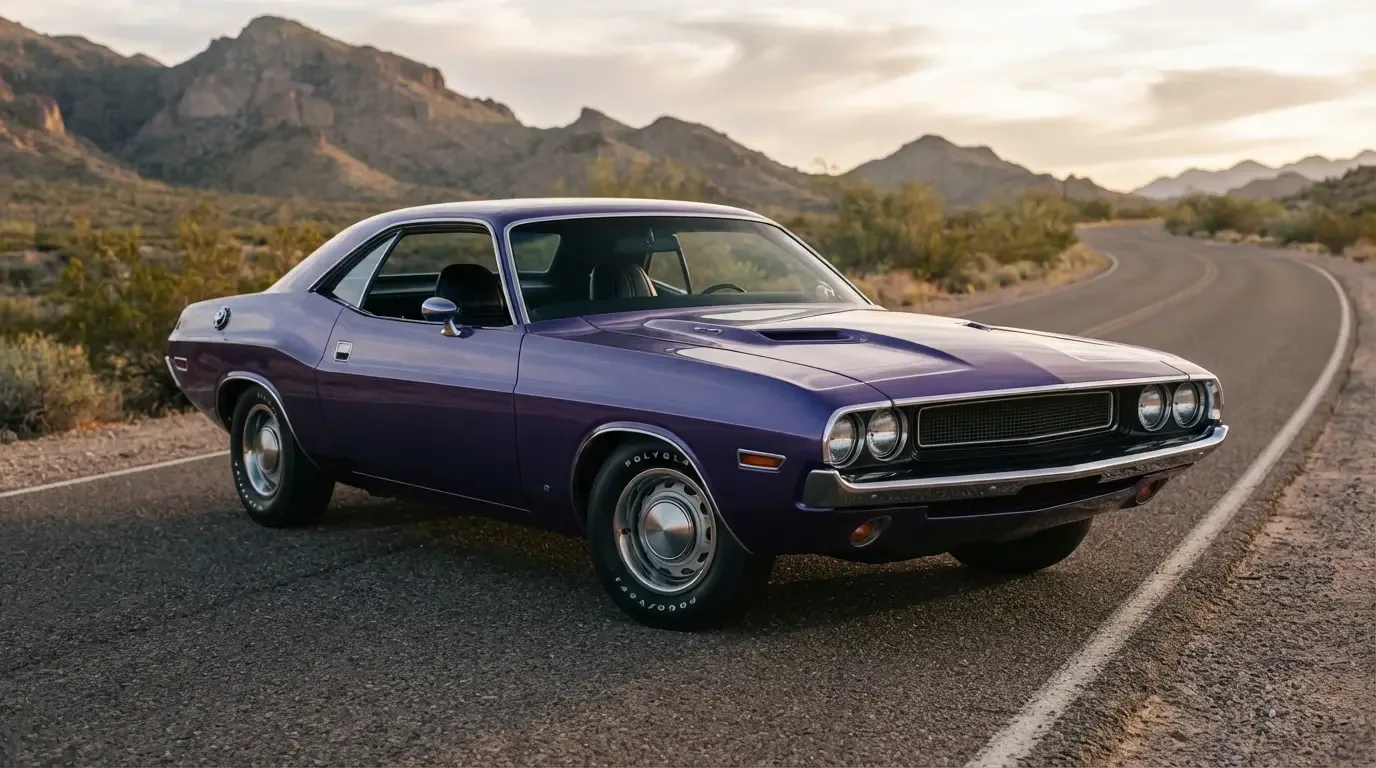
Chrysler leaned hard on high-impact paint in 1970, and the Challenger was a full participant. Buyers could order shades with names like Plum Crazy, Go Mango, Sublime, Top Banana, and Hemi Orange. These were not subtle finishes. They were designed to be visible from across a parking lot and to photograph loudly in magazine advertising. The strategy worked in the sense that it built an identity, and it works today because a period-correct high-impact color adds real money to a survivor. A Plum Crazy car draws a crowd at auction in a way that a white one does not, and the color code on the fender tag is one of the first things a serious buyer checks.
The colors also carry a quieter historical value, because they date the car so precisely. High-impact paint was a brief phenomenon, most intense in the 1969 to 1971 window before regulation and changing taste pushed the palette back toward earth tones. A loud 1970 Challenger is a snapshot of a specific and short-lived moment in American car culture, when a mainstream manufacturer thought a family could reasonably want a coupe the color of a grape. That confidence did not survive the decade, which is part of why the survivors in original bright paint feel like time capsules rather than merely bright cars.
What the numbers say about that first year
Dodge sold 76,935 Challengers in the 1970 model year across all body styles and engines, a strong debut that would never be matched again in the car's short life. The convertible was a small slice of that total, which is why open cars command a premium now. Hemi cars were rarer still, built in the low hundreds, and the T/A was a single-season run. Understanding these splits is the whole game with E-body values, because the badge on the trunk means far less than the documented breakdown of how many of that exact configuration left the line.
| Attribute | 1970 Dodge Challenger |
|---|---|
| Platform | Chrysler E-body |
| Wheelbase | 110 inches |
| Body styles | Hardtop coupe, SE hardtop, convertible |
| Base engine | 225 cubic inch slant-six |
| Top engine | 426 Hemi V8 |
| Designer | Carl Cameron |
| Model-year production | 76,935 units |
The car Hollywood made a legend
Part of why the first Challenger looms so large in memory has nothing to do with the factory. In 1971, the film Vanishing Point put a white Challenger R/T at the center of a cross-country chase, and that single car did more for the model's image than any advertisement Dodge ever ran. The movie car was a 1970 R/T, and the shape it burned into the public mind was this first-year body. Generations of enthusiasts who never sat in one still picture that white coupe when they hear the name.
The cultural afterlife matters to the story because it explains a gap between production and fame. Dodge did not build the most pony cars, and the Challenger did not outsell the Mustang or the Camaro. Yet the 1970 car occupies a larger space in the collective memory than its sales numbers would predict, and a good part of that oversized reputation traces back to a film released the year after launch. The metal was already special. The screen made it famous.
That fame has a practical effect on the modern market. A clean first-year Challenger draws attention that later E-body cars do not, and sellers know it. The shape people remember from film and photography is the 1970, and that memory is worth money when the car changes hands.
How it stacked up against the competition
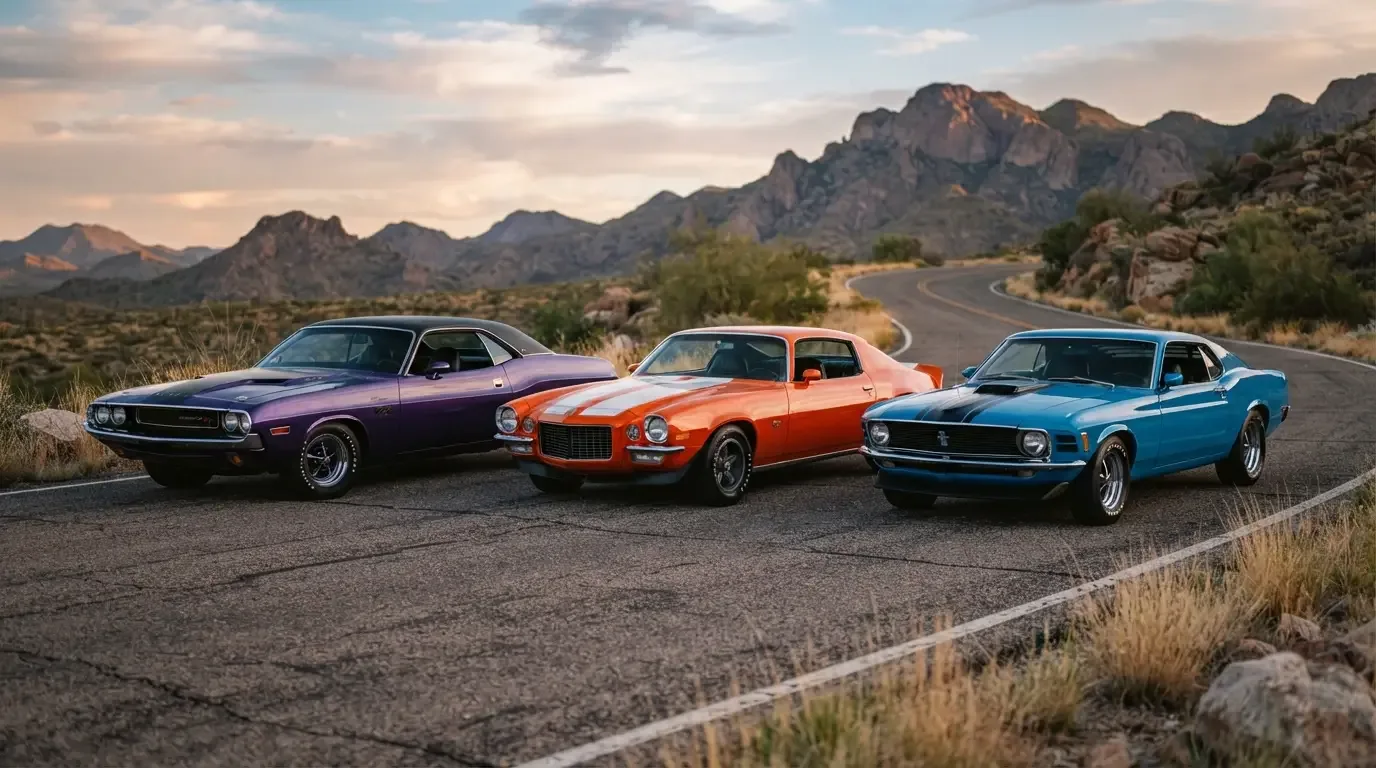
Placing the 1970 Challenger next to its rivals shows why Dodge chose to go big rather than blend in. The Ford Mustang and Chevrolet Camaro had defined the pony car as a compact, sporty coupe, and both had loyal followings and years of head start. Dodge could not out-history them, so it out-sized them. The Challenger was wider and heavier, with a cabin that felt more substantial and an option list that reached higher than anything Ford or Chevrolet offered in the same showroom. Where a loaded Camaro topped out at the SS 396, a Challenger could be ordered with the 426 Hemi, an engine with a racing bloodline neither competitor could match in a pony car body.
That positioning was a deliberate bet. Dodge decided that arriving last meant arriving different, and it built the most engine, the most color, and the most road presence it could rather than a careful copy of the established formula. The bet paid off in reputation even where it fell short in raw sales, and it is the reason the 1970 car reads as the boldest statement in the class rather than the tardiest.
The debut that had to carry the whole run
Here is the part that gives the 1970 car its weight in the story. The Challenger's high-performance era was brief. Insurance surcharges on muscle cars, tightening emissions rules, and the 1973 oil shock all hit within a few years of launch. The big engines thinned out after 1971, the Hemi and the 440 Six Pack disappeared, and by 1974 the Challenger name was retired. That means the 1970 model year is not just the first chapter. It is the peak. Every high-water mark of the E-body, the widest engine choice, the wildest colors, the T/A, the greatest number of Hemi cars, belongs to 1970 or the season right after. When collectors talk about a real Challenger, they usually mean this one.
"I read a lot of build sheets from 1970, and the pattern is always the same. The base cars were ordinary transportation, and the fast ones were ordered by people who knew exactly what they wanted. The paperwork tells you which is which, and that is the whole value of the year."
- Tom Ramirez
What to keep in mind when you read a 1970 Challenger
Because the engine and options drive everything, learning to read the car matters more than learning to love the shape. The fender tag and, where it survives, the broadcast sheet, tell the original story that the exterior cannot. A repainted car in a modern color hides its birth certificate. A numbers-matching survivor in a documented high-impact shade tells the truth on sight.
The 1970 Dodge Challenger arrived late and left early, and it spent the years in between defining what a Chrysler pony car could be. It was the biggest swing Dodge ever took in the segment, and because the good years were so few, the debut season carries the legend almost by itself. If you want to see one in the metal and understand why the first year commands the attention it does, a browse through a classic Challenger for sale is the fastest education there is.
Sources and notes
- Dodge Challenger (1970) - Wikipedia
- 1970 Dodge Challenger Base - Hagerty Valuation Tools
- 1970 Dodge Challenger R/T - Supercars.net
- 1970 Challenger Production Numbers - Stock Mopar
- 1970 Dodge Challenger Option and MSRP Price List - Amazing Classic Cars
- Dodge Challenger 1st Gen Production Numbers - Automobile Catalog