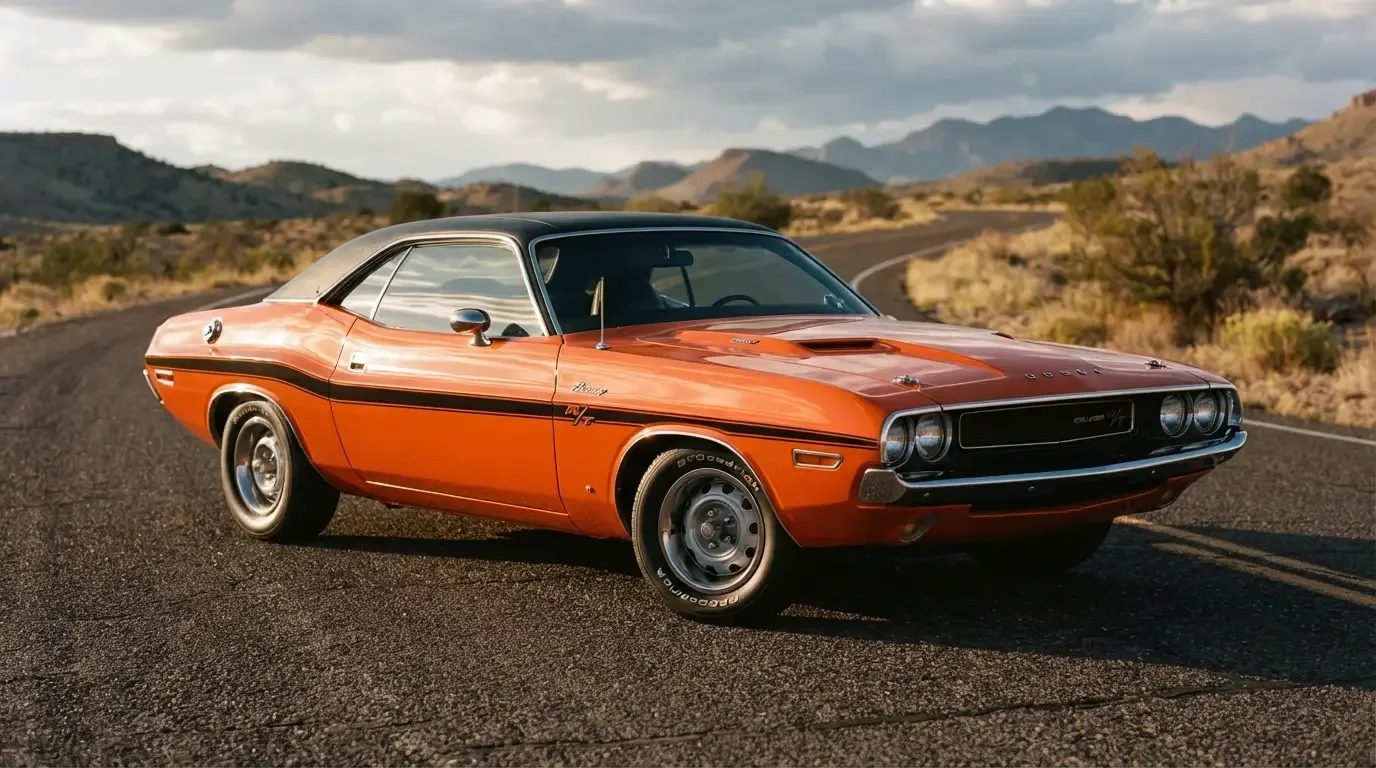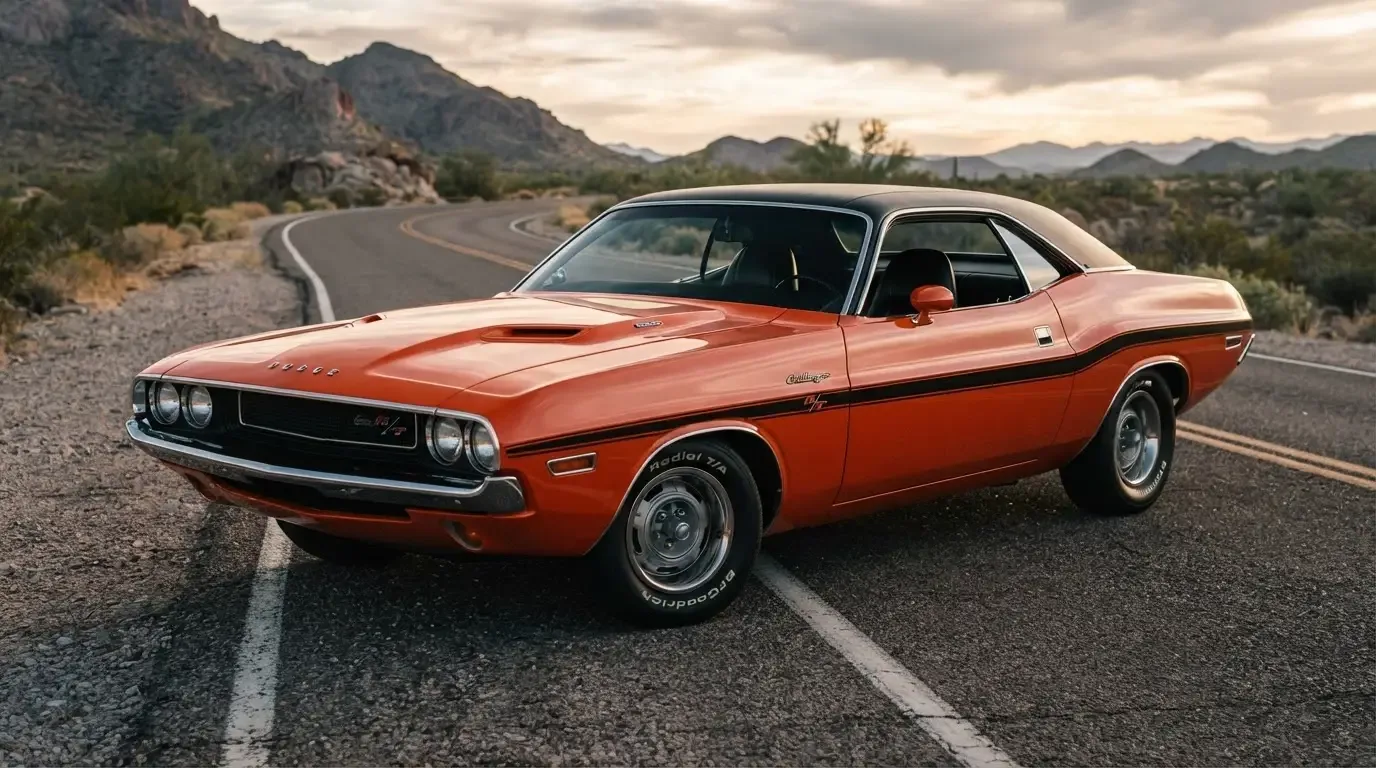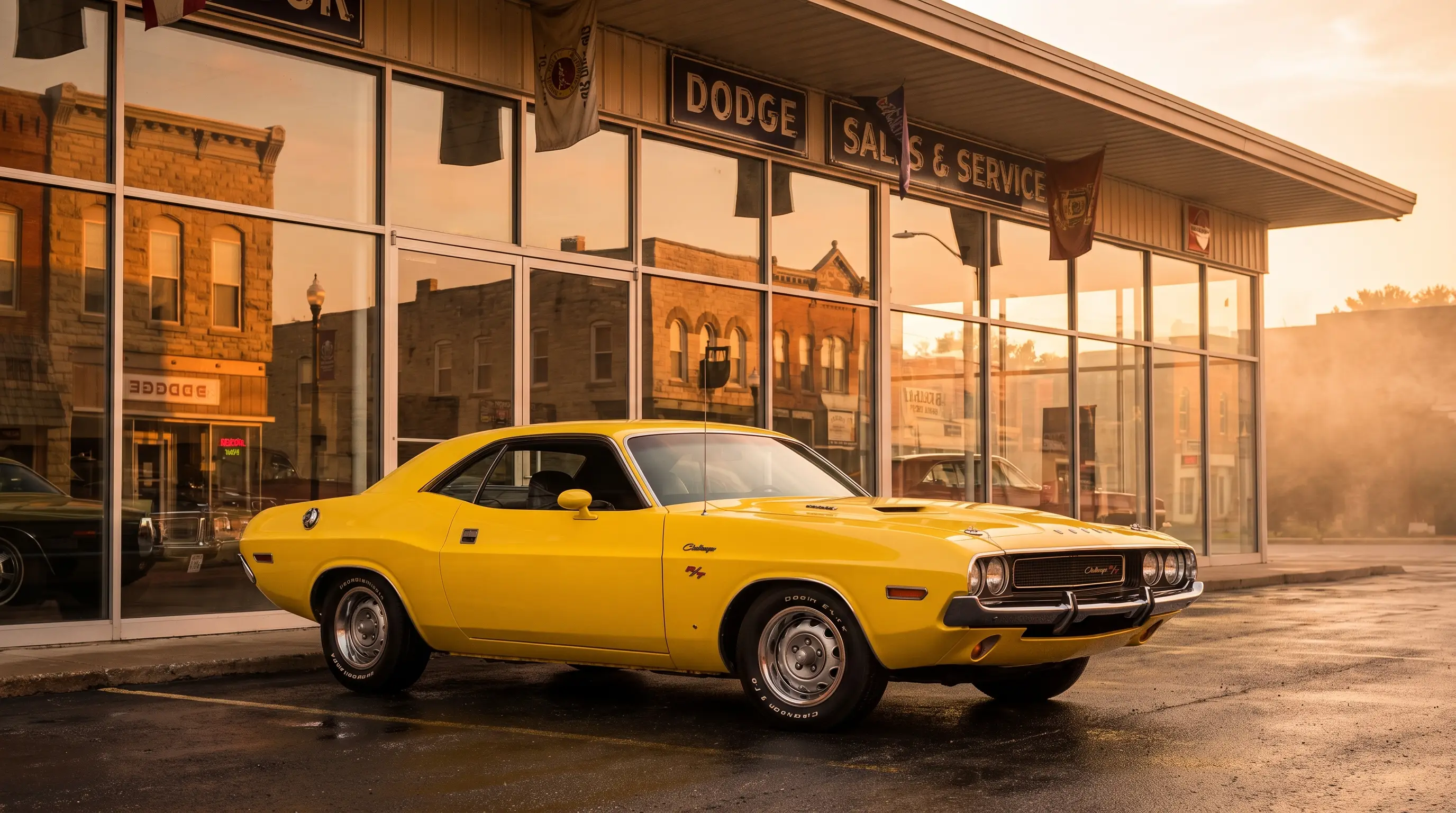
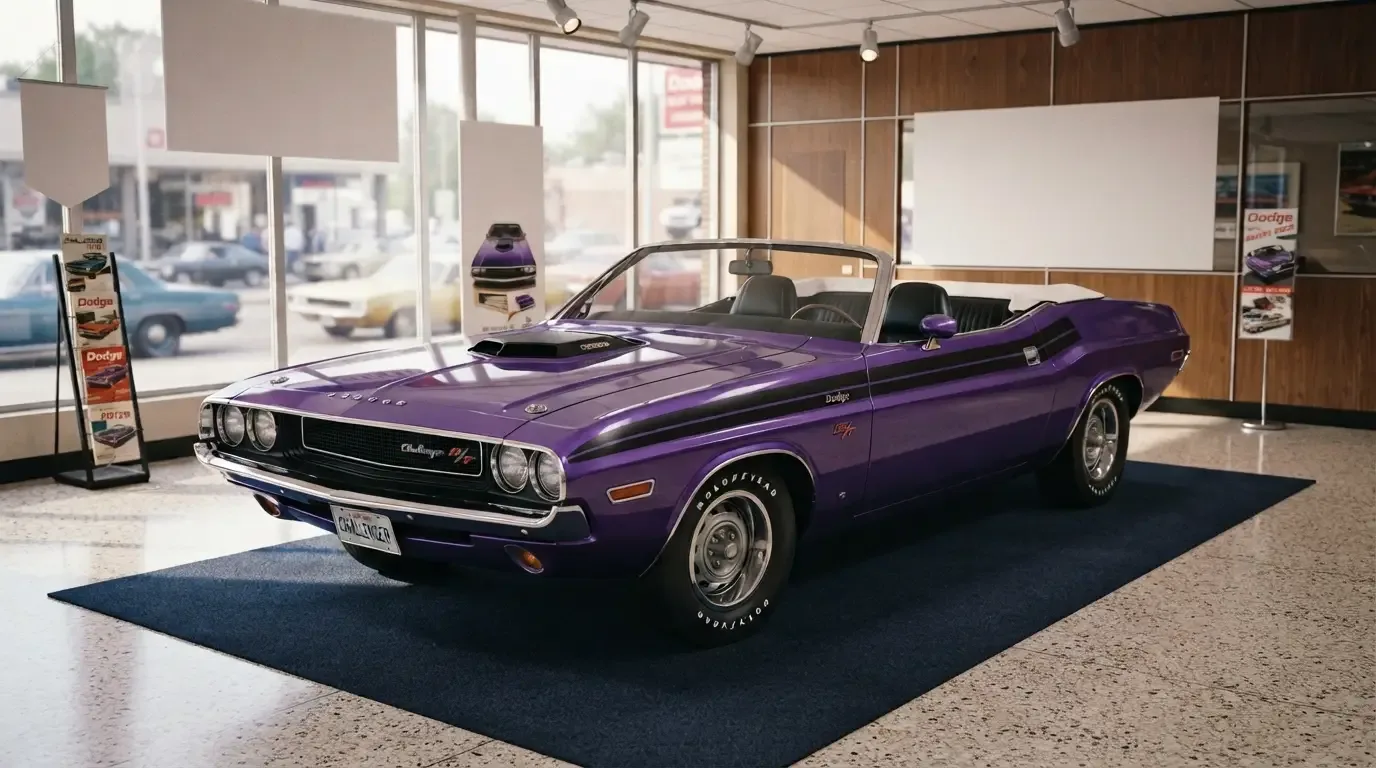
The 1970 Challenger launch was not a single event. It was a rollout that Dodge staged in stages, dealer by dealer, region by region, over the last months of 1969, and the paperwork trail it left behind tells a more interesting story than the glossy brochures ever did. Dodge needed a pony car. Plymouth already had the Barracuda riding on the same E-body architecture, and by 1970 Chevrolet and Ford had years of Camaro and Mustang sales data proving the segment was worth fighting for. The Challenger was Dodge's answer, and the way it reached showrooms says a lot about how Chrysler Corporation thought about its brands in that period.
Why Dodge needed its own pony car
Plymouth had been selling the Barracuda since 1964, essentially a badge job on the Valiant. Dodge dealers had nothing comparable to put next to a Mustang or a Camaro on the showroom floor, and that gap mattered more every year the segment grew. Chrysler's answer was to give Dodge a genuinely distinct car rather than another Barracuda clone. The Challenger got its own wheelbase, its own sheet metal, and its own trim strategy, built on the E-body platform Chrysler developed specifically for this class of car. Dodge management wanted a product that could compete on both style and specification, something buyers would cross-shop against a Mustang and choose on its own terms rather than as a Plymouth substitute.
Internally, the project moved with the kind of urgency that only lost market share creates. Chrysler had watched two full generations of Mustang and Camaro sales pass without a Dodge-badged entry, and dealers had been asking for one. The E-body program gave engineering a shared platform to amortize development costs across two divisions, which made the business case easier to justify even as Chrysler's finances tightened toward the end of the decade.
The showroom rollout, market by market
Dodge introduced the Challenger to the press and to dealers in the fall of 1969, ahead of the car going on public sale as a 1970 model. Advertising ramped up through September and October, with print campaigns emphasizing the range of available engines and the Challenger's position as the roomier, more comfortable option in the pony car class. Dealers received early shipments unevenly. Some regions had cars on the lot in September, others waited into October, a normal pattern for a new nameplate being built alongside existing Dodge and Plymouth production at the company's assembly plants.
The launch strategy leaned hard into the idea that the Challenger was a bigger, more livable pony car than its rivals. Dodge marketing materials from the period repeatedly stressed interior space and a smoother ride compared to the Mustang and Camaro, a deliberate positioning choice given that both those competitors had reputations for being tight inside. Read 1970 dodge challenger history for the fuller account of how the whole model year came together, including the engine lineup and trim structure that followed the launch.
Pricing and the trim ladder at introduction
At launch, Dodge offered the Challenger across a spread of trims designed to catch buyers at nearly every price point in the segment. The base coupe undercut the Barracuda and matched up closely against a well-equipped Mustang, while the R/T brought performance credibility with big-block power, and the top-shelf SE trim added a vinyl roof, upgraded interior trim, and a smaller rear window for a more formal look. This tiered approach meant a single showroom visit could route a buyer from an economical six-cylinder coupe all the way to a 440 Six Pack R/T, and Dodge salespeople were trained to walk customers up that ladder.
The base hardtop coupe listed at around $2,851, with the SE stepping up to roughly $3,083, the convertible starting near $3,120, and R/T models spanning about $3,266 to $3,535 depending on body style. The spread in base pricing across the lineup was wide enough that Dodge could claim the Challenger competed with everything from a stripped Mustang hardtop to a loaded Camaro SS, a flexibility that Ford and Chevrolet's more rigid trim structures did not always match.
Early reception from press and public
Enthusiast magazines of the day generally praised the Challenger's ride quality and interior room while noting it was heavier than a Mustang, a tradeoff that showed up in both handling and straight-line performance depending on the engine ordered. The car's styling drew favorable comment for its long hood and short deck proportions, a look shared with the Barracuda but expressed with different sheet metal and a distinct grille and taillight treatment that set the two E-body cars apart at a glance.
Public reception through the winter of 1969 into 1970 was strong enough that Challenger became a fixture in Dodge's advertising for the rest of the model year, and the car settled into the market as a legitimate third option in the pony car conversation rather than a late arrival playing catch-up.
"Dodge didn't rush the Challenger to market to chase Mustang sales. They rushed it to market because every month without a pony car was a month of lost dealer trust, and that internal pressure shows up in how fast the trim ladder filled out once the car finally launched."
- Tom Ramirez
The 1970 challenger launch also coincided with a broader shift in how Chrysler marketed its youth-oriented products, tying the car to music, motorsport sponsorships, and a general performance image that Dodge would lean on for the rest of the decade even as the market began to change. Understanding that launch context helps explain decisions Dodge made later in the E-body's run, including engine availability and trim adjustments that followed almost immediately after the car's first full season on sale.
What the launch tells us about Dodge's strategy
Looking back, the 1970 rollout reveals a company trying to do two things at once: catch up to a segment it had ignored for years, and differentiate its new product enough that it would not simply cannibalize Plymouth's existing Barracuda sales. Dodge largely succeeded on both counts. The Challenger found its own identity quickly, helped by a marketing push that emphasized size, comfort, and a broad engine range rather than trying to out-muscle the competition on paper alone.
For readers curious about the styling choices that came out of this launch period, a related story covers how the car's proportions and details were developed. And for anyone tracking down an original example from this launch year, Challengers for sale now gives a current look at what is available on the market today.
What stands out most, five decades on, is how deliberately Dodge sequenced the whole thing. The press cars went out first to build magazine coverage ahead of the public sale date. Dealer training material followed, walking salesmen through the trim ladder so they could steer a customer from a base six-cylinder coupe up to an R/T without missing a beat. Advertising timing was staggered by region so that demand built rather than spiked and stalled. None of that was accidental, and none of it reads like the work of a division playing catch-up out of desperation. It reads like a company that had watched its competitors for years, taken notes, and finally had the platform and the budget to act on them. The Challenger launch worked because Dodge treated it less like a single new model and more like the start of a multi-year campaign to own a piece of the pony car market it had ceded for too long.