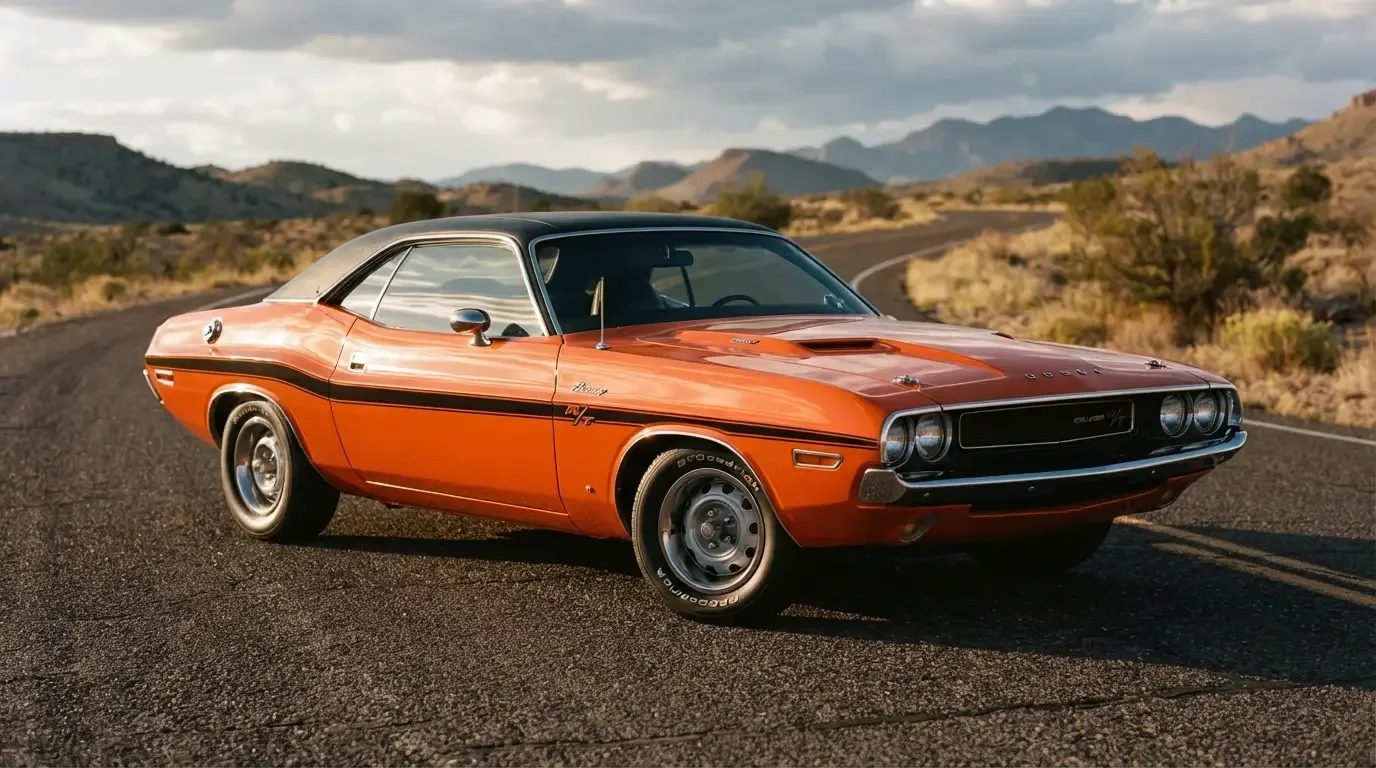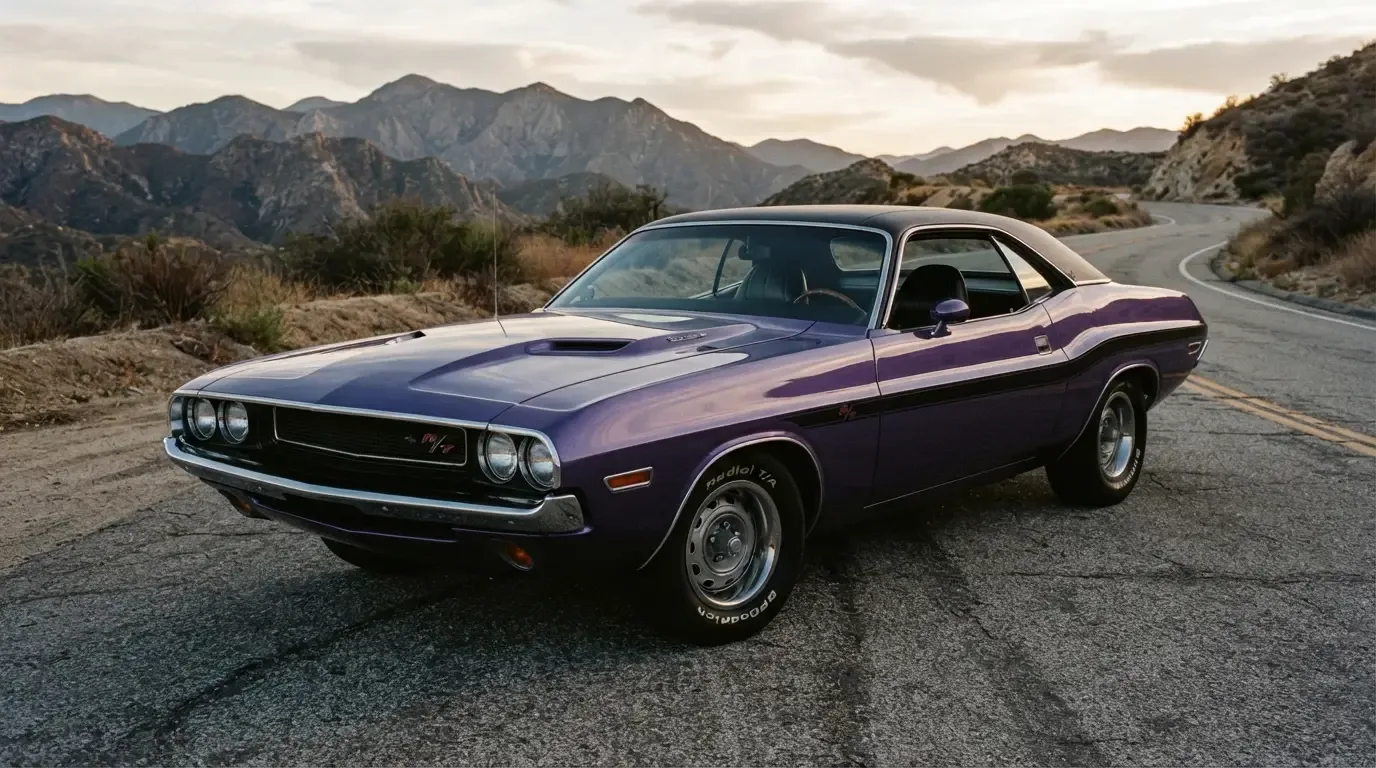
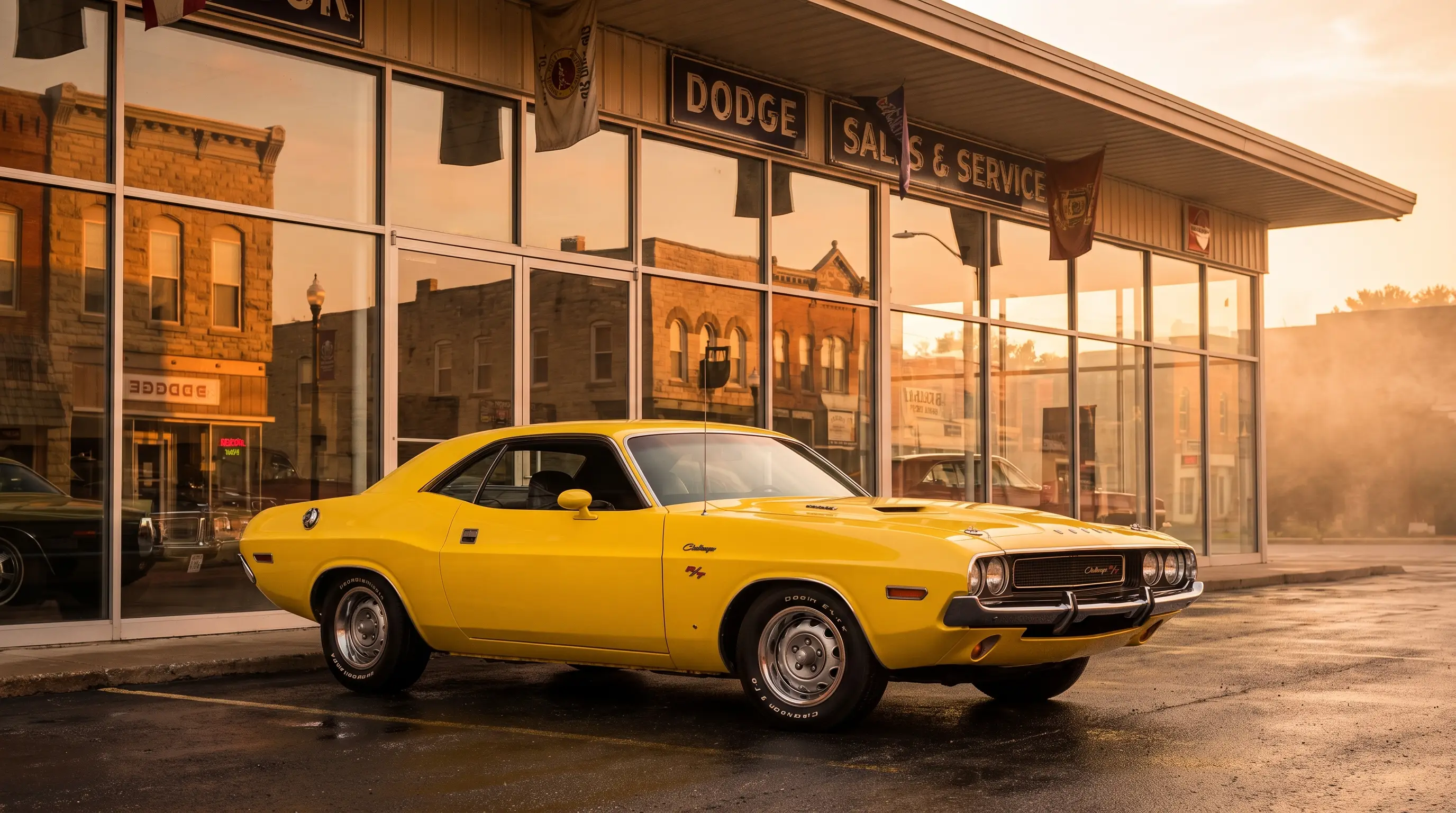
A journalist named Dave Wilson climbed out of a rented sedan at a Chrysler proving ground outside Detroit in the late summer of 1969 and found a row of cars waiting under a tent, engines ticking as they cooled from the drive over. He was there for the 1970 Challenger press launch, one of a few dozen writers Chrysler had flown in, fed, and handed keys to for a weekend that the company hoped would change how America talked about its pony car lineup. Wilson did not know yet that the car in front of him would outlive most of the men standing around it, or that the words he typed that week would still be quoted decades later by people restoring the very cars he drove.
Why Chrysler needed the room to be loud
By 1969, Ford and Chevrolet had been selling pony cars since 1964 and 1967 respectively, and Chrysler was arriving to a party that had already been going for years. The Challenger was Dodge's answer, built on the E-body platform it shared with the Plymouth Barracuda, and it needed press coverage that did more than confirm the car existed. It needed writers to say the Challenger was worth cross-shopping against a Mustang or a Camaro, in print, with their names attached.
Chrysler's answer was to stage the launch like an event rather than a courtesy. Journalists were given cars across the trim range, from a slant-six commuter special to R/T models with the 440 Magnum and, for a lucky few, the 426 Hemi. The idea was simple. Let the writers drive everything, let them push the quick cars hard, and trust that the spread would do the persuading on its own.
What the writers actually drove
Contemporary road tests from Car and Driver, Motor Trend, and Hot Rod all covered the Challenger that fall, and the split in their coverage tells you something about how wide the lineup really was. The base cars earned polite, forgettable praise. The R/T cars, especially the 440 six-pack and Hemi variants, earned the kind of breathless acceleration numbers that magazine covers are built around. One tester clocked a Hemi Challenger through the quarter mile in the low 14s, a 14.1 second run at 103 mph recorded by Car and Driver that other outlets came close to matching but rarely beat.
What stood out in the writing was less the raw speed than the surprise. Several writers noted that they expected Dodge to have simply badge-engineered the Barracuda, and instead found a car with its own character, longer wheelbase, wider stance, and a dashboard that felt like its own design rather than a shared afterthought. That distinction mattered to reviewers who had grown tired of platform-sharing dressed up as innovation.
The reviews that stuck
Not every word written that week was flattering. A few testers dinged the Challenger's turning radius and criticized the base interior trim as cheap next to the R/T's optional gauges. But the durable takeaway, the sentence that kept getting requoted into the following decade, was that Dodge had built a car that could win a stoplight argument against anything else on the lot. That framing, car as argument-winner, stuck to the Challenger's reputation for years and shaped how the car was marketed even after the initial press cycle ended.
The timing helped too. Insurance companies had not yet clamped down on muscle car premiums the way they would by 1971, and gas was still cheap enough that a 375 horsepower engine, the 440 Magnum's rating, read as a selling point rather than a liability. The 1970 Challenger press launch landed in what turned out to be a narrow window, and the writers covering it, whether they knew it or not, were documenting the peak of an era rather than its beginning.
"You can tell which cars from that era were built to be driven hard because the road tests read differently. Nobody was writing careful sentences about the Challenger's ride quality. They were writing about how fast the light turned green and how far behind everyone else was by the time it did."
- Nora Beckett
What the launch meant for the car's later reputation
Press coverage from a single week does not usually shape a car's reputation fifty years on, but the 1970 launch is something of an exception. The writers who drove those cars set a baseline that collectors and historians still reference, a record of what the Challenger felt like before options lists got edited by time and memory. When someone today wants more on the 1970 challenger press launch, they are usually reaching for those original road tests, because nothing captures a car's first impression like the people who drove it before anyone had decided it was a classic.
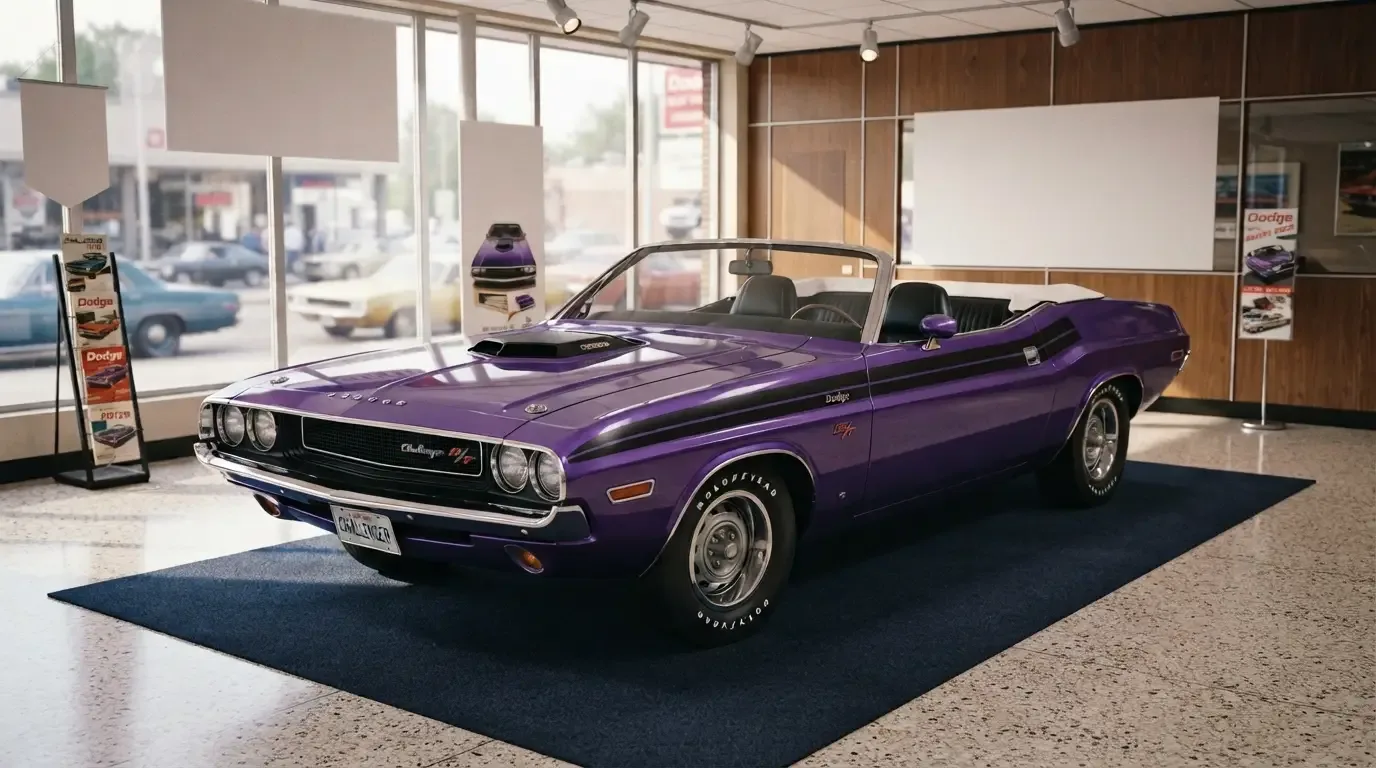
The convertible variant that arrived the same model year carries its own story worth knowing, and if the hardtop launch caught your attention, another one worth knowing sits right alongside it in the archive. Both cars were part of the same press cycle, driven by the same tired, caffeinated writers on the same proving ground roads.
What those journalists could not have predicted was how their casual, deadline-driven prose would become primary source material. Collectors quote acceleration figures from those magazines the way lawyers quote precedent. A number printed in a 1969 issue of a car magazine, right or wrong, has outlived the men who wrote it and shaped how the Challenger gets talked about at car shows fifty years later.
Looking past the headlines
It is worth remembering that the press launch was, at bottom, a sales tool. Chrysler was not staging a historical event, it was trying to sell cars, and every writer at that proving ground knew it. What makes the coverage interesting today is not that it was unbiased, it plainly was not, but that the enthusiasm reads as genuine even through the promotional framing. The writers liked the car. You can tell because they kept finding reasons to drive it faster than the assignment required.
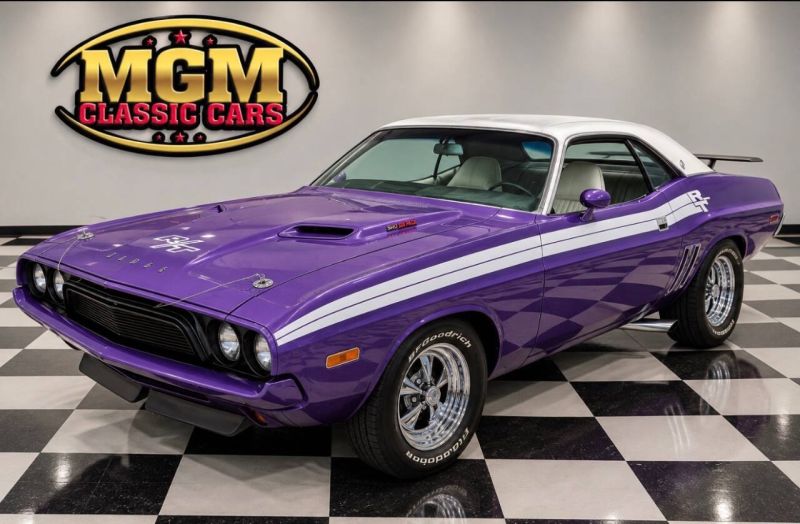
For anyone who has read those old road tests and started wondering what a real one looks and drives like today, it is worth taking the step from the archive to the driveway. You can browse classic Challenger listings and see how many of those original press-launch impressions still hold up when the car is sitting in front of you instead of described in a fifty-year-old magazine.
The Challenger that rolled out in 1970 did not need decades of hindsight to be recognized as something worth paying attention to. The writers at that first press event figured that out in a weekend, wrote it down under deadline pressure, and left a paper trail that still shapes how the car gets discussed today.
Sources and notes
- Dodge Challenger (1970) - Wikipedia
- 1970 Dodge Challenger R/T 440 Magnum specs - Automobile Catalog
- 1970 Dodge Challenger R/T Hemi performance data - Automobile Catalog
- Car of the Week: 1970 Dodge Challenger R/T - Old Cars Weekly
- 1970 Dodge Challenger R/T 440 Six Pack profile - HowStuffWorks
- 1970 Dodge Challenger R/T 426 Hemi specs - Motor Matchup