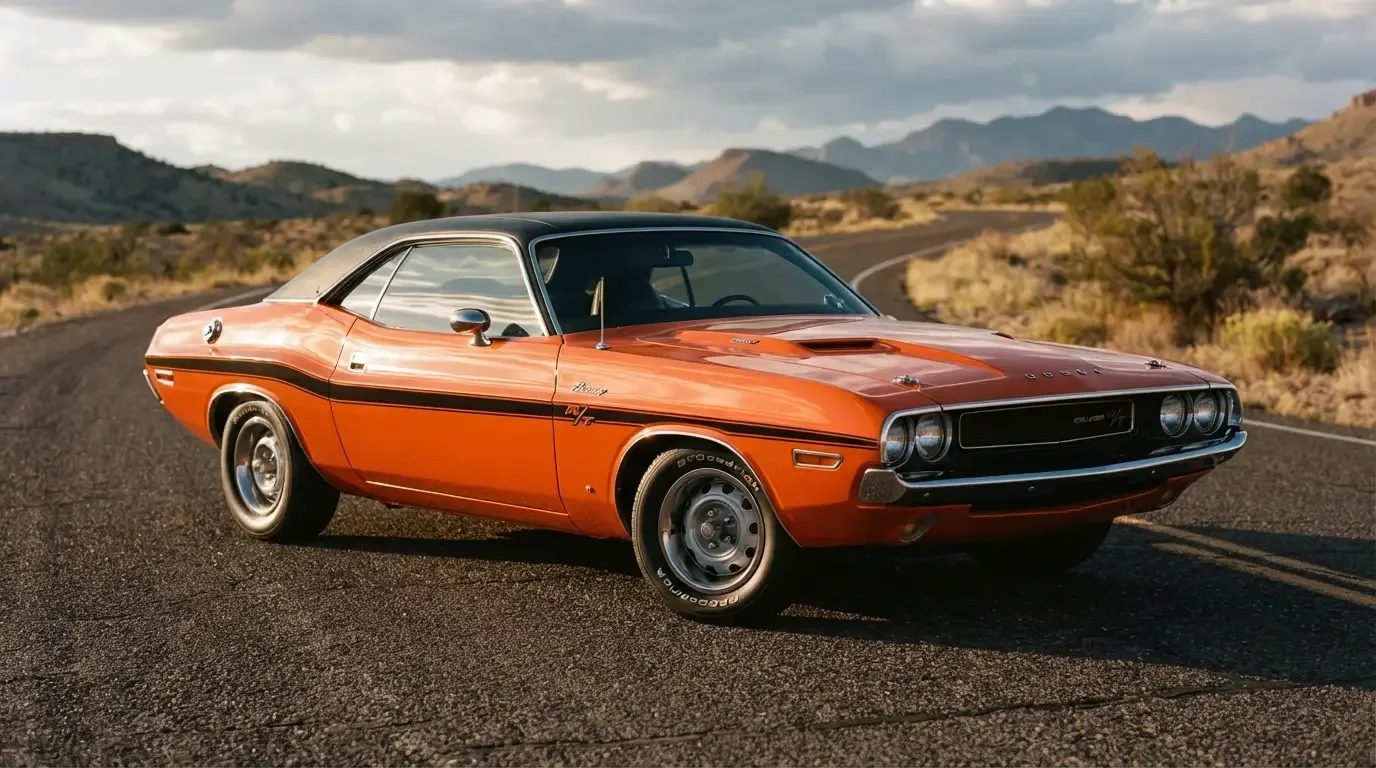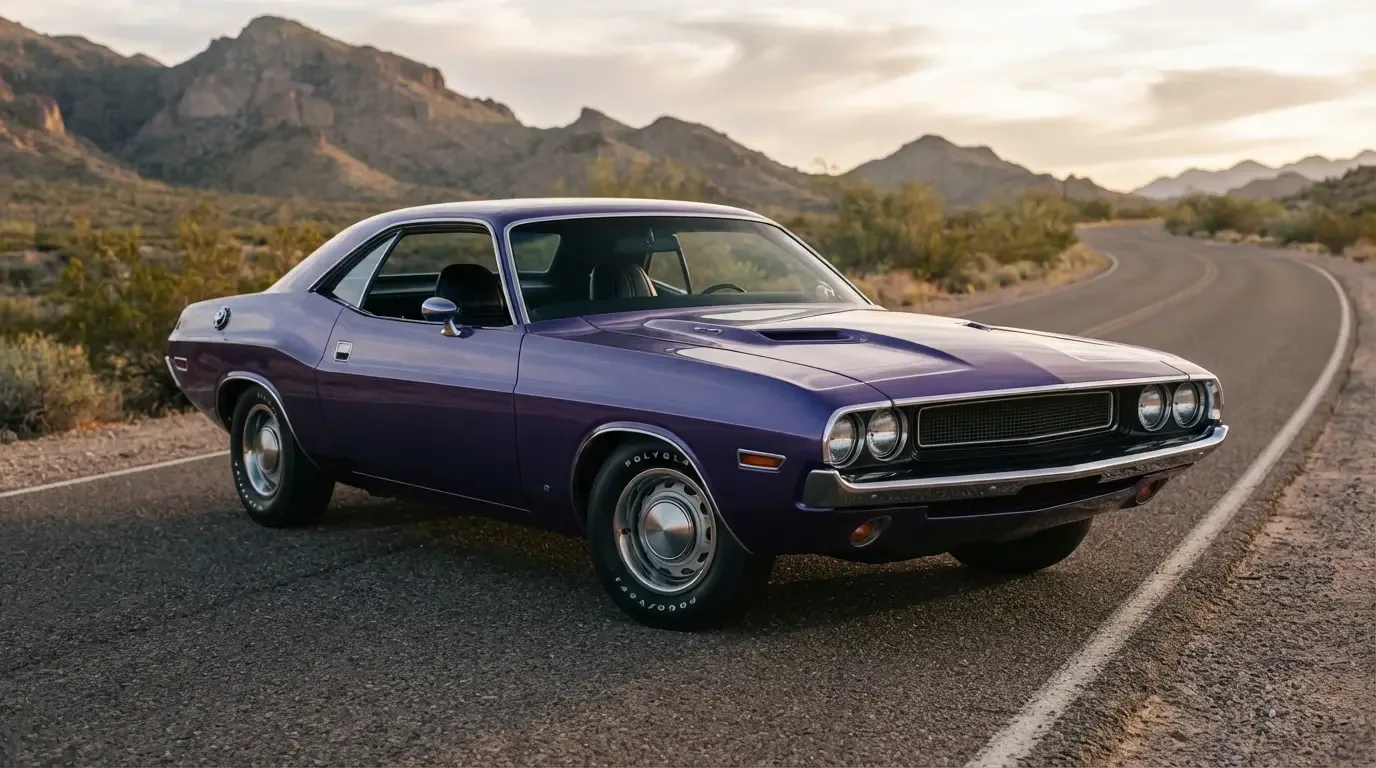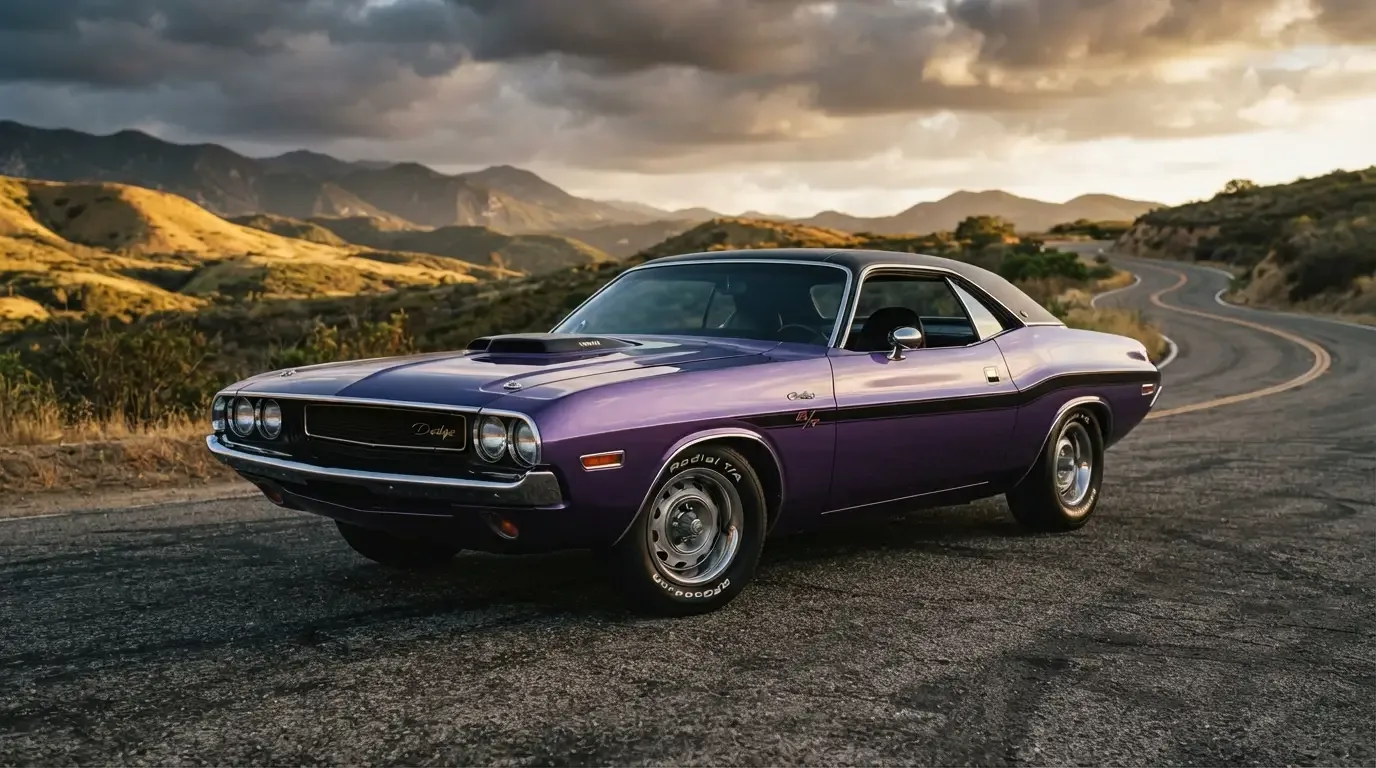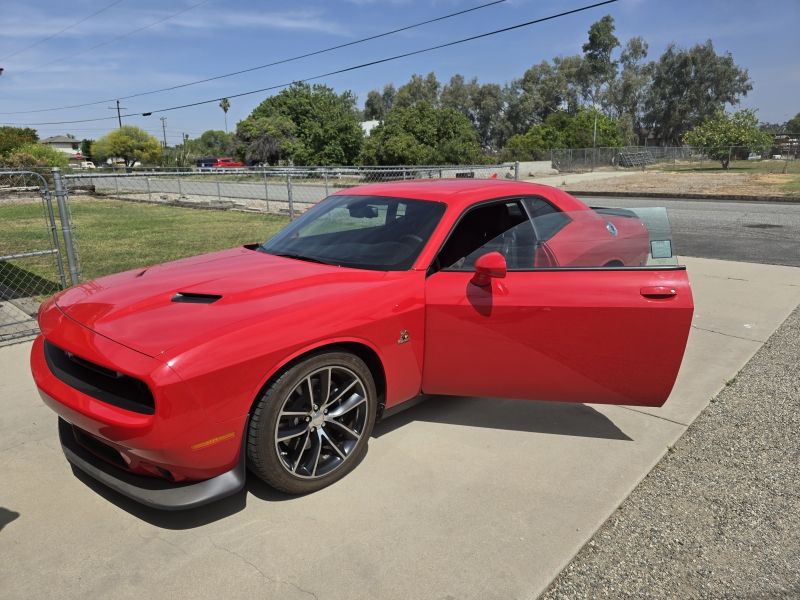
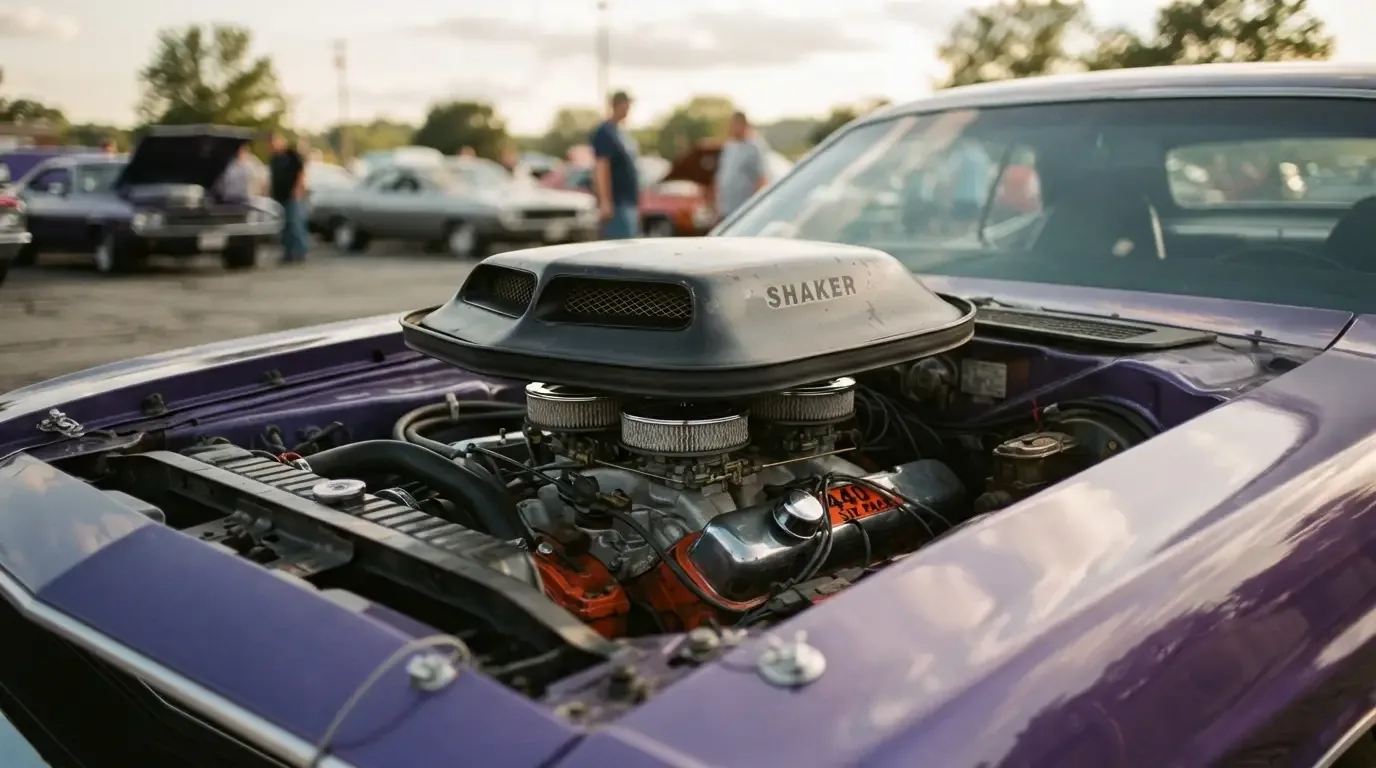
My uncle used to park his Challenger at the end of the driveway so the neighbors would have to walk past it to get their mail. He never said it outright, but everyone understood the reason had a name: the Shaker. That hood scoop, bolted straight to the top of the engine so it visibly shook at idle, is one of those details that turns a car from transportation into a personality, and it belongs to the Dodge Challenger's story as much as any engine option ever did.
An idea that sounds simple until you build it
Most hood scoops on muscle cars in 1970 were cosmetic, fiberglass shapes riveted to sheet metal that fed nothing but air to an empty cavity. The Shaker was different because it was functional and, more importantly, it moved. Rather than mount the scoop to the hood itself, Dodge engineers attached it directly to the air cleaner assembly sitting on top of the engine. Every time the throttle opened and the engine rocked on its mounts, that scoop rocked with it, poking through a cutout in the hood that gave it just enough clearance not to touch metal. At idle, at a stoplight, the whole thing trembled. That is where the name came from, and it is not marketing embellishment. The thing genuinely shook.
It was available across several engine options in the Challenger lineup, and once buyers saw one in person, competitors' cosmetic scoops started to look a little embarrassing by comparison. A functional part that also happened to be a visual signature is a rare combination, and Dodge leaned into it hard in the sales materials.
Why it worked as more than a gimmick
Cold air induction was not new in 1970, manufacturers had been chasing denser, cooler intake charges for years because cold air holds more oxygen and helps an engine make more power. What made the Shaker stand out was that it delivered on that promise while also being the most visible, most talked-about option on the car. A buyer who cared nothing about induction temperature still wanted the Shaker because it looked mean sitting there vibrating with the engine. A buyer who understood exactly what it did for airflow wanted it for a different reason entirely. Few options in Challenger history managed to satisfy both crowds at once.
The scoop that outlived its own decade
Most performance details from the early 1970s got quietly deleted as insurance premiums climbed and emissions rules tightened through the middle of the decade. The Shaker had staying power that a lot of those features never managed. It became such a recognizable piece of Mopar identity that decades later, when Dodge revived the Challenger nameplate for the modern era, engineers brought the Shaker back almost unchanged in concept, still functional, still visible, still trembling at idle on cars equipped with it. That kind of longevity does not happen to gimmicks. It happens to details that actually earned their reputation the first time around.
For anyone tracing how a single hood scoop became shorthand for an entire model's attitude, it helps to step back and read the full story of that first Challenger model year, because the Shaker did not exist in isolation. It was one piece of a car that Dodge built to make a statement from every angle, not just under the hood.
What club members will tell you if you ask
Talk to anyone who has owned a Shaker-equipped Challenger for any length of time and you will hear the same complaints alongside the affection. The scoop rattles on rough roads if the mounting hardware is not tight. It is a magnet for rain and road grime that a fixed hood scoop would never see. None of that stops owners from grinning about it. There is something honest about a part that shakes because it is doing its job, not because a stylist decided it should look that way. That honesty is exactly what keeps club members swapping Shaker stories decades after the last one rolled off the line.
"You could explain cold air induction to somebody for twenty minutes and they would nod politely. Show them a hood scoop shaking on its own at a stoplight and they understood the whole idea in about two seconds."
- Wayne Coburn
The competition never quite matched it
Chevrolet and Pontiac both experimented with cowl induction and hood-mounted scoops through the same period, chasing the same cold air performance benefit the Shaker delivered, but neither approach carried the same visible, moving signature. A cowl induction hood might open a flap under hard acceleration, invisible to anyone standing on the sidewalk, while the Shaker's constant, visible tremble worked whether the car was screaming down a quarter mile or simply idling at a gas station. That distinction mattered enormously to buyers who wanted their performance intentions announced without needing to explain anything. Ford, in fact, had gotten there first, introducing its own factory shaker-style scoop on the 1969 Mustang 428 Cobra Jet before expanding the option to other engines for 1970, and Chrysler followed with its own version on the Challenger and Barracuda that same 1970 model year. Dodge's take on the idea arrived close on Ford's heels rather than the other way around, which says something about how obvious the functional benefit was once an engineer bothered to bolt a scoop straight to the air cleaner instead of the sheet metal.
Owners who have driven cars with both styles of induction setup will tell you the performance difference between a well-tuned cowl induction system and a properly sealed Shaker is often smaller than the visual drama suggests. What separates them is showmanship, and the Shaker simply had more of it built directly into the hardware rather than bolted on as an afterthought.
Tracking one down today
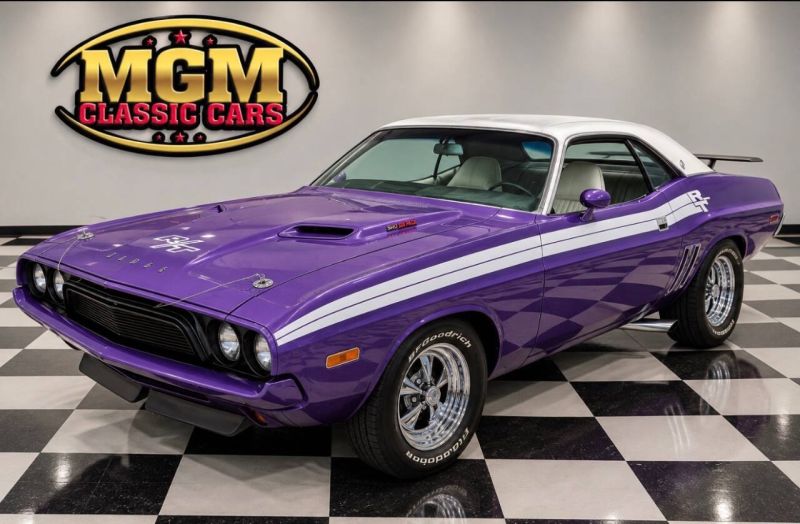
Shaker-equipped cars command real attention on the market now, in part because the option was never universal and in part because the visual signature is so immediately recognizable that even casual buyers gravitate toward it. If you are hunting one, condition of the scoop hardware and the hood cutout matter as much as the engine underneath, since decades of vibration can loosen mounts that were never over-engineered to begin with. Whether you already know exactly what you are looking for or you just want to see what is out there wearing that unmistakable hood, you can browse classic Challenger for sale and get a sense of how many genuine Shaker cars are still on the road.
A hood scoop should not be able to carry a car's entire identity on its own, and yet the Shaker comes close. It is proof that the smallest, most mechanically honest details often outlast the marketing campaigns built around them.
What to check before buying a Shaker car
A genuine Shaker setup involves more than the visible scoop itself. The air cleaner base, the foam seal that keeps engine bay heat from entering the intake, and the hood cutout with its trim ring all need to be present and correctly fitted for the system to work as designed rather than simply look the part. Reproduction scoops exist in wide variety today, some accurate to factory dimensions and others noticeably off, so buyers who care about originality tend to cross-reference casting numbers and factory documentation rather than trusting a scoop's presence alone as proof of an original installation.
Sellers occasionally add a Shaker-style scoop to a car that never came with one from the factory, since the visual appeal alone is enough to interest some buyers regardless of authenticity. That gap between cosmetic addition and functional factory installation is exactly where research pays off, and it is worth confirming before paying a premium for a feature that should genuinely tremble at idle, not just sit there looking the part.