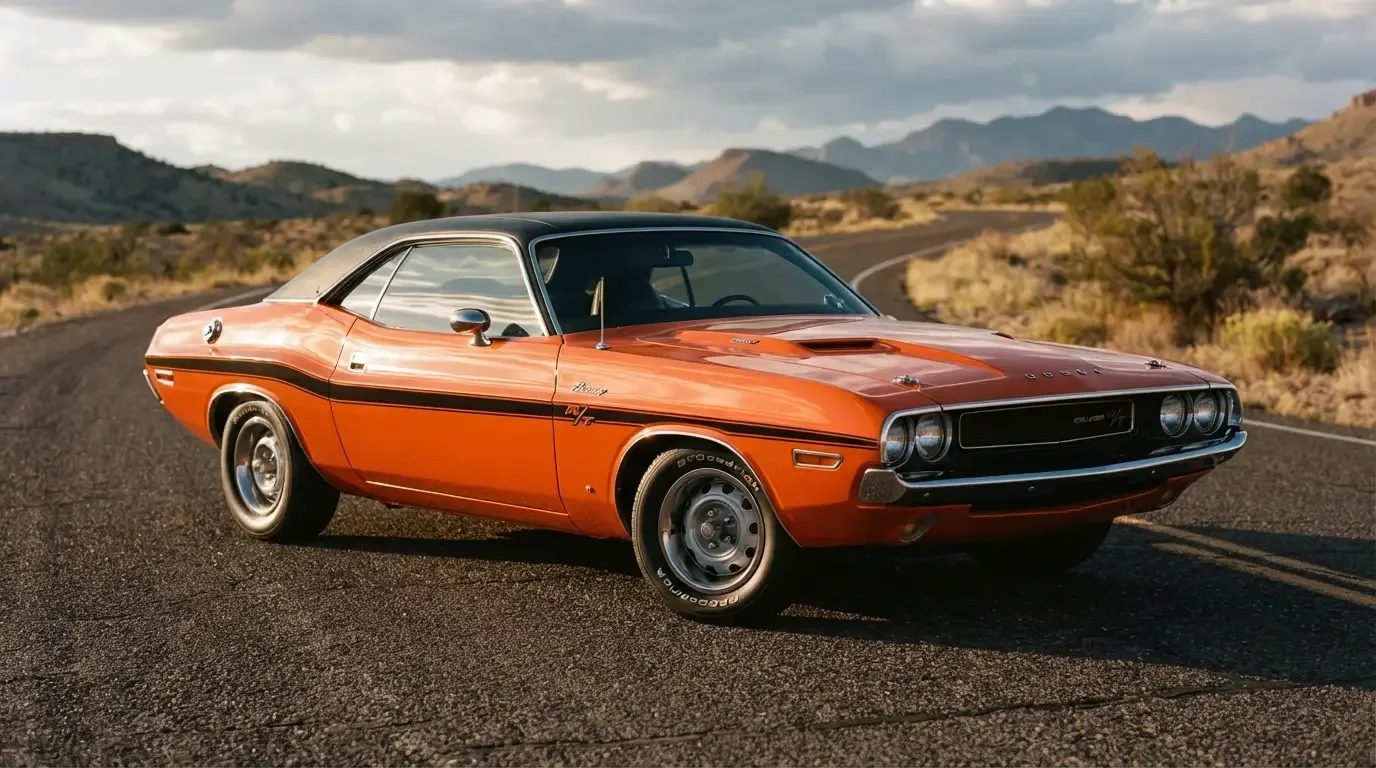
Walk a swap meet long enough and someone will eventually mention the Challenger Deputy like it is a secret handshake. Most Challenger fans have heard of the R/T, the SE, maybe the Trans Am homologation cars. Fewer know that for a short window in 1970, Dodge also sold a Challenger stripped down to almost nothing, aimed at buyers who wanted the shape of a pony car without paying for a single option beyond the badge.
A pony car with the fun bits removed on purpose
The Deputy was not a trim package in the usual sense. It was closer to a philosophy. Dodge product planners looked at the base Challenger coupe, already the entry point of the lineup, and cut it further. The Deputy dropped carpeting for rubber floor mats, deleted exterior brightwork that other Challengers wore as standard, and in some configurations skipped the wheel covers most buyers would have taken for granted. The idea was a fleet-friendly, budget-priced version of the same body that carried the 440 Six Pack and the Hemi on the other end of the price sheet. Same silhouette, same doors, same roofline, but built for a buyer counting nickels, not a buyer chasing quarter mile bragging rights.
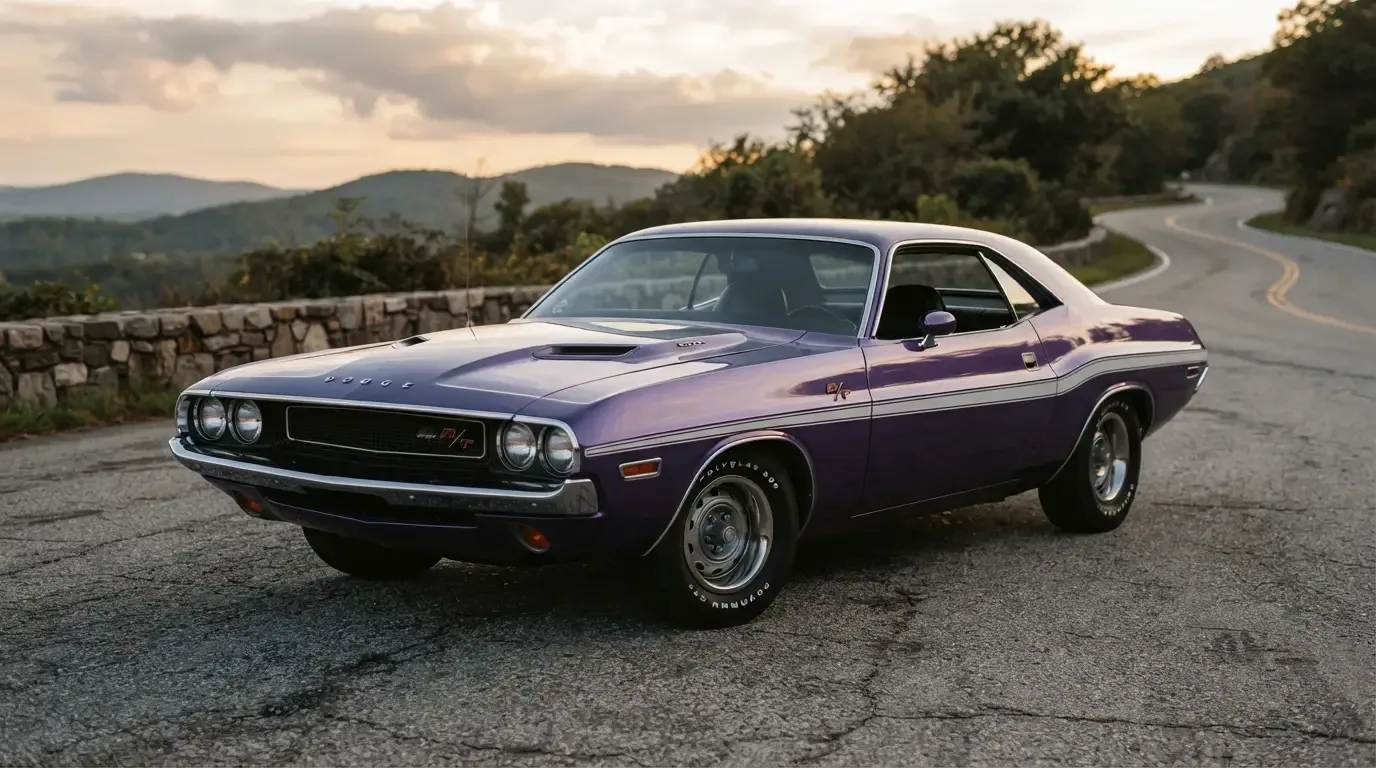
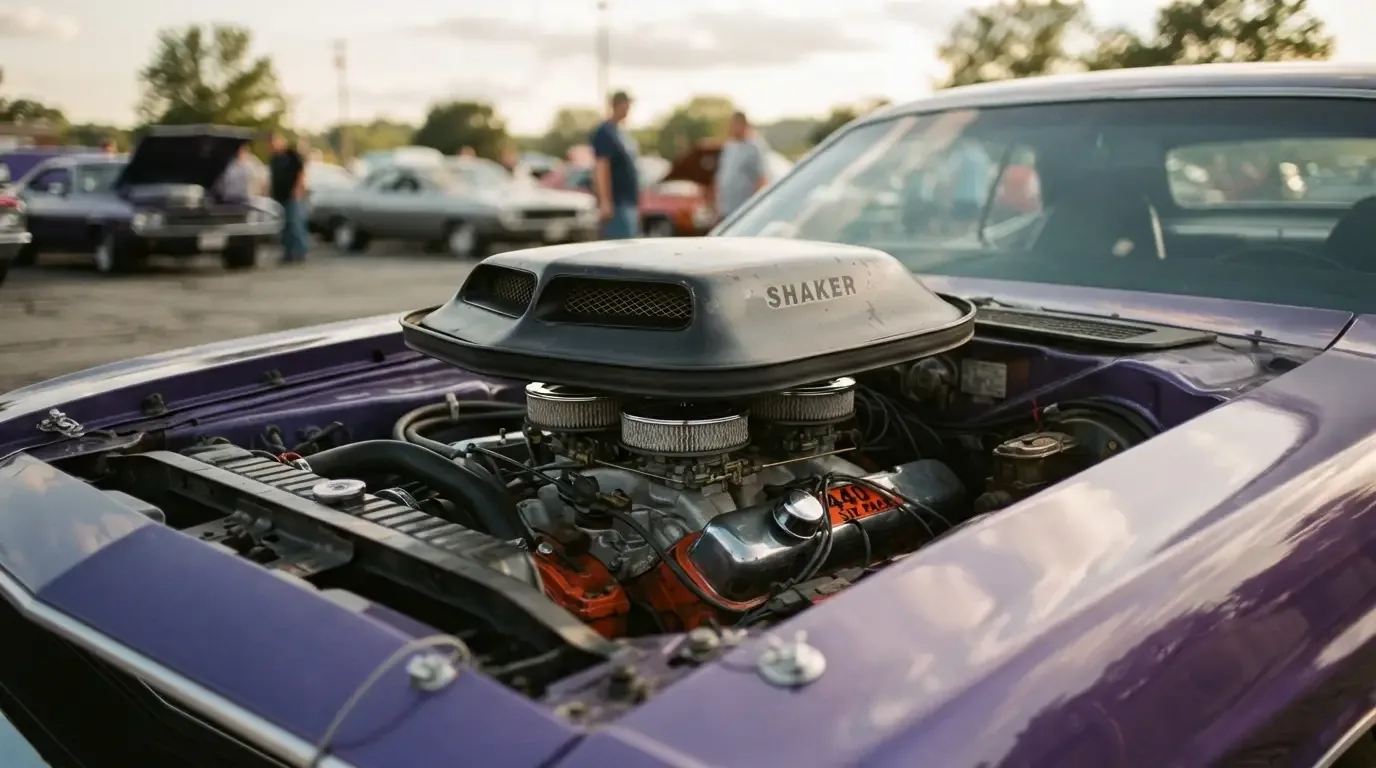
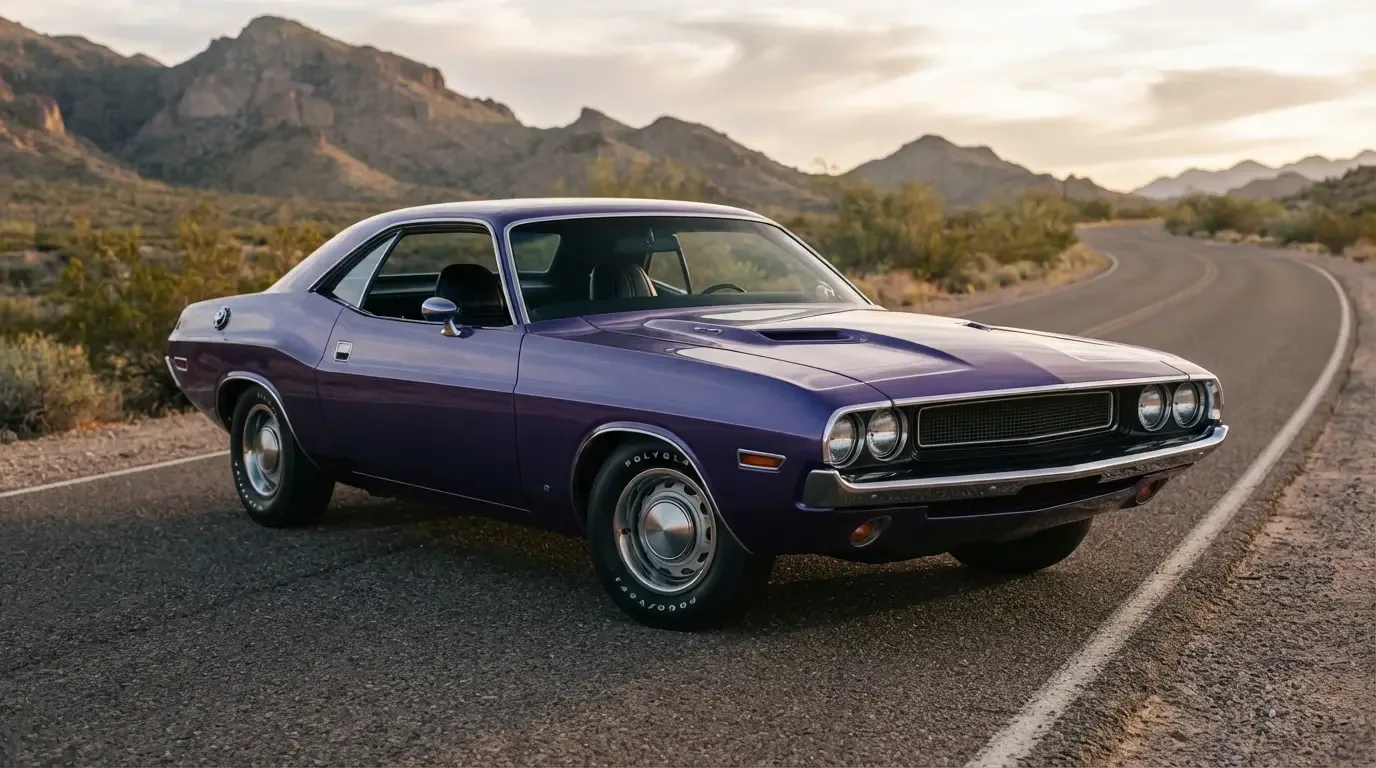
It is a strange thing to build in the same model year as a car wearing Plum Crazy paint and a Shaker hood, and that contrast is exactly why the Deputy has become a curiosity among people who already know the 1970 dodge challenger story cold. It shows the other end of what Dodge was willing to sell under the same nameplate.
Where the Deputy actually landed on dealer lots
The Deputy arrived mid-year in 1970 as a low-priced coupe that undercut the standard Challenger's base price by around $125, and it shaved cost by fixing the rear quarter windows in place and stripping out some of the base car's trim. Standard power came from a 198 cid slant six, a smaller unit than the 225 six in the regular Challenger, though a 318 V8 could be ordered as a step up. Despite the name, the Deputy was not built as a fleet or rental special. Dodge borrowed the name from a "sheriff" character its ad agency had created for Challenger television commercials that year, part of a Southern law-enforcement-themed marketing bit, and simply attached it to this stripped, budget-priced coupe aimed at buyers cross-shopping the six-cylinder end of the Camaro and Firebird lineup. That is still a very different customer than the one Dodge courted with magazine ads showing a Challenger R/T sliding sideways through a corner, but it was a value shopper, not a fleet manager filling out a purchase order.
Why a stripped-down Challenger matters to the full story
It is easy to write the Challenger's history as a straight line from Hemi to Shaker hood to Trans Am racer. The Deputy complicates that story in a useful way. Dodge was not building one car in 1970, it was building a platform that stretched from a barely optioned commuter to a factory drag package, and understanding both ends explains why the E-body program made financial sense to Chrysler's accountants in the first place. High-margin performance halo cars got the magazine covers, but volume cars like the Deputy kept the assembly line running and the whole program funded. If you want the full story of how those pieces fit together across the model's history, that broader account covers the arc from launch through cancellation.
What a Deputy actually cost, and what that bought you
Dropping the options and trim that other Challengers wore standard shaved real money off the sticker, roughly $125 off the already-modest base Challenger price. A buyer walking into a Dodge dealership in mid-1970 could get into a Deputy coupe for meaningfully less than the price of an R/T with even modest options, and for a lot of families cross-shopping a Falcon or a Nova, that price gap decided the sale. The Deputy was Dodge's answer to the argument that pony cars were only for enthusiasts with disposable income. It said you could own the shape without the sticker shock, even if the driving experience underneath was a lot less exciting.
"Everybody remembers the Hemi cars because that is the version worth writing a check for today. The Deputy is the version that explains why Dodge could afford to build the Hemi cars at all."
- Patrick Walsh
Why fleet-focused pony cars rarely survive intact
A budget-priced commuter car lives a harder life than an enthusiast's weekend cruiser, and the Deputy's typical buyer profile made that fate almost guaranteed for a large share of the run. Cars bought purely for cheap, practical transportation get driven without much concern for how carefully the clutch gets treated or how many curbs the front tires meet. Add in a used car market through the 1970s and 1980s that saw the Challenger nameplate as an ordinary secondhand coupe rather than a future collectible, and you get a recipe for attrition that hit stripped-down variants harder than well-optioned R/Ts. Nobody was pulling a Deputy into a heated garage in 1979 to protect an investment. It was just a car, and it got used like one until it eventually was not worth fixing anymore.
That is a very different survival story than the one told by cars carrying rare engine codes, which owners tended to treat with more caution even when they were not thinking about resale value. The result decades later is a genuine imbalance: performance variants that were expensive to buy new turn up at auctions with some regularity, while the cheapest car on the original price sheet has become one of the harder configurations to document with full originality intact.
Finding one today, and why it is worth the search
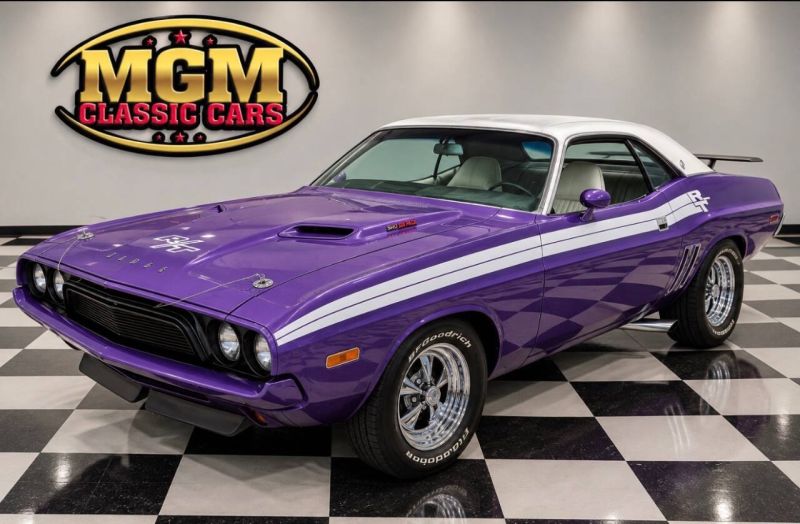
Collectors chasing rarity for its own sake have started circling back to cars like the Deputy precisely because everyone else spent decades chasing R/Ts. A clean, honest Deputy coupe with its original drivetrain intact tells a piece of Challenger history that the performance-focused cars cannot, and the scarcity of surviving examples means a genuine one carries a story most buyers have never heard before. Whether you are hunting a Deputy specifically or comparing it against the more familiar R/T and SE trims, it helps to see current inventory side by side. You can browse classic Challengers on the market and get a feel for how the stripped-down models stack up against the loaded ones in both price and availability.
The Challenger Deputy will never headline a poster or a calendar. It was never meant to. But for anyone who wants to understand the full range of what Dodge built under one nameplate in 1970, from the barest bones coupe to the wildest Hemi convertible, the Deputy is not a footnote. It is the other half of the equation.
What buying one today actually involves
Documentation matters more with a Deputy than with almost any other Challenger variant, precisely because so little separates a genuine example from a base coupe that has simply lost its trim over the decades. A build sheet, a fender tag, or dealer paperwork confirming the original order carries real weight here, since a car missing chrome and carpeting could just as easily be a base coupe stripped by a previous owner as it could be a factory Deputy built that way from the start. Buyers serious about the variant tend to lean on Chrysler's broadcast sheet records and any surviving dealer invoice rather than trusting appearance alone, because appearance alone tells you almost nothing definitive about a car this plain.
That extra diligence is part of what makes the Deputy an interesting project for someone who enjoys research as much as ownership. It rewards patience and paperwork over impulse buying, which is a different kind of collecting experience than chasing a documented Hemi car, but no less satisfying for buyers who like uncovering a car's real story rather than simply admiring one that everybody already recognizes on sight.