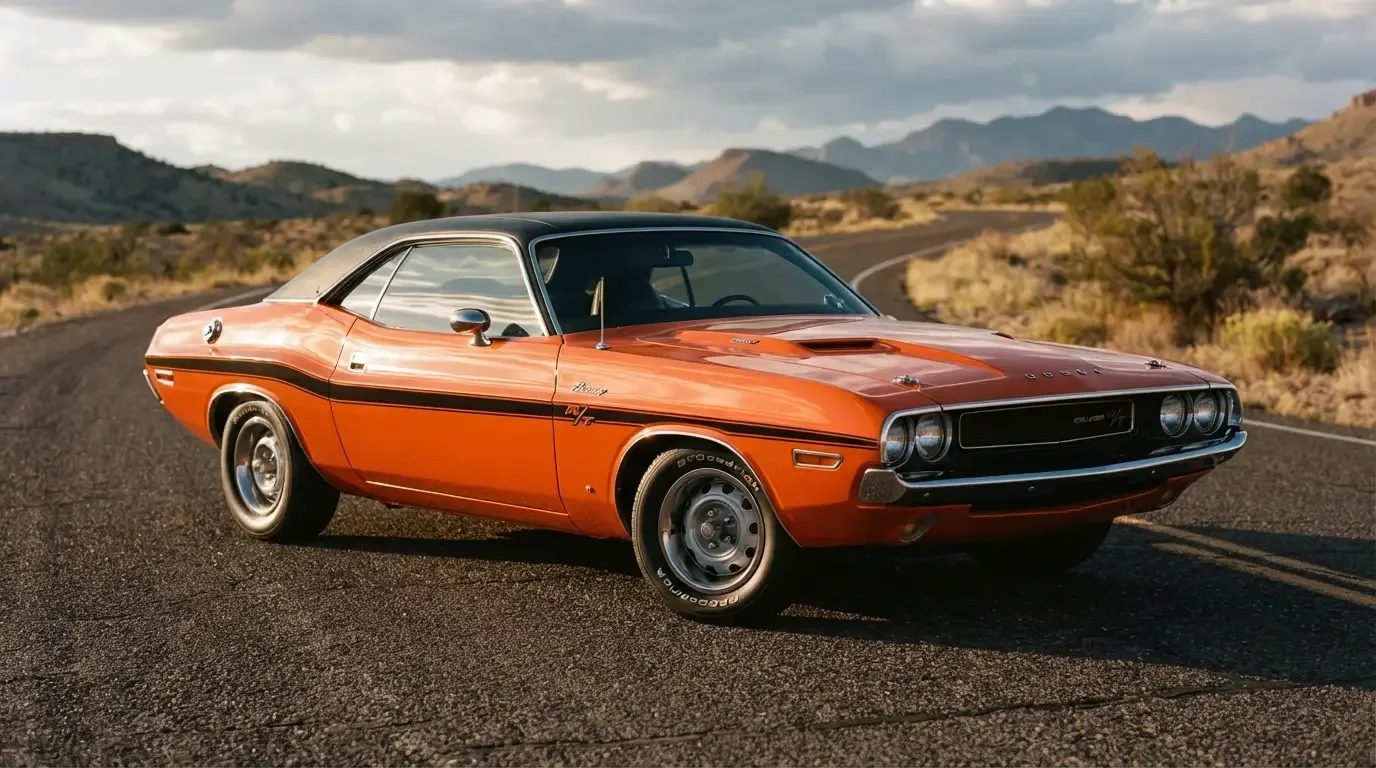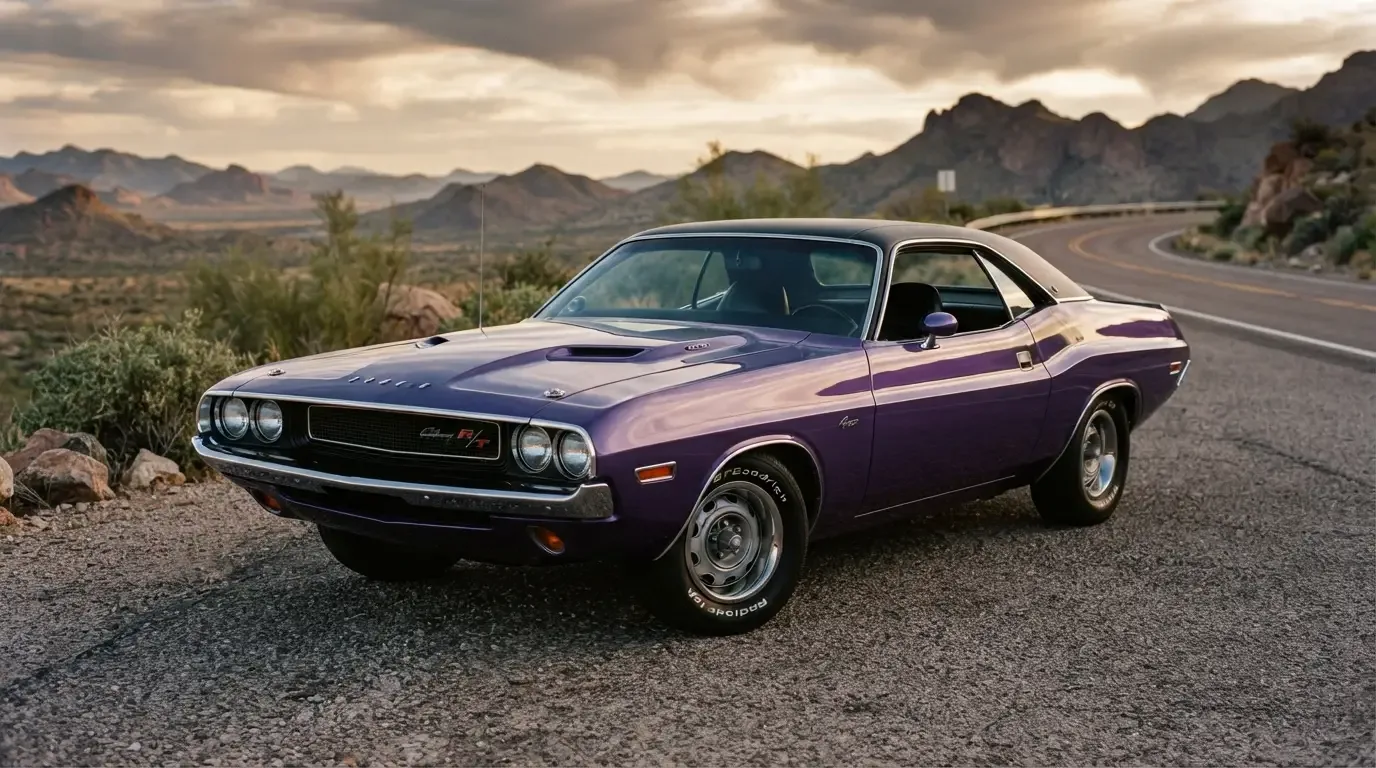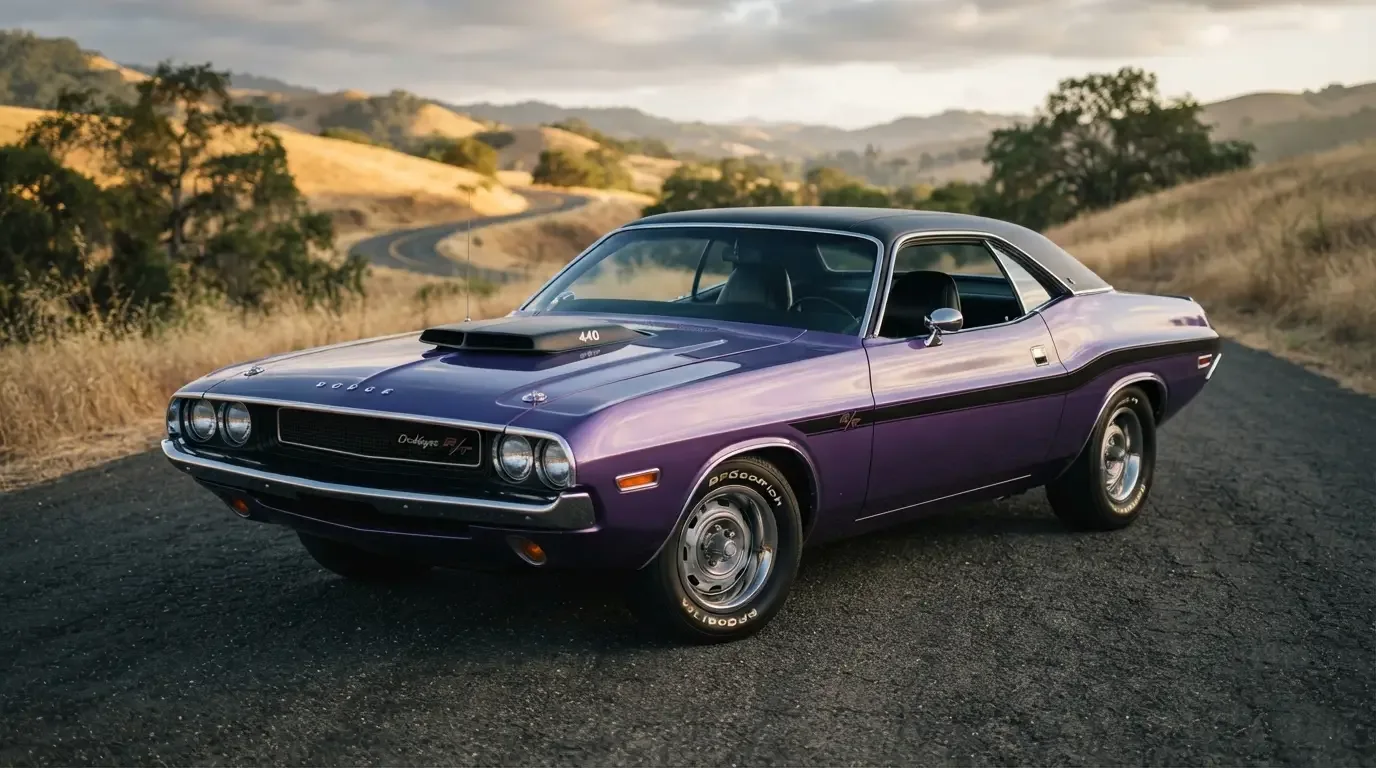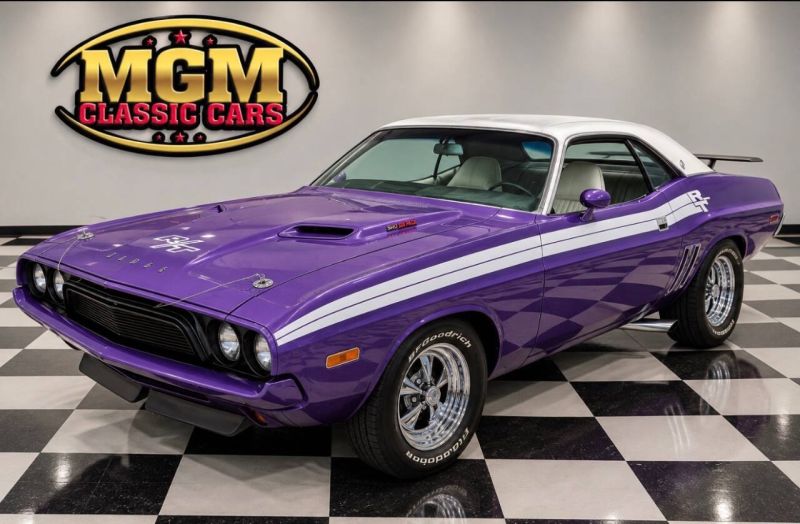
Walk into a Dodge dealer in the fall of 1969 and the 1970 challenger trims on offer amounted to a genuine ladder, not a single car with a few option boxes checked. Dodge structured the lineup so a buyer could leave with anything from a mild six-cylinder commuter coupe to a purpose-built Trans-Am homologation special, all wearing the same basic Challenger badge. Understanding how that ladder was built, and what actually separated Base from R/T from T/A from SE, explains a lot about how Dodge thought about the pony car market in 1970.
The base Challenger: the entry point
The standard Challenger coupe and hardtop came with a slant-six as the base engine, moving up through a range of small-block V8 options for buyers who wanted more than economy commuting. This was the volume trim, the one Dodge expected to move in the largest numbers, and it carried the Challenger's core styling cues, the coke-bottle body profile and long hood short deck proportions, without the performance hardware or visual add-ons of the higher trims. A base Challenger could still be optioned up considerably with V8 power and appearance packages, which meant the line between a well-equipped base car and an entry-level R/T was sometimes thinner than the trim names suggested.
Convertible versions were also offered at the base level, giving Dodge a genuine open-top pony car to compete directly with drop-top Mustangs and Camaros, though the convertible's structural reinforcement added weight and cost compared to the hardtop and coupe body styles.
R/T: the performance backbone of the lineup
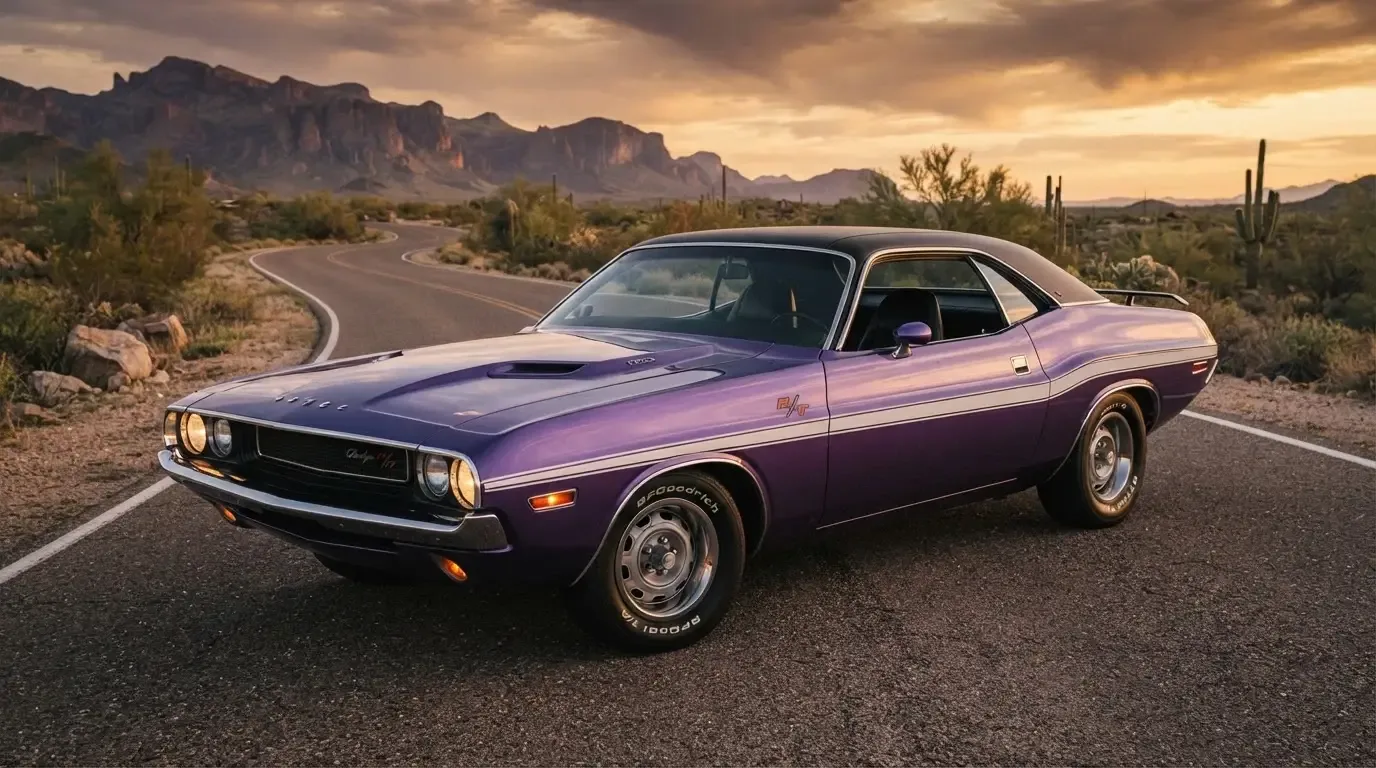
The R/T, short for Road and Track, sat at the center of Dodge's performance offering and could be ordered with a range of big-block engines up to and including the 440 Magnum, the 440 Six Pack, and the 426 Hemi. This was the trim most buyers associate with the 1970 Challenger's muscle car reputation, and it came with visual cues to match, including hood scoops, R/T-specific stripes, and upgraded suspension components to handle the additional power. R/T buyers could further select from a range of transmission and rear axle ratio combinations depending on whether they prioritized straight-line acceleration or a more streetable highway gear.
The 440 Magnum was rated at 375 horsepower, the 440 Six Pack's trio of two-barrel carburetors pushed that to 390 horsepower, and the 426 Hemi topped the range at an advertised 425 horsepower. The R/T's flexibility, being available with such a wide range of big-block engines under one trim badge, is part of why it remains the most collected and most discussed Challenger trim today, since a Hemi R/T and a base 383 R/T represent very different collector tiers despite sharing the same trim designation.
T/A: built for homologation, sold to the public
The Challenger T/A existed because SCCA Trans-Am racing rules required manufacturers to sell a minimum number of street versions of any car they wanted to race, and Dodge built the T/A specifically to satisfy that requirement while fielding a competitive race car in the series. On the street, the T/A came with a distinctive fiberglass hood, side exhaust exiting ahead of the rear wheels, a unique rear spoiler, and a specific 340 cubic inch engine equipped with three two-barrel carburetors, a setup unusual enough that it set the T/A apart from every other Challenger trim on paper as much as in appearance.
Production numbers for the T/A were modest by design, since Dodge only needed to build enough to satisfy homologation minimums rather than chase broad market appeal with this specific configuration. That relative scarcity is a significant part of why T/A examples carry a premium among collectors who specifically value the model's direct racing connection over raw engine displacement.
SE: the formal, comfort-oriented option
The Special Edition, or SE, took the Challenger in the opposite direction from the T/A, emphasizing a more formal, upscale character rather than outright performance. The SE's defining visual feature was its smaller rear window paired with a vinyl roof, a combination that gave the car a more coupe-like, formal roofline distinct from the standard Challenger's greenhouse. Interior trim on the SE stepped up as well, with upgraded upholstery and trim pieces meant to appeal to buyers who wanted the Challenger's styling and available performance without the harder-edged image of the R/T or T/A.
This SE approach mirrored a broader trend across the muscle car segment as manufacturers began hedging against the possibility that pure performance alone would not sustain the market indefinitely, a concern that would prove prescient within just a few years as insurance costs and emissions regulations reshaped the entire category.
| Trim | Focus | Signature feature |
|---|---|---|
| Base | Value, everyday use | Slant-six standard, broad V8 options |
| R/T | Performance | Available 440 Magnum, 440 Six Pack, 426 Hemi |
| T/A | Trans-Am homologation | Three-carb 340, side exhaust, fiberglass hood |
| SE | Formal luxury | Vinyl roof, smaller rear window |
"Four trims that all wear the same name but could not feel more different from behind the wheel. That range is exactly what makes the 1970 lineup so interesting to study, because Dodge was not building one car with options, it was building four distinct personalities on one body."
- Tom Ramirez
Why the trim ladder still matters to buyers today
Knowing the differences between these trims changes how a collector approaches the market. A base Challenger with an added stripe kit is not an R/T, and confusing the two, whether by accident or by a seller's omission, is one of the most common issues buyers run into when shopping original cars from this era. For the fuller picture of how this trim structure fit into the model's launch and overall history, where this started covers the broader context. And for anyone ready to compare trims side by side against real inventory, there is classic Challenger for sale listings worth reviewing before making a decision.
Options that blurred the lines between trims
Dodge's option sheet made the trim ladder even more complicated in practice, since a base Challenger could be ordered with a performance hood, upgraded suspension, and a big-block engine that pushed it visually and mechanically close to an R/T without technically wearing the badge. Conversely, an R/T could be optioned down toward a more comfort-oriented specification with a smaller V8, power steering, and air conditioning, softening its street presence considerably. This overlap is exactly why period build sheets and factory broadcast records matter so much to collectors today. Two Challengers that look nearly identical from across a parking lot can represent very different combinations of trim and options once the paperwork gets pulled, and that gap between appearance and documented specification is where a lot of buyer disputes and, occasionally, honest confusion still originate more than fifty years later. Serious buyers today learn to treat the trim name on a title or a for-sale listing as a starting point rather than a final answer, and to ask for the fender tag, broadcast sheet, or other factory documentation before assuming a car is exactly what its badges suggest.