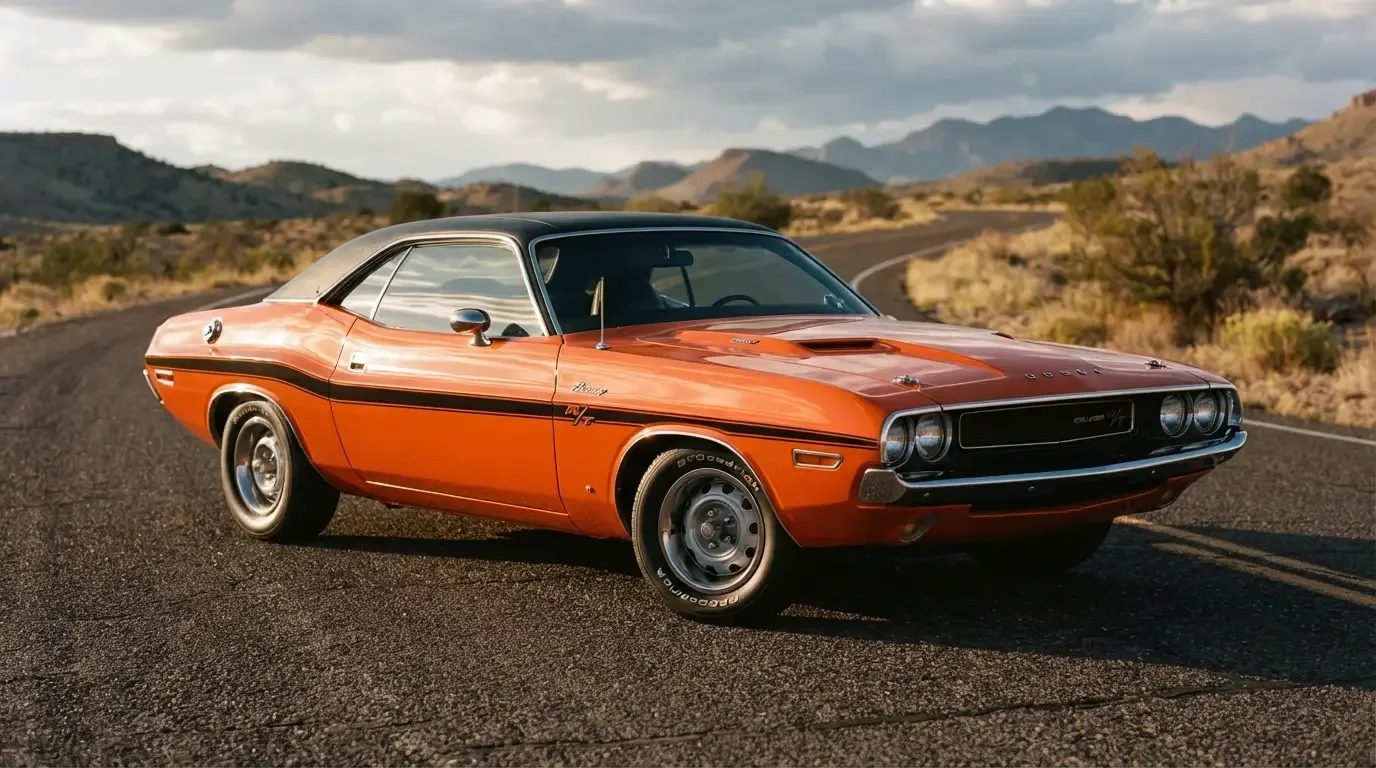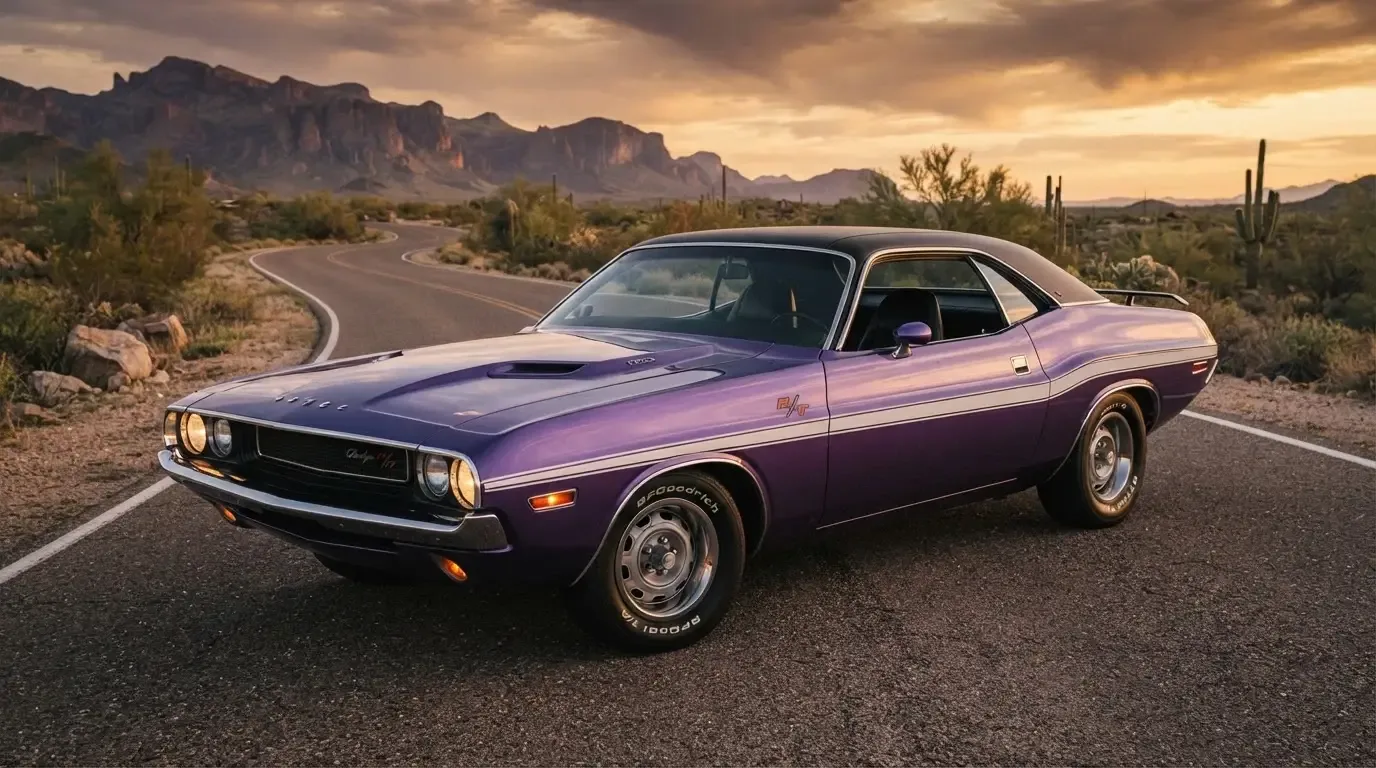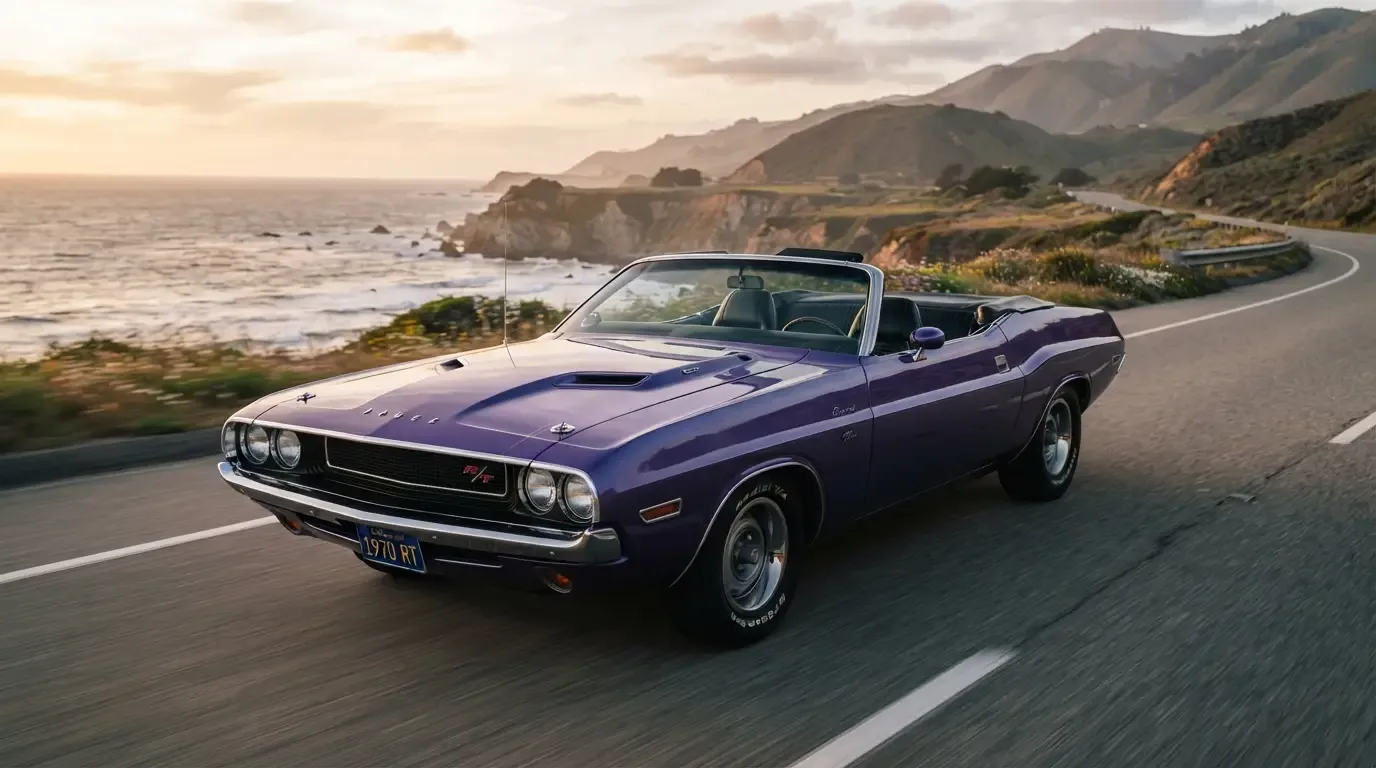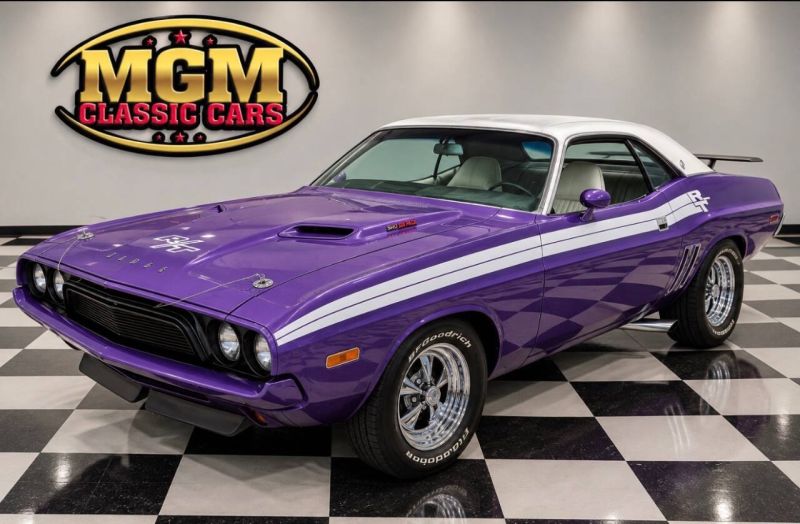
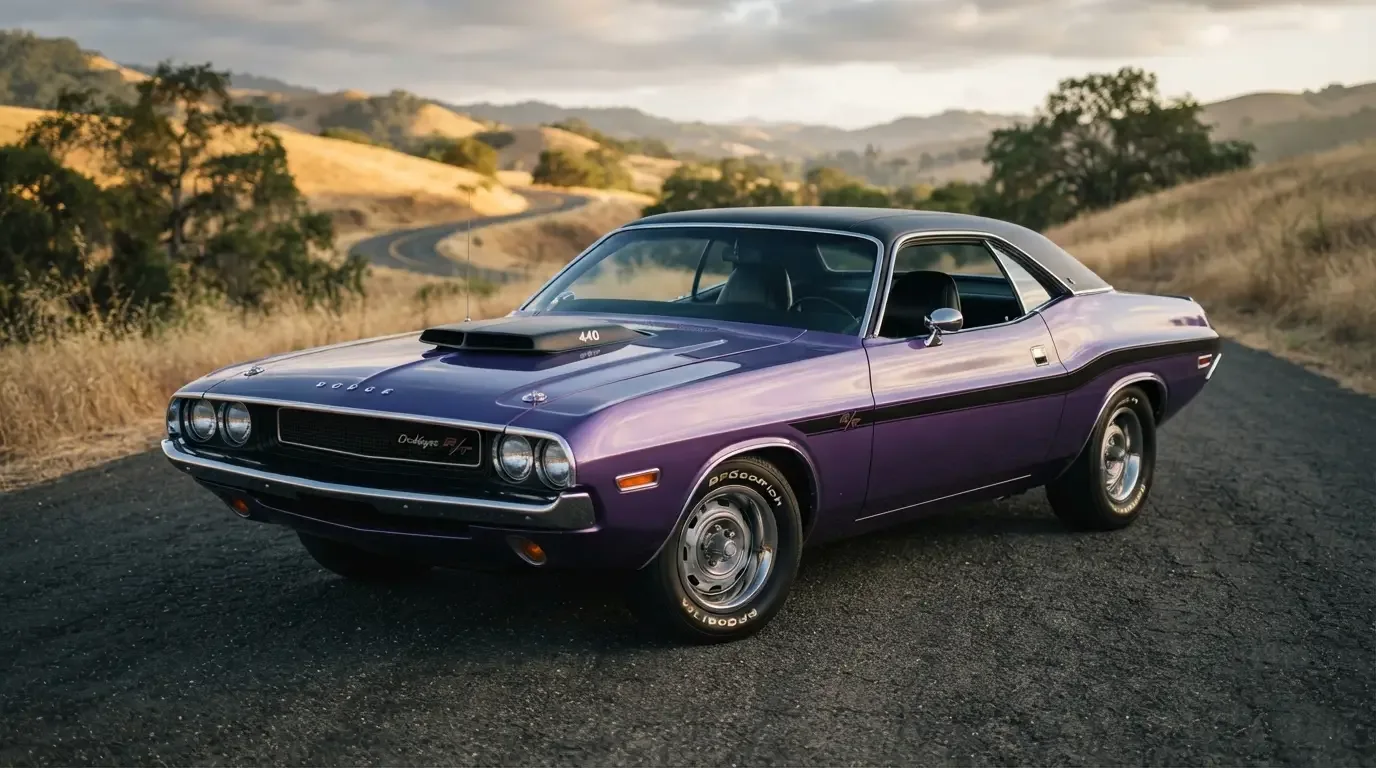
Of every configuration Dodge offered on the E-body platform, the 1970 challenger rt is the one that most fully represents what the nameplate was built to be. Road and Track, the name behind the initials, was never a marketing flourish. It described a specific engineering brief: enough power to compete on the drag strip, enough chassis capability to be taken seriously on a road course, and enough visual presence that nobody mistook it for a base coupe. Examined closely, the R/T at its peak year tells you almost everything you need to know about how Dodge approached performance in 1970.
Engine options that defined the trim
The R/T's standard engine was the 383 Magnum, itself no slouch, but the trim's real reputation rests on the big-block options above it. Buyers could step up to the 440 Magnum, rated at 375 horsepower, then the 440 Six Pack with its three two-barrel carburetor setup rated at 390 horsepower, and finally the 426 Hemi at the top of the range with an advertised 425 horsepower. Each step up that ladder changed the car's character meaningfully, not just its output on paper. The Six Pack traded a bit of everyday drivability for genuinely serious mid-range punch, while a Hemi car demanded more careful maintenance and driving discipline than most owners were prepared to give it, a reality that shows up repeatedly in period ownership accounts and service records from cars that survive today.
This spread of available engines under one trim badge is precisely why R/T values vary so widely depending on exact specification. A documented 426 Hemi R/T occupies an entirely different collector tier than a 383 car, despite both wearing identical R/T badging and trim on the outside.
Suspension and chassis work that backed up the power
Dodge did not simply drop big engines into the standard Challenger chassis and call it finished. The R/T received heavier-duty torsion bars up front, upgraded rear leaf springs, larger diameter sway bars, and firmer shock valving compared to the base car, all necessary to keep the additional weight and power of the big-block engines under control. Buyers could further option a Track Pack or similar heavy-duty running gear package depending on intended use, giving serious performance buyers a path to a genuinely track-capable car straight from the factory rather than requiring aftermarket modification immediately after purchase.
These chassis upgrades mattered because a big-block Challenger, particularly a Hemi car, carried substantially more weight over the front wheels than a small-block or six-cylinder version, and without the stiffer suspension components the car would have understeered and dove under braking in a way that undermined the performance the engine was supposed to deliver.
Visual identity of the R/T
R/T-specific styling included a distinctive hood, available in a functional shaker configuration on certain engine combinations, along with dedicated stripe treatments and R/T badging across the grille, fenders, and rear panel. The shaker hood, when equipped, protruded through a cutout in the hood itself and moved visibly with the engine at idle, a detail that made the car's performance intent obvious even to someone with no mechanical knowledge standing in a parking lot. Read the full story of the 1970 Challenger for how these visual elements fit into the model year's broader design language.
How the R/T performed against period expectations
Contemporary road tests generally praised the R/T's straight-line performance when equipped with the larger engines, while noting the car's substantial curb weight worked against it in tighter handling scenarios compared to lighter competitors. Quarter-mile times for well-tuned big-block R/Ts were competitive with anything else on the market in 1970, and the Hemi cars in particular developed a reputation, deserved or not, as some of the fastest street-legal cars a buyer could order from a factory that year.
Car Life's period test of a 440 Six Pack R/T recorded a quarter-mile pass of 14.64 seconds at just under 98 mph, numbers that held up against nearly anything else sold new that year. What is well documented is that the R/T's reputation solidified quickly among period enthusiasts and has only grown since, to the point that the trim name alone now carries recognition well beyond dedicated Mopar circles.
| R/T engine option | Configuration |
|---|---|
| 383 Magnum | Standard R/T engine |
| 440 Magnum | Single four-barrel big-block |
| 440 Six Pack | Three two-barrel carburetors |
| 426 Hemi | Top factory performance option |
"The R/T badge meant something specific in 1970, not a vague performance suggestion. Dodge backed it with real suspension engineering, not just a bigger engine dropped into an unchanged chassis, and that is why the R/T still holds up as a genuinely capable car rather than just a straight-line specialist."
- Sarah Whitfield
What defines a genuine R/T today
For collectors and researchers, verifying an authentic 1970 challenger rt today comes down to matching factory documentation, including the fender tag and broadcast sheet, against the car's actual engine, trim, and equipment. Because the R/T name and its various engine and package combinations were so widely optioned, physical inspection alone is rarely sufficient to confirm exact original specification, particularly for the more valuable big-block and Hemi configurations that have understandably attracted the most attention from restorers and, occasionally, from less scrupulous sellers over the decades. Anyone shopping this segment of the market benefits from treating documentation as seriously as the car itself, and those ready to start that search can browse classic Challenger listings currently available.
Transmission and drivetrain choices within the trim
The R/T was not a single fixed drivetrain, and the choices Dodge offered underneath the badge shaped how each car actually behaved on the road. A three-speed automatic suited buyers who wanted the R/T's power without a clutch pedal in daily traffic, while a four-speed manual appealed to drivers chasing the fastest possible acceleration and the most direct connection to the big-block underneath the hood. Rear axle ratios varied considerably as well, with numerically higher gears favoring straight-line acceleration at the expense of relaxed highway cruising, and lower numerical ratios doing the opposite. A Dana 60 rear axle, stronger than the standard unit, was available on the heaviest-duty combinations to handle the torque of the largest engines without the durability concerns that a lighter axle could develop under sustained hard use.
These combinations matter enormously to today's collectors, since a numbers-matching R/T with its original engine, transmission, and axle ratio intact commands a real premium over a car that has had any of those components swapped or replaced over the decades, even when the replacement parts are period-correct. The complexity of possible original combinations is part of what makes documenting an authentic 1970 R/T such a detailed exercise, and part of why serious buyers lean so heavily on factory paperwork rather than relying on a seller's description alone. Even a car with a well-documented history file benefits from independent verification against the factory build codes stamped into the fender tag, since paperwork and parts do occasionally get separated from the car they originally belonged to over five decades of ownership changes.