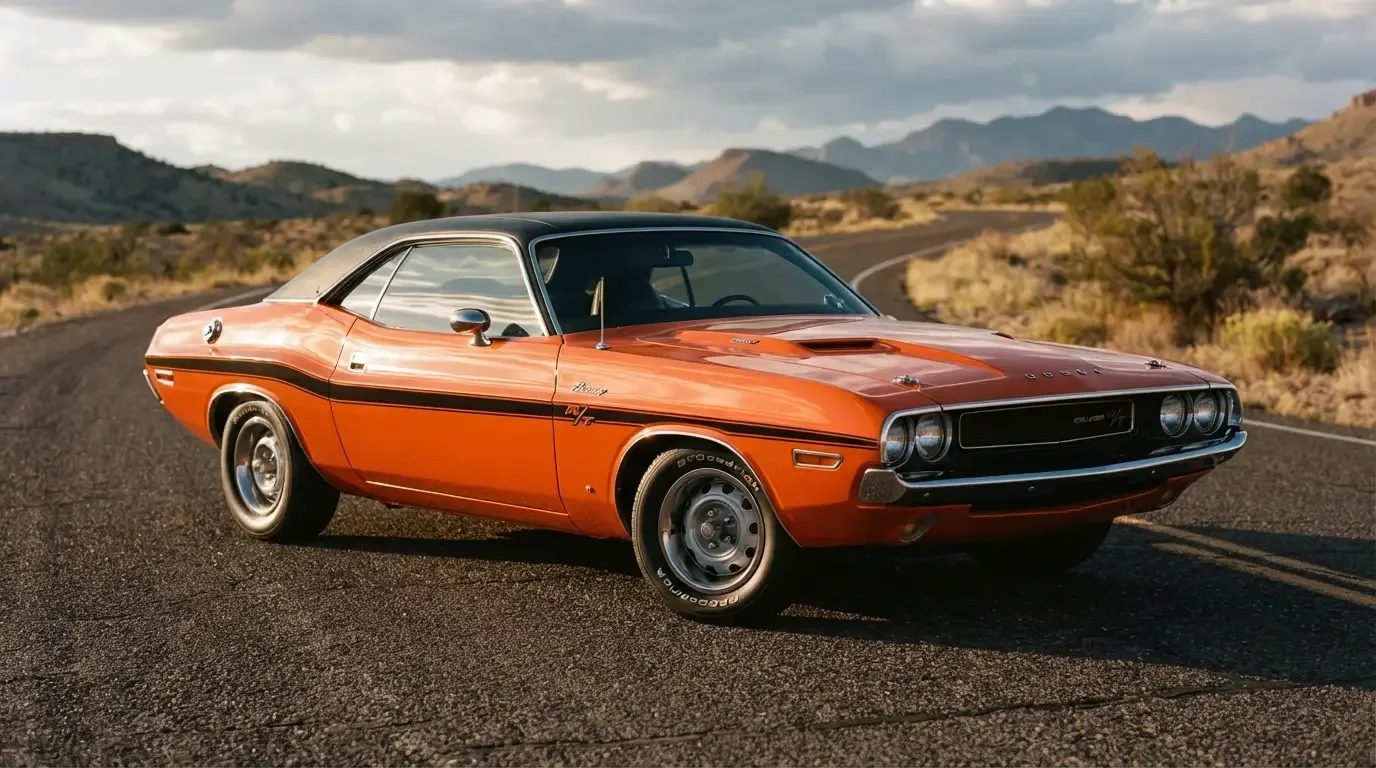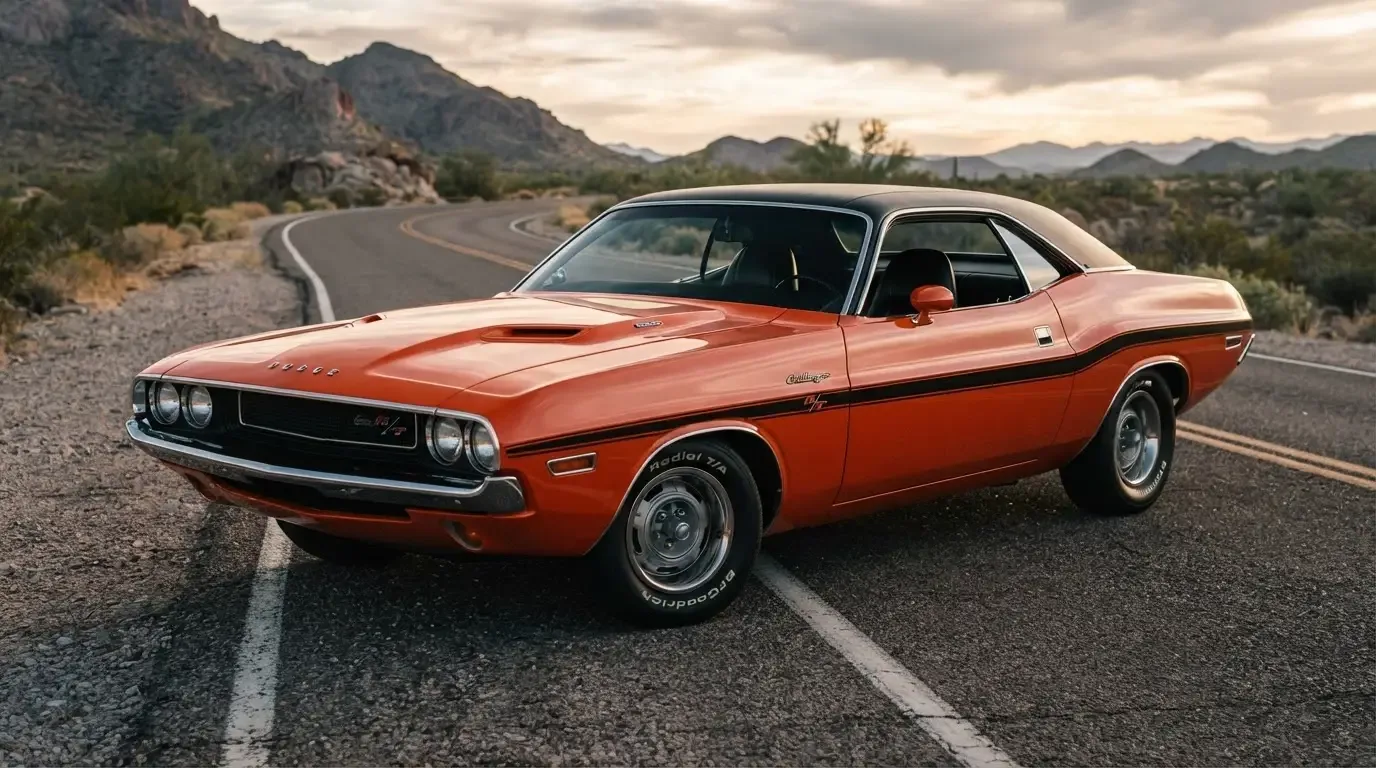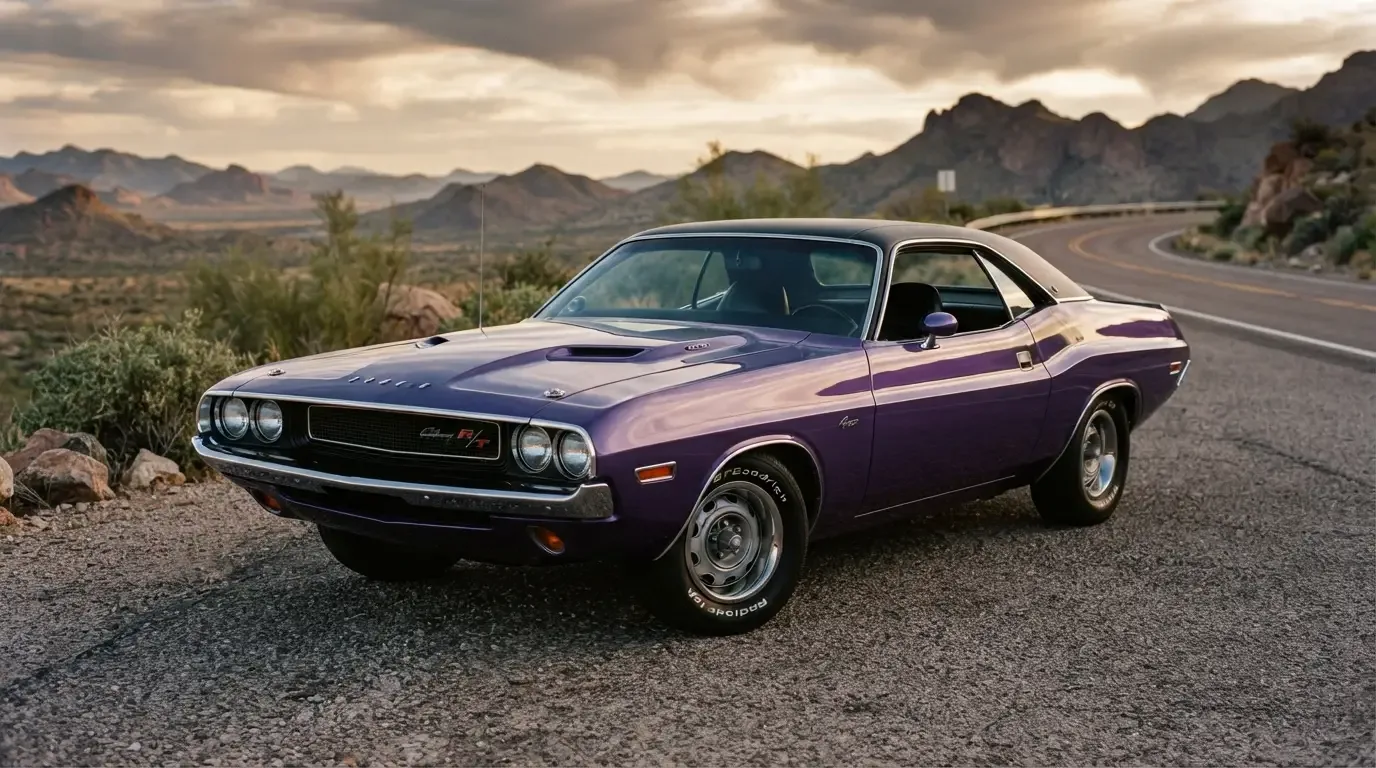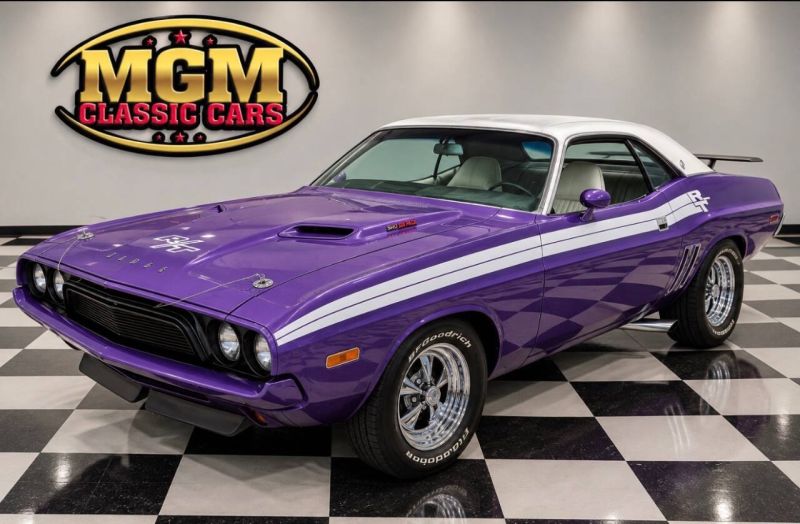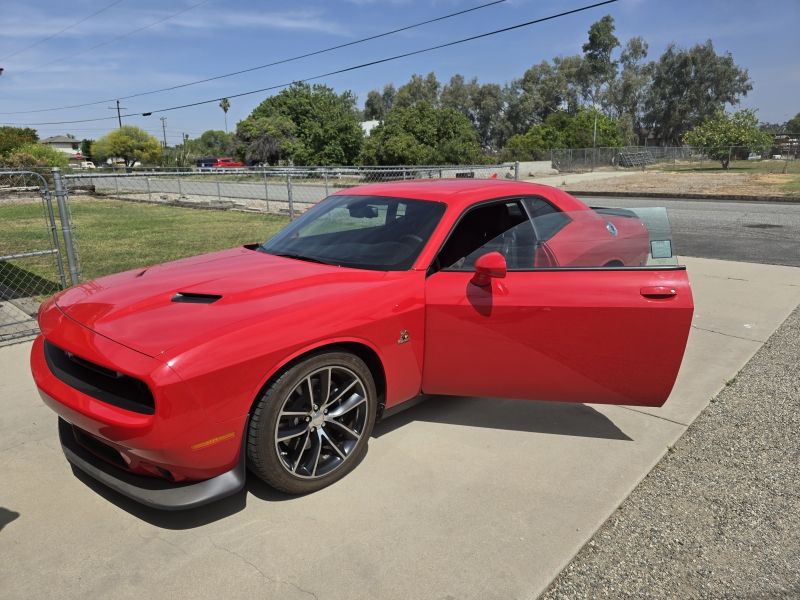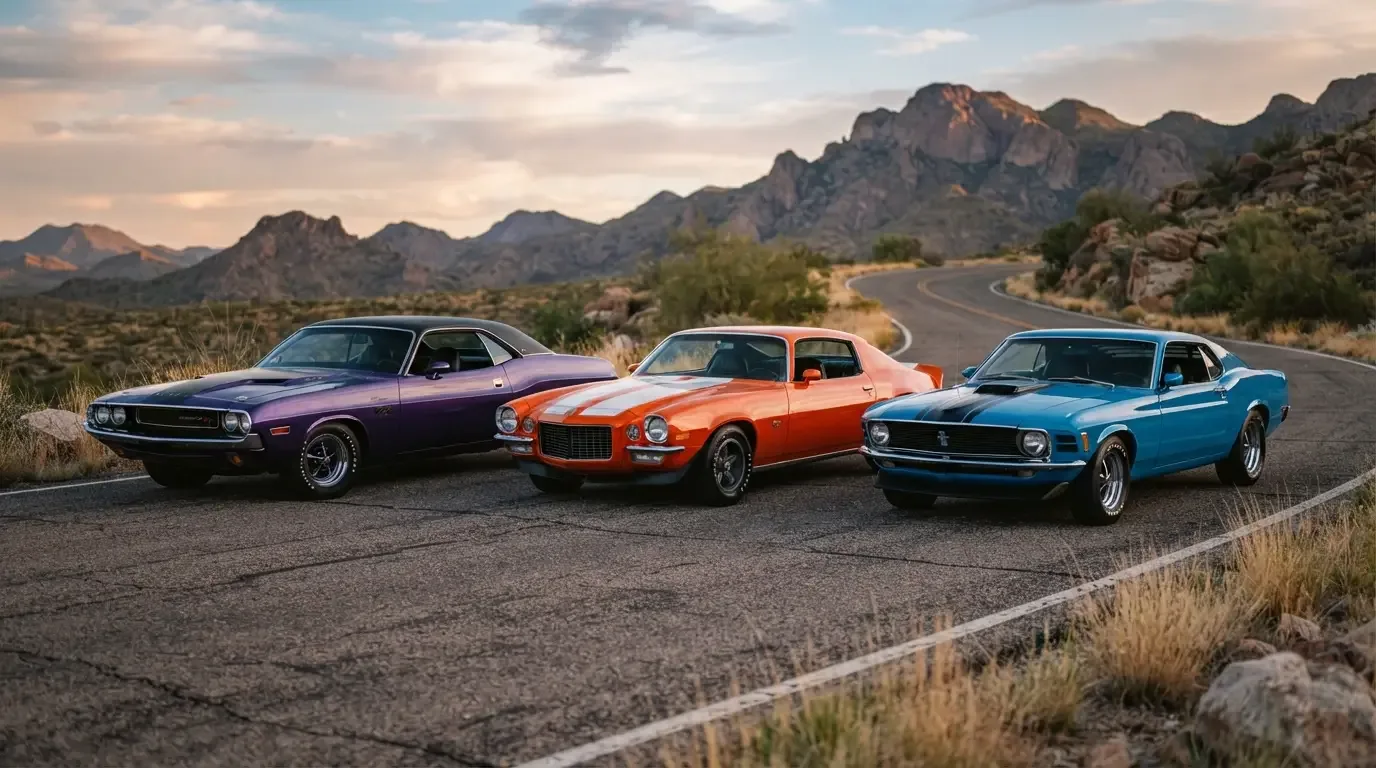
Put a 1970 Challenger next to a same-year Camaro and Mustang on a showroom floor back then, and a buyer had three genuinely different answers to the same basic question. The 1970 challenger vs camaro comparison gets the most attention today because both cars represent their manufacturers at a design and performance peak, but the Mustang belongs in that conversation too, since all three were fighting for the same customer with the same amount of money to spend. Dodge, Chevrolet, and Ford each answered the pony car brief differently, and those differences still shape how collectors value the three cars today.
Size and proportion, the first thing a buyer noticed
Walk around all three and the Challenger is immediately the biggest. It rode on a longer wheelbase than the second-generation Camaro and a noticeably longer one than the Mustang, and that extra length translated into more interior room and a smoother highway ride. Dodge's own advertising made this the centerpiece of its pitch, positioning the Challenger as the pony car buyers would not outgrow the way they might a tighter Camaro or Mustang. Chevrolet's second-generation Camaro, redesigned for 1970, took the opposite approach, with a lower, tauter stance that traded some rear seat room for a more planted, sports-car feel. The Mustang split the difference, having grown considerably from its original 1965 dimensions but still reading as the trimmest of the three by 1970.
That size difference was not just about comfort. A heavier, longer car needs more power to feel equally quick, which is part of why engine choice mattered so much in how each of these cars actually drove once a buyer left the lot.
Engine lineups compared
All three manufacturers offered a spread from mild six-cylinder base engines up to serious big-block performance options, but the character of those top engines differed. Dodge's Challenger R/T could be ordered with the 440 Magnum, the 440 Six Pack, or the 426 Hemi, giving Mopar buyers access to some of the largest displacement engines in the entire pony car segment. Chevrolet countered with the Camaro Z/28's high-revving small-block, tuned for road course balance rather than outright torque, plus big-block SS options for buyers who wanted straight-line muscle. Ford's Mustang lineup for 1970 included the Boss 302, built to homologate Trans-Am racing, and the Boss 429, a low-volume homologation special built around a massive semi-hemispherical head engine that Ford needed certified for NASCAR.
The practical result was that a Challenger buyer chasing maximum power had an easier path to genuine big-block muscle than a Camaro or Mustang buyer, while the Z/28 and Boss 302 buyers were chasing something closer to road course capability than drag strip bragging rights. Neither approach was wrong. They reflected different engineering priorities at each company, and those priorities still define how enthusiasts talk about the three nameplates today.
Handling and everyday drivability
Despite its size, the Challenger was not a poor handler by the standards of the day, and Dodge's T/A variant in particular was developed specifically to compete in Trans-Am racing, which forced real suspension development rather than badge engineering. Still, the Camaro's lower center of gravity and tighter dimensions generally gave it an edge in transitional handling, something road testers of the period noted repeatedly when comparing the two directly. The Mustang, riding on its own unique chassis tuning by 1970, tended to feel the most nimble of the three at lower speeds, a byproduct of its comparatively compact footprint.
For a buyer cross-shopping all three in period, the decision often came down less to any single objective measurement and more to which car felt right from behind the wheel, along with brand loyalty and dealer relationships that mattered more in that era than they might today. read the background on the full 1970 Challenger story covers how Dodge positioned the car within its own lineup, which is useful context before diving too deep into the rivalry itself.
Sales numbers and market reception
Chevrolet's Camaro consistently outsold the Challenger through the early 1970s, helped by a longer track record in the segment and a broader dealer network already primed to sell performance cars. Ford's Mustang, the segment's originator, also moved more units than the Challenger in most years of direct comparison. Dodge never quite caught the sales volume of either established rival, but the Challenger carved out a loyal following that valued its size, its engine options, and its distinct styling enough to accept being the newer, less proven choice in the segment.
| Model | Positioning | Top engine option |
|---|---|---|
| 1970 Challenger | Roomiest, big-block focused | 426 Hemi |
| 1970 Camaro | Lowest, most road-course tuned | 396/402 big-block (SS) |
| 1970 Mustang | Most compact, homologation special focus | Boss 429 |
"People love to argue about which of these three cars was objectively best, but that argument misses the point. Dodge built the Challenger to be the roomier, more powerful option, and that is exactly what it delivered. It was never trying to be a Camaro."
- Tom Ramirez
What the rivalry means for collectors now
Decades later, the sales gap between the three has flipped in significance. Rarity now works in the Challenger's favor for certain configurations, since fewer were built overall compared to the Camaro and Mustang in a given year, and genuine Hemi cars in particular are exceptionally scarce today. Collectors who once might have defaulted to a Camaro or Mustang out of familiarity are increasingly drawn to the Challenger precisely because it stands slightly apart from the more heavily documented and more commonly restored rivals. For readers interested in how the Challenger's underlying platform came together in the first place, worth a look too is the story of the E-body program itself. And for anyone ready to compare an actual example against its rivals in person, you can shop classic Challenger listings currently on the market.
Interior comparison and everyday livability
Beyond styling and engine specs, the interior experience differed enough between these three cars that period buyers frequently cited it as the deciding factor. The Challenger's cabin felt the most conventional of the three, with a driver-focused instrument panel and seats that prioritized comfort over aggressive bolstering. Rear seat space was genuinely usable for adults on shorter trips, something neither the Camaro nor the Mustang could claim with the same confidence given their tighter rear quarters. The Camaro's cockpit leaned sportier, with a wraparound dash design that wrapped controls toward the driver, reinforcing the car's road-course-adjacent personality even for buyers who never intended to see a track. Ford's Mustang interior by 1970 had grown more substantial than the original 1965 cabin but still felt the most compact of the three when four adults tried to use it at once.
These interior differences mattered because pony cars of this era were rarely bought as pure track toys. Most were daily drivers, and a buyer who commuted with passengers or ran errands regularly weighed cabin comfort just as heavily as quarter-mile bragging rights. Dodge understood this and built the Challenger's marketing around it deliberately, which is a big part of why the size and comfort argument shows up so consistently across period road tests and advertisements alike.