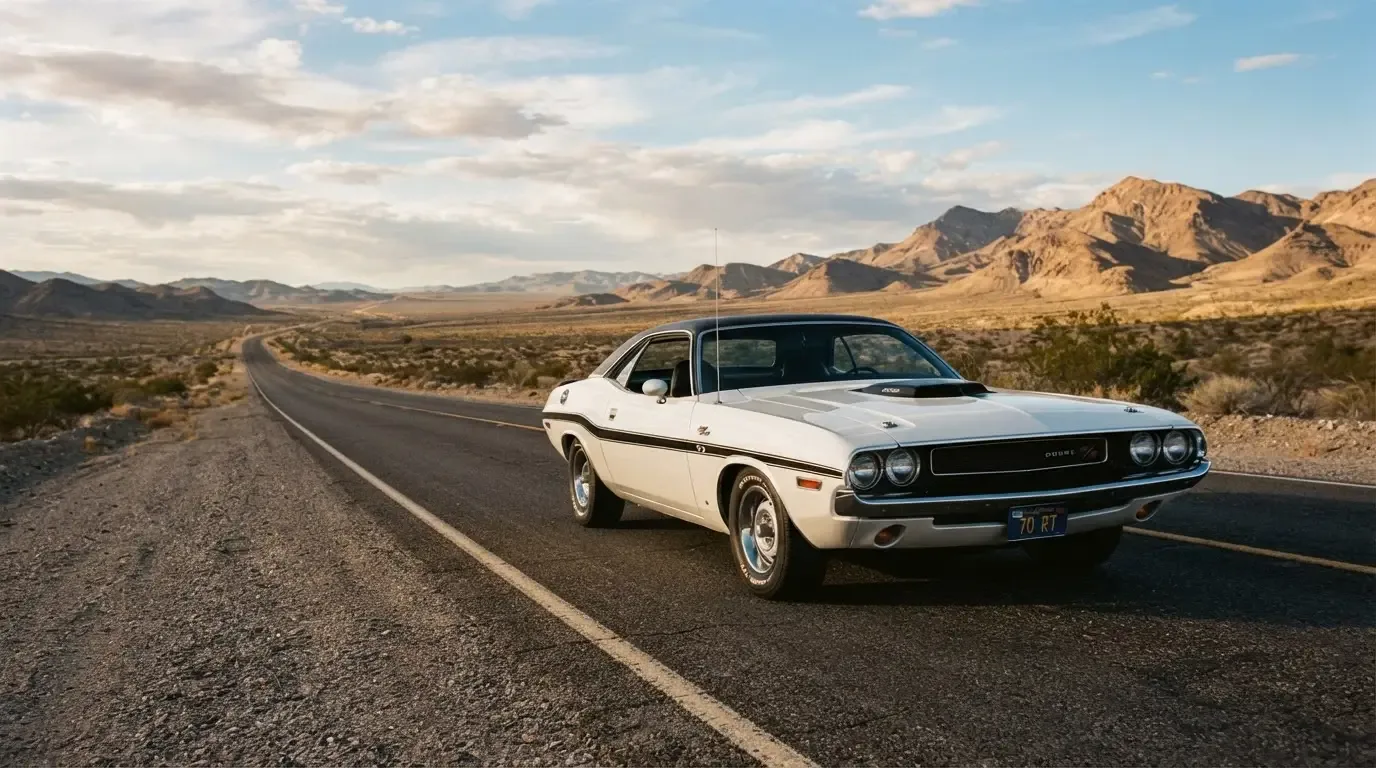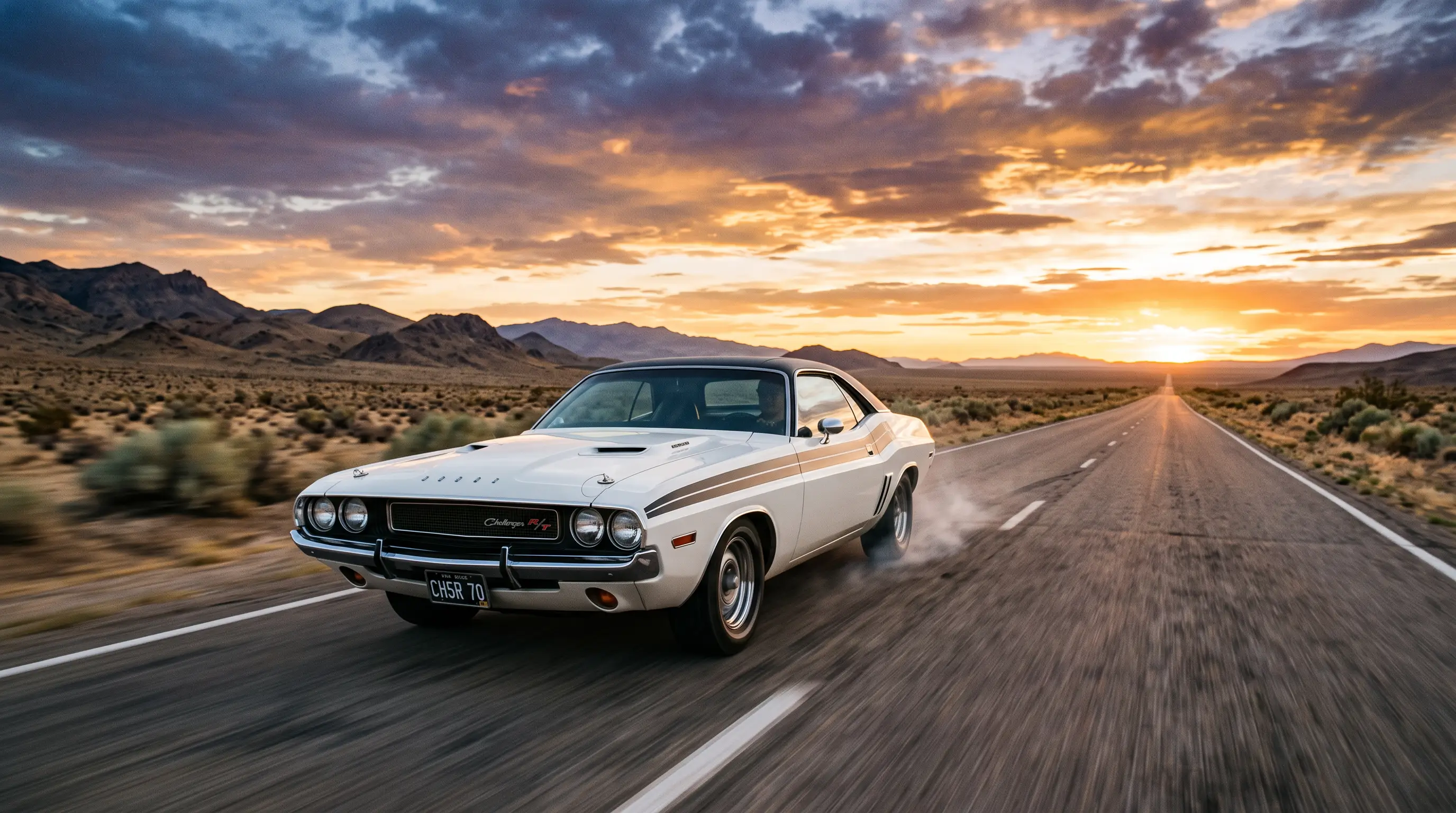
Most movie cars belong to a hero, a villain, or a getaway artist who is really just a hero with worse luck. The classic Dodge Challenger has spent decades occupying a stranger role than any of those, the challenger anti hero car, driven by men who are not clean protagonists and not straightforward villains either, just people running from something with no clear moral high ground underneath them. That in between status is a big part of why the car has aged so well on screen.
Kowalski was never a hero
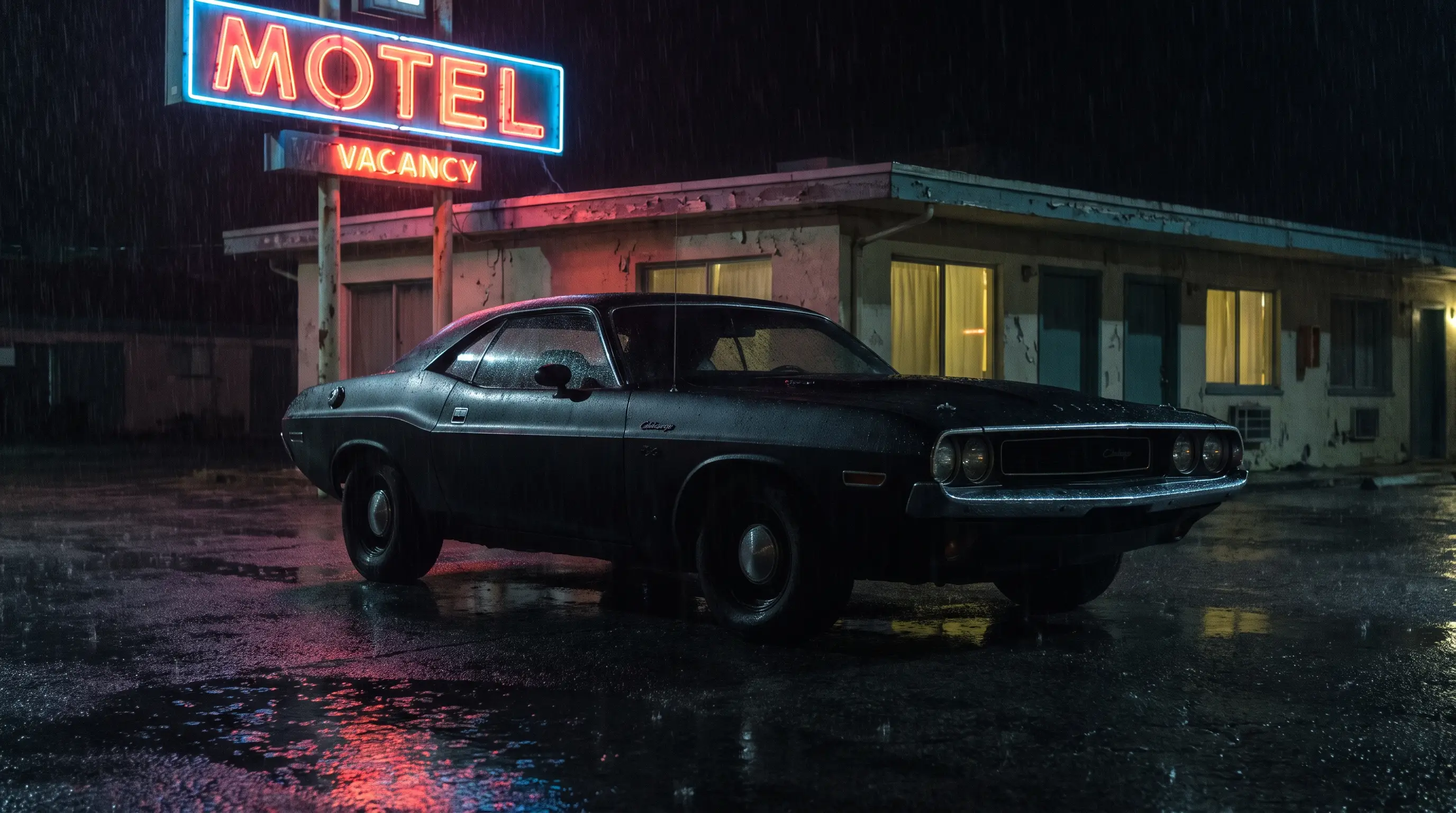
Vanishing Point gave audiences a driver named Kowalski who is delivering a car, breaking traffic laws at will, evading police for reasons the film never fully explains, and ultimately meeting an ending that offers no clean resolution. He is not fighting for justice. He is not righting a wrong. He is simply driving, and the film asks the audience to find that compelling on its own terms rather than dressing it up as heroism. The Challenger underneath him does not read as a hero's car or a villain's car. It reads as an instrument of a man who has stopped explaining himself to anyone, including the audience.
That refusal to moralize the character is part of what has kept the film relevant. A straightforward good guy in a fast car is a much less interesting story than a man whose motivations stay genuinely unclear for ninety minutes, and the Challenger's flat, unornamented body fits that ambiguity better than a flashier car would have.
Death Proof and a villain who drives the same shape
Quentin Tarantino flipped the script decades later in Death Proof, putting the classic Challenger in the hands of the film's heroines rather than its villain, a stunt woman played by Zoe Bell riding on the hood of the car during one of the film's centerpiece sequences. The villain in that film, played by Kurt Russell, drives a different car entirely. The choice to hand the Challenger to the women fighting back rather than the man stalking them recontextualizes the anti hero framing established by Vanishing Point, the car becomes a tool of righteous, if extremely reckless, payback rather than a vehicle for a man running from an unclear past.
Why the anti hero framing keeps working
A car this closely tied to morally ambiguous characters could easily have become a shorthand purely for villainy over the decades, the way certain black sedans or muscle cars get typecast as exclusively the bad guy's ride in genre films. The Challenger has largely avoided that trap, appearing across enough different films in enough different moral registers that no single reading has fully taken over its reputation. It has played the getaway car, the vengeance machine, the lonely wanderer's last ride, and occasionally, in less memorable films, a straightforward hero's car with none of the ambiguity that made its earlier appearances interesting. Our complete history of the car's screen appearances tracks how that reputation shifted across five decades of casting choices.
"Nobody roots for Kowalski because he is right about anything. They root for him because he refuses to stop, and that is a different, harder thing for a movie to sell."
- Patrick Walsh
What this means for how the car gets read off screen
Real owners of classic Challengers are, almost without exception, perfectly ordinary people with day jobs and mortgages, not brooding antiheroes running from an unexplained past. But the car carries a residue of that screen reputation into the real world regardless, a certain assumption from strangers at a gas station that whoever is driving that car has a bit of an edge to them, whether or not that assumption has any basis in the actual owner's personality. That is not a complaint. Most owners seem to enjoy the mild mistaken identity a well kept 1970 Challenger buys them at a stoplight.
For buyers drawn to the car specifically because of that reputation, the shopping experience does not change based on the mythology. Anyone who wants to browse classic Challenger listings looking for their own piece of that anti hero silhouette still needs to check the same things every serious buyer checks, rust, matching numbers, honest history, regardless of how many movies they watched before deciding to go looking.
Smaller roles that stayed in the same lane
Beyond the two films most often cited, a string of lower profile chase pictures and crime dramas have cast the Challenger in similarly unresolved moral territory, a getaway car for a character the audience is meant to sympathize with despite, or sometimes because of, their crimes. That pattern is consistent enough across decades of casting that it starts to look less like coincidence and more like an unwritten rule among directors reaching for this specific car. Nobody seems to want to put a Challenger behind a purely virtuous protagonist. It works better attached to someone the audience has to work a little to root for.
That casting instinct extends to television as well, where crime dramas set in the 1970s have occasionally used a Challenger as visual shorthand for a character operating just outside the law, whether as a small time criminal, a disillusioned cop bending the rules, or a witness with something to hide. The specificity of these roles rarely rises to the level of Vanishing Point or Death Proof, but the accumulation reinforces the same underlying reputation each time it happens.
A shape that resists easy categorization
Fifty years on from Vanishing Point, the Challenger still resists being cleanly filed as a hero's car or a villain's car in the way some other muscle cars have been. That ambiguity is not an accident of casting. It reflects something true about the shape itself, aggressive enough to suit a character with something to hide, plain enough to suit a character with nothing to prove. Filmmakers keep finding new uses for that flexibility, and there is no obvious reason they will stop anytime soon.
A car cannot audition for a role the way an actor does, but in a sense the Challenger has been doing exactly that for over fifty years, showing up again and again in stories about people the audience is not quite supposed to trust and not quite supposed to condemn either. That is a narrower lane than most cars ever get cast into, and the Challenger has made it entirely its own. Give it another fifty years and it will probably still be the car directors reach for whenever they need a character the audience cannot quite pin down, because some casting choices just keep working long after anyone remembers exactly why they started.