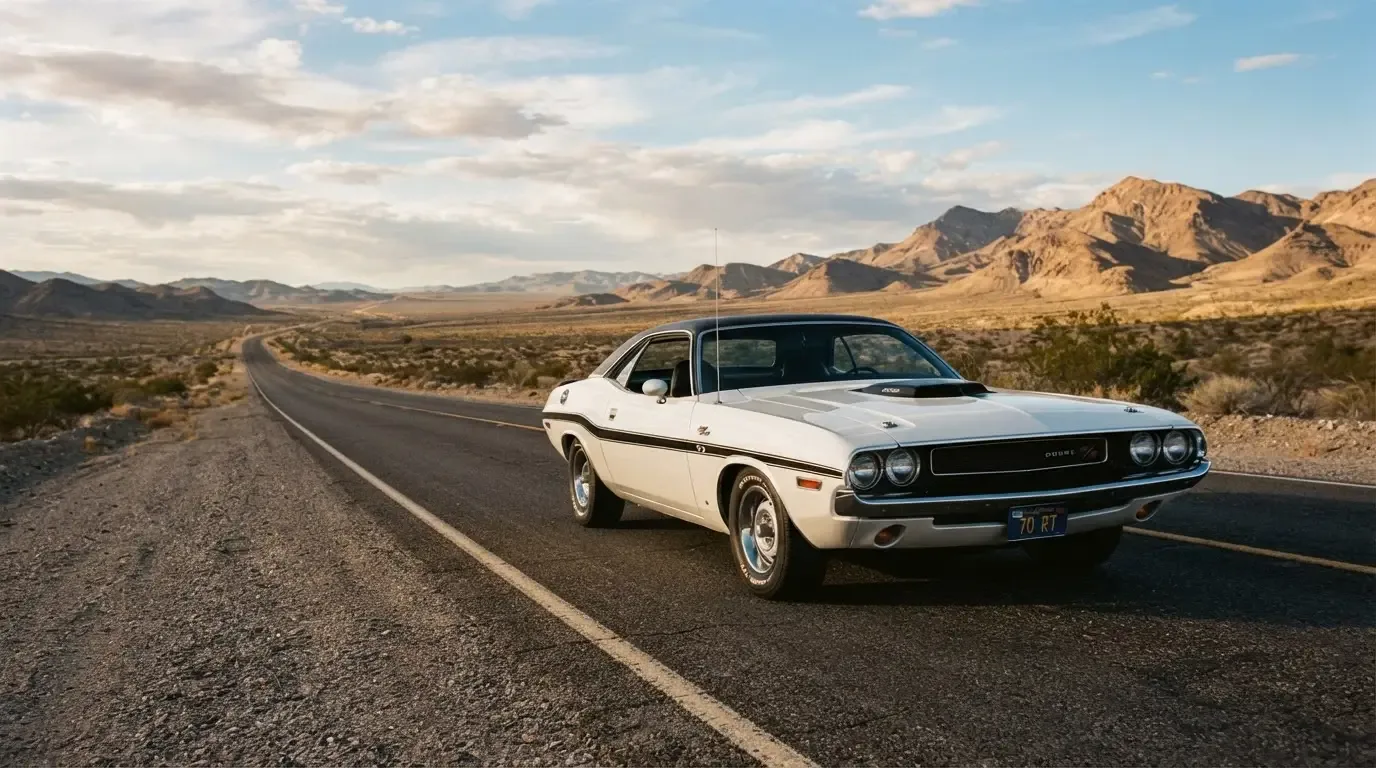
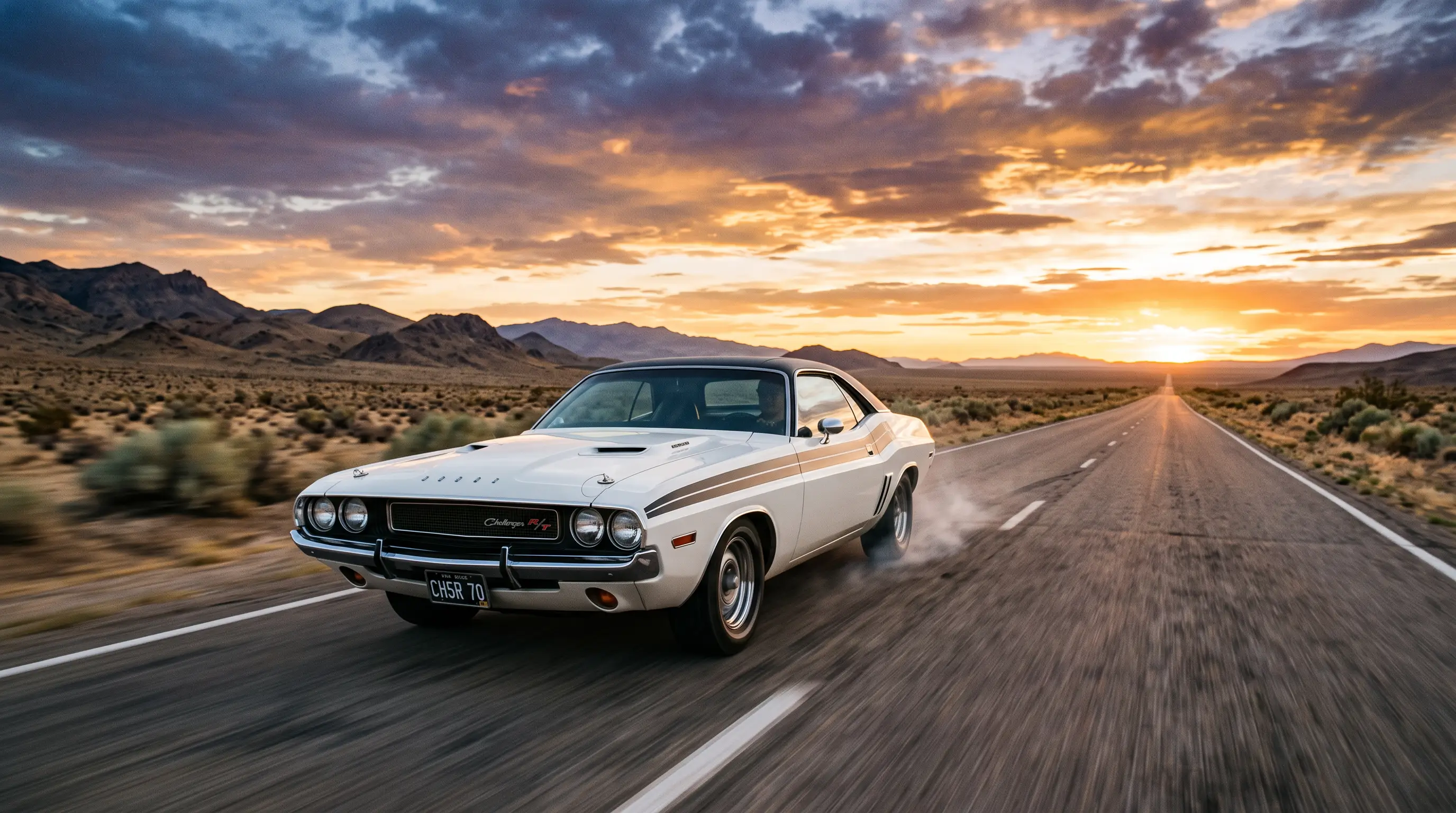
There is a particular strain of American film from the early 1970s that used the open road as a stand in for something larger, a country running out of easy answers, a generation questioning what freedom actually meant once the highway ran out. The challenger symbol of freedom that emerged from that moment did not come from an advertising campaign. It came from a lonely white Dodge Challenger crossing the American West in a movie that barely bothered to explain itself, and the meaning stuck regardless.
Vanishing Point and a very specific kind of freedom
Vanishing Point follows a man named Kowalski, a driver hired to deliver a car from Denver to San Francisco, who decides somewhere along the route that the delivery deadline matters less than the drive itself. He is not running toward anything specific. He is running from something, though the film is deliberately vague about what. That vagueness is the point. The Challenger in the film becomes a vessel for a kind of freedom that has nothing to do with a destination, only with motion, with the refusal to stop when everyone around him expects him to.
Critics writing about the film in the decades since have leaned into this reading, framing Kowalski's drive as an existential statement about a country losing faith in its own institutions right as the counterculture era was cresting. Whether the original filmmakers intended quite that much philosophy is its own debate, but the reading has stuck, and it has shaped how audiences understand every Challenger that has appeared on screen since.
Why a car, and why this car specifically
American film has always used cars as a shorthand for personal liberty, going back well before the Challenger existed. What made the Challenger fit this particular role so well was its timing. It arrived on dealer lots in 1970, right as the broader cultural mood was shifting from the optimism of the mid 1960s into something more skeptical, more worn down. A car built with genuine muscle, genuine speed, but without the polish of a luxury brand, matched that mood in a way a more refined car could not have.
The flat hood, the long low stance, the relative simplicity of the body all read as unpretentious on screen, a working class kind of freedom rather than an aspirational one. That distinction mattered to a film built around a man who is not chasing wealth or status, just the ability to keep driving without anyone telling him to stop.
How later films borrowed the same idea
Once Vanishing Point established the Challenger as a symbol tied to personal freedom rather than simple horsepower bragging rights, later filmmakers had a shorthand available to them that did not require rebuilding the metaphor from scratch. A Challenger on screen, even in a film with no direct connection to Vanishing Point, carries some residue of that earlier meaning simply because audiences have absorbed the association over decades of repeated exposure. The full story of how this reputation carried across film, music, and toy culture shows just how far a single movie's framing can travel once it takes hold.
"Kowalski was never running toward anything in that film. He was just refusing to stop, and somehow that refusal became the whole point of the car."
- Nora Beckett
The symbol outlives the specific politics of its era
The particular anxieties that shaped Vanishing Point, distrust in institutions, a sense of a country losing its footing, were specific to 1970 in ways that do not map neatly onto every later decade. What has outlasted that specific moment is the broader shorthand, a Challenger as a stand in for the freedom to just drive, without explanation, without a clear destination, without anyone's permission. That is a more durable idea than any single political mood, which is probably why it has survived across five decades of changing audiences.
Owners of these cars today rarely frame their attachment in explicitly cinematic terms, but the underlying instinct is not so different. A classic Challenger for sale rarely gets marketed purely on its horsepower figures or its options list. Sellers reach for words like freedom and open road almost reflexively, because the association built by one film in 1971 never really faded from how this car gets talked about.
The road movie genre needed a car like this
American road movies of the late 1960s and early 1970s had a specific problem to solve visually, how do you communicate a character's inner restlessness using nothing but a highway and a moving vehicle. Easy Rider solved it with motorcycles. Vanishing Point solved it with a Challenger, and the choice mattered because a car, unlike a motorcycle, could carry the weight of American industrial identity along with it. A Challenger on an empty highway is not just a man escaping something. It is a piece of Detroit manufacturing, built by union labor in a factory, out running from whatever it is running from, which adds a layer of meaning a two wheeled vehicle simply cannot carry in the same way.
That distinction gave later filmmakers another reason to reach for the Challenger specifically rather than any other muscle car when they wanted to invoke a similar mood. The car is doing double duty on screen, standing in for personal freedom and, quietly, for a certain vision of American industry and craftsmanship that audiences in later decades would come to view with its own kind of nostalgia.
A meaning built by accident, kept on purpose
Nobody at Chrysler in 1970 was designing the Challenger to become a symbol of anything beyond a competitive entry in the pony car wars. The meaning came later, built by a film that was not even a hit when it opened, and reinforced over decades by every filmmaker, songwriter, and collector who leaned into the same idea rather than inventing a new one. That kind of meaning, earned slowly and never really planned, tends to last longer than anything a marketing department could have engineered on purpose.
Fifty five years after Vanishing Point first hit theaters, a new viewer coming to the film cold still reads the Challenger the same way audiences did in 1971, as a stand in for a kind of freedom that has nothing to do with money and everything to do with refusing to explain yourself. Few cars get handed a metaphor that clean, and fewer still manage to hold onto it for this long without the meaning wearing thin. The road eventually runs out for every driver, in the film and out of it, but the shape of the car that made the point still turns up at every cars and coffee meet where someone wants to talk about what freedom actually looks like parked in a lot.