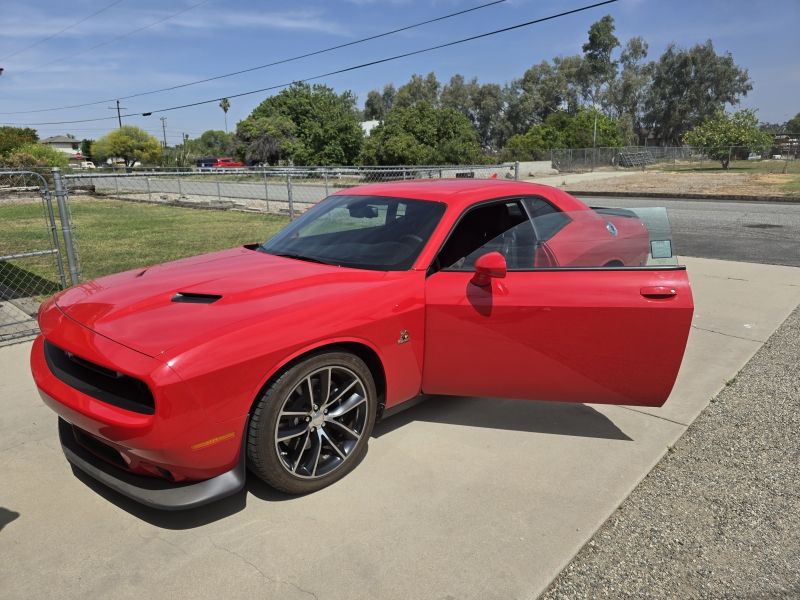
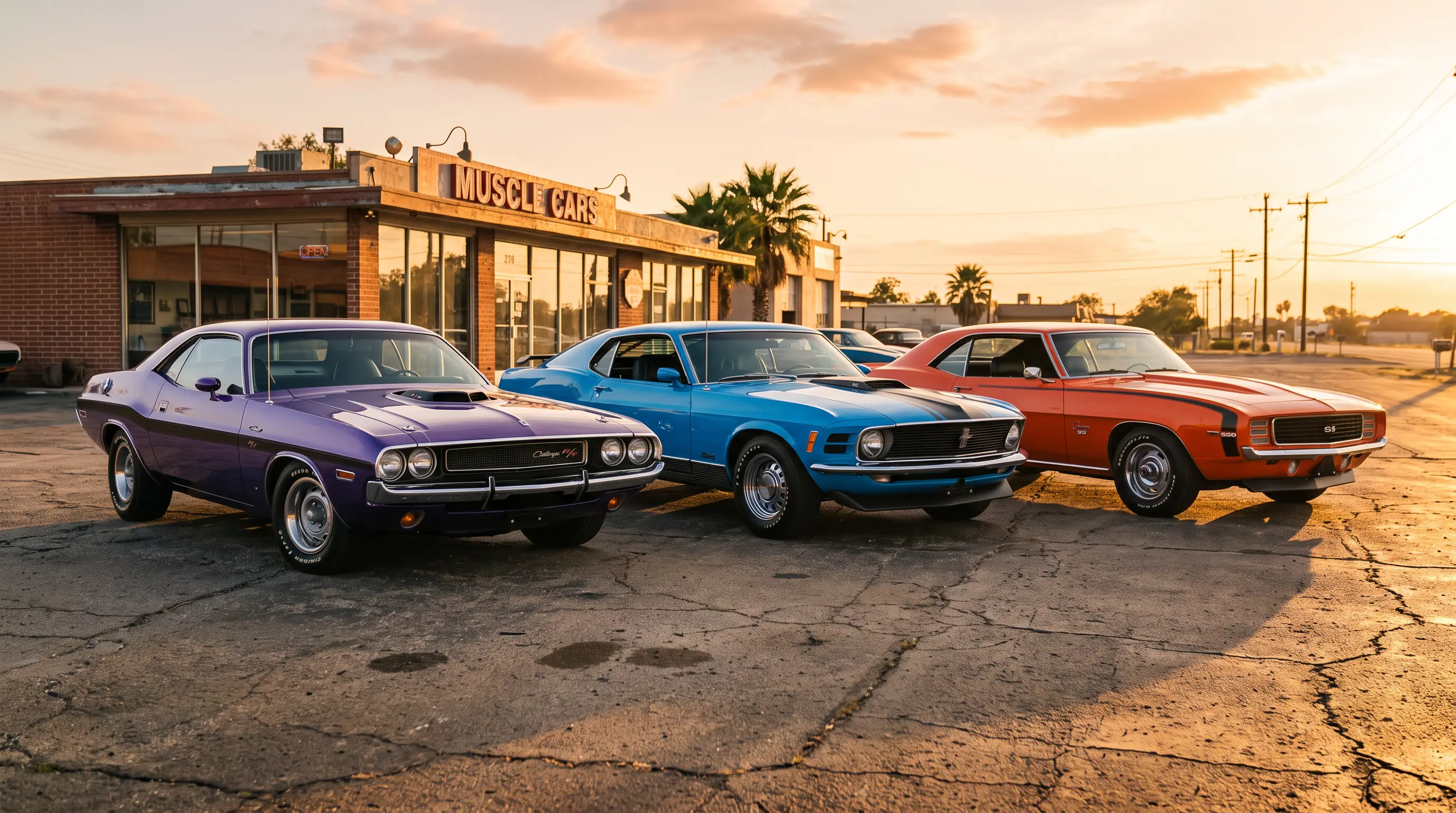
There is a photo that circulates at swap meets showing a Dodge Challenger, a Ford Mustang, and a Chevrolet Camaro parked nose to tail outside a diner sometime around 1971, three owners leaning against three hoods, none of them looking especially friendly toward each other. That picture captures the big three muscle rivalry better than any spec sheet could. This was not a polite competition fought in boardrooms. It played out in dealership parking lots, in magazine comparison tests, and on public roads where owners settled arguments the old-fashioned way.
Three companies, three different philosophies
Ford built its case on being first. The Mustang launched in April 1964 and had years to build brand loyalty before Dodge or Chevrolet fielded a proper direct response. Chevrolet answered in 1967 with the Camaro, backed by General Motors' enormous engineering and manufacturing resources, giving the car a level of build consistency and dealer network support that smaller competitors struggled to match. Dodge came last to this particular fight, launching the Challenger for 1970, but made up for lost time with an engine range that ran wider than either rival, stretching from a mild slant six all the way to the 426 Hemi at the top of the order.
Each company also picked a different emotional pitch. Ford leaned on accessibility and broad appeal, selling the Mustang to secretaries and racers alike. Chevrolet leaned on engineering credibility, backing the Camaro's Z28 variant with genuine Trans Am racing success. Dodge leaned hardest into raw intimidation, giving the Challenger a wider stance, a longer wheelbase than its own Barracuda sibling, and a marketing tone built around outright muscle rather than broad accessibility.
Insurance and emissions ended up as the real referee
By the early 1970s, this rivalry was not decided purely by whoever built the fastest car. Insurance companies began slapping heavy surcharges on big-block muscle cars driven by younger owners, and tightening emissions standards started sapping horsepower across every manufacturer's lineup at roughly the same time. The Challenger's highest-output variants, the Hemi and 440 Six Pack cars that had defined Dodge's entry into this fight, saw production numbers fall fast as buyers found those engines harder and harder to justify insuring. The same pressure hit Ford's and Chevrolet's top-tier offerings, which is part of why this entire era gets remembered as short, intense, and abruptly cut off rather than a rivalry that simply evolved gently over decades.
"Three companies spent about five years throwing everything they had at each other, and then the insurance men and the emissions regulators showed up and ended the party for all three of them at roughly the same time."
- Wayne Coburn
What each brand still gets credit for
Ford gets credit for creating the entire category and proving the market existed in the first place. Chevrolet gets credit for backing its entry with the deepest engineering resources in Detroit and turning the Camaro into a genuine road-racing weapon through the Z28. Dodge gets credit for showing up last and still building a car whose reputation, especially in Hemi and 440 form, arguably outpaced its rivals in outright intimidation even if it never matched the Mustang's total sales volume. None of the three companies won a clean, uncontested victory, and that lack of a clear winner is exactly why the argument still fills car show parking lots more than fifty years later.
For readers who want the deeper story of how Dodge's own internal rivalry with Plymouth factored into this bigger three-way fight, the whole picture covers how the Challenger and its Chrysler sibling both stacked up against Ford and Chevrolet during the same period.
Why this rivalry still shapes today's market
Collector demand today still traces directly back to this period of genuine, unresolved competition. Values for top-tier Challengers, Mustangs, and Camaros from this window all move somewhat in sync, because the same collector base cross-shops all three nameplates and the same period documentation standards apply across the board. A well-documented Challenger R/T from this era is not just competing against other Challengers at auction. It is implicitly being measured against the best examples of its old Ford and Chevrolet rivals too, exactly the way it was measured back when all three companies were building these cars to beat each other. If you want to see how Dodge's side of that old fight holds up today, you can find a classic Challenger and judge the big three muscle rivalry for yourself.
Advertising campaigns fought their own separate war
Beyond the racetracks and dealer lots, this rivalry played out just as intensely on the printed page and the television screen. Ford leaned on the Mustang's established heritage and broad cultural familiarity, running campaigns aimed at the widest possible buyer. Chevrolet pushed Camaro advertising that emphasized engineering credibility and motorsport connections, tying the street car directly to its Trans Am success. Dodge took the most aggressive tone of the three, building Challenger advertising around raw performance numbers and confrontational language that dared rival owners to prove their car was faster. That advertising tone matched the car's positioning perfectly, since Dodge had arrived last and needed to make the loudest possible entrance to earn attention against two established rivals.
Print advertisements from this period, still traded and collected today by memorabilia enthusiasts, reveal just how directly these companies attacked each other in language that would raise eyebrows in a modern marketing department. Comparison charts naming competing models by name, boastful performance claims, and directly confrontational copy were standard practice, a level of open combat between rival brands that later decades of advertising regulation and corporate caution would never allow again.
The rivalry's legacy outlived all three original nameplates
Ford kept the Mustang in continuous production and it remains the last nameplate of the original big three muscle rivalry still built new today. Chevrolet discontinued and later revived the Camaro more than once, breaking the continuous thread Ford maintained. Dodge's own Challenger nameplate disappeared after 1974, then returned decades later as a modern reinterpretation before eventually being retired again. That uneven survival across the three original combatants means the modern collector market treats surviving original examples from this era with a weight that goes beyond simple nostalgia. These are cars from companies that fought hard, and in Dodge's case, walked away from the fight entirely more than once, only to be remembered for exactly how hard they swung while they were still in it.
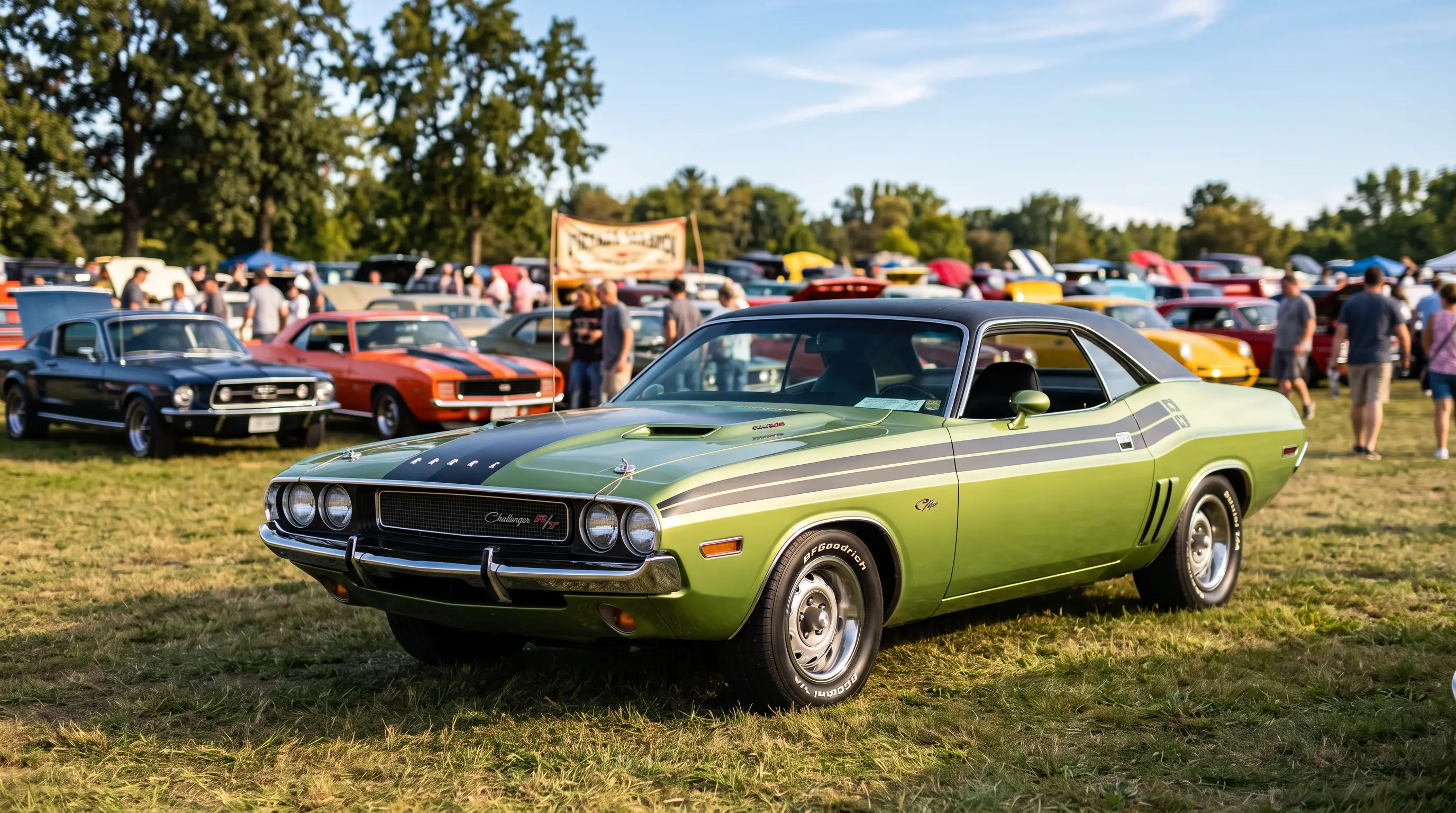
Collector clubs dedicated to each of the three original rivals still hold joint events specifically built around recreating that old showroom tension, parking Challengers, Mustangs, and Camaros nose to tail the same way they once sat outside dealerships competing for the same customer. Owners who attend these gatherings often say the friendly rivalry feels closer to the original spirit of the era than any museum display could capture, proof that a fight fought hardest more than fifty years ago still has plenty of life left in it among the people who kept these cars running.