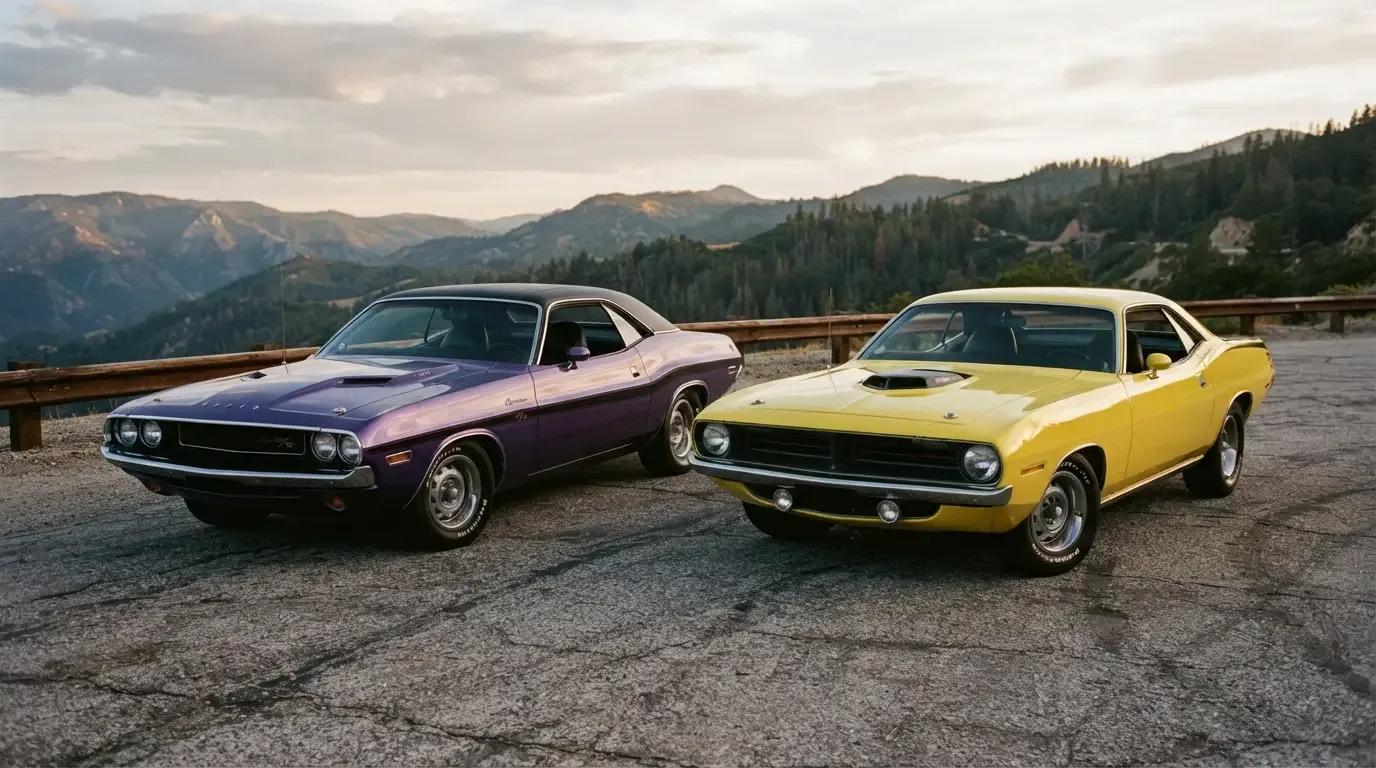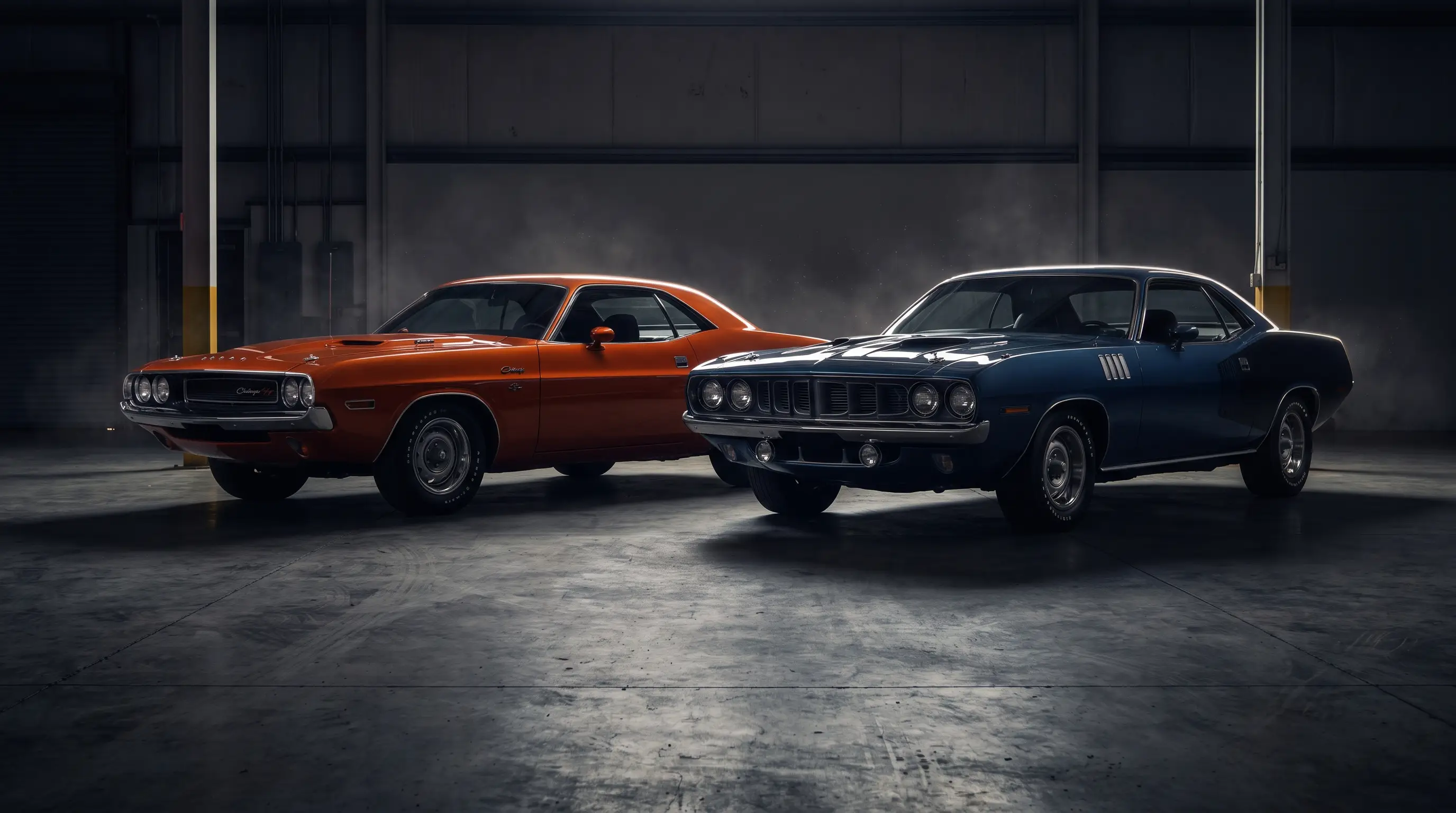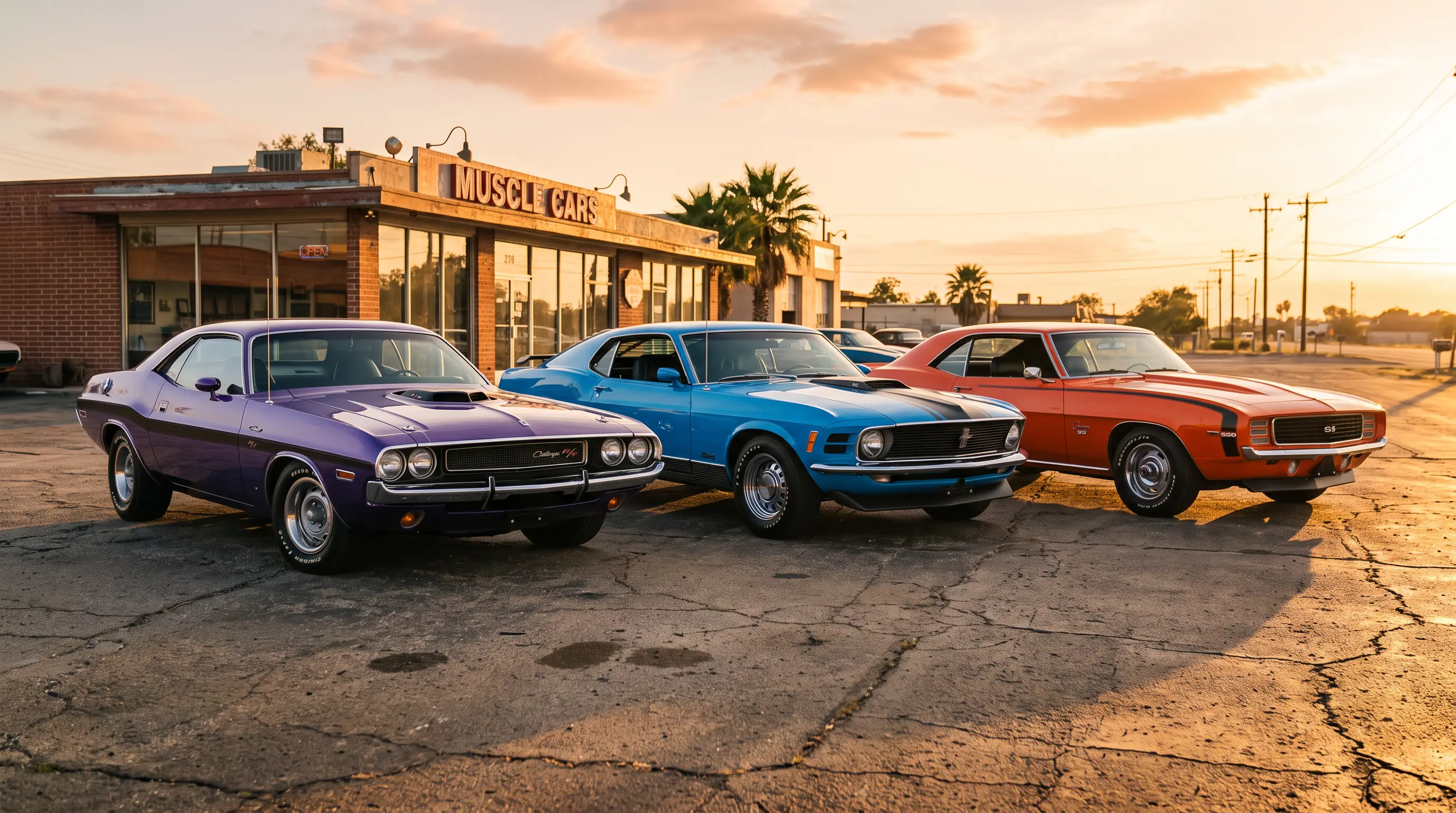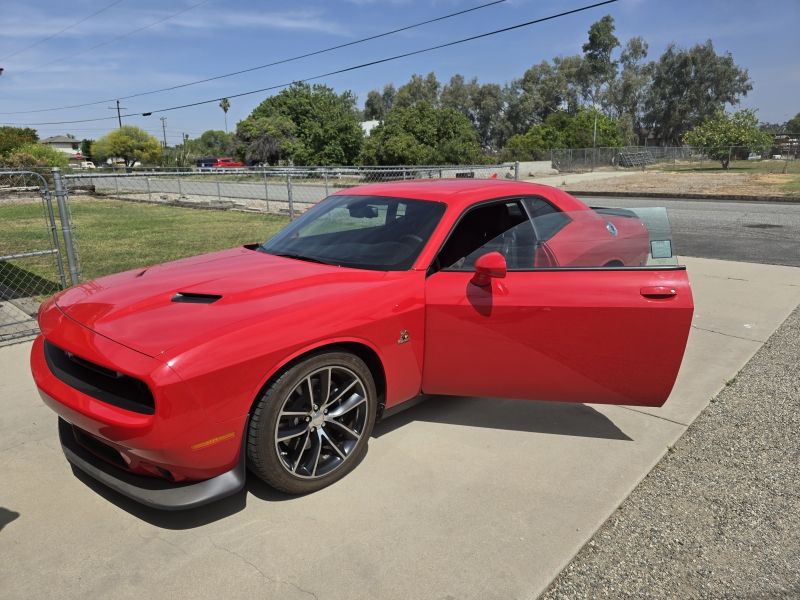
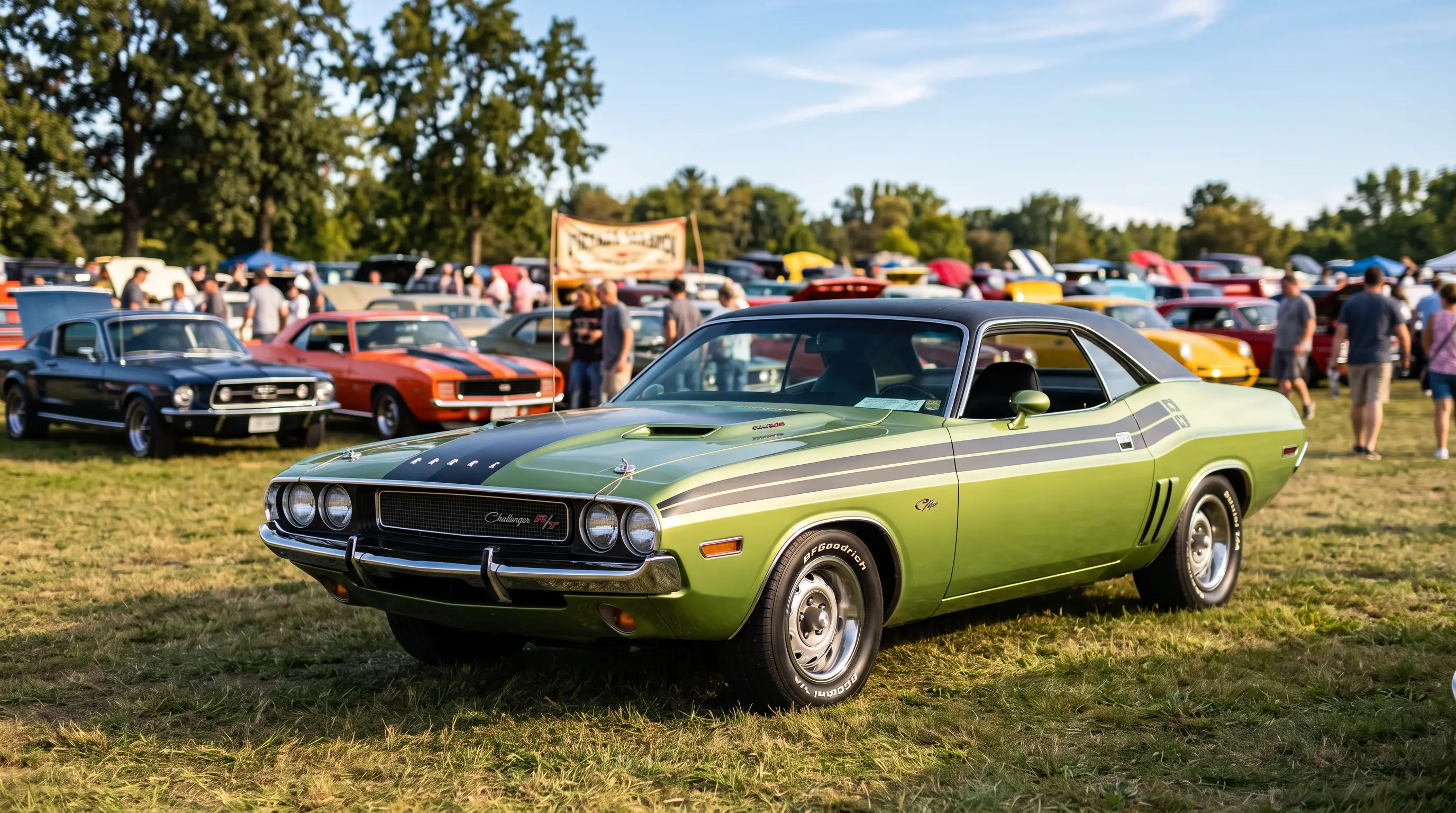
The Dodge Challenger showed up to the muscle car fight late, and it never fully shook that reputation. By the time it hit showrooms for the 1970 model year, the Mustang had five years of sales numbers behind it and the Camaro had two full generations of racing history. Talking about the Challenger legacy rivals question means admitting up front that Dodge was chasing, not leading. That does not make the car a loser. It makes the story more interesting, because the Challenger had to be different to matter at all.
Late to the party, and it showed in the engineering
Chrysler had watched Ford print money with the Mustang since 1964 and watched GM answer with the Camaro and Firebird for 1967. Dodge needed a pony car and needed one fast. Instead of building something new from scratch, the E-body platform borrowed heavily from the Barracuda program already in motion at Plymouth. That is not an insult. It is just how a company plays catch-up on a budget and a deadline. The upside was a bigger, more substantial car than either of its main competitors, with a wheelbase that gave it room the Mustang and Camaro simply did not have in 1970.
That extra size cut both ways. It let Dodge stuff a 426 Hemi under the hood without the packaging nightmares Ford dealt with in some Mustang applications, and it gave the Challenger a wider stance that looked planted at a standstill. It also made the car heavier and less nimble than a small block Mustang on a tight road course. Every review from the era says some version of the same thing: the Challenger felt like the biggest kid in the class, strong but not always the quickest through the turns.
The Mustang fight was never really close on volume
Ford sold over a million Mustangs in its first eighteen months on the market. The Challenger never got anywhere near that kind of number in its entire first-generation run from 1970 through 1974. Total production across all Challenger variants for that run lands right around 165,000 units, roughly 165,437 by most tallies of the 1970 through 1974 model years. Compare that to Mustang volumes still running well into six figures annually through the same years and you see the actual size of the gap. Dodge was never trying to out-volume Ford. The company was trying to carve a slice of buyers who wanted something a little more aggressive, a little more overtly performance-oriented than the increasingly civilized Mustang was becoming by 1971 and 1972.
Where the Challenger did win was in outright drama. The high impact color palette, the shaker hood scoop poking through the hood on big block cars, the optional Rallye instrument cluster. None of that sold more units than the Mustang's broad appeal to first-time buyers and secretaries and college kids on a budget. But it built a cult following that outlasted the sales charts, and that cult following is a big part of why Challengers command serious money at auction today while base Mustangs from the same years often sell for a fraction of the price.
Camaro was the closer fight, and it mattered more
If you want the real Challenger legacy rivals story, it is the Camaro fight that mattered on the street and at the track. Both cars rode on GM's F-body and Chrysler's E-body platforms respectively, both offered big block power, and both attracted the same customer walking into a dealership trying to decide between a bowtie and a Pentastar. The Z/28 Camaro and the Challenger T/A were built for nearly identical reasons, homologation for Trans-Am racing, and they raced each other directly in period.
The Challenger T/A actually ran competitively that first Trans-Am season, with Sam Posey scoring a top-three finish at Lime Rock, which is a detail a lot of casual fans miss even though the car never won a race outright. Chrysler pulled factory backing from Trans-Am racing after 1970, while Chevrolet kept developing the Camaro racing program longer. That single decision shaped a lot of what came after. The Camaro nameplate survived, evolved, and eventually outlasted the Challenger by decades before Dodge brought the name back in 2008. Longevity is its own kind of legacy, and on that count the Camaro simply outworked the original E-body Challenger.
| Model (1970) | Base wheelbase | Top factory engine | Trans-Am racing |
|---|---|---|---|
| Dodge Challenger | 110 in | 426 Hemi | 1970 season only |
| Chevrolet Camaro | 108 in | 396 / Z/28 302 | Multi-year factory program |
| Ford Mustang | 108 in | 428 Cobra Jet | Sports car racing, not Trans-Am works team |
Numbers like the Hemi's 425 horsepower rating get thrown around so often that people forget most of the actual sales volume came from six-cylinder and small block cars, on all three nameplates. The image of these cars as a three-way war of monster engines is mostly a modern retelling. In period, the vast majority of buyers on all sides picked something more modest and more affordable.
The Barracuda was closer kin than any rival
You cannot tell the Challenger legacy rivals story without mentioning the car it shared a factory floor with. The Barracuda was not really a rival at all, it was a sibling built on the same bones with a different face and a different sales pitch. Plymouth aimed the Barracuda a shade more aggressively at the drag strip crowd, while Dodge positioned the Challenger with a bit more standard equipment and a slightly more comfortable interior. If you want to see where this started, that comparison lays out how two cars from the same corporate family ended up with such different reputations despite nearly identical mechanical underpinnings.
Production numbers actually favored the Challenger over the Barracuda in most of those years, which surprises people who assume the more famous Cuda nameplate sold better. It did not, at least not consistently. Buyers walked into Dodge stores in bigger numbers than they walked into Plymouth stores, and that had more to do with dealer network size and regional preference than any real gap in the cars themselves.
"People want to make this a three-way shootout between Mustang, Camaro, and Challenger, and it works fine as a bar argument. But the car Dodge actually had to worry about most was parked one row over at the Plymouth dealer, wearing a different grille."
- Mike Sullivan
What actually got left behind
Here is the honest accounting. On raw sales, the Challenger lost to the Mustang badly and lost to the Camaro by a smaller but still real margin. On racing pedigree, it got one good year in Trans-Am before Chrysler pulled the plug, while the Camaro kept a factory program running longer. On design, the Challenger arguably aged better than either rival from the same years, and that is not a small thing. Walk any car show today and watch which nameplate draws the bigger crowd among the three. It is usually not close, and it is usually not in the Mustang's favor anymore either.
Collector demand does not always follow sales charts or trophy cases. It follows scarcity, style, and story. The Challenger built its legacy on being the car that showed up late, swung hard, and then mostly walked away from factory racing before it could really prove itself. That incomplete story is part of the appeal now. People fill in the what-if themselves, and that keeps the values climbing on the right cars even decades after the fact.
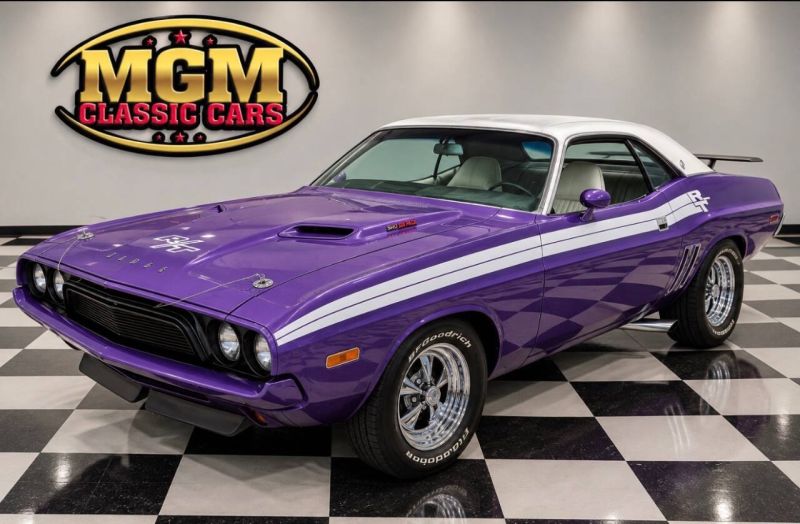
If any of this has you wanting to see one in person rather than just read about it, you can shop classic Challenger listings and get a feel for what actually survived from this era. The cars that are left tell the real story better than any sales chart from 1970 ever could.