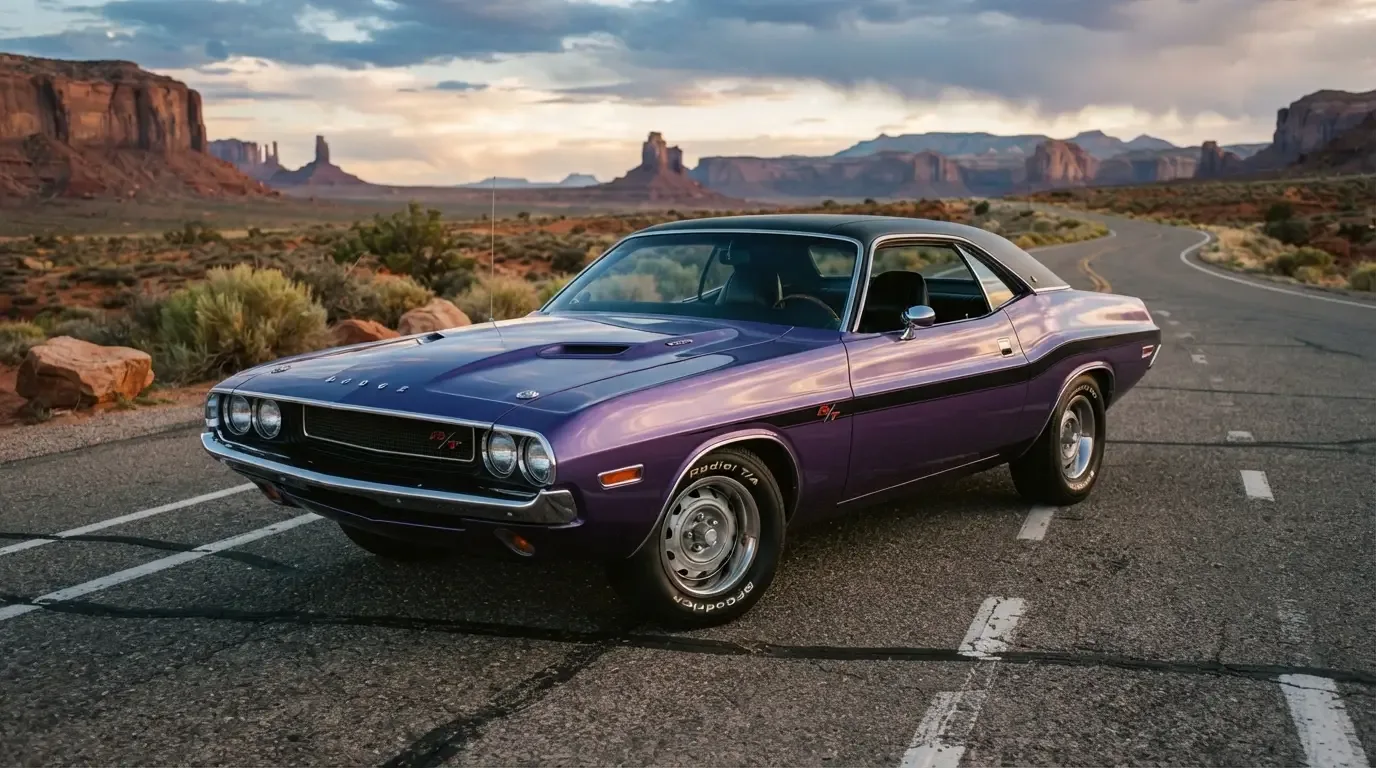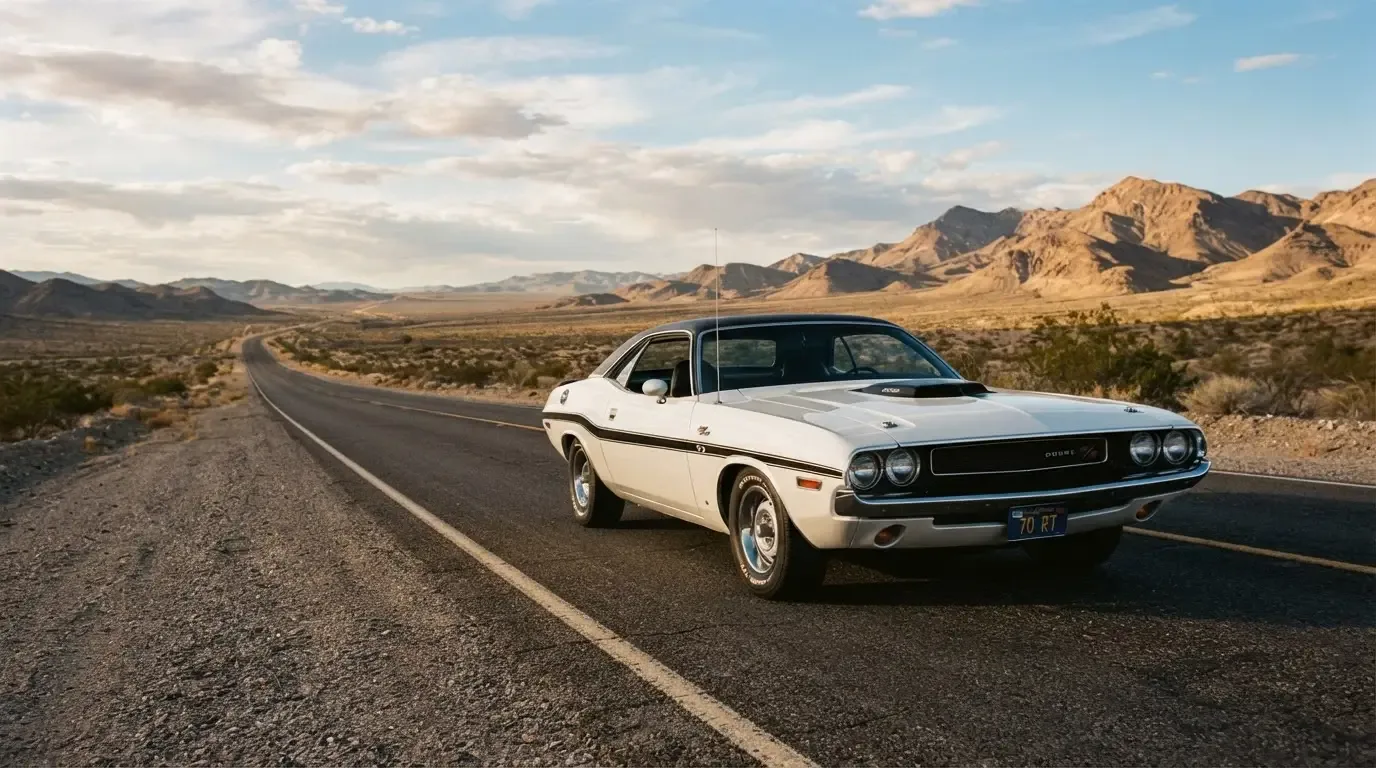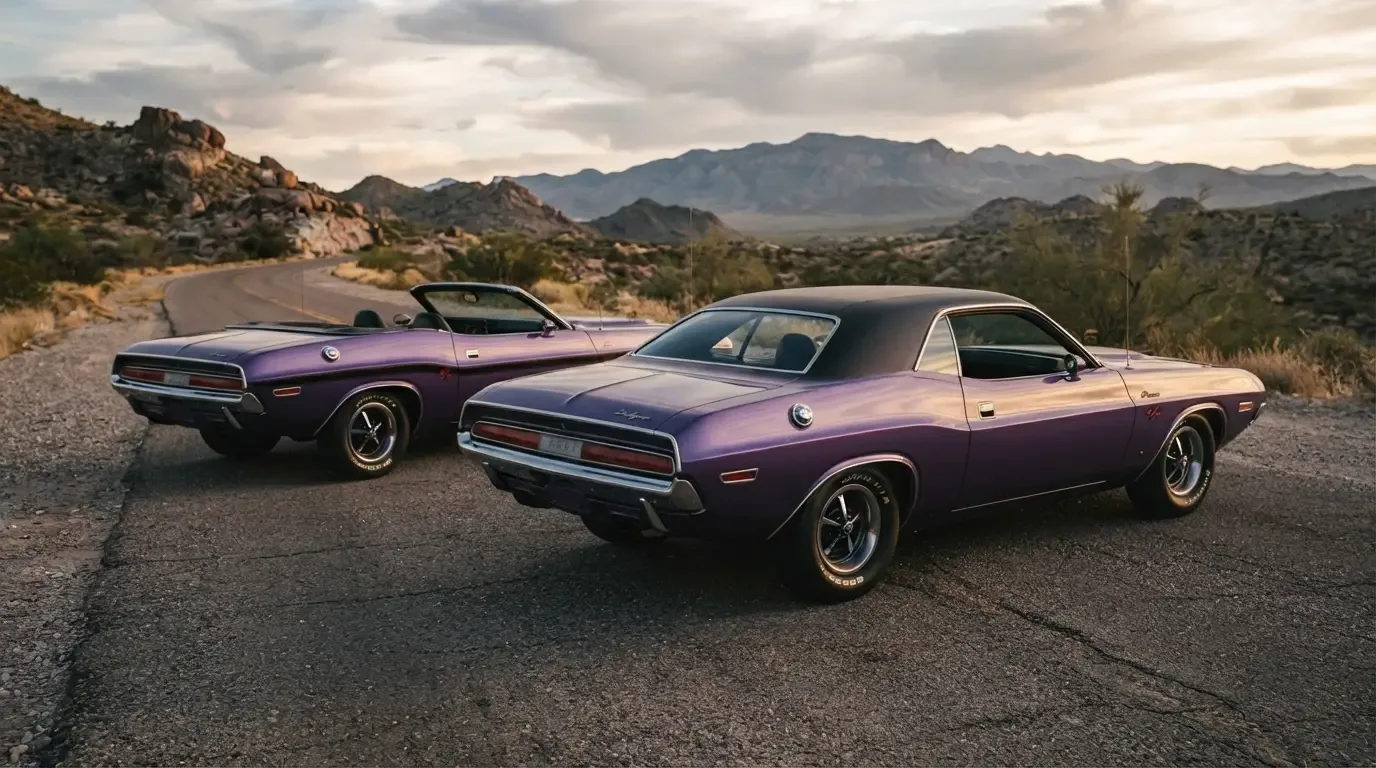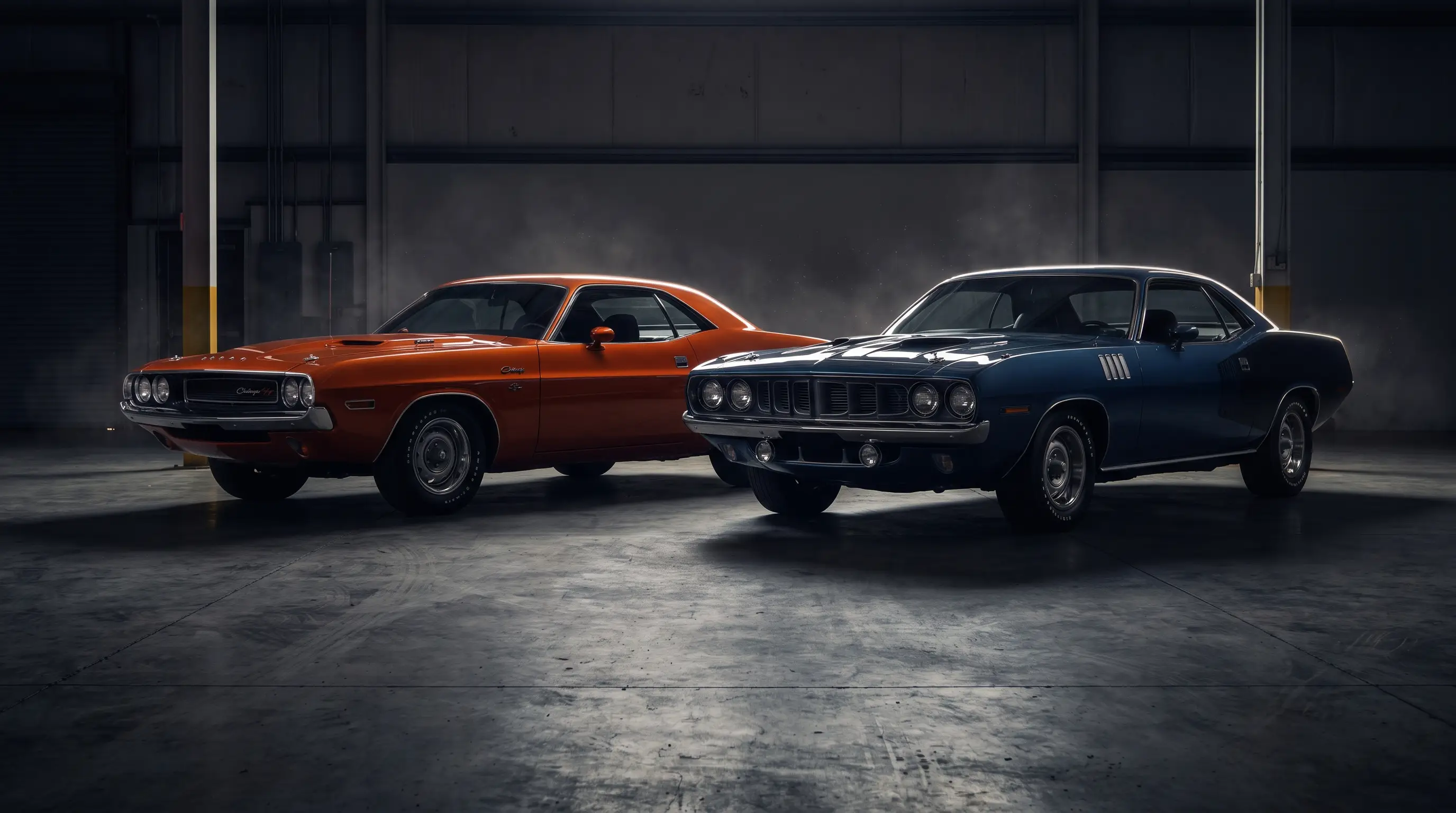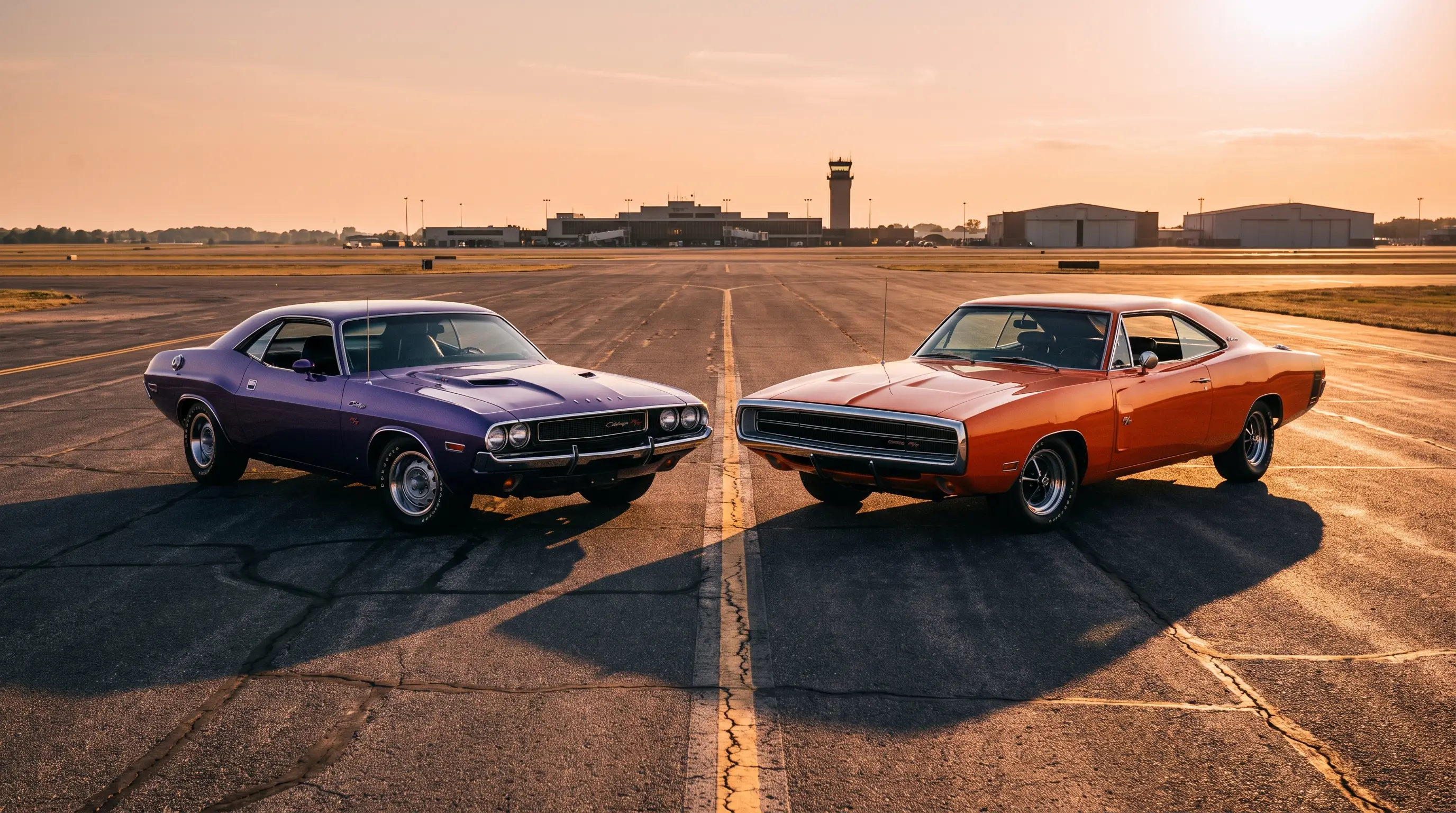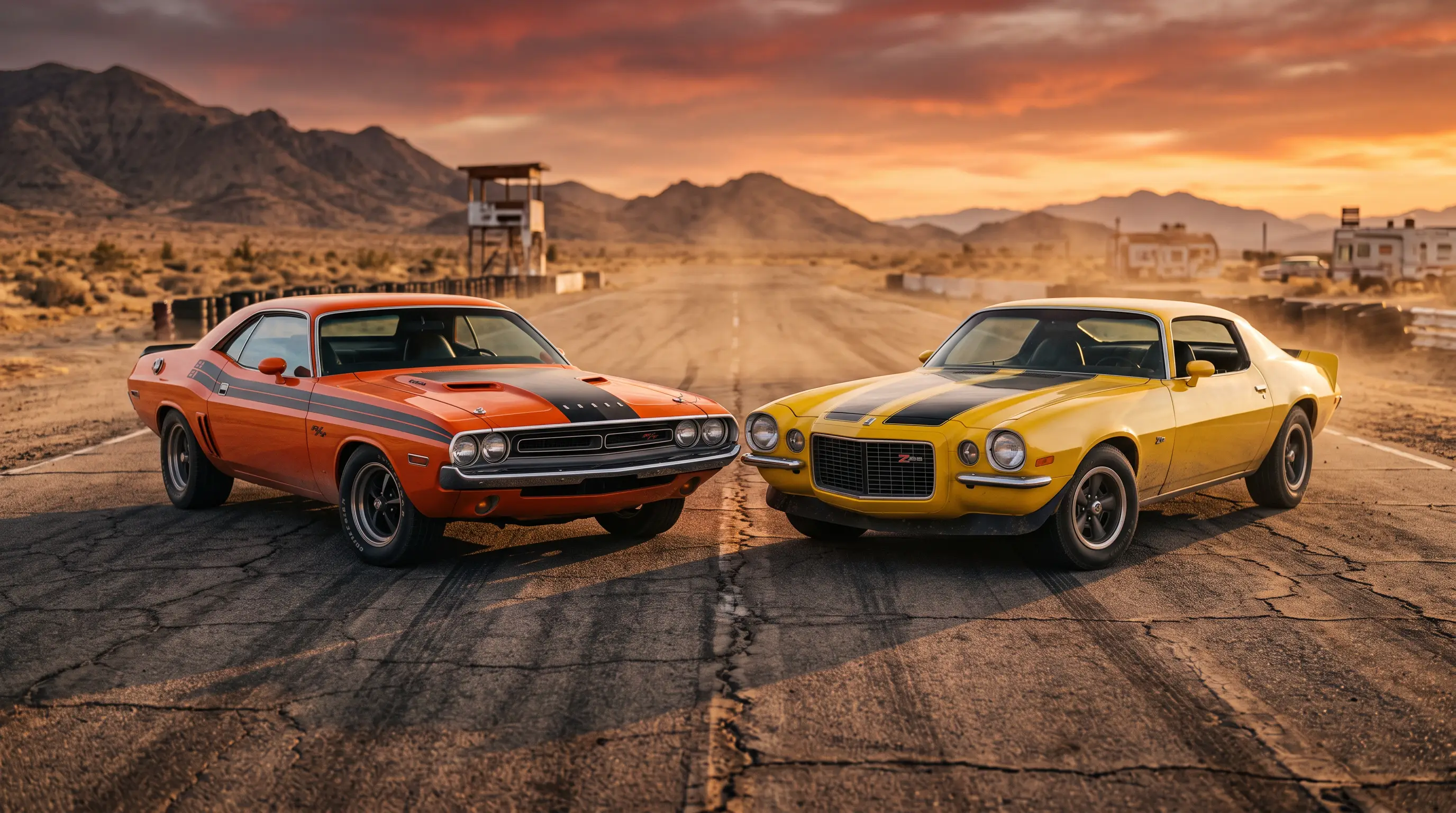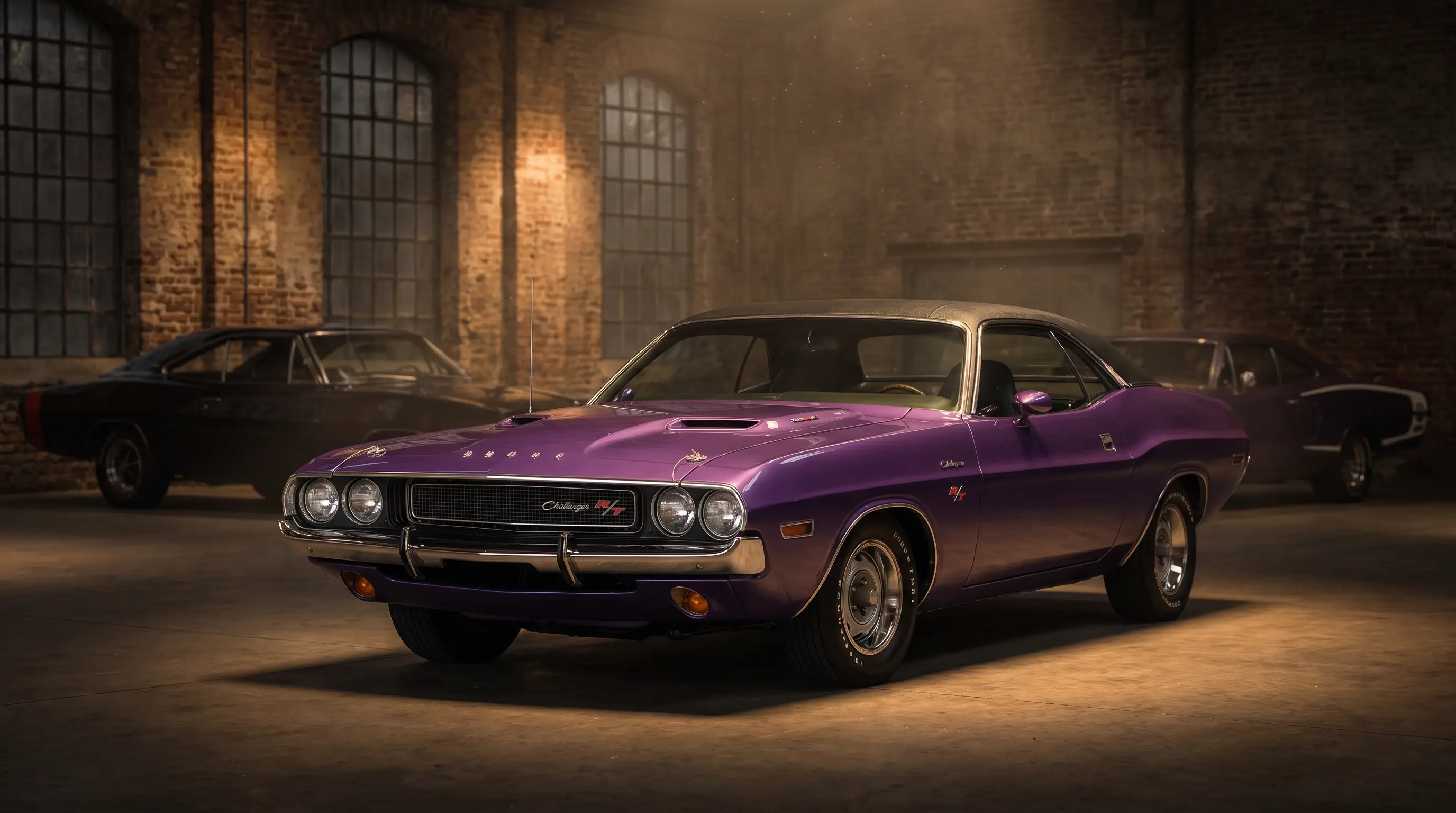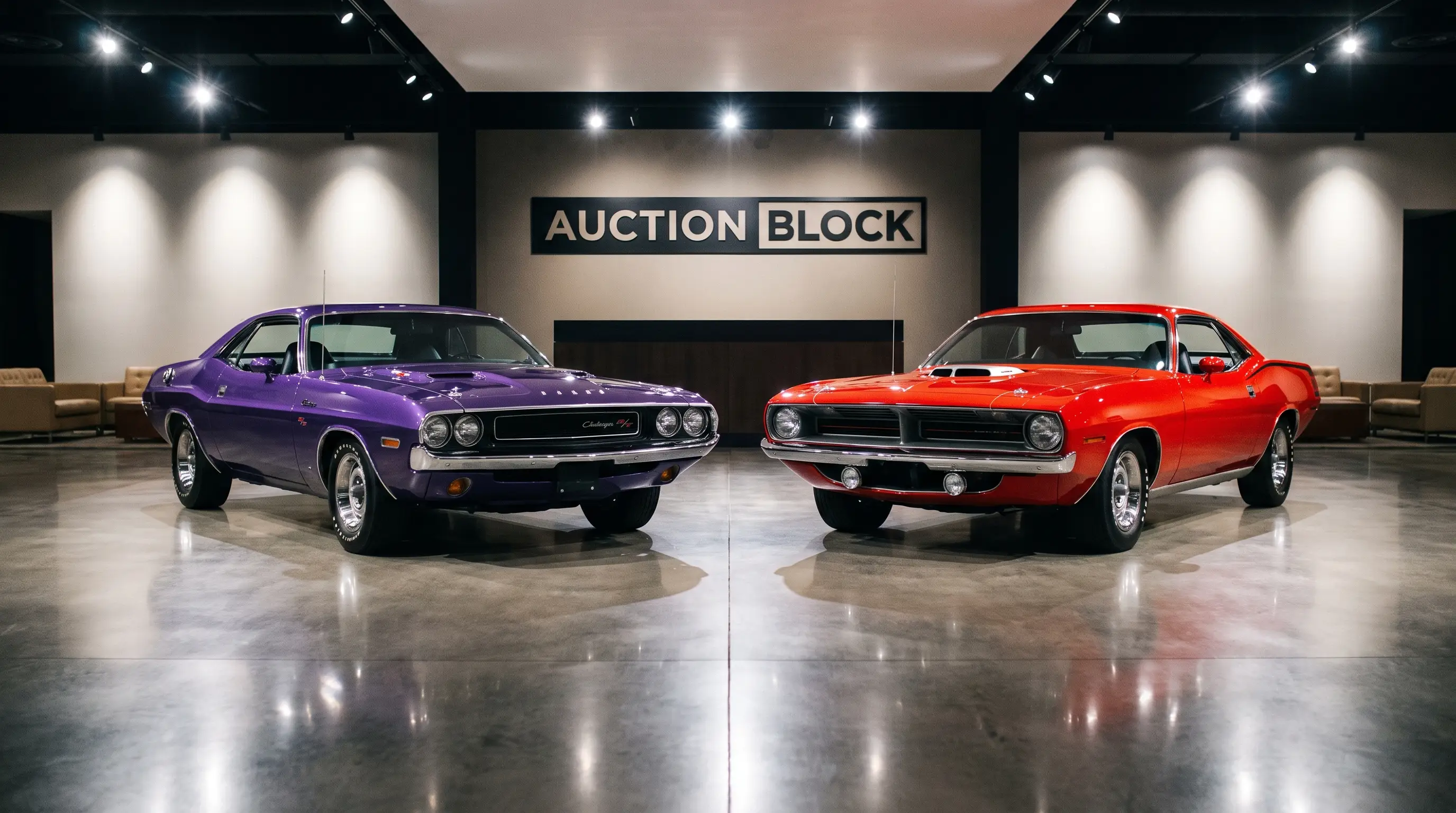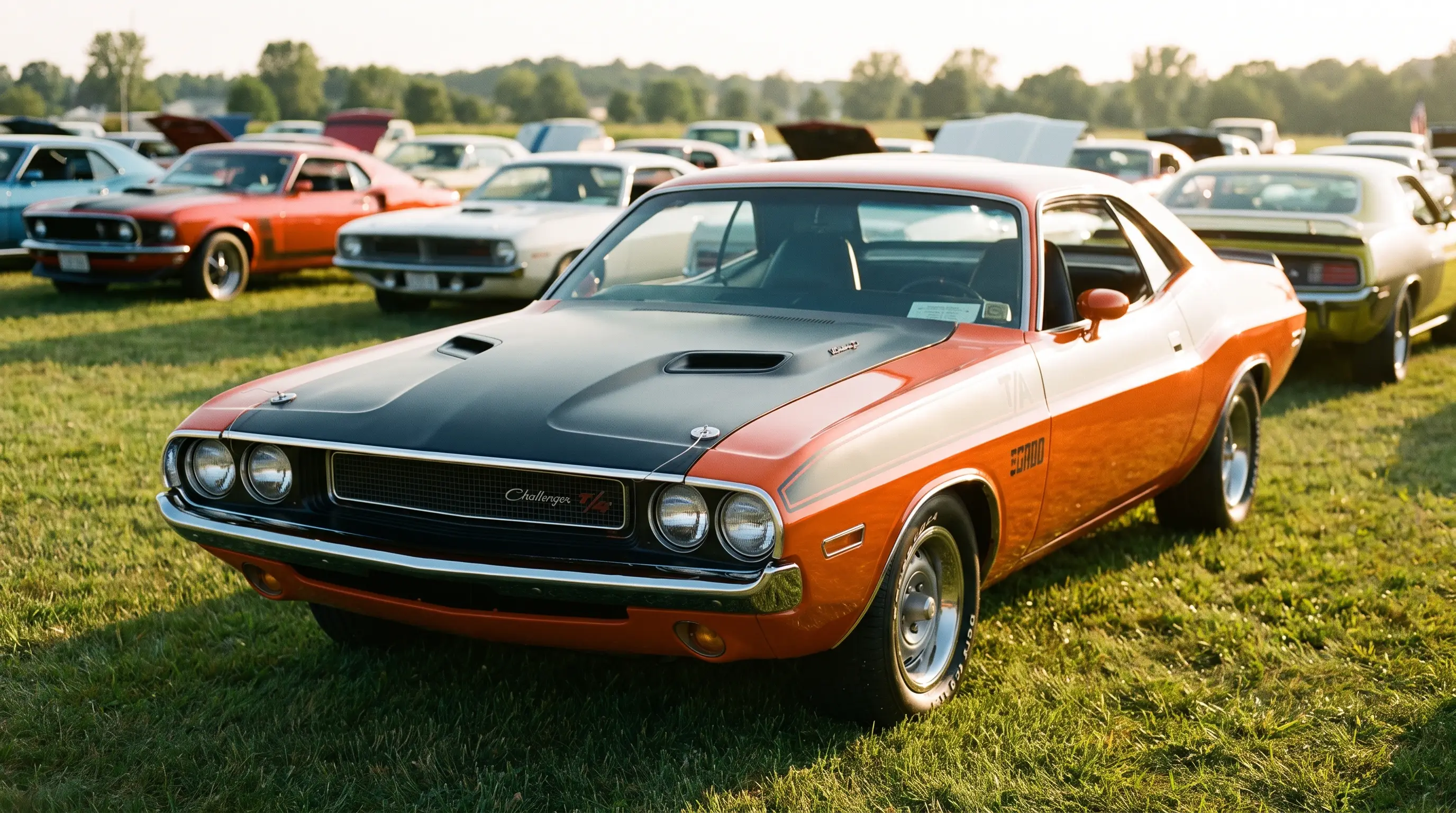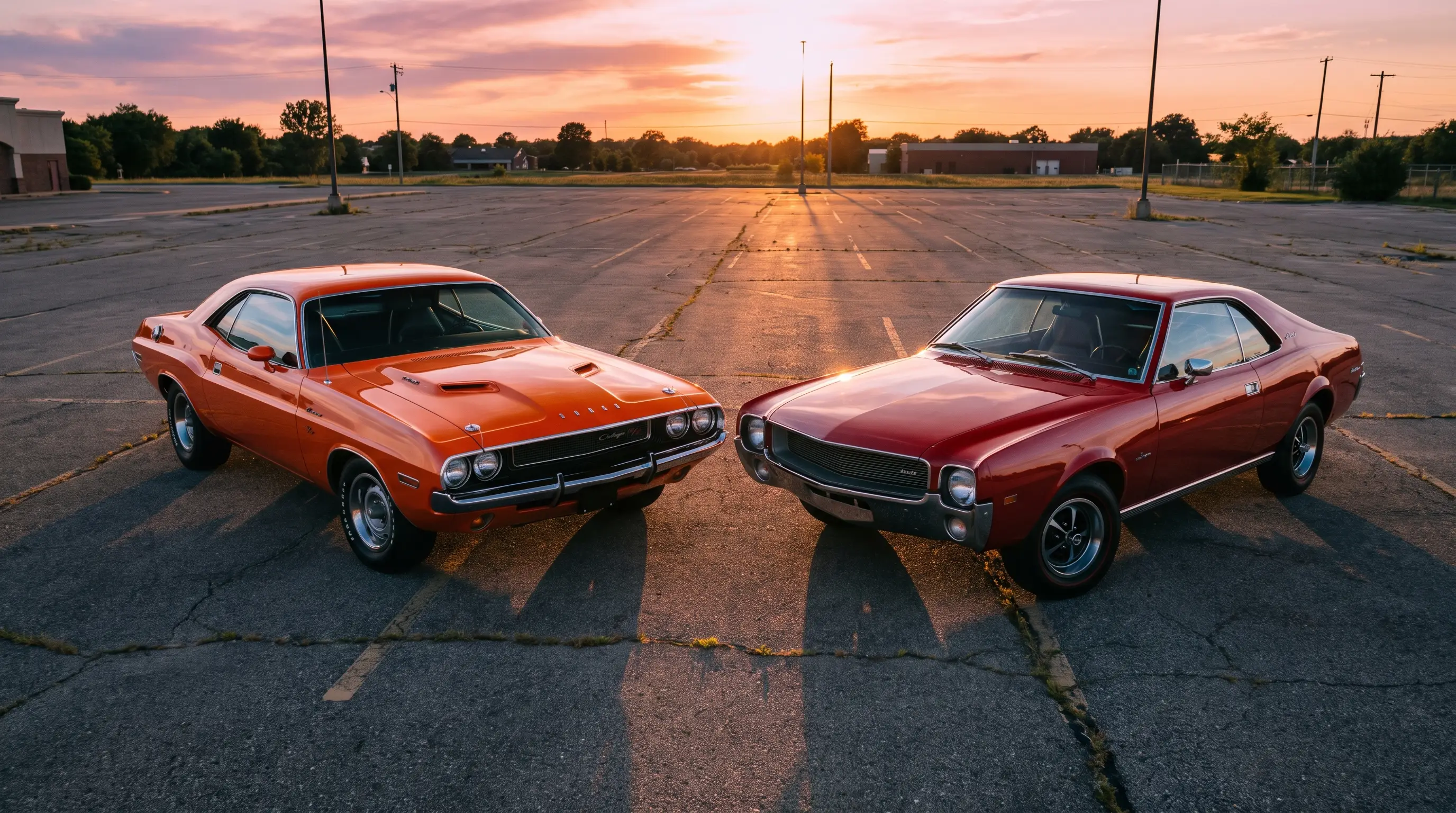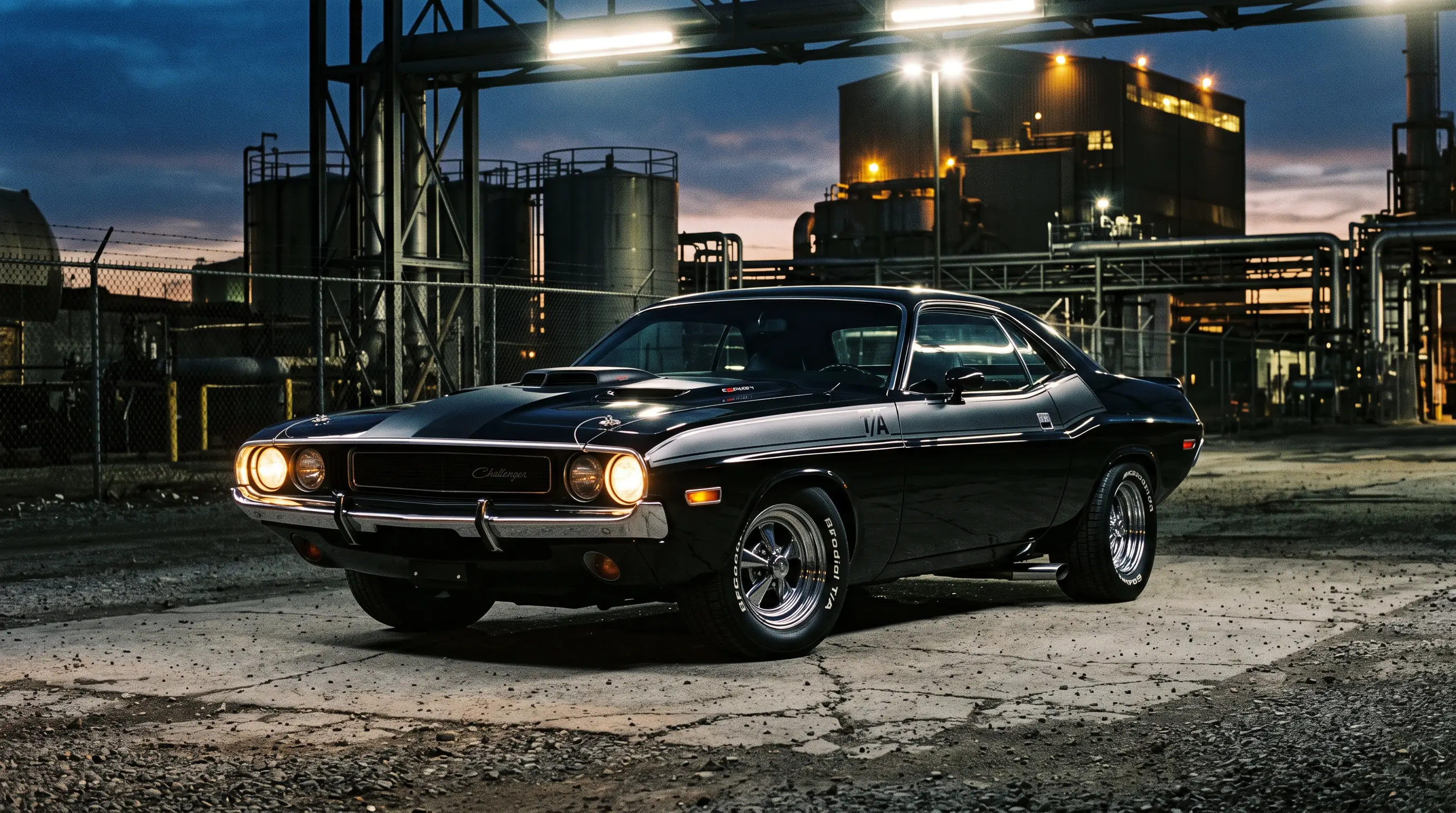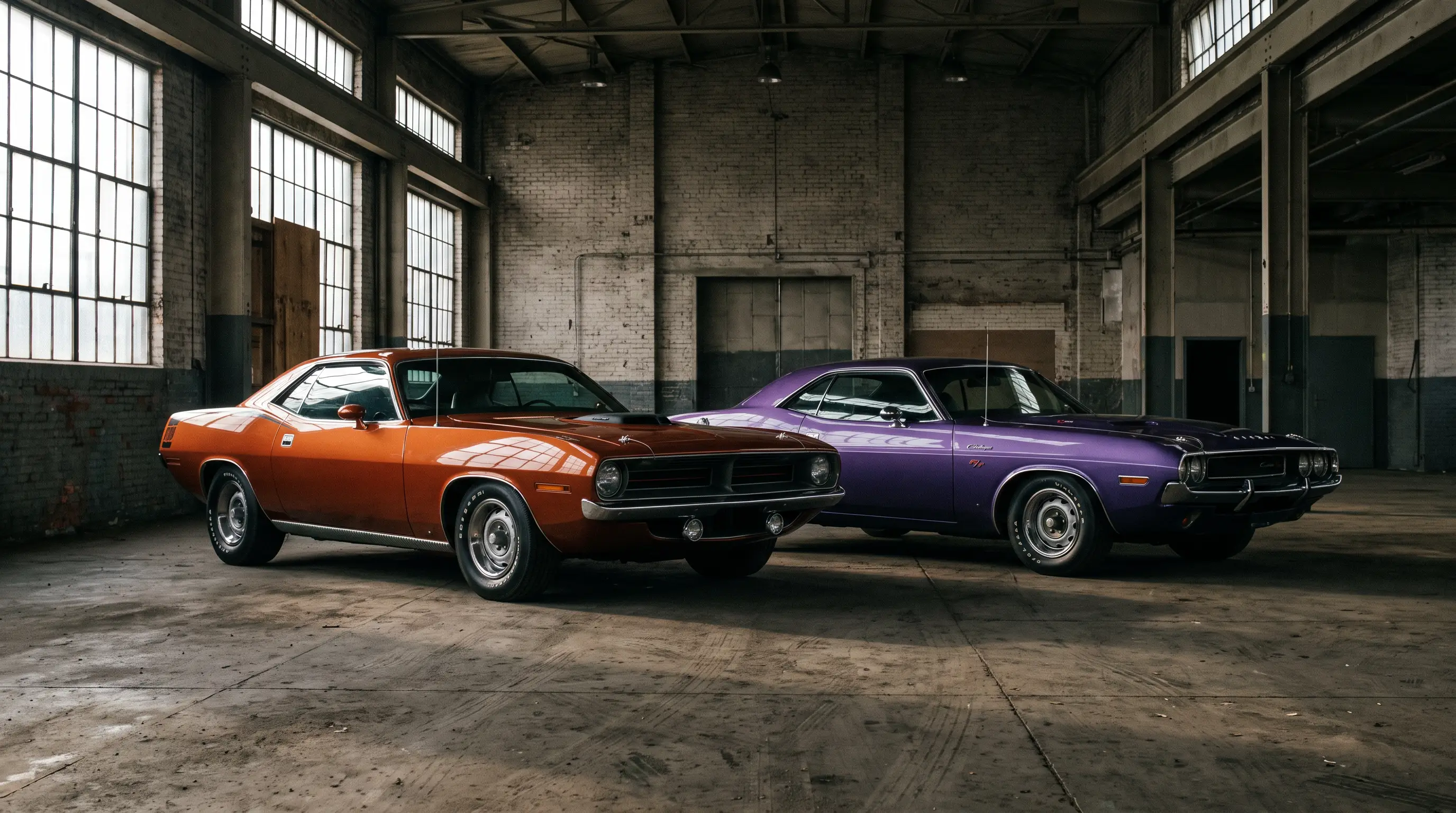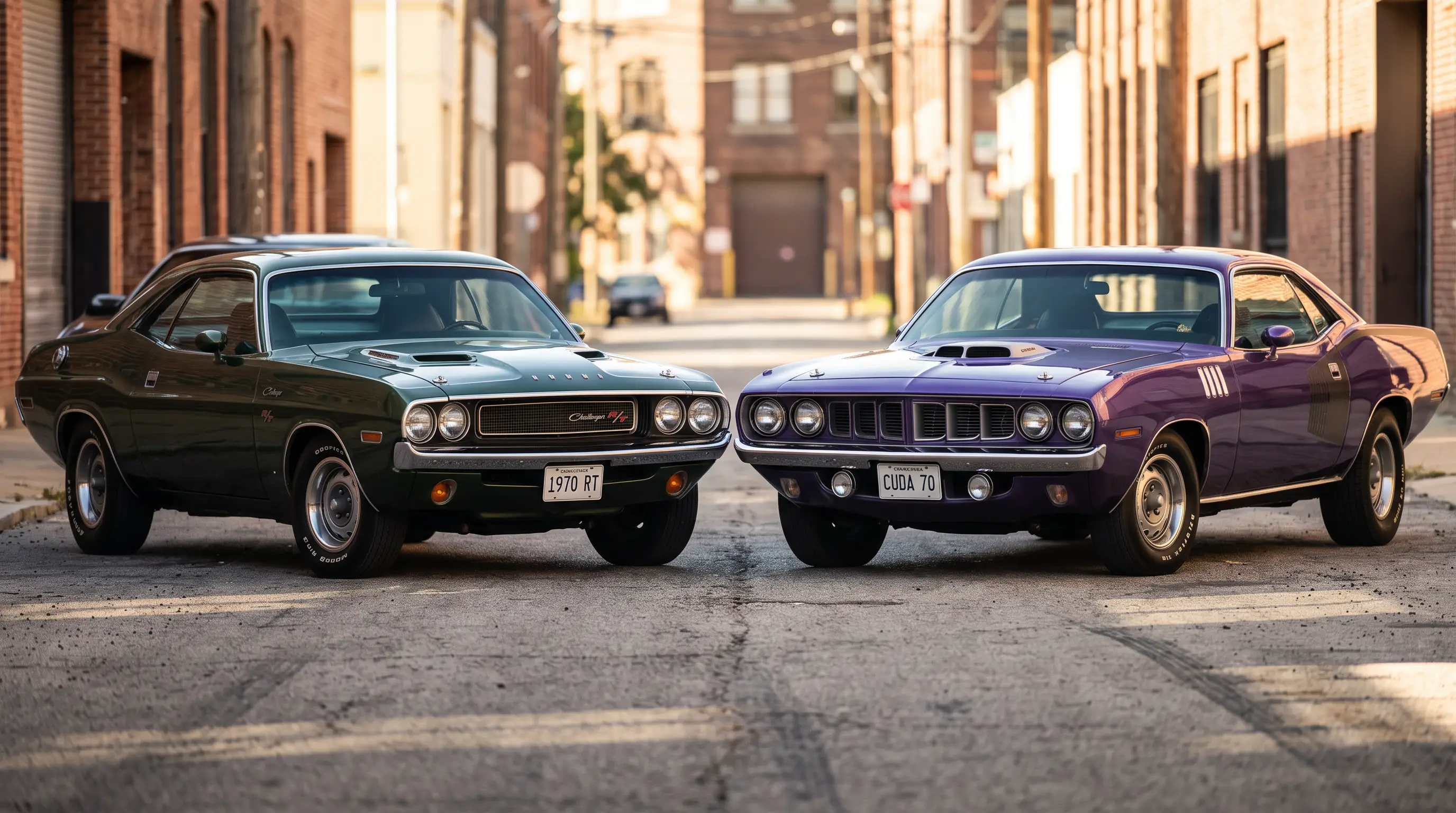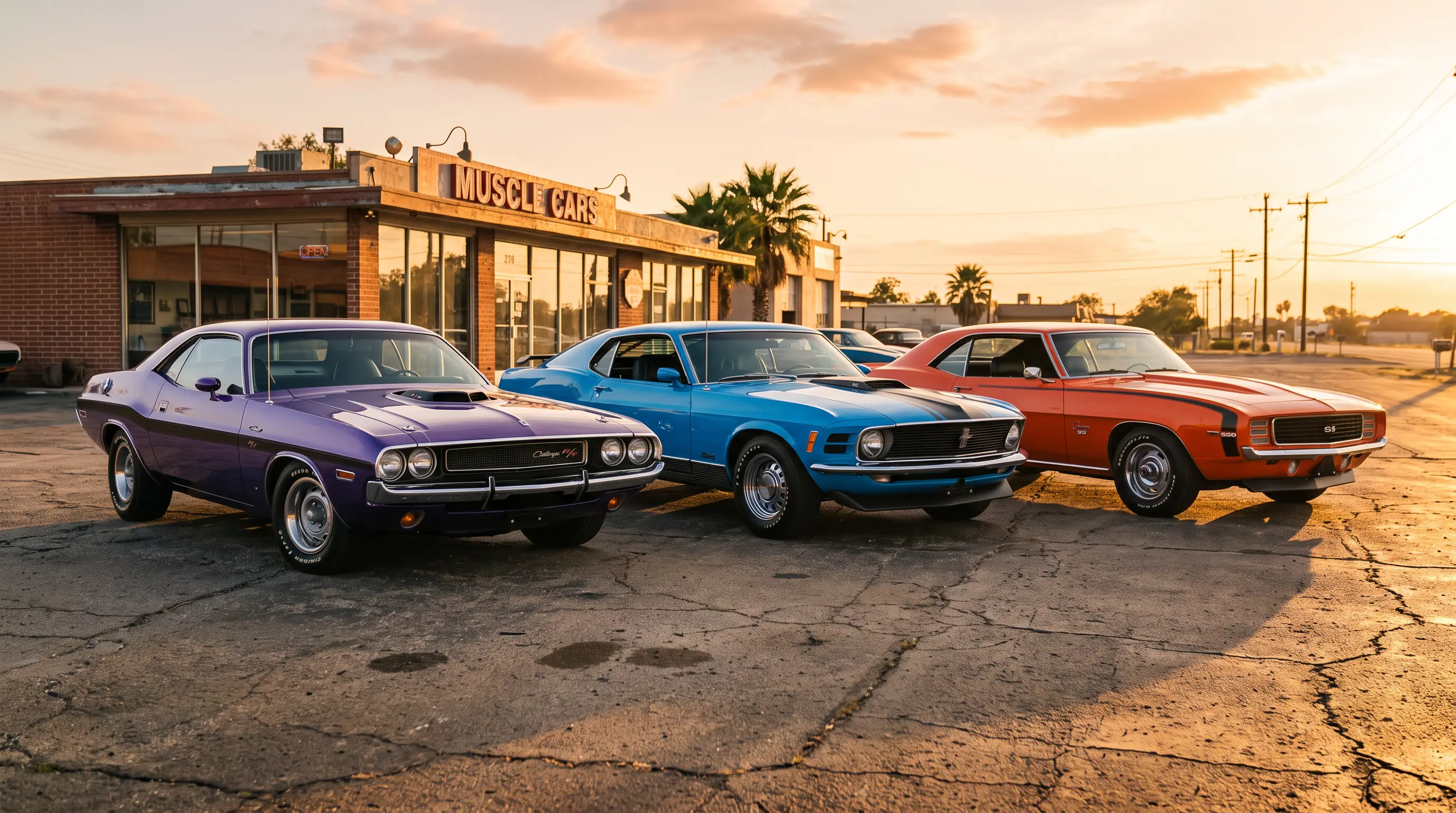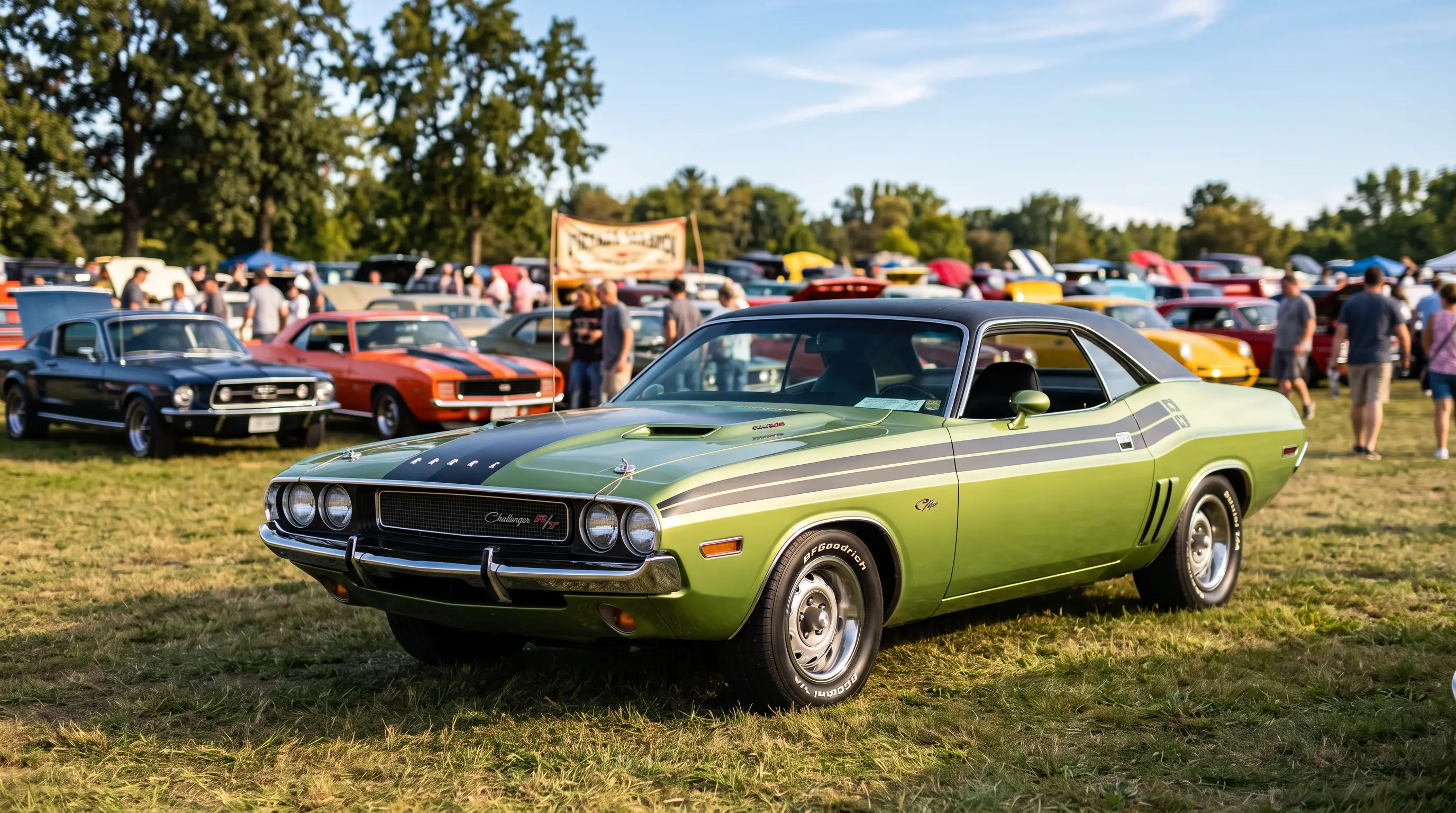
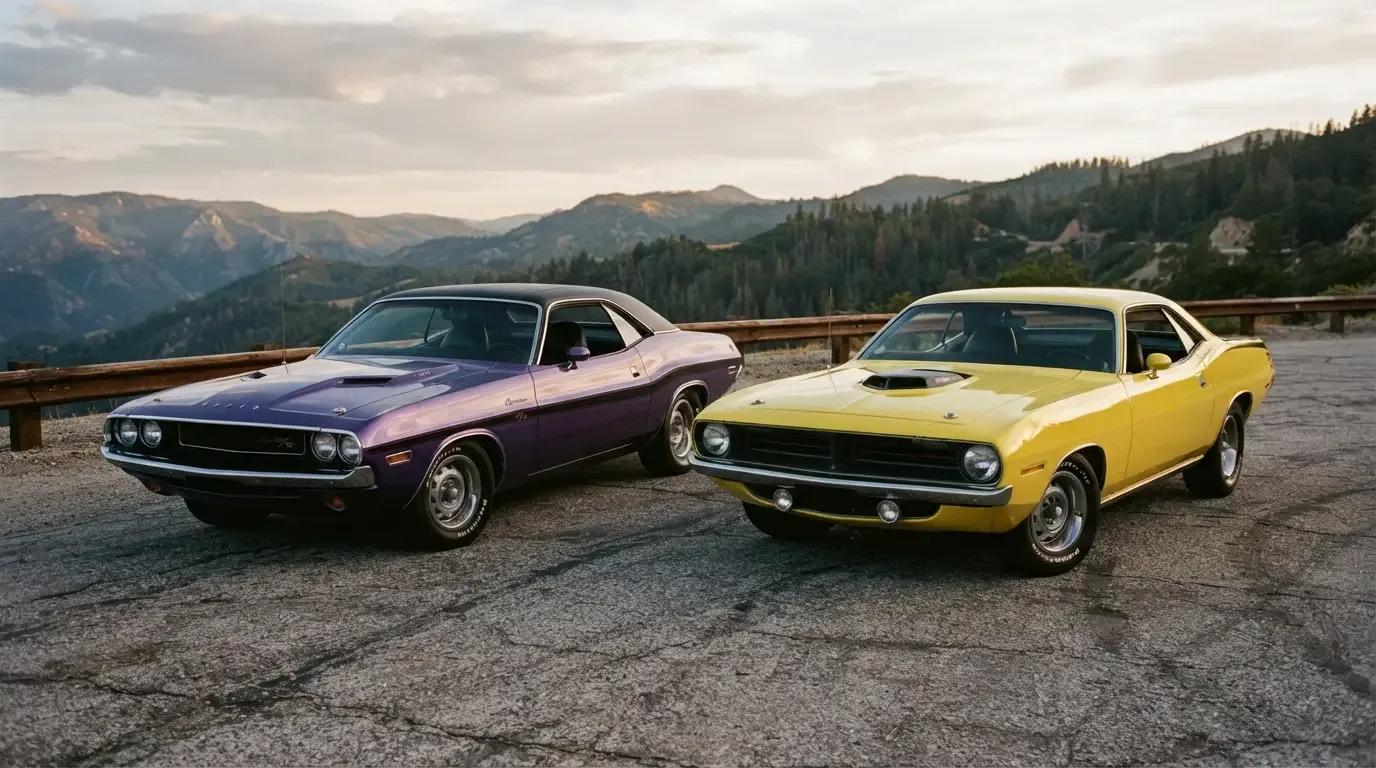
A fellow rolled into one of our club meets a few years back with a beautiful orange E-body and spent a good ten minutes arguing with another member about whether it was really a Challenger or really a Cuda. Both of them were half right and half wrong, which is usually how these things go. The truth about the Challenger vs Cuda question is that they came out of the same room at Chrysler, shared the hard parts, and still ended up as two genuinely different cars. Sorting that out took us the rest of the afternoon and a fair amount of coffee.
I have watched people fight about these two cars for as long as I have been in this hobby. The heat is real, and it usually comes from folks who have picked a side without knowing where the two cars actually split. So let me tell it the way we finally worked it out at that meet, with the paperwork on the table.
Two cars, one platform
Chrysler built both the Dodge Challenger and the Plymouth Barracuda on what the company called the E-body platform, launched for the 1970 model year. That shared platform is where the confusion starts, because people hear the word and assume the cars are the same thing wearing different badges. They are not, and the guy at our meet learned that the hard way when someone pulled a tape measure.
The Challenger rode on a 110 inch wheelbase. The Barracuda, and therefore the Cuda performance version, rode on a shorter 108 inch wheelbase. Two inches does not sound like much until you park them nose to tail. The Challenger is the longer car, and Dodge leaned into that length to sell it as the more upscale, more grown-up machine. The Plymouth was pitched tighter and a touch more aggressive. Same bones, different intentions.
Neither car shared its outer sheet metal with the other, either. The doors, the fenders, the whole skin were unique to each brand. That is the detail that ends most arguments once people see it. If you have chased down the full origin of the Dodge in our our dodge challenger retrospective, you already know the E-body was designed to give Dodge its own pony car rather than a rebadged Plymouth, and that goal is exactly why the two look related without being identical.
The Dodge personality
The Challenger was the later arrival of the two nameplates and it was aimed slightly upmarket. Dodge wanted a car that could wear bucket seats and a big block and still feel like it belonged in a nicer driveway. The longer wheelbase helped. So did the trim choices and the way the car was marketed as a personal machine with muscle available rather than a stripped street fighter.
That does not mean it was soft. The R/T could be ordered with the fiercest engines Chrysler made, right up to the 426 Hemi. But the Challenger's whole posture was a bit more of a gentleman's bruiser. It offered the performance without insisting you announce it on every corner. Plenty of our members who own both will tell you the Challenger is the one they drive to dinner and the Cuda is the one they drive to argue.
The Plymouth personality
Cuda was the name Plymouth gave the performance Barracuda, and it carried itself differently. Shorter, a little more urgent looking, pitched hard at the buyer who wanted the meanest thing on the lot. The Cuda leaned into its performance image without apology, and the marketing matched. Where the Challenger whispered that it could be quick, the Cuda said it out loud.
The engine menus overlapped heavily, which is another reason the two get tangled together in people's heads. Both could be had with the 340, the 383, the 440, and the 426 Hemi in the peak years. A Hemi Cuda and a Hemi Challenger are mechanically close cousins. The difference a buyer felt was in the wrapper and the wheelbase, not in the fury under the hood.
| Challenger vs Cuda (1970) | Dodge Challenger | Plymouth Cuda |
|---|---|---|
| Platform | E-body | E-body |
| Wheelbase | 110 inches | 108 inches |
| Positioning | Upscale personal muscle | Focused performance |
| Top engine | 426 Hemi | 426 Hemi |
| Outer sheet metal | Unique to Dodge | Unique to Plymouth |
| Overall length | Longer of the two | Shorter of the two |
Where the market split them apart
Here is where the story gets interesting for anyone thinking about money. For decades the two cars were valued in roughly the same neighborhood, with the rarest Hemi examples on top. Then the Cuda name pulled ahead at the very peak of the market. The Hemi Cuda convertibles in particular reached auction figures that left the equivalent Challengers a step behind, and that gap has shaped how people talk about the two ever since.
I want to be careful here, because this is where club arguments turn into bad buying decisions. The Cuda premium is real at the rarest end of the market, the six-figure and seven-figure Hemi cars. It does not automatically mean every Cuda is worth more than every Challenger. A clean, documented 340 Challenger can outsell a tired Barracuda all day long. Condition and paperwork still rule, and I have seen the ranking flip more than once when the wrong assumption met the right car.
"We spent a whole meet trying to settle which was better, the Challenger or the Cuda. We never did. What we settled instead was that most people arguing had never checked the wheelbase or the build sheet. Once they did, the shouting turned into learning."
- Wayne Coburn
How the community keeps them straight
In the clubs, we sort these two cars the same way every time, and it has nothing to do with brand loyalty. It starts with the badges and the grille, moves to the tape measure when somebody gets stubborn, and ends with the fender tag and the build sheet. The paperwork is the punchline to every one of these arguments. I have watched a man insist for twenty minutes that his car was the rarer one, only to go quiet when the documentation came out and told a plainer story.
That is the part newcomers underrate. The Challenger and the Cuda are close enough that a seller can blur them, on purpose or by accident, and the only cure is knowing what the factory recorded. A member of ours spent years thinking he owned a big-block car because the badges said so, until a real look at the numbers showed the engine had been swapped in long after the car left the line. The car was still a good car. It just was not the car he had been telling people it was.
This is why our older hands push so hard on documentation with anyone shopping either nameplate. The two cars came from the same building and the same year, so the surface tells you less than you think. The record tells you everything, and it does not care which badge you were hoping to see.
Fifty years of friendly rivalry
The best part of the whole Challenger vs Cuda business is that it never really gets settled, and nobody in the hobby actually wants it to. The rivalry is friendly. At any big show you will find Dodge people and Plymouth people parked a few spaces apart, ribbing each other, quietly proud that their side of the E-body family exists at all. Both camps know the truth underneath the teasing, which is that the two cars need each other. The comparison is half the fun of owning either one.
There is history in that rivalry too. Chrysler built two cars where a lesser company might have built one and sold it twice. That decision gave enthusiasts two distinct machines to love and argue over for the next fifty years. I would call that a gift. The debate has kept both cars in the conversation long after the factory stopped building them, and a car that people still argue about is a car that is still alive.
Which one is right for you
When a newer member asks me which to buy, I turn it around. What do you want the car to say about you? The Challenger vs Cuda choice is really a question about temperament, not about which one is objectively superior. Both are E-body cars with the same great engines available and the same beautiful proportions. They just carry themselves differently.
If you want the longer, slightly more refined car, the one that wears its muscle with a little discretion, the Challenger is your answer. If you want the tighter, louder statement, the Cuda leans that way. There is no wrong pick, only a mismatch between the car and the owner, and those mismatches are exactly what fill the classifieds with cars sold after two years.
Twins, not clones
That orange car at our meet turned out to be a Challenger, for the record, and the fellow who bet against it bought the next round. What everyone walked away with was the thing I keep coming back to. These two cars are twins, born the same year in the same building, and they still grew up with different personalities. That is what makes the comparison fun instead of settled.
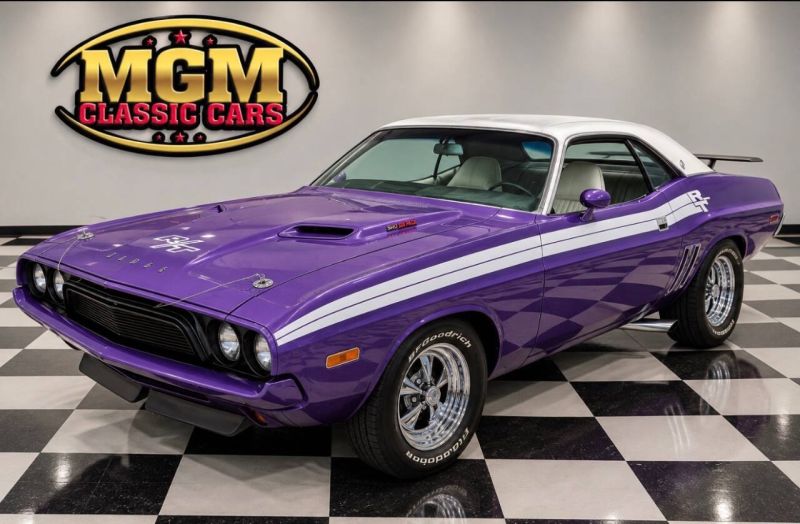
If the color and rarity side of all this has caught your attention, and it catches most people eventually, you can keep exploring the way paint and options turned certain E-body cars into the ones everybody chases. And when you are ready to stop reading and start shopping, there is always a good classic Challenger for sale somewhere waiting for the right owner to tell the difference.