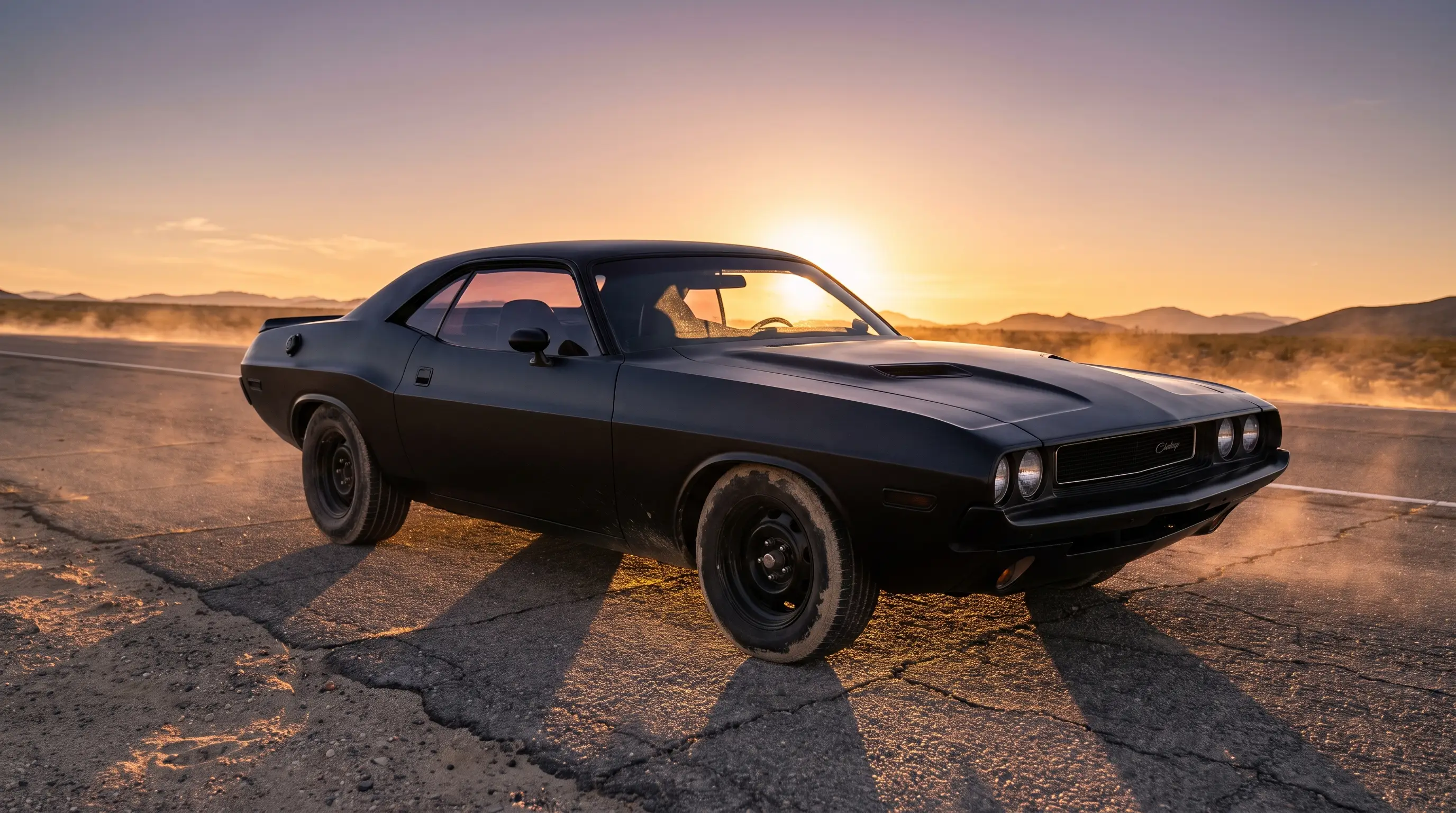
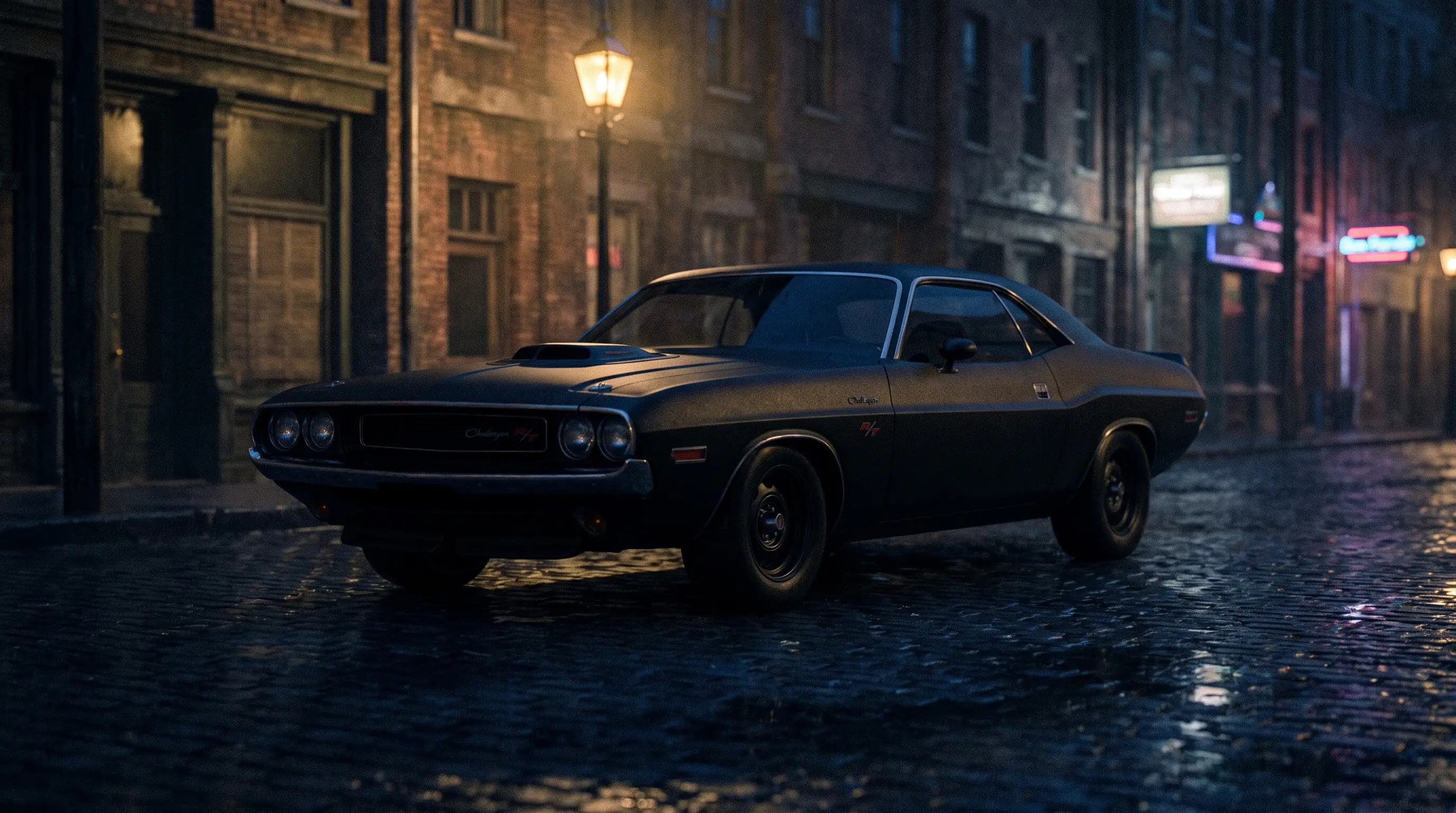
For years, street racers on Detroit's Woodward Avenue talked about a matte black Challenger R/T that would appear late at night, run its race, and vanish before anyone could learn who owned it. They called it the Black Ghost, and for a long time nobody outside a small circle knew the car was real, let alone who was behind the wheel. The Dodge Challenger has more than its share of movie legends, but this one belongs entirely to the street, and it turned out to be true.
A Detroit police officer with a secret second life
The car behind the legend was a 1970 Challenger R/T SE, and its owner was Godfrey Qualls, a Detroit police officer who bought the car new and used it to street race around the city, often against unsuspecting opponents who had no idea the man behind the wheel wore a badge during the day. Qualls kept the car largely out of public view for decades, and the Black Ghost mythology grew precisely because so few people ever got a clear look at the car or its driver.
What makes the story unusual among muscle car legends is how much of it turned out to be verifiable rather than exaggerated folklore. Qualls kept the Challenger in his family, and it stayed largely unrestored and mechanically original for decades after he stopped racing it, a rare outcome for a car with a genuine street racing history. Most cars with that kind of use get thrashed, wrecked, or heavily modified. The Black Ghost survived essentially intact.
The car resurfaces and the legend gets confirmed
The Black Ghost stayed a rumor among Detroit street racing circles for years before the wider collector world learned the full story after Qualls passed away and his family began sharing the car's history publicly. What emerged was a documented, numbers-matching 1970 Challenger R/T SE, one of just 23 R/T SEs built that year with the 426 Hemi and a four-speed manual, still wearing its original matte black paint and still carrying the scars and patina of decades of real use rather than a showroom trailer queen's polish.
That authenticity is central to why the Black Ghost resonates the way it does. This was never a car built to be looked at. It was built by its owner to win money on the street, run quietly, and disappear before the wrong kind of attention found it, and the fact that it survived in that state, rather than being restored into something shinier and less honest, is exactly what collectors and historians responded to once the story came out.
Why a police officer street racing matters to the story
There is a particular tension in the Black Ghost's story that other muscle car legends do not carry. A Detroit police officer spending his off-duty hours street racing a car built for exactly the kind of activity his job existed to police is not a detail that gets smoothed over easily, and it is part of what makes the story feel less like manufactured car culture nostalgia and more like an actual slice of Detroit life in the early 1970s. The city was full of young men with fast cars and a stretch of Woodward Avenue built for exactly this kind of unofficial competition, and Qualls was simply one of them, badge notwithstanding.
The car's reputation on the street reportedly grew specifically because of the mystery around who owned it. Opponents who lost to the Black Ghost rarely learned anything about the driver, and that anonymity did more for the legend than a public reputation ever could have. A car people cannot identify becomes more feared than one people know everything about.
"Most street racing legends get bigger with every retelling until nobody can separate the true parts from the invented ones. What is remarkable about the Black Ghost is that the actual car turned up, and it backed up almost everything people had been saying about it for decades."
- Nora Beckett
What the car actually tells us that the stories could not
Once the Black Ghost's true ownership came to light, historians and documentation specialists were able to compare the physical car against decades of secondhand accounts, and the match was closer than most muscle car legends manage. The 426 Hemi under the hood lined up with what people had described hearing on the street. The matte black paint, unusual for a factory Challenger of that era, matched photographs that had circulated in small circles for years. Even the specific stretch of Woodward Avenue where the car reportedly ran lined up with family recollections of where Qualls preferred to race.
That level of consistency between rumor and reality is genuinely rare. Most street racing legends accumulate exaggeration with every retelling, engines get bigger, times get faster, opponents get more impressive, until the documented facts and the folklore barely resemble each other. The Black Ghost is one of the few cases where pulling back the curtain confirmed the legend almost entirely rather than deflating it, and that is a large part of why the story landed so hard with collectors and historians once it became public.
Where the Black Ghost sits among Challenger legends
Most of the classic Challenger's biggest cultural moments come from Hollywood, from a white car disappearing across the desert in a 1971 chase film to a similar car resurrected decades later in a Tarantino homage. The Black Ghost is different because it never needed a film crew or a script. It earned its reputation the same way any street car does, one race at a time, with a driver who had every reason to keep his identity quiet and did so successfully for years.
For the broader picture of how the Challenger became a cultural fixture across film and street racing alike, read the background covers the full arc. Fans of the movie side of the story might also find it worth a look too, since a very different kind of Challenger legend was building on screen around the same era the Black Ghost's story finally came to light. And if a genuine matte black R/T with real street history has you hunting the market, shop classic Challenger listings to see what is currently available.
The Black Ghost also stands as a reminder of how much muscle car history exists outside published records and factory documentation. Not every significant Challenger got photographed at a drag strip or written up in a period magazine. Some of the most compelling stories, the Black Ghost included, spent decades circulating only as word of mouth among the people who actually saw the car run, and it took a family finally speaking publicly to bring that history into the daylight. That gap between what got recorded at the time and what actually happened on the street is worth keeping in mind whenever a car's documented history feels thin. Sometimes the story is simply waiting for the right person to tell it.
Sources and notes
- Black Ghost: How Godfrey Qualls' legendary Challenger passed from father to son - Hagerty Media
- The Black Ghost was an untouchable Detroit street racer, driven by a cop - Hagerty UK
- A Look at the Black Ghost Dodge Challenger and the Man Behind the Wheel - DodgeGarage
- 1970 Dodge Challenger Black Ghost Is a Historic Vehicle - autoevolution
- This Police Officer's 1970 Dodge Challenger Was Secretly a Street Racing Legend - MotorBiscuit